

Fun Things To Do In Washington DC: 6+ Things You Cannot Miss Here (Including Free Attractions)

Dec 24, 2024

Last Updated on: Jul 4, 2025

Travel Blog

Washington, DC, the capital of the USA, is experiencing a massive boost in tourism these days. 2023 has been a remarkable year, with the number of footfall reaching 25.95 million. The number is not just up from 2022 by 17%, rather, it is an improvement from the visitors in 2019. 

No wonder the things to do in washington DC have an important role to play in the increased tourism. 

The spike in tourism has further yielded a positive impact on the local economy. The number of 1.95 million international visitors in 2023 has been especially beneficial, considering they stay here longer and spend more than domestic visitors. 

This is a major milestone for Washington, DC. Put simply, we are seeing the results of our increased marketing and sales efforts thanks to the tourism recovery district legislation, and the city is benefitting from increased tourism. There is still work to do, however, since international travel hasn’t fully recovered. The additional funding allows us to continue to entice international visitors who stay longer and spend more.

Elliott L. Ferguson, II, President and CEO, DDC

So, do you also want to be a part of the bustling tourism scenario in the US capital? Let’s check out the things to do in Washington DC. I have also included some free activities to make your travel itinerary more pocket-friendly. 

Fun Things To Do In Washington DC | Including The Fun Things You Can Enjoy Here

Fun Things To Do In Washington DC

The best time to visit Washington, DC, is during the spring season. This is the season when you will find cherry blossoms in full bloom. Further, the spring months record an average temperature of 5-24 degrees Celsius. 

You can even plan a visit and explore the best things to do in Washington DC during the fall season. The fall months of September to November also record moderate temperatures ranging between 5-30 degrees Celsius. 

Irrespective of the season, if you want to visit Washington, DC, you can try the following activities. 

1. Visiting The White House And The Washington Monument

Visiting The White House And The Washington Monument

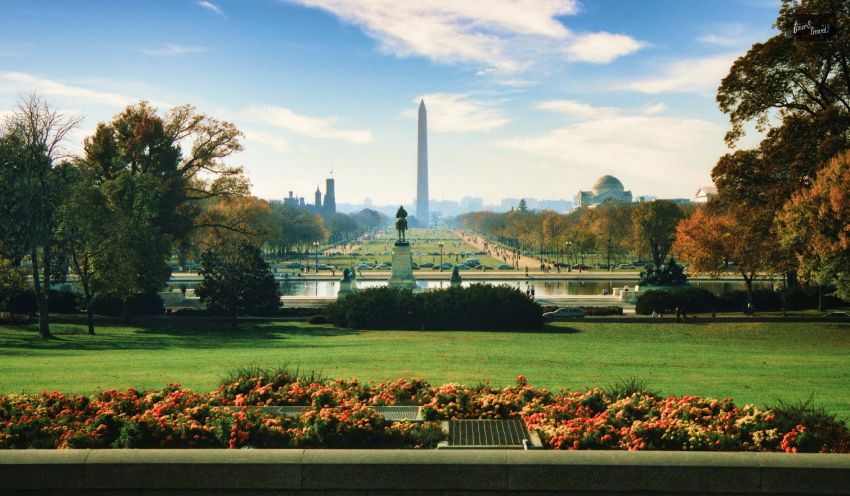
White House And The Washington Monument are two most important landmarks of Washington DC and the entire USA.

You can take an elevator to the top of the Washington Tower and explore a 360-degree view of the surroundings.

On the other hand, the White House, the official residence of the US President, has been standing proud in Washington DC for two hundred years as the symbol of American life and people. 

2. Visiting The Lincoln Memorial

Visiting The Lincoln Memorial

Address: 2 Lincoln Memorial Cir NW, Washington

Contact No: +1 202-426-6841

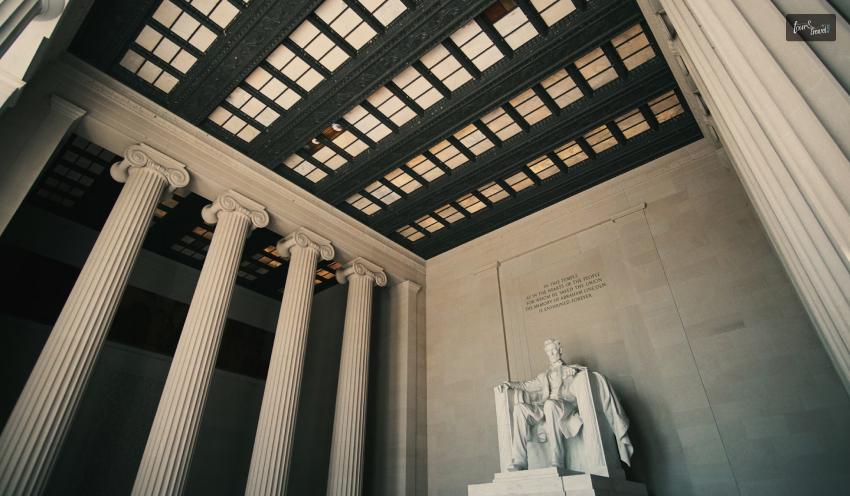
Are you traveling to Washington, DC, on a budget? You must visit the Lincoln Memorial in Washington, DC. It is free and an ideal location for history buffs or people who want to know about Lincoln.

Read here the famous speeches of Lincoln, including the Gettysburg Address and the Second Inaugural Address. Moreover,  the 38 Doric columns and other architectural features of the Memorial will grab your attention instantly.

When Lincoln Passed away, the 36 Doric columns of the Memorial used to stand for 36 states of the USA. 

3. Sightseeing At The National Mall 

Sightseeing At The National Mall

Contact Number: +1 202-426-6841

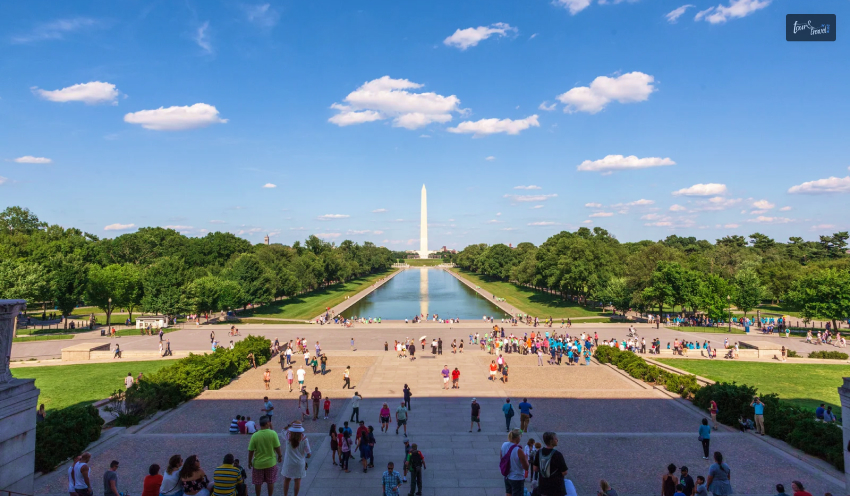
A visit to the grassy expanse of The National Mall is one of the most exciting and fun things to do at The National Mall. If you want to take an end-to-end walk on this grassy expanse, you have to walk for 2.5 miles.

As you take a walk through the National Mall, you will find many important monuments of the USA. You must especially stop by the World War II Memorial and Washington Monument.

Moreover, the National Mall is one of the most popular places to visit in Washington, DC to visit with your family. 

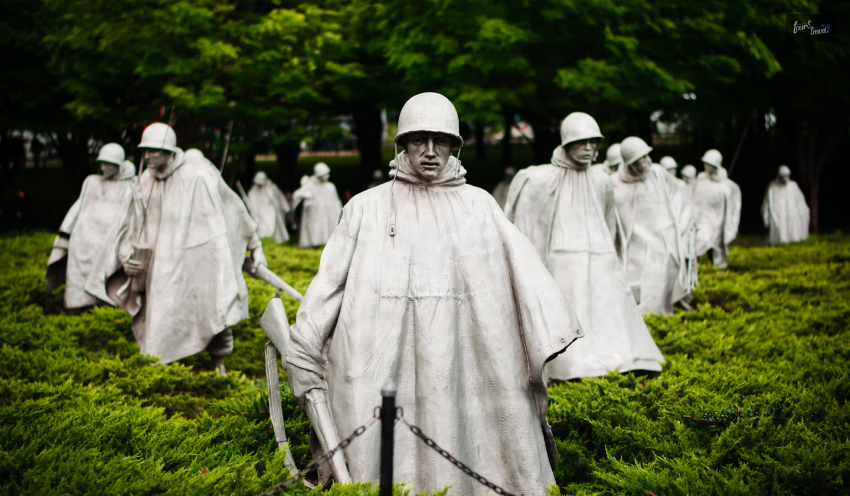
4. Plan A Visit To Vietnam Veterans And Korean War Veterans Memorials

Plan A Visit To Vietnam Veterans And Korean War Veterans Memorials

Address:  900 Ohio Dr. SW, Washington

Contact Number: +1 202-426-6841

Though not a fun visit, the Vietnam Veterans And Korean War Veterans Memorials are one of the best places to see in Washington, DC. “The Memorial” or “The Wall” is a popular place for dark tourism in the USA.

Today, when you visit the memorial, you will find the names of over 58000 Americans emblazoned on it. All of them lost their lives in the Vietnam War. You will also find metal sculptures of soldiers in action. 

Further, the Korean War Veterans Memorials pay tribute to 1.5 million Americans who were impacted by the “Forgotten War.” 

Tour And Travel Note:

The Korean War Memorial does not have adequate signage. So, if you already don’t know about the Korean War or for a young traveler, it may be difficult to grasp the significance fully.
Appreciate The Brilliance Of The National Gallery Of Art

Address: Sixth Street And Constitution Avenue Northwest 

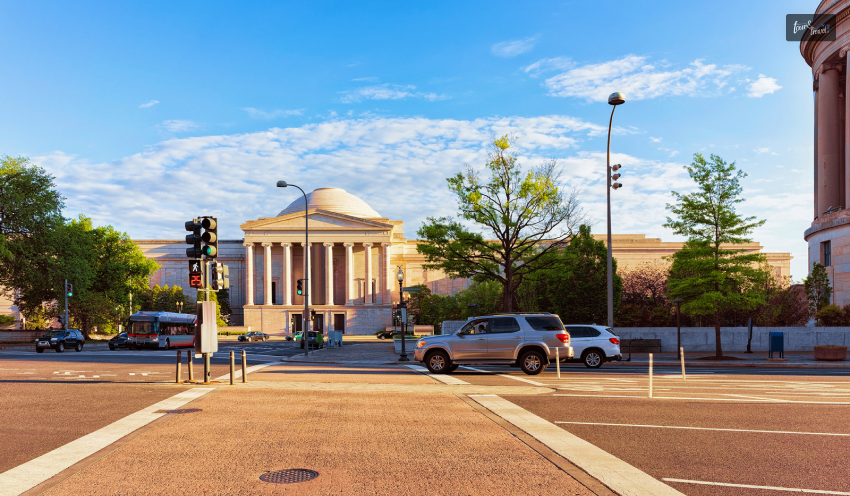
If you are looking for free things to do in Washington DC, you must consider a visit to the National Gallery of Art. And all the Da Vinci Code fans, this is the museum where you will find the only oil painting of Leonardo Da Vinci on a permanent display in the USA.

Further, the West Building houses some of the older works of the museum. You will find here works of the likes of Claude Monet and Sandro Botticelli. So, the happening museum in the heart of America assembles the best of Europe art scenario. 

6. Catch A Performance At The John Kennedy Center For The Performing Arts 

Catch A Performance At The John Kennedy Center For The Performing Arts

Address: 2700 F St NW, Washington, DC

Contact No: +1 800-444-1324

The John Kennedy Center For The Performing Arts is home to the National Symphony Orchestra. Throughout the year, you will find many performances, musicals and other shows taking place at the John Kennedy Center For The Performing Arts. 

Even if you don’t want to spend on the tickets (which usually come at a higher price), you can watch the free performances on the Millennium Stage. 

Furthermore, don’t forget to explore the “Art and Ideals: President John F. Kennedy” here. It has been there at the John Kennedy Center For The Performing Arts since 2022, and it ensures an immersive experience. 

7. Spend Some Moments Of Introspection At Washington National Cathedral

Spend Some Moments Of Introspection At Washington National Cathedra

Address: 3101 Wisconsin Avenue NW, Washington

Contact Number: +1 202-537-6200

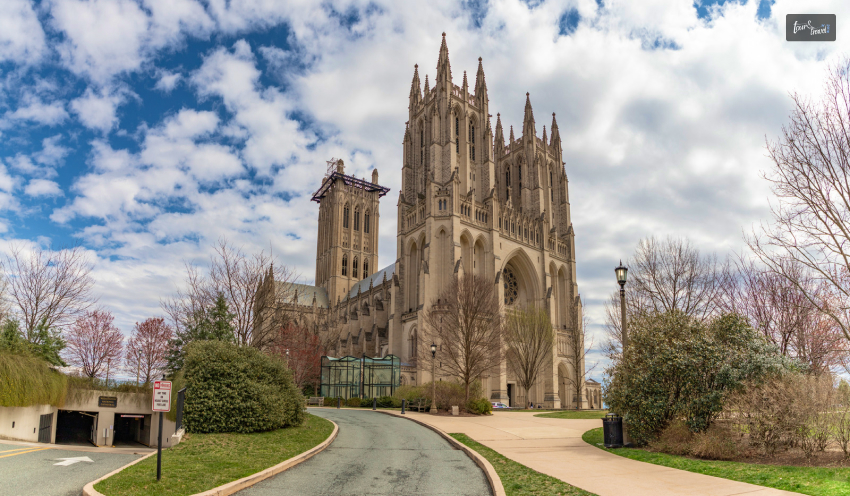
The Washington National Cathedral is the sixth-largest cathedral in the world. The construction of this massive church started in 1907 and was completed in 1990. The cathedral is so huge that you will need at least 2 hours to explore it.

Furthermore, the gothic architecture will grab your attention instantly. Also, as you step inside the church, you will find intricate works of stained glass. 

Moreover, the surrounding garden is a nice place to take a stroll and spend your leisure. 

Also read

Share on Social Media

Meet Sibashree Bhattacharya, a travel enthusiast who has a decade-long experience in transcending virtual barriers with her words! Her deep love for travel is apparent from her travel escapades to the mountain, often taking her readers on a journey, her words acting as Portkey! Fun fact: Sibashree loves to dive deep into the history of the places she is about to visit, making her travels even more wholesome. If you were wondering how her articles are not short of time travel, this answers it!

Leave a Reply

Your email address will not be published. Required fields are marked *

title-img Related

READ MORE Travel Safety with Technology

The Overlooked Connection Between Safe Travel And Strong Networks

BY  Sibashree Aug 21, 2025

When we’re planning a trip, the checklist usually looks the same: tickets, hotel, maybe insurance, and the pile of things we try to cram into a bag.  But one thing almost nobody writes down? Network security. And yet, in a world where we’re basically glued to the internet 24/7, it’s just as important.  The Wi-Fi at airports, coffee shops, even trains—it’s not just a way to stream Netflix. It can affect your safety, your money, and your peace of mind. So yeah, let’s talk about travel safety with technology and why secure connections are part of “safe travel,” what you can actually do to protect yourself, and a little bit about where all this is heading. Travel Safety With Technology: A Growing Dependency Honestly, you can’t separate travel and tech anymore. Every part of a trip runs through a screen— Flights booked online Boarding passes on your phone Hotel apps instead of keys GPS so you don’t wander in circles Paying with a tap instead of fumbling with cash.  Great for convenience, but it also leaves us exposed. Here’s the catch: hackers love travelers. At home, we’re behind decent Wi-Fi and firewalls without even thinking. On the road? Not so much. Public Wi-Fi is everywhere, and most of it isn’t secure.  That’s a big door open to identity theft, drained accounts, or even stolen work files. Safe travel today means watching your digital step just as much as your physical one. So, you have to ensure travel safety with technology.  Why Public Wi-Fi Is A Double-Edged Sword Public Wi-Fi feels like a blessing when you’re stuck in an airport or need to send a quick email. But it’s risky. Unsecured networks make it easy for someone shady to snoop on your activity, steal passwords, or slide into accounts. And don’t forget fake hotspots—“evil twins.” They look like the real deal, but they’re just traps. Connect without thinking and, boom, your info’s theirs. A few simple habits help: Turn off that auto-connect feature (it’s sneaky). Use networks that are clearly official and require a password. A VPN is your best friend—it scrambles your browsing. Kill Bluetooth and file sharing unless you’re actually using them. It’s not about ditching Wi-Fi altogether, just using it with your eyes open. The Importance Of Device Security On The Road Think of your phone or laptop like your passport—you wouldn’t leave it lying around. These little gadgets hold everything about you: banking apps, personal logins, sometimes even access to work systems. A few ground rules: Don’t toss devices in checked luggage—keep them close. Strong passcodes, or even better, biometrics. Set up two-factor authentication on your important stuff (make sure you can still get codes abroad). Turn on “Find My Device” in case things go south. Losing the gadget is annoying. Losing the data inside it? Way worse. Charging Smart: Avoiding The Trap Of Juice Jacking We’re always running low on battery when we travel—it’s just how it goes. And those free charging stations? Handy, sure. But some of them can be hacked to load malware or grab your data, a trick called “juice jacking.” Easiest fix: carry your own charger or a power bank. A small adapter works too. Costs a few bucks, saves a lot of hassle. Backup And Recovery: Digital Travel Insurance Even if you’re super careful, things happen. Devices get stolen, dropped, drowned in coffee… whatever. That’s where backups step in. Good habits here: Sync stuff to cloud storage regularly. Keep an encrypted hard drive back home. Automate backups so you don’t forget. It’s like travel insurance—you hope you won’t need it, but if you do, you’ll be grateful. Strong Networks, Stronger Travel “Safe travel” used to mean staying healthy and avoiding accidents. These days, it also means digital safety. The networks you use have a direct impact on how well your personal info—and sometimes your company’s—stays protected. For business travelers, the risk jumps higher. Logging into company systems over random Wi-Fi could put the whole organization at risk. That’s where enterprise tools come in—things like endpoint security.  Cisco Secure Endpoint, for example, adds monitoring and defense in real time. Not every traveler needs that level, but it shows how critical network strength is becoming. Looking Ahead: The Future Of Travel Safety With Technology Travel tech’s racing ahead: biometric boarding, AI hotel check-ins, digital wallets. Cool, right? But each new gadget or system comes with its own risks. Future-proof travelers will need to get ahead of the curve—encrypted connections, smarter identity checks, and tighter security partnerships between airlines, hotels, and tech companies.  In a few years, we’ll measure safe travel not just by “no delays” or “no lost bags,” but by how well digital systems protect the humans using them. Practical Tips For Ensuring Travel Safety With Technology Travel with a spare device that’s stripped down to essentials. Change your passwords before and after the trip. Check your accounts for odd activity while abroad. Power off devices at airport security—makes cloning harder. Don’t rely on just one card; carry a backup payment method. They’re small steps, but they make digital safety part of packing and planning, not an afterthought. Security As The Invisible Travel Companion Travel’s supposed to be about new places, new people, new experiences. But in this connected world, the networks you use and the gadgets in your bag matter just as much as the lock on your suitcase. Strong networks are like invisible travel gear—you don’t notice them, but they hold everything together.  Make safe browsing and backups part of your routine, and you’ll protect more than just your trip. You’ll protect the digital life you drag along with you. At the end of the day, “safe travels” isn’t just about smooth flights anymore. It’s about how securely you move through the hidden online paths that connect every stop on your journey, or how you can be sure of travel safety with technology.

READ MORE Banff National Park

Top 9+ Things To Do In Banff National Park In Winter: Adventure Tourism Guide

BY  Sibashree Nov 11, 2024

No park in the Rockies in Canada is as beautiful as the Banff National Park. This park has a year-round allure. So, no wonder the park had 4.288 million visitors in the 2023-24 fiscal year.  However, Banff National Park is breathtaking in the winter. With an average annual snowfall of 181 inches, the park also offers thrilling winter activities.  Banff National Park Visitor HighlightsBanff National Park had 4.13 million visitors in the 2022-23 fiscal year. So, 2023-24 has seen a massive increase (31%) in the footfall.The traffic congestion in the area has increased with the most traffic in the Lake Louise area. In 2023, there were 2,547 reports of human-wildlife encounters in this national park. So, you must be respectful to the wildlife in the park.  Further, Banff National Park and its surrounding areas expect 10-15 cm of snow in October 2024. The higher terrains can even receive a snowfall of up to 25 cm. So, Lake Louise, Sunshine Village, and other ski resorts in the area have started preparing for the winter ski season.  These resorts consider this snowy condition ideal for better winter tourism and activities. So, let’s find out the outdoor pursuits you can participate in at Banff National Park this winter. You Surely Don’t Want To Miss These Winter Activities At Banff National Park  Winter calls for an immersive experience in the Canadian Rockies. Banff National Park is not an exception. You can enjoy a casual stroll along the snow-covered streets. Further, you can just cherish the snowy beauty while sipping on your favorite hot chocolate drink. Of course, there are delightful activities like ice skating in the frozen lake, skiing, and snowboarding. However, before putting on your skiing shoes and gear, you must check the snow conditions in the park and at a particular resort.  Nevertheless, let’s talk about the activities without further ado!  1. Skiing And Snowboarding Banff National Park offers some world-class skiing and snowboarding facilities. In fact, the skiing season here is one of the longest in North America. The skiing season starts here from the end of November until May. It is phenomenal, indeed! Further, it does not matter whether you have not done skiing and snowboarding before. You can give it a go, thanks to the guidance and rentals available here. However, if you are not confident enough, you can just get a sightseeing tour ticket and explore the park. The three skiing resorts in Banff National Park are: Mt Norquay (10 Minutes Away from Town) Banff Sunshine (20 Minutes Away from Town) The Lake Louise Ski Resort  (40 Minutes Away from Town) You can try skiing at all the resorts or at least visit one during the cold season. You have to pay a nominal fee to ski at these resorts. However, if you need guidance or rentals, you must pay extra charges. Nevertheless, here is a snapshot of the admission fee to the park for your reference. Moreover, if you want to visit a particular ski resort, you can buy lift tickets. However, if you have plans to visit all the resorts, go for the SkiBig3 tickets for a better deal.  2. Ice Skating Ice skating rinks in Banff National Park are free, and Lake Louise is the best spot in the park. It is a Canadian dream to ice skate on the frozen lake. Also, you can take part in Pond Hockey here.  Further, you can enjoy the snow-capped beauties while enjoying your time at the Lake Louise Ice Skating Rink. The mountains around this lake are: Mount Whyte Mount Niblock Hungabee Mountain Mount Godor Fairview Mountain Mount Goodsir Moreover, you will love the ice castle at the Lake Louise ice skating rink. Don’t forget to take lovely snaps against the backdrop of this ice castle.  3. Snowshoeing/Winter Hikes Snowshoeing and winter hikes are two different activities. However, both make winter in Banff National Park very special.  So, check out the following snowshoeing hotspots in the national park. Lake Louise Marble Canyon Johnston Canyon to Upper Falls Sunshine Meadows Sulphur Mountain Trail Bow Glacier Falls Sulphur Mountain Trail is also a popular hiking route in the park in winter. Here are some hiking trails in the park in winter. Tunnel Mountain Summit - Moderate, 2.4 Km one-way Stewart Canyon - Easy, 1.5 Km, one way Sundance Canyon - Moderate, 3,7 km one way plus 2.1 km loop Spray Connector - Easy, one way 2 Km Marsh Loop, Easy, 2.8 Km loop However, winter is within the avalanche season in the park. The Avalanche Season in the park continues from November to June.  You can even reach the Avalanche Terrain after a short walk. So, follow the Avalanche Danger Signs and Avalanche Symbol while trekking in the park in winter.  4. Dog Sledding Dog Sledding is a great way to explore the park in winter. The mighty and energetic huskies will make your day. While exploring the park, you will also learn about its history and why it is so crucial for the community and locality. In addition, your musher or guide will explain the dog sledding technique to you. Moreover, dog sledding is a popular activity in Banff National Park during the SnowDays  Event in January and February. It is a celebration of Everything Winter in Banff.  5. Relax In Upper Hot Springs Hours of Operation: 10 am to 10 pm (Last entry: 9:30 pm) It will be the most relaxing experience for you to soak in the warm water of the Upper Hot Springs on Sulphur Mountain in the chilling winter. You can kinda call it a Canadian tradition. So, no wonder that it has been one of the best things to do in Banff National Park in winter since 1886.  Banff Upper Hot Springs has 100% natural mineral water. Take a dip in the outdoor pool as you behold the Cascade and Rundle Mountain peaks.  Moreover, don’t forget to visit the Bath House, which is a federal heritage building that houses some interpretive exhibits. These exhibits tell you about the history and nature of the hot springs.  Did you know that Upper Hot Springs is the highest operational hot spring in Canada? 6. Ice Climbing Banff National Park is one of the most popular destinations for ice climbing in the Canadian Rockies, along with Jasper and Kootenay National Park. November to April is the best season for ice climbing in these parks.  Easy access and reliable conditions are two factors promoting ice climbing in these parks. In Banff, the canyons and waterfalls are especially brilliant spots for ice climbing. The most visited spots for ice climbing in this park are: Johnston Canyon Professor Falls Louise Falls Weeping Wall Polar Circus Cascade Falls However, ice climbing requires avalanche training, and you must abide by safety guidelines.  7. Wildlife Spotting In May 2024, the Rocky Mountain Outlook came with disturbing news of Wildlife Paparazzi putting pressure on the Grizzlies of Banff National Park to take snaps. This is a sheer disrespect of wildlife and a form of hunting trophies in the form of photos of those animals. “With cell phone cameras, the digital photos of wildlife have become the 21st Century equivalent of hunters going out and bagging an animal that they can hang on their wall.”Brian Spreadbury, Former Human-Wildlife Conflict Supervisor, Lake Louise Nevertheless, exploring the wildlife of Banff National Park in winter is a delightful experience. It is most famous for the black and grizzly bears. Further, you will find bighorn sheep, cougars, moose, elk, and wolves here.  However, you have to be at the following sports to explore wildlife here. Icefields Parkway Bow Valley Parkway Lake Louise Moraine Lake Vermilion Lakes You will also find many small mammals like chipmunks and squirrels in Banff National Park. Moreover, with bald eagles and hundreds of bird species, this park is a birder’s paradise.  8. Snow Tubing Snow tubing is an exciting winter activity that takes place at the Mt. Norquay Ski Resort. It is open daily from 10 am to 4 pm. Further snow tubing activities happen in two different time slots. The first slot is from 10 am to 12:30 pm, and the next slot is from 1:30 pm to 4 pm.  The snow tubing park in Mt. Norquay is the largest in Alberta. Moreover, the eight sliding lanes in the park let you enjoy the activity with your friends and family.  9. Northern Lights Viewing Late September to April is the best time for northern light viewing in Banff National Park. Longer nights and clear skies during these months are the best times for stargazing and northern light watching.  Vermillion Lakes in the national park is easily accessible by car and on foot. It is the best location for watching the Northern Lights.  10. Attending Festivals and Events Along with the SnowDays Festival, many events transform Banff National Park into a festive hub. You can attend the following upcoming events in the park. Event Upcoming Date Banff Centre Mountain Film and Book Festival26th October - 3rd November, 2024Power of Presence - Wellness Retreat1st-3rd November, 2024Embrace Joy - Your New Freedom - Wellness Retreat7th-10th November, 2024Banff Wine & Yoga Festival 8th-11th November, 2024Banff Sunshine Community Ski Day6th December, 2024Mt Norquay Community Ski Day7th December, 2024Lake Louise Community Ski Day8th December, 2024SnowDays Play ZoneJanuary 2025Aerial Yoga Teacher Training16th-19th January 2025SnowDays Festival17th January-2nd February So, get geared up for winter fun at Banff National Park. You can reach the park from Calgary through a shuttle service.  Also read Why Include Whale Watching In Your LA Itinerary. Traveling On A Budget: Tips For Affordable Adventures. From Cocktails To Kickflips: Must-Try Activities In San Diego.

READ MORE national parks in oregon

Top 10 National Parks In Oregon That You Need To Explore In 2024!

BY  Ankita May 31, 2023

Are you searching for the best national parks in Oregon? If the answer to this question is a YES, then you have reached the right place! The state of Oregon, which is blessed with magnificent scenery, nature, and landscapes, is situated in the US's Pacific Northwest. It has a wide range of attractions to offer. There are stunning mountains and picturesque shoreline to lush woods, vast deserts, and intriguing canyons. Oregon is a destination for outdoor enthusiasts due to its remarkable variety of landscapes. It has plenty of amazing hiking, camping, and animal viewing to be experienced anywhere you go. In this article, I will be talking about one such natural wonder— the national parks in Oregon! S, if that is something that you are searching for, there is one thing you need to do. And that is to keep reading this blog till the end… Top 10 National Parks In Oregon That You Must Visit! Despite having just one national park, Oregon is not short on beautiful landscapes. The state is full of natural beauties, including a fossil-rich desert, gorges, untamed rivers, and 360 miles of public coastline. In this article, I will be focusing on the top ten national parks of Oregon that you must visit. So, if that is something that you have been searching for, then you will find this blog to be of great help! Keep reading this article till the end to learn more… 1. Crater Lake National Park As one of the deepest and clearest lakes in the world, Crater Lake National Park in western Oregon is well-known today. But 7,700 years ago, the eruption of Mount Mazama, which formed Crater Lake, is probably one of the largest geologic catastrophes ever. After Mount Mazama erupted, it fell, leaving a crater more than 1,200 meters deep. It measured 8 kilometers north to south and 10 kilometers east to west. The crater subsequently filled with rain and snowmelt. The Crater Lake is awe-inspiring, and that is why it is the first one on the list of the best and most visited national parks in Oregon. Native Americans saw it form nearly 7,700 years ago when a powerful eruption caused a lofty mountain to collapse. Its purity and popularity as the deepest lake in the United States. It is also one of the most pristine lakes on the planet, nourished by snow and rain, astounds scientists. Photographers, artists, and tourists love the breathtaking location and crystal-clear water above the Cascade Mountain Range. 2. California National Historic Trail The California National Historic Trail, is situated geographically near a number of towns and states. With state map illustrations and driving instructions, modern auto tour routes closely resemble the historic road(s). It offers opportunities to find the trail's remains and important resources. Insight into life on the trail is provided by fascinating tales. It recorded incidents of immigrants, businesspeople, missionaries, and fortune seekers. During the 1840s and 1850s, more than 250,000 people made the largest mass migration in American history. They moved to the gold fields and fertile farmlands of California. The more than 5,000-mile-long California National Historic Trail passes through parts of ten states. Over 1,000 miles of ruts and tracks left by travelers and their overland wagons allow you to walk through history. 3. Ice Age Floods National Geologic Trail Glacial Lake Missoula, a 3,000 square-mile body of water encircling Missoula, Montana, is the result of an ice dam in northern Idaho at the conclusion of the last Ice Age, between 18,000 and 15,000 years ago. Floodwaters burst open when the dam broke, traveling across Washington, Oregon, and the Columbia River before reaching the Pacific Ocean. The Ice Age Floods affected the people, and the terrain of the Pacific Northwest, profoundly. The majority of geologists thought that glaciers and streams slowly eroded rock formations to create Washington's Channelled Scabland. Geologist J Harlen Bretz postulated that cataclysmic floods were responsible for the formation of the Channelled Scabland after finding geologic data that contradicted this theory. Bretz's theory was initially mocked, but it was later proven correct thanks to new technology like satellite photography. By the 1970s, everyone agreed that the Ice Age Floods were to blame for the ravaged terrain of the northwest United States. Today, the terrain is littered with remnants of these Ice Age Floods, including massive basalt coulees ND massive dry falls. It also has big boulders that have traveled hundreds of miles, high water lines, and tremendous current ripples. The Ice Age Floods National Geologic Trail includes spectacular examples of cataclysmic flood geology, breathtaking landscapes, and locations for scientific study. 4. Lewis And Clark National Historical Park The Lewis and Clark National Historical Park is tucked away in northwest Oregon, close to the Washington state line, just south of Astoria. It honors the remarkable accomplishments of the well-known couple who traveled the United States by bearing their names. It was at this picturesque location that Lewis and Clark finally brought their expedition to a close. They set up camp for the winter of 1805, with everything from thick rainforest and magnificent coastline panoramas to portions of the Columbia River and Pacific Coast. A copy of Fort Clatsop and a visitors center are located in the historical park. You can learn all about their journey here. They both contain intriguing artifacts and displays. Its woodlands also offer some fantastic hiking opportunities, and kayaking, fishing, and wildlife viewing are all very popular. 5. Valley Of The Rogue River State Park The Rogue River in Oregon is appropriately called and is the next one on the list of national parks in Oregon. It flows through the state's southwest and is famous for its untamed rapids, untamed beauty, and legendary salmon runs. The thirty-five-mile stretch that goes downstream from the Grants Pass is one of the best whitewater runs in the nation. Visitors can also explore the Rogue on foot along the Rogue River National recreation path. It follows the river for more than 80 miles. With a rafting-supported backpacking trip, you may explore the entirety of Rogue in one fell swoop. It is available from many local outfitters. Rafts carry camping gear downstream and give weary hikers the chance to float down the river. The Rogue River is famous for its salmon, steelhead, and rainbow trout fishing, and a number of dams have been demolished recently to reopen fish migratory routes. 6. Oregon National Historic Trail If you were an immigrant heading to Oregon, would the promises of luscious farmlands and a fresh start tempt you to leave your home and trek for days? The Oregon National Historic Trail, which spans more than 2,000 miles across six states, still bears witness to the sacrifices, tribulations, and victories of early American settlers. A number of African Americans traveled to Oregon as pioneers. Some did so voluntarily as free people, while others faced coercion as slaves. Between the 1840s and 1860s, hundreds of people certainly made it to Oregon. With state map illustrations and driving instructions, modern auto tour routes closely resemble or follow the historical road(s), offering opportunities to find the trail's remains and important resources. Thousands of wagon wheels and hooves moving west ran over the land, pounding the surface. Known as waggon ruts, their remnants can take a variety of forms depending on the kind of soil and the long-term impacts of water erosion. Visiting a trail rut and traveling back in time is one of the best ways to experience the Oregon Trail. Fortunately, you may still find places today where you can have that experience. 7. Oregon Caves National Monument And Preserve The magnificent "Marble Halls of Oregon" are tucked away in the Siskiyou Mountains. The Oregon Caves National Monument and Preserve is a well-liked and remarkable tourist destination that is located in the southwest of the state, close to the California border. The lovely cave complex, which was formed millions of years ago, glitters and shines before your eyes, with spectacular formations and exquisite stalactites and stalagmites everywhere you turn. Exploring the caverns' vast halls, fantastic passages, and dark depths while on tour is an excellent way to learn more about their history and geology. Even while the unusual underground tunnels are the main draw, the surface is just as fascinating, with sparkling rivers and streams meandering through the forest. The gorgeous preserve is the perfect location for nature enthusiasts, offering hiking, hunting, and animal viewing. 8. Nez Perce National Historic Trail The Nimiipuu (Nez Perce) people have lived in the prairies, valleys, plateaus, and mountains of the inland northwest since the beginning of time. They were incredibly tenacious, surviving the American colonization and adapting to a new world. A non-traditional national park, Nez Perce National Historical Park is made up of 38 sites that collectively depict the tale of the Nimiipuu (Nez Perce). These sites are dispersed throughout a large portion of the Nimiipuu people's modern-day homelands in Idaho, Montana, Oregon, and Washington. The visitor centers in Lapwai, Idaho, the Big Hole National Battlefield near Wisdom, Montana, and the Bear Paw Battlefield near Chinook, Montana, all have staff on hand. It might require a significant amount of time and travel over many hundreds of miles to see all the park's attractions. There are 38 locations in the Nez Perce National Historical Park that are significant to the history and culture of the Nimiipuu. Examine these locations. Find out their tales. There is just so much to do here! 9. Fort Vancouver National Historic Site This park has a rich cultural history and is on the north bank of the Columbia River, in view of snow-capped mountain peaks and a bustling urban environment. Four distinct locations share history, ranging from a frontier fur trade post to a significant military legacy, the wonder of flying, and the beginnings of the American Pacific Northwest. Learn about tales of change, settling, conflict, and community. The enormous collection of archaeological artifacts, historical artifacts, and archival records kept at Fort Vancouver National Historic Site helps to tell the site's tales. Native Americans from before and after European contact, the Hudson's Bay Company fur trade, the United States Army, early military and civilian aviation at Pearson Field, and the Kaiser Shipyards are all represented in the museum collection. In the midst of the bustling City of Vancouver, the Fort Vancouver National Historic Site is a haven of natural beauty and history. This National Historic Site includes a number of dog-friendly routes as well as a summer Bark Ranger programme for tourists and their canines. On the grounds of Fort Vancouver National Historic Site, have a picnic. The park has a number of picnic sites that are accessible from sunrise to dusk. 10. Oregon Dunes National Recreation Area The last one on the list of the best national parks in Oregon is the Oregon Dunes National Recreation Area. The vast majority of Oregon's coastline is stunningly rocky and rugged, but this 40-mile stretch of beach between the Coos and Siuslaw rivers is home to the continent's greatest stretch of coastal sand dunes. Windswept dunes that rise 150 meters above sea level here are perfect for hiking, whale viewing, riding horses, and off-roading. Both developed campsites and undeveloped locations along the Siltcoos river offer camping options. Both developed campsites and undeveloped locations along the Siltcoos river offer camping options. Reservations are advised for the state parks of Umpqua Lighthouse to the south and Jessie M. Honeyman to the north, which both provide additional sites. The quieter regions with just foot traffic are kept apart from the areas for motorized off-highway vehicles by Oregon Dunes admirably. The largest off-road area, if you're into it, extends between Spinreel Campground and Horsfall Road. While exploring the dunes on foot, by horseback, or in a dune buggy is a lot of fun, the recreation area also offers a number of campsites for visitors to use. Fishing and canoeing are also very popular here. With so much to see and do, it's a wonderful spot to travel to. Wrapping It Up! In case you were searching for the best national parks in Oregon, I hope that this article has been of help to you. If there are any other queries related to the same, feel free to let me know. All that you need to do is scroll down till you reach the bottom of the page. Then leave your comments and queries in the box below.