




Fun Things To Do In Washington DC: 6+ Things You Cannot Miss Here (Including Free Attractions)

Dec 24, 2024

Last Updated on: Jul 4, 2025

Travel Blog

Washington, DC, the capital of the USA, is experiencing a massive boost in tourism these days. 2023 has been a remarkable year, with the number of footfall reaching 25.95 million. The number is not just up from 2022 by 17%, rather, it is an improvement from the visitors in 2019. 

No wonder the things to do in washington DC have an important role to play in the increased tourism. 

The spike in tourism has further yielded a positive impact on the local economy. The number of 1.95 million international visitors in 2023 has been especially beneficial, considering they stay here longer and spend more than domestic visitors. 

This is a major milestone for Washington, DC. Put simply, we are seeing the results of our increased marketing and sales efforts thanks to the tourism recovery district legislation, and the city is benefitting from increased tourism. There is still work to do, however, since international travel hasn’t fully recovered. The additional funding allows us to continue to entice international visitors who stay longer and spend more.

Elliott L. Ferguson, II, President and CEO, DDC

So, do you also want to be a part of the bustling tourism scenario in the US capital? Let’s check out the things to do in Washington DC. I have also included some free activities to make your travel itinerary more pocket-friendly. 

Fun Things To Do In Washington DC | Including The Fun Things You Can Enjoy Here

Fun Things To Do In Washington DC

The best time to visit Washington, DC, is during the spring season. This is the season when you will find cherry blossoms in full bloom. Further, the spring months record an average temperature of 5-24 degrees Celsius. 

You can even plan a visit and explore the best things to do in Washington DC during the fall season. The fall months of September to November also record moderate temperatures ranging between 5-30 degrees Celsius. 

Irrespective of the season, if you want to visit Washington, DC, you can try the following activities. 

1. Visiting The White House And The Washington Monument

Visiting The White House And The Washington Monument

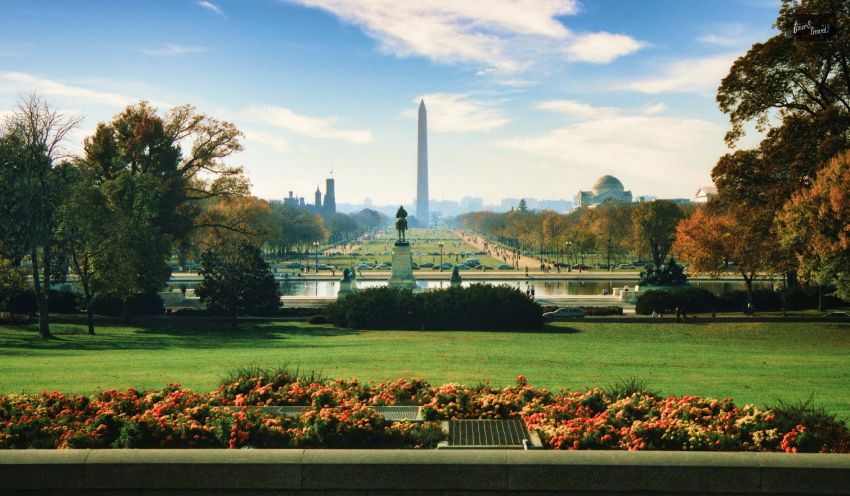
White House And The Washington Monument are two most important landmarks of Washington DC and the entire USA.

You can take an elevator to the top of the Washington Tower and explore a 360-degree view of the surroundings.

On the other hand, the White House, the official residence of the US President, has been standing proud in Washington DC for two hundred years as the symbol of American life and people. 

2. Visiting The Lincoln Memorial

Visiting The Lincoln Memorial

Address: 2 Lincoln Memorial Cir NW, Washington

Contact No: +1 202-426-6841

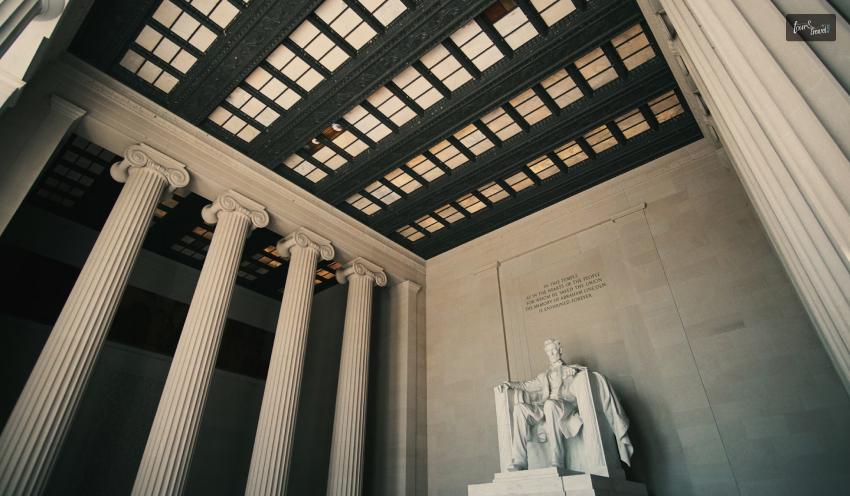
Are you traveling to Washington, DC, on a budget? You must visit the Lincoln Memorial in Washington, DC. It is free and an ideal location for history buffs or people who want to know about Lincoln.

Read here the famous speeches of Lincoln, including the Gettysburg Address and the Second Inaugural Address. Moreover,  the 38 Doric columns and other architectural features of the Memorial will grab your attention instantly.

When Lincoln Passed away, the 36 Doric columns of the Memorial used to stand for 36 states of the USA. 

3. Sightseeing At The National Mall 

Sightseeing At The National Mall

Contact Number: +1 202-426-6841

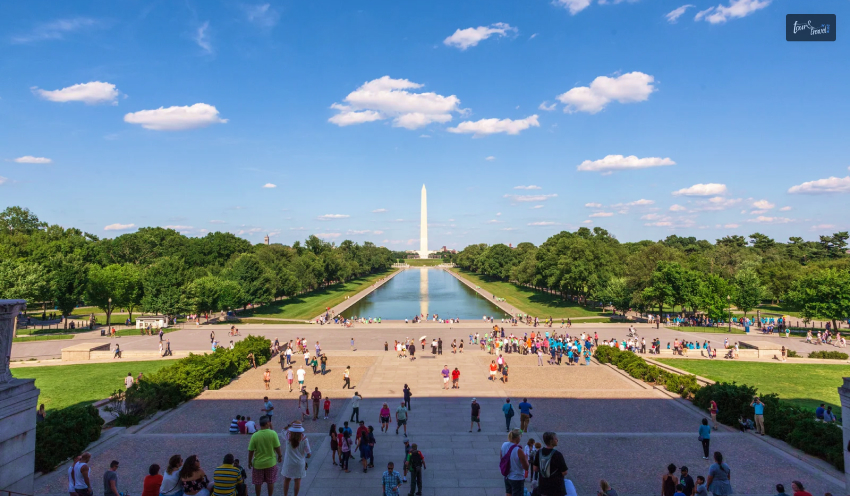
A visit to the grassy expanse of The National Mall is one of the most exciting and fun things to do at The National Mall. If you want to take an end-to-end walk on this grassy expanse, you have to walk for 2.5 miles.

As you take a walk through the National Mall, you will find many important monuments of the USA. You must especially stop by the World War II Memorial and Washington Monument.

Moreover, the National Mall is one of the most popular places to visit in Washington, DC to visit with your family. 

4. Plan A Visit To Vietnam Veterans And Korean War Veterans Memorials

Plan A Visit To Vietnam Veterans And Korean War Veterans Memorials

Address:  900 Ohio Dr. SW, Washington

Contact Number: +1 202-426-6841

Though not a fun visit, the Vietnam Veterans And Korean War Veterans Memorials are one of the best places to see in Washington, DC. “The Memorial” or “The Wall” is a popular place for dark tourism in the USA.

Today, when you visit the memorial, you will find the names of over 58000 Americans emblazoned on it. All of them lost their lives in the Vietnam War. You will also find metal sculptures of soldiers in action. 

Further, the Korean War Veterans Memorials pay tribute to 1.5 million Americans who were impacted by the “Forgotten War.” 

Tour And Travel Note:

The Korean War Memorial does not have adequate signage. So, if you already don’t know about the Korean War or for a young traveler, it may be difficult to grasp the significance fully.
Appreciate The Brilliance Of The National Gallery Of Art

Address: Sixth Street And Constitution Avenue Northwest 

If you are looking for free things to do in Washington DC, you must consider a visit to the National Gallery of Art. And all the Da Vinci Code fans, this is the museum where you will find the only oil painting of Leonardo Da Vinci on a permanent display in the USA.

Further, the West Building houses some of the older works of the museum. You will find here works of the likes of Claude Monet and Sandro Botticelli. So, the happening museum in the heart of America assembles the best of Europe art scenario. 

6. Catch A Performance At The John Kennedy Center For The Performing Arts 

Catch A Performance At The John Kennedy Center For The Performing Arts

Address: 2700 F St NW, Washington, DC

Contact No: +1 800-444-1324

The John Kennedy Center For The Performing Arts is home to the National Symphony Orchestra. Throughout the year, you will find many performances, musicals and other shows taking place at the John Kennedy Center For The Performing Arts. 

Even if you don’t want to spend on the tickets (which usually come at a higher price), you can watch the free performances on the Millennium Stage. 

Furthermore, don’t forget to explore the “Art and Ideals: President John F. Kennedy” here. It has been there at the John Kennedy Center For The Performing Arts since 2022, and it ensures an immersive experience. 

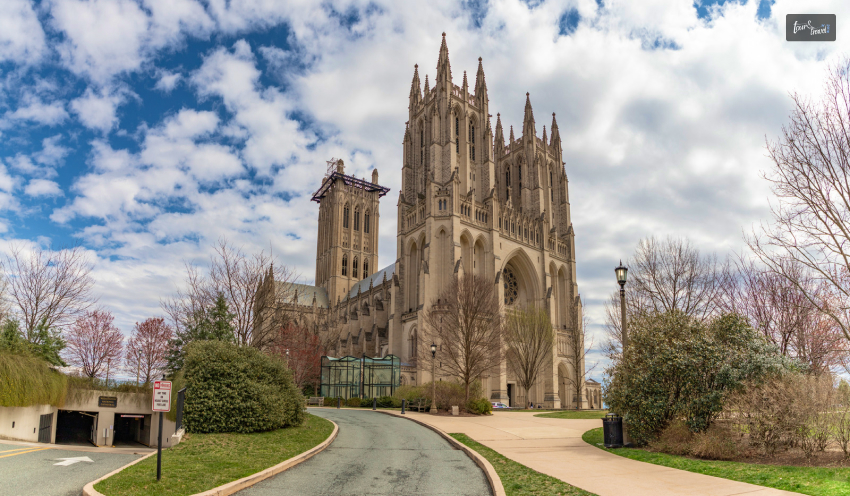
7. Spend Some Moments Of Introspection At Washington National Cathedral

Spend Some Moments Of Introspection At Washington National Cathedra

Address: 3101 Wisconsin Avenue NW, Washington

Contact Number: +1 202-537-6200

The Washington National Cathedral is the sixth-largest cathedral in the world. The construction of this massive church started in 1907 and was completed in 1990. The cathedral is so huge that you will need at least 2 hours to explore it.

Furthermore, the gothic architecture will grab your attention instantly. Also, as you step inside the church, you will find intricate works of stained glass. 

Moreover, the surrounding garden is a nice place to take a stroll and spend your leisure. 

Also read

Share on Social Media

Meet Sibashree Bhattacharya, a travel enthusiast who has a decade-long experience in transcending virtual barriers with her words! Her deep love for travel is apparent from her travel escapades to the mountain, often taking her readers on a journey, her words acting as Portkey! Fun fact: Sibashree loves to dive deep into the history of the places she is about to visit, making her travels even more wholesome. If you were wondering how her articles are not short of time travel, this answers it!

Leave a Reply

Your email address will not be published. Required fields are marked *

title-img Related

READ MORE what to see in Lassen Volcanic National Park

What To See In Lassen Volcanic National Park: Into The Darkness Of Subway Cave After A Fire Breakout

BY  Sibashree Oct 15, 2024

Lassen Volcanic National Park was in the news recently as the fourth-largest wildfire in California exploded out of proportion. The park's officials evacuated staff from the Mineral community near the park headquarters.  120 people were there in the community, and the evacuation started as the fire started moving east to the park on the evening of 26th July 2024.  However, the park fire reached near containment in August, and on 17th August 2024, the park was partially reopened. You may wonder what to see in Lassen Volcanic National Park after the fire breakout and if there is any significant destruction in the places of interest in the park.  Let me assure you. The park officials stated that the fire had never entered the park. However, there are still risks in the southern part of the park and Mill Creek and Mineral communities.  Nevertheless, the reopened parts of the park are out of danger despite some lingering smoke. So, Subway Cave, located around 15 miles north of Lassen Volcanic National Park, is one of the safest sites to explore after the fire incident. Make a rush, as it remains open from late April to November.  What To See In Lassen Volcanic National Park After The Fire Breakout (Exploring The Underground World Of A Lava Tube) Yes, you got me right! I am talking about the Subway Cave. The self-guided trail inside the cave is ⅓ miles long and 30 feet wide, and complete darkness is inside. So, many call it the journey into darkness. The USDA Forest Service maintains the cave, which remains open from dawn to dusk.  Before I get into more stories and facts about the cave, I want to present the basics you need to know briefly.  Important Facts About Subway Cave, Lassen National Volcanic Park Location in the ParkA 2-minute walk from the parking lot near the junction of “Highway 89” and “Highway 44” in Old StationAmenitiesPicnic TablesDrinking WaterParkingToiletsInterpretive SiteFeesFree (You can make donations)Pet-FriendlyNoParking FacilitiesMany Parking Facilities, Buses and RVsOutdoor ActivitiesInterpretative Sessions, Caving, PicnicTemperature Inside the Cave46 Degree Farrenheit Nearby AttractionShasta County (Mountainous landscape and multiple picnic locations)Nearby Trails*Cinder Crone TrailSpattercone Nature TrailButte Lake to Widow Lake, etc.  *Many hiking trails in the park, such as the Lassen Peak, Bumpass Hell, and Mill Creek Falls, are closed as the park has partially reopened after the recent wildfire explosion. So, check with the park authorities before you plan a hike on the park trails.  This Is How The Subway Cave Was Formed  If you are a keen learner of geology and want to know what to see in Lassen Volcanic National Park, you cannot avoid the lure of Subway Cave. I have already shared an account on the geothermal wonders of the park. This cave is an example of how lava flowed around 20000 years ago and created some magic.  A major lava explosion happened all across the Hat Creek area around 20000 years ago. The top layer of the lava flow became cold and hard in contact with air. Thus, a hard cap was formed. However, there was a continuous flow of molten lava below this cap.  The molten lava drained out Over time, but a hollow tube structure remained there. As you hike this trail, you will find traces of the more recent lava flows.  Route To The Subway Cave Is Bumpass Hell on your list of what to see in Lassen Volcanic National Park? Are you planning a trip to the park soon? Then, you will be disappointed as the Bumpass Hell trek route is closed after the park has reopened following the recent fire breakout.  Further, as Bumpass Hell is closed, you must take the Warner Valley Area route to  Devils Kitchen, which is the cave's opening. Devils Kitchen is a 4.4-mile hike from the Warner Valley Area (camping here is closed for 2024).   Accessing The Subway Cave  You have to climb down metal stairs as you access the Subway Cave. You will get down into a wide opening in the ground. The ground surface has a leveled floor. However, you must be careful as you get off the stair flight.  Further, you must wear sturdy footwear to avoid injuries and difficulties where the floor gets rough.  Fortunately, the ceiling and walls are quite smooth, minimizing the hiking difficulty level while hiking. Also, there is complete darkness inside the cave. So, you will need a flashlight to make it to the end.  The weather inside is a little cold, even in summer. So you will need a light jacket. Moreover, don’t forget to read and follow the interpretative signs through the trail to better understand the place.  The best thing about this park is that it’s 30 feet wide. So, even with complete darkness inside, you never feel suffocated.  What To See In Lassen Volcanic National Park Subway Cave It is not a long walk inside the Subway Cave. However, this short walk is enough to make it feature on the list of what to see in Lassen Volcanic Park.  Lucifer’s Cul-de-sac (An Attraction Very Few Knows About) Have you listened to Satan’s Cul-de-sac from Gangland Buries Its Own? The first thing that may amaze you inside the cave is Lucifer’s Cul-de-sac. There is a split as you enter the cave, and you are to turn to the right if you want to continue the trail. However, you will notice a big room if you are adventurous enough to turn left, when I tell you about Lucifer’s Cul-de-sac, The ceiling height starts from 6 feet and gets higher up to 15 feet. The most amazing thing about this room inside the cave is the rock formation on the ceiling and walls. It’s gothic and justified its name.  https://open.spotify.com/track/6cq37W4OXjEdQRLh2IVQOF As The Hike Advances  The ceiling height will vary as you continue the trek, and there are small boulder-like rock formations in many places. So, be careful with your steps and do not stumble upon them. Also, because of these rock formations, you must not wear an open-toe shoe while walking through the cave.  Nevertheless, the ceiling formation is fascinating, and in one section, it looks like stoned rainfall or water ripples. The section is called the Lavacicle Lane. Molten lava dripped off through the cracks in the ceiling cave, and there were formations of “drip pendants” or “lavacicles.”  Further, as you plan to take the exit, you notice all the colors in the lava rock formation, including green, blue, white, and brown lines.  Getting Out Of The Subway Cave As you approach the end of the cave, you will find a metal stair flight similar to the one at the entrance. From the top of the exit staircase, you can hike through an on-ground trail to the west or north to find the parking lot.  However, I prefer to take another walk through the cave and get back to the entrance. It will be so much fun to explore this unique geological formation again.  Things To Remember Before Getting Into The Darkness Of The Subway Cave  Subway Cave is a hidden gem if you consider what to see in Lassen Volcanic National Park. However, once you take the hike and read the interpretative signs, you will learn why it is geologically unique.  Nevertheless, you must be careful about certain things to ensure complete safety throughout the hike.  You will find rattlesnakes in the trail, and you have to be respectful to these reptiles. You must not make any move to catch or hurt them. Moreover, you cannot go off trails or litter inside the cave.  No food, water, or firelighting is allowed inside the cave. There are picnic areas nearby for you to catch refreshments. Wish you a safe, easy, and fun-filled experience inside the Subway Cave!  Also read Why Include Whale Watching In Your LA Itinerary. Traveling On A Budget: Tips For Affordable Adventures. From Cocktails To Kickflips: Must-Try Activities In San Diego.

READ MORE Travel Blog With A Headless CMS

How To Start A Travel Blog With A Headless CMS? Smart Tips

BY  Sibashree Aug 14, 2025

❌ Generic Templates ❌  Limited Flexibility across Channels These are the first two things you must leave behind if you are planning to start a travel blog these days. Also, it is now just about building a travel blog site, but the idea is to start a travel blog with a headless CMS and ensure optimized conversions.  Digital content endeavors to convert all the time, but it's not enough to generate persuasive copy and aesthetically pleasing designs and leave it at that.  The ability to adjust, pivot quickly based on real-time metrics and a strategic push at the appropriate time during the buyer's journey is essential.  Unfortunately, many CMS options fail to provide such access and flexibility. Yet a headless CMS allows for an in-depth design and the structure needed to create, experiment, and execute content intended for conversion across any channel.  With content modeling, an API-first approach, and componentized efforts, teams can design conversion-ready, optimized digital experiences along the way. Here’s more on how we can have absolute control over content presentation and structure with the help of a headless CMS.  Why Conversion Is Limited In Legacy Content Systems? Legacy content management systems (CMS) keep content tied to pages and templates. When a marketer wants to change the components or layouts, the messaging, or the targeting, it's usually an impossibility.  Furthermore, content displays differently on mobile than on desktop, and unless developers are on board to change visibility across devices or channels, brands suffer from amateur impressions.  In addition, when small changes need to be made, it requires dev time, which prevents even the simplest, most timely turnaround pieces.  Thus, when marketers have access to A/B performance, they're not always set up to make real-time changes.  Storyblok Labs product experiments showcase innovative ways to solve these limitations with faster, more flexible testing and deployment.  This is why conversion-centric content should be done as quickly and easily as possible. A headless CMS removes the content from the delivery, which allows for a more responsive experience. Why Do I Need To Start A Travel Blog With A Headless CMS? Creating content that converts doesn't just rely on what you say. It relies upon how quickly and efficiently you say it, test, and iterate at every stage of the funnel.  When people can change their minds with the click of a button and attention spans are shorter by the second, the ability to create and implement content with flexibility has never been more paramount.  You can no longer just create a landing page and wait to see what happens; in modern marketing, everything must be iterated, personalized, and perfected in real time based upon performance feedback. 1. A Headless CMS Offers Flexibility And Helps Find A Brand Voice A headless CMS provides the flexibility, framework, and agility necessary to produce content that advocates for high conversion rates with the ability to pivot just as quickly as your audience.  Because a headless CMS separates content from the front-end experience, both developers and marketers can create content modules that are highly reusable, each module attributable to a unique conversion goal.  You can test them with rapid A/B measurement campaigns. Moreover, you can easily assemble and deploy across all channels and touchpoints without upsetting the entire campaign plan.  The production time is cut down dramatically. Content silos are avoided. Compliance with best practices for brand voice and user experience becomes easier to control. 2. Ensures Better Assessment And Lesser Time For Content Production With personalization opportunities driven by behavioral data, along with the flexibility of integration with A/B testing tools, analytics platforms, and CRM/log-in pathways, every piece of content becomes interactive, trackable, and meaningful.  Marketing teams can assess specific measurements for particular audience segments, remove underperforming pieces mid-campaign, and apply successful formulas across global regions and departments, all from the same source of management. The possibilities for immediacy are especially valuable when it comes to major product debuts, last-minute holiday campaigns, or intense customer acquisition strategies.  Here, time is of the essence, and success depends on a failsafe launch at a selected moment. Being able to iterate while content goes live makes all the difference.  Within a headless CMS, your content machine is reactive to your business needs instead of responding to the consumer, continually changing, substantiating findings, and improving conversion attempts at every step. Start A Travel Blog With A Headless CMS For Future Convenience And Use (Understanding The Technicalities) A headless CMS supports the notion of creating content as fragments that can be used anywhere down the line.  For example, rather than creating hero banners and testimonial boxes, these "components" can instead be tagged as hero banners, testimonials, recommended features, CTAs, or pricing tables.  In addition, you can tag them with metadata for conversion. Mention who it's for, what part of the funnel it serves, and what campaign it connects to.  So, it is like a content marketing workshop. You can assemble the essentials to meet the campaign goal by selecting the existing high-performing blocks of content.  It creates a greater quality assurance requirement and allows those approving the messaging to not deviate from branding and past successful communications. The Benefits Of Using A Headless CMS For Travel Blogs When you start a travel blog with a headless CMS, the blogs become your brand with personalized storytelling and picking the right sub-niche for your travel blog.  Thus, you build stronger connections with a specific reader base and establish authority quickly.  1. Personalization Drives Conversion Rates Up By Using A Headless CMS For A Travel Blog Personalization drives conversion rates. Several different content pieces can be served based on segmentation data; thus, the same API connection can read geographic location or read CRM segmentation and serve a different headline, picture, or limited-time offer.  Thus, a new user can get one offer and a CTA. Furthemore, returning users can have a different CTA with various testimonials of their previous experience and industry.  A headless CMS makes it easier to let technology help people at scale with personalization that quickly drives them down the conversion path. 2. Iterating Quickly And Testing With Single Changes There is no final design for conversion; it requires ongoing updates based on what works and what doesn't. A headless CMS encourages rapid, modular designing that enables A/B testing or multivariate testing at the element level.  Marketers can test one element, a CTA, for example, or a product highlight against another product highlight to see which does better, and they can monitor the effectiveness in real time.  Because these elements are modular and exist apart from the overall design, they can be changed and adjusted without redoing an entire page or complicated experience. This allows marketers to pivot quickly and often for stronger conversions. 3. Minimizing Redundant Channel-Specific Content Paths to conversion don't just exist on websites; they exist in email, mobile apps, landing pages, digital ads, and more.  A headless CMS allows for omnichannel delivery from one content source, meaning that the message can be the same.  But because the content does not align with the design, you can update copy, style, and tone for each channel.  This decreases redundancy, increases content operations efficiency, and ensures that channel-specific experiences are as effective as possible to drive conversion. 4. Using An Integration With Analytics Sites To Drive Decisions About Content Elements No effort to optimize large content pieces can be realized without performance data. A headless CMS integrates with analytics sites, A/B testing sites, and customer data platforms (CDP) to give teams the power to see how well certain pieces of content work on what channels and for what demographic segmentation.  Marketers can discover which elements of an ad drive clicks, what subheadings have reduced bounce rates, and which CTAs have the highest conversion rates.  These results go back to the elements in question. Thus, it allows you to make quick changes and more intelligent repurposing of popular content pieces. Over time, this creates a scalable library of assets that have all been assessed for conversion. 5. Easing Inter-Departmental Collaboration Content that converts doesn't just involve the marketing team. It requires insight from design, content, development, and analytics teams as well.  A headless CMS makes this process seamless by offering a content repository, in different formats, that allows everyone to contribute.  The marketers can make their piece of the puzzle for the larger campaign using out-of-the-box components. The designers can ensure a universal, consistent design across teams. Moreover, the developers can build a connected and responsive front end, no matter the content.  Distributing these efforts allows for faster flows, greater accuracy, and increased experimental, data-backed content conversion opportunities. 6. Enabling Scaling Efforts Without Quality Decrease As brands grow, so do their campaigns and content needs for varied audiences. A headless CMS is intrinsically scalable, as it allows teams to replicate and pivot effective tactics from product to product and market to market.  Campaigns following templates and modules known to convert can easily be used for similar campaigns. Thus, the production time will go down.  Scaling is integral to maintaining conversion successes as it requires more resources over time. 7. Forming Credibility Through Speed And Consistency Speedy and effortless digital experiences create conversions. If a webpage takes too long to load or has a disjointed layout riddled with out-of-date resources, potential converters become frustrated and return to search for better resources elsewhere.  With a headless CMS, developers have complete control over the front end to create fast-loading and mobile-responsive efforts that increase usability.  Moreover, with a modular approach, updates can occur in seconds, without concern for disconnected segments because of out-of-date information.  This speed and consistent access create credibility, one of the most important factors for turning interested parties into buyers. 8. Conversion-Focused Funnels By Modular Assembly Of Content Perhaps the greatest advantage of a headless CMS is the unlimited ability to create hyper-targeted, conversion-based funnels based on specific buyer personas or short-term campaign needs.  When using a standard CMS, the content will be in silos based on general form templates.  Be it lead acquisition or collateral acquisition, email nurturing and lists, product nurturing or reactivation.  If creating a funnel exists within the marketer's realm, they can specify how the content flow should happen to generate the desired response.  For example, if a product funnel is for converting cold traffic, you will use short-form copy, images, or overview videos to create the awareness phase.  The interest phase can be a compilation of FAQ blocks, testimonials, or lists of advantages.  The action phase can use product comparisons, expiring discounts, or friction-free lead gen forms, all pulled from pre-vetted and modular content blocks. With a headless CMS, teams can be thoughtful and experimental about the funnels available to them.  One funnel does not have to serve all journeys. Instead, thoughtful, conversion-oriented experiences can be the way out based on user reaction and intent indicators. These are like live customizations, not just one-time executions.  With a headless CMS, content is a powerful tool for business growth and not an afterthought. 9. Decreased Time To Launch For Conversion-Focused Efforts One of the best ways to convert audiences is to get to them while the getting is good. When interests are hot, campaigns need to be ready, or else audiences will lose their interest or even worse convert to a competitor.  With a headless CMS, the time to launch dramatically goes down. Instead of creating something brand new and untested, teams can utilize a library of components.  There's no need to reinvent the wheel every single time, and efforts can launch in minutes as long as the used assets come from pre-existing libraries. 10. Ability To Change Without Starting Over When Consumer Actions Change Consumer action changes what works today might not work tomorrow. Thus, one of the greatest benefits of utilizing a headless CMS is the ability to change without starting over.  Marketers can relaunch certain components that didn't perform well. They can even try something similar with different layouts without having to start brand new.  Components can be: Geo-targeted Segmented Dependent upon what occurs without disrupting other campaigns in process.  This means conversion efforts are fluid and malleable, able to change without compromising the overall experience of the brand. Start A Travel Blog With A Headless CMS And See How Conversion Starts With Flexible Infrastructure Do you have a brand wanting to boost performance, grow fast, and provide the best omnichannel experience? The degree of flexibility that comes with a headless CMS is not only a technical advantage; it's a strategic necessity.  It allows teams to operate faster, test more effectively, convert more easily, and build a content operation. The overall process is reflective of the dynamic, data-driven nature of our digital world. When conversion reigns supreme, this is how to create effective digital experiences.

READ MORE what to pack for camping

What To Pack For A Week-Long Camping Trip?

BY  Sibashree Jan 9, 2026

“Ma, will you miss me when I am in the camps and do the trek with my school friends?” I was a little surprised, as every mom would be when a 13-year-old these days says such emotional things! I looked at her and then straight at her rucksack and the entire mess around it.  She read my expression. “Ma, I don’t know what to pack for camping. My class teacher gave us a list, and I cannot find it now.”  There is no point in telling her that she cannot be so careless with plans of camping and trekking in her mind. I texted her teacher, and until she replied, I got started with the basics.  My years of experience as a traveler and travel writer were waiting for this day of glory 😉! Nevertheless, sometimes, being a mother, you have to do things! Now, a whole week of camping may sound amazing. Fresh air, quiet mornings, that forest smell that sticks to everything. Honestly, it’s like hitting the reset button.  Then reality hits. Seven days out there? What even do you bring?You want fun, not a trip full of “why did I leave that jacket at home?” or “Ugh, no power again.”So, what actually goes in your bag without turning it into a nightmare? Here are some practical tips you need to remember.  What To Pack For Camping? Things You Need To Carry For Survival  You need a good shelter, food that keeps you going, and some survival tools when you are camping. Also, keep some books or board games handy to spend those long evenings.  1. Shelter And Sleep Essentials A solid tent is a must. Rain, wind, surprise weather! Your tent better not bail on you. Some tents are super roomy but heavy. Your shoulders will hate you. If you’re hiking far, weight matters more than space. I had to spend 30 minutes convincing my daughter about the same and had to make her talk to my fellow trekker, whom she, of course, trusts more than me.  Now, it’s about the sleeping bag. You have to consider the weather and ground conditions when choosing the right one.  If the bag is made of synthetic material, it will help to manage wet weather. But, if you are choosing down bags, those will be more compressible and occupy less space. However, they will not forgive your wet conditions.  In addition, you have to carry sleeping pads. Sleep on the hard ground for two nights, and you will know why you need these sleeping pads.  Pillow, of course, is an optional choice. I made a makeshift pillow for my daughter by stuffing some old clothes in a bag.  2. Clothing Weather changes, and fast. Cold mornings. Hot afternoons. Damp nights. You get the idea. Layers that dry fast are your friend. Zip-off pants, light jackets, even a swimsuit, sound extra, I know. But there’s that one river crossing or random rainstorm where you’ll be glad.  Socks. Bring more than you think. Blisters ruin everything. Shoes matter too. Waterproof boots, yes. But a lighter pair for hanging around camp? Total win. 3. Food Freeze-dried meals are easy, lightweight, and actually tasty now. Add fruit, nuts, or some cooked food if you can. I got my daughter a few protein bars. I made those at home using roasted sesame seeds, jaggery, and peanuts.  Also, I stir-fried some boiled peas with salt and some seasoning and packed them in a zipper pack. These munchies really help, and unlike the ready-made snacks in the market, these don’t make you feel dehydrated.  Breakfast? Keep it simple. Oatmeal, instant coffee, snack bars. Done.Lunch is usually wraps, nut butter, and trail mix. Easy stuff. Dinner? One-pot meals are gold. Less cleanup, less stress. Don’t forget small things like oil, salt, or spices. Little stuff goes a long way.  Water. Super important. Bring enough. Know where to refill. Hiking miles because you misjudged water? No thanks. 4. Tools And Survival Necessities A good knife, a small multi-tool, and a headlamp with extra batteries, and you’ll use these more than half the fancy gadgets you’re tempted by. Use maps or a compass, even if you have a phone. Phones die. Signal disappears. Happens. Electronics? Charging them can be annoying. Also, portable energy solutions can save your sanity at some point, trust me. 5. Safety Essentials Hygiene. Boring, but trust me! After day three, you’ll care. Soap, toothbrush, wipes, quick-dry towel. Sunscreen and bug spray! You cannot forget any of these essentials.  You will also need a first-aid kit. Blisters, cuts, aches, all of it! Bring painkillers, allergy meds, and anything personal you need.  Hand sanitizer is more than just about germs. Whistle or signal tool? It might feel extra, but one day you’ll be glad you have it. 6. Entertainment Evenings can be long. Books, journals, cards, and small instruments will help you to pass the time. Hammocks are great for some chill instantly. You will love staring at trees or taking photos when relaxing in a hammock.  Also, you can bring camp chairs. Sometimes, comfort wins over minimalism, especially when you are doing back-to-back camping or trekking.  What To Pack For Camping? Don’t Feel Overwhelmed  Are you camping for the first time, and that too for seven days? The packing procedure can get a bit overwhelming.  It’s okay. However, making a list of essentials or talking to your tour operator will help. Also, you can reach out to anyone in your camping group. When traveling solo, you can post your queries in Facebook travel groups.  Still, it all starts with getting a good quality tent, and you have to learn how to set it up properly. Also, carry layered clothes as temperatures change and weather conditions can change dramatically after sundown, or there can be sudden turns of events.  Furthermore, you will need lights and lightsaver tools, and you must keep your meals simple.  Moreover, you have to keep some things or aspects spontaneous while camping. Everything will not happen as planned. You may have to collect a dead branch and wash it to use in cooking if you have left the spatula at home! Things like these will happen, and how you overcome them is the real fun of camping. Read Also: Must-See Attractions While Camping on Everest Base Camp Trek Why Solo Adventures Can Be Life-Changing The Best Great Barrier Island Camping Tips