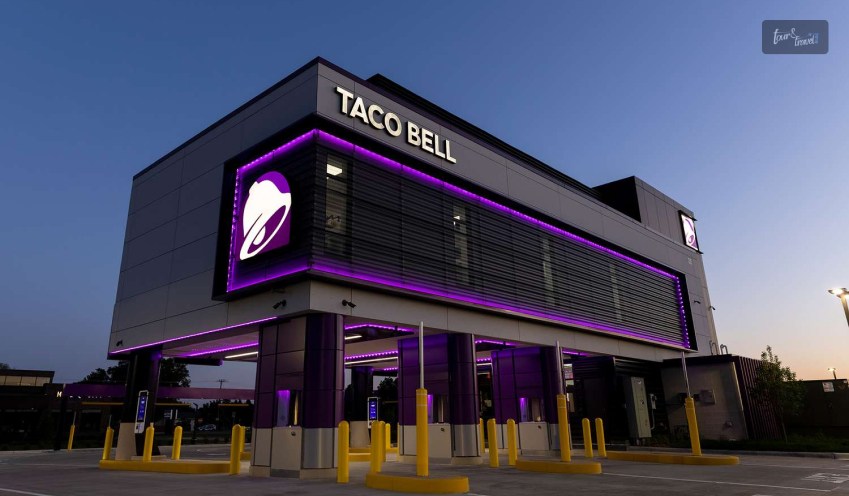





Taco Bell Breakfast Hours: When Does Taco Bell Serve Breakfast?

Aug 8, 2023

Last Updated on: Nov 15, 2024

Travel Blog

Taco Bell needs no introduction, especially with its classic breakfast burritos! Want to know more about Taco Bell breakfast hours? Read the article regarding the best part of the breakfast hours at Taco Bell.

Taco Bell is one of the most successful fast-food restaurants in the US, a fusion restaurant with a mix of American and Mexican food items. The food manufacturer, of course, specializes in Tacos. However, you can also order burritos, quesadillas, and crunch wraps that are delicious.

Taco Bell has created its unique place in the restaurant business, especially because it offers a change in the same old Burger and Sandwiches options for Breakfast. You have to be aware of the timings because, like other restaurants offering Breakfast, Taco Bell has a specific time after which you might not get served.

Taco Bell Breakfast Hours: When Does Taco Bell Serve Breakfast?

The company was founded around the 1960s, but it has been very recently that Taco Bell launched its breakfast menu. It was in 2014 that they launched Breakfast especially to compete against McDonald’s’ which has been dominating the breakfast scene for quite a long time.

Taco Bell has kept some items available from the breakfast hours long after it ends. Some things are, however, only allowed in some outlets during the Taco Bell breakfast menu hours. Sometimes, if you search for “Taco Bell breakfast hours near me” on Google, you will find options to visit and others.

However, due to being short-staffed, you might only find some of the food items on the breakfast menu at Taco Bell. The brand has recently become a billion-dollar chain and has successfully maintained fast-food standards during breakfast hours.

What Is Taco Bell?

What Is Taco Bell?

Taco Bell is one of the most underrated fast-food restaurant chains in the US for both dining and takeout. When all restaurants across the globe are claiming that they use and offer organic food, Taco Bell went ahead and focused on creating nostalgia through junk food.

The brand has successfully incorporated breakfast menus and hours. However, they did not need to complete McDonalds’ breakfast policies. Breakfast Crunch-wrap and Breakfast burritos are some of the top favorite items available in the Taco Bell breakfast hours.

What Are Taco Bell Breakfast Hours?

What Are Taco Bell Breakfast Hours?

The Taco Bell breakfast hours start from 7 a.m. to 10 a.m. So you can fix your Breakfast within this time. According to the official website of Taco Bell, www.tacobell.com informs that only some stores have all the food and drinks options available.

At times, there is a limited number of staff at the store. However, the quality of the food and the taste is quite satisfactory. The official site also has store locators that help you locate the stores. If you want to know, taco bell lunch hours, visit their official site.

If you plan to visit Taco Bell on Saturdays or Sundays, call ahead at the restaurant and confirm your breakfast orders. Taco Bell is heavily packed on weekends, especially because of the delicious breakfasts.

If you are asking, what time does Taco Bell stop serving breakfast? The answer is after 11, you probably won’t be served breakfast items.

What Are The Taco Bell Items For Breakfast?

The classic breakfast burrito is one of the most in-demand items for Breakfast by Taco Bell. Egg stuffed in crunch wraps accompanies the traditional burrito. The Taco Bell website claims,” We make bold food you can’t get anyplace else.” This claim is quite righteous as Taco Bell does experiment with their food.

Food

Taco Bell food

The Breakfast burrito, also known as the Cheesy Burrito, is stuffed with cheese, steak, potatoes, sausage, and eggs based on your choice. It is one of the best things about Taco Bell. The bacon put inside the burrito is smoked, adding to the food party in your mouth.

The Breakfast Crunch-wrap Comes with a hash brown, bacon, eggs, and cheese are put inside the wrapped tortilla, and creamy jalapeno sauce is added. Trust me, and it tastes as good as it sounds. It acts very appropriate to have a low-level breakfast sandwich. There is a distinct crunch in this item with caramelized potatoes.

Breakfast Quesalupa is a flour tortilla filled with melty pepper jack, then fried with nacho cheese. The item is wrapped around scrambled eggs, extra-spicy potato nuggets, and bacon bits.

A.M. Grilled Taco tastes quite close to Quesalupa. However, they could be more flavorful. There are also fluffy eggs that accompany the item. This item can be ordered with bacon or with sausage. Remember to hit Taco Bell before 11 a.m. to try the best of the items during breakfast hours.

Drinks

Taco Bell drinks

Taco Bell breakfast hours have four types of drinks: Mountain Dew Baja Blast Freeze, Tropicana Orange juice, Mountain Dew Kickstart Orange Citrus, and premium Hot Coffee. Coffee is one of the most important parts of Breakfast, especially for those unable to function without caffeine.

The Tropicana orange juice is mostly a supplement that accompanies a combo meal. It is refreshing and often mixed with soda, giving the drink a refreshing taste. Mountain Dew Kickstart Orange Citrus consists of less Fanta or juice; instead, there is too much sugar.

One thing that is advantageous about the drink is Vitamin C. However, the flavor could be more noteworthy. The drink “Baja Blast” does sound like a mix of alcohol and juice; however, it is more of a sweet, sugary, and creamy combination. The ideal food item you can have with this drink is the Quesalupa.

Most of the drinks offered by Taco Bell in their breakfast menu have soda. It is a bold move, especially when people across the world are trying to become more health-conscious and limit their sugar intake. They are, however, a nice addition to Taco Bell breakfast hours.

Reviews

According to TripAdvisor, Taco Bell has been rated 3 out of 5 especially based on its breakfast items and their reviews. The brand has a benefit, especially on Sundays when Chick-Fil-A is closed. Hence, the brand has successfully grabbed the attention of breakfast customers with its classic burritos and crunch wraps apart from tacos.

The reviews have been satisfactory in terms of the services and the quality of the food. However, there have been issues with some items with dry meat or tasteless sauce. The drive-thru service of Taco Bell across the US has been quite efficient.

Conclusion

Please read the article to learn more about the Taco Bell breakfast hours and the items you can order.

Let us know in the comment below about your favorite breakfast item that you order when you visit Taco Bell.

Read Also:

Share on Social Media

Sagnika Sinha is a content writer who is passionate about writing travel vlogs, entertainment and celebrity articles and literature-based pieces. With a 4 years experience in teaching, she loves reading books. A procrastinator by nature, she loves travelling, listening to music, planting and gardening.

Leave a Reply

Your email address will not be published. Required fields are marked *

title-img Related

READ MORE certified translation for immigration

How to Navigate Visa & Immigration Translations When You Travel Long-Term

BY  Sibashree Oct 22, 2025

Traveling long-term or moving abroad is an exciting adventure. But if your journey involves applying for visas, immigration permits, or residency, you’ll quickly discover that documentation is one of the biggest hurdles. Among the most common requirements are visa translation services and certified translations of official documents. Whether you are applying for a student visa, a work permit, or reuniting with family overseas, presenting correctly translated documents can make or break your application. Authorities want clear, accurate, and verifiable translations, and failure to meet those standards often leads to delays or even rejections. This guide explains everything you need to know about visa and immigration translations, including why certified translations are required, what documents usually need them, and how to avoid common pitfalls. Why Visa Translations Are Crucial When immigration officers review applications, they must be able to fully understand the documents submitted. If your birth certificate, marriage certificate, or bank statement is in another language, it must be translated into the official language of the country you are applying to. Here’s why translations are necessary: Legal clarity: Immigration authorities cannot legally assess documents they don’t understand. Consistency: Translations ensure names, dates, and details match across multiple documents. Compliance: Many countries require certified translations to confirm that translations are accurate and complete. What Are Certified Translations? Not all translations are equal. For immigration, you need certified translations. A certified translation includes: A complete and accurate translation of the original document. A signed statement (certificate of accuracy) by the translator or translation company confirming the translation’s authenticity. Contact details of the translation provider for verification if needed. This certificate is essential because it gives immigration officers confidence that the document is trustworthy and complies with their standards. Common Documents That Require Certified Translations When applying for visas or residency, the following documents are often requested in translated form: Birth certificates Marriage or divorce certificates Death certificates (in cases of dependent claims) Passports and ID cards Academic transcripts and diplomas Criminal record checks Medical records or vaccination certificates Bank statements and tax returns Employment contracts or pay slips Before submitting your application, carefully check the requirements of the immigration authority you are applying to, as these can vary from country to country. How to Handle Certified Translations for Visa Applications If you are preparing for long-term travel or immigration, here’s how to approach the translation process: Identify which documents need translationReview the checklist from the immigration authority. Don’t assume that only personal records need translation—financial and academic documents are often required too. Choose a reliable certified translation providerLook for services that are recognized by immigration authorities. For example, Certling offers certified translations accepted by USCIS in the U.S., UKVI in the U.K., and IRCC in Canada. Submit clear scans or photos of your documentsHigh-quality images prevent errors and ensure no details are missed in the translation. Check turnaround timesVisa applications often have strict deadlines. Many providers offer standard and express delivery options—use express services if you’re short on time. Verify acceptance guaranteesEnsure the translation provider guarantees compliance with immigration authorities. This gives peace of mind if your documents are ever questioned. Innovation in Visa Translations The translation industry has modernized significantly. Companies like Certling use AI and machine vision to analyze documents, count words instantly, and provide transparent per-word pricing. This innovation eliminates overcharging based on per-page pricing models and saves applicants money. Other key advancements include: Selective translation tools: Applicants can exclude unnecessary sections of documents, such as logos or stamps, lowering costs. Secure file handling: Professional providers use encrypted systems and delete documents after delivery to protect your data. Instant online quotes: You can now upload documents and get pricing within seconds, reducing guesswork. FAQs on Visa & Certified Translations Do I always need certified translations for visa applications? Yes, in most cases. Immigration authorities typically require certified translations of any foreign-language documents. Can I translate the documents myself? No. Self-translations are not accepted. Certified translations must come from a qualified translator or company. How long does the process take? This depends on the provider. Standard services may take a few days, while express options can deliver certified translations within 24 hours. What happens if immigration rejects my translation? Reputable companies often provide corrections or revisions free of charge if authorities raise issues. Certling, for example, includes this as part of their service. Are digital copies of certified translations acceptable? Yes, many immigration authorities now accept certified translations in PDF form. However, some may request physical copies, so confirm with your local authority. The Role of Certified Translation Services in Your Journey Securing a visa or residency isn’t just about submitting the right forms. It’s about presenting complete, clear, and compliant documentation. Certified translation is a critical part of this process. Providers like Certling specialize in certified translations for immigration and visa applications. They offer word-based pricing, fast turnaround, and acceptance guarantees for major authorities across the U.S., U.K., Ireland, and Canada. While your focus may be on the exciting parts of long-term travel, taking care of certified translations early ensures your journey won’t be delayed by paperwork. Final Thoughts Navigating the visa application process can be overwhelming, especially when traveling long-term or moving abroad. Certified translations are not just a formality—they are a legal requirement that can significantly affect your success. By understanding what certified translations are, why they matter, and how to get them done correctly, you’ll be better prepared to handle the complexities of immigration paperwork..

READ MORE Travel Blog With A Headless CMS

How To Start A Travel Blog With A Headless CMS? Smart Tips

BY  Sibashree Aug 14, 2025

❌ Generic Templates ❌  Limited Flexibility across Channels These are the first two things you must leave behind if you are planning to start a travel blog these days. Also, it is now just about building a travel blog site, but the idea is to start a travel blog with a headless CMS and ensure optimized conversions.  Digital content endeavors to convert all the time, but it's not enough to generate persuasive copy and aesthetically pleasing designs and leave it at that.  The ability to adjust, pivot quickly based on real-time metrics and a strategic push at the appropriate time during the buyer's journey is essential.  Unfortunately, many CMS options fail to provide such access and flexibility. Yet a headless CMS allows for an in-depth design and the structure needed to create, experiment, and execute content intended for conversion across any channel.  With content modeling, an API-first approach, and componentized efforts, teams can design conversion-ready, optimized digital experiences along the way. Here’s more on how we can have absolute control over content presentation and structure with the help of a headless CMS.  Why Conversion Is Limited In Legacy Content Systems? Legacy content management systems (CMS) keep content tied to pages and templates. When a marketer wants to change the components or layouts, the messaging, or the targeting, it's usually an impossibility.  Furthermore, content displays differently on mobile than on desktop, and unless developers are on board to change visibility across devices or channels, brands suffer from amateur impressions.  In addition, when small changes need to be made, it requires dev time, which prevents even the simplest, most timely turnaround pieces.  Thus, when marketers have access to A/B performance, they're not always set up to make real-time changes.  Storyblok Labs product experiments showcase innovative ways to solve these limitations with faster, more flexible testing and deployment.  This is why conversion-centric content should be done as quickly and easily as possible. A headless CMS removes the content from the delivery, which allows for a more responsive experience. Why Do I Need To Start A Travel Blog With A Headless CMS? Creating content that converts doesn't just rely on what you say. It relies upon how quickly and efficiently you say it, test, and iterate at every stage of the funnel.  When people can change their minds with the click of a button and attention spans are shorter by the second, the ability to create and implement content with flexibility has never been more paramount.  You can no longer just create a landing page and wait to see what happens; in modern marketing, everything must be iterated, personalized, and perfected in real time based upon performance feedback. 1. A Headless CMS Offers Flexibility And Helps Find A Brand Voice A headless CMS provides the flexibility, framework, and agility necessary to produce content that advocates for high conversion rates with the ability to pivot just as quickly as your audience.  Because a headless CMS separates content from the front-end experience, both developers and marketers can create content modules that are highly reusable, each module attributable to a unique conversion goal.  You can test them with rapid A/B measurement campaigns. Moreover, you can easily assemble and deploy across all channels and touchpoints without upsetting the entire campaign plan.  The production time is cut down dramatically. Content silos are avoided. Compliance with best practices for brand voice and user experience becomes easier to control. 2. Ensures Better Assessment And Lesser Time For Content Production With personalization opportunities driven by behavioral data, along with the flexibility of integration with A/B testing tools, analytics platforms, and CRM/log-in pathways, every piece of content becomes interactive, trackable, and meaningful.  Marketing teams can assess specific measurements for particular audience segments, remove underperforming pieces mid-campaign, and apply successful formulas across global regions and departments, all from the same source of management. The possibilities for immediacy are especially valuable when it comes to major product debuts, last-minute holiday campaigns, or intense customer acquisition strategies.  Here, time is of the essence, and success depends on a failsafe launch at a selected moment. Being able to iterate while content goes live makes all the difference.  Within a headless CMS, your content machine is reactive to your business needs instead of responding to the consumer, continually changing, substantiating findings, and improving conversion attempts at every step. Start A Travel Blog With A Headless CMS For Future Convenience And Use (Understanding The Technicalities) A headless CMS supports the notion of creating content as fragments that can be used anywhere down the line.  For example, rather than creating hero banners and testimonial boxes, these "components" can instead be tagged as hero banners, testimonials, recommended features, CTAs, or pricing tables.  In addition, you can tag them with metadata for conversion. Mention who it's for, what part of the funnel it serves, and what campaign it connects to.  So, it is like a content marketing workshop. You can assemble the essentials to meet the campaign goal by selecting the existing high-performing blocks of content.  It creates a greater quality assurance requirement and allows those approving the messaging to not deviate from branding and past successful communications. The Benefits Of Using A Headless CMS For Travel Blogs When you start a travel blog with a headless CMS, the blogs become your brand with personalized storytelling and picking the right sub-niche for your travel blog.  Thus, you build stronger connections with a specific reader base and establish authority quickly.  1. Personalization Drives Conversion Rates Up By Using A Headless CMS For A Travel Blog Personalization drives conversion rates. Several different content pieces can be served based on segmentation data; thus, the same API connection can read geographic location or read CRM segmentation and serve a different headline, picture, or limited-time offer.  Thus, a new user can get one offer and a CTA. Furthemore, returning users can have a different CTA with various testimonials of their previous experience and industry.  A headless CMS makes it easier to let technology help people at scale with personalization that quickly drives them down the conversion path. 2. Iterating Quickly And Testing With Single Changes There is no final design for conversion; it requires ongoing updates based on what works and what doesn't. A headless CMS encourages rapid, modular designing that enables A/B testing or multivariate testing at the element level.  Marketers can test one element, a CTA, for example, or a product highlight against another product highlight to see which does better, and they can monitor the effectiveness in real time.  Because these elements are modular and exist apart from the overall design, they can be changed and adjusted without redoing an entire page or complicated experience. This allows marketers to pivot quickly and often for stronger conversions. 3. Minimizing Redundant Channel-Specific Content Paths to conversion don't just exist on websites; they exist in email, mobile apps, landing pages, digital ads, and more.  A headless CMS allows for omnichannel delivery from one content source, meaning that the message can be the same.  But because the content does not align with the design, you can update copy, style, and tone for each channel.  This decreases redundancy, increases content operations efficiency, and ensures that channel-specific experiences are as effective as possible to drive conversion. 4. Using An Integration With Analytics Sites To Drive Decisions About Content Elements No effort to optimize large content pieces can be realized without performance data. A headless CMS integrates with analytics sites, A/B testing sites, and customer data platforms (CDP) to give teams the power to see how well certain pieces of content work on what channels and for what demographic segmentation.  Marketers can discover which elements of an ad drive clicks, what subheadings have reduced bounce rates, and which CTAs have the highest conversion rates.  These results go back to the elements in question. Thus, it allows you to make quick changes and more intelligent repurposing of popular content pieces. Over time, this creates a scalable library of assets that have all been assessed for conversion. 5. Easing Inter-Departmental Collaboration Content that converts doesn't just involve the marketing team. It requires insight from design, content, development, and analytics teams as well.  A headless CMS makes this process seamless by offering a content repository, in different formats, that allows everyone to contribute.  The marketers can make their piece of the puzzle for the larger campaign using out-of-the-box components. The designers can ensure a universal, consistent design across teams. Moreover, the developers can build a connected and responsive front end, no matter the content.  Distributing these efforts allows for faster flows, greater accuracy, and increased experimental, data-backed content conversion opportunities. 6. Enabling Scaling Efforts Without Quality Decrease As brands grow, so do their campaigns and content needs for varied audiences. A headless CMS is intrinsically scalable, as it allows teams to replicate and pivot effective tactics from product to product and market to market.  Campaigns following templates and modules known to convert can easily be used for similar campaigns. Thus, the production time will go down.  Scaling is integral to maintaining conversion successes as it requires more resources over time. 7. Forming Credibility Through Speed And Consistency Speedy and effortless digital experiences create conversions. If a webpage takes too long to load or has a disjointed layout riddled with out-of-date resources, potential converters become frustrated and return to search for better resources elsewhere.  With a headless CMS, developers have complete control over the front end to create fast-loading and mobile-responsive efforts that increase usability.  Moreover, with a modular approach, updates can occur in seconds, without concern for disconnected segments because of out-of-date information.  This speed and consistent access create credibility, one of the most important factors for turning interested parties into buyers. 8. Conversion-Focused Funnels By Modular Assembly Of Content Perhaps the greatest advantage of a headless CMS is the unlimited ability to create hyper-targeted, conversion-based funnels based on specific buyer personas or short-term campaign needs.  When using a standard CMS, the content will be in silos based on general form templates.  Be it lead acquisition or collateral acquisition, email nurturing and lists, product nurturing or reactivation.  If creating a funnel exists within the marketer's realm, they can specify how the content flow should happen to generate the desired response.  For example, if a product funnel is for converting cold traffic, you will use short-form copy, images, or overview videos to create the awareness phase.  The interest phase can be a compilation of FAQ blocks, testimonials, or lists of advantages.  The action phase can use product comparisons, expiring discounts, or friction-free lead gen forms, all pulled from pre-vetted and modular content blocks. With a headless CMS, teams can be thoughtful and experimental about the funnels available to them.  One funnel does not have to serve all journeys. Instead, thoughtful, conversion-oriented experiences can be the way out based on user reaction and intent indicators. These are like live customizations, not just one-time executions.  With a headless CMS, content is a powerful tool for business growth and not an afterthought. 9. Decreased Time To Launch For Conversion-Focused Efforts One of the best ways to convert audiences is to get to them while the getting is good. When interests are hot, campaigns need to be ready, or else audiences will lose their interest or even worse convert to a competitor.  With a headless CMS, the time to launch dramatically goes down. Instead of creating something brand new and untested, teams can utilize a library of components.  There's no need to reinvent the wheel every single time, and efforts can launch in minutes as long as the used assets come from pre-existing libraries. 10. Ability To Change Without Starting Over When Consumer Actions Change Consumer action changes what works today might not work tomorrow. Thus, one of the greatest benefits of utilizing a headless CMS is the ability to change without starting over.  Marketers can relaunch certain components that didn't perform well. They can even try something similar with different layouts without having to start brand new.  Components can be: Geo-targeted Segmented Dependent upon what occurs without disrupting other campaigns in process.  This means conversion efforts are fluid and malleable, able to change without compromising the overall experience of the brand. Start A Travel Blog With A Headless CMS And See How Conversion Starts With Flexible Infrastructure Do you have a brand wanting to boost performance, grow fast, and provide the best omnichannel experience? The degree of flexibility that comes with a headless CMS is not only a technical advantage; it's a strategic necessity.  It allows teams to operate faster, test more effectively, convert more easily, and build a content operation. The overall process is reflective of the dynamic, data-driven nature of our digital world. When conversion reigns supreme, this is how to create effective digital experiences.

READ MORE airtran

AirTran: A Nostalgic Journey Through Time And Sky

BY  Abdul Aziz Nov 22, 2023

AirTran Airways was an American low-cost airline originally headquartered in Orlando, Florida, which ceased operations after the acquisition of Southwest Airlines. AirTran Airways was founded in 1993 as Conquest Sun Airlines under the management of two small airlines, Destination Sun Airways and Conquest Airlines. They operated mainly Boeing 717s and 737s. It shuttled flyers around the US Midwest as well as the East Coast and stayed in business for 21 years. Why does it not operate anymore? What happened to AirTran? AirTran: A Brief Look Back Conquest Airlines' co-founder Victor Rivas was one of the founders of Conquest Sun. Who bought AirTran? AirTran Corporation in 1994 purchased the airline and renamed it AirTran Airways. It later exited from AirTran Corporation's new holding company, Airways Corporation. The holding company of ValuJet acquired the airline, and the holding company of Airways Corporation in 1997, which owned the struggling ValuJet Airlines. ValuJet's holding company became AirTran Holdings and merged with ValuJet Airlines' AirTran Airways. ValuJet Airlines, in turn, became "AirTran Airlines" before merging with AirTran Airways. Southwest Airlines acquired AirTran Airways and parent company AirTran Holdings on May 2, 2011. It gradually integrated them with AirTran's last revenue flight on December 28, 2014. It operates nearly 700 flights per day, primarily in the eastern and midwestern United States, with its main hub at Hartsfield-Jackson Atlanta International Airport serving nearly 200 daily departures. AirTran's fleet consisted of Boeing 717-200 aircraft, of which it was the largest operator in the world, and Boeing 737-700 aircraft. AirTran History Image Source: community.southwest.com This was founded in 1993 as Conquest Sun Airlines and began operations as an original Boeing 737-200 that flew to and from Orlando. AirTran Airways was founded by the management of both Destination Sun Airways and regional carrier Conquest Airlines. The founding of Destination Sun Airways is unclear. Which claims Destination Sun was founded in 1991 by former Northeastern International Airways CEO Guy Lindley and that the airline was formerly known as SunExpress and was based in Fort Lauderdale, Florida. Another source claimed that Destination Sun was founded in 1990 by a group of pilots, presumably former Eastern Air Lines pilots, as AirTran management later claimed that it was founded by former Eastern Air Lines employees. Rafael Rivas and Victor Rivas founded Conquest Airlines in April 1988 in Texas. Victor Rivas, one of the founders of Conquest Airlines, was also closely involved in the founding of Conquest Sun Airlines. In 1994, AirTran Corporation, the holding company of Minneapolis-based Mesaba Airlines, acquired Northwest Airlink from Northwest Airlines, with hubs in Minneapolis and Detroit. After the purchase, the airline changed from Conquest Sun Airlines to AirTran Airways to match the name of the holding company. The airline moved its headquarters to Orlando and grew to 11 Boeing 737s serving 24 cities in the eastern as well as midwestern United States, offering low-cost vacations to Orlando. In 1995, AirTran Corporation established a new subsidiary called Airways Corporation and placed it under the new subsidiary; AirTran Corporation then separated from the new Airways Corporation, becoming an independent holding that also owns AirTran Airways. After the separation, AirTran Corporation became Mesaba Holdings after its subsidiary Mesaba Airlines separated from AirTran Airways. AirTran Corporation/Mesaba Holdings then became MAIR Holdings, which liquidated in July 2012. Latest Developments On September 27, 2010, Southwest Airlines announced the acquisition of AirTran Airways and parent company AirTran Holdings for a total of $1.4 billion. The deal gave Southwest a significant presence in many AirTran hubs, including Atlanta (at the time the largest US city without Southwest service) and Milwaukee, as well as expanded service to Baltimore and Orlando. With the acquisition, Southwest added international service to several leisure destinations such as Cancún, Montego Bay, and Aruba. Southwest integrated AirTran's Boeing 737-700 series fleet with the Southwest Airlines brand and design, after which the Boeing 717 fleet leased out to Delta Air Lines beginning in mid-2013. The airlines planned to complete as well as close the deal within two years, with the two airlines operating as separate carriers in the interim. The deal closed on 2 May 2011, and the airline won a license on 1 March  2012. The full integration of all employee groups between the two airlines ended in 2015. On February 14, 2013, Southwest Airlines announced that it had entered into a codeshare agreement with AirTran. They took the first step on January 25, 2013, launching joint routes in five markets. As of February 25, 2013, Southwest continued to launch joint routes with 39 other markets. By April 2013, joint routes were to be available in all Southwest and AirTran cities (both domestic and international). Southwest announced that the integration would end on December 28, 2014, when AirTran Airways Flight 1 will be the airline's last Boeing 717-200 (N717JL) departure from Atlanta Hartsfield-Jackson International Airport (ATL) to Tampa International Airport ( TPA). The flight used the call sign "Critter" as a nod to ValuJet. This route and flight number was Valujet's first flight. Read More: Top 10 Airports In The USA: Navigating Excellence In Air Travel Reviews From AirTran Flyers Image Source: chestertravels.com AirTran has had quite a journey in all these years, and so did its passengers. Here are some of the reviews from people after their flight with AirTrans. 1st Review "I was given business class, which I was quite thrilled about. The seats are much bigger in this area and I felt comfortable the entire time. The arm rests were actually big enough for me to use as well. I was given a drink and a snack as soon as I boarded the plane - I did not have to wait like the people in coach. I was also offered more drinks and snacks throughout the flight. It is a small perk, but it is nice. It was also nice to be the first off the plane. I did not have to wait for everyone to debark first." - SharonSaver 2nd Review "I loved it! The employees were great and they even offered several snacks while in the air. It was my very first time riding on a plane, so I was kind of nervous. The Flight Attendant made me feel so relaxed and offered to sit with me if I needed it, then. Although I declined the offer, it was nice to know that an airline would go the extra mile for their customers. Every time I travel, I go with AirTran because they know how to treat you." - mrsyoung1983 3rd Review "I fly to Orlando and LAX several times a year and the only company I'll fly with is Airtrain! They are one of the few airlines that offer convenient non-stop flights from my local airport. And their flights are always more than $100 cheaper than the other airlines. Their flights are ALWAYS on time. Knock on wood here, but I've never had a delayed Airtran flight. In fact, most of my flights arrive at their destinations a few minutes early. The staff is outstanding!" - jenniandtonyx1 Wrapping Up AirTran Airways was a beloved low-cost airline that operated for 21 years. It offered affordable flights across the US Midwest as well as the East Coast. The airline's history overlaps with that of several other airlines, including Conquest Airlines, ValuJet Airlines, and Southwest Airlines. They ultimately acquired AirTran Airways and its parent company, AirTran Holdings. AirTran Airways is no longer in operation. But its legacy lives on in the hearts of many who fondly remember their journeys on this iconic airline. If you have thoughts to share or questions to ask, then please leave a comment below. We would love to hear from you! Read Also: This Is My Experience With Eva Air! This Is What I Felt About Aruba Airlines! Flair Airlines Review: This Is How I Feel About Flair Airlines! Fly In Style: Your Ultimate Guide To Lot Polish Airlines Adventures!