Art, Architecture, and Azaleas: 24 Things to do in Savannah in 2024!
BY
Ankita
Mar 23, 2024
Imagine strolling through streets lined with historic sites, exploring contemporary art in bustling galleries, unwinding in grandiose homes turned into museums, or sipping coffee in quaint little nooks. Yes, THAT is Savannah for you!
A city where the old and the new blend together, like honey, Savannah's diverse offerings range from serene gardens to lively beaches. It ensures every moment is packed with potential. But what are the things to do in Savannah, GA?
If that is something that you are interested to know, I have you covered! In this guide, I'll talk about Savannah's top experiences and provide tips to craft your ideal visit. Ready to explore? Keep on reading this blog till the end to learn it all…
Best Things to Do in Savannah, GA in 2024!
Savannah is a hidden gem. There is absolutely no doubt about that! But did you know that the gorgeous city of Savannah is rated number 18 TripAdvisors’ Travelers’ Choice Best of the Best Destinations for 2024?
Yes, you heard that right!
That is exactly why it would be best if you booked a flight to explore the southern charms of the city. Here is a list of the things to do in Savannah, GA that should be on your bucket list:
1. Explore the Historic District
The first thing to do in Savannah, GA is to take a walk through the old parts of the town. It's a big area with lots of old and important buildings. You'll see different styles of houses and other cool things like squares with fountains and statues.
There are some really special places you should see. For instance, the big church called the Cathedral of St. John the Baptist, the Mercer Williams House, and a few others that are famous in Savannah.
You can check out this area by walking, riding a bike, taking a trolley, going on a carriage ride, or joining a tour group. It's a fun way to see a lot of neat stuff in Savannah.
2. Stroll Along River Street
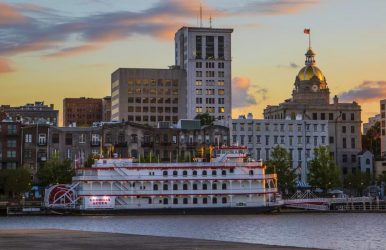
Secondly, another must-do thing in Savannah, GA is to stroll along River Street, which is a lively waterfront promenade that runs along the Savannah River.
This place is lined with some of the most popular restaurants, bars, galleries, and hotels that serve the convenience of the visitors. But that is not all! One of the best things about River Street is that this place offers a great view of the river and the ships that pass by.
So, when you are here, you can enjoy the local cuisine, browse the souvenirs, watch the street performers, and listen to live music.
Additionally, you can join the festivities during the annual events, such as the St. Patrick's Day Parade, the Fourth of July Fireworks, the Oktoberfest, and the Christmas on the River. River Street is also a great place to catch a ferry, a riverboat cruise, or a dolphin tour.
3. Visit the Forsyth Park
Thirdly, if you are looking for a relaxing and scenic spot in Savannah, you should visit Forsyth Park. It is a 30-acre park in the heart of the city.
Famous for its iconic fountain that literally takes the breath away, this park was built in the year 1818. Visitors often gawk at the beauty of this place which resembles the one in Paris's Place de la Concorde.
And you know what? There is everything that you need at a park here! It features a fragrant garden, a children's playground, a lovely cafe, and a visitor center. Additionally, a large open space for picnics, sports, and concerts also adds to the charm of the park!
Pro Tip: Do not forget to enjoy the seasonal events that take place in the park. These include the Forsyth Farmers' Market, the Savannah Jazz Festival, the Picnic in the Park, and the Sidewalk Arts Festival.
4. Discover the Bonaventure Cemetery
Fourthly, the bucket list for the best things to do in Savannah, GA will be incomplete without this one! If you are interested in the history and culture of Savannah, you should visit the Bonaventure Cemetery, which is a 100-acre cemetery that dates back to 1846.
Bonaventure Cemetery is not only a resting place for some of Savannah's most notable citizens, such as Johnny Mercer, Conrad Aiken, and James Oglethorpe.
Additionally, it is also a stunning example of the Southern Gothic style, with its elaborate tombstones, statues, mausoleums, and live oaks draped with Spanish moss.
You can also find the grave of the "Bird Girl." It is the statue featured on the cover of the best-selling book "Midnight in the Garden of Good and Evil". You can explore the cemetery on your own or join a guided tour.
5. Enjoy the City Market
Are you looking for a fun and lively place in Savannah? Well then, you should enjoy the City Market. It is a four-block area that has been the social and commercial hub of the city since the 18th century.
The City Market is home to a variety of shops, restaurants, bars, galleries, and studios, where you can find everything from local arts and crafts to gourmet food and drinks.
You can also enjoy the entertainment options, such as live music, comedy shows, karaoke, and trivia nights.
The City Market is also a great place to experience Savannah's nightlife, as it hosts many events and parties throughout the year.
6. See the Wormsloe Historic Site
Suppose you want to see one of Savannah's most picturesque and historic sites. In that case, you should see the Wormsloe Historic Site, which is a former plantation that was established by Noble Jones, one of the first settlers of Georgia, in 1736.
The Wormsloe Historic Site is famous for its majestic avenue of live oaks that leads to the ruins of the colonial estate, where you can see the tabby walls, the museum, and the interpretive center.
You can also explore the site's nature trails, marshes, gardens, and wildlife. You can visit the Wormsloe Historic Site on your own or join a guided tour.
7. Experience the Savannah College of Art and Design
Are you a fan of art and design? In that case, you should experience the Savannah College of Art and Design, a prestigious private university that has campuses in Atlanta, Savannah, Hong Kong, and France.
The Savannah College of Art and Design (SCAD) offers more than 40 majors and 60 minors in various fields of art and design. For instance, some of them are architecture, animation, fashion, film, graphic design, photography, and more.
You can visit the SCAD Museum of Art, which showcases the works of contemporary artists and designers and the historic buildings that house the SCAD classrooms, studios, and galleries.
You can also attend some of SCAD's events and exhibitions, such as the SCAD Fashion Show, the SCAD Film Festival, the SCAD Sidewalk Arts Festival, and the SCAD deFINE ART.
8. Relax at the Tybee Island
If you are looking for a beach getaway near Savannah, you should relax at Tybee Island, a barrier island located 18 miles east of the city.
Tybee Island is a popular destination for locals and tourists alike. They come to enjoy the sandy beaches, the warm waters, the fresh seafood, and the laid-back atmosphere.
You can also visit some of the attractions on the island. For example, firstly visit the Tybee Island Light Station, which is the oldest and tallest lighthouse in Georgia. Secondly, you can visit the Tybee Island Marine Science Center. It offers educational programs and exhibits on the local marine life. Lastly, you Fort Pulaski National Monument, which is a historic fort that played a role in the Civil War.
You can also join some of the activities on the island, such as kayaking, fishing, surfing, biking, or birdwatching.
9. Learn at the Georgia State Railroad Museum
Are you someone who is interested in things related to history? Well, in that case, you should learn at the Georgia State Railroad Museum. Visiting this is one of the best things to do in Savannah, GA.
This a museum located in the former Central of Georgia Railway Savannah Shops and Terminal Facilities.
The Georgia State Railroad Museum is a National Historic Landmark and features the country's largest collection of historic railroad buildings.
You can see the locomotives, cars, and machinery that were used in the railroad industry, as well as the workshops, offices, and roundhouses that were part of the complex.
Additionally, you can ride on a steam or diesel train, operate a handcar, and learn about the railroad's history and operation. You can visit the museum on your own or join a guided tour.
10. Taste the Savannah Bee Company
Suppose you are a fan of honey and bees. In that case, you should taste the Savannah Bee Company, which was founded in 2002 by Ted Dennard, a passionate beekeeper and honey enthusiast.
The Savannah Bee Company produces and sells various honey products, such as raw honey, whipped honey, honeycomb, honey straws, honey butter, honey soap, honey lotion, and more.
You can visit the Savannah Bee Company stores in various locations in Savannah, sample the flavors and varieties of honey, and learn about the benefits and uses of honey and beeswax.
You can also join some of the events and workshops the Savannah Bee Company offers, such as the Honey Tasting Experience, the Mead Tasting, the Bee Garden Tour, and the Beekeeping 101.
11. Watch the Savannah Theatre
If you are looking for a cultural and entertaining experience in Savannah, you should watch the Savannah Theatre. It is a historic theater that was built in 1818 and is the oldest continually operating theater in the United States.
The Savannah Theatre has hosted many famous performers and shows, such as Oscar Wilde, W.C. Fields, Lillian Russell, and Porgy and Bess. Today, the Savannah Theatre presents a variety of musicals, comedies, and concerts, featuring talented local and regional artists.
12. Shop at the Broughton Street
Looking for a shopping spree in Savannah? You should shop at Broughton Street, the city's main shopping street. Broughton Street offers a mix of local and national stores, ranging from clothing and accessories to books and antiques.
You can find some of the most popular brands, such as Banana Republic, J.Crew, Urban Outfitters, and Anthropologie, as well as some of the most unique boutiques, such as The Paris Market, The Salt Table, and The Book Lady.
Moreover, you can also enjoy the cafes, bakeries, and restaurants that line the street, such as Leopold's Ice Cream, The Coffee Fox, and The Collins Quarter.
13. Tour the Old Fort Jackson
You should tour Old Fort Jackson if you want to learn more about Savannah's military history. It is a historic fort that was built in 1808. At present, it is the oldest brick fort standing in Georgia.
The Old Fort Jackson played a role in the War that took place in 1812, the Civil War, and the Spanish-American War, and was used as a training camp during World War I and World War II.
You can see the original cannons, barracks, and ramparts, as well as the exhibits and displays that tell the story of the fort and its soldiers.
You can also watch the daily cannon firings, musket demonstrations, and flag ceremonies and participate in some of the fort's interactive programs and events.
14. Admire the Telfair Museums
If you love art and culture, you should admire the Telfair Museums, a trio of museums that showcase the art and history of Savannah and the world.
The Telfair Museums consist of the Telfair Academy, the Jepson Center, and the Owens-Thomas House and Slave Quarters.
The Telfair Academy is a historic mansion that was built in 1819 and houses a collection of 19th and 20th-century American and European art, including works by Mary Cassatt, Frederic Remington, and Childe Hassam.
The Jepson Center is a modern building that opened in 2006 and features a collection of contemporary art, including works by Jasper Johns, Roy Lichtenstein, and Nick Cave.
The Owens-Thomas House and Slave Quarters is a historic house built in 1816 and a National Historic Landmark showing the life and legacy of the wealthy and enslaved residents of the antebellum South. You can visit the Telfair Museums on your own or join a guided tour.
15. Eat at the Mrs. Wilkes Dining Room
Wondering where to get the best taste of the Southern cuisine in Savannah? Look no further and head over to the Mrs. Wilkes Dining Room. This one is a legendary restaurant that was established in 1943 by Sema Wilkes. She is a self-taught cook who opened her boarding house to the public.
The Mrs. Wilkes Dining Room serves a family-style lunch Monday to Friday, featuring dishes like fried chicken, meatloaf, macaroni and cheese, collard greens, black-eyed peas, cornbread, and peach cobbler.
You can enjoy the food in a communal setting, sharing a table with other guests and passing the platters around. Additionally, you can also buy some of the cookbooks and souvenirs that the restaurant sells.
16. Visit the Pin Point Heritage Museum
The next thing to do in Savannah, GA is to visit the famous Pin PointMuseum. If you want to discover the African American culture and heritage of Savannah, this is the place to go. It is a museum that is in the previous A.S. Varn & Son Oyster and Crab Factory.
The museum tells the story of the Pin Point community. The community was founded in the 1890s by the descendants of freed slaves who worked in the seafood industry.
You can see the original equipment, tools, and products used in the factory. You can also see the exhibits and videos depicting the history and traditions of the Pin Point people.
Additionally, you can meet some of the former workers and residents of the community, who share their stories and experiences.
17. Play at the Savannah Children's Museum
Traveling with kids in Savannah? Then you should play at the Savannah Children's Museum. It is a museum that is located in the old Central of Georgia Railway Carpentry Shop.
The Savannah Children's Museum is a fun and educational place for children of all ages. It features a variety of indoor and outdoor exhibits and activities that encourage learning through play.
You can explore the sensory garden, the maze, the climbing wall, the art studio, the water play area, the reading nook, and more.
You can also join some of the programs and events the museum offers. For instance the Toddler Tuesdays, the STEAM Studio, the Story Time, and the Family Free Day.
18. Drink at the Moon River Brewing Company
If you are looking for a refreshing and exciting drink in Savannah, you should drink at the Moon River Brewing Company, a brewery and pub founded in 1999 and located in the former City Hotel.
The Moon River Brewing Company produces and serves a variety of beers, such as the Swamp Fox IPA, the Slow-vannah Pale Ale, the Dixie Kristal Tripel, and the Captain's Porter.
You can also enjoy the food menu, which features pub classics, such as burgers, wings, nachos, and salads.
Furthermore, you can experience the haunted side of the brewery. It is said to be one of the most haunted places in Savannah. You can join some of the ghost tours and investigations that the brewery hosts.
19. Walk the Savannah Botanical Gardens
If you are looking for a peaceful and beautiful place in Savannah, walk the Savannah Botanical Gardens, a 10-acre garden on the city's south side.
The Savannah Botanical Gardens are open to the public and free of charge. It features a variety of plants, flowers, trees, and shrubs, as well as a pond, a waterfall, a rose garden, a camellia garden, a fern garden, a herb garden, and a children's garden.
You can also see the Reinhard House. It is a historic farmhouse built in 1840 and furnished with antiques and artifacts. You can visit the Savannah Botanical Gardens on your own or join a guided tour.
20. Learn at the Savannah History Museum
In case you want to learn about the history of Savannah, you should visit the Savannah History Museum, which is located in the former Central of Georgia Railway Passenger Station.
The Savannah History Museum showcases the history of Savannah from 1733 to the present, featuring more than 10,000 artifacts, documents, and photographs, as well as interactive exhibits and displays.
You can see some of the highlights of the museum, such as the bench from the movie "Forrest Gump," the uniform of General Casimir Pulaski, the carriage of Girl Scouts founder Juliette Gordon Low, and the locomotive of the Central of Georgia Railway.
Additionally, you can watch the film "Savannah the Survivor." It narrates the story of the city's survival through wars, fires, and epidemics.
21. Eat at the Olde Pink House
If you tried to search for the best things to do in Savannah, GA on the internet, you must have come across blogs talking about the Olde Pink House!
When it comes to a fine dining experience in Savannah, you should eat at the Olde Pink House, a historic mansion built in 1771 and one of the city's oldest buildings.
The Olde Pink House is a restaurant that serves traditional Southern cuisine with a contemporary twist. It features dishes such as shrimp and grits, fried green tomatoes, she crab soup, and pecan-crusted chicken.
You can enjoy the food in one of the elegant and cozy dining rooms, each with its own fireplace and decor, or in the basement tavern, which offers live music and a casual atmosphere.
You can also enjoy the haunted side of the restaurant. Most people say that the ghost of James Habersham Jr., the house's original owner, haunts the house.
22. Relax at the Skidaway Island State Park
If you are looking for a natural and serene place near Savannah, relax at the Skidaway Island State Park, which is on Skidaway Island 15 miles southeast of the city.
Skidaway Island State Park is a 588-acre park that offers a variety of outdoor activities and amenities, such as hiking, biking, camping, picnicking, fishing, boating, and birdwatching.
You can also visit some of the attractions in the park, such as the observation tower, the interpretive center, the nature trails, and the boardwalk.
You can also see some wildlife inhabiting the park, such as deer, raccoons, alligators, and egrets.
23. Eat at the Zunzi's
There is no trip that is complete without good food! If you want to have a unique and delicious food experience in Savannah, you should eat at the Zunzi's.
It is a restaurant that was founded in 2005 by Johnny and Gabriella Debeer, who are from South Africa and Switzerland, respectively.
Zunzi's serves a fusion of African, European, and American cuisine, featuring sandwiches, salads, wraps, bowls, and sauces made with fresh and local ingredients. You can try some of the signature dishes, such as the Godfather, the Conquistador, the Oliver's Lunch, and the Shit Yeah Sauce.
You can also enjoy the friendly and casual atmosphere of the restaurant, which has a takeout window and a rooftop deck.
24. Drink at the Ghost Coast Distillery
And lastly, if you are looking for a craft and spirits experience in Savannah, you must drink at the Ghost Coast Distillery. It is a distillery that was founded in 2017 and is the first distillery in Savannah since the prohibition.
The Ghost Coast Distillery produces and sells a variety of spirits, such as vodka, whiskey, bourbon, gin, and rum, using local and organic ingredients.
You can visit the distillery and take a tour of the production facility, where you can see the stills, the barrels, and the bottling line, as well as learn about the history and process of distilling.
You can also visit the tasting room, where you can sample the spirits and cocktails, as well as buy some of the merchandise and souvenirs.
Wrapping it Up!
I hope that you found this blog on all the things to do in Savannah helpful. This is a wonderful city that offers a lot of attractions and activities for all kinds of travelers.
Whether you are into history, culture, nature, or entertainment, you will find something to suit your taste and interest in Savannah.
So, what are you waiting for? Book your trip to Savannah today and discover the charm and beauty of this Southern gem. And yes, don’t forget to have a great time!
Read Also:
15 Unexpected Things To See And Do In Georgia
A Guide To National Parks In Georgia – Latest Guide
7 Fun Things To Do In The Great Smoky Mountains National Park






 Related