










Hardee’s Breakfast Hours: When Do They Serve Breakfast?

Aug 24, 2023

Last Updated on: Jul 22, 2026

Travel Blog

Want to know about Hardee’s breakfast hours? Don’t you love the trademark burger of Hardee’s that you can order during breakfast hours? Let’s learn about breakfast items and the time to fulfill your morning cravings.

In this article, I will inform you about the latest breakfast hours at Hardee’s and discuss the most ordered and popular food items on the breakfast menu. After all, how can we not address the beauty and the deliciousness of Monster Biscuit?

Breakfast is one of the most important parts of our daily nutritional value and health. The Hardees have claimed that all their food items are of high quality and rich in nutritional value. I will be evaluating the food and their servings accordingly in this article.

Hardee’s Breakfast Hours: When Do They Serve Breakfast?

When Do They Serve Breakfast

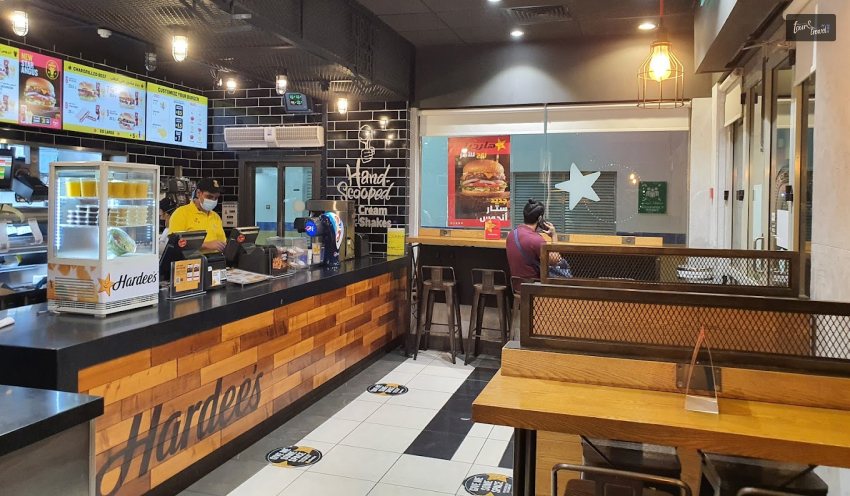
The atmosphere of Hardee’s has a retro vibe with retro-style graphics, and bright and solid colors. You will automatically feel hearty when you enter the Hardee’s as the distinctive atmosphere is fun and relaxing and offers delicious food. So want to know Hardee’s breakfast hours?

You will also find it interesting that the brand tries to advertise its food in sarcastic and funny ads. The advertisements and digital promotions by the brand often have beautiful women in small clothes promoting the food items.

It is a way of grabbing eyeballs, but Hardee’s is trending! Their breakfast items are some of the best, so we will review their demand and how long you can order from the breakfast menus.

Hardee’s

Hardee's

An American fast-food restaurant chain, Hardee’s was founded in 1960 by Wilber Hardee. The primary location in which Hardee’s operates is in the southeastern United States. However, the restaurant chain also has restaurants across western and Midwestern regions in the USA.

The brand has created a name in the market with its big burgers with high-quality ingredients. The burgers are quality, are made of 100% beef, and are served with a sesame seed bun.

The brand ensures that all items on its menu are nourishing! They have other things on their menu besides the burgers, such as chicken sandwiches, milkshakes, breakfast items, french fries, and salads.

When Do They Serve Breakfast?

Hardee's breakfast serving

Hardee’s breakfast hours during the weekdays are from 6:00 a.m. to 10:30 a.m. The company has made an exception on Sundays as the Hardee’s weekend breakfast hours are from 7:00 a.m. to 10:30 a.m.

Considering Breakfast is one of the significant meals of the day, the company has created delicious breakfast menus that are nutritional as well. The food you will find in Hardee’s is quite comforting and satisfactory for your taste-buds.

If you are late in visiting Hardee’s, do you want to know what time does Hardee’s stop serving breakfast? Well, you would not get your breakfast orders if you visit after 10:30 a.m.

What Is The Breakfast Menu?

What Is The Breakfast Menu?

The restaurants of Hardee’s are spread across the USA and other countries; hence, finding your favorite breakfast meal would be fine. There are many options on the Hardee’s breakfast menu hours to ensure that you will never get bored. Keep exploring!

Monster Biscuit

Monster Biscuit

It is a mammoth size breakfast sandwich that can satiate your morning hunger! It might be a food item that will keep your hunger at bay till late afternoon. The biscuit is rich in quality and will replenish your hunger.

The item on Hardees breakfast hours consists of three things: breakfast sausage, ham, and bacon. The biscuit is made from scratch and is filled with thinly sliced ham, a folded egg, a melted American cheese slice, a sausage patty, thinly sliced ham, and crispy bacon pieces.

Bacon Beast Biscuit

Bacon Beast Biscuit

The item is salty, crunchy, savory, and delicious! It is one of the items significantly ruling the breakfast tables at Hardee’s. This dish comprises crispy pieces of bacon that are thick cut, which is then surrounded by two melted American cheeses and a folded egg.

The biscuit was made from scratch, so customers put Hardee’s on a different level than other restaurant chains.

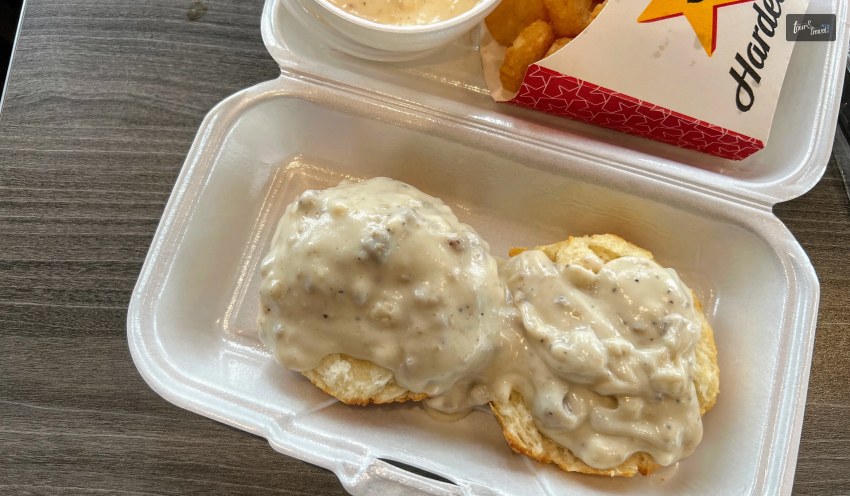
Biscuit’ N’ Gravy

Biscuit' N' Gravy

It is the perfect staple for the southern people as their Breakfast comprises biscuits and gravy! The item by Hardee’s is quite filling with its savory but simple food. The item is energizing and comforting and a favorite among the customers.

The biscuit is served cut in half with substantial serving with chunky white sausage gravy, which is quite creamy in texture.

You can also order crisp bacon, eggs, hash browns, and the biscuit with gravy.

Sunrise Croissant

Sunrise Croissant

If you want to munch on something light and feathery, the sunrise croissant is quite satisfying as it is filled with butter and American cheese, scrambled and baked eggs, ham, and a choice of bacon or sausage.

The item does not have much of a high calories still. If you want to be careful, you can get thinly sliced ham which adds up to only 390 calories. The croissant is perfect for you, especially if you have any cravings but not anything heavy.

The dish is a buttery decadence that is less dense and doughier than other options on the breakfast menu.

Loaded Omelet Biscuit

Loaded Omelet Biscuit

The item consists of a loaded meat and omelet accompanying cheese accompanying a baked biscuit made from scratch. The sandwich has these elements and is perfect for a rushed breakfast.

Hash Rounds

Hash Rounds

It is a perfect supporting role to the main role of a biscuit sandwich. The hash rounds of Hardee’s are one of my favorites as they are small bite-size round servings. A perfect accompaniment to the breakfast meal.

The hash rounds are golden-brown crisps that are nugget sized and are given along with BBQ or ketchup dipping sauce.

Pork Chop ‘N’ Gravy Biscuit

Pork Chop 'N' Gravy Biscuit

The item justifies the feeling customers get from a Southern comfort fast food joint; at its core, Hardee’s is just that! The biscuits are buttery and fluffy, making your experience similar to a slice of heaven.

The Pork Chop ‘N’ Gravy Biscuit is a biscuit sandwich with boneless pork chop, which is breaded and deep-fried. The sausage gravy that is famous for Hardee’s is accompanied! You can get extra help from it.

Plus, there are two types of pork in the sandwich. If that is not a good deal, I don’t know what is!

Competitor Companies

Let us talk about the competitors of Hardee’s in the restaurant industry and how they give tough competition! They operate as a restaurant and ensure that they maintain quality services to several people.

After learning about Hardee’s breakfast hours, let me share with you the competitors! The burgers of Hardee’s is quite famous along with breakfast burritos and frisco breakfast sandwiches. Let us compare Hardee’s with four other competitors namely BIG SMOKE BURGER, CJ Foodville, Tap 42 and The Providore.

The Providore

The restaurant is a privately owned place which operates as a cafe, grocery, wine shop, deli and bakery. You can get processed food and beverages. The headquarters of the restaurant is located in Singapore with an approximate of 83 employees!

Tap 42

With an employee number of 133, the headquarters of Tap 42 is at Bal Harbor, US. The restaurant is a chain operator which was founded in 2011. You can order processed food and beverages in this restaurant. It is a privately owned restaurant with quite some popularity.

Big Smoke Burger

The restaurant was founded in 2007 and processed food and beverages are easily available in this place. The headquarters of the restaurant is Oakville, CA! You will also find food ingredients in this restaurant.

There are about 84 employees in the restaurant! This is the only restaurant that has the proper social media presence to compete with that of Hardee’s. The restaurant is a subsidiary!

CJ Foodville

A private restaurant, there are 250 employees in this place. They provide processed food and beverages because they are a holding company for restaurants. They provide food ingredients to restaurants.

These restaurants and food holding units are competition to Hardee’s however, their social media presence is comparatively quite low. Plus, they also are unable to have the industry wide reach as compared to Hardee’s!

Reviews

According to Tripadvisor, Hardee’s has a 3.5 rating out of 5 based on 332 reviews. Reviews are quite positive based on their experience with food, atmosphere, value, and service. Hardee’s offers three types of meals: Breakfast, lunch, dinner, and after-hours.

Conclusion

I am already hungry with all this evaluation of some of the most popular breakfast items available during Hardee’s breakfast hours. I am sure you are too! Just keep in mind, on Sunday, they open 30 minutes late.

During weekdays, the breakfast hours extend to 4 hours 30 minutes. Try the items I mentioned in the list of the article and comment down to let us know your favorite one!

Read Also:

Share on Social Media

Mashum Mollah is the feature writer of Search Engine Magazine and an SEO Analyst at Real Wealth Business. Over the last 3 years, He has successfully developed and implemented online marketing, SEO, and conversion campaigns for 50+ businesses of all sizes. He is the co-founder of Social Media Magazine.

Leave a Reply

Your email address will not be published. Required fields are marked *

title-img Related

READ MORE card-img

How To Start A Travel Blog With A Headless CMS? Smart Tips

BY  Sibashree Aug 14, 2025

❌ Generic Templates ❌  Limited Flexibility across Channels These are the first two things you must leave behind if you are planning to start a travel blog these days. Also, it is now just about building a travel blog site, but the idea is to start a travel blog with a headless CMS and ensure optimized conversions.  Digital content endeavors to convert all the time, but it's not enough to generate persuasive copy and aesthetically pleasing designs and leave it at that.  The ability to adjust, pivot quickly based on real-time metrics and a strategic push at the appropriate time during the buyer's journey is essential.  Unfortunately, many CMS options fail to provide such access and flexibility. Yet a headless CMS allows for an in-depth design and the structure needed to create, experiment, and execute content intended for conversion across any channel.  With content modeling, an API-first approach, and componentized efforts, teams can design conversion-ready, optimized digital experiences along the way. Here’s more on how we can have absolute control over content presentation and structure with the help of a headless CMS.  Why Conversion Is Limited In Legacy Content Systems? Legacy content management systems (CMS) keep content tied to pages and templates. When a marketer wants to change the components or layouts, the messaging, or the targeting, it's usually an impossibility.  Furthermore, content displays differently on mobile than on desktop, and unless developers are on board to change visibility across devices or channels, brands suffer from amateur impressions.  In addition, when small changes need to be made, it requires dev time, which prevents even the simplest, most timely turnaround pieces.  Thus, when marketers have access to A/B performance, they're not always set up to make real-time changes.  Storyblok Labs product experiments showcase innovative ways to solve these limitations with faster, more flexible testing and deployment.  This is why conversion-centric content should be done as quickly and easily as possible. A headless CMS removes the content from the delivery, which allows for a more responsive experience. Why Do I Need To Start A Travel Blog With A Headless CMS? Creating content that converts doesn't just rely on what you say. It relies upon how quickly and efficiently you say it, test, and iterate at every stage of the funnel.  When people can change their minds with the click of a button and attention spans are shorter by the second, the ability to create and implement content with flexibility has never been more paramount.  You can no longer just create a landing page and wait to see what happens; in modern marketing, everything must be iterated, personalized, and perfected in real time based upon performance feedback. 1. A Headless CMS Offers Flexibility And Helps Find A Brand Voice A headless CMS provides the flexibility, framework, and agility necessary to produce content that advocates for high conversion rates with the ability to pivot just as quickly as your audience.  Because a headless CMS separates content from the front-end experience, both developers and marketers can create content modules that are highly reusable, each module attributable to a unique conversion goal.  You can test them with rapid A/B measurement campaigns. Moreover, you can easily assemble and deploy across all channels and touchpoints without upsetting the entire campaign plan.  The production time is cut down dramatically. Content silos are avoided. Compliance with best practices for brand voice and user experience becomes easier to control. 2. Ensures Better Assessment And Lesser Time For Content Production With personalization opportunities driven by behavioral data, along with the flexibility of integration with A/B testing tools, analytics platforms, and CRM/log-in pathways, every piece of content becomes interactive, trackable, and meaningful.  Marketing teams can assess specific measurements for particular audience segments, remove underperforming pieces mid-campaign, and apply successful formulas across global regions and departments, all from the same source of management. The possibilities for immediacy are especially valuable when it comes to major product debuts, last-minute holiday campaigns, or intense customer acquisition strategies.  Here, time is of the essence, and success depends on a failsafe launch at a selected moment. Being able to iterate while content goes live makes all the difference.  Within a headless CMS, your content machine is reactive to your business needs instead of responding to the consumer, continually changing, substantiating findings, and improving conversion attempts at every step. Start A Travel Blog With A Headless CMS For Future Convenience And Use (Understanding The Technicalities) A headless CMS supports the notion of creating content as fragments that can be used anywhere down the line.  For example, rather than creating hero banners and testimonial boxes, these "components" can instead be tagged as hero banners, testimonials, recommended features, CTAs, or pricing tables.  In addition, you can tag them with metadata for conversion. Mention who it's for, what part of the funnel it serves, and what campaign it connects to.  So, it is like a content marketing workshop. You can assemble the essentials to meet the campaign goal by selecting the existing high-performing blocks of content.  It creates a greater quality assurance requirement and allows those approving the messaging to not deviate from branding and past successful communications. The Benefits Of Using A Headless CMS For Travel Blogs When you start a travel blog with a headless CMS, the blogs become your brand with personalized storytelling and picking the right sub-niche for your travel blog.  Thus, you build stronger connections with a specific reader base and establish authority quickly.  1. Personalization Drives Conversion Rates Up By Using A Headless CMS For A Travel Blog Personalization drives conversion rates. Several different content pieces can be served based on segmentation data; thus, the same API connection can read geographic location or read CRM segmentation and serve a different headline, picture, or limited-time offer.  Thus, a new user can get one offer and a CTA. Furthemore, returning users can have a different CTA with various testimonials of their previous experience and industry.  A headless CMS makes it easier to let technology help people at scale with personalization that quickly drives them down the conversion path. 2. Iterating Quickly And Testing With Single Changes There is no final design for conversion; it requires ongoing updates based on what works and what doesn't. A headless CMS encourages rapid, modular designing that enables A/B testing or multivariate testing at the element level.  Marketers can test one element, a CTA, for example, or a product highlight against another product highlight to see which does better, and they can monitor the effectiveness in real time.  Because these elements are modular and exist apart from the overall design, they can be changed and adjusted without redoing an entire page or complicated experience. This allows marketers to pivot quickly and often for stronger conversions. 3. Minimizing Redundant Channel-Specific Content Paths to conversion don't just exist on websites; they exist in email, mobile apps, landing pages, digital ads, and more.  A headless CMS allows for omnichannel delivery from one content source, meaning that the message can be the same.  But because the content does not align with the design, you can update copy, style, and tone for each channel.  This decreases redundancy, increases content operations efficiency, and ensures that channel-specific experiences are as effective as possible to drive conversion. 4. Using An Integration With Analytics Sites To Drive Decisions About Content Elements No effort to optimize large content pieces can be realized without performance data. A headless CMS integrates with analytics sites, A/B testing sites, and customer data platforms (CDP) to give teams the power to see how well certain pieces of content work on what channels and for what demographic segmentation.  Marketers can discover which elements of an ad drive clicks, what subheadings have reduced bounce rates, and which CTAs have the highest conversion rates.  These results go back to the elements in question. Thus, it allows you to make quick changes and more intelligent repurposing of popular content pieces. Over time, this creates a scalable library of assets that have all been assessed for conversion. 5. Easing Inter-Departmental Collaboration Content that converts doesn't just involve the marketing team. It requires insight from design, content, development, and analytics teams as well.  A headless CMS makes this process seamless by offering a content repository, in different formats, that allows everyone to contribute.  The marketers can make their piece of the puzzle for the larger campaign using out-of-the-box components. The designers can ensure a universal, consistent design across teams. Moreover, the developers can build a connected and responsive front end, no matter the content.  Distributing these efforts allows for faster flows, greater accuracy, and increased experimental, data-backed content conversion opportunities. 6. Enabling Scaling Efforts Without Quality Decrease As brands grow, so do their campaigns and content needs for varied audiences. A headless CMS is intrinsically scalable, as it allows teams to replicate and pivot effective tactics from product to product and market to market.  Campaigns following templates and modules known to convert can easily be used for similar campaigns. Thus, the production time will go down.  Scaling is integral to maintaining conversion successes as it requires more resources over time. 7. Forming Credibility Through Speed And Consistency Speedy and effortless digital experiences create conversions. If a webpage takes too long to load or has a disjointed layout riddled with out-of-date resources, potential converters become frustrated and return to search for better resources elsewhere.  With a headless CMS, developers have complete control over the front end to create fast-loading and mobile-responsive efforts that increase usability.  Moreover, with a modular approach, updates can occur in seconds, without concern for disconnected segments because of out-of-date information.  This speed and consistent access create credibility, one of the most important factors for turning interested parties into buyers. 8. Conversion-Focused Funnels By Modular Assembly Of Content Perhaps the greatest advantage of a headless CMS is the unlimited ability to create hyper-targeted, conversion-based funnels based on specific buyer personas or short-term campaign needs.  When using a standard CMS, the content will be in silos based on general form templates.  Be it lead acquisition or collateral acquisition, email nurturing and lists, product nurturing or reactivation.  If creating a funnel exists within the marketer's realm, they can specify how the content flow should happen to generate the desired response.  For example, if a product funnel is for converting cold traffic, you will use short-form copy, images, or overview videos to create the awareness phase.  The interest phase can be a compilation of FAQ blocks, testimonials, or lists of advantages.  The action phase can use product comparisons, expiring discounts, or friction-free lead gen forms, all pulled from pre-vetted and modular content blocks. With a headless CMS, teams can be thoughtful and experimental about the funnels available to them.  One funnel does not have to serve all journeys. Instead, thoughtful, conversion-oriented experiences can be the way out based on user reaction and intent indicators. These are like live customizations, not just one-time executions.  With a headless CMS, content is a powerful tool for business growth and not an afterthought. 9. Decreased Time To Launch For Conversion-Focused Efforts One of the best ways to convert audiences is to get to them while the getting is good. When interests are hot, campaigns need to be ready, or else audiences will lose their interest or even worse convert to a competitor.  With a headless CMS, the time to launch dramatically goes down. Instead of creating something brand new and untested, teams can utilize a library of components.  There's no need to reinvent the wheel every single time, and efforts can launch in minutes as long as the used assets come from pre-existing libraries. 10. Ability To Change Without Starting Over When Consumer Actions Change Consumer action changes what works today might not work tomorrow. Thus, one of the greatest benefits of utilizing a headless CMS is the ability to change without starting over.  Marketers can relaunch certain components that didn't perform well. They can even try something similar with different layouts without having to start brand new.  Components can be: Geo-targeted Segmented Dependent upon what occurs without disrupting other campaigns in process.  This means conversion efforts are fluid and malleable, able to change without compromising the overall experience of the brand. Start A Travel Blog With A Headless CMS And See How Conversion Starts With Flexible Infrastructure Do you have a brand wanting to boost performance, grow fast, and provide the best omnichannel experience? The degree of flexibility that comes with a headless CMS is not only a technical advantage; it's a strategic necessity.  It allows teams to operate faster, test more effectively, convert more easily, and build a content operation. The overall process is reflective of the dynamic, data-driven nature of our digital world. When conversion reigns supreme, this is how to create effective digital experiences.

READ MORE card-img

Exploring Southern Utah’s Hidden Dive Sites

BY  Sibashree Jul 15, 2025

If you are a travel freak like I am, you must know that Utah, one of the most expansive Western states, is also one of the best places to go Scuba diving. Yes!  I recently went to scuba dive in Utah. Honestly, this was not my first time there. However, I wanted to have sufficient knowledge and experience before writing this article for you all.  Guess what? I have come up with all the tips and tricks to go scuba dive in Utah, and you will read all of that in this article.  Are you ready? Let’s ‘Dive’ into it! (Sorry for the pun, guys.) Defying Expectations: Inland Diving In Southern Utah First, I want you to imagine a place where sandstone canyons meet tranquil blue reservoirs. This creates an underwater world unlike anywhere else.  Yes, it's real! When you go to scuba dive in Utah, you will see it all, and more.  You might not see Southern Utah's arid landscapes as an ideal destination for scuba enthusiasts. However, you surely must not assume before you give it a try. Trust me, these freshwater oases hold surprises.  Moreover, when you go beneath the surface, you will see such majestic wonders. This includes: Submerged rock arches Craggy formations Schools of trout weave through shadowy depths You see, thuis is not the same as the ocean's coral sanctuaries. You will see that hese desert reserves offer unique terrain. Do you know how these are formed? These terrains are shaped by millennia of water erosion and dam construction.  Are you expecting some beginner basics? Hell no! This is about seasoned adventurers ready to uncover the unexpected.  Therefore, get ready to immerse yourself in these canyon depths, which promise a whole new kind of thrill. Dry Lands, Wet Wonders: Gear Essentials For Desert Diving Preparing for a desert-lake adventure means tailoring your equipment to meet rugged and remote needs.  You might think that Standard wetsuits may suffice. However, exposure suits with UV resistance are convenient for prolonged surface time in high-altitude sun.  A lightweight, portable water filtration system is invaluable for staying hydrated while hauling gear into secluded areas. What Are The Necessary Items to Bring? This list is extremely important when you prepare for scuba dive in Utah. I can assure you that I have curated this list in a way that every single item is non-negotiable. Take a look! Dive computers with features for managing higher-altitude conditions Extra tank straps and padded gear bags for off-road treks Rugged dive boots for rocky shoreline entries What to Leave at Home: Tropical gloves and hoods (temperatures are manageable here) Heavyweight tanks that strain your back during desert portage Furthermore, when you plan trips to remote canyon lakes, pack light but deliberately.  Additionally, consider the terrain, weather, and distance to ensure a smooth transport and setup process. Mapping The Canyon Lakes: Inland Dive Locations Near St. George Southern Utah is home to stunning canyon lakes, each with its own character beneath the surface. Near St. George, you'll find a variety of prime spots: ReservoirDepth RangeVisibilityHighlightsSand HollowUp to 60 feet15–25 feetSubmerged vehicles and rock formationsQuail CreekUp to 120 feet30–40 feetSheer underwater cliffs and fish swarmsGunlockUp to 50 feet10–20 feetSeasonal waterfalls and volcanic rock Access points range from paved boat ramps to rugged trails, so research your entry options ahead of time.  Moreover, some areas require permits or park entry fees, so check local regulations before heading out.  Furthermore, spring through early summer often offers optimal visibility as water clarity peaks.  For more details on services and resources for scuba diving St George Utah, you can consult local experts. Planning Desert Dives: Weather, Water And Seasonal Windows Diving in desert reservoirs involves navigating fluctuating water levels and weather patterns: 1. Conditions And Their Impact Monsoon Season (July–September): Flash flooding decreases visibility and raises currents. Spring Run-Off (March–June): Melting snow may cloud water clarity, but reservoir levels stabilize. Summer Heat (June–August): Warm temperatures mean comfortable water temps but bring surface heat challenges. 2. Ideal Timing Checklist FactorIdeal RangeNotesWater Temperature68–75°FComfortable with no hoodVisibility30+ feet (considered high)Avoid windy daysTimingMidweek mornings- 3. Fewer Crowds, Calmer Water Sometimes, reservoir management schedules releases. Therefore, you must coordinate your visit accordingly to take advantage of ideal conditions. What Are The Important Safety Protocols For Remote Desert Dives? Safety takes center stage when diving in isolated desert terrain. Start with a hydration plan to beat the dry heat.  Additionally, when you are between dives, protect yourself with high-SPF sunscreen and shade.  And for emergencies, bring reliable communication like satellite-enabled devices. Furthermore, cell coverage can be unreliable in these regions. What Are The Important Steps To Boost Safety During Scuba Dive In Utah? : Well, I know you already saw it coming! These are the important safety measures you cannot miss.  As someone who loves travelling and adventures, I always believe that safety is necessary; it makes the ride more enjoyable. Let’s take a look: Firstly, designate a "shore-side buddy" to monitor your progress and assist as needed. Secondly, file a float-plan details with rangers or authorities to ensure someone knows your location. Thirdly, respect the natural environment—pack out what you pack in and avoid damaging the fragile underwater features. Finally, these steps reduce risks while helping to preserve the unique beauty of these ecosystems. Seal The Scuba Dive In Utah: Chart Your Next Underwater Adventure Here it is, you guys! Your ultimate travel guide to plan for your upcoming scuba dive in Utah. Trust me, this will be an experience of a lifetime.  Moreover, you will see that Southern Utah's canyon reservoirs offer a striking mix of desert beauty and underwater exploration.  Furthermore, do you remember what we discussed? Successful outings depend on three factors taht you need to get right. These are: Preparation Gear  Timing.  Each trip feels like uncovering a hidden treasure beneath the waves. Now's the time to start planning your next visit. Connect with local guides and fine-tune your schedule. Moreover, you must also log your first (or fiftieth) immersion into these remarkable desert waters. However, with so much still to discover, the adventure doesn't end here. Furthermore, these reservoirs are just one chapter in a larger story of inland diving possibilities.

READ MORE best time to visit Andaman

Best Time To Visit Andaman – Andaman Guide Of 2023

BY  Sibashree Nov 17, 2022

Weather Conditions in AndamanAPRIL - JUNEJULY - SEPTEMBEROCTOBER - MARCHTemperature24°c - 37°c 22°c - 35°c20°c - 30°cSeasonSummerMonsoonWinter 2022 is almost ready to bid us adieu. A new year is less than two months away, and there’s no reason why you shouldn’t start planning your trips for 2023. And the first place to check out in the new year (if you trust us even a teeny tiny bit) is Andaman - because the best time to visit Andaman is approaching, and you must not miss out on this golden opportunity! Today, we will only talk about visiting this island state in the Indian Ocean. Keep reading to find out all that you need to know about traveling to Andaman! Journey Across The Indian Ocean: Best Time To Visit Andaman! Thanks to warm temperatures and little rain, the best time to visit Andaman is anytime between October and May. Although the picturesque archipelago undergoes moderate weather throughout the whole year, it is best that you plan a trip during these months for a memorable experience. At the same time, you must remember that there are so many other people thinking along the same lines. As a result, it is safe to say that this time of the year also happens to be the busiest time for the island state. But whenever you decide to visit this sunny island, it’s best to avoid the same during Monsoon. The high tides, incessant rains, and strong wind all add up to create an environment that can hinder your touring experience - so why take the risk? Yes, the islands are perfect for water sports, beach excursions, and plenty of sightseeing due to their warm weather, more or less throughout the year. But naturally, there are advantages and disadvantages of visiting the islands in different seasons. So without wasting any time, let’s check out a comprehensive guide for traveling to Andamans at different seasons - scroll down to find out all that you need to know! Exploring Andamans In Winter (October - March): To be honest, Andaman does not really experience a proper winter season. If you have ever traveled to Bengaluru or Vishakhapatnam, then you will be able to understand the climate type prevalent on these islands. The mildly humid, pleasant weather is ideal for tourists to relax - the turquoise water of the vast ocean reflects shades of blue, contrasted by the white sands, and the blue sky only makes these islands worth a visit during this season. Andamans In Winter The winter season makes the destination a picturesque location perfect for couples on honeymoon, families, and other elderly people. The best part? Neither the location is sultry nor is it sweaty - so you can just grab some cocktails and unwind inside the shacks against an aesthetic backdrop. Exploring Andamans In Summer (April - June): While seeking the best time to visit Andaman and Nicobar islands, you can always consider Summer for planning a trip to these beautiful groups of islands. Let us tell you why! With absolutely no rainfall, the weather is ideal for sightseeing, water sports, or just relaxing by the beach. The season usually begins in January and goes on till the end of April. Since this is the time for a summer vacation in the academic sector, the season collides heavily with a busy tourist season comprising mostly families with children. Moreover, you can also try out all the different watersports during this time.  In this context, let’s check out a few details related to visiting Andamans in Summer. Temperature And Weather: During Summer, the Andaman Islands experience an average temperature that ranges between 25 degrees to 32 degrees. With a mean relative humidity of about 80%, Summer is perhaps the most popular time to travel to these beautiful islands and cross off a few travel goals from that bucket list of yours.  Moreover, during this season, the weather is quite calm. You can even try out different watersports such as parasailing, jet skiing, snorkeling, and scuba diving.  Why Should You Visit Andamans During Summer? Stop googling ‘Andaman Nicobar best time to visit’ and instead keep reading to find out why Summer is one of the best reasons to visit this group of islands. Summer in Andaman is all about the warm ambiance, the glowing environment, and the vibrant crowd. If you love beaches, then you will get to witness the pristine destination, and that too in all its summer glory. Who hasn’t seen those aesthetic pictures of Andaman in magazines, social media platforms, and even blogs? We are talking about those photographs with the boats anchored on the sandy shores with beautiful turquoise waters in the backdrop. It’s the idea of travel photos with a few hammocks tied to several coconut trees, all standing tall, facing the limitless ocean. Summer is also about festivities, and Andaman surely rises to the occasion. If you do end up finding Summer as the best time to visit Andaman, then don’t miss out on festivals like The Island Tourism festival (a 14-day festival celebrating the traditions and cultures of the region), The SubashMela (an event for celebrating Subash Chandra Bose’s birthday), and The Block Mela (an event for celebrating the diverse cultures, and local lifestyles). Things To Remember Before Visiting Andaman In Summer: Since the weather in Andaman during Summer is calm, you do not need to let that paranoia worry you. Simply pack everything you will need and lose yourself in this beautiful paradise - this is, after all, the best time to visit Andaman! Here’s what you need to keep in mind! Since you will be traveling to tropical climates, you will dehydrate fast. As a result, it is best that you carry plenty of adequate water and stay hydrated. Don’t forget to carry your deodorants, hats, sunglasses, and sunscreens as protection against the hot Sun. Also, make sure you are traveling light with beach clothes and some flip-flops. Exploring Andamans In Monsoon (July - September): As we mentioned early on, Monsoon is definitely not the best time to visit Andaman, as compared to the other two seasons. In case you had no idea, the islands receive rain not once but twice from monsoon - once from the Southwest Monsoon and the other time from Northeast Monsoon. You don’t need to type ‘Andaman and Nicobar islands best time to visit’ on Google to find out that monsoon is not your ideal weather for traveling to Andamans. But in case you hate crowds and don’t mind some rain, and a little adventure, then we don’t see any reason why you can visit these islands during monsoon. So let’s check out all the details you need for planning a trip to Andaman during Monsoon. Temperature And Weather: Monsoon in Andaman is characterized by incessant rains and high tidal waves. In fact, the temperatures easily range between 22 degrees Celsius to 30 degrees Celsius, making this an ideal season for both hot chocolate and different citrus-based beverages. Moreover, Andaman is relatively dull during Monsoon. Thanks to all the rough rainfall and tropical storms that last for nearly 180 days yearly, the islands experience a reduction in tourist influx. People are seeking unique experiences and planning to let loose from their mundane routines. You will actually find a lot of time for self-exploration and rejuvenation - if you are trying to find some solitude on your trips, then you should visit Andaman during Monsoon. Why Should You Visit Andamans During Monsoon? You should totally visit the Andaman Islands during monsoon for some much-needed solitude, bliss, and silence. It doesn't matter whether you want to go solo or with your friends, the ambiance during this season will help you self-explore and introspect without unnecessary interruptions - this is the ideal time to get lost right in the middle of nothing! Things To Remember Before Visiting Andaman In Monsoon: Since monsoon is not the best time to visit Andaman for a majority of tourists, it is highly unlikely that water sports are available during this season. Moreover, the large waves and unpredictable winds further make watersports unsafe. In fact, the season makes the islands pretty isolated from tourists, so much so that hotels give away rooms at huge discount prices. But keep in mind that all ferry operations might get disrupted frequently due to the rough waves - however, the beauty of spending a monsoon in Andaman during this time is forever memorable. It’s not risky to travel to Andaman during this time of the year, but if you have this perfect touristy vacation in mind, then you might just be disappointed. Here’s what you must keep in mind! Don’t forget to carry your umbrellas, power banks, torch lights, munchies, mosquito repellants, raincoats, and windcheaters. If the rain stops you from stepping out for food, you can always count on your munchies. Make sure you are not carrying any expensive gadgets and cameras during this time. Frequently Asked Questions (FAQs): Check out the most frequently asked questions about finding the best time to visit Andaman. 1. Which Month Is Best For The Andaman Trip? The best time to visit the Andaman Islands is anytime from October to May. This is because the weather during this time is pleasant and ideal for water sports, sightseeing, and even beach excursions. Similarly, monsoons are not usually recommended for traveling to these islands due to unpredictable rains, storms, and waves. 2. What Is The Famous Food Of Andaman? The basic diet of people residing in Andaman comprises coconuts, spices, rice, and plenty of seafood. Moreover, since Andaman is made up of islands, the destination happens to be a seafood paradise - from lobsters and fresh prawns to crabs, there’s so much to try out here. Don’t miss out on Red Snapper, an all-time favorite. 3. What Type Of Clothes To Wear In Andaman? Ans: You can carry the following clothing essentials on your trip to Andamans,➊ Sunglasses, ➋ Hats, ➌ Cotton clothing,➍ Bathing suits,➎ Comfortable Shoes,➏ Smart Casuals,➐ Sleeping Attires, and➑ Poncho/Raincoat. In Search Of The Deep Blue: Andaman Calling! So you know the best time to visit Andaman - you no longer need to type search for ‘Andaman best time to visit’ or related material! Then what are you waiting for? Pack your bags today, and start on your trip soon - after all, the islands are so beautiful there’s no way not to add this destination to your bucket list. In the meantime, don’t forget to share your thoughts and moments from your Andaman trip if you have already visited these islands in the comments below. You may also like: The Comeback Of Death Valley National Park Lake? Will It Stay?