
Geneva To the Alps: A Journey Through Culinary Delights and Alpine Wonders

Embarking on a journey from Geneva to the Alps is not just a travel experience; it’s an exploration of culture, nature, and gastronomy. This voyage presents a unique opportunity to savor local culinary delights.  Moreover, you will find yourself surrounded by some of the world’s most breathtaking alpine wonders.

From the shores of Lake Geneva to the snow-capped peaks, let’s discover what makes this journey great for any traveller. To enhance your adventure, consider a private transfer from Geneva to Crans-Montana, offering a direct and luxurious route into the heart of the Swiss Alps.

This service not only provides comfort and style but also the flexibility to stop along the way.  Capturing the picturesque villages, vineyards, and ancient forests make this region a treasure trove of natural beauty and cultural richness.

With a private transfer, your journey to Crans-Montana becomes an integral part of the Alpine experience. Thus you find yourself swayed by your  desires and leaving you with unforgettable memories.

The Culinary Gateway: Geneva’s Gourmet Scene

Geneva, nestled on the western tip of the serene Lake Geneva. It serves as the perfect starting point for your alpine adventure. The city is renowned for its vibrant culinary scene, blending Swiss traditions with international influences.

  • Local Favourites: Don’t miss the chance to indulge in Fondue and Raclette, two iconic Swiss dishes that embody the spirit of communal dining and warm hospitality.
  • Gourmet Markets: Explore Geneva’s bustling markets like Marché de la Rive. There fresh local produce, artisan cheeses, and handmade chocolates await you.

The Journey to Alpine Splendor

Journey to Alpine Splendor

As you venture from Geneva into the Alps, the landscape transforms. It offers a visual feast of verdant valleys, sparkling lakes, and majestic mountains. However, this transition from urban sophistication to natural splendour is a journey in itself.

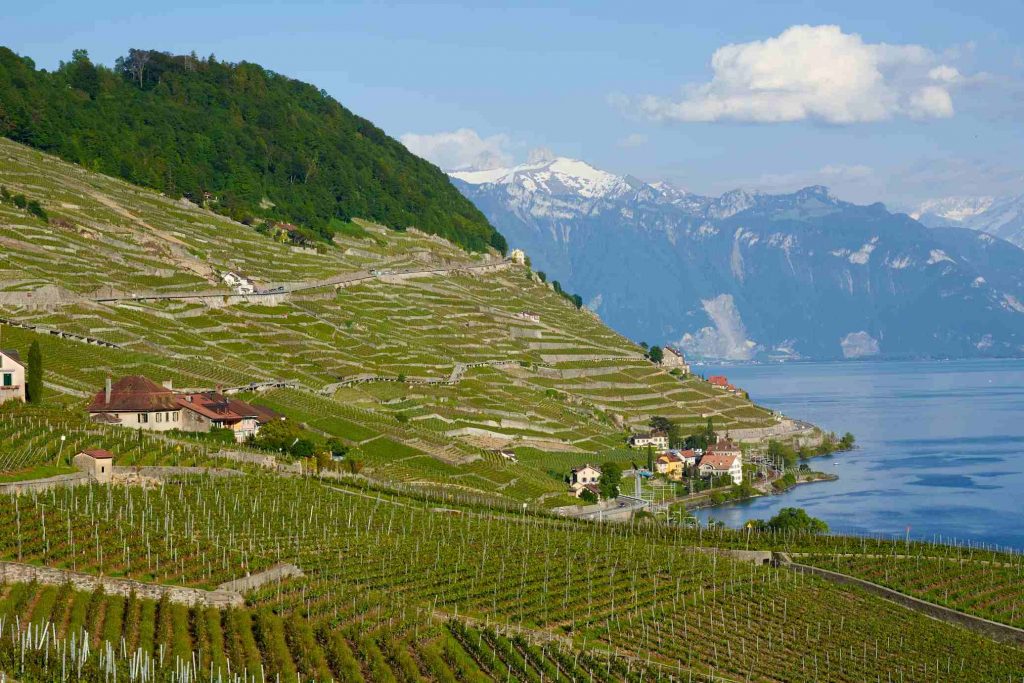
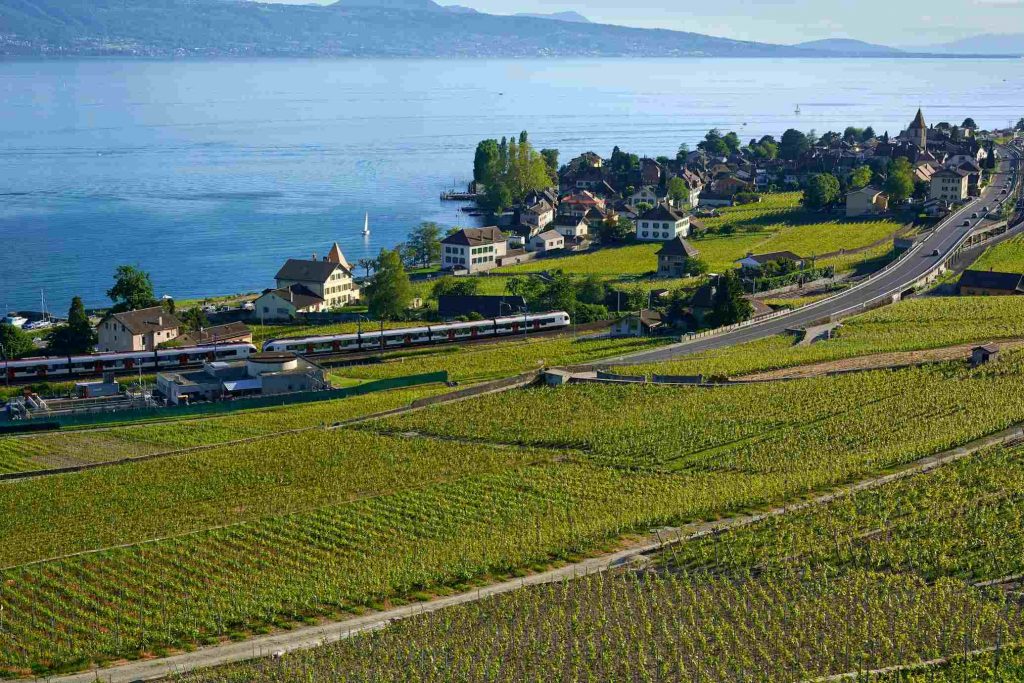
  • Scenic Routes: Take the scenic route through the vineyards of Lavaux, a UNESCO World Heritage site, where terraced vineyards offer panoramic views and exquisite local wines.

Savouring Alpine Cuisine

The culinary journey continues in the heart of the Alps. In addition to it there, each mountain village and resort offers its unique take on alpine cuisine.

  • Mountain Delicacies: In alpine towns like Courchevel, traditional dishes such as Tartiflette and Diots au Vin Blanc showcase the hearty and warming flavors designed to comfort after a day in the cold.
  • Michelin-Starred Dining: For those seeking a more refined dining experience, the Alps are home to numerous Michelin-starred restaurants. Moreover, there you meet with innovative chefs who put modern twists on classic alpine ingredients.

Cultural Insights and Alpine Traditions

Beyond the culinary delights, this journey offers deep cultural insights. Moreover the connection to alpine traditions that have shaped life in these mountains for centuries.

  • Local Festivals: Participate in local festivals and events to immerse yourself in the alpine way of life. It’s a form of traditional music and dance to cheese-making workshops.
  • Sustainable Practices: Many alpine communities are leaders in sustainable living. Moreover, visiting these areas provides insights into eco-friendly practices, from organic farming to renewable energy.

Fantastic Things To Do In Geneva, Swierlanand

Fantastic Things To Do In Geneva, Swierlanand

As mentioned above, Geneva is a gorgeous city filled with the delights of nature. Nature’s bounty has made it a great place for tourists from across the world. 

Therefore, plan to make the best use of Geneva To the Alps. Yes you got it right,  you will get a greeting from some of the most stunning scenery there. 

Here in this section, we discuss some of the things to do while living your dream of Geneva to the Alps. So, let’s get started with the discussion. 

Climbing The Towers Of St Pierre’s Cathedral

You may have heard that Geneva, besides being one of the most beautiful and culturally great cities, is the home to different international organizations. However, visiting them all at once is often difficult. What if you climb some building top and get the best visuals of the city? 

One of the iconic structures that can make you live your dream of going from Geneva to the Alps could be climbing the top of the cathedral. However, by doing it, you can get the best visuals of the city. Moreover, you can visualize the architectural traditions that govern the city. Therefore, you must attempt to climb the St. Pierre Cathedral and get the most stunning features. 

Paragliding From France To Switzerland

Visiting Europe and missing out on paragliding would be a great miss! What if you take a huge dive from France to Switzerland? 

Yes, you got it right, it would be a great addition to your Geneva to the Alps dream tour. Head on to the top of Mont Saleve and take a dive…oh my God! It sounds utterly terrifying. It provides great fun. Moreover, it provides a great opportunity to visit the incredibly beautiful region. 

Walking The Cobbled Streets Of The Town

Geneva is indeed beautiful. Moreover, the old town is more attractive to visitors from different parts of the world. 

There you could come across the old historical past of the city. Moreover, you can come across different buildings that speak volumes about the great culture the city has to offer to Switzerland and Europe in general. 

Cheezy Fondue

The visit to Geneva will be more sublime when you connect yourself to the culinary traditions of the country. Moreover, you could learn a great deal about the culture and daily food practices of the city. It’s a great way to visit Europe and know the world. 

But whenever you discuss food from Geneva to the Alps, you will be treated to the best traditions and discussion on the food culture. The first of the mentions is the cheese fondue. It’s a delight to your taste buds, which is difficult to explain. 

Simply take the bread and dip it in your cheese fondue. You will feel like forgetting your present and transporting yourself straight to an imaginary cascade of cheese. This is indeed one of the must-do things in your Geneva trip. 

Lake Geneva And Paddleboarding

The trip to Geneva must not be complete without it. Geneva is a special place and is gifted with stunning scenery. Moreover, the lake offers great scenery. 

Engage yourself in paddleboarding, especially during the warmer months. Summer is the best season in Europe, and it is this very time best suited to enjoy the crystal blue waters

Conclusion: A Journey of Discovery

From the gourmet delights of Geneva to the natural and culinary wonders of the Alps, this journey is a feast for the senses.

 It’s an invitation to explore, taste, and immerse yourself in the rich tapestry of experiences that this unique region offers. Whether you’re a food lover, a nature enthusiast, or a culture seeker, the journey from Geneva to the Alps promises unforgettable moments and lasting memories. So pack your appetite for adventure, and let the alpine journey begin.

Read More:

Share on Social Media

Abdul Aziz Mondol is a professional blogger who is having a colossal interest in writing blogs and other jones of calligraphies. In terms of his professional commitments, he loves to share content related to business, finance, technology, and the gaming niche.

Leave a Reply

Your email address will not be published. Required fields are marked *

title-img Related

READ MORE Studying In Manhattan

Studying In Manhattan – 5 Places To Visit In Your Off Time

BY  Abdul Aziz Mar 31, 2022

If you are among the few who are able to study in Manhattan, great! Then you should consider yourself lucky because not everyone is able to afford it! It is one of the biggest cities in which, if you are able to make it on your own, your life is set. That will only start with a good education. However, when you are in Manhattan, it all can’t be about the university and the studies! What if you want to look around? It is a marvelous city after all! Plus, if this is a place you are finally deciding to settle, there are certain things that you should be aware of. In this excerpt below, we will be discussing the top five places which you can visit in your free days. Aka, the weekends once you are done with all your assignments! But, before that, let us discuss a little about everything that you need to know before moving to Manhattan. Everything You Need To Know Before Moving To Manhattan So, you are moving to Manhattan for further studies. Great! Here is everything that you need to know in order to make a smooth transition from anywhere to Manhattan. - Finding an affordable living space is very important before you decide upon anything. Click hericoll to find affordable studio apartments for your first move. - New York City is very expensive, including food which is the second necessity in your stay. Thus, you should be prepared for this. - Know the subway by heart. Cab fares are skyrocketing, and you wouldn’t be able to drive your car on the busy streets of Manhattan. Therefore, subways are the best thing you can do. - It has one of the highest taxes in the United States Of America. Thus, if you are planning to find a job after your education, you must be aware of this. Places To Visit In Your Off Time During your off times, when you have nothing else to do! You are caught up with all your studies and have some spare time then visit these places. They are great for some alone time or with a group of university friends. 1. Central Park If you are in New York, why are you not visiting Central Park? Then what have you done! It is the best place for a stroll alone or with your favorite group of people. Plus, I swear every season has its own charm on Central park, but it is the best in Fall. Some of the attractions here are Central park zoo, the Lake, and Strawberry Fields. 2. Metropolitan Museum Of Art Not just one of the oldest and one of the pioneer museums in New York City, but it is also the place for the - ā€˜Met Gala!’ This is the best place to visit for anyone who is a fashion and art enthusiast. It has an interesting number of American & Egyptian art. 3. Broadway Watching a Broadway show should be on your bucket list! Now that you are in the city of Broadway take up each opportunity to go watch a Broadway show. It could be the latest show which is the talk of the town, or a long-running classic which you have heard about all the time. 4. Empire State Building Again another legendary site that you absolutely cannot miss. Whenever I think about the Empire State Building, all I can think about is the climax of ā€˜Sleepless In Seattle.’ This 120 storeyed, 381-meter tall building is one of the tallest points in the city, and nothing can match that surreal feeling of getting a bird's eye view of the entire city. Especially at night! 5. Times Square It's busy! It's chaotic! It is the best attraction in New York! Manhattan is Times Square! With the two-storeyed billboards and the neon lights, there is always something new to see in Times Square. New York! New York! New York! The city that never sleeps! A city where you always have something new to do! This city will keep you busy. So, you made an excellent decision to choose this for your further studies. Keep hustling, and New York will be your own! Read Also: Things To Do In Maryland – Free Places To Visit In Maryland Best Time To Visit New York – Know All About New York Weather

READ MORE festivals in Japan

What Are The Best Festivals In Japan? Celebrating The Culture And Tradition Of JapanĀ 

BY  Sibashree Mar 26, 2024

Japan, a country steeped in tradition and culture, offers an array of sensory experiences that attract travelers from around the globe. Among these, the Japanese matsuri (festivals) stand out as a testament to the country's rich heritage, embodying the spirit of joy, community, and the spectacular interplay of light and color. For those embarking on Japan tours, the opportunity to participate in these festivals is not just a travel highlight; it's a deep dive into the heart of Japanese culture. The Essence Of Vibrant Matsuri Matsuri are integral to Japanese culture, with each festival having its unique significance, rooted in history, religion, and local lore. These events range from solemn traditional ceremonies to explosive celebrations of life, each painted with vibrant colors and illuminated by dazzling lights. The experience is a feast for the senses, offering insight into the communal spirit and the enduring traditions that define the Japanese way of life. A Kaleidoscope Of Festivals No Japan tour is complete without witnessing the spectacle of at least one matsuri. The Gion Matsuri in Kyoto, renowned for its grand procession of floats, is a spectacle of craftsmanship and community spirit that dates back over a thousand years. The Sapporo Snow Festival transforms the city into a winter wonderland of intricate ice sculptures, blending artistry with the beauty of nature. Meanwhile, the Aomori Nebuta Festival captivates with its parade of enormous lantern floats, creating a mesmerizing dance of light and shadow. Illuminating Experiences What sets these festivals apart is not just their visual appeal but the immersive experiences they offer. Participating in vibrant matsuri is to step into a living tapestry of history and tradition. Visitors can don traditional attire, partake in ancient rituals, and indulge in local delicacies. The warm welcome extended by the local communities adds to the charm, making every visitor feel part of the celebration. Seasonal Spectacles The beauty of Japan's festivals is their diversity throughout the year. Spring welcomes the cherry blossoms with hanami (flower viewing) parties, where the fleeting beauty of sakura serves as a backdrop for gatherings filled with food, drink, and song. Summer brings the explosive energy of fireworks and bon dances, while autumn and winter festivals, such as the Chichibu Night Festival, showcase breathtaking displays of light against the seasonal landscapes. Planning Your Japan Tour For travelers eager to immerse themselves in the magic of Japanese matsuri, planning is key. Many festivals occur on specific dates or seasons, and some of the most popular can draw large crowds. Engaging with a specialized Japan tours operator can provide invaluable insight, ensuring you not only witness these incredible events but also understand their cultural significance. Accommodations and logistics are also taken care of, allowing you to fully immerse in the experience without the hassle. A Journey Through Light and Color Japan's festivals are more than just events; they are a vibrant expression of life itself. They offer a unique window into the soul of Japan, where tradition and modernity dance hand in hand. For those seeking a deeper understanding of Japanese culture or simply looking to experience the extraordinary, the vibrant matsuri are a highlight of any Japan tour. As you navigate through the festivals of light and color, you're not just a spectator but a participant in a centuries-old tradition that continues to dazzle and inspire. How To Take Part In Matsuri  To take part in Matruri, a grand Japanese festival, you have to learn about Japanese culture. Many Matruri welcome tourists and visitors from around the world. Indeed, it's a great way to learn about Japanese festivities and share the most important inputs on the celebrations. Here, we discuss how you can take part in Matrusir and experience the festivities. It is usually opined that there are many, hundreds, and thousands of Matsur taking place in Japan. The is no requirement to wear traditional clothes. Watching the people in procession and parades in huge numbers is a great approach to feeling the festivity from within. Renting Traditional Japanese Costumes If you join the matsuri celebration in general clothes, there is no issue, but you may be detached from the crowd. Why not make the gathering special? No, you do not need to buy traditional wear. But you can rent it. It’s a simplistic wear, yet echoes the Japanese spirit…yes, we mean a Kimono called the Yukata. There are Yulta rentals. Moreover, there are some specific costumes meant for different festivals. You can try it out and have fun. Chanting Together  Another part of the festivities and soaking in the fun is chanting together. It is one of the easiest ways to be one with the people. Chants like Washoi or Oisa, or say Rassera Rassera Rassera (in the Nebuta Festival), can help you get yourself close to the Japanese culture and the sense of unity. It is indeed a great way to join the locals and be one with the Japanese culture. Dance Together  One of the great ways to express fun, merriment, and lightness of mood is by dancing together. Dance has been an integral part of the culture of various civilizations. It is a great way to participate with the people and learn about the intricacies of the culture. The same goes for Japan. It is a great way to embrace the warmth of the festivities and soak up the cultural elements. In Japan, during the vibrantMatrusi, you can take part in a traditional Japanese folk dance called Odori. Repeat the same movements with everyone, and you will be a master of it in no time. If you find it shaky initially, then you could use YouTube videos to familiarize yourself with the steps. Don’t worry, you are new, and you need some time. But there is no doubt that you will have great fun. Cherish The Gastronomic Heart Of The Matsuri: Yatai Street Food No festival experience is complete without navigating the Yatai, the vibrant rows of wooden street food stalls that provide the smoky, sweet aroma defining every matsuri.  For many travelers, the Yatai are the most accessible entry point into the celebration, offering a literal taste of Japanese tradition. As you wander through the crowds, start with the iconic Takoyaki (savory octopus balls), served piping hot and topped with dancing bonito flakes.  Follow the sizzle of the grill to find Yakisoba, where thick noodles are stir-fried with a signature tangy sauce that has been a festival staple for generations.  For those with a sweet tooth, the whimsical Choco-banana, dipped in chocolate and colorful sprinkles, is a nostalgic must-try.  Finally, don't miss Taiyaki, the famous fish-shaped cakes filled with sweet red bean paste or creamy custard.  Eating your way through these stalls isn't just about refueling; it’s a vital ritual of communal joy. Tradition Meets Tomorrow: Tech And Sustainability In The Best Festivals In Japan In 2026 In the travel landscape of 2026, the magic of a Japanese matsuri is no longer just about preserving the past. It’s about ensuring these traditions survive in a modern, eco-conscious world. The intersection of high-tech logistics and "Green Shinto" values has transformed how visitors experience these spectacles. Smart Crowd Management Navigating the legendary congestion of festivals like Kyoto’s Gion Matsuri has been revolutionized by technology.  Major events now utilize official Crowd Management Apps, such as the SusHi Tech Tokyo 2026 platform, which provides real-time heat maps of street density.  By using AI-driven sensor data, these apps steer tourists away from bottlenecked alleys toward "secret" viewing spots, ensuring safety without dampening the festive spirit.  For the traveler, this means less time stuck in a standstill and more time enjoying the procession. The Rise Of The Eco-Matsuri Sustainability is the new heartbeat of the festival grounds. The "Zero-Waste" movement has moved from niche to norm. The Earth Celebration 2026 on Sado Island, for example, leads the charge by encouraging visitors to bring their own reusable cutlery (my-hashi) and offering dedicated wash stations to eliminate single-use plastics. Even the iconic nighttime illuminations have gone green. Traditional paper lanterns are increasingly powered by high-efficiency LED bulbs and solar-charged battery packs. Events like the Nabana no Sato Light Festival now run massive, multi-million LED displays entirely on solar energy.  This shift not only reduces the carbon footprint but also allows for more intricate, color-changing light shows that were impossible with traditional candles.  In 2026, you can soak in the "Light and Color," knowing that the glow is as sustainable as it is spectacular. Festivals In Japan: A Spectacle Of Light And Color Japanese tours that include the vibrant matsuri offer an unparalleled experience of the heart of Japanese culture.  Each festival, with its unique blend of history, tradition, and community, presents an unforgettable spectacle of light and color.  Whether you’re drawn by the history, the beauty, or the sheer joy of these celebrations, participating in a matsuri or the festivals in Japan is an experience that resonates long after the lights have dimmed. Read Also: What Is The Oldest Country In The World? Japanese And Other Civilizations Still Alive Today What Are The Things To Do In Japan? Know Why Gen Z Travelers Love Japan The Most What Is The Best Japanese Temple To Visit? A Temple Tour In Japan

READ MORE things to do in Valletta

What Are The Things To Do In Valletta? Spending An Action-Packed Vacation In The Capital City Of MaltaĀ 

BY  Sibashree Dec 1, 2025

Everything great is happening in Valletta's tourism industry these days. 2025 has been a year of growth and recognition for Valletta, the small capital city of Malta, and a UNESCO World Heritage Site.  In the forest quarter of 2025 itself, Malta received more than 693,000 visitors according to the Tour and Travel World. It was an 18.9% rise from the same period in 2024. Furthermore, in the same period, the tourist spending reached €508.5 million.  This means tourism continues to offer opportunities for local and foreign entrepreneurs who come to set up companies in Malta, with the help of local specialists from BridgWest.Ā  In addition, the World Travel $ Tourism Council has chosen Malta as the venue for the WTTC Global Summit, 2026. The 26th edition of the summit will take place in collaboration with the Ministry for Foreign Affairs & Tourism and the Government of Malta.Ā  The prominent landmarks of Valletta, such as the Grand Harbour and St. John's Co-Cathedral, and activities such as exploring Victoria's Gate and trying some brilliant craft beer, and cultural richness, have helped Valletta enjoy such growth in numbers and global recognition.  I have been to Malta, and starting from exploring the fortified walls of Valletta to enjoying the serene charm of Valletta Grand Harbour Waterfront, the free things to do in Valletta were the highlights for me. On such a shoestring budget, I was able to enjoy the essence of a city, which even enjoyed the status of the European Capital of Culture 2018.  In this Tour and Travel Blog, I will, of course, talk about the free activities and other fun and interesting things to do in Valletta.  What Are The Things To Do In Valletta? As I started exploring the city of Valletta, I noticed the signature "Pointed Cross" of the Knights protecting this ancient city from everything evil.  If this is something really spiritual, on the other hand, you will see history becoming alive with the post boxes, telephone booths, and British colonial architecture.  Nevertheless, these are the things to do in Valletta. 1. Visiting The St. John's Co-Cathedral Address: Triq San Gwann, Il-Belt Valletta, Malta Hours Open: 9 AM to 4:15 PM (Monday to Saturday) Entry Fee: Adults: €15, Seniors: €12, Students: €12, Children (Under 12): Free when accompanied by an adult, €5 Extra for a Belfray Tour, Audio Tour Included View this post on Instagram A post shared by St John's Co-Cathedral (@stjohnscocathedral) The St. John's Co-Cathedral is the most prominent example of the Baroque-style architecture of Valletta. The Knights of the St. John built this conventional church for the order in the late 16th century.  You will know about the life of St. John the Baptist from the paintings by Mattia Preti on the ceiling of this cathedral.  Furthermore, there are eight chapels, dedicated to various languages, tapestries, marble floors, and gilded carvings. However, the main focus for me was the painting called "The Beheading of Saint John the Baptist." This dramatic work, one of the few artworks signed by Caravaggio, is in the Oratory. 2. Exploring Fort St. Elmo And The National War Museum Address: Mediterranean Street, Valletta, Malta Hours Open: 9 AM to 5 PM Entry Fee: Adults - €10.00, Senior Citizens (60+) and Youths (12-17 Years) - €7.50, Students - €7.50, Children (5-11 Years) - €5.00, Below 5 Years - Free Fort St. Elmo stands as a witness to the Great Siege of Malta in 1565. It has military paraphernalia and many artefacts.  However, the major appeal of the fort is intangible, and it lies in the fact of how it became a refuge for the people of Malta during the attack of the Ottoman Empire under the leadership of Suleiman the Magnificent.  The Knights, only around 500 in numbers, defeated the 6000 strong army of the Ottoman Emperor. Furthermore, the National War Museum inside the fort, spanning over seven sections, celebrates the 7000-year-old history of Malta. Some of the exhibits here date back to the Bronze Age (2,500 BC).  You can even request a guided tour of the museum.  Insider Tip: 2025 marked the 900th year of the Great Siege of Malta. A docu-drama called The Great Siege of Malta 1565 was released in 2025. This 45-minute docu-drama celebrates the bravery of the "Hospitalier Order of the Knights of St. John of Jerusalem."  3. Visiting The Grand Master's Palace Address: St George's Square, Valletta Hours: 9 AM to 5 PM Entry Fee: €12 for Adults, €10 for Children Aged 12 to 17 Years and Seniors, Children (6-11): €8, Infants (1-5): Free The Grand Master of the Order of St. John used to rule Valletta from the Grand Master's Palace. The armory here is the main attraction, and it has the accessories and outfits of the Knights.  Furthermore, the symbol of power, with its history of 450 years, is once again in the news with its recent renovation work.  It was also the "seat of the first constitutional parliament of Malta in 1921," and now it is the "Seat of the Office of the President of Malta." 4. A Guided Tour Of Casa Rocca Piccola Address: 74 Republic Street, Valletta, Malta Hours: Monday - Saturday: 10 AM to 5 PM Audio Tours: From 10 AM Guided Tours: From 10 AM to 4 PM (On An Hourly Basis) View this post on Instagram A post shared by Casa Rocca Piccola (@casaroccapiccola) Do you know that the 9th Marquis de Piro still lives in this 16th-century palace? Join the audio tours or the guided tours to see the swanky furniture and unique staircases.  However, for me, the Bomb Shelters were the main attraction. These are not dark tourism spots. These are the living history of World War II.  When 15 air raids took place in 1942, the people of Valletta saved their lives by hiding in these chambers. These shelters were part of the quarry of the 400-year-old house, and they were made from a solid rock foundation.  5. Know The WWII Stories Of Malta At Lascaris War Rooms Address: Lascaris Ditch, Valletta VLT 2000, Malta Hours: 10 AM to 4:30 PM Entry Fee - Adults: €20, Seniors: €19, 5-15 Years Old: €7, Family: €35, Children below 5 Years: Free I love history, and even if you don't, you cannot avoid knowing about WW1 and WW2. These two wars changed the course of human civilization.  At Lascaris War Rooms, you don't just see the exhibits. You live through the moments of war as you explore the tunnels and labyrinths used as protection from the Italian and German attacks during World War 2.  It's like getting transported to the 1940s within a minute.  Insider Tip: I found the War Rooms more fascinating than the National War Museum at Fort St Elmo. Did you know that these War Rooms were used as the headquarters for the Invasion of Sicily or Operation Husky? 6. Visiting The National Museum Of Archaeology Address: Auberge de ProvenƧe, Republic Street, Valletta, Malta Hours: 8 AM to 7 PM (Admission Closes at 6:30 PM) Entry Fee: €5 View this post on Instagram A post shared by Heritage Malta (@heritagemalta) I was at a loss for words at the National Museum of Archaeology, Valletta. It has everything you need to know about the prehistoric days of Malta.  Once I entered, the first room had exhibits showing how the earliest people settled here, even before the temple establishment period. It had "Red Skorba ornaments" and some "tools" they used in their everyday lives.  I also got to see exhibits from the Ghar Dalam phase (5200 BC), Tarxien phase (2500 BC), and Bronze Age.  Then, I reached the main hall of the museum. It had the Sleeping Lady and other astonishing sculptures and temple carvings.  Among the collectibles from the Temple Period, the Obsidian Core was the most impressive. It was a headless sculpture, in a seated posture.  Housed inside a Baroque building, this museum is now the main attraction of Auberge de ProvenƧe, which was earlier the home of the Knights of the St. John. Insider Tip: If you are traveling from any other town in Malta, take a bus to the Valetta Bus Terminal. From there, it is a short distance on foot.  7. Visiting The Upper Barrakka Gardens Address: 292 Triq Sant'Orsla, Il-Belt Valletta, Malta Hours: 7 AM to 10 PM Entry Fee: Free Home to the Siege Bell War Memorial, the Upper Barrakka Gardens offer amazing views of the harbor and the three neighboring cities.  This 16th-century garden was built in the 16th century, and the Knights of the Saint John once used it as a private garden.  Once you are done strolling the Castille Square, you will find the Upper Barrakka Gardens nearby.  Insider Tip: It's great to relax at the Upper and Lower Barrakka Gardens and have a sip of your favorite drink. However, at 12 PM and 4 PM, the officials of the Malta Heritage Society get dressed in military uniforms and fire the cannons at the Upper Barakka Gardens.  Now, I had a cup of hot coffee in my hand, and I was not ready for it. So, it fell out of my hand, and it was a mess.  Nevertheless, this tradition has been continued for more than 100 years, and once you attend it, you will know why it is worth it.  Also, you must use the Barakka Lift to travel between the upper and lower Barakka Gardens quickly.  8. Plan A Visit To The Lower Barrakka Gardens Address: Lvant, Il-Belt Valletta, Malta Hours: 7 AM to 10 PM Entry Fee: Free I know people do not talk much about the Lower Barrakka Gardens. However, that's a blessing in disguise. It is way less crowded than the Upper Barrakka Garden.  Now, despite having the name as "Gardens," it is actually a small-scale garden with a few minutes taken to complete the stroll.  However, there is a fort and a waterfront with Greek-style arches overlooking them. You can relax here, have your moments, and make the most of the photo ops. 9. Enjoying The Waterfront The Baroque houses, surrounding the waterfront of Valletta, were earlier used for storing the essentials of the Grand Master. Now, they are bars and restaurants.  I found the promenade the perfect place to relax and cherish a drink with my eyes set on the ships cruising. The place is more magical after sundown, but there is a trick! You have to find a cafe or restaurant that is not crowded by tourists. Find yourself a quiet corner. 10. Watching A Performance At The Manoel Theatre Address: Old Theatre Street, Il-Belt Valletta, Malta Capacity: 623 Opened In: 1732 View this post on Instagram A post shared by Teatru Manoel (@teatru.manoel) At Manoel Theatre, as a performer of elocution and audio theater for the longest time, I had goosebumps. I was standing at the oldest working theater in Europe.  The wrap-around gallery was the highlight of the building, and I attended an opera performance by none other than Joseph Calleja.  Also, if you want to explore the grand architecture of Manoel Theatre, you can do so every Tuesday. During the summer months, the tours are conducted between 10:30 AM and 12 PM, and during the winter months, these tours continue from 11 AM to 3 PM. Tickets are available at 20.00 €.  11. Trying Local Food  Many people call Maltese ftira a "type of pizza." However, very few people know that it is a UNESCO intangible cultural heritage, with a history dating back to the 16th century, when it was first prepared in the ovens of the Knights of St. John.  Furthermore, it is a chosen food because of its versatile fillings and its role as an identity of Valletta and, by extension, of Malta. I also loved the coffee here. It was my best companion while taking a stroll across the roads. Furthermore, if you are in Valletta, don't miss the Lampuki Pie or the signature fish pie.  How To Reach And Move Around Valletta? Valletta is well-connected to the world through the Malta International Airport. It is around 9 km away from Valletta, and the short drive took me close to 20 minutes. I took the bus to the City Centre.  You can also book a shuttle in advance or take a taxi.  The city has a well-connected bus route, and it is a small city that you can cover on foot. However, the transport options are island-specific. You can take a Talinja Card or Flex Card for exploring Valletta and Malta.  Also, you can take a ferry service to the Grand Harbour of Valletta to and from Gozo and the Three Cities. You will even get a ferry service from Sliema to St. Paul's in Valletta. Insider Tip:  I picked the "Gozo Standard Add-On" card for my day trip. I didn't have the time for so many trips. But you can use this add-on to enjoy unlimited tours to Gozo Island.  What Is The Best Time To Visit Valletta? March to May and September to early November are the best seasons to visit Valletta. Valletta has so many historic landmarks and outdoor spaces. The temperature in the early 20s in these months offers you the ideal chance to explore Valletta.  Also, the crowd is quite manageable in these months.  Valletta, At A Glance: Why Does Valletta Offer Such A Rich Experience? The best thing about Valletta is how compact it is! By compact, I mean it has a big heart, accommodating the best museums, well-preserved Baroque architecture, the Grand Harbour, stone walls, and stories.  From the stories of a 16th-century ghost to being the backdrop of many spy thrillers, such as "The Secrets of Malta" by Cecily Blench, and historical novels such as "The Hidden Palace" by Dinah Jefferies, have added stories to each key attraction of the city.  Also, the stories of the city's sustenance during World War II and the Great Siege by the Ottoman Turks in 1565 tell us about human resilience.  Location-wise, this Fortress City, with a soft honey hue, stands on the ocean. It is also the dream of a photographer with the Baroque architecture reaching the sky.  Despite being only 1 kilometer long and 600 meters wide, the city of Valletta is very compact, housing many museums, cobblestones, and architecture, and it became the "European Cultural Capital in 2018.  Valletta is very close to the famous Three Cities. These cities are Cospicua, Senglea, and Vittoriosa. The Grand Harbour separates these cities from Valletta.  Valletta was built by the Knights of St. John in 1565 after the Great Siege of Malta. It was one of the best fortified cities in Europe and was built in a very short span. The city got its name from Jean Parisot de La Valette, who was the Grand Master of the Knights of St. John. Where To Stay In Valletta? When in Valletta, you must choose a hotel with an amazing rooftop view. The Embassy Valletta Hotel and Palazzo Ignazio are some of the best options to stay in.  The best areas for finding a hotel are the Valletta City Centre, Floriana, The Three Cities, etc.  The hotel charges will be around 300-500 Euros.  Is Valletta Really Worth It? An Honest Confession About The City  Yes, Valletta is a European Capital City with so many historic, religious, and cultural elements. This UNESCO World Heritage Site also has many stories, like the Great Siege of Malta or the attacks of World WW2.  However, the remnants of the British Colonial Rule, like the telephone booths and post boxes, were sore to my eyes and they are a mismatch with the beautiful Baroque architecture and century-old buildings.  Also, it is hard to find a quiet place in Valletta. So, that can be a problem for a solo traveler. Still, the great food and historic thrill of the city make it really worth it! Even if you are in the city for one day, you can enjoy a stroll around the City Square and at least explore the St. John's Co-Cathedral to enjoy a slice of Maltese life. Read Also: A Kotor Montenegro Travel Itinerary For 3 Days: How To Travel Kotor Montenegro On A Budget? ā€œWinter Is Coming!ā€ Where Is Hot In October? Explore Places To Visit In Europe Best Summer Destinations In Europe Beach: Couples Get Ready!