

Fun Things To Do In Morocco: Exploring The Land Of Rich Culture And Adventure

Jul 17, 2023

Last Updated on: Aug 26, 2025

Travel Guides

When it comes to fun and immersive experiences, few places can match the vibrant souks of Marrakech. Lose yourself in a maze of extremely narrow alleyways that are full of a kaleidoscope of colors, enticing aromas, and the sounds of haggling merchants. 

Get Yourself Immersed in the Vibrant Souks of Marrakech

Explore the bustling markets where you can find everything from traditional Moroccan spices and intricately crafted ceramics to beautiful textiles and hand-woven rugs. Don’t forget to put your bargaining skills to the test and enjoy the lively atmosphere that surrounds this enchanting city.

Trekking in the Sculprous Atlas Mountains

For nature enthusiasts as well as adventure seekers, trekking on the breathtaking Atlas is an absolute must-do in Morocco. Lace up your hiking boots and embark on an unforgettable journey through rugged terrains, picturesque Berber villages, and alluring valleys. 

The High Atlas region offers a range of hiking trails suitable for all levels of experience, letting you witness stunning landscapes, encounter local wildlife, and experience the warm hospitality of the Berber people. Whether you opt for a day trip or a multi-day trek, the Atlas ranges promise awe-inspiring views and an opportunity to connect with nature.

Discover the Timeless Beauty of chefchaouen’s Blue Medina

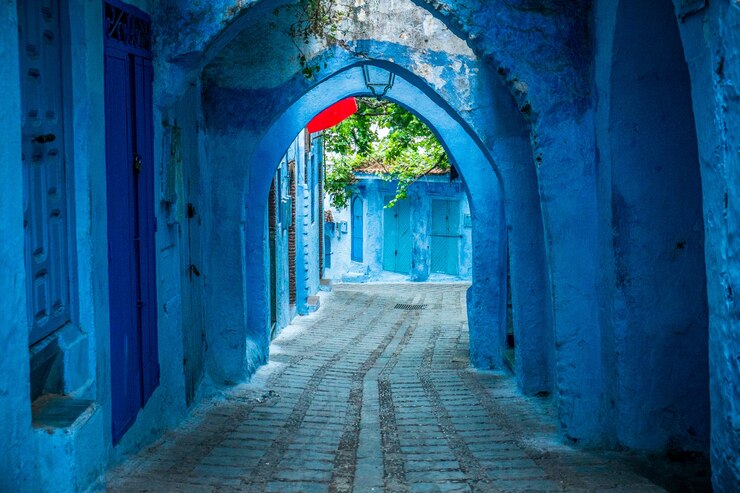
chefchaouen's Blue Medina

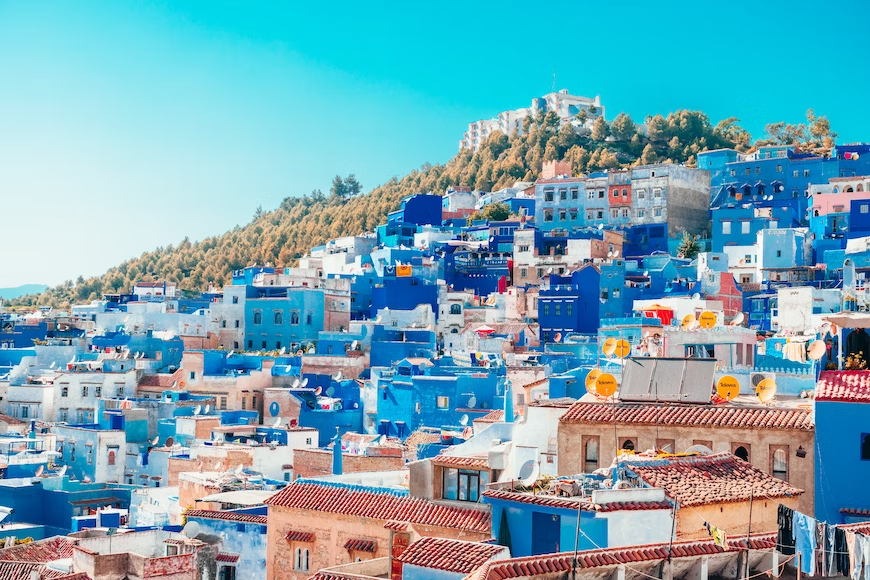
Settled in the Rif Mountains, the city of Chefchaouen is renowned for its picturesque blue-painted medina, creating a fairytale-like ambiance. Wander through the narrow, winding streets adorned in shades of blue and marvel at the traditional Moroccan architecture. The blue-washed buildings and alleyways make for a photographer’s paradise, providing endless opportunities for capturing Instagram-worthy shots. 

As you explore this magical city, take the time to visit the vibrant local markets, indulge in delicious Moroccan cuisine, and soak up the serene atmosphere that sets Chefchaouen apart.

Ride a Camel and Camp Under the Sahara Desert’s Starlit Sky

A trip to Morocco isn’t complete without venturing into the vastness of the Sahara Desert. Experience the thrill of riding a camel across the golden dunes, immersing oneself in the surreal beauty of the desert landscape. As night falls, settle into a traditional desert camp and witness the spectacular sight of a star-filled sky. 

Share stories around the campfire, listen to traditional music, and indulge in a delicious Moroccan feast. The tranquility and grandeur of the Sahara Desert offer a once-in-a-lifetime experience that will leave you with memories to cherish forever.

Unveil the Rich History and Architecture of Fes

Step back in time and explore the medieval city of Fes, renowned for its ancient mosques, madrasas, and maze-like streets. The UNESCO-listed Medina of Fes is the world’s largest car-free urban area, paving the way to wander freely through centuries-old architecture and soak up the city’s rich history.

Visit the famous Al-Qarawiyyin Mosque, the world’s oldest university, and admire the intricate details of the Bou Inania Madrasa. Don’t miss the vibrant tanneries, where you can witness the traditional process of leather production. Fes offers a captivating glimpse into Morocco’s past and is a must-visit for history enthusiasts.

Relax and Unwind in the Coastal Town of Essaouira

Escape the hustle and bustle of Morocco’s cities and head to the picturesque coastal town of Essaouira. Known for its laid-back atmosphere and stunning beaches, Essaouira offers a perfect blend of relaxation and adventure. Stroll along the historic ramparts, explore the bustling fishing harbor, and savor fresh seafood at the local restaurants. For the more adventurous, try your hand at windsurfing or kiteboarding, taking advantage of the strong Atlantic winds. With its charming medina and picturesque coastal scenery, Essaouira provides a refreshing break from the inland cities.

Experience Moroccan Hospitality with a Homestay

To truly immerse yourself in Moroccan culture, consider embarking on a homestay experience. Stay with a local family and get a glimpse into their daily lives, traditions, and authentic Moroccan hospitality. Whether you’re in bustling cities or remote villages, a homestay offers a unique opportunity to connect with the locals, learn about their customs, and even participate in traditional activities like cooking traditional Moroccan dishes or practicing traditional arts and crafts. It’s an excellent way to forge meaningful connections and create lasting memories.

Embark on an Unforgettable 3-Day Tour with a Reputable Tour Operator.

Morocco Tour

One of the best ways to experience the wonders of Morocco is by embarking on a 3-day tour organized by a trusted tour operator. These tours offer a well-crafted itinerary that covers some of the most iconic destinations in the country, ensuring you make the most of your time. A reputable tour operator will handle all the logistics, including transportation, accommodation, and guided tours, allowing one to sit back, relax, and fully indulge your soul in the experience.

With a 3-day tour, you can embark on a whirlwind adventure, exploring the highlights of Morocco. From the bustling streets of Marrakech and the majestic Atlas Mountains to the charming coastal town of Essaouira and the Sahara Desert, these tours offer a diverse range of experiences. You can expect to visit historic landmarks, indulge in local cuisine, engage with the vibrant culture, and witness breathtaking landscapes. Whether you’re a solo traveler, a couple, or a group of friends, a 3-day tour with a reputable tour operator is an efficient and hassle-free way to explore the best that Morocco has to offer.

Opting For the Right Tour Operator for Your Moroccan Adventure

While planning an adventure to Morocco, selecting the right tour operator is crucial for a smooth and enjoyable experience. Here are a few key considerations to make when choosing a tour operator:

Reputation: 

Look for tour operators with a solid reputation and positive reviews from past travelers. Check online platforms and travel forums, and seek recommendations from friends or travel agents.

Itinerary: Review the itinerary offered by the tour operator to ensure it covers your desired destinations and activities. Be attentive toward the duration of each stop and the overall pace of the tour.

Inclusions: 

Check what has been included in the tour package, such as accommodation, transportation, meals, and guided tours. Make sure that the inclusions are in pair with your preferences and budget.

Flexibility: 

Don’t forget to consider if the tour operator provides any flexibility when it comes to customizing the itinerary or adding optional activities.

Value for Money

Compare prices and inclusions among different tour operators to determine the best value for your budget.

By carefully selecting a reputable Tour operator that matches your preferences, you can embark on a stress-free and memorable Moroccan adventure, leaving you with unforgettable memories of this captivating country.

Read Also:

Share on Social Media

Arnab is a professional blogger, having an enormous interest in writing blogs and other jones of calligraphies. In terms of his professional commitments, He carries out sharing sentient blogs.

Leave a Reply

Your email address will not be published. Required fields are marked *

title-img Related

READ MORE most dangerous cities in mexico

Beyond The Beaches: Unmasking The Most Dangerous Cities In Mexico

BY  Abdul Aziz Dec 26, 2023

With good reason, Mexico is one of the most sought-after travel destinations worldwide. However, not every area of Mexico is secure for tourists. Today, we will talk about the most dangerous cities in Mexico. According to the World of Statistics, nine Mexican cities are among the world's ten deadliest in 2022. There have been 512 homicides reported through the first seven months of the year, or an average of 73.1 per month. The murders are steadily on track to match or marginally exceed those numbers in 2023. The previous year saw 887 murders or an average of 73.91 homicides per month. Most Dangerous Cities In Mexico A recent study on wisevoter.com found that there were 36,579 murders in Mexico. This corresponded to the 4th-highest murder rate in the world, 28.37 per 100,000 people. The study found that men are eight times more likely than women to become murder victims. Here are some of the most dangerous cities in Mexico that you could wisely avoid if you are planning to visit: Acapulco Despite being one of the most dangerous cities in Mexico, Acapulco continues to draw large numbers of tourists due to its beaches. The rate of homicide in the city is 111 per 100,000 residents. Drug-related violence in Acapulco has increased dramatically as different cartels compete for control of the lucrative drug trade in the city. This city is located in Guerrero, a notorious state well-known for its high rates of violence. It witnesses regular chaos brought on by gang turf wars and heroin production. Tijuana Tijuana's high murder rate and drug-related violence make it the most dangerous city in Mexico. There are 138 homicides for every 100,000 people. Tijuana is the main gateway for drugs originating in South America, making it a hub for cartel activity. Due to its proximity to the US border, it is also a significant hub for organized crime and human trafficking. Based on data on homicide rates, Tijuana is the world's most dangerous city. Ciudad Victoria Ciudad Victoria, one of the most violent cities in Mexico, is situated in the state of Tamaulipas. This area is another hotbed of drug-related violence, with a homicide rate of 86 per 100,000 residents. Located just beyond the U.S. border, Tamaulipas makes it an entryway city as well. In Ciudad Victoria, members of the Northeast Cartel actively manage their businesses. Irapuato Irapuato, in the central state of Guanajuato, has witnessed a surge in drug-related homicides over the last three years. With a homicide rate of 81 per 100,000 residents, the city is among the least safe places for visitors. Even regrettably so for the residents who live there. Turf wars between the Santa Rosa de Lima Cartel and the Jalisco Cartel New Generation are primarily to blame for the murders that occur here. Cancun A spate of shootings, robberies, and attacks on tourists in Cancun were linked to cartels. Mexican President Andres Manuel Lopez Obrador has recently issued a warning to travelers about the travel risks. This city is notorious for its high levels of violence. Yet it is far less deadly than other Mexican cities, with a homicide rate of 64 per 100,000 people. Uruapan For a mountainside city in Michoacan, Uruapan has seen a steady rise in violence; sadly, it appears that this violence will only get worse. This once peaceful town is now home to rival cartels that frequently switch names and hands. Killings take place in the most inconspicuous places, like bars and arcades. The current homicide rate in Uruapan is 55 per 100,000 residents. Culiacan Formerly regarded as a moderately dangerous city, Culiacan is currently the scene of a fatal conflict.  It happened after the apprehension of Ovidio Guzman, the son of cartel leader El Chapo. The city is Sinaloa's central city and has a homicide rate of 61 per 100,000 residents. Because of the Sinaloa Cartel's stronghold over the city and its populace, visiting tourists face extreme danger. Cuidad Obregon Sonora's second-biggest city, Cuidad Obregon, has gained notoriety recently. It ranks as the world's fourth most dangerous city in 2022. Not only has there been an increase in violence in Ciudad Obregon but also in the neighborhood of Cajame, which is the southernmost part of the state. It will take time to determine whether this sharp rise in crime will hold. There are currently 52 homicides for every 100,000 residents. Celaya According to the accounts, more than a thousand people were killed brutally every year. Theft, drug sales, and human trafficking have all increased, so the story is far from over. Taking a vacation in Celaya is risky. Celaya has 109.38 killings per 100,000 residents, making it one of the world's most dangerous cities right now. Coatzacoalcos Once a bustling tourist destination in Veracruz, Coatzacoalcos has a homicide rate of 48 per 100,000 residents. Perpetrators left nine bodies on the street. Among the top ten most dangerous cities in Mexico is this one because of murder, violent crime, and robbery. Ensenada The only other regions of Mexico with official travel advisories or restrictions are those located 1,400 miles away. Reports from the press and locals indicate a rise in violence. Locals and tourists, however, have not been impacted by this unrest. Violent killings have increased in Ensenada and Tijuana over the past few months, primarily occurring outside of the city center and at night. Although there are some risks in the unguarded neighborhoods further out, the city center is still very safe. Travel through the Vine Valley or on day trips are usually safe. Reynosa Reynosa is a prominent urban center located directly across the Rio Grande from the US border. Unfortunately, because of ongoing conflicts between criminal gangs, it has gained a reputation as one of Mexico's most dangerous cities. Traveling to this area due to the ongoing security concerns is high risk. However, it's crucial to understand that Reynosa, despite its unflattering reputation, is an important industrial center for the Rio Grande Valley and Northern Tamaulipas. The city drives a number of industrial activities and acts as a vital link in cross-border trade and commerce, significantly impacting the region's economic landscape. Reynosa continues to play an important role in connecting and promoting economic development in this region of Mexico, even with the ongoing security concerns. Chihuahua Due to concerns about crime and kidnapping, the U.S. State Department advises travelers to "Reconsider Travel" to Chihuahua. There is a lot of violent crime and gang activity in the area. Travelers should exercise caution even though the majority of criminal organizations commit murders that are targeted assassinations. Drug-related violence has escalated dramatically in northern Mexico over the last twelve years, especially in Chihuahua. Despite being relatively safer than other cities in the area, cartel violence is still a problem in Chihuahua. It's crucial to remember that most killings target drug dealers and their families; violent crimes rarely target tourists. There are military checkpoints throughout the city and its environs, and adherence to them is required. Wrapping Up It's critical to keep in mind that even though the state has a high rate of crime, not all of it is dangerous. For example, Illinois is not always a crime hotspot just because Chicago is. When it comes to organized crime and corruption, Tijuana, Ciudad Juarez, Victoria, Reynosa, and Culiacan are typically the worst cartel cities in Mexico. While you're organizing your next vacation, we hope this article will be helpful to you in determining which areas of Mexico are dangerous. If the location you're interested in doesn't appear on this list, it's probably not in one of Mexico's most dangerous regions. And as long as you exercise common sense caution, you should be alright. If you have thoughts to share or questions to ask about the most dangerous cities in Mexico, please leave a comment below. We would love to hear from you! Read Also: Navigating The Unseen: Exploring The Most Dangerous Country In The World Heatwaves And Adventure: Traveling To The World’s Hottest Destination Crime And Caution: Navigating The Dark Side Of California’s Cities Is Costa Rica Safe For Visit For Travelling?

READ MORE Explore The World With Their Kids

6 Reasons Parents Should Explore The World With Their Kids

BY  Ankita Jan 5, 2024

For parents, the opportunity to explore the world with their children is invaluable. Not only does it open the door to new experiences for the kids, but it also offers a chance for the family to grow closer together. Family-friendly destinations like Pigeon Forge, TN, are perfect examples of places that cater to the interests and needs of both children and adults. These locations provide a diverse range of activities and experiences that can enrich a family vacation, making every moment memorable. In this article, we will delve into six reasons why parents should consider traveling the world with their kids. Diverse Experiences  When speaking of diverse experiences, Pigeon Forge is definitely going to top the list. Pigeon Forge, TN, is home to The Island, an entertainment complex that epitomizes the kind of diverse experience ideal for family travel. This location is more than an entertainment center; it's the ultimate attraction offering fun and learning. With an array of shops, restaurants, and attractions like The Great Smoky Mountain Wheel, The Island offers something for everyone in the family. The variety of experiences available at The Island means that parents and children can enjoy a range of activities together. From exploring unique shops to dining at family-friendly restaurants, and from enjoying the spectacular views from the Great Smoky Mountain Wheel to staying at the on-site hotel, the experiences are tailored to create lasting memories. The Island’s mix of attractions ensures that every family member’s interests are catered to, making it an enjoyable part of any visit to Pigeon Forge. Such destinations showcase how travel can be both entertaining and educational for children as they learn through engaging and interactive experiences. Given the popularity of family-friendly attractions like The Island Pigeon Forge sees an influx of vacationers every year. Educational Opportunities Traveling provides children with invaluable educational opportunities that extend far beyond the classroom. As families explore new places, children are exposed to different cultures, languages, and historical contexts. This exposure is not only educational but also eye-opening, providing real-life context to lessons learned in school. For instance, visiting historical sites offers a tangible connection to history, making it more relatable and interesting for kids. Encountering different cultures fosters a sense of global awareness and understanding, teaching children about diversity and tolerance. Participating in language exchanges or trying new foods can also be fun, interactive ways to learn. These experiences contribute to a well-rounded education, where children learn about the world in an immersive and interactive way. Building Stronger Family Bonds Traveling together as a family is an excellent way to strengthen family bonds. Shared experiences, whether the excitement of exploring new destinations or overcoming the challenges of travel, bring families closer together. These shared memories become a foundation for stronger relationships. Activities that encourage teamwork, like hiking or navigating a new city, enhance family bonds. Children and parents learn to rely on and support each other in different situations. Involving children in travel planning also increases their sense of involvement and investment in the trip. They feel valued and heard, which is important for their self-esteem and the overall family dynamic. Family vacations are not only fun; they are an opportunity for deeper connection and understanding among family members. Developing Adaptability And Resilience In Kids Traveling is an excellent way for children to develop adaptability and resilience. When families explore new environments, children learn to adapt to different situations, whether it's navigating a new city, trying unfamiliar foods, or interacting with people from diverse backgrounds. These experiences teach kids flexibility and problem-solving skills as they learn to handle unexpected challenges and changes in plans. The ability to adapt and bounce back from difficult situations is a crucial life skill. Travel exposes children to minor setbacks or changes, like delayed flights or weather changes, in a safe and controlled environment. Handling these situations helps children build resilience, equipping them with the ability to cope with bigger challenges in life. Moreover, overcoming these obstacles can boost their confidence and self-esteem, making them more willing to take on new challenges in the future. Encouraging Curiosity And Creativity Traveling with kids can significantly boost their curiosity and creativity. Being in a new place with different sights, sounds, and smells stimulates children’s senses and piques their curiosity. This natural curiosity can lead to a deeper interest in learning about the world around them. Different travel experiences, whether visiting museums or exploring natural landscapes, provide opportunities for creative thinking. Children are inspired to think outside the box and view the world from different perspectives. This exposure can lead to creative problem-solving and innovation. Additionally, these experiences can ignite a passion for new hobbies or interests, such as photography, art, or history, further enriching their lives. Promoting Physical Activity And Health Travel often involves a variety of physical activities that can be beneficial for both children and adults. Activities like hiking, swimming, or simply exploring a city on foot encourage physical movement, which is essential for maintaining good health. For children, engaging in physical activities while traveling can instill a lifelong appreciation for exercise and an active lifestyle. Outdoor activities, in particular, have numerous health benefits. They provide fresh air, help in vitamin D absorption, and reduce stress and anxiety. These activities also present an opportunity for families to spend quality time together, away from the distractions of technology and daily routines. Encouraging an active lifestyle through travel not only promotes physical health but also contributes to mental well-being. Conclusion It's time to explore the world with your kids, as it offers far more than just a break from the routine. It's an enriching experience that contributes significantly to their development and strengthens family bonds. From developing adaptability and resilience to fostering curiosity and creativity and promoting physical activity and health, the benefits of traveling with children are immense. These experiences not only create lasting memories but also lay a strong foundation for a well-rounded, healthy, and fulfilling life. As parents, taking the opportunity to travel with your kids is one of the greatest gifts you can give them – a world of learning, discovery, and togetherness. Read Also: 10 Best Things To Do In San Diego (USA) Cooking In Dublin: 7 Restaurants To Dine In With Your Family The Ultimate Guide To Travelling When You Have No Money Make Your Honeymoon A Truly Memorable Affair: Here’s How

READ MORE Pamukkale Turkey

What Is So Special About Pamukkale Turkey? (Waterpools, Things To Do, And More)

BY  Sibashree Sep 18, 2025

Pamukkale is one of the most visited regions in Turkey in 2025. With its natural beauty and historical intrigue, it welcomed 1.6 million visitors in 2025, according to a recent Travel and Tour World report.  Home to the Hierapolis spa city, Pamukkale Turkey, has snow-white travertine terraces, which look dramatic against the backdrop of blue skies. Also, it is one of the most prominent destinations in Turkey to promote nature-based tourism.  Also, resembling a winter wonderland covered with snow, Pamukkale is actually a unique landscape formed by hot spring waters in a Sun-kissed zone of Turkey.  Where Is Pamukkale Turkey?  Pamukkale is in the Denizli Province of southwestern Turkey. It has Hierapolis, a UNESCO World Heritage Site and a unique landscape, including white travertine terraces.  The unique landscape is built with the carbonite mineral deposits of the hot water springs here.  Furthermore, Pamukkale is in the Inner Aegean region of Turkey and it is in the valley of the River Menderes.  How To Reach Pamukkale Turkey From Istanbul? The distance between Pamukkale and Istanbul is close to 572 km, and based on your mode of transport, it will take between 6 hours 20 minutes and 11 hours to reach Pamukkale.  1. Istanbul To Pamukkale Turkey By Train You can take a train from Istanbul to Eskişehir and then board the Pamukkale Express from Eskişehir to Denizli, where Pamukkale is located. This 8-hour journey by train allows you to cherish the beauty of central Anatolia.  Otherwise, board a train from Istanbul to Yenikapı and then a train to Pamukkale. The train will pass through stations such as Istanbul Pendik, Eskişehir, and Goncalı. 2. Istanbul To Pamukkale By Air The Denizli-Çardak Airport (DNZ) is the nearest airport to Pamukkale. It is located at a distance of 67 km. You can take a domestic flight from Istanbul to Pamukkale and then take a shuttle or a bus to reach Pamukkale by road within 50 minutes.  3. Istanbul To Pamukkale By Road Companies such as Kamil Koç operate direct buses from Istanbul to Sarayköy. From Sarayköy to Pamukkale, it is a journey of less than 30 minutes by road.  Moreover, you can take overnight buses to Pamukkale from Istanbul.  What Is So Special About Pamukkale Turkey?  With thermal springs, white hills of cascading water, and crystal lakes, the unique landscape of Pamukkale looks stunning. Furthermore, it has Hierapolis or the “Holy City.”  Fortunately, all these unique features of Pamukkale are mostly intact even today. Moreover, as the UNESCO World Heritage Convention says, it is a wonderful fusion of natural beauty and cultural richness.  “The property is largely intact and includes all the attributes necessary to express its Outstanding Universal Value, based on the strong and tight integration between the natural landscape (the white travertine terraces and numerous thermal springs) and culture (the city ruins from the Greco-Roman and Byzantine period, especially the theatre and the necropolis). The boundaries of the site are adequate to reflect the site’s significance.” - UNESCO World Heritage Convention.  Let’s explore its unique features and landmarks.  1. Cotton Castle Pamukkale Turkey Pamukkale means cotton castle in Turkey, and the name comes from the travertine terraces, which have white formations with a cotton-like appearance. The terraces here form stepped pools, and together they look like a cascading castle of white cotton and crystals.  But do you know how this unique landmark was formed? Western Anatolia in Turkey has the largest deposits of calcium carbonate rocks in the world. However, it is also the region where the Earth’s crust faces the maximum pull.  Furthermore, various geothermal, seismic, and volcanic activities here create many fissures and faults. The Pamukkale plateau in the Denizli Basin is one of the main examples of this kind of geological formation.  Here, the calcite terraces and rimstone pools fall from over a 200-meter-tall cliff. Being rich in minerals, the cascading water covers the rocks with a thick layer of white sediments. These rocks look like layers of cotton and have thus got the name Cotton Castle.   According to NASA, the mineral deposition in this area is aged between 50000 and 600,000 years. The process started from the Pleistocene epoch, and the latest deposition here is related to the Laodikeia earthquake.  2. The Pools Of Pamukkale Turkey The thermal pools in the travertine terraces of Pamukkale were formed with mineral-rich hot spring water falling down the hillside and solidifying the deposits.  The vast Cleopatra’s Pool is probably the most prominent example when we talk about the pools of Pamukkale. The average water temperature of these pools ranges between 19 and 57 degrees Celsius. Sometimes the temperature can be as much as 100 degrees Celsius.  3. The Hot Springs Of Pamukkale The hot springs of Pamukkale have geothermal water, which is rich in minerals. Being mineral-rich, these waters have many therapeutic benefits. Moreover, it is a lifetime experience to swim in the geothermal pools on travertine terraces against the beautiful white walls.  4. The Ancient Hierapolis Or The Holy City Of Pamukkale  King Antiochus II founded ancient Hierapolis in the 2nd century BCE at the top of Pamukkale. Its strategic position near the thermal rings and along the trade route made it a thriving city during the Roman Rule.  Furthermore, Hierapolis became a prominent spa and healing city, and it grew in religious and cultural significance over time. The vast necropolis, the Temple of Apollo, and the Roman theater are the telltale signs of a rich history of Hierapolis, or the Holy City of Pamukkale.  Moreover, during the Byzantine era, Hierapolis experienced tremendous growth as a Christian hub, and it became a bishopric. In addition, the necropolis area saw many churches being built, and it became a chosen resting place for Christian martyrs.  Finally, in 1988, UNESCO gave the combination of Hierapolis and Pamukkale the designation of a UNESCO World Heritage Site.  5. The Gate To Hel Or Pluto’s Gate In Hierapolis View this post on Instagram A post shared by M. Tolga Akbulut (@mtolgaakbulut) Pluto’s Gate was believed to be the gate to hell or the underworld. This prominent archaeological site was associated with Pluto, the Roman God of the dead, wealth, and the underworld.  The scientific explanation behind this place is that geothermal activities in Pamukkale caused the release of a large amount of carbon dioxide. Thus, it became a lethal area, and the priests utilized this natural phenomenon to convince pilgrims of the place’s mystical power.  What Are The Things To Do In Pamukkale Turkey? As I have already mentioned, the things to do in Pamukkale are the perfect fusions of natural, cultural, and religious explorations. Try these activities here.  1. Taking A Bath In Cleopatra’s Pool Cleopatra’s Pool got its name from Queen Cleopatra taking a bath in this pool. It is surrounded by marble columns that go back 1000 years.  This pool is just a 10-minute walk away from the main ruins of Hierapolis. 2. Exploring The Roman Theater The history of the Roman Theater goes back to the 2nd century AD. It could accommodate 12,000 visitors and was the venue for theatrical performances and gladiatorial battles.  Even today, the Roman Theater is well-maintained, and you can enjoy a panoramic view of Pamukkale from this place.  3. Taking A Stroll Around The Necropolis The necropolis area of Pamukkale has tombs and family mausoleums that belong to the Byzantine, Roman, and Hellenistic periods.  The necropolis area is like an outdoor museum where you can read the plaques and learn a lot about the people who stayed here and how they viewed life and the afterlife.  4. Visiting The Local Villages The Pamukkale Village offers you a slice of the ultimate Turkish rural life. Try the mezes or appetizers, kebabs, and Pide or Turkish pizzas from local shops and restaurants here.  Also, you can explore the shops here to buy ceramic items, jewelry, and textiles.  5. Enjoying A Walk Through The Travertine Terraces Take a walk along the travertine terraces and experience the wonder of nature at its best. Furthermore, you can wet your feet in the warm waters of the pools here.  However, you have to walk carefully on the surface as it can be slippery.  Pamukkale Turkey: Frequently Asked Questions (FAQs) Here are the frequently asked questions and answers about Pamukkale Turkey.  1. What Is The Best Time To Visit Pamukkale Turkey? April to June, or the spring season, and September to November, or the autumn season, are ideal times for a visit to Pamukkale. However, if you want to avoid the crowd, the winter months of December to March are the best options.  2. Which City Is The Closest To Pamukkale Turkey? Denizli is the closest city to Pamukkale. The distance between these two places is around 17 km. Today, Denizli City is a bustling hub of textile production and export.  3. Is It Possible To Swim In Pamukkale? Yes, swimming is allowed in the travertine pools in Pamukkale. However, there are only some designated pools, such as the Cleopatra Pool, where you can swim.  4. Is 1 Day Enough In Pamukkale? Yes, one day is enough to explore the Pamukkale. You can take a bath in the travertine pools, explore the ancient ruins, and visit the local villages within 5-6 hours.  5. Which One Is Better? Cappadocia Or Pamukkale? Cappadocia and Pamukkale both have stunning landscapes. However, Cappadocia is famous for adventurous activities, like hot air balloon rides. On the other hand, Pamukkale is a place for natural exploration, visiting the ancient ruins, and taking a bath in the travertine pools.  6. What Language Is Spoken In Pamukkale? Turkish, the official language of Turkey, is the main language in Pamukkale. However, people here also speak in English.  7. Is Pamukkale Good For Skin? Yes, Pamukkale is good for the skin. The presence of silica, sulfur, and calcium in the water improves the elasticity of the skin, cleanses the skin, and alleviates eczema and other skin conditions.  8. Can I Drink Water In Pamukkale? The water of the thermal springs and pools of Pamukkale is rich in minerals. So, it is better to avoid drinking the water from the hot springs and pools in Pamukkale.  9. Do I Need To Pay Entry Fee To Visit Pamukkale Yes, you will need to pay an entry fee to visit Pamukkale. Furthermore, there will be an additional fee if you want to swim in the Cleopatra Pool.  Read Also: You Cannot Miss These Unique Things To Do In Indiana | Explore The Hidden Gems To Visit Your Visa Guide: Turkey Transit Visa Information & Hong Kong Visa Processing Time Easiest Countries To Get Citizenship In 2025: Let’s Know The Names