

A Complete Guide to Grand Cayman’s Underwater Wonders

Sep 20, 2024

Last Updated on: Aug 26, 2025

Travel Blog

If you are a first time traveler or a seasoned one, looking for a great marine adventure, you must visit Grand Cayman. The Grand Cayman is a stunning location with beautiful coral reefs, perfect for a deep sea dive, with crystal clear waters.

This island offers many water activities that are meant for each age group. Whether you want to swim with dolphins in Grand Cayman or snorkel with friends, there is something for everyone to enjoy. Here, we will explore the top things to do in the Grand Cayman where you will make the best memories.

Let’s get started.

1. Swimming with Dolphins

swim with dolphins

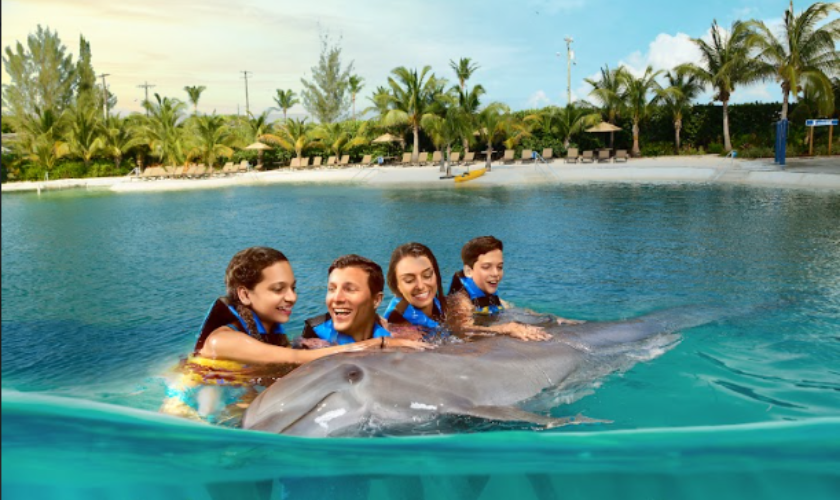
Swim with dolphins in Grand Cayman is perhaps the most fascinating activity on the island and Dolphin Discovery makes it all even better. Worry not because it is not purely amusement but an educational program that involves interaction with these mammals, studying their behavior and even taking a ride on their backs.

It is always enjoyable and therefore is a great activity to do as a family. You will observe the dolphins swimming and delightedly carrying out tricks like feeding them. Moreover, the structure is developed to help you have maximum enjoyment while ensuring your safety, and hence wonderful experiences in that tranquil environment will be created.

Because of this, you may expect to have great interactions with dolphins, who are very sociable, and these interactions will increase your respect for the animals.

2. Snorkeling at Stingray City

For most travelers, Stingray City is considered a must-do destination where one can snorkel aground with manta rays. When you are done with your swim with dolphins in Grand Cayman, you can visit this fascinating place that is shallow enough to allow one to feed and swim with the rays. It is a safe activity with a professional guide provided and is suitable for people of any age. It is hard to avoid dozens of stingrays gliding around in the water who will welcome you.

Additionally, the water is so clear that you can look around and see just what beautiful underwater life there is. For those who would like to enjoy the Caribbean Sea, this is a place that can be very much looked forward to.

3. Diving the Bloody Bay Wall

If you feel you need more adventure than simply swim with dolphins in Grand Cayman, you must visit the bloody bay wall. For experienced scuba divers, Bloody Bay Wall is one of the best attraction spots located on the northern side of the island. This spectacular wall descends to over 1000 feet, covered with corals and an abundance of marine life.

Here are several types of dive sites, for instance, some include deep wrecks, walls, and bays that even plunge into caves. Moreover, look out for nurse sharks as well as turtles and many kinds of fish that live in this colorful environment.

The wall has different slopes which attract worldwide divers in search of fun and breathtaking underwater beauty. Many divers do not leave this place as they are enchanted by the extraordinary beauty and abundance of life here.

4. Exploring the Wreck of the Kittiwake

Previously, a U.S. Navy Submarine Rescue Ship nicknamed “Kittiwake” has been strategically sunk on the coast of Seven Mile Beach in a bid to form artificial reefs. Anyone who wants to go fishing (or just snorkeling) can have fun at this dive site since it can be reached by either snorkelers or scuba divers. When you are done with your swim with dolphins in Grand Cayman, you must explore this wreck.

The wreck is upright at a depth of 60 feet and has a variety of inhabiting creatures, such as sponges, fish, and other living marine organisms. One of the Kittiwake’s wonderful aspects is how it allows one to travel back in time and enjoy a great dive.

You will be surrounded by colorful corals and fishes. In the course of the dive, as divers swim in and out of the wreck, they will see how the ship has become a home for marine life and that part of history has evolved into another form.

5. Snorkeling at Eden Rock

Eden Rock is perhaps the most bereft of problems, with the snorkeling beach being just a stone’s throw from the beach. This site has beautiful coral reefs that appeal to all kinds of snorkelers, novices, and experts, for this is a tropical ocean that is a sight to behold.

Moreover, you can expect to find some of the warmer ocean fishes and even sea turtles as you swim in the clear waters. The best part is that you can also swim with dolphins in Grand Cayman. Due to the shallow depths, it is very good for families and makes it safe and fun as well.

With the rental equipment a few steps away, it presents a good opportunity for those who want to go past the sand without going all the way. In addition, the facilities and services available in the neighborhoods will assist in coming up with plans for a whole sunbathing and surfing fun day.

6. Discovering the Coral Gardens

The Coral Gardens located close to Stingray City is an exquisite snorkeling area which is rich in beauty aesthetics and a variety of marine life. You will be able to snorkel and witness various coral species and schools of fishes swimming about the reefs. If you go during the day, you can also have fun and swim with dolphins in Grand Cayman.

The water is also calm and it’s therefore good for both beginner and expert snorkeling persons. Hence, don’t rush through the beautiful attractions under the sea, go slowly and appreciate even the tiniest living organisms which exist under water.

The parrotfish and angelfish, along with their floral patterns, in addition to other marine creatures, adorn the calming beauty of the Grand Cayman. Here, you will find the pleasant underwater scenery of Coral Gardens with a great variety of sea life.

7. Night Diving Adventures

For a truly unique experience, consider a night dive in Grand Cayman. You must reserve your daytime to swim with dolphins in Grand Cayman, then you can enjoy the nightlife.

This activity reveals a different side of the underwater world, as many marine creatures become active after dark. Divers often encounter bioluminescent organisms, which create a magical glow in the water, and watch nocturnal species like octopuses and squid come to life.

Guided night dives are available for all skill levels, ensuring safety while you explore the mesmerizing underwater nightlife. The thrill of night diving adds an element of adventure to your underwater exploration, making it an exhilarating way to see the ocean in a whole new light.

Conclusion

The underwater attractions of Grand Cayman have plenty to offer everyone, from peaceful snorkeling in vibrant coral gardens to exhilarating interactions with marine life.

You can engage with the dynamic environment that makes this island a top diving destination with each activity. When you swim with dolphins in Grand Cayman, you will experience one of the best adventures of your life. These adventures, which can include diving into a historic wreck or swimming with dolphins, will leave you with lifelong memories.

Embrace the journey that lies beneath the waters, and don’t pass up the chance to experience Grand Cayman’s spectacular splendor. It’s only a splash away from your undersea experience in this tropical paradise!

Also read

Share on Social Media

Meet Sibashree Bhattacharya, a travel enthusiast who has a decade-long experience in transcending virtual barriers with her words! Her deep love for travel is apparent from her travel escapades to the mountain, often taking her readers on a journey, her words acting as Portkey! Fun fact: Sibashree loves to dive deep into the history of the places she is about to visit, making her travels even more wholesome. If you were wondering how her articles are not short of time travel, this answers it!

Leave a Reply

Your email address will not be published. Required fields are marked *

title-img Related

READ MORE Summer In Rome

Summer In Rome: Sleep, Do, See

BY  Pijus Maity Jul 17, 2024

Summer in Rome: Every traveller knows Rome is one-of-a-kind; no wonder it is widely recognised as the Eternal City.  Aside from the timeless architecture and history that lives in all of its paths, one cannot get over its ethereal beauty. And can you blame? The city is charmed with an eternity of times you may explore and still discover something new for yourself. You never know what you will find in its most notable landmarks because there’s so much to see and do. Let us now start our guide on things to do, locations to see, and spots you may enjoy during your Roman summer break. Exploring Rome: It All Begins With A Plan… First, we will explore the remains of the Roman Forum and visit the Colosseum. It is the most famous symbol of the city of Rome worldwide.  Both the Pantheon, which is well-known for its dome, and St. Peter's Basilica in Vatican City offer a panoramic view from its dome. These are evergreen destinations that never fail to leave a lasting impression and have a strong and timeless historical aura.  1. The Sistine Chapel The Sistine Chapel, which is housed at the Vatican Museums, is another must-visit ​​location. However, pay attention – reservations are required in advance. Then, take in the views from the Spanish Steps and see the Trevi Fountain. Art lovers might visit the Galleria Borghese, which features paintings by Bernini and Caravaggio, and the Capitoline Museums, which are home to antique Roman artefacts. The National Gallery of Ancient Art is situated at Palazzo Barberini as well.  2. Catacombs of San Callisto For an experience like no other, visit the Catacombs of San Callisto and walk or ride along the Appian Way. The Orange Garden will offer breathtaking sunset views of Rome, and the Baths of Caracalla will provide insight into ancient Roman public baths. Rome also has an outstanding food scene. Crispy and thin Roman pizza and classic pasta dishes like carbonara, cacio e pepe, amatriciana, and gricia are examples of its traditional cuisine. Notable dishes are Carciofi alla Romana, or Roman-style artichokes, and Supplì, fried rice balls filled with cheese.  3. Relish The Roman Delicacies Also, take a chance to savour Saltimbocca alla Romana, which is veal cooked in butter and white wine with prosciutto and sage. Desserts not to be missed are classic tiramisù and maritozzo, a sweet bun filled with cream.  Take a chance to enjoy a meal at classic trattorias like Da Enzo al 29 or Armando al Pantheon, or venture to Michelin-starred restaurants like Il Pagliaccio or La Pergola for a premium experience.  4. Extraordinary Stays Of course, there are plenty of places to stay in Rome. For reasons related to transit, goods, and services, we advise selecting places close to the city centre.  Furthermore, the majority of the most well-known, highly regarded lodging options with top-notch service are found in Rome's historic centre. You may, for instance, consider the wonderful VRetreats hotels.  Rome may be chaotic, so pay attention to this step to ensure that you have the greatest holiday possible with excellent service and the ability to see all the places you want to see in less time. Here’s Your Rome Itinerary… Whether you are in the city for three days, five or a week, you need an itinerary to visit places that deserve priority. If I were to give an honest opinion, three days is fine for a tour of this ethereal destination. Here’s why: 1. Day 1 at the Palatine Hill Are you back from the Colosseum already? If so, it’s time to visit Palatine Hill and, of course, the Roman Forum. Count on me when I say this: Palatine Hill is absolutely unmissable!  Sure thing, everyone loves the Colosseum, and they’re most likely to hit their destination when they reach Rome. But why not go that extra mile to discover a not-so-hidden-gem? If you are dying for some epic views across the forum, this one destination should be on your bucket list. Welcome, home Christmas card photos dwelled with tour images.  2. Day 2 at Pane e Salame It is obvious that you should stop at a food destination with all that extra vacation stress you are carrying. I have found an incredibly amazing lunch spot in Rome, Pane e Salame. It is a paradise for those looking to gulp fresh cheese and delectable meats.  I saved some serious money on their charcuterie tray, which was the wanderer’s reward! It has got so many delicacies that you can share without feeling guilty to your friends. Also, add Aperol Spritz for that extra kick! While Venice and other north Italian cities are quite popular for their finger food-serving styles, this place does something unique. Have an amazing time at Pane e Salame and taste the authentic Italian culture in the form of food.  3. Day 3 is for a Walking Tour I will not immediately name the places, but nothing pays off like an accomplished walking tour of Rome. Art flows through every single vein of the city, and you are never going to be secluded! On this walking tour, you are most likely to cover Piazza Navona, the Spanish Steps, Campo de Fiori, the Trevi Fountain and the Pantheon. This tour shouldn’t take you more than an hour!  Important Consideration: These places are jam-packed with tourists. So, you can book your tickets for months with fewer tourists arriving, say during winter or autumn. Follow these tips, and you’ll be good to go! The Bottom Line So, what’s stopping you from discovering the gem of Italy? There’s literally so much to see and do in the city that boasts of art and culture.  Get ready to see something special and dine in the best places in Rome. Thank you for reading this article till the end!  We really hope we were helpful on your way to planning your vacation. Wishing you the best stay in Italia! Also read Roman Revelations: Unforgettable Things To Do In Rome, The Heart Of Italy! Find Hotels Near Rome’s Top Attractions And What Parts Of The City To Stay In. The Italian Train Group FS Will Launch A New “Night Train Like Hotel”: Rome To Dolomites.

READ MORE custom itineraries

Are There Minimal Group Sizes Or Custom Itineraries?

BY  Sibashree Sep 5, 2025

If you’ve ever tried planning a trip with friends or family, you’ve probably asked the same thing: Do we even have enough people for this to count as a group? Or maybe the opposite: can we just make our own plan instead of sticking to theirs? Most companies draw the line somewhere around 8–10 people. That’s the usual cutoff for a group booking. Still, if you’ve got fewer folks, don’t stress.  Many operators will let you set up a custom plan—though, yep, it usually costs extra. That’s just the baseline, though. Everything shifts depending on what kind of trip you’re eyeing, where you’re headed, and even when you go. Those details can totally change the rules. So, if you are also wondering how custom itineraries help groups to plan for the perfect getaway, you are at the right place. In this blog, I am going to delve into the various aspects of custom itineraries for different group sizes. Looking into how they help and how to negotiate them. So, keep reading to know more! What Are Custom Itineraries? Unlike normal or fixed itineraries, custom itineraries refer to personalized travel plans that include a meticulously designed guide for trips. By covering how to travel, where to stay, and what to do, they provide the perfect tour guide. In addition to this, they consider the budget for the trip. So, the guide covers all the tour spots that can be managed within the budget range, which prevents overspending or going beyond the budget. Moreover, they are not generic and do not fit all. That is, based on your specific needs and demands, the itinerary is created with recommended activities, tickets, accommodation options, and more. So, it provides a completely tailored trip guide with detailed planning that meets your requirements. How Do Custom Itineraries Help Group Trip Planning? Generally, travel agents use custom itineraries while planning group trips for parties that do not fall within the size limits. So, they collect the necessary details from the group. Focusing on their budget, trip demands, accommodation needs, and activity plans. Moreover, they use the details to create a perfect group trip plan. Also, they recommend certain activities, trip destinations, and a comprehensive guide for the trip. In addition to this, solo travellers also use custom itineraries for travelling to their favorite places with their preferences. So, based on their destination plans and staycation ideas, they create the custom itineraries. Also, this helps in making the trip memorable and enjoyable without indulging in unnecessary activities, just because it is mentioned in the itinerary. How Do Group Size Requirements Vary By Trip Type? Not every trip plays by the same numbers. Adventure stuff—like safaris or hikes—tends to keep it small.  Sometimes just 4–6 people, which makes sense when you think about logistics (and honestly, it feels better that way). But if you’re talking about big bus tours or a cruise excursion, that number jumps. Think 15–20 people minimum just to make the math work out. Cultural things, like a city walking tour or even a cooking class, usually land in the middle. Around 6–8 people keep it personal but still cover costs. What Seasons Affect Group Size Requirements? Season matters—a lot. In busy tourist months, operators are usually chill because they can mash smaller groups together and still hit their targets.  Off-season? Totally different. They might stick to the rules harder or even raise the minimum just to cover expenses. There’s a silver lining, though. During shoulder seasons, many companies bend the rules a bit to pull in more bookings.  If you can travel, then you’ll probably find more flexibility (and better prices, too). What Hidden Costs Should You Consider With Custom Groups? Custom sounds amazing, right? But here’s the catch: it’s rarely just the base price. Extra fees sneak in. Private guide? Extra.  Special access after hours? Extra. Even behind-the-scenes admin costs for coordinating all the moving parts—yep, also extra. So, with the custom planning for the trips, there are always hidden costs associated with every activity and tour plan. Transport can be tricky too. Smaller groups split costs across fewer people, so per-person prices climb fast. And mid-sized groups?  They’re stuck in that awkward middle—too many for a small van but not enough to fill a full coach. In those cases, a van rental for 15 passengers is often the sweet spot. Oh, and some places add “exclusivity” charges if you want the space or service all to yourself. Always, always ask for a breakdown before you lock anything in. What Options Exist For Groups That Don't Meet Minimums? Didn’t hit the magic number? No big deal. A few workarounds exist. You could pay a small-group supplement (basically a surcharge for being fewer people).  Or, an easier option, join another group that’s already booked and running. Another route: check if the company offers “guaranteed departures.” That means the trip happens no matter what.  Downside is, you won’t usually get custom tweaks—it’s more of a fixed plan. But hey, at least you know the trip won’t get canceled. How Can You Negotiate Custom Itineraries? If you’re leaning toward a custom trip, here’s the trick: go in with a clear list of what really matters and what you can bend on. Operators are way more open to changes when you’re flexible. List out your must-haves (non-negotiable stuff) and your nice-to-haves (things you’d love but could swap).  Be ready to compromise on timing, hotels, or smaller activities. That balance—firm on priorities but loose on details—usually gets you the best outcome. Custom Itineraries For Group Trips So, where does that leave you? Well, step one is simple: jot down a wish list. Split it into “musts” and “maybes.”  When you bring that to an operator, you’ll not only save time but also make it easier for them to build something that actually works.  They see what’s important, and you still give them room to figure out the logistics. That’s how you get a trip that feels like yours without breaking all their rules. Read Also: Planning To Travel The World? How To Pack Up Your Life So It’s Ready For You When You Get Back Are You Planning A Trip To Osaka? This Is Your Quintessential Guide A Step By Step Guide On Planning A Luxury Travel Vacation

READ MORE Creating Travel Memory Collages

Creating Travel Memory Collages: How To Transform Your Adventures Into Lasting Visual Stories

BY  Sibashree Jul 17, 2025

Each visitor reviews their trip and returns home with dozens of pictures spread out over their phone, camera, and cloud storage.  Those single photos record moments, but typically don't convey the complete story of your trip.  Creating travel memory collages offers an excellent solution to bring together these fragments into engaging narrative visual representations that capture not only what you saw, but also how you felt during your trip. Why Is Creating Travel Memory Collages Preferable To Conventional Photo Albums?  Classic photo albums display photographs linearly, but travel experiences are rarely neat stories.  The most memorable moment of your journey may come on day three of a seven-day trip, and the best meal on the final night. Memory collages enable you to value emotional resonance over sequence, designing a composition that reflects the truth of your experience. Think about how one collage can integrate the sunrise view from your hotel room window, the scrawled note from a local café, museum entry stickers, and photos of travel companions.  That layered approach is how we actually recall trips – as a web of experiences, not discrete events. Creating Travel Memory Collages: Keep These Practical Tips In Mind Creating travel memory collages involves planning and the use of digital tools for the execution of your creative ideas.  Here are the tips I keep in mind while creating travel memory collages.  1. Planning Your Travel Documentation Strategy Successful travel collages start even before you unpack your suitcase. Seasoned travelers have organized ways of collecting collage items as they travel along.  Begin by deciding what types of memories you wish to document, other than regular tourist snapshots. Consider gathering ephemera such as restaurant menus, maps with your routes marked, boarding passes, and even flowers pressed from viewpoints.  These physical pieces add texture and authenticity to your end product. Most travelers bring a small envelope in their daypack to collect these memory triggers. Your photographic approach must also move beyond landmarks and selfies. Take note of details such as the texture of old stone walls, the palette of markets, street signs in a foreign language, and the hands of craftspeople at work.  These contextual photographs are useful as dense, dimensional collages' valuable building blocks. 2. Use Digital Tools That Transform Your Travel Memories New technology has transformed how we make and share travel collages. An effective collage maker online offers point-and-click functionality for merging photos, text, and design elements into professional-looking layouts without requiring design expertise. These programs also come with travel-oriented templates that are designed for the particular requirements of adventure documentation.  For such features as map incorporation, timeline layouts, and portrait and landscape picture orientations, interspersed seamlessly, look for the best programs.  Top programs enable you to play around with the layout until you arrive at settings that best capture the spirit of your adventure. Cloud-based collage makers also eliminate the solo traveler's quandary of editing photos spread across different devices.  You can initiate a collage on your phone while on layover, edit it on your laptop at the hotel, and finalize it on your tablet on the return trip. 3. It’s About Storytelling Through Visual Composition Effective travel collages narrate through considered composition and visual flow. Begin by establishing the overall theme or mood you wish to express.  Was this a self-discovery journey, a reunion with long-time friends, or an adventure of cultural immersion? Your theme will inform all of your compositional choices. A solo trip might have more personal, reflective moments written in an intimate, diary-like style.  A family vacation can emphasize shared moments with overlapping images and dynamic arrangements. Cultural discovery themes are served by juxtaposing elements contrasting the home and the destination. Consider where your eye moves through the composition. Successful travel collages create visual journeys that lead viewers through with you.  You could start with departure photos in the upper left, move through destination highlights, which are centered, and conclude with return trip photos in the lower right. The most effective travel collages don't just show what you looked at, but the cultural context of what you looked at that made those things meaningful. Intersperse some of the local customs, the seasonal festivals, or the historical importance you learned during your travels. Street art, architectural details, vernacular dress, and community celebrations are cultural touchstones for your own photographs.  A collage of your temple visit has greater resonance if contrasted with photos of community rituals, traditional offerings, or temple daily life that you witnessed. Language resources inject an additional dose of cultural realism. Incorporate photos of signage, menus, newspapers, or handwritten letters in the local languages.  Even if the audience is not able to read them, they give instant cultural context and plunge viewers into the distinctive atmosphere of your destination. 4. Try Balancing Personal Moments With Iconic Destinations There are tourist sites for a reason – they represent something fundamental about the history or nature of a place. But collages made up only of famous landmarks never feel very personal.  The trick is to achieve a balance between iconic shots and intimate, close discoveries. Put that iconic cathedral shot in a frame with your photo of that quaint café where you dodged a rainy afternoon.  Set the mandatory sunset beach picture beside photos of the fishermen who explained tides to you. These personal touches turn ordinary vacation photographs into real travel anecdotes. Your own vision is the selling point.  Thousands of individuals shoot the same landmarks, yet only you had that specific interaction with a street vendor, found that secret vantage point, or saw that unintentional moment of local life. 5. Focus On Seasonal And Weather Storytelling Weather and seasons play a tremendous role in shaping travel experiences, yet most collages miss these critical storytelling elements.  A drizzly Parisian afternoon creates very different memories from a sunny day, and your collage should convey these atmospheric conditions. Welcome, weather shots as storytelling devices instead of photographic disappointments. Rain on windows, snow on landmarks, or the theatrical light of cloud storms bring emotional resonance to photographs.  They also evoke more memories than ideal shots of the weather. Seasonal setting also informs the viewer of the time and atmosphere of your experience. Cherry blossoms immediately conjure spring in Japan, and autumn foliage perfectly encapsulates European city breaks.  Summer festival throngs and winter market scenes each tell particular seasonal tales. 6. Creating Cohesive Visual Narratives Strong travel collages are visually unified without sacrificing varied experiences. This harmony takes some careful consideration of color palettes, continuity of lighting, and compositional harmony.  You are not attempting to make each image look the same, but you are establishing a common visual vocabulary that ties your story together. Think about how various places in your trip could have similar color schemes or light. Mediterranean locales will frequently feature warm, golden tones that will generally work together.  Northern European cities may have cooler, more subdued color schemes with varying but similarly consistent moods. Repetition of visual motifs also unifies. If you photographed local architecture extensively, utilize such structural motifs as unifying threads in your collage. Food shots, transportation shots, or nature images can be utilized for such unifying purposes. Sharing and Preserving Your Travel Stories By Creating Travel Memory Collages When completed, your travel collages are valuable personal documents and good sharing tools. Consider creating different versions for different audiences and uses.  A longer collage might be perfect for your personal record, but a shorter version is preferable for posting on social media. Prints offer tangible ways of preserving and sharing your travel memories. Lovely prints transform digital collages into physical keepsakes that friends and family can appreciate without screens.  Most travelers create annual travel books that highlight their year's best collages. Sharing online provides the possibility of reaching other travelers and impacting their travel.  Travelers' communities value personal, firsthand information over glossy guidebooks. Your collages have the power to shape the next person's adventure or encourage them to explore places they would otherwise not have thought of. Making Every Journey Count By Creating Travel Memory Collages Travel collages redefine the way we understand and remember our travels. Instead of letting valuable memories lie dormant digitally, such visual stories celebrate the depth and nuance of travel.  They tell us that every trip, be it a foreign adventure or a fast weekend in town, has tales worth keeping and passing on. The act of making travel collages also encourages slower, more reflective travel. When you know that at some point you will be distilling these events into visual narratives, you pay closer attention as you travel.  You notice the things that otherwise would pass you by and seek out flesh-and-blood experiences that will add depth to your story. Begin your next journey with collage construction in mind. Load that little envelope for the gathering of ephemera, snap pictures beyond the self-evident tourist's shots, and leave yourself open to serendipitous moments that may become the core of your narrative.  Your future self will appreciate the rich, layered memories constructed from your deliberate method of travel documentation. Read Also: 11+ Great Places To Take Pictures In London: Photography Tourism In London