






What Is Universal Pass? – Registration, Application, And Login

Feb 22, 2023

Last Updated on: Apr 23, 2026

Travel Guides

You might be familiar with the term universal pass. It was quite popular during the covid-19 pandemic.

People, especially the front workers of society, were allowed to have these passes, which helped them travel without restrictions during the covid lockdown.

It is necessary to follow the covid 19 lockdown rules and regulations. However, living takes work, and work takes us outside our safe zone. That is why introducing the Universal Travel pass was a great decision. So, what is this travel pass, and how does it work? This article should give you a clean and complete overview of the same.

What Is A Universal Travel Pass?

The name of the passUniversal Travel pass
TypeQR code based.
Levels of travel category5 different levels.
Launched byMaharashtra government
Adopted byCentral government
Applicable inAcross India
PurposePublic transport free of covid restriction.
EligibilityCitizens aged above 18 who have taken both doses of the vaccine and completed 14 days after their second dose.
When to applyAfter 14 days of taking the second dose.
Online applicationAvailable.

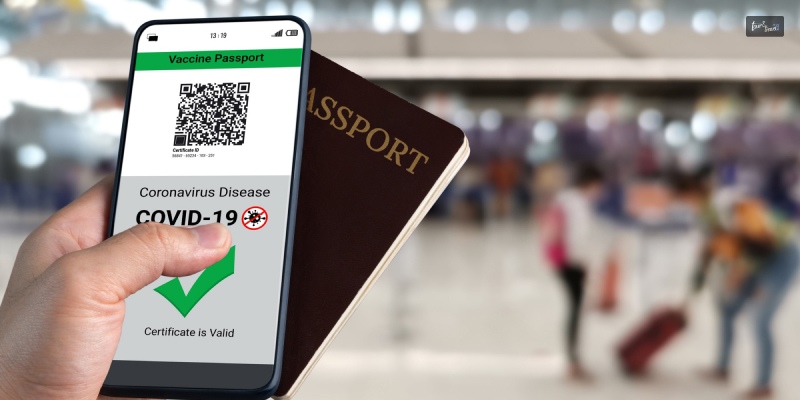
Universal travel passes are electronic passes with a QR code. Fully vaccinated citizens of India are issued with QR Code-based universal passes that allow them restrictionless travel through different mediums of transport.

The universal pass started with the Maharashtra State Disaster Management Authority. They started it in association with the Indian Railways. Two of these authorities ensured that people who are fully vaccinated and have the universal pass with them are eligible to travel through metros, local trains, and monorails in Mumbai.

The Maharashtra government issued the pass in five degrees; people working at the forefront of society, like healthcare workers, utility, education workers, and other essential services, were prioritized to have the pass.

Gradually, this travel pass became available to people from other cities in India. One only needs to get their vaccination done to be eligible for the universal travel pass.

Why Was The Universal Pass Introduced?

Following are the objectives for introducing the universal travel pass –

  • People with this QR-based pass can travel safely across India during the covid pandemic.
  • The travel pass was introduced to ensure that the education and healthcare system runs smoothly despite the obstacles caused by the covid pandemic.
  • People had safer modes of transportation thanks to the e-pass or Qr code-based travel pass.
  • There is no need for people with a travel pass to go through a physical examination to check whether they are fully vaccinated or not. The pass is proof of their vaccination.
  • During the covid-19 restrictions, there were many incidents of people traveling with a fake ID. The universal travel pass put a stop to this practice.
  • People with a travel pass can travel using any mode of transportation, be it a rickshaw or a train.
  • The universal travel pass reduces the need for RT-PCR tests during any interstate travel.

Who Are Eligible For A Universal Travel Pass?

The adult people of India are eligible to have a travel pass. However, they need to fulfill two simple criteria to be eligible for the universal travel pass. Citizens need to have both doses of their covid vaccination done.

Also, they need to spend a period of 14 days after the vaccination before they can apply for the universal pass. There is no need for children to apply for a travel pass.

How To Apply For Universal Travel Pass?

Here are the necessary steps for applying for a universal travel pass –

  • First, navigate to epassmsdma.mahait.com.
  • There, you will see the Citizen category. Under this category, you should click on Universal Pass for Double Vaccinated Citizens.
  • Vaccinated individuals have to enter the mobile number they have used during their CoWin registration.
  • An OTP will be provided to you. Now, you have to enter the OTP.
  • The previous procedure will show the applicant’s Covid-19 vaccination details. The details of their beneficiaries will also be there.
  • Now, the applicant’s details will be visible along with a slot to upload their photos.
  • Now, they must upload their photos (below 3 MB) and checkmark the declaration.
  • Once they click on Apply, the photo will be uploaded.
  • Then, the applicant will get a link to download their Universal Pass through SMS.

Applicants now download and print their universal travel pass. One can use both computer and mobile devices to generate, download and print their universal passes. Once you go through these steps, universal travel pass downloading will be easier.

Data Displayed On The Universal Travel Pass

Here are the data displayed on the Universal travel pass –

  • Name of the Travel Pass-holder.
  • UTP holder’s gender.
  • Age of the UTP holder.
  • Picture of the applicant.
  • Level of their travel category.
  • The IDs of the applicant’s beneficiaries.
  • QR code
  • Date of both dozes of the covid vaccination.

Frequently Asked Questions (FAQs):

I hope you have found the information you were looking for regarding the universal travel pass Maharashtra. Here are some extra queries and answers in case you need them –

1. Can I Travel Using Universal Pass?

Ans: The universal travel pass allows users to travel without any restrictions. The Indian railway and central government have issued this pass allowing citizens to travel across the country without any restriction. However, pass holders need to complete both the dozes of covid vaccines.

2. What Is The Process Of Universal Travel Pass?

Ans: People with a universal travel pass can travel across the country without restriction. They need to have a printout of the travel pass while booking train tickets or using any other public transportation. Only fully vaccinated individuals are eligible for the pass.

3. Is Maharashtra Universal Pass Valid?

Ans: You can use the universal travel pass all over the country, and the Maharashtra UTP is a valid government-issued document. This certificate is valid across all the states in India. The Central government has adopted the pass that the Maharashtra government initiated.

4. How Many Degrees Of UTP Are There?

Ans: There are five degrees of UTP issued by the government of India. These degrees are issued according to the level of covid restriction applied to certain states.

Bottom Line

People having the universal travel pass can travel across different states based on the degree of their pass and the levels of restrictions applied to different states. If citizens need to go out during the covid lockdown, they should have the UTP with them along with other necessary documents.

I hope that this article was helpful. If you have any questions about the same, you can approach us for clarification. Please comment below to engage with us. We cherish and encourage your support.

Share on Social Media

Arnab is a professional blogger, having an enormous interest in writing blogs and other jones of calligraphies. In terms of his professional commitments, He carries out sharing sentient blogs.

Leave a Reply

Your email address will not be published. Required fields are marked *

title-img Related

READ MORE best national parks in arkansas

What Are The Best National Parks In Arkansas? Know Why You Will Love Them 

BY  Sibashree Sep 1, 2021

Especially, the best national parks in Arkansas, along with national museums and trails, are a must-visit to learn about the American Civil War history.  But do you know that there is only one national park in Arkansas? The National Park Service only recognizes the Hot Springs National Park.  Along with that, you can also explore the National Memorial, Arkansas Post, National River, Buffalo, the National Historic Site, Fort Smith, etc.  For the campers and the hikers, these natural parks, monuments, and sites in Arkansas are like gems. Every hiking trail has a rich history along with a mesmerizing beauty. 7 Best National Parks In Arkansas Arkansas is home to the birthplace of the 42nd President of the United States, Bill Clinton. Also, it is known as the “Natural State.”  Furthermore, the state has seen major economic success in the tourism sector.  According to a report from Arkansas Money & Politics, in 2024, the tourism spending (business and leisure) was $10.3 billion, and it was a 4% increase from 2023.  Now these national sites, monuments, and national parks of Arkansas are the pillars of such a tourism boom.  Also, I had a wonderful time at these natural wonders. So, here, I will share some important details and my experience at these places.  1. Buffalo, The National River, Best For Canoeing, Kayaking, And Stargazing Quick Facts  Established: 1st March, 1972 Flowing Distance: 135 Miles through the Ozarks  Entry: Free Camping Charges: $0-$50 As I cruised through the Ozark Mountains and saw the massive limestone bluffs, Buffalo, the first national river of America, gifted me some goosebump moments.  It is also one of the undammed rivers in America. As the Sun went down, I along with my co-travelers and I enjoyed our campfire on the Buffalo River banks.  Furthermore, the Buffalo National River bank was designated as an International Dark Sky Park (IDSP) in 2019. You can even take part in various night sky programs in the river.  Moreover, the National Park Service has made some changes to the restrooms and lighting facilities around the Buffalo River to keep the light pollution and interference minimal for dark sky observation.  2. Fort Smith National Historic Site: Best For An American Civil War History Tour Entry: Free Hours: 9 AM to 5 PM Contact Number: Voice Phone Number, (479) 783-3961 Once you visit the Fort Smith Historic Site, 80 years of history will be alive in front of your eyes.  It awaits you to tell the story from 25th December 1817, the day it was established, to 1896, the jurisdiction of Judge Isaac C. Parker over Indian Territory.  In the middle of Oklahoma and Arkansas, there are many historic buildings from the Civil War era, in the Fort Smith National Historic Site.  Also, can you believe that 86 got the verdict of execution at Fort Smith between 1873 and 1896 in the courtroom of Isaac C. Parker? The gallows are also still there.  Does not seem surprising again, thanks to the jurisdiction of Judge Isaac C. Parker, who believed and said, “Permit no innocent man to be punished, but let no guilty man escape." 3. Hot Springs: The National Park In Arkansas With Ancient Thermal Springs   Entry Fee: Free Hours Open: Visitor Center, 9 AM to 5 PM, and Hiking 24/7 Hot Springs, the national park of Arkansas, has an interesting geology, and the ancient thermal springs are the most fascinating feature of this national park.  Furthermore, it has historic bathhouses where you can heal and relax with the ultimate spa experience. Choose between the Lamar Bathhouse, Ozark Bathhouse, Hale Bathhouse, Superior Bathhouse, and many such names.  Also, remember that the bathhouse area, constructed during the period of 1892 and 1923, was designated as a National Historic Landmark District in 1987 along with the Grand Promenade.  Furthermore, along with exploring the hot springs and bath houses, you can even camp at the Gulpha Gorge Campground. The camping fee is $34 per night.  However, the most rewarding experience here is hiking through Hot Springs and North Mountain Trails, Sunset Trail, and West Mountain Trails.  4. Little Rock Central High School: National Historic Site I missed visiting the Little Rock Central High School. In 1957, this school was the epicenter of the enforcement of the African American Civil Rights. The school followed the Brown v. Board of Education. Moreover, the struggle of the Little Rock Central High School ensured that everyone around the world got opportunities for education.  5. Arkansas Post: National War Memorial Henri de Tonti established the Poste de Arkansea in 1686. Located at the Quapaw village of Osotouy, it became known as “The Post.”  There was a long struggle between Spain, France, and England for dominion over the Mississippi Valley.  The Post eventually became the first semi-permanent settlement of the French in the Lower Mississippi Valley.  Moreover, The Post is witness to the only Revolutionary War in Arkansas, in which the British partisans logged head with Spanish soldiers. It took place in 1783 and was also known as the Colbert Raid.  Again, in 1803, thanks to the Louisiana Purchase, the Post became a part of the United States. Moreover, by 1819, it was the first city to become the capital of the Arkansas Territory, and it was the largest regional city.  During the Civil War, Fort Hindman was built here to take control over the confluence of White and Arkansas Rivers. However, it was destroyed in 1863.  6. President William Jefferson Clinton Birthplace This place is the perfect definition of an American leader born in the woods, who makes some revolutionary movements. President William Jefferson Clinton was born in the Town of Hope in the Arkansas ranges. The president spent his first four years here. The property is still in good condition. Take a walk on the property. Then take a tour of the town of Hope. And feel the historical vibes of the place. 7. Trail Of Tears The historical value of the trails is pretty touching, and is remembered by the Native Indian tribes and the Cherokee people.  The Trail of tears is a historical trail that is 5,043 miles long. The track stretches from the southern Appalachian mountains to the west side. This single historical trail crosses over nine USA states. The heart-touching facts are attached to this trial. In 1830, seventeen Cherokee groups were removed from their homelands. And the painful consequences determined the fate of these people. For the remembrance of the sacrifice of the people, this historical path is called the Trail of Tears. Wrapping It Up: The best national parks in Arkansas, along with other national sites, are good travel destinations for people of all ages. If you are looking for a good travel option that has historical value. This is the best choice. For adventure-loving travelers, this is the best choice to spend the entire day on the side of the Buffalo River. You can visit the nearest places from the river banks, and all the hiking trails lead towards a town. So most often there is less chance of getting lost. But morning and daytime are the most suitable times to explore the place. So what is your next travel plan? Do not forget to share your experience with us in the comment section. Read Also: Living Your Solo Travel Dreams: 8+ Best Places To Travel Solo Female In US Unique Things To Do In Tulsa: Into The Land Of Art Deco Architecture Be Soothed And Meet History At Hot Springs National Park

READ MORE Managing Utility Bills And Services During Moves And Extended Travel

Managing Utility Bills And Services During Moves And Extended Travel

BY  Mashum Feb 13, 2024

Before packing your first box, make sure to notify your utility and service providers of your move date and new address. This includes essential services like gas, electricity, water, internet, phone, and cable or satellite TV. Notifying them in advance ensures you receive a final bill for service at your old address so you can pay any remaining balance. Provide the exact date the service should stop and your new address where the service should start. Also give them a forwarding address for the final bill, which may come later. Taking these proactive notification steps alleviates headaches from missed bills or payments during a busy move. Avoid Bill Surprises While On The Go Constantly traveling or relocating for extended periods can make paying and keeping track of utility bills a real headache. Set your accounts for automatic and paperless billing to avoid missing payments or getting hit with late fees. Have electric, gas, cable, internet, phone, and other bills set to autopay directly from your bank account every month while you are away, and make sure you have enough funds available to cover those payments? Also, set up your accounts so that bills can be viewed and managed electronically online through each provider's website. Retail expert movers recommend routing all bills and statements to a trusted relative or P.O. box that will forward your mail to wherever you end up. With a few preparatory steps before locking up and heading out, you can travel worry-free knowing vital services won't be disconnected. Forward Important Mail During Transitions Whether you're moving across town or traveling overseas for months at a time, don't let lapses in mail service leave you in the dark on important communications. Before an upcoming move, submit a change of address to the post office so mail gets routed to your new residence or a trusted contact. This ensures you receive mail from utility companies, banks, insurance providers, and other services during the transition process. If taking an extended trip, have the post office hold your mail until you return or forward it to a friend or family member who can scan and email you anything urgent. This way bills, legal documents, and other correspondence don't pile up unchecked at your empty house while you're gone for weeks or months. Staying up-to-date on mail prevents unexpected issues. Read Also: Corporate Travel Redefined: The Power Of Taxi Amsterdam For Business Rides Streamline Services While Away When you're preparing for an extended time away from home, look at temporarily suspending non-vital home services to save money. Cable TV and internet packages often tack on fees, so you end up paying for services never used. Before an extended trip or during slow relocation periods: Put cable TV services on seasonal hold - once reactivated, retain your previous channel package without added fees Suspend internet if wireless access is not essential during your time away Stop newspaper delivery which will pile up unread Place gym memberships on hold status so monthly fees aren't wasted Disable alarm monitoring systems with the assurance of quick reactivation Pausing unnecessary utilities and home services over weeks or months gives savings that add up. Most providers let you conveniently pick up where you left off for seamless transitions. As the Federal Communications Commission notes, be aware of any terms or conditions associated with temporarily discontinuing services. With some advanced planning, you can streamline the services you actually need and forego the rest while you’re away. Get Seasonal Utility Rates For Long Trips When planning for an extended trip spanning multiple seasons, take advantage of many utility providers' seasonal service plans to maximize savings. Call your gas, electric, and water companies to inquire if they offer special rates for customers who will be away for months at a stretch–common for snowbird travelers and those holding up somewhere warm for the frigid winter months. Oftentimes providers give breaks on standard bills when they know in advance you won't actually be occupying the home to use services for a fixed duration. Find out what options are readily available for putting gas, electric, water, and even cable on hold status just until your return, even if you come back at a different time annually. Checking on special cost-saving programs specific to extended seasonal gaps in service can pay off. This allows flexible travelers focused on warm weather destinations to save a little more towards their next adventure on the road. Reconnect Services Upon Returning Home Don't come home to a property full of shut-off notices! Be proactive by scheduling and confirming the reactivation of utility and home services shortly before your return. A few days ahead: Call the cable company to reopen service on your scheduled move-in date - this prevents lagging connections. Have the power company resume electrical service by your designated date to avoid dark, warm apartments. Reactivate your home internet modem and wireless router to get back online for work and entertainment needs as soon as you arrive. Resume your garbage pickup on the day you move back to prevent waste pile-ups. As cautioned by USA.gov's household services guidance, don't assume providers will automatically switch your accounts back on. After lengthy absences, directly request all services be transferred or started at your location effective on the precise date of your arrival to avoid any lapses. Scheduling ahead alleviates having to reboot utilities one by one after coming home tired from travel. Instead, enjoy seamless access to functioning appliances, climate control, and amenities. Planning Ahead Minimizes Headaches Whether you're frequently on the go or planning an extended getaway, don't let utility billing and services fall by the wayside. With some advance preparation before transitions, you can redirect mail, suspend non-essential accounts, take advantage of seasonal rates, and seamlessly reconnect everything upon returning home. Staying actively informed and visible to providers while away reduces the chances of penalties, confusion, or disruptions down the road. A few simple proactive tasks like automating payments or consolidating bills to one trusted advisor can alleviate countless headaches. Embrace solutions that simplify managing obligations from afar. The little time invested upfront in organizing your affairs makes for smooth travels every step of the journey. Read Also: Sands Of Splendor: Luxurious Desert Safari Experiences In Dubai 20 Of The Best Places To Travel In Africa In 2024 6 Best Destinations For A Safari In Kenya

READ MORE What is the oldest country

What Is The Oldest Country In The World? Japanese And Other Civilizations Still Alive Today 

BY  Sibashree Apr 1, 2026

While Iran, one of the oldest countries in the world, is fighting back against the joint attack of the USA and Israel, it’s the correct moment to look back at the ancient civilizations of our world.  So, what is the oldest country in the world?  While some say it is Japan, some vouch for India, and China remains the oldest continuous civilization in the world.  Here, I have picked 10 countries that I can call the “Immortal Ten” because of the human resilience they have shown and how they have survived.  What Is The Oldest Country In The World?  The current geopolitical map, in fact, did not exist for a long time.  Most of the countries that are members of the United Nations came into being in the aftermath of 20th-century decolonization or the dissolution of Soviet-era empires.  But what lies under the modern borders and changing flags is a much deeper level of human history.  Although historians generally use continuous sovereignty to measure longevity.  However, a government can lose its sovereignty to an invader, but that does not necessarily mean the end of the culture.  The true measures of a lasting civilization are cultural continuity, the survival of language,  religion, social cohesion, and identity beyond the ruin of even the most magnificent palaces. So, each civilization that qualifies for this list has withstood conquest, colonization, or internal upheaval without losing its very foundation.  Here are the ten oldest civilizations that are still living today. 1. China, The Oldest Continuous Civilization In The World  China traces its origins back to the Shang Dynasty (c. 1600 BC) over 3,500 years ago.  The oracle bone script of the Shang did not simply get lost like the hieroglyphics of Egypt or the cuneiforms of Mesopotamia. Instead, it gradually transformed into the modern Chinese writing system in use today.  Furthermore, the "Imperial Logic" of China, a centralized bureaucracy under moral guidance by Confucianism, was the charter of the Han Dynasty. It continued to be the underpinning even through the rise and fall of the many dynasties.  Even when the country was dominated by foreign powers such as the Mongols (Yuan Dynasty) or the Manchus (Qing Dynasty), they did not "unmake" China.  Rather, the new rulers were "Sinicized, " taking on the Chinese ways of administration and language so as to stay in power.  The present-day People's Republic of China utilizes a model of central governance that is reflective of the bureaucratic mindset of the emperors who ruled the country some two millennia ago. 2. Egypt: The Tital Of Antiquity  Egyptian civilization rose to prominence around 3100 BC under Pharaoh Narmer, at least in theory.  For 3,000 years, it set the standard for administration, engineering, and art.  The native religion faded with Christianity, and later Islam, and Coptic was mostly replaced by Arabic.  Still, the Egyptian character stayed rooted in the Nile.  Foreign powers, such as the Persians, Romans, Ottomans, and British, could never fully erase that identity.  Furthermore, Cairo held a central role in Islamic thought for centuries.  Today, Egypt remains the most culturally influential nation in the Arab world. The people have outlasted every empire that tried to control them. 3. Iran: The Persian Resilience  Iran, once called Persia, ruled the world from 550 BC when Cyrus the Great built the Achaemenid Empire.  The culture soaked up new rulers instead of losing itself.  After Alexander took over, he started wearing Persian royal clothes.  When Islam came in the 7th century through Arab rule, Persians embraced the faith but kept their language and built a unique style of art and religion. Thus, eventually, the formation of Shi'a Islam happened.  Farsi stayed strong with its roots unchanged and gave rise to poetry that shaped global thought, in particular through Rumi and Hafez.  Now, Iran's Islamic Republic stands where the ancient emperors once did, same land, same heartland, 2,500 years later! 4. India: The Land Of Spirituality India's story starts with the Indus Valley Civilization (c 2500 BC).  After it faded, the Vedic traditions in the Ganges Valley shaped Hinduism.  Also, the thing is, India has always had this "Diversity in Unity. "  It survived Mughal rule and the British Raj without giving up its core values or spiritual roots.  Local languages, epics like the Mahabharata, and daily life structures held strong through centuries of outside control.  After its independence from British Rule in 1947, India became the world's largest democracy, built on an ancient foundation that still holds together today. 5. Greece: The Land Of Philosophy  Greek civilization had its beginnings in the Bronze Age with the Mycenaeans (c. 1100 BC). Furthermore, its most flourishing period was the 5th-century BC "Golden Age" of Athens.  After the Greek city-states were absorbed by Rome to some extent, Greek culture became the very foundation of the Roman Empire.  In the Byzantine Empire, Greek was the language of the state as well as the church, and it was through these that Classical knowledge was preserved through the Middle Ages.  Even under four centuries of Ottoman rule, Greeks maintained their identity through the Orthodox Church and the use of their ancient language.  Moreover, when modern Greece was liberated in 1830, in essence, it was not a matter of creating a new identity. It was about celebrating a nation and a culture that has been around for three thousand years. 6. Japan: The Land Of The Oldest Continuous Hereditary Monarchy Japan has the world's oldest continuous hereditary monarchy, beginning with a legendary founding in 660 BC and first documented records in the 6th century AD.  It modernized rapidly during the Meiji Restoration in 1868 without losing its traditional values.  Furthermore, unified by one language and Shinto and Buddhism, Japan was never colonized by a Western power.  Even after World War II destroyed much of its infrastructure, the imperial institution stayed intact as a symbol of continuity.  Probably more or less, Japan's blend of advanced industry and old social norms contributes to its stability.  Today, the nation remains one of the most enduring civilizations in history. 7. Ethiopia: The Highland Fortress Ethiopia stands as a symbol of African endurance.  Its origins go back to the Aksumite Empire (c. 100 AD), which was among the earliest nations to adopt Christianity in the 4th century.  For over seven hundred years, the Solomonic Dynasty, which asserted its lineage from the biblical King Solomon, ruled the country.  The challenging terrain of Ethiopia enabled it to be the only African country that was never colonized (although it was under an Italian occupation for a short time in the 1930s).  The Ethiopian Orthodox Church and the Ge'ez script were cultural foundations. It preserved national identity and sovereignty when the rest of the continent was carved up by Europe. 8. Jewish Civilization Starting in the kingdoms of Israel and Judah more than 3,000 years ago, Jewish civilization stands as the most remarkable example of cultural resilience in history.  After the Romans destroyed Jerusalem, the Jews spread out worldwide in a diaspora. Normally, a nation without a territory would lose its identity in a few generations.  However, Jewish civilization, through religious law (Halakha), the Hebrew script, and a strong tradition of education, was able to survive as a "portable nation".  The founding of the State of Israel in 1948 was the political expression of a cultural memory that had been kept alive for over 2,000 years. 9. Armenia: The First Christian State Armenia has been located in the Caucasus region for at least 3,000 years.  It was the first country to make Christianity its official religion in 301 AD.  Yes, the Armenian people had many influences. The Persian, Roman, Ottoman, and Soviet!   They still maintained their unique alphabet (created in the 5th century) and their national church.  Not even the atrocities of the 1915 genocide were able to sever the cultural connection of the modern Republic of Armenia with its ancient Bronze Age heritage. 10. Korea: The Hermit Continuity The Korean culture started with the kingdom of Gojoseon. Further, its cultural identity resulted in a unified nation by the 7th century.  Surrounded by a peninsula, Korea had its unique Hangul script and Confucian values. Thus, despite cultural influences from China and a very harsh period of Japanese colonization (1910-1945), it never lost its identity.  Even though North and South are separate nowadays, they both have the same original myths, language, and sense of ancestors' pride.