

Thuparamaya, Anuradhapura: Walking Around Sri Lanka’s First Stupa (2026 Guide)

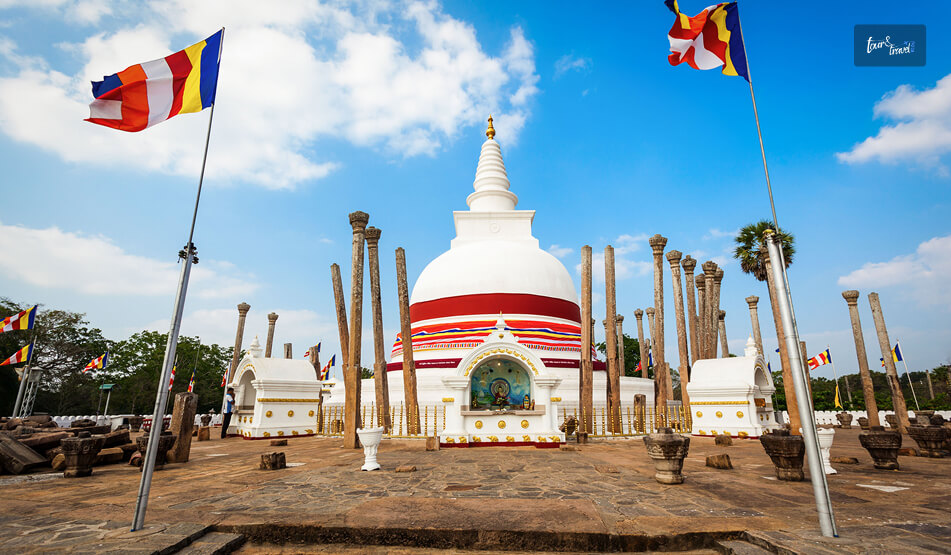
Thuparamaya is probably the most unassuming among the dagobas of Anuradhapura. 

However, it is equally, if not more, important than other dagobas and stupas in Sri Lanka. 

It was the first stupa that was built in Sri Lanka after Buddhism arrived here. Also, it was built as the house of the relic of the right collarbone of Lord Buddha. 

Furthermore, recently, an update has made this stupa the center of attraction, especially for Indian travelers and the Buddhist people of India. 

The Sri Lanka Tourism Development Authority reported 191,704 arrivals in August 2026. It highlighted that India was the largest source market with 47253 visitors. 

This is a significant figure as the founding story of Thuparamaya stupa runs through the Indian emperor Ashoka and his envoy Mahinda.

So, if you are interested in Buddhism or the history of India, this is the spot where a familiar thread reaches Sri Lanka. 

Thuparamaya At A Glance

DetailWhat to Know
LocationSacred precinct of Anuradhapura, North Central Province, Sri Lanka
FounderKing Devanampiya Tissa (247–207 BC) built it at the request of the monk Mahinda.
PurposeTo enshrine the Buddha’s right collarbone.The first stupa after Buddhism reached the island.
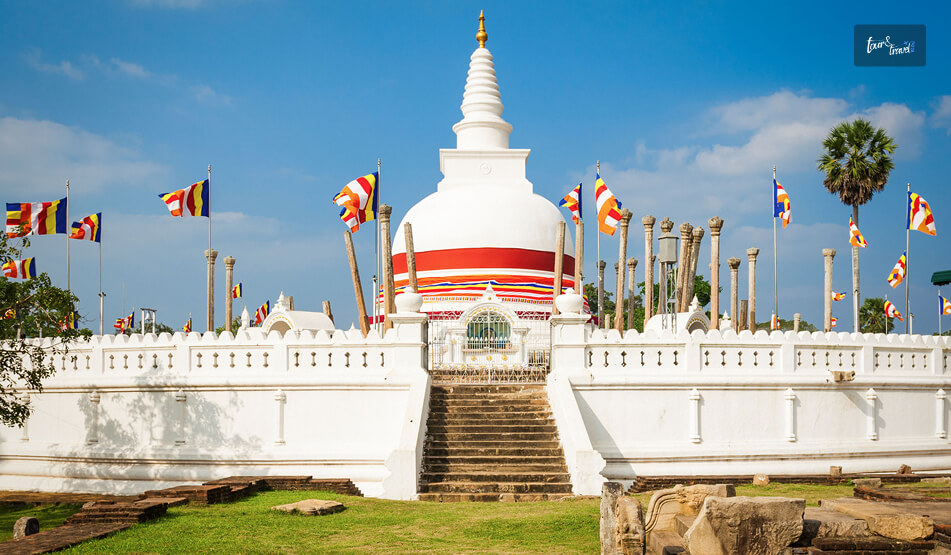
FormBell-shaped dome.Two rings of stone pillars survive from a roofed vihara.
HeightAbout 19 Meters
Base diameter18 Meters
Current structureRebuilt in the 19th century
Hours7 AM to 5 PM
TicketIncluded in the Anuradhapura Sacred City TicketFree for LocalsForeign Adults: USD 30.00Foreign Children: USD 15SAARC Adults and Children: USD 15
Time needed30–45 minutes 
Best timeEarly morning, before the stone platform heats up

My Morning At The First Stupa

My Morning At The First Stupa

When I reached Thuparamaya, the ticket counter had just opened. 

So, when I took my shoes off at the edge of the platform and stepped onto granite, it was still cool. 

After the scale of Ruwanwelisaya and Jetavanaramaya, Thuparamaya felt humane and intimate.

I took a circle of the dome and then continued exploring the stupa. 

The Stone Pillars Around The Dome

I noticed the pillars around the dome. 

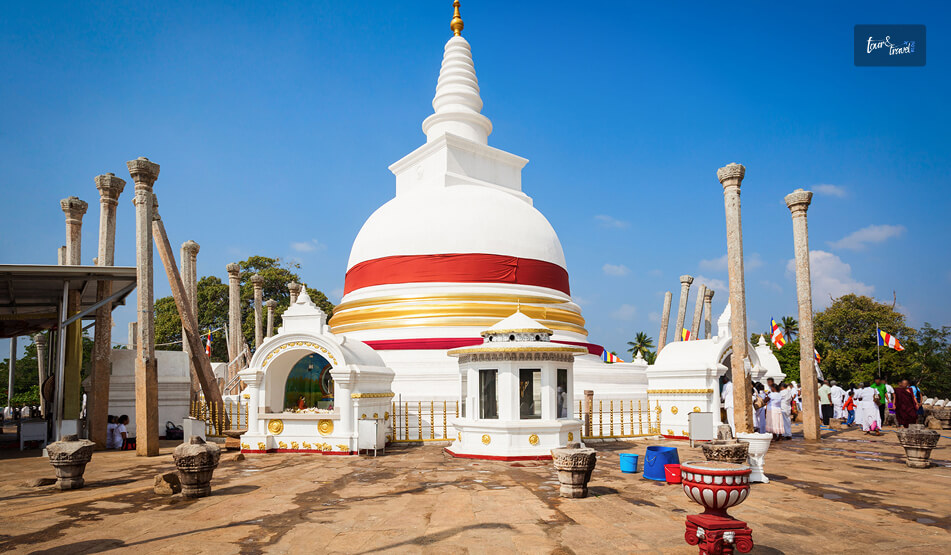
Two rings of stone columns stand around the stupa.

These are the remains of a roofed vatadage, a circular relic house, that once sheltered it. 

Oriental Architecture describes Thuparamaya as the oldest of Sri Lanka’s vatadage-type shrines.

Furthermore, the building is attributed to Devanampiya Tissa and later to King Vasabha. 

Standing among those columns, I found it easy to picture a timber roof overhead and lamplight inside.

Living Worship, Not A Museum Piece

When I was at Thuparamaya, I saw devotees arriving with flowers. 

Also, the monks were moving quietly around the platform. Everything was happening on time. 

However, there was no rush around it. 

So, if you are visiting this stupa, keep your voice low and be respectful while taking photos. 

The Ruins Around 

The primary complex of the Thuparamaya Stupa is enclosed by a square boundary wall with a southeastern entrance.

Behind this lies a structure identified as a Bodhigara rather than its previously suspected roles. 

To the right of the main gate stands the Padalanchana Stupa, built by King Lagnatissa to mark the sacred footprint site of the four Buddhas of this aeon. 

To the left of the central stupa is a prominent 3rd-century BCE image house historically known as the Trident House.

Moreover, just beyond the main enclosure to the far left remains the pillared chapter house of the monastery. 

The History: How One Collarbone Started A Landscape of Stupas

The History How One Collarbone Started A Landscape of Stupas

Ashoka sent Mahinda to Sri Lanka, bringing Theravada Buddhism and the practice of worshipping at chaityas. 

At Mahinda’s request, King Devanampiya Tissa built Thuparamaya to enshrine the Buddha’s right collarbone.

That is why it has the designation of the first stupa on the island. 

The timeline below sets out what the record supports at each stage.

PeriodEventNote
247–207 BCFounding under Devanampiya TissaTraditional date for the first stupa
114–136 ADPalumekichchawa Inscription names the Thuparama templeDescribed as the earliest chiselled stone inscription naming it during the reign of Gajabahu
Later Anuradhapura eraRuined stupa restored under Aggabodhi IIRoyal edict ordered full restoration
19th centuryPresent dome rebuilt1862

Why The Name Matters

Thuparamaya combines stupa with aramaya, a residential complex for monks. 

The name tells you the stupa was never a standalone structure. 

It anchored a monastery.

Also, an ancient inscription even records a reservoir whose harvest was for the monks living here.

Latest Updates For 2026 Visitors

Latest Updates For 2026 Visitors

These are the recent developments I would check before travelling.

August 2026 arrivals were 191,704, and January to August arrivals reached 1,535,122, according to the Economic Times LK. 

For comparison, August 2025 stood at 198,235, according to the Financial Chronicle.

So this year is a little below last year’s pace.

Also, there is ongoing UNESCO restoration work at Jetavanaramaya. Due to this, Thuparamaya is getting more crowds of photographers and tourists looking for photo ops. 

Cycling Versus Tuk-Tuk

The core sites span roughly 10 km of riding.

So, renting a bicycle is the best way to visit them. A bicycle rental is around 300-400 LKR for a day. 

You will also get tuk-tuks on hire here. 

A Half-Day Itinerary Around Thuparamaya

TimeStopWhy This Stop Works
6:30 AMSri Maha BodhiPilgrimage atmosphere is strongest at dawn.
7:30 AMThuparamayaCool stone, few visitors, unhurried circuit.
8:30 AMRuwanwelisayaShort ride and the white dome looks magical in morning light. 
9:30 AMJetavanaramaya and museumAllow time for the museum and any scaffolding views.
12:00 PMLunch and restAvoid the 12 to 3 PM heat.
3:30 PMAbhayagiriLarger site, easier in the softer afternoon light.

Nearby Places To Combine With Thuparamaya

The Jaya Sri Maha Bodhi Museum is about 1 km away, and Jetavanaramaya is about 2 km from Thuparamaya. 

Also, Anuradhapura anchors the north-west corner of the Cultural Triangle. So, you can easily visit the Sigiriya Rock Fortress.

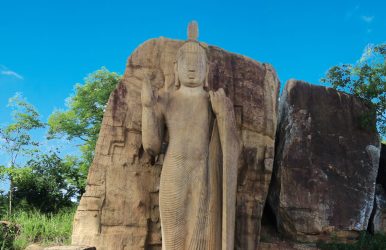
Furthermore,  the Aukana Buddha statue is a natural stop on the road.

Share on Social Media

Sibashree is a travel, culture, and leisure writer who has been writing since the age of 12 and professionally since 2014. With more than a decade of travel writing experience and journeys across India and several parts of the world, she brings a deeply personal and thoughtful perspective to her work. A student of English Literature and Mass Communication, Sibashree has always viewed travel as more than movement — for her, it has been a way of understanding people, cultures, and herself. Her passion for spiritual exploration has also led her to many unusual and meaningful destinations over the years. Outside of writing, Sibashree enjoys watching European cinema, reading about global politics, and reflecting on the stories hidden within everyday places.

Leave a Reply

Your email address will not be published. Required fields are marked *

title-img Related

READ MORE Uppuveli Beach

Where Is Uppuveli Beach, Trincomalee? What Are The Best Things About The Beach?

BY  Sibashree Mar 24, 2026

After spending time in the northern city of Jaffna exploring everything it has to offer, I was looking forward to relaxing.  Jaffna has some beautiful temples, and despite being a slow travel destination, the rich Tamil culture and history offered a fulfilling experience.  However, I needed a place where I could relax and soak in the memories I have collected there. I intended to enjoy just those "beachy" times when I arrived at Trincomalee, and that is exactly what I found on the Uppuveli Beach.  This was the ultimate "holiday within my backpacking trip," and completely different from the beaches in Jaffna. Where Is The Uppuveli Beach? Uppuveli Beach is in Trincomalee. On the northeastern coast of Sri Lanka, it is further the epicenter if you are exploring the things to do in Trincomalee.  The distance between the Uppuveli Beach and the Trincomalee city center is just 6 kilometers. So, you can reach within a drive of just 15 minutes.  Moreover, it is famous for the beauty of the Bay of Bengal, and from here you can explore nearby attractions such as the Pigeon Island Marine National Park and Swami Rock. How To Reach Uppuveli Beach From Trincomalee? The Blue Bus Experience? You can travel from Jaffna to Trincomalee by bus like me. Trincomalee, anyway, is a major transport hub.  Furthermore, it is well-connected to Colombo, Kandy, and even Habarana, which is the major gateway to many other things to see in Sri Lanka, such as the Hurulu Eco Park, Sigiriya Rock, the Pidurangala Rock, and the Kaudulla National Park.  I reached Trincomalee from Jaffna by bus within 4 hours and 50 minutes. However, our driver, Ahoy, said that on days of dense traffic, it can take up to 5 hours and 30 minutes.  Travel From Jaffna To Trincomalee By Bus The blue buses from Jaffna to Trincomalee are the cheapest mode of transport. The ticket cost roughly 1100 LKR.  From Trincomalee To Uppuveli Beach  From the Trincomalee Bus Station, I took a tuk-tuk to the Uppuveli Beach. The tuk-tuk driver charged me 500 LKR.  The Experience At Uppuveli Beach  Uppuveli Beach is the place that offers you simplicity, and here, you will forget keeping track of your time.  You can swim, sunbathe, or just soak in the beauty of the golden hour, or just soak in the beauty of golden hour or count the waves like me.  The Golden Hour See a sunset on the beach while it’s still dark out.  Uppuveli faces the east, and it offers an amazing view of the Bay of Bengal when the sun rises.  The sky looks like it’s on fire with shades of pink and gold lighting up the clouds.  The Waves The waves were huge when I was there in July. The waves here rise really high above your head and can definitely knock you over if you don’t pay attention to them when swimming.  If you can catch the waves just right, they are also great for body surfing. As always, be respectful of the Indian Ocean.  What Are The Things To Do At Uppuveli Beach? Uppuveli offers a serene alternative to the more crowded southern beaches.  Boasting breathtaking turquoise waters and palm trees swaying in harmony with one another, Uppuveli is a welcoming community that exudes a sense of calm. 1. Marine Adventures At Pigeon Island Marine National Park The number one attraction in Uppuveli is Pigeon Island Marine National Park.  A 20-minute boat ride from the beach will take you to Pigeon Island, a protected sanctuary surrounded by colorful and lively coral reefs.  Pigeon Island is famous as one of the three places in the world where you can see black-tip reef sharks and giant sea turtles in the shallow waters (up to 12 feet).  You may also dive deeper by visiting several local dive shops that operate daily excursions to the Uppuveli Pinnacles and the famous shipwrecks in and around Uppuveli.  Local dive shops also provide excursions between March and September to boat watch for blue whales and pods of spinning dolphins. 2. Visit The Cultural Landmarks Of Swami Rock You may take a short tuk-tuk ride to the Swami Rock Temple located in Trincomalee town.  Swami Rock is perched on a cliff and provides some of the best views of the ocean as you look towards the Koneswaram Hindu Temple, which is located in the middle of the cliff and overlooks Trincomalee Harbor. The temple is dedicated to Shiva and is a great example of intricate Dravidian-style architecture.  In addition to the temple at Swami Rock, you will also see Lover’s Leap, which is nearby and steeped in local folklore. 3. Visit Fort Frederick And Find Spotted Deer On your way to the Koneswaram Temple, be sure to visit Fort Frederick. It is a 17th-century fortress built by the Portuguese.  Fort Frederick today is a peaceful area. It has many spotted deer, and you can see them roaming freely between colonial buildings and massive banyan trees. 4. Kanniya Hot Water Springs For something unique, head inland to the Kanniya Hot Water Springs.  There are seven stone wells here, each producing water at a slightly different temperature.  It’s a traditional site for ritual bathing. Also, people believe that water here has healing properties. Moreover, at Uppuveli Beach, you can have the best dining and drinking experience thanks to places such as Fernando’s Bar, Rice 'n' Curry, and Cafe on the 18th. Also, you will find Wanderers Hostel and other budget-friendly places to stay near the Uppuveli Beach.  When Is The Best Time To Visit Uppuveli Beach?  The best time to visit Uppuveli Beach is between February and August, and July is the peak month.  From August, the ocean starts getting a little rougher.  Moreover, as I have mentioned, it is best to hit the beach when it is still dark. Thus, you can enjoy the magic of the sunrise.  Also, if you want a drink by the sea, 3:30 PM to 4 PM will be the best. As you gulp down some cold Lion Lager, the Sun prepares to go to rest for the day.
READ MORE Adam's Peak

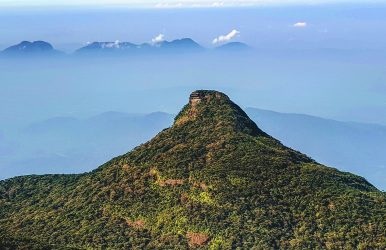
Adam’s Peak (Sri Pada): Climbing Sri Lanka’s Sacred Mountain

BY  Sibashree Aug 21, 2026

It was two in the morning, and I started climbing Adam’s Peak. I was in a line of pilgrims, and the line stretched as far as I could see with my torchlight. All the guides about climbing up this sacred mountain tell you about climbing the 5500 steps. However, nothing prepares you for the experience you will have in conquering them in pitch darkness.  Furthermore, the crowd itself was a reflection of how inclusive Sri Lanka is in its religious practice. It was a gathering of people from four different religious beliefs.  The reasons for everyone’s climb were not the same. However, that did not quite clash with each other.  That is the beauty of the Indian Subcontinent, and Sri Lanka sets an example each time I visit it.   Nevertheless, in this guide, I will talk about my experience of reaching the summit of Adam’s Peak and all the details you need to know.  Adam’s Peak: Some Quick Facts You Need To Know AttributeDetailsLocationInside Peak Wilderness Protected Area, Central Highlands, Sri LankaElevation2,243 Metres (7,359 Feet)Local NameSri Pada ("Sacred Footprint") or SivanolipaathamalaiReligious SignificanceSacred to Buddhists, Hindus, Muslims, ChristiansTotal StepsRoughly 5,500 Stairs via the Popular Hatton RouteAverage Hike Time3 to 5 Hours for the Ascent1.5 to 2 Hours for the DescentPilgrimage SeasonDecember (Unduvap Poya) to May (Vesak Poya)Best Months to ClimbJanuary to March for Dry Weather and Clear Sunrise ViewsCostFree (No Entry Fee or Permit Requirements) What Makes Adam's Peak Sacred Mount Pedro is the tallest mountain in Sri Lanka. However, Adam’s Peak has the highest spiritual significance.  The local name for the peak, Sri Pada, or "Sacred Footprint,” itself sets your expectations high.  It rises 2243 meters in the Central Highlands of Sri Lanka. Adam’s Peak has a rock formation at the summit resembling a large footprint, which is claimed by four separate religions. The Mystery Of The Footprint At The Adam’s Peak Summit The Buddhists believe that the sacred footprint at the summit is of Lord Buddha. On the other hand, Hindus believe that the footprint is of Lord Shiva.  Some Christians think the footprint is of Adam. He set his first footprint here after falling from the Garden of Eden. Muslims also believe Adam, the first prophet in their religion, left this footprint.  Furthermore, there is a different Christian belief that the footprint belongs to St. Thomas.  Again, the locals call it the “Mountain of Saman.” They think the mountain is associated with Saman, a significant figure of worship in local traditions.  Irrespective of the religious significance of Adam’s Peak, pilgrimage to the summit has continued for over a thousand years. A Brief History Of The Pilgrimage Some of the earliest recorded efforts to conquer Adam’s Peak go back to the reign of King Vijayabahu I in the eleventh century. He built wayside rest houses along the route. Later, various rulers expanded the mountaintop shrine. They also built roads and installed the iron chains that still assist climbers on the steepest sections near the summit. Another fascinating local belief is that the chains in the steep sections of the route belonged to Alexander the Great. Also, you will find a mention of Adam’s Peak in the writings of the Chinese traveler Ma Huan. He described Adam’s Peak as a place rich with precious stones. Along with the religious significance, the richness of gems is another reason why this peak has drawn visitors from far beyond Sri Lanka. Where Is Adam's Peak Located? https://maps.app.goo.gl/CZeW7kGZ8rTZG2Xc8 The sacred mountain is in the southwestern part of the Central Range in Sri Lanka. It is at a distance of around 40 km from Ratnapura.  However, the more popular trekking route is through Hatton, which is just at a distance of 32 km.  The landscape surrounding the mountain is delightful and quintessential of the Sri Lankan Central Highlands. You will see tea plantations and rainforest.  Moreover, Dalhousie, or Nallathanniya, is the village at the base of this mountain. Most trekkers start their journey from this village itself.  It is an easy base to reach from Hatton, Maskeliya, or Ratnapura, depending on which direction you're coming from. Getting To The Trailhead Hatton is the main transport hub for this side of the mountain. It is well connected by train on Sri Lanka's scenic hill-country line as well as by bus from Kandy, Nuwara Eliya, and Colombo.  From Hatton, local buses and shared taxis run the remaining stretch to Nallathanniya. During peak pilgrimage season, you will get extra buses heading to the base.  If you are driving yourself, the roads narrow considerably in the final approach to Dalhousie. Also, parking fills up quickly on weekends and full moon nights. Choosing Your Route To Adam’s Peak Just as pilgrims of four different religions want to conquer Adam’s Peak, there are six trails that lead to Adam’s Peak.  However, as I have mentioned, the Hatton route via Nallathanniya is popular with travelers. It is also the easiest.  The route is around 5 km one-way, and the staircase on this route is well-maintained for a safe ascent.  The Kuruwita-Erathna, Ihala-Maliboda, and Ratnapura routes are longer. They are also less developed and used mainly by more experienced or locally guided hikers rather than casual visitors. The Night Climb Most pilgrims start the climb to the summit at around 2 to 3 AM. This reminded me of the walk and the queue for visiting the Tirupati Balaji Temple and Aruanchalam Temple in India. Both of these temples are located at hilltops.  Nevertheless, with the ascent starting at 2 AM to 3 AM, you can reach the summit before sunrise at around 6 to 6:15 AM.  You know your fitness level and the number of stops you are taking at the tea shops along the way. The total duration to complete the ascent will change with these factors.  Also, very few people talk about the descent, which is actually way harder, and my knees had a hard time.  The reward of all this hardwork is the sacred "Shadow of Sri Pada" on a clear morning.  Difficulty And Fitness Considerations The climb to Adam’s Peak is moderate to hard. There is no technical scrambling.  However, the stone stairs are relentless, and they test different muscles than a usual hiking trail. So, basic fitness is important, and only reasonably fit adults can complete the ascent in three to four hours. Having said that, mental endurance is most important here.  I passed pilgrims well into their seventies moving slower but steadily upward alongside groups of teenagers.  The descent deserves just as much respect as the climb. The repetitive downward impact on knees and quads catches many first-timers off guard. Also, rushing it is a common way to end up sore for days afterward. What Is The Best Time To Climb Adam’s Peak From the Unduwap Poya (full moon) in December to the Vesak Poya in May is the official pilgrimage season for climbing Adam’s Peak.  It is the dry season in Sri Lanka.  The entire route gets decked up during this season. The strings of lights, the tea stalls, and rest huts open all night make the ambience festive.  However, if you want to avoid the crowd, you can plan a climb between June and November.  Skip the monsoon months and slippery stone steps.  Crowds And Timing Within The Season If you want to join the pilgrims in the peak season, you must avoid the following days. Full Moon Days Weekends The Week Around the Sinhala New Year in Mid-April. Also, the months of January and February remain the busiest.  So, if you are planning a quieter climb in the festive season, aim for a weekday in early December or late April instead. What To Pack And Expect Comfortable, broken-in walking shoes matter more here than technical hiking gear. The trail has no scrambling but plenty of relentless stairs.  Nights on the mountain get cold, particularly in December and January. So, a warm layer is worth the extra weight in your bag.  The entry is free, though donations are welcomed at the temple near the base. Moreover, you must carry cash for tea, snacks, and simple meals from the stalls lining the route during the season. Nearby Places To Combine With Your Visit Hatton and the surrounding tea country make a natural base before or after the climb. You can combine Adam's Peak with a trip through Nuwara Eliya or onward toward Ella. Take the trip via Sri Lanka's scenic hill-country rail line.  Do you have a rest day built in? The tea estates around Maskeliya and Dalhousie are worth exploring at a slower pace once your legs have recovered from the descent. Guides And Group Climbs To Adam’s Peak Hiring a guide is not necessary on the main Hatton route, since the path is obvious and well-populated during the season. However, having a guide can add real value for first-time climbers. These guides help you know the context of the mountain's history and the shrines passed along the way.  Many guesthouses in Nallathanniya and Hatton can arrange a local guide on short notice.  Also, joining a small group climb is a good option for solo travelers who would rather not do the pre-dawn ascent entirely alone.

READ MORE Aukana Pilimaya

Aukana Pilimaya Or Aukana Buddha Statue (Avukana): A Standing Giant On The Kala Wewa Shore (2026 Guide)

BY  Sibashree Sep 23, 2026

I drove through Kekirawa and followed a road along the Kala Wewa Reservoir.  After a few small shops and a car park, I got a glimpse of the 12-meter-long Aukana Buddha statue.  The history of this granite statue dates back to the 5th century, and King Dhatusena had it carved.  Also, Aukana Pilimaya is one of the most significant Buddha statues in Sri Lanka, despite having fewer crowds.  Do you know how the statue got its name? Aukana in Sinhalese means sun-eating, referring to how the first rays of the sun fall on this east-facing statue.  Pilimaya means image or statue.  In this article, I will discuss all the details of the statue, including its history, the timings of the visit, and more.  Aukana Buddha At A Glance DetailWhat to knowLocationNear Kekirawa, Anuradhapura District, North Central Province.It is beside the Kala Wewa reservoir.TypeStanding Buddha carved from a granite rock face.Raised right hand in a variation of the abhaya mudra.HeightAround 12 MetersDate5th century (King Dhatusena) is the usual attribution.However, there are debates about the actual date. Attached to rock?Yes, by a thin strip of stone behind the figure.Managed byCentral Cultural Fund.Time needed30–90 MinutesBest timeDawn or early morning as the statue faces east.  My Drive To Kekirawa And The Kala Wewa Shore I traveled to Aukana from the Dambulla side.  So, I took the A9 road north and turned off at Kekirawa.  Furthermore, the last stretch on the journey ran beside the vast Kala Wewa. It was a tank built by Dhatusena.  The Debates Over Who Made It Are Prominent From The First Sight So, despite the debates, connecting the threads here is easy. The king who built a reservoir here can easily build a Buddha statue here.  Also, Culavamsa, the medieval chronicle of Sri Lanka, has a record of King Dhatusena commissioning a jeweled diadem for the “Kalasela” image. Many interpret it as Avukana.  However, Leelananda Prematilleke, a great scholar of archaeology in Sri Lanka, is of a different opinion.  I am quoting him from Asian Historical Architecture.  “...that the image at Avukana is posterior to the 6th century.”  Moreover, he found certain features of the statue in contrast to the earlier Madavacciya and Veheragala traditions. About the features he found in contrast, he wrote, “stylistic advance indicated by the double chin, the ridge formation of the lips and the eye-brows, the sharp curve of the robe falling over the left wrist." Here, one practical piece of advice I want to add.  You cannot trust Google Maps completely here. Ask locals, especially when moving to the stalls and car park.  The History: Then, Who Carved It, And When? The honest answer is that the date is still debated. The most common attribution is the reign of Dhatusena, but there are competing views, summarised below. Proposed dateAttributed to5th century ADKing Dhatusena5th to 8th century ADBroad range for the colossal Buddha tradition.8th century ADSuggested by Paranavitana, based on a donor inscription on a stone slab.12th century ADA popular belief credits Parakramabahu I. First Sight Of The Statue The standing figure of Lord Buddha here rises from a carved lotus pedestal. The expression on the face is calm, and looking at it instantly takes your weight away.  The figure was tall. So, I went a little farther away and tilted my head back to see the entire statue.  Next, I walked closer to the statue and noticed the detailing, including the folds of the robe that looked fine as fabric.  The Detail I Would Have Missed Without Looking Closely Art historians find the Abhay Mudra hand posture of Lord Buddha influenced by the Amaravati style.  The same style is also visible in the bulging robe near his ankle.  On the other hand, the detailing and the proportions of the body parts show prominent influence of the Gupta era. So, when you take a photograph of this statue, you capture a fusion of notable art styles across various eras.  The Hidden Deities Under The Pedestal The pedestal was separately carved and pushed beneath the figure.  In 1952, during conservation, archaeologists found a small chamber under it. The chamber had five bronze figures.  Among them, Brahma was in the center, with Indra, Kubera, Yama, and Varuna around him.  I found this the most human detail of the site, a small protective offering hidden under a colossal one. Also, as I have seen in Gal Vihara, here also the religious integration of Hinduism and Buddhism is prominent.  The Canopy Controversy In 1976, the Department of Archaeology built a huge brick arch over the statue. Constructed using around a million bricks, it was built as a shelter for the statue.  However, in 1998, the Sunday Times published a report showing how unstable the arch had become due to tree roots penetrating through it and water seepage.  It mentioned,  “The brick arch constructed in the '70s by the Department of Archaeology has been rendered unstable by water seepage and is in imminent danger of collapse, thus threatening the 1521-year-old statue, located in the Anuradhapura District.” However, when I last visited the statue, the canopy was still there.  Latest Updates For 2026 Visitors The Central Cultural Fund (CCF) manages this site, and you can buy the e-ticket for a visit to this heritage site from the CCF.  Sri Lanka received 1,535,122 visitors from January to August 2026. However, Aukana sits off the main circuit and stays quiet. Tickets, Timings And How to Get There Aukana is not part of the Cultural Triangle round ticket. So, buy an e-ticket from the CCF website or pay on site.  ItemDetailEntrance fee (reported)LKR 1,000 per personDressShoulders and knees covered.Take your shoes off near the platform.BusDambulla to Anuradhapura buses stop at Kekirawa.Local bus No. 548 covers the 19 km to Aukana.TrainOnly four daily trains stop at Aukana, and the station is 1 km from the statue.DistanceAbout 30 km northwest of Dambulla.Also, it is roughly an hour from Anuradhapura, Dambulla, or Sigiriya. Tuk-Tuk Charges Kekirawa-to-Aukana tuk-tuk charge is around LKR 900, including waiting time. However, the actual price you need to pay will change based on how much you can negotiate.  The statue is 800 m from Aukana village. A One-Day Itinerary With Aukana Aukana is an ideal mid-morning stop between the Sacred City of Anuradhapura and the cluster of the Dambulla Royal Cave Temple and Sigiriya Rock Fortress.  TimeStopNotes7:00 AMDepart AnuradhapuraStart early to beat the heat.8:30 AMAukana BuddhaThe east-facing statue is lit well in the morning.9:30 AMSasseruwa (optional)About 11 KM further.11:00 AMKala Wewa shoreShort stop for views of the reservoir.12:30 PMLunch in Kekirawa or DambullaSimple rice and curry.2:00 PMDambulla Cave TempleContinue along the Cultural Triangle. Nearby Places To Combine With Aukana You can easily pair a visit to the Aukana Buddha Statue with Ras Vehera or Sasseruwa. Ras Vehera has a similar Buddha statue in a standing posture, and it is in a jungle setting near Galnewa.  In this context, it is worth reading what H.C.P. Bell wrote in the “895 edition of the Archaeological Survey of Ceylon.” He excavated Aukana Buddha in 1895.  “This image is of much the same height as its mighty fellow at Seseruwa, but in every respect has the advantage, and impresses the gazer far more strongly.” He further added,  “In contrast the Avukana statue, cut almost in full round from a boulder of about the same height, stands boldly forward, huge, assertive, awe-inspiring.  The features, members, and robe are better chiselled, and the expression is not wanting in placid dignity.  Exclusive of the nimbus (sirespota, 3 ft. 8 in.) and pedestal (3 ft. 10 in. in height, 15 ft. 2 in. in diameter), the figure rises 38 ft. 10 in. The Buddha stands in an attitude of blessing.” Also, the Dambulla Royal Cave Temple is around 35 km from Aukana Pilimaya.  Comparing Aukana With Gal Vihara If you are interested in the art history of Sri Lanka, you will find out one fascinating fact.  The colossal Buddhas at Polonnaruwa's Gal Vihara continue the tradition that Aukana represents.  If you plan both, see Aukana first, then Gal Vihara, to follow the style forward in time.