
Aberdeen Falls: Sri Lanka’s Quietest Big Waterfall

Aberdeen Falls makes you wait, and you have to work hard to get a view of this majestic waterfall.  

Also, this waterfall in Sri Lanka’s hill country was the one with the fewest other visitors when I got there.  

There was no roadside pull-off here and no viewing platform right off the highway.  

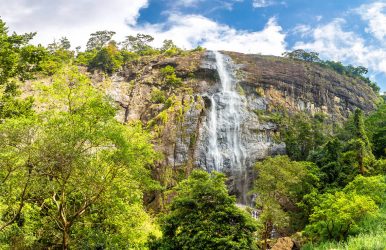
Just a walk through tea land above Ginigathena, the sound of water getting louder, and then a nearly 100-metre curtain dropping into a rock-walled pool! 

Here is my experience at this majestic waterfall and everything else you need to know to visit it.  

Quick Facts About Aberdeen Falls 

Quick Facts Details  
Height About 98 Meters  
Width Around 8 Meters  
River Kehelgamu Oya, a tributary of the Kelani River  
Location Near Ginigathena, Nuwara Eliya District, Central Province  
Rank 18th highest waterfall in Sri Lanka  
Access Short hike (roughly 1 km) from the road, and there is no formal entry fee.  
Swimming Not recommended as the pool is deep, and currents can be dangerous.  

Where Is Aberdeen Falls And How To Get There?

Aberdeen Falls: Sri Lanka’s Quietest Big Waterfall

Aberdeen Falls is on the Kehelgamu Oya, a major tributary of the Kelani River, near the town of Ginigathena in the Nuwara Eliya District.  

It is named, a little incongruously, after Aberdeen in Scotland. So, it is a nod to the British planters who once ran the tea estate here. 

From Ginigathena 

The most common approach starts in Ginigathena town.  

From there, follow Ambatale Road to a Buddha statue at the end of the road, where you will need to park.  

From that point, it is a walk of a little over a kilometre. Some guides list it as 800 meters to 1.2 kilometers depending on the exact route along a footpath through the estate and down toward the falls. 

From Colombo Or Kandy 

A common route from Colombo runs via Avissawella and Karawanella to Ginigathena. It is roughly 3 to 3.5 hours by car.  

From Kandy, it is a similar distance heading the opposite direction, passing through Kadugannawa and Ginigathena’s outskirts. 

On The Trail 

The path down is uneven in places and can get slippery after rain. 

So proper shoes matter more here than at the roadside falls further up the valley.  

It is not a technical hike, but it’s enough of a walk that you’ll want at least an hour round trip, more if you stop for photos. 

What Makes Aberdeen Falls Different

Aberdeen Falls: Sri Lanka’s Quietest Big Waterfall

Most of the well-known waterfalls in this part of the hill country, St. Clair’s, Devon, are effectively drive-by attractions. 

They are visible from a car window or a short stroll off the highway.  

Aberdeen isn’t.  

You have to commit to the walk, and that alone keeps the crowds thinner than at the more famous falls nearby. 

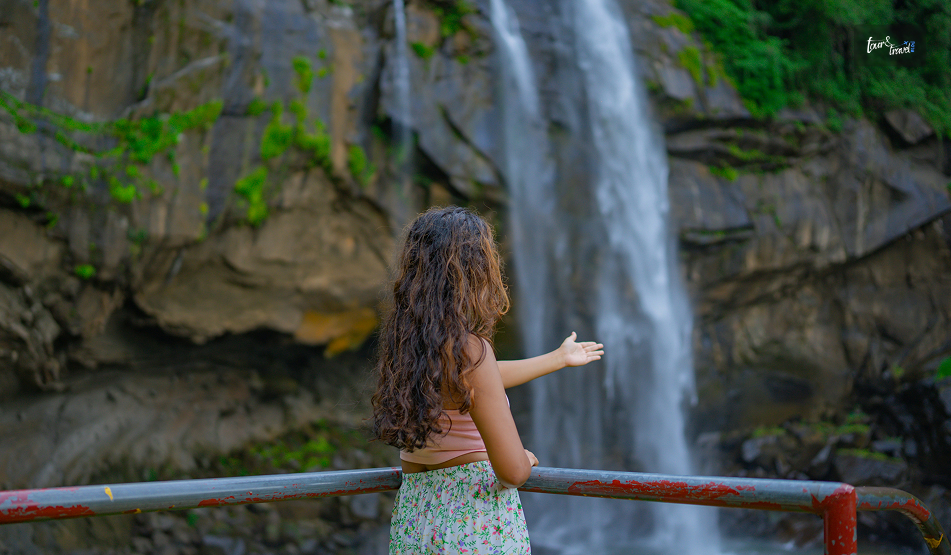
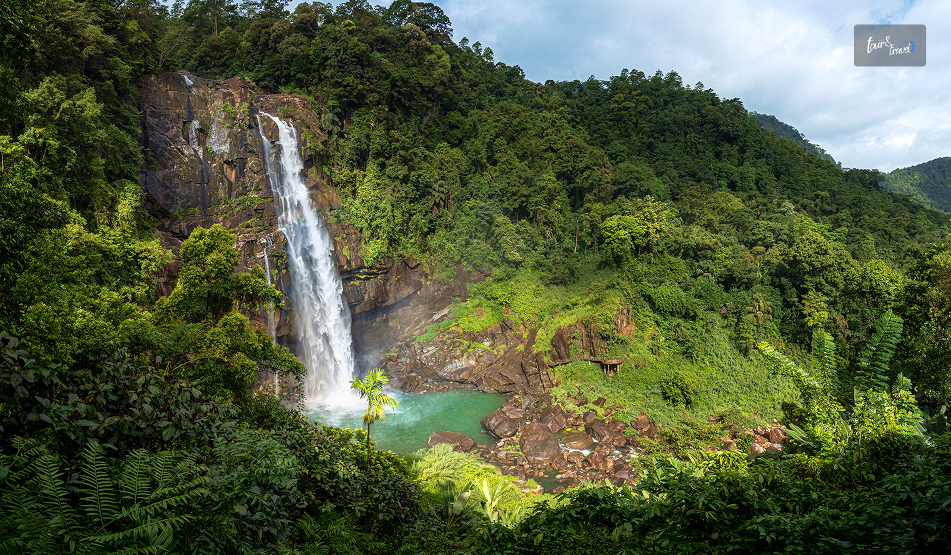
The reward is a narrow, forceful single drop into a pool framed by a large rock formation behind it, with dense forest closing in on both sides.  

Local legend holds that a tunnel connects Aberdeen Falls to Laxapana Falls further down the valley. 

There is no solid evidence for it. However, it is the kind of story that gets repeated at every viewpoint, and I’ll admit it added a bit of atmosphere while I stood there.  

Because Aberdeen and Laxapana both sit on rivers that feed hydroelectric schemes, water levels can vary noticeably depending on how much is being diverted upstream. 

So the falls look a little different every time. 

The Amphitheatre Of Stone And Mist 

What truly sets Aberdeen Falls apart once you clear the jungle trail is the sheer scale of its geological footprint.  

The water does not simply spill over a cliff. 

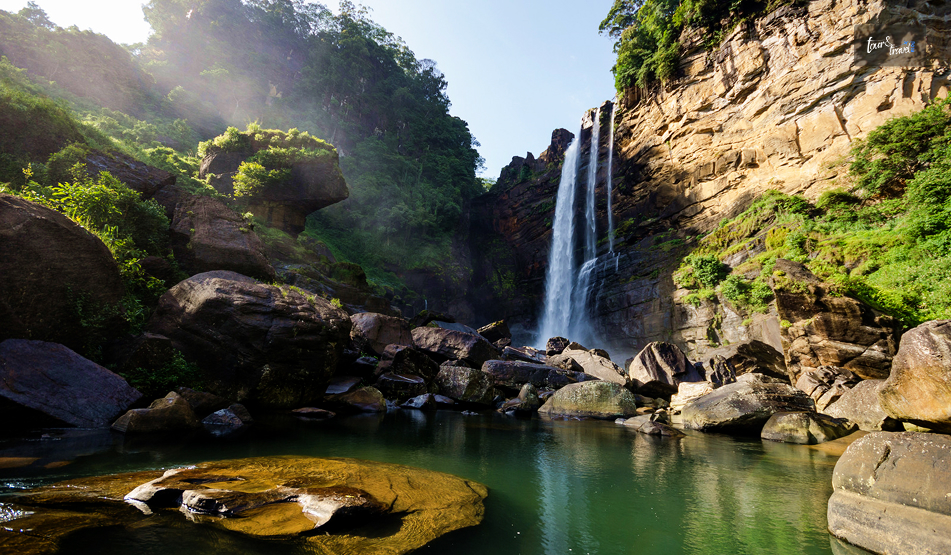
It thunders into a colossal, horseshoe-shaped rock amphitheatre.  

This towering crescent of dark, wet stone acts like a natural sounding board, trapping the roar of the Kehelgamu Oya and magnifying it until the air itself seems to vibrate. 

Because of the unique inward curve of the rock walls, a perpetual cloud of heavy mist hangs suspended over the plunge pool.  

This constant humidity has created a microclimate where vibrant green mosses, slick liverworts, and primitive ferns cling to every vertical fissure, contrasting sharply with the black obsidian-colored rock face. 

Standing at the edge of the basin, the view is framed by a dense canopy of endemic trees that lean over the water, blocking out the harsh midday sun.  

The result is a moody, isolated sanctuary that feels entirely cut off from the outside world.  

It is a visual drama you completely miss from a roadside viewpoint. So, it is a hidden world for those willing to track it down. 

What Is The Best Time To Visit Aberdeen Falls? 

Seasons Months  What to Expect  
Wet season May to September Strongest flow, but the trail is muddier, and swimming is more dangerous  
Dry season December to March Easier trail conditions, gentler flow, clearer photos  
Early morning Any season Cooler hiking temperatures and better light through the forest canopy  

Places To Visit Near Aberdeen Falls: Laxapana Falls And Kitulgala

Aberdeen Falls: Sri Lanka’s Quietest Big Waterfall

If you are already making the trip out to Ginigathena, it is worth extending the day.  

Laxapana Falls, tied to Aberdeen in local folklore, is a further drive down the valley. 

Also, Kitulgala, Sri Lanka’s main whitewater rafting hub, is roughly 30 to 40 minutes away. 

Thus, this stretch is a natural base for a nature-and-adventure day rather than a single quick stop. 

A One-Day Itinerary Around Aberdeen Falls 

Time Stop Notes 
8:00 AM Depart Ginigathena or Kitulgala Start early to avoid the midday heat on the walk.  
9:00 AM Hike to Aberdeen Falls About 1 km each way from the Ambatale Road parking point.  
10:30 AM Return to the road Allow extra time for photos and the uphill return walk.  
11:30 AM Drive to Kitulgala Roughly 30–40 minutes away.  
12:30 PM Lunch by the Kelani River Several riverside spots near the rafting operators.  
2:00 PM Optional: whitewater rafting or a river walk Kitulgala’s main draw if you have the afternoon free.  

Practical Tips For A Visit To Aberdeen Falls 

  • Wear proper hiking shoes as the trail has dirt and stone. Also, it can be slick after rain. 
  • Do not swim in the pool at the base because it is deep. There have been cases of drownings here. 
  • There is no ticket booth or formal infrastructure. So bring water and snacks with you. 
  • Moreover, hire a local guide or tuk-tuk driver in Ginigathena if you are unsure of the trailhead. You may not find a signpost everywhere.  
  • Climbing back up from Aberdeen Falls, sweating a little more than I expected to, I remember thinking it was worth every step.  

It does not have the roadside fame of St. Clair’s or Devon. That is exactly the point, as this is the waterfall you visit when you want to feel like you found it yourself.

Share on Social Media

Sibashree is a travel, culture, and leisure writer who has been writing since the age of 12 and professionally since 2014. With more than a decade of travel writing experience and journeys across India and several parts of the world, she brings a deeply personal and thoughtful perspective to her work. A student of English Literature and Mass Communication, Sibashree has always viewed travel as more than movement — for her, it has been a way of understanding people, cultures, and herself. Her passion for spiritual exploration has also led her to many unusual and meaningful destinations over the years. Outside of writing, Sibashree enjoys watching European cinema, reading about global politics, and reflecting on the stories hidden within everyday places.

Leave a Reply

Your email address will not be published. Required fields are marked *

title-img Related

READ MORE Jaffna Cultural Guide

A Jaffna Cultural Guide: How To Experience Tamil Culture In Jaffna? 

BY  Sibashree Jan 6, 2026

With the Sri Lanka Tourism Development Authority (SLTDA) planning to diversify the tourism offerings, Jaffna, the northernmost part, comes into the limelight. Jaffna is the place to know about the local Tamil culture and heritage of the country.  Jaffna has beautiful temples, and the Jaffna temple etiquette shows how the people here are sincere about their customs and traditions. Also, major festivals such as the Nallur Annual Festival are celebrated around the temples here.  On the other hand, the Jaffna food scene is a celebration of locally-sourced ingredients such as fresh seafood, palm flour, and roasted spices.  SLTDA is proactively improving the infrastructure without compromising the sustainability aspect. Thus, in 2026, Jaffna is going to emerge as an eco-tourism leader, which promotes its culture and heritage.  Also, during my last visit, I found Jaffna to be a rhythm. I woke up with the sound of temple bells at 5 AM and the smell of jasmine and roasted curry powder. As I crossed the Elephant Pass, it was a paradigm shift from the greens of the Sinhalese South. Suddenly, I was in a sun-drenched, rugged terrain of palmyrah palms and limestone.  The humble and soft curves of the Buddhist Stupas were replaced by the towering Gopurams of the Hindu temples.  Life moves at a gentle pace here, and everyone works together, keeping a century-old tradition and heritage alive.  In this Tour and Travel Blog, I will talk about how to experience Tamil culture in Jaffna, every day, through festivals, temple visits, and more.  How To Experience Tamil Culture In Jaffna? Reading The Streets And Daily Rituals  Taking a walk down the streets of Jaffna is the best way to learn about the local Tamil culture. And the best part is the inclusivity.  It does not matter the social strata you belong to. The customs, festivals, and temples are accessible to all. Nevertheless, these are the daily rituals and road customs that offer insights into the culture of Jaffna. 1. The Kolam (Doorstep Art) I walked along the lanes of Jaffna at dawn and saw women sweeping their doorsteps and drawing intricate geometric patterns with white rice flour. It is called the Kolam.  Kolam has deeper spiritual and environmental implications. Kolam at the doorstep is a gesture of non-violence or Ahimsa. Also, the design is made using rice flour, which ants and birds eat. Thus, the first act of the day becomes about giving.  Furthermore, during a special festival or wedding in the house, the white lines are bordered with Kaavi (red brick powder). The red lines offer spiritual protection from evil eyes.  Also, if you see a house with no Kolam for many days, it means that the family is mourning. It signifies that the rhythm of joy has paused for a certain period for the family. 2. The Pottu And Vibuthi (Forehead Markings) Pottu and Vibuthi are two different types of forehead markings, and these are the visual language of faith. a. Vibuthi (The Ash) Vibuthi means three horizontal lines drawn on the foreheads of the devotees of Shiva. It means the burning away of the ego and the impermanence of life.  Also, the followers of Lord Shiva often smear ash on their forehead after a morning temple visit.  b. The Sandalwood Paste It is a yellow dot made of sandalwood paste. Many people even smear the sandalwood paste on the entire forehead. It signifies mental clarity and cooling. c. Pottu (The Dot) Pottu, often red (vermillion), the dot symbolizes the "third eye" or the seat of Shakti (divine power). It means that a woman is married.  You will also notice black dots (with Kajal/Kohl) on the forehead of young children as a mark to ward off evil eyes.  3. The Home Visit Etiquette And Tamil Hospitality Customs The Tamil hospitality customs are warm and welcoming. However, when you visit a Jaffna home, you have to follow certain social norms.  Follow The Evil Eye Or Drishti Rule  You cannot praise the beauty and health of a child excessively when visiting their home. It is considered a bad omen or an act of jealousy. If you want to adore a child, praise them briefly and share your good wishes.  The Plate Rule Of Eating  It does not matter how much you liked the food. You cannot polish your plate. Contrary to Western culture, here, leaving a polished plate means that you are still hungry or the host failed to provide enough.  The custom is to leave a tiny, symbolic amount of food on the plate. It shows that you have been provided with an abundant amount of food. 4. Caste & Conservatism: Managing Expectations In my Jaffna travel guide, I have talked about the cultural richness of the Sri Lankan northern city. However, beyond the cosmopolitan buzz of Colombo, a socially conservative vibe reigns in this region of Sri Lanka.  So, PDA or public displays of affection, even holding hands, can draw uncomfortable stares from the older generation.  Furthermore, you cannot wear short skirts or shorts in public. Your clothing has to be modest, and usually your knees and shoulders should be covered.  Temple Culture Beyond Sightseeing: A Jaffna Cultural Guide The Nallur Kandaswamy Kovil is the majestic spiritual and cultural heart of the city. However, the village kovils or the smaller temples are the places where local communities gather, and the atmosphere is very intimate.  The Archana Basket Ritual At The Temples  You can buy a small wicker basket near the temple entrance. It contains bananas, a coconut, flowers, and betel leaves.  Once you enter the temple, you have to hand it over to the priest at the inner sanctum. He will offer the basket to the deity and chant a blessing.  Furthermore, the priest will return with a flaming lamp (Aarti). Hover your hands over the flame and then touch your eyes to receive the light’s blessing. The Temple Sound: Nadaswaram And Thavil When you are in Jaffna, you don’t have to look for music. The music will find you. The sound of Nadaswaram or a long wind instrument exudes a piercing and soulful melody.  Then, the Thavil or drum has a thundering sound, and it is heard during every major temple festival. Nallur Festival Traditions And Jaffna Festival Calendar FestivalMonthWhat to ExpectThai PongalJanuaryA harvest festival where "Pongal" (rice and milk) is boiled until it spills over, symbolizing abundance.Nallur FestivalAugustA massive 25-day celebration culminating in a grand chariot procession where thousands of men pull the deity's carriage.DeepavaliNovemberThe Festival of Lights; homes have oil lamps, and the city exudes the scent of traditional sweets. Immersive Cultural Experiences For an immersive cultural experience, you must meet a traditional weaver in Inuvil and see how artisans create the most intricate textiles on hand-operated looms from cotton and palmyrah fibers.  Also, you must give the restaurants a miss for the day. Visit a local homestay where you can have cooking lessons. Grind spices using a stone grinder or Miris Gala and feel the aroma.  Do you love Bharatanatyam Dance? Visit an art school like the Jaffna Kalai Thoothu. You can watch students rehearse this ancient, highly disciplined classical dance form. You can even join sessions such as the Vibrant Rhythms of Jaffna, where you can also try some moves.  The Authority Voices On The Jaffna Cultural Guide Anuk Arudpragasam (Booker Prize Shortlisted Author): “Jaffna is a place of memory. The culture here isn't just performed; it is held onto tightly as a way of surviving history.” (Context: Discussing the resilience of Tamil culture post-war). The "Jaffna Boy" (Local Cultural Blogger): “To know Jaffna, you must wake up before the sun. The culture lives in the sweeping of the front yard and the drawing of the Kolam before the heat sets in.” Serious Eats (Culinary Authority): “The hospitality in Jaffna is aggressive in the best way possible. You do not just 'eat' here; you are fed.” A Jaffna Cultural Guide: Know The Expert Tips  “Saptingala” or “Have you eaten?” This is the common term I have heard from the locals I encountered. Seldom have I come across a city where people are so caring, even in casual greetings.  However, it’s safe to say “Yes.” Otherwise, they will feel obligated to feed you. Apart from these gestures, some other things you need to keep in mind when you are in Jaffna. 1. Don’t Touch The Head The head is the most sacred part of the body. So, you cannot pat a child on the head. Furthermore, you cannot touch a priest or monk randomly.  2. Use Your Clean Right Hand  You have to keep your right hand clean. You must use your right hand for shaking hands, eating, giving money and gifts, and pointing.  3. Men And Shirts  You will often find older men not wearing a shirt in their house. There is nothing offensive about the custom. In the hot and humid north, it is a tradition that ensures comfort.  4. Don’t Photograph Women Bathing In Holy Places Keerimalai Springs is a holy bathing place, and local women often take a bath in sarees at public wells. You must not photograph them.  It is a daily ritual for them and not meant for any tourist show.  5. The Quintessential Jaffna Siesta  Most shops and house doors are closed between 1 PM and 4 PM. It is the Jaffna Siesta time. It once again shows how life in Jaffna moves at a different pace than the rest of the world.  6. Gold Is Security  Women in Jaffna roam around wearing massive amounts of gold jewelry. It is their financial security. Also, Thattam or the gold coin jewelry is especially famous here.  It is disrespectful if you ask a woman whether the ornaments she is wearing are real or not. It is always real.  7. The Jasmine Rule  During my stay in Jaffna, I always wore a string of fresh jasmine flowers in my hair. It was one of the reasons why I connected with the local people very quickly.  A Jaffna Cultural Guide: Frequently Asked Questions (FAQs) Here are the frequently asked questions and answers about the Jaffna cultural guide.  1. What Is The Main Religion In Jaffna?  Hinduism is the main religion in Jaffna. Furthermore, people here are mostly devotees of Lord Shiva and Murugan. The religious beliefs of the people here impact the local culture, food, and daily rhythm. 2. Can I Shake Hands With Local Women? The Jaffna society is conservative. So, most women here will not be comfortable shaking hands with you at the first meeting. You can fold your hands and say “Vanakkam” with a smile for a perfect greeting.  3. What Language Do The People In Jaffna Speak? Tamil is the primary language in Jaffna. People here rarely speak the Sinhalese language.Furthermore, you will find people speaking in English in hotels and other facilities. However, as you explore the villages, you will find very few people speaking English.  4. Is Jaffna Culture Similar To India?  Yes, the culture of Jaffna is very similar to that of Tamil Nadu in South India. In fact, if you visit Jaffna from Colombo, you will experience a huge cultural shift. The Tamil people in Jaffna are very protective and proud of their distinct identity, cuisine, and dialect.  5. Can I Enter A Home In Jaffna If I Am Invited? Yes, it is a huge honor to visit a home in Jaffna on invitation. Just remember to take off your shoes at the gate or door. Furthermore, when you visit a home in Jaffna, you can carry flowers and sweets as gifts. You must not carry alcohol as a gift if you are visiting a home in Jaffna for the first time. 6. Why Is Vegetarian Food So Common In Jaffna?  Vegetarian food is very common in Jaffna due to the strong Hindu influence. Many locals are vegetarians here due to religious beliefs. Also, many local Tamil families here follow the custom of eating vegetarian food on Tuesdays, Fridays, and other holy days. 7. Is It Rude To Leave Food On My Plate In Jaffna? No, it is not rude to leave food on your plate when you are eating in Jaffna. In fact, when you leave a little amount of food on your plate, in Jaffna, it means that the host has served you an abundant amount of food. If you polish your plate off completely, the host may serve you another mountain of rice, considering you are not full yet. 
READ MORE Bentota

Why Is Bentota Beach, Sri Lanka, Famous? Know About Bentota Beach, River Safari, And More

BY  Sibashree Jul 7, 2026

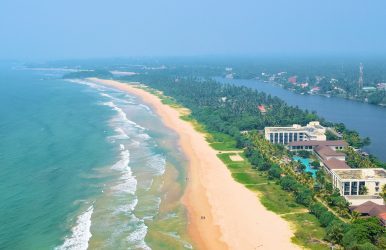
With the One Love Reggae Festival returning to Bentota Beach, Sri Lanka is now preparing to be a vibrant cultural stage for music lovers from around the world.  The event is slated from 7th to 9th August, and with a laid-back coastal atmosphere, will function as a major tourism catalyst for Bentota.  Nevertheless, Bentota Beach has always been a popular, idyllic destination in Sri Lanka due to the calm waves of the Indian Ocean and soft golden sands.  Furthermore, it is a gateway to the Sinharaja Forest Reserve, a UNESCO World Heritage Site, and another UNESCO World Heritage Site, Galle Fort.  However, for me, the most striking thing about Bentota was the safari on the Bentota Ganga. With dramatic landscapes and surrealism awaiting you in every nook, this was one of the highlights of my trip to Sri Lanka.  Also, very close to Colombo, just a 2-hour drive away, this beach stands out even if tourists show more interest in popular variations such as Tangalle Beach and Mirissa Beach.  Here is more about why Bentota Beach is worth visiting and what the top attractions are.  What Are The Things To Do In Bentota?  The heavenly sunset views of Bentota Beach, the most anticipated boat safari on Bentota Ganga, and a relaxing experience in the Ayurveda Herbal and Spice Garden! Furthermore, if you want an adrenaline rush, you can take part in activities such as parasailing, banana boating, jet skiing, and more! 1. Water Sports At Bentota Beach Bentota has many beaches, such as the Ventura Beach or the Moragalla Beach, where the ocean meets the Bentota Ganga River.  However, together, they are known as the Bentota Beach, and together they look like a long stretch of fine white sand.  A specific stretch of sand is parallel to Bentota Lagoon, which is more commonly called the Bentota Ganga.  It is known as the Paradise Island, looking like a narrow and long peninsula stretching out into the ocean.  Also, it is ideal for the following watersports.  Windsurfing Waterskiing Diving Canoeing Snorkeling Fishing Moreover, centers such as Diyakawa Water Sports and Sunshine Water Sports Center help with the best gear, training, and guidance.  2. Visiting The Kosgoda Sea Turtle Conservation Project I mentioned the Kosgoda Sea Turtle Conservation Project when visiting Kalutara.  However, it is way closer to Bentota, and it is situated at a distance of just 9 km. So, it is just a road journey of 9 km or 15 minutes south by road.  It remains open from 8:30 AM to 6:30 PM, and the ticket price is LKR 500 for locals and LKR 1000 for foreigners.  It is a vital wildlife sanctuary on the southwestern coast of Sri Lanka. Established in 1981, it aims to protect endangered sea turtles from extinction caused by poaching and habitat loss. The hatchery monitors local beaches to rescue vulnerable eggs.  It buries them safely in protected sand nests until they hatch. Impressively, the project cares for all five sea turtle species that visit Sri Lanka. The Green Turtles Loggerhead Turtles Hawksbill Turtles Olive Ridley Turtles Leatherback Turtles.  The sanctuary also rehabilitates turtles injured by fishing nets. However, for me, the most exciting experience in the sanctuary was releasing newborn hatchlings into the Indian Ocean at sunset.  This hands-on experience funds the project while raising global awareness about marine conservation. Overall, it was a great experience learning about the marine ecosystem and how these adorable marine creatures play an important role in maintaining the balance.  If you want to watch and study them further, Sri Lanka has many other destinations such as the Dalawella Beach, Dickwella Beach, and Mount Lavinia Beach.  3. The River Safari On Bentota Ganga  While many people are more excited about the watersports, I visited Bentota for the water safari.  It was late afternoon, and the Sun was getting mellower. Fortunately, the hotel I was staying in had the provision for booking a boat safari.  The boat progressed through the jungle. Also, I could spot eagles flying high and some snakes in the water.  I was looking for crocodiles, but this time, I did not find one.  Moreover, the roots of the trees got entangled, and the roots created some eerie formations that looked straight out of Apocalypse.  Having said that, the river safari was not just an opportunity to spot the wildlife. I also saw the traditional fishing techniques and prawn farming in the wetlands surrounded by mangrove forests.  Another interesting stop was the Cinnamon Island. I spotted old and young men cutting sleek sticks of cinnamon. I bought a few bottles of cinnamon oil from them.  It was a 1.5-hour safari, and it cost around LKR 2500.  4. Exploring The Bentota Market  The Aluthgama town is around 3 km away from Bentota, and the Monday market here is amazing.  I had a talk with Manjula, a college student and a local vendor who helps her mother, Hiruni.  “People from different parts of the southwest coast come here. This is a market mostly dominated by women. So, I love being a part of the market.  The vendors sell various products, including clothes, vegetables, groceries, and other knick-nacks.  I also found the place to be a great spot for socializing. Women were interacting with each other when buying exotic fruits and fresh vegetables.  Moreover, I collected some cinnamon sticks, spices, and clothes as souvenirs.  5. Enjoying The Benefit Of Herbal And Spice Treatment  Bentota is famous for traditional Ayurveda and health treatment. The oils and massage solutions here have spices and local herbs.  The medicines and solutions also have cardamom, cinnamon, seeds, fruits, bark, and leaves.  So, if you want to enjoy the ultimate Sri Lankan spa experience, Bentota is the ideal place.  The big hotels and resorts have spas offering traditional treatments and therapies. Furthermore, there are some specialized Ayurveda centers.  Where To Stay In Bentota Beach?  From budget guesthouse Hotel Hemadan to 5-star hotel Taj Bentota Resort, the accommodation options in Bentota are diverse.  Furthermore, if you want an artistic and boutique experience, you can choose options such as Taj Bentota Resort and NH Bentota Ceysands.  Based on the accommodation you choose, the cost of staying in Bentota will be between LKR 13000 and 60000 per night. 

READ MORE Diyaluma Waterfall

Diyaluma Waterfall, Sri Lanka: The Eternal Memoir Of Love (Location, Hiking, And More)

BY  Sibashree Mar 16, 2026

After visiting the Nine Arch Bridge and the iconic blue trains, my next stop was the Diyaluma Waterfall, at a distance of around 45 km.  Now, Sri Lanka is full of hidden gems. Along with the Ritigala Forest Monastery, this waterfall has also offered me a slice of offbeat Sri Lanka.  Furthermore, the Diyaluma Waterfall, with a height of 220 meters, is the second-tallest waterfall in Sri Lanka, and it has many natural infinity pools.  If those were not reasons enough, Diyaluma Waterfall is irresistible for the local tragic love story associated with it. Also, it is a place of great ecological importance.  Moreover, the journey from Ella to Poonagala and the trek further offer an equally unforgettable experience.  Here are more details about visiting the Diyaluma Waterfall, its location, transport options, history, hiking experience, and more.  Where Is Diyaluma Waterfall?  The Diyaluma Waterfall is on the Colombo-Badulla highway in the Badulla district of Sri Lanka.  Koslanda, around 6 km west, is the closest town to the Diyaluma Waterfall.  Furthermore, it is located at a distance of around 30 km from Ella. Also, the waterfall is located about 196 km away from Kandy, the cultural hub of central Sri Lanka.  Moreover, the Kirindi Oya River has formed this waterfall. This river starts flowing near Bandarawela and flows across the central part of Sri Lanka.  How To Reach The Diyaluma Falls, Sri Lanka?  Tuk-tuks are easily available from Ella to Poonagala. Further, from the Poonagala village at the top, you have to do a short hike to reach the Diyaluma Falls.  However, you can also hike from Koslanda. This is a bottom-to-top hike and way more difficult than the top-to-bottom hike from Poonagala.  Also, the tuk-tuk to the Poonagala village cost me LKR 4000.  Moreover, remember that you have to inform your tuk-tuk driver that you need to go to the upper Diyaluma Falls and trek down from there. 1. Hiking From Poongala To Diyaluma Falls  Carry an offline map when hiking from Poongala to the Diyaluma Falls as the network is inconsistent here.  Furthermore, you must take your tuk-tuk driver as a guide or a different local guide for the hike.  My trek to the falls started from the Makaldenya Junction, and I walked for around 30 minutes to reach the Upper Diyaluma Waterfall.  The path is even, and that is why you need to wear proper hiking shoes with a good grip. Also, long and dry grasses cover the entire route.  You will find all the infinity pools here, and taking a bath is a must, considering the heat and strain of walking downhill.  Then, I took a walk of around 10 minutes to reach the Lower Diyaluma Fall. From there, you can see water falling into the valley from a height of 220 meters.  Also, this is the moment you realize the meaning of the Diyaluma Waterfalls. The name is a combination of Diya and Haluma.  Moreover, the name means the “liquid light” or a “rapid flow of water.”  2. Hiking From Koslanda To Diyaluma Falls  The hike from Koslanda is difficult. However, it offers an amazing view of the waterfall from the Diyaluma Falls Bridge below.  Furthermore, the hike takes around 20 to 30 minutes, and on this hiking route, you will find many snacks and coconut shops.  What Are The Things To Do At Diyaluma Falls?  To enjoy hiking and other activities at the Diyaluma Falls, you have to arrive a little early. The waterfalls are open from 6 AM to 5 PM.  Then, you can enjoy a bath in the infinity pools, relax on the rocks, or talk to the locals. In fact, I got to know about the history of this waterfall when talking to a local hiker.  1. Swimming In The Natural Infinity Pools Of The Diyaluma Waterfall On the edge of the main Diyaluma Waterfall, you will find the main natural infinity pool. Also, you will find many other natural infinity pools formed by the Upper Diyaluma Waterfall.  However, you must check with the locals and take enough precautions before getting into the water.  2. Relaxing On The Surrounding Rocks It may not sound very appealing to you. However, for me, who always cherishes TheLowDownUnder Travel experiences, it is a great thing to experience.  Sitting on a rock and seeing streaks of water gushing from a height of 220 meters. You don’t get to see these scenes often, right? Also, don’t forget to bring a towel if you want to sit on the rocks and relax.  3. Talking To The Locals  I come from a country where cricket is the religion. Sri Lanka also has a celebrated cricket team and has produced legends such as Sanath Jayasuriya, Kumar Sangakkara, Muttiah Muralitharan, and Arjuna Ranatunga.  So, it was great fun talking about cricket.  Then, a local guy shared the history of the Diyaluma Waterfall and the tragic love story associated with it. The History Of The Diyaluma Waterfall  A king once fell in love with a lady. However, she was from a lower caste, and the societal norms did not allow them to get married. So, they fled. Unfortunately, people against it chased them down, and the lady fell into the waterfall and died.  Safety Norms To Follow While Visiting The Diyaluma Falls  No set rule exists for the visitors to the Diyaluma Falls, and that is probably the most concerning matter.  The tourist inflow here is high, and most of them are adrenaline junkie.  So, stand on the edge and swim in the infinity pools, but with caution. Moreover, avoid visiting the waterfall in the monsoon season, from September to early December.  Even if you hike in these months, do not swim in the waterfall.  Overall, the Diyaluma Waterfall remains the symbol of the grandeur of nature, and the myths associated with it make it more intriguing.  So, if you are in Sri Lanka, don’t miss a hike to this waterfall, which is also at the epicenter of a unique ecosystem.  Moreover, enjoy the serenity and spirituality in the air.