
Diyaluma Waterfall, Sri Lanka: The Eternal Memoir Of Love (Location, Hiking, And More)

After visiting the Nine Arch Bridge and the iconic blue trains, my next stop was the Diyaluma Waterfall, at a distance of around 45 km. 

Now, Sri Lanka is full of hidden gems. Along with the Ritigala Forest Monastery, this waterfall has also offered me a slice of offbeat Sri Lanka. 

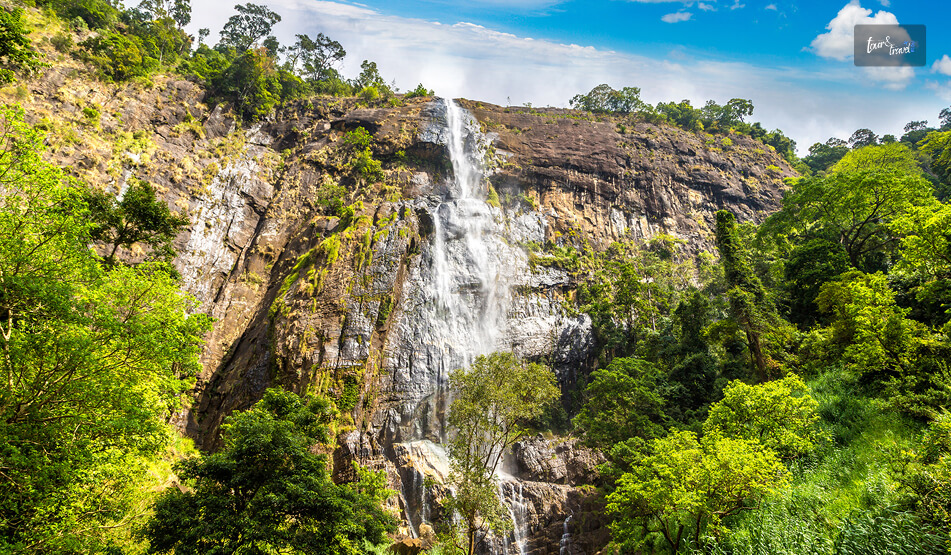
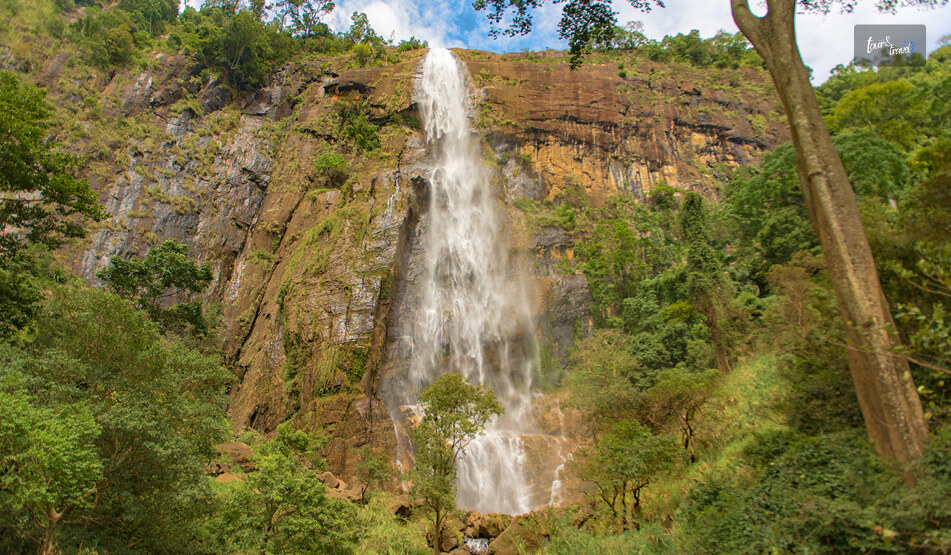
Furthermore, the Diyaluma Waterfall, with a height of 220 meters, is the second-tallest waterfall in Sri Lanka, and it has many natural infinity pools. 

If those were not reasons enough, Diyaluma Waterfall is irresistible for the local tragic love story associated with it. Also, it is a place of great ecological importance. 

Moreover, the journey from Ella to Poonagala and the trek further offer an equally unforgettable experience. 

Here are more details about visiting the Diyaluma Waterfall, its location, transport options, history, hiking experience, and more. 

Where Is Diyaluma Waterfall? 

The Diyaluma Waterfall is on the Colombo-Badulla highway in the Badulla district of Sri Lanka. 

Koslanda, around 6 km west, is the closest town to the Diyaluma Waterfall. 

Furthermore, it is located at a distance of around 30 km from Ella. Also, the waterfall is located about 196 km away from Kandy, the cultural hub of central Sri Lanka

Moreover, the Kirindi Oya River has formed this waterfall. This river starts flowing near Bandarawela and flows across the central part of Sri Lanka. 

How To Reach The Diyaluma Falls, Sri Lanka? 

How To Reach The Diyaluma Falls, Sri Lanka

Tuk-tuks are easily available from Ella to Poonagala. Further, from the Poonagala village at the top, you have to do a short hike to reach the Diyaluma Falls. 

However, you can also hike from Koslanda. This is a bottom-to-top hike and way more difficult than the top-to-bottom hike from Poonagala. 

Also, the tuk-tuk to the Poonagala village cost me LKR 4000. 

Moreover, remember that you have to inform your tuk-tuk driver that you need to go to the upper Diyaluma Falls and trek down from there.

1. Hiking From Poongala To Diyaluma Falls 

Carry an offline map when hiking from Poongala to the Diyaluma Falls as the network is inconsistent here. 

Furthermore, you must take your tuk-tuk driver as a guide or a different local guide for the hike. 

My trek to the falls started from the Makaldenya Junction, and I walked for around 30 minutes to reach the Upper Diyaluma Waterfall. 

The path is even, and that is why you need to wear proper hiking shoes with a good grip. Also, long and dry grasses cover the entire route. 

You will find all the infinity pools here, and taking a bath is a must, considering the heat and strain of walking downhill. 

Then, I took a walk of around 10 minutes to reach the Lower Diyaluma Fall. From there, you can see water falling into the valley from a height of 220 meters. 

Also, this is the moment you realize the meaning of the Diyaluma Waterfalls. The name is a combination of Diya and Haluma. 

Moreover, the name means the “liquid light” or a “rapid flow of water.” 

2. Hiking From Koslanda To Diyaluma Falls 

The hike from Koslanda is difficult. However, it offers an amazing view of the waterfall from the Diyaluma Falls Bridge below. 

Furthermore, the hike takes around 20 to 30 minutes, and on this hiking route, you will find many snacks and coconut shops. 

What Are The Things To Do At Diyaluma Falls? 

What Are The Things To Do At Diyaluma Falls

To enjoy hiking and other activities at the Diyaluma Falls, you have to arrive a little early. The waterfalls are open from 6 AM to 5 PM. 

Then, you can enjoy a bath in the infinity pools, relax on the rocks, or talk to the locals. In fact, I got to know about the history of this waterfall when talking to a local hiker. 

1. Swimming In The Natural Infinity Pools Of The Diyaluma Waterfall

On the edge of the main Diyaluma Waterfall, you will find the main natural infinity pool. Also, you will find many other natural infinity pools formed by the Upper Diyaluma Waterfall. 

However, you must check with the locals and take enough precautions before getting into the water. 

2. Relaxing On The Surrounding Rocks

It may not sound very appealing to you. However, for me, who always cherishes TheLowDownUnder Travel experiences, it is a great thing to experience. 

Sitting on a rock and seeing streaks of water gushing from a height of 220 meters. You don’t get to see these scenes often, right?

Also, don’t forget to bring a towel if you want to sit on the rocks and relax. 

3. Talking To The Locals 

I come from a country where cricket is the religion. Sri Lanka also has a celebrated cricket team and has produced legends such as Sanath Jayasuriya, Kumar Sangakkara, Muttiah Muralitharan, and Arjuna Ranatunga. 

So, it was great fun talking about cricket. 

Then, a local guy shared the history of the Diyaluma Waterfall and the tragic love story associated with it.

The History Of The Diyaluma Waterfall 

A king once fell in love with a lady. However, she was from a lower caste, and the societal norms did not allow them to get married. So, they fled.

Unfortunately, people against it chased them down, and the lady fell into the waterfall and died. 

Safety Norms To Follow While Visiting The Diyaluma Falls 

No set rule exists for the visitors to the Diyaluma Falls, and that is probably the most concerning matter. 

The tourist inflow here is high, and most of them are adrenaline junkie. 

So, stand on the edge and swim in the infinity pools, but with caution.

Moreover, avoid visiting the waterfall in the monsoon season, from September to early December. 

Even if you hike in these months, do not swim in the waterfall. 

Overall, the Diyaluma Waterfall remains the symbol of the grandeur of nature, and the myths associated with it make it more intriguing. 

So, if you are in Sri Lanka, don’t miss a hike to this waterfall, which is also at the epicenter of a unique ecosystem. 

Moreover, enjoy the serenity and spirituality in the air.

Share on Social Media

Sibashree is a travel, culture, and leisure writer who has been writing since the age of 12 and professionally since 2014. With more than a decade of travel writing experience and journeys across India and several parts of the world, she brings a deeply personal and thoughtful perspective to her work. A student of English Literature and Mass Communication, Sibashree has always viewed travel as more than movement — for her, it has been a way of understanding people, cultures, and herself. Her passion for spiritual exploration has also led her to many unusual and meaningful destinations over the years. Outside of writing, Sibashree enjoys watching European cinema, reading about global politics, and reflecting on the stories hidden within everyday places.

Leave a Reply

Your email address will not be published. Required fields are marked *

title-img Related

READ MORE how to get from colombo to galle

How To Get From Colombo To Galle: Know The Best Options For Traveling The Distance 

BY  Sibashree Jun 6, 2026

The historical Galle Fort, a UNESCO World Heritage Site, is going to play an important role in the tourism growth of Sri Lanka in 2026.  Its colonial-era landmarks, such as the Groote Kerk, the Dutch reformed church or the Galle Clock Tower, the living heritage, and the rich maritime history make Galle Fort such a prominent landmark in the landscape of cultural tourism in Sri Lanka.  It is also easily accessible from the Bandaranaike International Airport in Colombo, at a distance of around 153 km.  Various bus routes between Colombo and Galle, and the train connectivity ensure a smooth journey.  Here are more details about how to get from Colombo to Galle.  How To Get From Colombo To Galle? Know The Transport Options The best way to get from Colombo to Galle is to enjoy a scenic train ride. However, if you miss the train, you can also opt for a local bus ride.  Also, if the budget is not a constraint, you can book a ride from a ride-hailing app or book a cab to travel the distance by road.  Here, I will decode the train, bus, and private transfer journeys along with details such as the travel duration, ticket pricing, and amenities.  Moreover, the journeys in buses and local trains offer distinct cultural experiences, as I have mentioned in my Kandy to Ella train journey blog.  1. How To Get From Colombo To Galle By Train?  To get from Colombo to Galle, you can plan a coastal train ride.  Here, the railway track runs along the palm-fringed coasts for most of the journey.  Moreover, the ocean waters here will crash just meters away from your open window.  So, overall, it is, in no way, a mundane commute experience. You are going to have an experience of a lifetime.  You can have a look at the table below to know about the train timings. (Source: Sri Lanka Railways).  Departure From Colombo FortAvailableArrival In Galle 6:17 AM Saturdays, Sundays, and Holidays 8:32 AM6:50 AMEveryday9:29 AM8:35 AMEveryday10:49 AM10:30 AMEveryday12:49 PM2:40 PMEveryday4:57 PM3:50 PMEveryday5:57 PM4:47 PMEveryday7:04 PM5:32 PMMonday to Friday (Except Holidays)8:25 PM5:31 PMSaturdays, Sundays, and Holidays 8:05 PM5:51 PMEveryday9:29 PM6:16 PMExcept Saturdays and Sundays8:40 PM7:30 PMEveryday11:10 PM The trains have second-class and third-class sections.  The ticket price for the second-class commute is LKR 500, and for the third-class commute it is LKR 240.  How To Book The Tickets To Get From Colombo To Galle By Train?  You can book the ticket from Colombo to Galle online (reserved) or offline (unreserved).  If you are traveling between December and April, it is the peak season for a trip to Sri Lanka. So, you must book the tickets at least 32 days in advance from the Sri Lanka Railways online seat reservation portal.  However, in the off-season, you will get the tickets a few days before.  In addition, you can book a train ticket from the local counter at the Colombo Fort Railway Station.   2. The Colombo To Galle Express Bus: Speed And Comfort If you want a more comfortable journey to get from Colombo to Galle without spending much money, you can try the bus routes.  Express Highway Bus (EX01) Duration: 2 hours to 2.5 hours Route The bus travels through the Southern Expressway (E01).  Moreover, if you choose this route, you will be able to bypass every coastal traffic, and you will reach faster than the coastal route buses. Traveling Experience The buses are usually fast and relatively smooth.  Additionally, the buses are very comfortable, usually air-conditioned, and have comfortable cushioned seats.  Moreover, the journey through this route is through the highway, which means that you will not be able to see any ocean views. Where To Catch The Bus From These buses depart from the Makumbura Multimodal Center or the Colombo Bastian Mawatha Bus Terminal.  Additionally, these buses are frequent you will be able to catch a bus every 20 minutes to 30 minutes. Coastal Route Bus (Route 02) Duration: 3 hours to 4 hours Route Buses of this route pass through the coastline, giving you an amazing coastal view.  These buses pass through some magnificent towns like Mount Lavinia, Wadduwa, and Hikkaduwa, which enhance the beauty of the journey. Traveling These buses will provide you with an authentic and local Sri Lankan ride.  Sometimes the ride can also be chaotic but enjoyable. Moreover, if you choose these buses, be prepared for a bold and rapid ride.  These bus rides are often characterized by a stop-and-go rhythm because of their sudden bursts of speed.  Furthermore, these bus rides are enjoyable with loud, crowded, and vibrant locals hopping on and off, and street vendors selling snacks.  Finally, the most amazing part of this bus ride is the spectacular views of coconut palms and the Indian Ocean. You can also jump off and go around the beach towns along the way. Where To Catch The Bus From  You can catch these buses from the Central Bus Stand near the Colombo Fort Railway Station. Some Tips For Your Ride Here are some other details you need to know if you want to get from Colombo to Galle.  Ticket Prices These buses are very affordable. The ticket prices depend on whether you take a local non-AC bus or an AC highway bus. The ticket prices usually range between LKR 300 and LKR 1000. Luggage You usually won't find a cargo hold on coastal buses. In such situations, you will need to keep your backpack on your lap or squeeze it into overhead racks. Music And Noise If you have never been on a Sri Lankan bus, this is going to be a light-and-sound journey for you.  Public buses in Sri Lanka are known for their lively atmosphere, featuring Sri Lankan pop music and colorful interiors, which you can enjoy throughout the journey. Private Transfers And Taxis: Seamless Door-To-Door Service Suppose you are traveling with family or small children.  Or, if you are part of a group where everyone is carrying heavy luggage, you can choose a private transfer.  Also, a private transfer can be of two types.  Taking A Private Taxi  A private taxi will pick you up from the Bandaranaike International Airport or your hotel in Colombo and drop you off outside your accommodation inside the Galle Fort ramparts.  You will enjoy the ride through the Southern Expressway.  A private taxi ride on this route will take between 1.5 and 2 hours.  However, the charges will be really high as a standard sedan will cost between LKR 15000 and 20000.  Using Ride-Hailing Apps If you are traveling to Sri Lanka for the first time, you can avoid negotiating with unpredictable street drivers.  You can book a cab using local ride-hailing apps such as PickMe. It is the premier local Sri Lankan ride-hailing platform. Furthermore, you can also use Uber to operate reliably and extensively throughout the Colombo metropolitan area.  The price range for these cabs from Colombo Fort to Galle is between LKR 8000 and 12000.

READ MORE things to do in sapporo

What Are The Unique Things To Do In Sapporo? Exploring The Capital Of Hokkaido  

BY  Sibashree Mar 31, 2026

If you want to explore offbeat Japan, you can surely visit Sapporo, the capital of Hokkaido Island.   Hokkaido Island,anyway, teaches the art of slow living and slow traveling.   The scenic beauty here is amazing, the winters are snowy, and the food and beer here are amazing.   Also, it is an amazing year-round destination, and the things to do in Sapporo are as diverse as they can be.   And here are the details. However, before that, let us talk about the best time to visit Sapporo.  What Is The Best Time To Visit Sapporo?   As I have mentioned, you can visit Sapporo throughout the year. However, December to February is the best time to plan a visit.   Especially, February is the month of the winter festival in Sapporo.   Moreover, April to May is the ideal time if you want to experience the Cherry Bloosm Season from the Hokkaido Shrine and Maruyama Park.   Also, the warm and humid summer months are ideal for enjoying the “beer garden events.”   In addition, from September to November, or the autumn months, are great for seeing the fall foliage, hiking, and attending the food festivals.   What Are The Most Unique Things To Do In Sapporo?   More than ticking the bucket list, in Sapporo, you need to soak in the laid-back vibe.   It is way less crowded than Osaka and Tokyo, and despite that, it has an important role to play in the tourism industry of the country.   That is why many people travel from Tokyo to Hokkaido.   1. Visiting The Parks And Gardens  As a nature lover since forever and daily walking the streets and parks of Sapporo, I have learned that Sapporo has lots of green spaces where you can enjoy nature.  The parks of Sapporo are the city's heart.   Odori Park is my usual starting point in the morning when I first walk.   This park is located in the center of downtown and is an ideal and convenient place to take a refreshing morning walk before starting your day.   On days when I want to be more active, I cycle, jog, or photograph all the amazing trees and flowers at Moerenuma Park. It is absolutely stunning how vast the area is!  You will probably find me at Maruyama Park, located next to Hokkaido Shrine, during the spring and fall months.   It’s an incredible place to see the cherry blossoms in full bloom, and it’s usually very pretty to see the fall leaves change color from green to red.   During the wintertime, it becomes a wonderful family-oriented ski resort that I simply love!  For a bit of a deeper dive, I love visiting the Hokkaido University Botanical Gardens. It’s a peaceful retreat where I can admire rare plants and learn about the indigenous Ainu culture.  2. Exploring The Galleries And Museums  Upon arriving in Sapporo, I did not take long to figure out that this is a city that has beautifully integrated its history with modernity, which is a masterclass.   I spent the first day of my trip exploring the history of the island of Hokkaido by visiting the Hokkaido Museum.  Then, I went to the Historical Village, which showed how the early infrastructure and primitive architecture were examples of the area's strength.   The Hokkaido University Museum is also a majestic place, with its enormous collection of extensive academic research and archaeological artifacts through the ages.  Of course, I couldn't resist a detour to the Sapporo Beer Museum. Learning the history of Japan’s iconic brew made that final tasting session feel well-earned.  As a fan of art, I was spoiled for choice with several locations from which I could pick my favorites.   The JR Tower Art Gallery has an impressive array of artwork, and at the Sapporo Art Park, there are some unbelievably large sculptures sitting throughout the grounds.   I was amazed at how much creativity and energy could be found in the city of Sapporo.   While looking at all the galleries, you can also plan a trip to Uji, located approximately 500 km south.   A visit to Japan would not be complete without enjoying a cup of matcha at this city's matcha capital.  3. Visiting The Shrines And Temples  Kyoto may have the most amazing shrines, but Sapporo also has some beautiful ones.   The Hookaido Shrine is the most popular among them, and you will find it just next to the Maruyama Park.   Furthermore, the Sapporo Suitengu Shrine is another place where families and pregnant women visit for a healthy baby.  Moreover, if you are a seeker and want some spiritual guidance, Joganji Temple is your place. It has the most meditative environment.  4.  Exploring The Historical Landmarks Of Sapporo  Sapporo has many historical places to visit, and you can start with the “Former Hokkaido Government Office.”   It has beautiful gardens, and with its insightful exhibitions, it offers a deep understanding of the local history.   The next place you can visit is the Sapporo TV Tower. It is an important landmark for broadcasting and tourism.   Furthermore, from the TV Tower, you can enjoy an amazing view of Odori Park and its surroundings.   The Clock Tower is another important landmark in Sapporo. It has been standing there since 1878.   However, for me, the most iconic historical landmark in the city was the Hoheikan Guest House.   This 1880 guest house in Nakajima Park had many important guests, including the royal family and important foreign guests.   In addition, for a culturally immersive experience, you can explore the Hokkaido historical village. It is like an open-air museum with distinct architecture, buildings, and Japanese townscapes.  5.  Souvenir Shopping   It’s a sin to visit Sapporo and not do some serious shopping.   Furthermore, souvenir shopping is one of the best things to do in Sapporo because of the diversity of stuff you can procure.   Firstly, the sweets here are amazing. You must try Marusei butter sandwiches and Royce chocolates.   Also, you will find skincare products made of horse oil.   In addition, you will love local crafts such as Ainu crafts and Otaru glassware.   Moreover, the best places for shopping in Sapporo are “Ario Sapporo Mall,” “Apia Mall,” “Sapporo Stellar Place Mall,” and “Tanukikoji Shopping Street.” 

READ MORE things to do in galle

What Are The Things To Do In Galle Fort, Sri Lanka? Exploring A UNESCO Heritage Site

BY  Sibashree Mar 24, 2026

Galle has been my ideal dreamy, sepia-toned travel destination located on the southwestern coast of Sri Lanka.  Moreover, the city’s stunningly beautiful old fortified peninsula reaches defiantly out into the Indian Ocean and boasts many crumbling colonial-style buildings, narrow cobblestone streets, and swaying palm trees.  However, the true magic of Galle comes from taking it slowly.  Hi, in today’s blog, I will talk about the things to do in Galle Fort. However, I will begin with why a visit to the Galle Fort is worth it and how to get there.  Why Visit Galle Fort? A UNESCO World Heritage Site And The Fortress That Defied Time “Founded in the 16th century by the Portuguese, Galle reached the height of its development in the 18th century, before the arrival of the British.  It is the best example of a fortified city built by Europeans in South and South-East Asia, showing the interaction between European architectural styles and South Asian traditions.” • UNESCO World Heritage Convention.  The trading post was once impenetrable, and the rampart walls kept the invaders at bay.  However, centuries later, during the 2004 Tsunami, the same stone walls that stood against cannons also protected the people from the ocean.  Thus, the Galle Fort remained intact even though the surrounding coastline was devastated. Today, it stands as a UNESCO World Heritage Site for being a unique example of a fortified city.  How To Reach The Galle Fort? You can easily reach the Galle Fort from Colombo or down the coast.  From Colombo  You can take a train from Colombo Fort, and after a three-hour journey and amazing ocean views, you will reach Galle.  However, currently, this route is being reconstructed. So, you can take a Highway AC bus from the Makumbura Station.  Furthermore, it is a 2-hour journey through the Expressway.  From Mirissa Or Weligama If you’re already beach-hopping the south coast, you can just hop on any local bus headed toward Matara or Galle.  It’s cheap, frequent, and gives you a real taste of local life, and that’s amazing as a follower of TheLowDownUnder Travel philosophy.  Also, from my days in Jaffna to the things to do in Kandy, I have always ditched comfort and the obvious for a more authentic experience.  What Are The Things To Do In Galle Fort, Sri Lanka?  When talking about the things to do in Galle Fort, you have to think beyond the tourist checklist.  Furthermore, Galle is a place of contrasts! You have the rugged, salt-sprayed stone of the ramparts on one hand, and on the other hand, you have the most polished boutique shops.  So, Galle is beyond your usual Instagram photo op.  And one of the best things to do in Galle is to understand how the fortress and the neighborhood have survived empires and natural disasters.  Moreover, in Galle, you become a part of the history as you watch the sunset from an ancient bastion or sip cold beer at a wine bar on a cobblestone street.  Also, you will see an extension of all these in my detailed account of two days in Galle Fort.  Day 1: Getting Lost In The Living Museum Walks, exploring the architecture, culture, and the much hyped sunset experience! These were the things to do in Galle Fort on day one.  Morning: The Rampart Walk Walking is the best way to begin your exploration of Galle Fort. It is small and, therefore, a great destination for pedestrians.  In the morning, I climbed to the top of the stone ramparts and walked the entire way around the edge of the Fort, obtaining a 360-degree view of Galle. I saw the sparkling, turquoise ocean to one side and the red tiled roofs of the original buildings of the town on the other. On your walking tour, look for the famous Galle Clock Tower and the historic Galle Lighthouse, which is probably the most photographed place in all of Sri Lanka.  The whitewashed lighthouse is stunning against the clear blue sky, but I found that the late afternoon light gives it that soft, golden color that makes the palm tree shadows cast perfectly across the grass. Afternoon: Culture And Architecture After you’ve finished exploring the upper level of the walls, it’s time to explore the narrow alleyways of the city.  Throughout the streets, you are going to notice something extremely wonderful. You will see the cultural and ethnic diversity and the same inclusive culture of Sri Lanka, prominent through the iconic Ambuluwawa Tower in Colombo.   In just a matter of blocks, I was able to visit the Dutch Reform Church, All Saints Anglican Church, Meeran Mosque, and Sri Sudharmalaya Buddhist Temple.  All these places serve as a testament to the many different people who have influenced the development of Sri Lanka over many hundreds of years. If the heat of the sun becomes unbearable, I recommend that you check out either the Historical Mansion Museum or the Maritime Museum.  Both of these museums are in beautifully restored colonial structures and provide visitors with great artifacts dating back to Sri Lanka’s colonial period. Evening: The Sunset Ritual When the sun is going down, I suggest that you make your way to the western walls of the fort.  At Flag Rock Bastion, you will find the locals performing their “cliff jumping” tourism attraction.  You will have the opportunity to see how far they will go into the crashing waves.  If you would rather have a quieter spot to watch the sunset, I would recommend that you go to Triton Bastion.  I spent an hour there on the grassy ramparts watching as the sky slowly burned with bright oranges. What a way to see Mother Nature's fireworks show. Day 2: Boutiques, Buffets, And Beaches Day 2 was more relaxed as I shopped, gorged on grand feasts, and explored the beaches.  Morning: The Shopping Mecca Galle is now Sri Lanka's shopping capital. Pedlar Street is the epicenter of the boutique shops, from where you can collect elegant souvenirs.  A few of my personal favorites are in the table below.  Places to Visit for ShoppingThings to BuyStick No BillsVintage-Style PostersThe Tea Room by Evergreen GroupBuy Tea in BulkOld Dutch HospitalThis former colonial hospital is now a chic shopping and dining precinct. It’s the perfect place to grab a coffee and browse. Lunch: A Local Feast After the spicy food in Jaffna, the food in Gelle was comforting. So, trying the Coconut Sambal is one of the best things to do in Galle.  You will get the curries with chicken and vegan-friendly options here. Also, to beat the midday Sun, have some homemade ginger beer or treat yourself to a scoop at Isle of Gelato.  Moreover, don’t forget to try the cashew caramel at Isle of Gelato.  Afternoon: Beyond The Walls As the Sun starts getting softer, you can explore the surrounding coast. Also, if you want to extend your coastal hunt, head to Dewata Beach.  Here, you will find many beginners and professionals surfing the waves.  Furthermore, if you want to just relax, take a tuk-tuk ride to the Jungle Beach in Unawatuna. It is a small sandy cove with lush greenery.