

XXXX Brewery Tours – Visit Brisbane To Have The Best Beer For Brunch

Feb 20, 2026

Last Updated on: May 18, 2026

Travel Blog

We planned XXXX brewery tours – visit Brisbane as a tribute to an Australian icon. I was traveling with my partner, and neither of us had ever done a brewery tour in Australia before. 

So, naturally, the start was a little jittery. Still, we opted for it for a unique and fun experience. Also, we scheduled our XXXX brewery tours – visit Brisbane on our last day in Australia. 

Moreover, we planned that our tour would start at 11 AM so that we had the rest of the day for leisure. 

Still, we got late somehow and had to skip our breakfast to catch up with the tour. And, rushed and huffing and puffing, we reached the brewery 10 minutes late. We were hot and sweaty. 

Moreover, at first we lost our way to the entrance, making us late by another five minutes. The moment I started thinking of it as a lost opportunity, the amazing people there told me that we could still join the 11 AM tour. 

So, though the day did not start on a great note, it did not feel bad anymore. 

How To Reach The XXXX Brewery?

How To Reach The XXXX Brewery

I don’t want you to lose your way to the XXXX brewery tours – visit Brisbane like us. That is why I am sharing the details about how you will reach the brewery. 

The brewery is located opposite the Milton Railway Station. Furthermore, you will have to take a brief walk from the Suncorp Stadium. 

Once you reach the brewery, you need to locate the entrance. It is at the corner of Paten Street and Black Street. 

Confused, we ran up and down Milton Street. Don’t make this mistake. 

How Was Our Experience Of XXXX Brewery Tours – Visit Brisbane?

How Was Our Experience Of XXXX Brewery Tours  Visit Brisbane

So, the XXXX brewery tour started. It was a delightful step-by-step process, and we enjoyed it thoroughly. 

1. Getting Ready For The Tour 

When we reached the brewery, we got baseball caps with an XXXX branding. We also had to wear lanyards, fluorescent vests, and goggles. 

In addition, they gave me plimsolls to wear as I had open-toe shoes on. I loved my look when I was ready in the gear. 

Also, the best thing was that there were not many people on the tour. A guy called Rickie took charge of our tour. He was quite goofy, but he had in-depth knowledge of the brewery and ale-making. 

2. And The Tour Started 

He started the tour with a crisp video of the XXXX story and took us around. We saw how everyone was in action inside the brewery. He actually showed us the process of beer making. 

You have to take the tour yourself to understand the things I saw.

3. Exploring The History And Making Of The Beer 

We saw the bottles whizzing, and there were brewing tanks. Then, the bottles were moving on the conveyor belts for storage and labelling. 

Afterward, Rickie took us to a small museum, and we learned about the history of beer there. The bottle designs were diverse, and they had the XXXX mascot and other paraphernalia. 

Once again, unless you are a part of the tour, you will not understand why the XXXX brewery is the most iconic brewery of Queensland, and it has a history of 145 years. 

The tour took us around 90 minutes, and then came the most exciting part, the beer tasting. The things we can do for free beer! Cheesy? Can’t help it. 

Enjoying Free Beer On XXX Brewery Tours – Visit Brisbane 

Enjoying Free Beer On XXX Brewery Tours  Visit Brisbane

We had to take off our health and safety gear at the end of the tour. Then, Rickie took us to the bar.

There, we sample four different types of beers brewed there. 

I cannot remember the names because, anyway, the Australian diction is not the easiest thing to decipher for my Indian sensibilities. However, I liked the taste of each variant. 

I was missing my colleagues and friends badly. Those people, the beer towers kept me going, where evenings turned into nights and the work hours were never-ending. 

Nevertheless, once we finished sampling, Rickie handed us a full-sized bottle of beer. It was so much fun at the bar. 

And that was not all. The bartender had an extra glass of beer ready, and he offered it to me as a great gesture. 

My partner even tried a glass of champagne there, as everyone present was celebrating the Melbourne Cup. It is indeed “The Race that stops a nation.” They poured so many glasses that even a handsome crowd could not finish them. 

Our Brunch Plan Changed Into A Lunch Session Soon 

With adequate beer tasting and having champagne, both of us were drunk. This was surely the booziest brunch I ever had. 

We were naughty and even felt hungry. So, we decided to have lunch at the XXXX bar. I ordered a salmon dish. Of course, I don’t remember the name, and my partner opted for a huge burger to soak in the alcohol. 

The Lovely Atmosphere Of The Bar 

We loved the atmosphere of the bar. The tour did not have many people. However, many people were already present at the bar, and they were watching the Melbourne Cup on a big screen.

Still, all of us found comfortable seats and had a fun meal. Probably, great beer makes you feel in a way, but I enjoyed everything about the hours I spent there. 

Also, the staff was really friendly. So, if you are in Brisbane and relax in a safe space, you must plan a XXX brewery tour. 

Things To Keep In Mind For XXXX Brewery Tours – Visit Brisbane 

  • If you want to join the XXXX brewery tours – Visit Brisbane, you need to have an ID proof, and you have to be above 18 years. 
  • Furthermore, you can book the tours in advance through Viator. 
  • You can take the tours from Wednesdays to Saturdays. 
  • It is better to wear covered shoes. Otherwise, you will have to wear plimsolls like me. 

The only disadvantage I found in the brewery was the absence of wheelchairs or clutches. Also, you will have to take steps. So, the tour will be difficult for you if you have mobility issues.

Read Also:

Share on Social Media

Sibashree is a travel, culture, and leisure writer who has been writing since the age of 12 and professionally since 2014. With more than a decade of travel writing experience and journeys across India and several parts of the world, she brings a deeply personal and thoughtful perspective to her work. A student of English Literature and Mass Communication, Sibashree has always viewed travel as more than movement — for her, it has been a way of understanding people, cultures, and herself. Her passion for spiritual exploration has also led her to many unusual and meaningful destinations over the years. Outside of writing, Sibashree enjoys watching European cinema, reading about global politics, and reflecting on the stories hidden within everyday places.

Leave a Reply

Your email address will not be published. Required fields are marked *

title-img Related

READ MORE La Maddalena, Italy

The Most Distinctive Landscapes In The La Maddalena Archipelago — And How To Experience Them Properly

BY  Sibashree May 18, 2026

Some places in the Mediterranean win you over at first glance. Others get more interesting the longer you look. The La Maddalena Archipelago belongs to the second group. Its beauty is obvious: clear water, pale sand, rugged coastline, and the kind of light that makes the sea look unreal. But what makes La Maddalena stand out is something more specific.  Here, granite, wind, shallow seabeds, and protected coastlines come together to create landscapes that are never merely beautiful. They are precise, dramatic, surprising, and deeply shaped by the way you approach them. That distinction matters. It is easy to reduce the archipelago to the usual formula: white beaches and turquoise water. But La Maddalena, Italy, is far more varied than that. Its most memorable places are not interchangeable.  Some are defined by rock and relief. Others by light, water depth, and shifting color. Others still by exposure, silence, or the feeling of being far from shore. To understand what makes La Maddalena special, you have to look beyond the postcard image and notice how each island creates its own visual experience. What Makes A Landscape Unique In La Maddalena, Italy  For me, La Maddalena, Italy, brings something new every time. Some people say the landscape changing color is the best part. But I like how the sea blends with the land here.   The smooth granite cliffs and naturally made famous sculptures on the granite also attract me. Then there are the hidden coves. Meanwhile, the shallow sea changes its color three times a day.  As it touches the beach, it appears transparent, with a greenish tint at first. After that, the water is pale blue and finally turquoise. On top of that, the flutter of sea breeze will always calm your soul.  Some people say the long, monotonous sea coasts bore them. But I don’t relate to them. I bet they don’t have the perspective to enjoy the sea. I believe the archipelago is not only a beach site. It has traces of age-old geology. It captures the sun and moon differently.  Most importantly, their unique physical forms shape their appeal. Some of them change their shades with changes in light. Others feel remote even within one of Sardinia’s best-known coastal areas. Have you seen all of them? Caprera’s Granite Landscapes Caprera is where the archipelago shows its harder, more rugged side. Some Mediterranean islands feel soft and inviting. Caprera does not. Its identity is built first around rock, then around the sea. The coastline feels carved rather than arranged, with granite formations giving the landscape weight and direction before the water even comes into view. That makes Caprera an ideal place to begin. It shows that La Maddalena, Italy is not only about bright bays and transparent water. It is also about structure. Cala Coticcio is famous for the glare in its shallow water. The luminous water at night attracts many tourists. At the same time, the surroundings also leave a spell on you!  The bay is held inside a rocky frame, almost as if it has been cut into the island. The result is not generic prettiness, but contrast: rough stone against brilliant water, solid granite against an unexpectedly delicate inlet. Caprera also introduces an important difference between the archipelago’s landscapes. Some places reveal themselves immediately. Others feel earned.  Here, arrival is part of the experience. The coast does not simply present itself. It builds tension through dense Mediterranean scrub, pale rock, and sudden flashes of blue. That is why Caprera is one of the clearest examples of a La Maddalena landscape shaped as much by geology as by the sea. Budelli And The Shifting Colors Of The Sea People judge Budelli by the single postcard image they see. But it doesn’t really tell you much about the place. I feel what makes the place unique is Spiaggia Rosa. It is a popular destination. But if you ask me, people really don’t explore the scenic beauty here. Honestly, what triggers me is the landscape's fragility.  The pink shade of Spiaggia also seems magical. But do you know why it looks like that? The color actually comes from the minor organisms and the fragile, broken shells that lie there.  So you don’t really visit Budelli to chill out. Or have a fun swimming session. On the other hand, this is a destination that makes you pause to enjoy nature.  Around Budelli, the shallow waters and the wider Porto Madonna area create a constantly shifting field of color. Light, depth, and movement do most of the work.  This is where the archipelago's visual intelligence becomes especially clear. The scene is not powerful because it is massive or monumental. It is powerful because it changes. The sea reflects, absorbs, brightens, and darkens. Budelli becomes less like a postcard and more like a lesson in how color can define an entire landscape. Spargi’s Wild, Wind-Shaped Character If Budelli feels fragile, Spargi is something else entirely. It doesn’t try to be subtle. The island feels more open, a bit harsher in places. The coastline is broken up. To clarify, there are big granite shapes, gaps between rocks, and sudden coves that don’t really ease into each other. There’s nothing smooth or organized about it. Cala Corsara shows that pretty clearly. It’s not just “beautiful” in the usual sense. It looks worked over. For example, the rock feels it has been pushed and worn down over time.  Moreover, you can see these odd shapes, small pockets of water caught between heavier stones, and uneven edges. It feels like pressure has been part of the process here. Compared to Budelli, it’s less delicate. There’s less layering, too. But that’s what makes it extravagant. Spargi feels more direct. It doesn’t hide what it is. At the same time, it’s not untouched. In peak season, there are people everywhere. Boats, noise, and movement are very common. But even then, it doesn’t fully soften. The landscape holds its original self. It doesn’t look postcard-pretty. You might have partied on the best cruises from Miami. It’s time for a visual treat that will heal your soul, too!  And that’s probably why I love going there. It keeps a bit of that rough edge, even when everything around it tries to smooth it out. Santa Maria’s Hidden Coves And Sculpted Coastline Santa Maria offers a quieter counterpoint to the islands that come before it. Where Spargi is abrupt, and Caprera feels built from mass, Santa Maria is more open, horizontal, and subtle. It is not dramatic in the obvious sense. Its strength lies in a softer, more understated kind of distinction. The island’s lower profile matters. Because Santa Maria is relatively flat, the landscape opens outward instead of rising around you.  That changes the rhythm of the place. The coastline feels wider, the sea more continuous, and the transitions between sand, shallow water, and open sea more gradual. Cala Santa Maria captures this character well: fine sand, transparent water, and a feeling of calm that comes not from emptiness, but from clarity and space. One of the most interesting features is Passo degli Asinelli, the shallow sandy passage nearby. It is the kind of place where geography becomes image.  Santa Maria does not rely on a single dramatic viewpoint. Its identity comes from the relationships between islands, channels, beaches, and soft marine contours. It may be less theatrical than some of the archipelago’s more famous stops, but that is exactly why it belongs in the conversation. Why The Archipelago Is Best Understood From The Sea At some point, the central point becomes clear: many of the distinctive landscapes of La Maddalena, Italy, cannot be fully understood from land. They depend on perspective. Again, it’s your perspective that tells you what to gape upon and what to ignore. To clarify, the abstract shape of a cove can amaze you. For me, honestly, I find nothing more amazing than the gradient of a seabed. With that, I love watching how the shallow water changes tones as the landscape changes.  Some people tell me the way the islands are spaced is surprising. To sum up, none of these are unique details. But the landscape that forms with these elements is really amazing! How Do I Prefer Exploring?  For me, everything is about perspectives. As I said before. As a result, boat rides in La Maddalena are not just a practical way for me to get around. So go out and enjoy the best cruises for families.  In addition, they offer the viewpoint from which the archipelago finally makes sense as a whole. Budelli is the clearest example. Simply put, one of its most important landscapes is meant to be admired rather than entered. So if you want to plan a weekend trip to a nearby national or state park, think twice. Plan bigger!  But the same idea applies across the archipelago. From the water: Santa Maria’s openness becomes clearer Spargi’s broken coastline looks more expressive Caprera’s granite structure becomes easier to read. For travelers who want that perspective in a simple, well-organized way, Giteinbarca.it/en offers boat rides in La Maddalena, Italy. Book the ride to experience the connected landscape rather than a series of separate stops.  Ready To Make The Most Of Your Vacations?  How you travel and what you see vary from one person to another. Do you prefer calling the shots? Explore independently and choose what you want to see.  However, planned trips help you see the best of any destination. To clarify, if you want to enjoy the landscape at its most scenic, you need to follow a routine. A carefully routed trip helps to see each island differently, for its nature, flora, and fauna.  On your La Maddalena tour, the plan would be critical. Here you won’t just jump into a carousel of amazing landscapes. It’s your planning nd perspective that will shape your La Maddalena, Italy trip.  If you ask me, I won’t suggest you simply cover all beaches, one after another. Instead, my suggestion would be to take some time off and cherish the transition of the landscape from one beach. Whichever you like. It’s your call!  The best part is that the different landscapes would look like parts of the same puzzle. You just need to have the eyes for it. To sum up, that’s what makes the La Maddalena archipelago beautiful! 
READ MORE family vacation planning

The Overthinker’s Guide To Getting Ready For A Family Vacation

BY  Sibashree Sep 18, 2025

Why does prepping for a family vacation feel like bracing for a storm? One moment you're picturing peaceful views, the next you're buried in packing spreadsheets and panic over airport snacks.  For overthinkers, trip planning can feel more like a stress test than a getaway. With school calendars, rising travel costs, and lingering travel anxiety from recent years, even a simple trip starts to feel complicated.  Still, with screen fatigue on the rise and more families choosing road trips over flights, places like Pigeon Forge, Tennessee, are becoming top picks for affordable, family-friendly escapes.  In this blog, we will share practical tips, small insights, and brutally honest truths to help overthinkers prepare for a family vacation without losing their minds. The Ultimate Family Vacation Planning Guide For An Overthinker  Do you need to see all the attractions of a place you are traveling to? NO. Do you have to care about everyone’s travel styles and choices? YES, but not at the cost of ruining the trip and making it all about doing this and that! So, while you need proper planning, you also need to leave some room for spontaneity.  1. Build The Itinerary, Then Burn Half Of It There’s nothing wrong with having a schedule. It helps manage expectations. But no itinerary has ever survived contact with a toddler meltdown or unexpected road construction. Make peace with flexibility. If you're heading somewhere with a mix of outdoor and indoor activities, like the Smoky Mountains region, you’ll want options.  Maybe the kids want to explore a nature trail, but get bored five minutes in. Or the weather flips, and your plans for a waterfall hike turn into a game of “how fast can we Google indoor fun.” This is where having a Smoky Mountains attraction like TopJump Trampoline & Extreme Arena on your list makes all the difference.  Located near all the main action, it gives kids a chance to bounce, climb, and burn energy while you sit, breathe, and wonder why you packed so many granola bars. It’s one of those rare spots that keeps the whole crew happy without anyone whining, “I’m bored.” 2. Stop Trying To Pack For Every Possible Future You are not a psychic. You cannot predict if your child will suddenly become allergic to sunscreen in Utah or develop a deep emotional need for a specific stuffed dinosaur you didn’t bring. Accept it. The sooner you do, the easier packing becomes. Overthinkers love to prepare for worst-case scenarios. This is why your suitcase has three backup chargers, two first-aid kits, and six pairs of socks per person.  But there’s a difference between being prepared and being controlled by the fear of inconvenience. Ask yourself this: Is this an actual need, or just a fear-based “what if”? If it's the latter, skip it. Focus on the basics. Clothes for the climate. Toiletries. Important medications. A few snacks that won’t melt into sticky crime scenes in your car seats.  That’s it. Stores exist in other places. You don’t have to bring your entire medicine cabinet just to feel okay about leaving the house. 3. Plan For Togetherness, But Not Constantly This is a family vacation, not a hostage situation. You do not need to spend every single second together. In fact, you shouldn’t. Overthinking parents often want the trip to “make up” for lost time. We pile in together for every meal, every outing, every moment.  But this is a fast track to tension. Let kids pick one activity without adult input. Let one parent sleep in while the other takes the early risers to breakfast. Your vacation doesn’t become less meaningful just because you took 90 minutes apart. Sometimes, the best memories come from those unstructured moments, like your partner getting too competitive in mini golf. Or your teen discovering they actually don’t hate breakfast food. The magic is in the mess, not the perfect plan. 4. Let Go Of Social Media Expectations You know what doesn't help overthinking? Trying to make everything look “Instagram-worthy.” Planning your family vacation like it’s a content shoot for a lifestyle brand only adds pressure. Spoiler alert: real life doesn’t come with a filter. Your photos might include crooked smiles, messy hair, or a popsicle that dripped on someone’s shirt five seconds in. That’s fine. You’re not building a brand. You’re building memories. Social media is fun, but it shouldn’t be the measuring stick for how well your trip is going. Also, if you’re filming every moment, you’re not in the moment. Take a few pictures, then put the phone down. Let your brain take the pictures for once. 5. The Food Doesn’t Need To Be Perfect Unless you’re traveling with a chef, the meals will be... fine. You will probably eat one amazing dinner, one very average lunch, and one breakfast that everyone talks about for the wrong reasons. Stop aiming for gourmet. Aim for edible and easy. Grocery stores are your friend. So are diners who don’t mind crayons on the floor. Lowering your food standards might be the most freeing thing you do. If your kid only eats fries and bread for three days, they’ll live. If the restaurant takes too long and you end up microwaving mac and cheese at the hotel, that’s okay. Travel is about shared experience, not Michelin stars. Overthinking Is Just Caring In Disguise: So, It’s Okay During Family Vacation Planning Let’s be honest. The reason you overthink is that you care. You want this to be good. You want your kids to remember this trip fondly. Moreover, you want your partner to be relaxed, and for the family to feel connected. There’s nothing wrong with that. But the caring doesn’t need to translate into anxiety. Trust that you’ve done enough. The plan will adapt. That the memories will come, not because everything went “perfectly,” but because you were all there together, trying. So pack the extra underwear, sure. But also pack some grace. For your family. For the weather. And, for the unexpected. And most of all, for yourself. Family vacations aren’t about escaping your real life. They’re about making space for the parts of life that get squeezed out in the daily rush. Laughter. Quiet. Curiosity. That weird energy kids get when they sleep in unfamiliar beds. The chance to look around and think, this is different, and that’s good. And if it all goes sideways? If the weather turns, or the reservations get canceled, or someone barfs in the rental car? It’s still a story. One that your family will retell, probably at Thanksgiving, and probably with exaggerated sound effects. Overthinkers, take heart. You don’t need to control the vacation to enjoy it. Just show up, pack a sense of humor, and leave room for the unexpected. That’s where the real adventure is. Read Also: Family Things To Do In Logansport Indiana: Everything You Must Know Thanksgiving Road Trips With Kids: Tips For A Fun And Safe Journey A Guide To Planning Your First Family Ski Trip

READ MORE mihintale

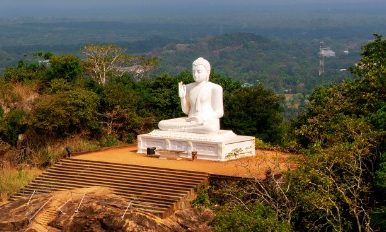
Climbing Mihintale: My Morning At The Birthplace Of Sri Lankan Buddhism

BY  Sibashree Sep 18, 2026

I reached Mihintale before 7 AM.   The stone steps were still cool, and the mist was not yet off the fields.   You can call it bad timing, as everyone told me to visit Mihintale at sunrise or never at all. However, I chose a different time on purpose.   The reward? I found Mihintale at its quietest.   Sigiriya, an hour south, got all the crowds and queues.   On the other hand, Mihintale, the place where Buddhism actually arrived in Sri Lanka, is humble, with a handful of monks.   Also, there were a few pilgrims in white attire.   Surprisingly, I even came across some confused tourists checking a map.   That struck me more, and it once again reminded me that it is one of the most underrated stops in the Cultural Triangle.   Mihintale At A Glance  Detail Information Location 13 km east of Anuradhapura, North Central Province Significance Site of the 3rd-century BCE meeting between Arahat Mahinda and King Devanampiyatissa, traditionally marking the introduction of Buddhism to Sri Lanka Opening hours 6 AM to 6:00 PM (Remains Open for longer hours on Poson Poya.) Foreign visitor entry fee Around US$3 per person (paid in LKR at the day's rate). It is separate from the Anuradhapura Sacred City ticket. Visitor entry fee for locals Free Steps to the summit About 1,840 stone steps from the base car park to Mihintale Rock. Best time to visit Early morning (6–8 AM) or late afternoon; June's Poson Poya for the full pilgrimage experience Nearest base town Anuradhapura (20–30 minute drive or tuktuk ride)  The Story Behind The 1840 Steps The significance of climbing up the 1840 steps at Mihintale is not about the 1840 steps.   The hill is modest if you compare it to the Sigiriya Rock Fortress.   However, it is the spot where the entire religious character of the island changed.   Monk Arahat Mahinda, Emperor Ashoka’s eldest son, met King Devanampiyatissa.  The king was hunting, and after his exchange with Arahat Mahinda, he converted to Buddhism.   He also declared Buddhism the state religion. Thus, Mihintale is the birthplace of Buddhism in Sri Lanka.   Ambasthala Dagoba, a small stupa, marks the exact spot of that meeting.   So, in significance, this place outranks the more photogenic ruins in local devotion.  It is not built for tourists. It is also not a restored monument.   In fact, it is a working pilgrimage site that Sri Lankan Buddhists have kept returning to for over two thousand years.  Why Poson Poya Turns Mihintale Into A Sea Of White Mihintale becomes the spiritual center of the country every June.   Poson Poya, or the full moon day in Jun,e is the biggest festival here.   In 2026, Mihintale celebrated Poson Poya on 29th June and, like every year, more than ten thousand devotees attended the event.   The pilgrims dressed in white climbed through the night with lanterns to reach the summit stupas by dawn.   Climbing Mihintale: What The 1,840 Steps Actually Feel Like The climb to Mihintale has different stages.   Also, each stage evokes different feelings with its distinct ambiance.   The Base: Kantaka Chetiya And The Monastery Ruins  From the main car park, the first wide stone stairway leads past the ruins of what was once a large monastic complex.  The complex had refectories, meditation halls, and stone urinals carved with such intricate patterns that early archaeologists initially mistook them for decorative slabs rather than plumbing.   I took a short detour off the main steps to reach Kantaka Chetiya.  It is a partially preserved stupa ringed with carved friezes that are older.  I found them more delicate than anything at the summit.   Almost nobody stops here, which is exactly why I did.  The Middle Climb: Widening Views And The Naga Pokuna  The steps get shallower and more shaded as you climb.  Also, I came across the famous Naga Pokuna here.   Naga Pokuna means the pond guarded by a five-headed cobra.   Once I reached Naga Pokuna, I could see the dagobas of Anuradhapura in the distance.   They looked like pale domes above the tree line.   I stood there for a good 10 minutes to admire the view of the dagobas and catch my breath.   Ambasthala Terrace And The Sacred Meeting Point  After crossing Naga Pokona, the steps opened onto a broad, sandy plateau.  It is the Ambasthala Terrace with frangipani trees all around. These trees reminded me of my home.   Furthermore, the Ambasthala Dagoba sits in the center of the terrace.   As I mentioned, it is the place where Monk Mahinda met the king and brought the religious transformation of the island country.   A large seated Buddha statue watches over the terrace, and this is where I saw the most devotees.  I knelt, lit oil lamps, and then sat in the shade.   You have to take off your shoes and hat here.   The sandstone here can be uncomfortably hot by mid-morning. So, visiting Mihintale early is a must.   The Final Push To Mihintale Rock  From Ambasthala, a short but steep set of steps, carved directly into the granite, with only a thin iron handrail, leads to the summit.  You will find the small Mahaseya Dagoba here.  It is a genuinely exposed scramble in a couple of places, and I saw more than one visitor turn back here.   If you make it, the payoff is a 360-degree view over the Anuradhapura plains.  I completed the climb in an hour.   So, if you factor in around 2 hours for climbing and descending, you will need at least 2 hours to explore the stupas and soak in the spiritual vibe here.   Entry Tickets And Costs  Mihintale has its own ticket, separate from the Anuradhapura Sacred City ticket that covers Ruwanwelisaya, Jetavanaramaya, and Abhayagiri.   Ticket type Approx. price (2026 reporting) Mihintale foreign adult ticket $3 (paid in LKR) Mihintale child ticket (under 12) $1.5 to 2.5 Anuradhapura Sacred City ticket (separate) $25–30 Combined Ticket of Cultural Triangle tour $50 (Sigiriya, Dambulla, Polonnaruwa, Anuradhapura)  How To Visit Mihintale From Anuradhapura? Mihintale is around 13 km east of Anuradhapura's New Town.  Also, it is roughly a 20–30 minute drive or tuktuk ride along a well-paved road. When I visited, the tuktuk charged me LKR 1500.   Most visitors combine it with an Anuradhapura day as an early-morning add-on before the sacred city gets busy.  You can also visit it as a late-afternoon stop on the way toward Trincomalee or Habarana.   What Is The Best Time Of Day And Year To Climb Mihintale? 6:30 AM to 7 AM is the best time of the day to beat both the heat and the tour buses.  Also, if you are looking for the best season, May to September is the best window with dry weather conditions.   However, if you want to experience the festive fervor around the temple, Poson Poya or June Full Moon is the best.  A Half-Day Mihintale And Anuradhapura Itinerary  Time Stop Notes 6:00 AM Depart Anuradhapura Take a tuk-tuk or car and reach within 25 minutes. 6:30 AM Mihintale Base and Kantaka Chetiya Climb the cool steps. Explore the monastery ruins with no crowds. 7:30 AM Ambasthala Terrace and Mihintale Rock Enjoy the sunrise light and a quieter summit.  9:00 AM Return to Anuradhapura Have your breakfast. Return to the Sacred City. 9:30 AM to 1:00 PM Ruwanwelisaya, Sri Maha Bodhi, Jetavanaramaya Core Anuradhapura sites before midday heat.  Why Mihintale Is Worth The Detour  Most Cultural Triangle itineraries treat Mihintale as an optional half-day tacked onto Anuradhapura.  It is obvious, as Anuradhapura gets more attention due to its scale, and Sigiriya is marketed well.   However, Mihintale is the only site in the region I visited that still felt primarily like a place of worship rather than a monument being managed for visitors.   If you only have time for one Buddhist pilgrimage site in the Cultural Triangle beyond the big-name ruins, it is the place you should be.