
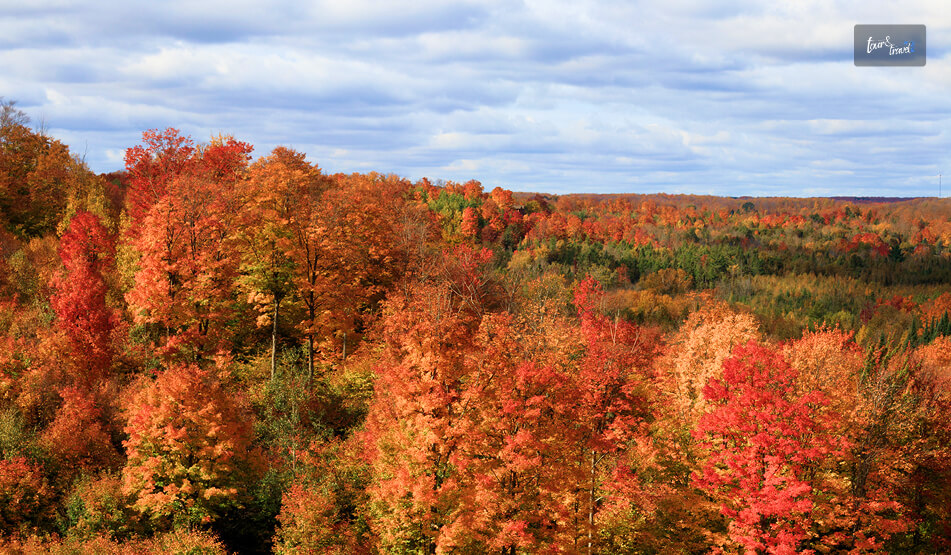


Unique Things To Do In Gaylord, MI: Exploring Michigan In Style

It has been years since our visit to Gaylord in Michigan. But the Alpine village left such a lasting impact that anytime I hear something good about the city, it feels personal!

As a traveler and travel writer, I have to write about itineraries or stuff like things to do in Gaylord, MI. However, this time, I have decided to keep it very candid. 

This time it’s not about how much I know. On the contrary, it’s about the connection I felt and the meaningful things that happened to me. 

And you know, I was very happy when my feelings for Gaylord were validated by the “Slow Tourism Movement” started by Pure Michigan. 

So, the next time I am in Gaylord, I will just smell the tulips, relax and unwind, and have the best pizza. 

Nevertheless, Gaylord, with its diverse terrains, has a lot to offer to outdoor enthusiasts. 

So, you can be a traveler like me, just soaking in the moment. Also, you can be a traveler eager to explore the trails.

Irrespective of the type of traveler you are, you wil have many options as you search for “What to do in Gaylord, MI today.”

Let’s discuss all those in this Tour and Travel Blog. 

What Is The Best Time To Visit Gaylord, MI?

What Is The Best Time To Visit Gaylord, MI_

April to October is the best time to visit Gaylord, MI. The summer months from May to July are ideal for many outdoor activities, such as biking, hiking, and elk spotting. 

Also, Gaylord celebrates the Alpenfest in the summer season. It is a celebration of the Alpine heritage. 

The temperature in Gaylord starts dropping from November, and the lowest temperature becomes sub-zero. Moreover, October is the wettest month in Gaylord and February usually has the most amount of snowfall. 

Do you want to know more about the weather conditions in Gaylord, MI, by month? Have a look at the table below. 

MonthsHighest Temperature (Degree Celsius)Lowest Temperature(Degree Celsius)Days of Rainfall
Janurary-5-107
February-3-126
March4-67
April12-110
May 2079
June25109
July27148
August26147
September22108
October15412
November7-39
December-1-88

Unique Things To Do In Gaylord, MI For Adults And Children

It’s not easy to find a quick answer to what is Gaylord Michigan known for. However, here I have jotted down my favorite experiences during the trip to this beautiful “Alpine Village.”

1. Spot Elk At Gaylord’s City Elk Park: Free Things To Do In Gaylord, MI

  • Location: 116 Grandview Blvd, Gaylord
  • Hours Open: 24 Hours

Is Gaylord, Michigan, worth visiting for a wildlife enthusiast? Of course! 

You can plan a day trip to Gaylord’s City Elk Park and find the elk grazing peacefully.

2. Exploring The Trails At Aspen Park: Things To Do In Gaylord MI In Winter

  • Location: Commerce Blvd, Gaylord
  • Hours Open: 6 AM to 11 PM

Aspen Park, with its unique geographical features, is the one-stop destination for bikers, hikers, and casual strollers. 

During the winter months, the wooded and hilly terrains here become ideal for cross-country skiing. 

3. Visiting The Call of the Wild Museum: Things To Do In Gaylord, MI, To Know About Local Culture

  • Location: 850 S Wisconsin Ave, Gaylord
  • Hours Open: 9 AM to 9 PM

A theater, a gift shop, and a display of North American wildlife in their natural habitat! The Call of the Wild Museum is a fusion of all these. 

Here you will learn about the local history and wildlife, and collect some fun souvenirs from the award-winning gift shops. 

4. Relaxing At A Spa: Things To Do This Weekend For Adults

If the week-long activities have kept you busy, you can visit a spa this weekend for massage, Reiki, aromatherapy, and other wellness services. 

The Holistic Spa at 104 W Main St is a popular spa here. 

5. Spending Time At Otsego County Sportsplex: The Kids’ Favorite

  • Location: PO Box 1886, 1250 Gornick Ave, Gaylord
  • Hours Open: Monday and Friday: 6 AM to 7 PM; Tuesday & Thursday: 6 AM- 8:30 PM, Wednesday: 6 AM – 7:30 PM, Saturday: 8 AM – 6 PM; Sun: 10 AM – 6 PM

The Olympic-sized swimming pool and ice rink are the biggest attractions of Otsego County Sportsplex. 

However, it also has segments for Yoga, Kayaking, and Karate training. Moreover, you can rent a room to play softball, baseball, or golf here. 

6. Playing Golf At Bavarian Falls Park: Things To Do In Gaylord, MI In The Afternoon

  • Location: 850 S Wisconsin Ave, Gaylord
  • Hours Open: 10 AM to 10 PM

You can spend the afternoon trying your luck at the turf. The golf course at Bavarian Falls Park is a favorite of young couples, and the scenic view here is relaxing. 

7. Watching Sunsets At Otsego Lake State Park

  • Location: 7136 Old Hwy 27 S, Gaylord
  • Hours Open: 8 AM to 10 PM

Kissing by Lake Otsego was the biggest “IT” moment for my partner and me in Gaylord. It’s a place to relax away from the noise of city life. 

Also, the Sun setting behind the trees offers transcendental views.

8. Exploring The North Blueberry Farm

  • Location: 3964 Hallenius Rd, Gaylord

Want to have the best blueberries in the region? Head to the privately-owned North Blueberry Farm. 

Enjoy some slow moments here, cherishing the scenic beauty, and carry some fresh blueberries back home.

9. Visiting The Otsego County Historical Society

  • Location: 320 W Main St, Gaylord
  • Entry: Free

Otsego County Historical Society is a museum that brings the history, culture and socio-economic characteristics of Gaylord under one roof. 

The hours of cooperation vary for the museum. So, call at +1 989-732-4568 to plan your visit.

10. Visiting The Gaylord Area Council For Arts

  • Location: 125 E Main St, Gaylord
  • Entry Fee: Free

How beautifully Gaylord has built an art community to promote its local talents! A visit to the Gaylord Area Council for Arts is one of the best things to do in Gaylord if you want to know about the local culture. 

Further, the Gallery Room here is fascinating, and you will see different forms of art here. Some of them even depict the history of the area.

11. Collecting Fresh Produce At Gaylord Farmer’s Market

  • Location: 829 W Main St, Gaylord
  • Hours Open: Saturday, 10 AM to 2 PM

All of us who talk about sustainable tourism must pay a visit to Gaylord Farmer’s Market. Michigan has always been one of the biggest promoters of the farm-to-table culture. 

At Gaylord Farmer’s Market, I got to see how things happen. Local farmers and vendors gather here with their fresh produce. 

Moreover, you see so much energy and emotion when you buy something from them or just have short and meaningful conversations. 

It’s the best way to know about the local community. 

12. Shopping At Old Spud Warehouse

  • Location: 314 S Otsego Ave, Gaylord, MI
  • Hours Open: Monday-Saturday, 10 AM to 6 PM, Sunday: 12 PM to 4 PM

The old world charm of the Old Spud Warehouse building spoke to me at first glance. Along with the clothes and accessories, what I loved the most there were the vintage items. 

I collected all the gifts for my friends from there.

Where To Eat In Gaylord? Know The Restaurants In Gaylord MI

You must have heard of Detroit-style pizza. Also, the pasties in the Upper Peninsula Region are a sheer gastronomic delight. 

Further, if you have a sweet tooth, all roads in Michigan lead to Mackinac Island, home to the famous Mackinac Island fudge. 

Along with these signature dishes, the local fresh ingredients and flavors such as thimbleberries, cudighi, and white fish, cherries, apples, maple syrup, and artisan cheese make Michigan an ideal place for culinary tourism. 

Nevertheless, these are our favorite restaurants in Gaylord, MI.

  • Bennethum’s Northern Inn at 27 Old US Hwy
  • Mi Vallarta at 1006 W Main St
  • The Iron Pig Smokehouse at 143 W Main St

Things To Do in Gaylord, MI: Frequently Asked Questions (FAQs)

Here are the frequently asked questions and answers about things to do in Gaylord, MI.

Why Does Gaylord, Michigan Get So Much Snow?

Gaylord, the highest city in the Lower Peninsula region, gets copious snowfall due to its high altitude (411 meters), the northern and northwestern winds blowing into the city, and the lake-effect. 

The two Great Lakes, Superior Lake and Michigan Lake, are the two most prominent elements contributing to the heavy rainfall in the city. 

But how? Jim Keysor, the warning coordination meteorologist at the National Weather Service in Gaylord, says,

The process of lake-effect snowfall, and rainfall, is the process of cold air moving across an unfrozen body of water … and we normally have a wind direction that blows from north and northwest that brings the air across the Lakes into our area.

What Is The Snowiest City In Michigan?

Munising, Houghton, and Marquette are the snowiest cities in Michigan. However, this year (2024-25 Winter), Gaylord has become the center of attraction due to a heavy snowfall of 204.6 inches. 

However, it is still behind Munising, which had a record snowfall of 238 inches in the 1996-97 winter, and in the 2024-25 winter season, it recorded a snowfall of more than 218.1 inches. 

What Is Gaylord Famous For?

With heavy snowfall and a mild summer, Gaylord is the ultimate “Alpine Village” you want to visit. No wonder that it is often referred to by this nickname. 

Its skiing and golf resorts attract a lot of enthusiasts every year, and it is the ultimate land of outdoor adventure with diverse terrains and activities such as biking, hiking, elk spotting, etc. 

With a Swiss heritage and a sister city to Pontresina in Switzerland, Gaylord also celebrates the Alpine connection through festivals and other cultural activities. 

Alpenfest is the biggest celebration in this regard. In 2025, Alpenfest in Gaylord will take place from 8 to 12 July 2025. It is the 60th year of the festival.

Moreover, don’t miss the Alpine-themed architecture when you are in Gaylord. 

What Should I Wear To Gaylord Ice?

You should wear long pants, a hat, gloves, and a Gaylord Rockies parka to Gaylord Ice. 

Gaylord is one of the coldest cities in Michigan, and snowfall reached a record high in the 2024-25 winter season.

What Is America’s Snowiest City?

Valdez, in Alaska, is the snowiest city in the United States. 

Thanks to the Aleutian low-pressure system, frequent and lasting snowstorms, and mountain drainage, Valdez experiences around 325.3 inches of snowfall in a year. 

What Is The Coldest City In Michigan?

In the Upper Peninsula, Stambaugh is the coldest city in Michigan, with the temperature going down to -30 degrees Celsius on 20th January, 2025, and -28 degrees Celsius on 21st January 2025. 

In winter 2024-25, the Upper Peninsula and some parts of the Lower Peninsula experienced frigid cold. 

Further, the temperature in various parts of the Upper Peninsula decreased to -25 degrees Celsius. 

Nevertheless, here is a list of the temperature records of the cities in the Upper and Lower Peninsulas of Michigan during the winter of 2024- 25.

Name of the CityTemperature (Degree Celsius)
Stambaugh-28
Ironwood-27
Herman-25
Marquette Area-19
Bergland-17
Munising-14
Manistique-13
Sault Ste Marie-13
Engadine-13
Houghton/Hancock:-12
West Branch-12
Atlanta-9
Kalkaska-6
Battle Creek-5
Grand Rapids-5
Vanderbilt-4
Lansing-4
Gaylord-4

What Month Does Michigan Get The Most Snow?

December to February are the snowiest months in Michigan. However, snowfall in Michigan starts in November and continues till April. 

In the 2024-25 winter season, the Upper Peninsula Region of Michigan had a snowfall of over 320 inches (National Weather Service). It was the highest of the season. 

Further, Gaylord had a snowfall of 204.6 inches in the 2024-2025 winter season1, achieving a 138% high of the usual average of 148 inches. 

Also, during the same months, Traverse City received 152.2 inches of snow, and Detroit received 28.7 inches.

Up Next..


  1. https://www.yahoo.com/news/much-snow-did-michigan-season-145317508.html? ↩︎

Share on Social Media

Sibashree is a travel, culture, and leisure writer who has been writing since the age of 12 and professionally since 2014. With more than a decade of travel writing experience and journeys across India and several parts of the world, she brings a deeply personal and thoughtful perspective to her work. A student of English Literature and Mass Communication, Sibashree has always viewed travel as more than movement — for her, it has been a way of understanding people, cultures, and herself. Her passion for spiritual exploration has also led her to many unusual and meaningful destinations over the years. Outside of writing, Sibashree enjoys watching European cinema, reading about global politics, and reflecting on the stories hidden within everyday places.

Leave a Reply

Your email address will not be published. Required fields are marked *

title-img Related

READ MORE heat wave temperatures

Surviving The Sizzle: Things To Keep In Mind While Traveling To Heat Wave Zones!

BY  Mashum Sep 7, 2023

Summers are warm. However, Scorching heat in certain places has highlighted them as heat wave zones. With heat wave temperatures across many areas worldwide, we are reminded that climate change is a global phenomenon. A significant health risk, heat wave zones make it difficult for people to travel, stay, enjoy or perform professional liabilities. I will identify certain important factors that influence travel plans, health risks and ways in which you can be safe from heat waves. The conditions that are being observed across the world in some beautiful vacation-worthy locations are serious! They can impact your health and lifestyle, so read the article to learn about the dangerous conditions that will likely affect your travel plans. Things To Keep In Mind While Traveling To Heat Wave Zones! Across the world, many places are currently heating up! Several tourist destinations and other places in Asia, Europe and the United States have heat wave temperatures. Officials in countries like France and Italy in Europe have issued health warnings. I am not saying it is highly risky, but the probability of the situation becoming risky is high! If you are visiting one of the heat wave zones, you may not be able to stick to your original plan, be it for vacation or professional liabilities. Let's explore further the precautions you might take to be safe when you visit or have to visit a heat wave zone! What Are Heat Waves? The increasing global temperature worldwide has led to people experiencing some of the hottest days! According to the weather reports, the heat intensifying in several countries worldwide has led to people fainting, sunburns and health concerns such as sunstroke. It is identified as a heat wave, especially when the temperature from June 2023 has been recorded as the warmest in the global records. The increasing heat wave temperature has succinctly impacted water supplies, agriculture, ecosystems, energy, human health and economies. One of the major reasons for heat waves has been greenhouse gas emissions, which need to be cut off as soon as possible. Climate change is a serious threat; we must take it that way to survive and help our future generations. What Are The Regions With Heat Wave Zones? In Europe, the temperature in Rome reached 104°F in July, while in Sardinia, it was 112°F. In at least 23 cities in Italy, there have been red alerts for the weather as the heat wave is potentially becoming a threat in recent times. Tourists have been passing out, creating an awareness towards global climate change and crisis. Now, Death Valley in Nevada, running along a section of the border of Central California, is identified as the "hottest place on earth"! The National Weather Service reported that the temperature reached 128°F in July 2023, a clear cause for concern. People living in Los Angeles heat wave are having serious health issue concerns! According to the weather forecast, the capital of Arizona, Phoenix, has seen a rise in temperature to114°F while Florida and Texas are equally heating up! La Palma, located in the Canary Islands, has been riddled with wildfires recently, leading to the evacuation of 4,000 people from their homes. The popular tourist destination, the Acropolis in Athens, was shut down at the beginning of July this year during midday! It is peak time for tourist visits, but because the authorities informed us the temperature could rise to 111.2°F within a week, it was closed! In China, the recorded temperature in northwestern Xinjiang province was 126°F. Places worldwide have been hampered by the heat wave temperatures, impacting people's lifestyles, tourism and the country's economy. Is It Safe To Travel To Heat Wave Zones? As travelers, you should check the upcoming weather and climate of the location that you are visiting! If you visit one of the places I have stated regarding increasing temperature, you must keep a tab on the everyday temperature. Your sightseeing might go differently than planned if a situation occurs when one of the monuments or places you will be visiting is shutdown due to increasing temperature. If you suffer from chronic health conditions, you should not go out, especially in the scorching heat! If you are visiting from professional liability, you must carry out certain steps to cope with the heat. Remember that the temperature starts building from 11 a.m.; hence, try to enter a building or where your work is within that time frame. Read along further to learn about your steps to stay safe! What Are The Things To Do If You Travel To Heat Wave Zones? In the evening, the temperature will come down. Hence, it would be best to keep yourself cool in the daytime. The first thing is to wash your face and arms, including your armpits and wrists, so your body temperature can feel a bit of semblance. You can repeat the action as much as possible the whole day! If you are visiting Europe, you've got it easy! There are fountains in Europe. Apart from that, you need to take cool showers and air-dry yourself! It will keep the temperature of your body down. In some countries, such as Italy, residents are asked to stay in an air-conditioned environment for at least 3 hours a day. Try to find a cool restaurant, gallery or museum if you are visiting one of these countries to stay in air conditioning for some time. Try to wear clothing that is made of cool fabric, such as cotton! It is even better if the material is light and loose from your clothing. Try to use sunscreen as much as possible. Recently, people have been using manual and electric handheld fans to keep the face and body cool as much as possible. Another important thing that you must do is use heat wave sunglasses when outside! Drink more beverages and filled food, such as fruits, salads, and veggies! Also, ensure that you must have insurance covering all your medical expenses before traveling. What Are The Health Risks? Heatwave zones have several health risks, such as heatstroke or sunstroke! In this condition, your body cannot maintain a safe temperature, especially when exposed to hot weather. The body temperature must not exceed 103 Fahrenheit, but in sunstroke, it does. There is also a chance of getting pale skin, muscle cramps, sweating, and exhaustion. Currently, the US heat wave is one of the serious concerns for business travelers! You might get red and blotchy skin if you stay in the sun for too long! You have to take fluid regularly. Chances of dizziness, headaches, and sweating when visiting heat wave zones are high! Finishing Up… Overall, climate change has led to health risks along with issues where people cannot avoid these situations. With increasing temperatures in certain places across the world, people, children, and senior citizens cannot cope with the increasing temperature. People with chronic health conditions such as allergies to skin, asthma, upset stomachs, and headaches are facing more issues, especially when traveling to heatwave zones. I suggest following the tips and consulting a doctor if the situation worsens. Let us know your thoughts about this situation and how to be safe in heat wave temperatures! Read Also: Spring Travel And Eye Health Tips Sizzling Summer Road Trip Destinations 7 Tips For Planning The Perfect Summer Camp For Kids


READ MORE UK Staycation

What Makes A UK Staycation Good Value For Families?

BY  Sibashree Aug 8, 2026

Booking a UK staycation always feels like a victory when you find a low up-front price.  However, that budget-friendly cottage or hotel room can quickly become an expensive illusion.  Moreover, once you factor in the hidden extras, the true cost of your trip starts to skyrocket.  These extra costs include fuel, meals out, parking fees and the endless stream of snacks children always seem to demand.  By the time you head home, your original booking fee might only represent a fraction of your actual spend.  In addition, when you judge the true worth of a British family holiday, it is not about hunting down the lowest headline price. Instead, it is about calculating exactly what your family gets for the total amount you will leave behind.  Start With The Real Cost, Not The Headline Price Two holidays costing £700 on the booking screen can produce very different final bills. One might involve staying somewhere fairly remote, driving every day, paying for several attractions and eating out regularly.  Another could cost slightly more initially but include activities, facilities or entertainment that would otherwise have been paid for separately. The Hidden Staycation Costs Checklist Before booking, it can be useful to sketch out the likely spending for the whole trip. Think about: accommodation travel and fuel food days out parking activities evening entertainment any equipment or clothing needed for the trip It does not need to be an exact budget. Even rough estimates can reveal whether an apparently cheap break really is cheaper. This is particularly important when comparing self-catering accommodation with hotels, resorts or holiday parks.  Each style of holiday shifts spending into different areas. Free Time Isn't Always Free One of the more overlooked costs of a family break is simply keeping everybody occupied. If the accommodation itself offers very little to do, a family may end up leaving every morning in search of entertainment.  The Cost Of Rainy Day Backups Shuttling children between a wildlife park, an aquarium and a bowling alley to escape the inevitable rain might seem like standard holiday planning.  However, while these individual entrance fees feel harmless at the ticket desk, their combined total can completely wreck a budget by Friday.  This hidden drain on a wallet is exactly why on-site amenities are worth their weight in gold.  Having access to a swimming pool, covered games areas, or safe outdoor play spaces means families can easily be entertained for an afternoon without buying another round of tickets. Of course, accommodation shouldn't be booked just because it boasts the longest list of features. If a family genuinely prefers using a basic cottage as a base for wild coastal walks, that is fantastic.  Additionally, the trick is simply being honest about how the days will be spent before booking. Location Can Make A Big Difference Where you stay can quietly influence spending throughout the week. Saving £100 on accommodation may not be much of a saving if it means an extra hour in the car every day.  Driving Times Vs. Summer Traffic Longer journeys mean more fuel, more parking and often more temptation to buy lunch while out.  They also use up something that families have limited quantities of on holiday: time. The opposite can be true too.  Staying in the centre of a popular tourist destination may cost considerably more, while staying a short distance away could give almost the same access at a lower price. It is therefore worth looking at the surrounding area rather than judging accommodation in isolation.  Check where the beaches, walks, shops and attractions actually are. Look at driving times rather than distances alone. Ten miles on a quiet road is very different from ten miles through heavy summer traffic. Consider What Is Already Included Sometimes the phrase "included in the price" matters more than the price itself. UK family destinations vary enormously in what they offer. Some provide little beyond accommodation, while others build a much wider range of activities into the stay. Places such as Manor & Ashbury Resorts illustrate this broader approach.   In this, the cost of the break has to be considered alongside the range of activities available on site rather than viewed simply as the price of somewhere to sleep. Comparing Value Across Accommodation Types The same calculation can be applied anywhere. To see how different staycation choices shift your spending, consider this basic breakdown: Accommodation TypeUpfront CostHidden Extras to ExpectBest Suited ForAll-Inclusive ResortHigherDrinks, premium crafts, off-site excursionsHigh-energy families who want a packed itinerary without driving.Self-Catering CottageMediumGroceries, fuel, entry tickets, rainy-day backupsIndependent explorers who prefer cooking and quiet beach days.Budget Hotel RoomLowerEvery meal out, parking fees, daily activity ticketsFamilies using the room strictly as a base for heavy sightseeing. A family may know they are likely to go swimming three times, play several sports and look for entertainment most evenings. Then, having those things readily available may represent better value than arranging them individually elsewhere. For another family, those facilities might barely be used and therefore have almost no value at all. Value is personal. Food Can Change The Budget Quickly Eating out is one of the fastest ways for family holiday spending to spiral out of control. For a family of four, even casual pub lunches and daytime cafe stops quickly turn into a massive daily bill. In addition to that, once you add up the afternoon ice creams, drinks, and sit-down evening meals, the food costs can easily rival your initial accommodation fee. Besides, choosing a self-catering setup offers massive savings, though nobody wants to spend their entire break trapped in a kitchen. A hybrid dining strategy usually works best to strike a fair balance for everyone.  Furthermore, preparing breakfast at your base and sorting simple packed lunches for day trips keeps costs low without feeling restrictive. Also, you can then mix home-cooked dinners with a few special nights out at local restaurants.  As a result, this smart compromise frees up plenty of cash to spend on the holiday activities your kids actually want to do. Good Value Doesn't Necessarily Mean Spending Less There is an important distinction between a cheap holiday and a good-value holiday. A £500 break where everyone is bored, and the family spends another £500 trying to entertain themselves.  This means they have not necessarily represented better value than a £750 holiday where most of what they wanted to do was already available. Equally, there is little point paying extra for facilities nobody intends to use. The best-value staycation is usually the one that matches the way the family actually likes to spend its time. For some, that means beaches, picnics and long walks with very little organised entertainment.  Others want swimming, sports and activities from morning until evening. Some families mainly want a comfortable base for exploring a new part of the country. Understanding that before booking is probably the most effective budgeting decision of all. Rather than asking which UK holiday is cheapest, ask what the entire week is likely to cost. Moreover, also understand what you will actually get for that money. That tends to produce a much more useful answer. Finding Your Perfect Balance Ultimately, finding a rewarding UK staycation requires a shift in mindset from chasing the lowest price to maximizing overall experience.  Additionally, a cheap booking that leaves your kids bored and forces you to spend hundreds on daily entertainment is rarely a bargain. Conversely, a slightly higher upfront cost that bundles in swimming, sports and evening entertainment often protects your wallet in the long run. Value is entirely personal. Moreover, it depends on whether your family thrives on quiet beach walks and DIY picnics or structured high-energy holiday park activities.  Before you enter your credit card details on a booking screen, sketch out a realistic estimate of your total holiday expenditure.  You need to shift your focus from “What is the cheapest option?” to “What we actually get for our total spend.”  You will guarantee a memorable stress-free getaway that will deliver genuine value for every pound spent. Read Also: What Are The Things To Do In Edinburgh? Things You Cannot Miss Here The Best Travel Insurance Plans For A Trip To The UK Eco-Tourism In The UK: Top 10 Sustainable Stays

READ MORE card-img

The Volcanic Landscape of Katmai National Park: Come Visit The “Ring of Fire” 

BY  Sibashree Jul 25, 2024

The wild heart of Katmai National Park harbors 14 active volcanoes. This national park of around 5 million acres surpasses the magnificence of the Grand Canyon National Park, and kayaking, canoeing, and hiking here are one-of-a-kind experiences.  One of the oldest national parks, Katmai National Park, was established in 1918. Novarupta Volcano eruption on 6th June 1912 was destructive, and preservation of the habitation around Mount Katmai was crucial.   The National Park Service website says,  “Lasting three days, the largest volcanic eruption of the twentieth century exploded June 6, 1912, from a new volcano, Novarupta. In the process, it created Katmai caldera and the Valley of Ten Thousand Smokes. Not only have the 1912 events remained scientifically important ever since, but also the 1912 deposits continue to provide insights about volcanic and magmatic processes that impact us and the land we live in.” (Source)  Today, this national park is a living account of human history, and it is the home for brown bears and salmons. It is also one of the most popular destinations for volcanologists because it’s still active. Further, it has a handsome number of visitors every year, and in 2023, the number of footfall was 33,763. (Source)  Do you also want to explore this magnificent volcanic landscape? Let me be your guide.  Why Are So Many Volcanoes In Katmai National Park?   With “50 discrete volcanic vents,” Katmai National Park is the center of attention of many. But why does it have so many volcanoes?  Volcanoes in the Aleutian volcanic arc and Katmai National Park are part of the Pacific Ring of Fire. “The Ring of Fire is home to 75% of the world's volcanoes and 90% of its earthquakes.” (Source)  Many call the Ring of Fire the Circum-Pacific Belt, and many tectonic plates meet here. Due to the constant movements of these plates (especially the subduction of the Oceanic Pacific Plate under the North American Plate every year), volcanic eruptions and earthquakes take place here.   Along with the eruption of  Novarupta-Katmai in 1912, there are also records of the eruption of Mount Trident from 1953 to 1974.   The latest volcanic eruption in Katmai happened with the venting of Fourpeaked Volcano in 2006. Here is an excerpt from a report published on the 2006 volcanic eruption of Fourpeaked Volcano.   “On September 17, 2006 Fourpeaked Mountain, a glacier-clad stratovolcano with no known Holocene activity, produced a plume of steam, ash, and SO2, which rose to 6000 m above sea level. The plume was observed by eye-witnesses, seen on weather radar, and also appeared in SO2-sensitive satellite imagery. Concurrent with the plume, regional seismic stations recorded a swarm of volcano-tectonic earthquakes while an atmospheric infrasound signal was recorded 800 km away. Air and ground reconnaissance revealed a linear series of vigorously steaming vents in the summit glacier, stretching about 1 km down the north flank of the volcano.”  So, are you ready to know about the active and rugged volcanoes in Katmai National Park. The next section gives you a detailed overview.   Know The Volcanoes In Katmai National Park  Volcanoes erupt for a short span if you study the entire timetable of a volcano. However, the eruption is only the outcome of activities that take place for years or even centuries. Similarly, the volcanoes in Katmai National Park have faced long intermittent periods between the occurrences of small and big eruptions.   Further, the volcanic activities and earthquakes taking place in Katmai due to tectonic movements have a major impact on human lives across generations.   Here, I present a brief overview of a few volcanoes out of the 14 in Katmai.  Mount Katmai  https://www.youtube.com/watch?v=UF79ozS_kFA&t=33s Mount Katmai has recorded the highest explosive incidents in the Katmai volcanic cluster. Active for over 70,000 years, the two cones of Mount Katmai were beheaded due to the caldera collapse in 1912.    The eruptive products of Mount Katmai are varied in their compositions, including basalt and rhyodacite.   Mount Griggs Mount Griggs, the tallest peak in the district, is 2,530 m tall. Despite having young lava flows, some of the deposits in Mount Griggs are 290,000 years old.   The volcano is still active and you will get to see the yellow sulfurous steam around its summit.   Trident Volcano https://www.youtube.com/watch?v=5rQVsdsWsIA Trident Volcano is one of the older volcanoes in Katmai. From 1953 to 1974, Trident Volcano had many eruptions. However, the highest and the central volcanic cone of Trident Volcano has been lying dormant for around 10000 years.   Mount Mageik  Mount Mageik has four discrete eruptive centers covered with snow. However, glaciers have caused severe decay in three of these lava centers. It is a younger volcano in Katmai, with its lava aged between 4,000 and 93,000.   The last eruption of Mount Mageik happened 2500 years ago. It caused a crater between two Mount Mageik summits. Today, the crater is filled with an acid lake, exuding steam curls.   Alagogshak Volcano  Alagogshak stands at the southwesternmost corner of the Katmai volcanic cluster. It is also the oldest in the Katmai family of volcanoes. The lavas in this volcano are 40,000-680,000 years old.   Peak 6875, Snowy Mountain   Peak 6875 is a young dome made of dacite lava. The scoop-shaped peak looks like a natural amphitheater.    Spectacular Landscapes Created By Volcanic Activities In Katmai National Park   The volcanoes in Katmai have created some interesting landscapes, and their activities have encouraged geologists to explore the possibilities. Nonetheless, the Valley of Ten Thousand Smokes is the most prominent volcanic landscape in Katmai.   It is the work of the largest volcanic eruption in the 20th century. The Novarupta Volcano eruption on 6th June 1912 created this valley.   There are various exciting destinations in the Valley of Ten Thousand Smokes. For the geologists and people studying volcanoes, Novarupta is the ultimate destination. The dome causing the massive eruption in 1912 still carries warm steam.   It is also the most colorful place in the valley, thanks to its kaleidoscopic views caused by the deposition of ash, pumice, and other minerals.   Another popular destination in the valley is the Buttress Range Ridge. Here, you will catch a glimpse of the extensive wildlife in Katmai. Along with the bears, you will also find ptarmigan, ground squirrels, and caribou.   Other fascinating spots to explore in this valley are Katmai Pass, Southwest Trident Lava Flows, Knife Creek Glaciers, Mount Katmai Caldera, Mageik Lakes, etc.   Did You Know?  Katmai has the largest population of protected brown bears in North America.  It is home to around 2000 creatures.  Robert F. Griggs, a botanist who named Valley of Ten Thousand Smokes, played an active role in designating Katmai as a national park.  Dumpling Mountain offers the best view of Katmai National Park.  The annual Fat Bear Week in Katmai is a tournament-style competition, and online visitors can choose the winner of the tournament through voting.  Katmai National Monument was established in 1918. The redesignation of the protected and expanded area as a National Park happened in 1980.   Final Words   Active volcanoes add to the spectacle of Katmai National Park, and they attract the most adventurous souls across the globe.   The volcanoes are part of the Pacific Ring of Fire, and they have an eruptive history, with the last incident occurring in 2006.   AOV, or the Alaska Volcano Observatory, is in charge of monitoring the activities of these volcanoes. It also records the incidents of eruptions from dedicated monitoring stations. Two webcams are also installed at Fourpeaked and Katmai for continuous vigilance of the volcanic landscape.   So, are you ready to visit Mount Griggs, Mount Katmai, and other volcanoes in Katmai National Park? Do you want to have an exciting encounter with wildlife? Don’t forget to share your experience with us!   Katmai National Park FAQs   How To Explore Katmai National Park?  You cannot reach Katmai National Park by road. You can take a floatplane from Kodiak, Anchorage, or Homer. Further, you can take a boat or floatplane from King Salmon.  Both routes lead to the Brooks Camp shore.   What Is Special About Katmai National Park?  Katmai National Park is known for its active and extensive volcanic landscape. It has 14 volcanoes. Further, it is the home to around 2000 species, including brown bears.   You can enjoy your time here by hiking through the trails or boating or canoeing.   What Type Of Volcano Is Katmai Mountain?  Katmai Mountain is a stratovolcano and it had two big cone-shaped volcanoes. The caldera collapse in 1912 beheaded the two cones.   What Wildlife Is In Katmai National Park?  Brown bears are the most popular animals in Katmai National Park. In fact, the national park has the largest population of protected brown bears in North America.   Moose, gray wolves, sea otters, and humpback whales are fascinating animals here. Overall, it is home to around 2000 species of creatures.   What Type Of Trees Are In Katmai National Park?  Sitka spruce, alder thickets, and willow are popular trees in Katmai. You will also find plants like lowbush cranberry, cow parsnip, labrador tea, and watermelon berries here.   Reference:  National Park Service: “Since 1916, the National Park Service has been entrusted with the care of our national parks. With the help of volunteers and partners, we safeguard these special places and share their stories with more than 318 million visitors every year. But our work doesn't stop there.”  Harvard University: “Harvard experts, researchers, and leaders all around the globe make contributions—from public health to conflict resolution—that transcend borders, forge connections, and strengthen communities.”  National Geographic: National Geographic is a “world leader in geography, cartography and exploration.”  Also read Plan A Day Trip to Dry Tortugas National Park: This Is How You Will Do It. Everglades National Park: The UNESCO Heritage Site With Its Quiet Beauty. Welcome To Biscayne National Park: Enjoy Kayaking and Canoeing At This Watery Wonder.