
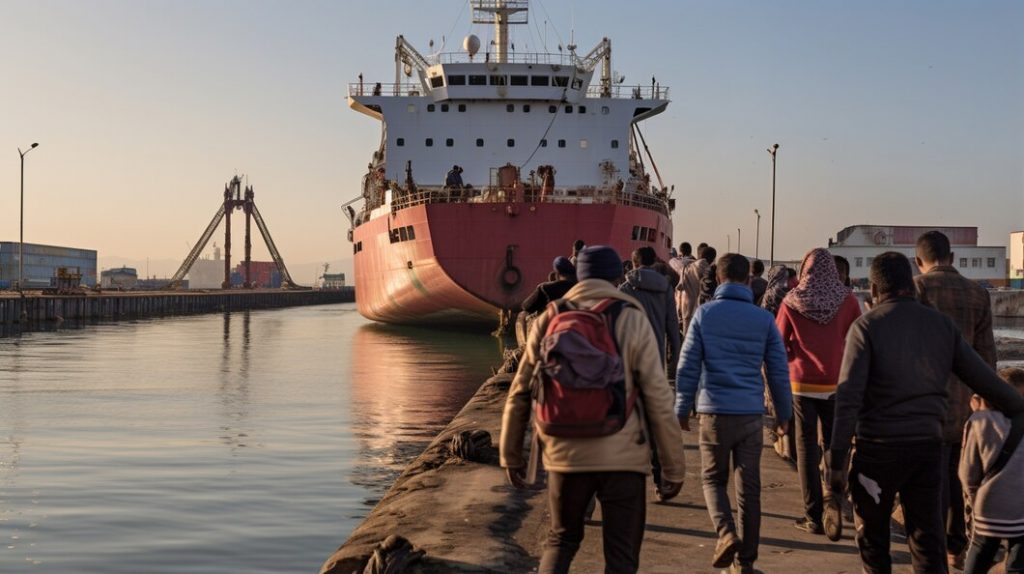

Langkawi RORO Ferry: Your Gateway To Island Paradise

Jan 30, 2024

Last Updated on: Aug 27, 2025

Travel Guides

Langkawi RORO offers a wide range of on-board ferry services to passengers for their ferry trip to Langkawi. The ferry operator company is constantly making efforts to provide a reliable and speedy service for passengers.

Langkawi Kedah RORO Service has trained staff who have been providing services to passengers for a long period of time. Book your Langkawi RORO ferry tickets and enjoy a fantastic sail experience between Kuala Kedah and Langkawi Jetty. 

Langkawi RORO Ferry Ticket Online Booking

Langkawi RORO Ferry Ticket Online Booking

Langkawi, a captivating island located in Malaysia’s Kedah state. It is a sought-after travel destination that attracts tourists with its beautiful beaches, stunning landscapes, and lively culture. The most effective method to get to this paradise is to take the LK Roro Ferry. The greatest part about this ferry is probably the fact that you will be able to board it along with your cars.

The Langkawi Kedah RORO Management Sdn. Bhd. is completely committed to offering extraordinary travel experiences to our loyal customers. Their focus is on providing an unrivaled passenger ferry that bridges Langkawi and the mainland. It operates all day and every day of the year.

With more than two decades of experience in the field of ferry, Langkawi RORO ferry remains constant. Its commitment to maintaining the highest safety standards throughout every ferry operation.

Amenities on the Langkawi RORO Ferry Services

  • The Langkawi Kedah RORO ferry can accommodate a capacity of 400 passengers.
  • They aim to reduce delays and wait times to ensure a relaxing environment for all of our guests.
  • The ferry is designed to meet all demands for cargo and freight of passengers! catering completely to commercial and non-commercial needs.
  • The journey by boat to Langkawi is distinguished by luxury and comfort. The vessels are outfitted with modern conveniences, which ensure the smoothest and most enjoyable trip.

Kuala Kedah-Langkawi, as well as Langkawi-Kuala Kedah, is the most well-known route that is served using the RORO ferry.

The Kuala Kedah Jetty has been serving as the beginning point for your Langkawi excursion. The busy jetty is a bustling hub, brimming with tourists eager to discover the island.

Kuala Kedah to Langkawi : Travel Duration

The length of your trip to Kuala Kedah to the Langkawi Jetty is contingent on a variety of elements, such as weather conditions and ferry speed. In general, the Kuala Kedah to Langkawi ferry ride takes between 1 45 minutes and 1 hour, giving you plenty of time to take in the views from the beach and prepare for the exciting experiences that lie ahead in Langkawi.

Langkawi RORO Ferry Schedule 2023

Langkawi RORO Ferry Schedule

Planning is the key to organizing a trip that is well-organized. This is also true for Langkawi travel.

The timetable you check in advance lets you align your travel plans to the ferry schedule, which will ensure that you have a smooth experience.

  • Langkawi RORO ferry departs daily at 01:30 pm. Langkawi RORO ferry sets off every day at 01:30 pm and departs from Kuala Kedah Jetty to get to Kuala Kedah on its Langkawi journey.
  • The ferry leaves at 9:15 AM at the Langkawi Tanjung Lembung Port for the return trip via Langkawi up to Kuala Kedah.

For more info, contact:

Kuala Perlis: 604-985 1899 / 604-9852539 / 604-985 2690
Langkawi: 604-966 1125 / 604-966 1126.

Getting to Langkawi By Air

If you are coming to the island from Singapore, traveling by air is your safest and most hassle-free choice. It will take a mere hour and a half if you take a direct flight in order to reach the island. You have the option of Air Asia and Scoot. They both offer direct as well as affordable flights from Singapore to Langkawi each day of the week. If you do not have a problem with connecting flights, Malaysia Airlines and Malindo Air both stop at Kuala Lumpur International Airport.

Getting to Langkawi By Road

There are no roads connecting Langkawi. But you can drive from the Malaysian mainland, such as Kuala Lumpur, using a car or a bus to any of the following spots. 

Ferry Terminal in Kuala Kedah is located on the northwestern coast of Malaysia. If you are planning to ride along the North-South Expressway, you must take the exit at Alor Setar Selatan and then follow the road signs. It could take around 6 hours to reach Kuala Kedah via a car from Kuala Lumpur. The ferry terminal at Kuala Perlis, which is further up, will take you about an hour longer. 

The regular coaches and buses are available between KL and Kuala Perlis, and it takes about 8 hours. The buses usually leave from the Pudu Sentral bus station or even the Hentian Duta bus station in KL. You will find the bus stand within walking distance from the ferry clock at Kuala Perlis.  

Getting To Langkawi By Train

If you’re traveling from Kuala Lumpur, it’s advisable to book an ETS (Electric Train Service) ticket to Arau. Being the royal capital of Perlis, Arau is regarded as the starting point for the journey to Langkawi and Thailand, where every adventurer begins their journey to the island via Kuala Perlis Ferry Terminal. Choosing Arau as your final stop is recommended as it is closer to the port, and the ferry ride’s duration will be shorter. 

The journey takes approximately four hours and 49 minutes and is considered the fastest inter-state train service in Malaysia. If you want to enjoy a picturesque journey and are not in a hurry to reach your destination, this is a great travel choice. Ticket prices range from RM72 to RM92, and you can book your journey on the official website. Upon arriving at your destination, you can hire a Grab car or a taxi to reach the ferry terminal, which operates from 7 am to 7 pm.

Wrapping Up

You must have a passport that is valid for at least 6 months, and you will need one blank page to make an entry of the immigration stamp. Furthermore, you will not need a visa to enter the country. You could be visiting for business or pleasure for a period of 90 days or less, and still, you wouldn’t need a visa.

If you have thoughts to share or questions to ask, please leave a comment below. We would love to hear from you!

Read Also:

Share on Social Media

Ankita Tripathy loves to write about food and the Hallyu Wave in particular. During her free time, she enjoys looking at the sky or reading books while sipping a cup of hot coffee. Her favourite niches are food, music, lifestyle, travel, and Korean Pop music and drama.

Leave a Reply

Your email address will not be published. Required fields are marked *

title-img Related

READ MORE How far is Orlando from miami

How Far Is Orlando From Miami? How To Travel By Road, Train And Air? 

BY  Sibashree Mar 23, 2026

Are you planning a Florida trip to see all the beaches in Miami?  Florida definitely has the best beaches in the world and the best cuisine. Furthermore, with year-long sunshine, it boasts a vibrant culture, happening nightlife, and endless outdoor activities.  Orlando, on the other hand, has Disney World, and it is the theme park capital.  However, this time, I will not ask you to choose between the beach holidays and theme park adventures.  You can easily travel from Miami to Orlando and experience the best of both worlds.  So, in today’s blog, I will talk about how far is Orlando from Miami and how to travel the distance.  Also, if you are planning a trip from Tampa to Orlando, you can read my guide.  How Far Is Orlando From Miami? The distance between Orlando and Miami is around 236 miles or 380 kms. Furthermore, the travel time between Orlando and Miami is between 3.5 and 4.5 hours.  However, the travel time will depend on the mode of transport you choose. So, here is a quick summary.  Different Modes of Transport From Orlando to MiamiTravel TimeBy Car3.5 to 4.5 HoursBy Train3 Hours and 30 Minutes to 7+ HoursBy BusAround 4 to 6 HoursBy Air About 1 Hour Furthermore, Miami is served by the Miami International Airport, which is around 10 miles away from Miami.  Moreover, the Orlando International Airport is at a distance of 12 miles.  So, consider the travel time to and from the airports, which is around 1 hour, including both sides.  How To Travel To Orlando From Miami?  The fastest way to travel from Orlando to Miami is by taking a flight. However, you can also travel by train, bus, and car.  Here are the details.  1. How Far Is Orlando From Miami By Train? The travel time between Orlando and Miami by train will depend on the service you take.  For example, if you take the Brightline Train service, you will travel the distance in about 3 hours and 30 minutes.  Furthermore, the ticket price will range between $79 and $300 for a one-way ticket. You can also take the shuttle service offered by Brightline to explore the Miami Area.  Take The Amtrak Trains For The Most Budget-Friendly Travel  The ticket price for Amtrak Trains is about $35 to $102. Also, private room services are available at $288.  Check out the departure and arrival timings of the Amtrak train.  DepartureArrival7:05 AM12:22 PM11:05 AM6:34 PM 2. How To Travel From Miami To Orlando By Bus? RedCoach USA is the main bus service between Miami and Orlando. The travel time between these places is between 3 hours and 40 minutes and 4 hours and 5 minutes.  Furthermore, the ticket price for this bus ride depends on the day of the week you are traveling. Ticket prices are higher on weekends.  Moreover, the ticket price ranges between $39.99 and $107.99.  3. How To Travel From Miami To Orlando By Car? The car rental price for a one-way journey from Orlando to Miami is between $60 and $110. Furthermore, the leading car rental services on this route are Sixt and Alamo.  Furthermore, you can take an Uber from Miami to Orlando. The rental cost starts from $317.  4. Traveling From Miami To Orlando By Air As I have mentioned, the Miami International Airport, at a distance of around 10 miles, and the Orlando International Airport, 12 miles away, are the two gateways.  Moreover, American Airlines, Delta, and JetBlue are the main airline services on this route.  Furthermore, the travel time by flight is around 1 hour, and the ticket price is about $250 to $300.  How Far Is Orlando From Miami? Frequently Asked Questions (FAQs) Here are the frequently asked questions and answers about the Orlando to Miami distance.  1. Is It Better To Drive Or Fly From Orlando To Miami? The choice of a drive or a flight from Orlando to Miami depends on the kind of experience you want. For example, if you are traveling with family and want to keep the itinerary flexible, you can go for a drive. It is also way cheaper than a flight. On the other hand, if you want to travel very fast, take a flight, which completes the journey within 1 hour.  2. What Is The Cheapest Way To Get From Miami To Orlando? Amtrak train and RedCoach USA buses are the cheapest modes of transportation between Miami and Orlando. In both these services, the ticket price starts from around $34-$35. 3. How Much Is Uber From Orlando To Miami? The price for an Uber ride from Orlando to Miami depends on the type of service you are opting for.For example, the UberX service costs $317, the Uber Black service costs $671, and the UberXL services are available at $571.  4. How Far is Orlando To Miami By Plane?  The Orlando to Miami distance by plane is about an hour. So, if you want to travel quickly, you can take a flight from the Miami International Airport to the Orlando International Airport. Furthermore, American Airlines, Delta, and JetBlue offer services on this route, and the ticket price will be about $250.  5. What Is The Best Time To Travel From Orlando To Miami?  December to March or the winter season, and March to May or the spring season are the best seasons for a trip from Orlando to Miami. Furthermore, 8 AM to 10 AM or 3 PM to 6 PM are the peak hours on this route. So, travel outside these hours. Also, mid-week and weekends are the ideal times for a Miami to Orlando journey. Moreover, June to November is the Hurricane season. Especially mid-August to mid-September is the most difficult time for a drive from Miami to Orlando. In addition, car rental prices are higher on weekends and during peak seasons. So, if you want to save on car rental, choose the mid-week days. 

READ MORE Which Is Colder Minus 40°C or Minus 40°F

Minus 40°C Or Minus 40°F: What To Know Before Planning Your Next Mountain Escapade?

BY  Barsha Feb 3, 2026

Which is colder: Minus 40°C or Minus 40°F? The question appears simple, at least at a glance. But if you think about it, it does open an interesting window into the dynamic world of temperature, rather, how we tend to measure temperature.  Moreover, it also gives insight into why different people use different measurement systems across the globe.  The most fascinating part? How do these systems even relate to extreme temperatures?  The answer might actually surprise you. -40°C and -40°F are exactly equal. Yep! That’s right - it is the point of meeting for the two temperature scales.  On that note, let’s dissect and unpack why this even happens.  More importantly, what else do you need to know about the two temperature scales before you can plan your next mountain escapade.  Celsius Vs Fahrenheit: What’s The Difference? To make things super easy for you to understand, I have laid out the difference between Celsius and Fahrenheit in simple terms below: AspectsCelsiusFahrenheitOriginAnders Celsius, a Swedish astronomer, developed the Celsius scale in 1742. Daniel Gabriel Fahrenheit, a German physicist, developed the Fahrenheit scale in 1724.Definition“of or using a scale of temperature in which water freezes at 0° and boils at 100°.” (Oxford Dictionary)“of or using a scale of temperature in which water freezes at 32° and boils at 212°.” (Oxford Dictionary)Used InMost places in the world, including Europe, Australia, Africa, Asia, and most scientific work. Primarily in the United States of America and some Caribbean countries.Conversion Formula°F = (°C × 9/5) + 32°C = (°F − 32) × 5/9 So, Which Is Colder: Minus 40°C or Minus 40°F? I already answered this question in the very beginning - both are the same! It is the point at which the two scales meet.  So, if you use the conversation formula I have listed above, then: -40°C × 9/5 + 32 = -40°F Also, this is the only point where Fahrenheit and Celsius readings match.  Then, why does it confuse all of us? It is mainly because of three primary reasons, as per my understanding:  Most individuals don’t really encounter extreme weather conditions. So, they do not really come across this overlap point.  Secondly, in most countries, the education system teaches only one scale. As a result, there is little or no intuitive comparison.  Finally, Fahrenheit readings are usually larger for both outdoor and room temperatures. For example, 50°F is equivalent to 10°C. This automatically makes most individuals assume that the two scales don’t match.  Where Does It Hit -40 On Earth? Places like Greenland, Northern Canada, Siberia, and some regions of Scandinavia go down to -40 regularly during the winter months.  For example: In February 2021, temperatures dipped to -43°C in Sweden.  Siberia, Canada, and Yukon also experience these levels regularly.  In these regions, both Fahrenheit and Celsius are the same - you will shiver equally.  In this context, I have a fun fact about the coldest temperatures recorded on Earth: In 1983, Vostok Station, located in Antarctica, recorded −128.6°F (-89.2°C) (Source: Britannica)  That is literally double what you will feel at -40°. More importantly, it is a real-world reminder that extreme weather conditions and environments exist on Earth.  How Cold Does It Feel At -40°? The truth is that whether it is -40°F or -40°C, you will feel the same. And trust me, I’m not kidding - you will literally shiver!  In February 2021, I experienced -40°C in Yukon. My thermometer read -40°F, and I experienced frostbite risk within minutes. Whether it’s -40°C or -40°F, the result is the same: Your skin will freeze within minutes without the right protection.  Vehicles might not even start. Metal will stick to the skin.  Your eyelashes might freeze.  At -40°, it is dangerously cold regardless of what scale you are using.  Also, the wind is so chilly that you will shiver and can fall sick or even die without the right gear and equipment.  How -40° Feels On The Human Body? So, I can’t just keep telling you guys that it is going to be dangerously cold.  Instead, it is much better to give you all the real picture of how the human body is bound to react at sub-zero temperatures:  Temp (°F/°C)Impact On The Human Body-76°F/-60°CIt is painful to even breathe. Also, exposed body parts, including eyes, will freeze.-40°F/-40°CSkin will freeze in two minutes. Also, metal will stick to the skin. -22°F/-30°CExposed and unprotected skin, including eyelashes, will freeze in ten minutes. -4°F/-20°CNumbness begins to set in, with an increasing risk of frostbite. 14°F/-10°CThe skin begins to sting, with a risk of frostnip if exposed. 32°F/0°CBreathing becomes visibly tough. Also, fingers stiffen in a few minutes.  Even without any chilly winds, subzero temperatures are hazardous, especially if you are not prepared.  At -40°, both Fahrenheit and Celsius, there is only one brutal truth: without protection and preparation, it is dangerous and life-threatening.  Winter Hiking Hazards You Should Know About: Winter can alter any landscape radically, striking a balance between mesmerizing beauty and quirky dangers.  And while it is impossible to talk about all hazards in detail, I’ve compiled all the possible winter hiking hazards and their mitigation strategies below: Winter Hiking HazardMitigation StrategyFrostbite & HypothermiaCheck the weather, pack extra clothes, and layer well.Slip & FallUse microspikes or crampons and trekking poles.Getting LostUse a compass, maps, and a GPS. Also, try mapping your route.Fatigue & DehydrationEat frequently, stay hydrated, and pack extra food (and water).Falling Into Ice or WaterAlways test the ice and be careful while crossing icy terrains. CornicesAvoid walking under or on the edges of ridges. Equipment FailureKeep electronics warm. Also, carry gear repairs and physical maps. Tree WellsIn deep snow, avoid the base of trees. AvalanchesCheck forecasts for avalanches. Also, avoid steep terrains. Short Daylight HoursStart early, carry spare batteries, and definitely wear a headlamp. In addition, I’ve touched upon the common (but very dangerous) hiking hazards that you can come across at sub-zero temperatures in the mountains in detail: 1. Ice: Of course, you need to worry about ice! In the winter months, melt-freeze cycles turn hiking trails into slippery ice. Similarly, this can also happen on popular tourist routes where snow is compressed over a long period of time.  If you slip on these icy trails, it will lead to bruises and bumps. Moreover, a bad slip and fall can lead to serious wrist, ankle, or back injuries.  As a result, it is best to carry metal-tipped trekking poles and traction for additional stability in such conditions.  2. Avalanches: In the United States, avalanches (as per avalanche.org) kill between 25 and 30 people every winter. Moreover, the injury rates are much higher.  Most victims are ice climbers, snowmobilers, snowboarders, and backcountry skiers. However, oblivious hikers do get caught in avalanches occasionally.  The worst part? Nearly 95% of avalanches begin on slopes that are between 30 and 45 degrees in steepness.  However, the snow ends up traveling down to the flat terrain - and it even appears to be safe to an untrained eye.  As a result, it is vital to consult topo maps, check trip reports, and talk with local experts before you set out. That is your best shot at safety in the face of an avalanche.  3. Glaciers: Many of the iconic summits in the United States are guarded by glaciers.  While there are several snowfields across the western part of the United States - mostly misnamed as glaciers - you will find true glaciers mostly in the Pacific Northwest and in the far north.  Moreover, these are active glaciers that moves around, forming cracks with time. As a result, these fissures, A.K.A crevasses, lie under the snow, hidden from the human eye. Naturally, fatal falls - and unexpected ones - become a major possibility.  So, it’s best not to step out on glaciated terrain unless you have some experience in both glacier navigation and snow travel. This also includes improving your fissure-rescue skills.  4. Steep Snow: The challenge and adventure of climbing snow-covered, steep slopes is certainly thrilling.  Recently, I had the opportunity to try out snow climbing, and while it was thrilling, I can’t overstate the importance of safety and experience.  It’s so much more technical than it appears visually - if you slip even once, you can slide down the steep slope. Also, you have to know: How can you assess the snow conditions around you? Use crampons.  Take a fall with the help of an ice axe.  Additionally, it is best to be familiar with avalanches and safety first. Because a majority of snow climbs will require you to cross terrain prone to avalanches.  What To Know Before Planning Your Next Mountain Escapade? 9 Tips That Can Keep You Safe! Safety in weather extremes, especially in the mountains, requires careful preparation, specialized equipment, and a constant awareness of your body’s condition.  Moreover, the combination of high winds, rapid changes in weather, and freezing temperatures leads to life-threatening conditions. And that too in minutes.  This includes the risk of both frostbite and hypothermia. Moreover, preparing for freezing temperatures is incomplete without strict layering, high-calorie nutrition, and waterproof gear. And still it’s not enough - surprised? Well, don’t be! Instead, scroll down for the internet’s most comprehensive list to prepare for survival in freezing temperatures in the mountains. 1. Stay Hydrated: Problem: Dehydration is very common in freezing temperatures, much like hotter regions with arid weather conditions.  How? The cold weather conditions can easily suppress thirst. But the dry air in the mountains and high levels of physical activity will make your body dehydrated - and this will happen faster than you can possibly imagine.  Moreover, dehydration can lead to dizziness, fatigue, and headaches.  Solution: As a result, you should try carrying a thermos with herbal teas (like chamomile, tulsi, or ginger) or just warm water with lemon and honey. These can hydrate you, keep you warm from the inside, and boost immunity.  Also, on this note, avoid caffeine or any caffeinated drinks since they will dehydrate you faster.   2. Nourish Yourself: Problem: Your body will burn a lot of calories to stay warm in freezing temperatures.  As a result, even if you think that a bowl of hot Maggi seems like an appealing meal for the mountains, it is crucial to balance comfort and nutrition.  Solution: So, you should focus on energy-dense and high-calorie food items like seeds, whole grains, and roasted nuts to ensure high energy levels in the body.  Moreover, you can consider adding warming ingredients to your food. Ingredients like turmeric, garlic, and ginger can fight cold and improve digestion.  Also, if you do end up eating a steaming bowl, then add boiled eggs or vegetables for a healthy, protein-packed version.  On that note, here’s a list of things you can eat: Beef jerky.  Trail mix. Nuts. Milk chocolate. Pretzels or chips. Cheese and deli meat. Tortillas or crackers. Pizza slices. Pumpkin or banana bread. Peanut butter sandwiches. 3. Protect Your Lips And Skin From Dryness: Problem: Cold and dry air is not good for the skin - it strips the skin of moisture. And this in turn leads to dry hands, irritated skin, and cracked lips.  This is highly uncomfortable and causes skin damage if you don’t address it within minutes.  Solution: As a result, always use a moisturizer that is thick and nourishing before stepping out. Moreover, while doing so, focus on different areas like your face, neck, and hands, which are prone to getting exposed.  Also, do not forget to apply lip balm on your lips - and ensure the lip balm comes with SPF for protection against the UV rays of the sun and the cold, both of which are strong at high altitudes.  In addition, eat food items that have a high percentage of omega-3s. This includes flaxseeds and walnuts, both of which are perfect for hydrating your skin from within.  4. Stay Active For Proper Blood Circulation: Problem: When you are absolutely stationary in freezing temperatures, your blood circulation will slow down. This, in turn, makes you feel colder.  Solution: The only solution here is not to sit in the same spot for too long.  So, try out light activities such as walking, stretching, or even a few squats to ensure proper blood circulation. Also, it feels good to do light physical activities after a long day of trekking.  5. Take Care Of Your Altitude Sickness: Problem: At high altitudes, you can expect oxygen levels to fluctuate and drop. This, in turn, can cause fatigue, nausea, or dizziness.  Solution: You should give enough time to your body - that way, your body will be able to adjust. As a result, it is best to take it easy on day 1.  Moreover, drink lots of water and eat food items that are rich in antioxidants. This includes berries, nuts, and fresh fruits. That way, your body will be able to fight the stress and pressure of altitude.  If you are feeling unwell at any point, don’t push too hard. Rest is very important.  6. Support Your Body’s Immune System: Problem: The blend of altitude and cold weather can easily weaken your body’s immune system. This, in turn, will make you prone to illnesses.  Solution: Incorporate food items that are rich in Vitamin C, like amla or oranges, in your daily diet in the mountains to boost your body’s immune system.  Moreover, warm soups are also great - but ensure these have vegetables, lentils, or even chicken stock. Why? Because it offers warmth, hydration, and nourishment together.  Also, ensure you can sleep well - a good sleep cycle will recharge your body.  7. Look After Your Feet: Problem: Remember that cold or wet can lead to chilblains, frostbite, and lots of discomfort. Solution: Invest in insulated and waterproof boots. Moreover, you can consider wearing thick woollen socks to ensure your feet are dry and warm.  Also, don’t forget to carry an additional pair of dry socks - that way you can change socks if your feet feel too damp. In addition, you can try massaging your feet with a nice, warm balm. Why? It will prevent dryness and improve circulation.  8. Breathe Smartly For Avoiding Cold-Air Effects: Problem: If you directly breathe in icy, cold air, then it will irritate your lungs.  Trust me on this one! It has happened to me. And then you will start coughing. Some people also feel a tightness in their chests.  Solution: When you start feeling chilly, try to breathe through your nose and avoid doing it through your mouth. This will keep you warm, moisturizing the air even before it can reach your lungs. Also, this will help you to keep respiratory problems at bay.  9. Prioritize Mental Wellness: Problem: The beautiful solitude of the mountains can be very peaceful. However, at times it can get very overwhelming. As a result, staying healthy mentally is just as crucial as looking after yourself physically.  Solution: Take some time for yourself so that you can practice mindfulness - and while doing so, don’t forget to appreciate the beauty around you.  Moreover, you can consider carrying a journal for jotting down your reflections and thoughts.  Also, it is healthy to count on your group to stay connected. Why? Sharing experiences together can motivate everyone and lift spirits. 

READ MORE Best Time To Visit Shimla

Which Is The Best Time To Visit Shimla? – Travel Guide

BY  Nabamita Oct 19, 2022

Every Indian has at least once visited the beautiful snowy hills of Shimla, located in the lap of Himachal Pradesh. If you are thinking of traveling to Shimla for your vacation, you can do that anytime you want. Ideally, there is no best time to visit Shimla, you can visit there anytime you want. Welcome To Shimla! Shimla, also known as Simla until the year 1972, is a city in Himachal Pradesh, in North India. Due to its scenic beauty, mountain landscape, and old English architecture, no doubt it is known as the Summer capital of British India. The beautiful oak trees, colonial old English-style architecture, and an ancient feel are what attract visitors to Shimla. But if you are still wondering when to visit Shimla, then you need to keep on scrolling down the article. Best Time To Visit Shimla Even though you are traveling solo to Shimla or looking for the best time to visit Shimla for honeymoon, then keep on scrolling to know the best time to visit Shimla.  Oct - Feb ❄️Jul - Sept 🌧️Mar - Jun ☀️-7 to 10c10 - 20cc15 - 30c 1. March To June The summer and spring months start from the month of March and continue till the month of June. After long and extreme winter months, the summer months are quite pleasant for tourists looking for the best time to visit Shimla. The temperature around this time rotates around 16c to 30c. The days are quite warmer and rather enjoyable, with a wide range of greenery, colors of blooming flowers, and melting snow. The roads here are clear and without any blockage and interruptions along the way. This way, you can enjoy every nook and cranny of the beautiful city of Shimla. Even though you should carry warm clothes with you, it would be wiser to carry light clothes as well if your tolerance for colder weather is high. 2. July To September Just like any other hill station here in India, the monsoon months are regarded as the offseason for tourists and visitors. With heavy rainfall, landslides, and roadblocks, the monsoon months may not be the best time to visit Shimla. The average amount of rainfall that Shimla receives is more than 1400mm, and the temperature is around 14c to 20c. But the best deal for adventurers during the monsoon months is that since it is the offseason for tourism, huge discounts are given by hotels and lodgings. But if you are willing to take the risk of visiting there during the monsoon months, then you should consider all the dangers ahead of time. 3. October To February One of the best time to visit Shimla for snowfall is during the winter months. The winter months are what attract most of the tourism here in Shimla. The temperature during the winter months ranges from -6c to the highest at 8c. The snow-covered mountain tops are a sight to see for the sore eyes, and if you are lucky enough,, you can also witness snowfall here. Winter months are just magical for the countryside as it is in the citylights here in Shimla. You are definitely going to enjoy every cozy night with your friends, family, or partner, or adventure sports out in the snow. Different Climates In Shimla When you want to visit any hill station, it is very important that you have thorough knowledge about all the potential risks and dangers of the place. 1. Summer In Shimla Summer months is the most enjoyable for tourists who are not too comfortable with the snow and cold climate. Other than going for adventure sports in the snow, there are many adventure sports available during the summer months as well. Adventure sports such as paragliding, trekking, rafting, and camping. Even if you are not into all these activities, then during summer, the summer festival is the best entertainment experience that you want to experience. Activities like folk dancing, musical performances, and flower shops go on for about five days. This festival first started in the early 60s, with thousands of visitors visiting each year. 2. Monsoon In Shimla Since the monsoon is usually considered an offseason, there are not a lot of activities to do around this time of the year. But the Rhyali festival, or the monsoon festival, is one of the most attractive attractions during this time of the year. The festival is celebrated in honor of the rain god to appease him in order to have a prosperous agricultural year.  But during the monsoon, the water-washed hill station gives a fresh perspective to the landscape. 3. Winter In Shimla The white fluffy snow-covered mountaintop of Shimla looks like a magical place indeed. With lots of adventure sports such as ice skating and skiing. One of the best places to travel to in Shimla is Mashobra, Kufri, and Narkanda. If you are traveling to Shimla during the month of December, then you should definitely stay till Christmas and New Year in here. The hill station is beautifully decked up during this time, and it is possible that you will celebrate a white Christmas here in Shimla. Frequently Asked Questions (FAQs) If you have any more queries about the best time to visit Shimla, then here are a few questions you might find helpful. 1. In Which Month Snow Falls In Shimla? The months from October to February, this is the time of the year in Shimla when you are able to witness actual snowfall and a snow-covered hill station. 2. Is 2 Days Enough For Shimla? Traveling to Shimla during an optimal season would take about 3 days and 2 nights to witness the majesty of the whole hill station. Hiring a car or a bike to travel would help you a lot to travel the whole hilly region. 3. Is It A Good Time To Visit Shimla Now? If you want to experience summertime in Shimla, then the best time to visit Shimla is for the months of March to June. But if you want to witness the winter months, then you would want to visit here during the months of November to February. Visit Now! Shimla is one of the most naturally aesthetically pleasing hill stations in India. It is a must-visit place in India, but you need to know the best time to visit Shimla. So when you are backpacking to Shimla on your next vacation, then don’t forget to pack all the warm clothes.