
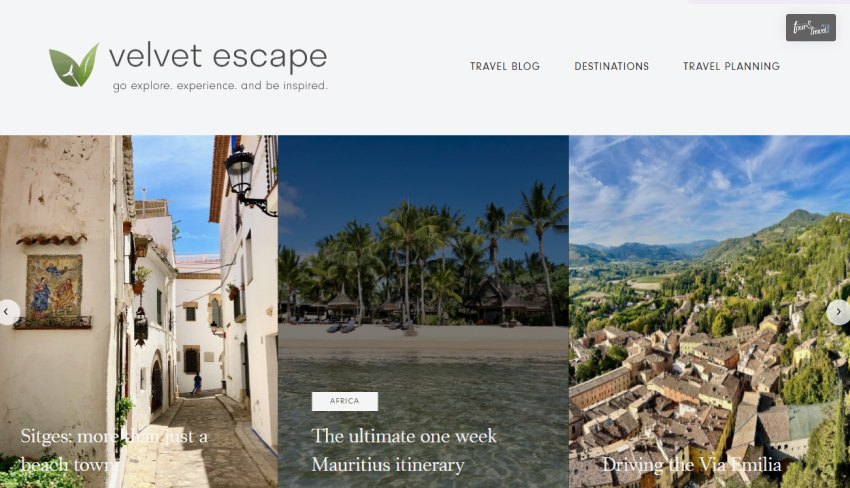


Want The Best Travel Tips: Go Through Velvet Escape Travel Blog

Jul 26, 2023

Last Updated on: Jan 10, 2024

Travel Blog

Craving an indulgent and immersive travel experience and yet cannot travel? We have got Velvet Escape Travel Blog to satisfy your visual and mental cravings! This blog is the ultimate example of perfection, branching out in diverse ways related to tourism and travel.

As a Blog, it encapsulates a complete version of all travel aspects, such as the interests of tourists, trending travel destinations, promoting different marketing aspects, and others. In this article, you will find a discussion of detailed elements that highlight the Velvet Escape Travel Blog.

This site addresses and answers all your concerns. It has detailed travel stories about city trips, adventure sports, offbeat locations, leisure experiences, and much more. You will find the blog a refreshing and welcoming website for travel plans and advice compared to others in the market.

Overview

Award-winning luxury travel website Velvet Escape Travel Blog offers a selection of destination guides, travel schedules, hotel and tour reviews, and motivational travel narratives to help you have luxurious yet immersive travel experiences. Velvet Escape is founded and published by Amsterdam, Netherlands-based Keith Jenkins. He had a prosperous ten-year career in investment and corporate banking. He quit his job in the business world in 2008 to pursue his passions for writing, travel, and photography. As a result, in December 2008, the blog Velvet Escape was founded.

Velvet Escape Travel Blog: Why Should You Check It Out?

why check Velvet Escape Travel Blog

The writings of Jenkins are detailed regarding getting an overview of the travel experiences. He is detailed about his knowledge and uses blogs to connect with his readers by answering their questions in the comments.

He makes it a point to inform travelers about buildings, notable structures related to history, and other educational content. The blog details sustainable travel experiences and how Jenkins explores the world by visiting different destinations.

The blogs also help connect with other travelers, find deals on booking tickets and accommodations, and learn about people’s experiences. You get to know a lot, especially about locations and how to visit them.

What Is A Velvet Escape Travel Blog?

What Is A Velvet Escape Travel Blog

The Velvet Escape Travel Blog has the logo “Go explore. Experience. And be inspired.” which presents a fresh perspective on traveling. The new generation of travelers considers travel in a different light where it is more of part of lifestyle instead of just a little break.

Here comes a beam of light as an inspiration for travelers for adventure or leisure. The unique element of storytelling is comprehensive information, personal experience, and guidance for diverse travel experiences.

The blogs on Velvet Escape Travel Blog create an immersive travel experience with stunning visual images, detailed backgrounds of the locations, and adventure. They also make customized travel experiences regarding the personal experience of the travelers who write the blog.

Founder

Founder velvet escape

The founder of the Velvet Escape Travel Blog website is Keith Jenkins, also the Chief Executive Officer of Ambassador. The Ambassador is a leading network for content creators and professional travel bloggers worldwide. He is also the publisher of the Velvet Escape Travel Blog website.

The website is an award-filming site and has successfully influenced millions of people across the globe. Jenkins is based in Amsterdam, Netherlands. He has been an investment and corporate banker for a decade; however, it was in 2008 that he embarked on a new journey.

His journey consisted of pursuing his passion for traveling by traveling, photography, and writing about it. In 2008, he founded the blog called Velvet Escape Travel because it created diverse avenues for travelers like him.

Services Available On Velvet Escape Travel Blog

Services Available on Velvet Escape Travel Blog

Various services are available on the blog founded by Jenkins because it focuses on writing detailed, fun, and inclusive articles. He also tries to create an experience for the readers so they can use it as their guide.

The significant features of the blog are services, shops, as well as ambassadors. In relevance to services, you will find a variety of marketing and advertising services. Velvet Escape has made a significant contribution to different travel experiences and approaches.

iambassador is a premier travel blogger network connecting bloggers worldwide based on content services and digital marketing. The product or the destination of travel is essential. Hence, it is through this network encourages and advises tourists and travelers to take on that dream trip.

The Velvet Escape blog is also a store that sells travel accessories and travel souvenirs. The different products you can buy from it connect you further with travel experiences and destinations.

Why Is The Velvet Escape Travel Blog Different?

Why Is The Velvet Escape Travel Blog Different?

The blog makes travel an inclusive experience with a wealth of propitious information. The articles written on the website are a collection of hotel experiences, travel itineraries, tour reviews, destination guides, as well as luxury stays.

As a practical resource, blogs are for thoughtful travelers seeking advice and travel ideas. The articles have a lot of details for a month-long or a week-long vacation, which is quite an idea for people who want a customized itinerary instead of just following tours and trip packages available in the market.

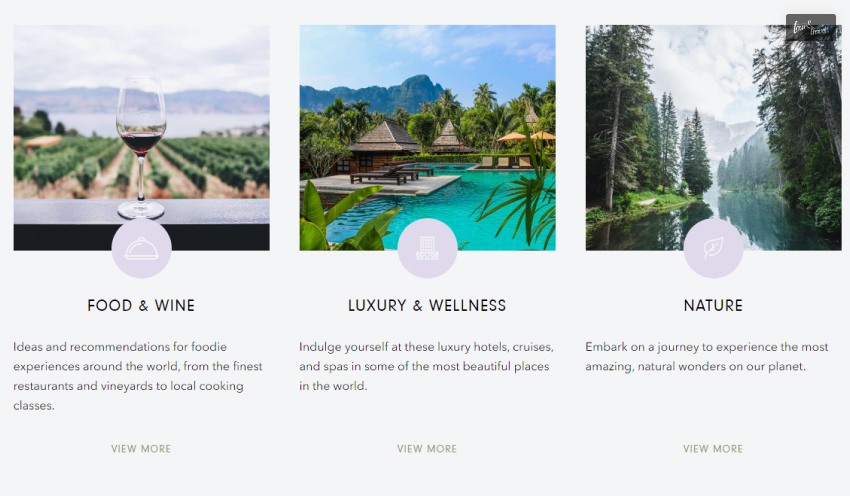
The blog is also successful in highlighting offbeat locations so that travelers seeking a unique experience can develop an idea. Topics related to food and wine, nature, beaches, travel stories, culture & history, plane views, and city trips are all there on the website.

Types Of Blogs On The Website

Types Of Blogs On The Website

The collection of articles is diverse on the website, especially concerning the features related to travel destinations and experiences. Offbeat and stunning locations are highlighted in the articles written by Jenkins.

History & Culture

The range of destinations this site covers under history and culture is diverse. The man’s personal experience on this platform, along with practical guidance and advice for the people, is immensely helpful. The articles are compelling from the perspective of travel bloggers who love traveling.

Luxury & Wellness

The articles are written by Jenkins and sponsor products related to wellness and luxury. You will find guidance when affiliating with different businesses and brands. Some blogs inform about the writer’s personal choices and how they can guide others.

Nature

The blogs about nature are pretty descriptive and help readers understand visitors’ preferences in different locations. It is essential to identify how the writer highlights the significance of nature in his blogs.

Whenever he visits different places, he discusses nature and the way it influences nature. It is unique because many travel blogs do not share their personal experiences.

City Trips

The blogs talk about the trips concerning the locations and how you can go around the city. A detailed description of the town, the transportation, and the local resources are shared by the author.

How Does Velvet Escape Travel Generate Content?

Among the most often asked questions about travel are beaches, city trips, food and wine, luxury and wellness, culture and history, nature, plane views, road trips, and travel stories, especially from first-time visitors. This is a friendly and helpful guide for travelers to use while planning their vacation.

The Velvet Escape travel blog covers a variety of locations, price points, and leisure pursuits. Some of the most well-liked tourist destinations in the world are briefly described in his writings.

Everybody has occasionally yearned for a change of scenery. You have to get away from the stresses and anxieties of everyday urban life, even if only for a day or a few weeks. You should go to one of the many breathtaking places if beaches and the ocean are part of your idea of the perfect vacation.

A trip to a city to see some famous buildings and structures is something you should do if you’re interested in culture and history. Discovering new places, learning about different cultures, and experiencing different lifestyles are all made possible by travel.

This fantastic resource for travelers uses the author’s personal experience to create interesting and educational content.

One method of creating content is to write about one’s own travel experiences. In addition, he offers advice, recommendations, and anecdotes about travel based on his expertise and experience. He takes his own pictures, films, and footage in order to produce content. In addition, research is done to gather data from different sources. Furthermore, he works with numerous companies and brands.

Conclusion

Please read the article to learn about the Velvet Escape Travel Blog and the features of the blog.

Comment below regarding your favorite blog article in the Velvet Escape Travel Blog.

Read Also:

Share on Social Media

Sagnika Sinha is a content writer who is passionate about writing travel vlogs, entertainment and celebrity articles and literature-based pieces. With a 4 years experience in teaching, she loves reading books. A procrastinator by nature, she loves travelling, listening to music, planting and gardening.

Leave a Reply

Your email address will not be published. Required fields are marked *

title-img Related

READ MORE Katmai National Park

The Volcanic Landscape of Katmai National Park: Come Visit The “Ring of Fire” 

BY  Sibashree Jul 25, 2024

The wild heart of Katmai National Park harbors 14 active volcanoes. This national park of around 5 million acres surpasses the magnificence of the Grand Canyon National Park, and kayaking, canoeing, and hiking here are one-of-a-kind experiences.  One of the oldest national parks, Katmai National Park, was established in 1918. Novarupta Volcano eruption on 6th June 1912 was destructive, and preservation of the habitation around Mount Katmai was crucial.   The National Park Service website says,  “Lasting three days, the largest volcanic eruption of the twentieth century exploded June 6, 1912, from a new volcano, Novarupta. In the process, it created Katmai caldera and the Valley of Ten Thousand Smokes. Not only have the 1912 events remained scientifically important ever since, but also the 1912 deposits continue to provide insights about volcanic and magmatic processes that impact us and the land we live in.” (Source)  Today, this national park is a living account of human history, and it is the home for brown bears and salmons. It is also one of the most popular destinations for volcanologists because it’s still active. Further, it has a handsome number of visitors every year, and in 2023, the number of footfall was 33,763. (Source)  Do you also want to explore this magnificent volcanic landscape? Let me be your guide.  Why Are So Many Volcanoes In Katmai National Park?   With “50 discrete volcanic vents,” Katmai National Park is the center of attention of many. But why does it have so many volcanoes?  Volcanoes in the Aleutian volcanic arc and Katmai National Park are part of the Pacific Ring of Fire. “The Ring of Fire is home to 75% of the world's volcanoes and 90% of its earthquakes.” (Source)  Many call the Ring of Fire the Circum-Pacific Belt, and many tectonic plates meet here. Due to the constant movements of these plates (especially the subduction of the Oceanic Pacific Plate under the North American Plate every year), volcanic eruptions and earthquakes take place here.   Along with the eruption of  Novarupta-Katmai in 1912, there are also records of the eruption of Mount Trident from 1953 to 1974.   The latest volcanic eruption in Katmai happened with the venting of Fourpeaked Volcano in 2006. Here is an excerpt from a report published on the 2006 volcanic eruption of Fourpeaked Volcano.   “On September 17, 2006 Fourpeaked Mountain, a glacier-clad stratovolcano with no known Holocene activity, produced a plume of steam, ash, and SO2, which rose to 6000 m above sea level. The plume was observed by eye-witnesses, seen on weather radar, and also appeared in SO2-sensitive satellite imagery. Concurrent with the plume, regional seismic stations recorded a swarm of volcano-tectonic earthquakes while an atmospheric infrasound signal was recorded 800 km away. Air and ground reconnaissance revealed a linear series of vigorously steaming vents in the summit glacier, stretching about 1 km down the north flank of the volcano.”  So, are you ready to know about the active and rugged volcanoes in Katmai National Park. The next section gives you a detailed overview.   Know The Volcanoes In Katmai National Park  Volcanoes erupt for a short span if you study the entire timetable of a volcano. However, the eruption is only the outcome of activities that take place for years or even centuries. Similarly, the volcanoes in Katmai National Park have faced long intermittent periods between the occurrences of small and big eruptions.   Further, the volcanic activities and earthquakes taking place in Katmai due to tectonic movements have a major impact on human lives across generations.   Here, I present a brief overview of a few volcanoes out of the 14 in Katmai.  Mount Katmai  https://www.youtube.com/watch?v=UF79ozS_kFA&t=33s Mount Katmai has recorded the highest explosive incidents in the Katmai volcanic cluster. Active for over 70,000 years, the two cones of Mount Katmai were beheaded due to the caldera collapse in 1912.    The eruptive products of Mount Katmai are varied in their compositions, including basalt and rhyodacite.   Mount Griggs Mount Griggs, the tallest peak in the district, is 2,530 m tall. Despite having young lava flows, some of the deposits in Mount Griggs are 290,000 years old.   The volcano is still active and you will get to see the yellow sulfurous steam around its summit.   Trident Volcano https://www.youtube.com/watch?v=5rQVsdsWsIA Trident Volcano is one of the older volcanoes in Katmai. From 1953 to 1974, Trident Volcano had many eruptions. However, the highest and the central volcanic cone of Trident Volcano has been lying dormant for around 10000 years.   Mount Mageik  Mount Mageik has four discrete eruptive centers covered with snow. However, glaciers have caused severe decay in three of these lava centers. It is a younger volcano in Katmai, with its lava aged between 4,000 and 93,000.   The last eruption of Mount Mageik happened 2500 years ago. It caused a crater between two Mount Mageik summits. Today, the crater is filled with an acid lake, exuding steam curls.   Alagogshak Volcano  Alagogshak stands at the southwesternmost corner of the Katmai volcanic cluster. It is also the oldest in the Katmai family of volcanoes. The lavas in this volcano are 40,000-680,000 years old.   Peak 6875, Snowy Mountain   Peak 6875 is a young dome made of dacite lava. The scoop-shaped peak looks like a natural amphitheater.    Spectacular Landscapes Created By Volcanic Activities In Katmai National Park   The volcanoes in Katmai have created some interesting landscapes, and their activities have encouraged geologists to explore the possibilities. Nonetheless, the Valley of Ten Thousand Smokes is the most prominent volcanic landscape in Katmai.   It is the work of the largest volcanic eruption in the 20th century. The Novarupta Volcano eruption on 6th June 1912 created this valley.   There are various exciting destinations in the Valley of Ten Thousand Smokes. For the geologists and people studying volcanoes, Novarupta is the ultimate destination. The dome causing the massive eruption in 1912 still carries warm steam.   It is also the most colorful place in the valley, thanks to its kaleidoscopic views caused by the deposition of ash, pumice, and other minerals.   Another popular destination in the valley is the Buttress Range Ridge. Here, you will catch a glimpse of the extensive wildlife in Katmai. Along with the bears, you will also find ptarmigan, ground squirrels, and caribou.   Other fascinating spots to explore in this valley are Katmai Pass, Southwest Trident Lava Flows, Knife Creek Glaciers, Mount Katmai Caldera, Mageik Lakes, etc.   Did You Know?  Katmai has the largest population of protected brown bears in North America.  It is home to around 2000 creatures.  Robert F. Griggs, a botanist who named Valley of Ten Thousand Smokes, played an active role in designating Katmai as a national park.  Dumpling Mountain offers the best view of Katmai National Park.  The annual Fat Bear Week in Katmai is a tournament-style competition, and online visitors can choose the winner of the tournament through voting.  Katmai National Monument was established in 1918. The redesignation of the protected and expanded area as a National Park happened in 1980.   Final Words   Active volcanoes add to the spectacle of Katmai National Park, and they attract the most adventurous souls across the globe.   The volcanoes are part of the Pacific Ring of Fire, and they have an eruptive history, with the last incident occurring in 2006.   AOV, or the Alaska Volcano Observatory, is in charge of monitoring the activities of these volcanoes. It also records the incidents of eruptions from dedicated monitoring stations. Two webcams are also installed at Fourpeaked and Katmai for continuous vigilance of the volcanic landscape.   So, are you ready to visit Mount Griggs, Mount Katmai, and other volcanoes in Katmai National Park? Do you want to have an exciting encounter with wildlife? Don’t forget to share your experience with us!   Katmai National Park FAQs   How To Explore Katmai National Park?  You cannot reach Katmai National Park by road. You can take a floatplane from Kodiak, Anchorage, or Homer. Further, you can take a boat or floatplane from King Salmon.  Both routes lead to the Brooks Camp shore.   What Is Special About Katmai National Park?  Katmai National Park is known for its active and extensive volcanic landscape. It has 14 volcanoes. Further, it is the home to around 2000 species, including brown bears.   You can enjoy your time here by hiking through the trails or boating or canoeing.   What Type Of Volcano Is Katmai Mountain?  Katmai Mountain is a stratovolcano and it had two big cone-shaped volcanoes. The caldera collapse in 1912 beheaded the two cones.   What Wildlife Is In Katmai National Park?  Brown bears are the most popular animals in Katmai National Park. In fact, the national park has the largest population of protected brown bears in North America.   Moose, gray wolves, sea otters, and humpback whales are fascinating animals here. Overall, it is home to around 2000 species of creatures.   What Type Of Trees Are In Katmai National Park?  Sitka spruce, alder thickets, and willow are popular trees in Katmai. You will also find plants like lowbush cranberry, cow parsnip, labrador tea, and watermelon berries here.   Reference:  National Park Service: “Since 1916, the National Park Service has been entrusted with the care of our national parks. With the help of volunteers and partners, we safeguard these special places and share their stories with more than 318 million visitors every year. But our work doesn't stop there.”  Harvard University: “Harvard experts, researchers, and leaders all around the globe make contributions—from public health to conflict resolution—that transcend borders, forge connections, and strengthen communities.”  National Geographic: National Geographic is a “world leader in geography, cartography and exploration.”  Also read Plan A Day Trip to Dry Tortugas National Park: This Is How You Will Do It. Everglades National Park: The UNESCO Heritage Site With Its Quiet Beauty. Welcome To Biscayne National Park: Enjoy Kayaking and Canoeing At This Watery Wonder.

READ MORE Travel

5 Reasons To Travel When You Retire

BY  Ankita Jan 9, 2024

In the mosaic of life, retirement marks a significant transition. While some fully embrace leisure and relaxation, others opt for a more dynamic approach—partial retirement. This innovative concept allows individuals to savor retirement benefits while engaging in meaningful activities, including travel. You can find out if partial retirement might be right for you at https://boomerbenefits.com/could-partial-retirement-be-right-for-you/. As you embark on this new chapter of life, whether fully or partially retired-here are five compelling reasons to make travel an integral part of your journey after employment. One of the most profound aspects of travel is its opportunity for cultural enrichment and continuous learning. As you step out of your comfort zone and explore diverse destinations, you encounter new traditions, cuisines, and perspectives. The world becomes your classroom, offering lessons beyond a book's pages. Whether visiting ancient historical sites, immersing yourself in local customs, or trying a dish you've never heard of, every journey becomes a lesson in cultural understanding. Travel during partial retirement allows you to fill your days with experiences that broaden your horizons and contribute to your personal growth. Strengthening Social Connections Retirement often comes with the promise of more leisure time, and what better way to spend it than by cultivating and strengthening social connections? Traveling in your retirement years provides ample opportunities to share experiences with family and friends. Whether a reunion with old friends or a multigenerational trip with family, these shared adventures create lasting memories and deepen your bonds. Additionally, travel introduces the chance to meet new people, fostering social connections with like-minded individuals who share your passion for exploration. Shared experiences and shared stories become the threads weaving the tapestry of your social connections during your partial retirement. Health and Well-being Travel is not just a feast for the soul; it can also positively impact your physical health and overall well-being. Engaging in new activities, exploring different landscapes, and staying active during travels contribute to a healthier lifestyle. Whether hiking through scenic trails, strolling along picturesque beaches, or participating in local activities, travel provides opportunities for exercise that feel like adventures rather than routines. The mental stimulation derived from navigating new environments and embracing novel experiences can also contribute to cognitive well-being. By incorporating travel into your partial retirement, you are nurturing your wanderlust and your body and mind. Rediscovering Passion and Hobbies Retirement is the ideal time to rediscover and indulge in your passions and hobbies. Whether you love art, history, nature, or adventure, there's a destination waiting to reignite your interests. From exploring art galleries in Paris to hiking the trails of Machu Picchu, travel offers many opportunities to immerse yourself in activities that bring you joy. Partial retirement allows you the flexibility to design your itinerary around your interests, ensuring that each trip becomes a personalized adventure tailored to your passions. The world becomes a canvas on which you can paint the vibrant strokes of your hobbies, rekindling the flames of enthusiasm that may have flickered in the busyness of work life. Creating Lasting Memories The essence of travel lies in the memories it creates—moments that linger long after the journey concludes. During your partial retirement, you have the luxury of time to savor and appreciate these moments. From the awe-inspiring beauty of natural wonders to the laughter shared with loved ones in a bustling market, every experience becomes a treasure. Traveling in your retirement years allows you to build a collection of memories that serve as a testament to a life well-lived. These memories enrich your personal narrative and become a source of inspiration for the generations that follow, creating a legacy woven with the threads of your adventures. Read Also: A Backpacker’s Guide: Must-Have Camping Essentials Secrets Of Forest Camping: Tips For An Unforgettable Getaway Sorting Out Christmas Vacation: 11 Best Places To Visit On Christmas This Year!

READ MORE Chilean wine country

A Journey Through Chile’s Wine Country: From The Andes To The Pacific

BY  Sibashree Aug 20, 2025

Okay, so, picture this: Chile laid out like a long ribbon—kind of wild, right? Mountains stacked on one side, waves crashing on the other, and somewhere in between, these sun-kissed vineyards doing their own thing. And not just recently, either. Some of these spots have been growing grapes longer than most countries have existed. When folks talk about wine in Chile, it’s no stuffy affair—honestly, it feels more like jumping headfirst into the whole shebang: the scents, the crazy landscapes, locals chatting about soil like it’s family gossip...and the wine isn’t just a drink. It’s, I dunno, almost like reading a diary of the land and weather and the winemaker’s mood last summer. Believe me, if you find yourself wandering around Central Valley’s endless stretches, or just chilling with a glass of something zippy and white right off the coast, the whole experience flips whatever you thought you knew about wine on its head. Here’s a rundown of how to, well, do it up right—and why Chilean wine country is totally underrated for anyone who actually cares what’s in their glass. Why Chile Belongs On Your Wine Travel List Let's be real. Chile’s geography, if you look at a map, is ridiculous. It's absurdly long and skinny—on one side, you’ve got the Andes looking dramatic, on the other, the Pacific just doing its endless thing.  That combo means you get all kinds of grapes—each with its wild backstory.  Sometimes, you’ll even wonder if the wine tastes different because of the wind or the fog, and honestly, maybe it does. Way back, some old Spanish guys brought over vines during the 1500s (imagine lugging grape plants on a boat…). Fast-forward: these days, Chile fires off everything from bold Cabernet to its famous Carmenère (which was basically lost everywhere else until they stumbled on it growing here), and while tradition is huge, they’re also not afraid to play around—mixing, blending, inventing. But don’t let the obsession with the grape fool you—traveling here, you’re in for high-energy Santiago, mind-blowing seafood in Valparaíso, classic farmhouses, and some wineries that look like spaceships landed in the vines. The Essential Wine Regions Of Chilean Wine Country Can’t see it all? Yeah, same. So here are the spots you wanna hit if you thrive on the good life: 1. Maipo VALLEY – The Bordeaux Of South America Jump in a car from Santiago and you’re basically in wine heaven before you’ve finished your podcast.  Maipo’s like Bordeaux if Bordeaux were dragged down to South America and given a tan. Their Cabs are everything—sun, altitude, crazy temperature swings. Here, you bounce between proper castles and tight-knit family farms. Pro tip: Say yes to barrel tastings, even if you don’t know what’s going on. Also, picnic in the vines? Yes, please. 2. Colchagua Valley – Bold Reds And Boutique Luxury Prefer your wine big and loud? Colchagua’s where it’s at. You get Carmenère, Malbec, and Syrah, all hedged in by mountains and dusty hills.  Out here, you can sleep in some bougie lodge, eat with a chef who got bored with Santiago, or hop on a horse and clop around feeling very, very far from home—or work. 3. Casablanca Valley – Cool-Climate Elegance Suddenly need something crisp? Casablanca’s like dipping your toes in the ocean, but with wine. The vibe? Super chill (temperature-wise too), close to Valparaíso, and heavy on Sauvignon Blanc and Chardonnay that somehow taste like the smell of fresh rain. And, weirdly, the buildings at some of these wineries—glass walls, clean lines—make you feel like you’re drinking inside a modern art painting. Not bad, right? 4. Aconcagua Valley – Tradition Meets Innovation Nose around north of Santiago, and you hit Aconcagua. This place is a mashup: grandad techniques next to bright-eyed winemakers pouring orange wine and talking about fermentation like it’s the new rock ’n’ roll.  Reds, whites, and all kinds of stuff in between. More Than Just Wine: Immersive Chilean Wine Country Experiences Let’s be honest for a second: even if wine’s great, no one wants just wine, all the time. Some add-ons you can’t miss: Gourmet Food: Loads of wineries double down with restaurants that’ll ruin you for regular meals—seafood, lamb, veggies, all paired so well you’ll start rating salad at home. Art and Architecture: Sometimes you come for the wine, and end up taking fifty photos of the cool ceilings or a painting hung next to barrels. Nature and Adventure: Think: hiking near volcanoes, pedaling past vines, even floating in a hot air balloon. Wild? Yes. Culture Stuff: Pick grapes with strangers, learn a dance and laugh at yourself, or poke around for cheese, olive oil, or crafts that weigh down your suitcase. When To Visit Chilean Wine Country Best part—Chile’s long enough that there’s always somewhere worth going. If you want the inside scoop: Harvest (March to May): Grapes everywhere, everyone’s busy, and there’s a good chance you’ll get roped into a festival—or grape-stomping contest. Spring (September to November): The Weather’s sweet, gardens and vines exploding, and not a tour bus in sight. Summer (December to February): Big sunshine, big crowds, big everything. Good if you want max hustle and bustle. Traveling In Style: Curated Luxury Wine Tours Hate planning logistics? Me too. Just get a fancy tour company and let them sweat the details—private tastings, cool places to crash, cars to get you from A to B, and guides who know when to hang back and when to start telling crazy stories about wine politics. Check out Into the Vineyard or anyone who actually answers their emails. They make sure you’re doing what you want, not what the last ten tourists did. One of the best ways to experience the breadth of Chile’s wine regions is with a specialized travel company like Into the Vineyard. A Sample Luxury Chile Wine Tour Itinerary Let’s imagine how a week goes down (give or take, you know?): Day 1 – Land in Santiago. Someone grabs your bags; you’re at a boutique hotel with a welcome drink before you even check Wi-Fi. Day 2 – Maipo Valley. Taste, eat, repeat. If the schedule says “vineyard lunch,” you’re in for at least three wines before dessert. Day 3-4 –  Colchagua Valley. Sleep in a posh lodge. Visit small-batch wineries. Maybe fall off a horse (hopefully not). Day 5 – Casablanca Valley. White wine and seafood until you need a nap. Then, go to Valparaíso for a night out. Graffiti, music, food, the works. Day 6 –  Aconcagua Valley. Get nerdy with organic wine folks. Learn that “biodynamic” isn’t just a buzzword. Day 7 –  Back to Santiago. Last gifts, one more meal, then gone. Insider Tips for the Perfect Chilean Wine Country Tour Here are some of the tips for travel. The travellers should follow these tips for a more immersive experience while visiting the place. Honestly, don’t drive yourself. Local drivers know where to go (and where to stop for the best empanadas). Try the funky grapes—País, Carignan, even that Riesling with the label you can’t pronounce. Book the good stuff early—boutique tours disappear quickly. Look for places with a pool or a hot tub. Thank me later. The Last Few Things To Keep In Mind Before Visiting Chile Chile’s not just another check on your wine passport. You’re standing with snow-capped Andes in the background, sipping a glass that could’ve been impossible anywhere else, and finishing your last meal by the ocean.  Mix in a little culture, art, and memories you can’t fit in a suitcase, and well, that’s what makes Chile a story you can drink. Read Also: With Popular Wineries, Learn the Things to Do in Mudgee! 5 Ideas For Wine Tours In Barcelona- Make It Happen Wineries You Should Visit In Winter