If you come across arid, jagged mountains kissing the skies, you know it’s Ladakh. Further, here, the dry winds seem to carry spiritual messages with them. Further, the ancient gompas (Tibetan monasteries), with their whitewashed walls, are repositories of solitude and knowledge. The pristine waters of the lakes here create a perfect impression of the encompassing surroundings.
Once in Ladakh, there is so much to see and so much to explore, from pure blue freshwater lakes to picturesque passes, from dreamy valleys to frozen rivers. So, one must prepare oneself for a kaleidoscope of experiences here.
Have you recently decided to take a trip to Ladakh? This blog brings you the 25 amazing things to do in Ladakh.
25 Amazing Things to do in Ladakh:
In South Asia’s Travel & Tourism Exchange (SATTE) held between 22nd and 24th February 2024, Ladakh has been promoted as an all-weather tourist spot.
Visit this wonderland in any season, and you have something to do to fulfill your outdoor pursuits.
1. Sunrise at Pangong Tso Lake!
Witnessing the sky streaked red by the morning sun can be an exhilarating experience. Doing the same by Pangong Tso Lake embellishes the experience further.
This spectacular lake made its appearance in the movie “3 Idiots.” Apart from that, it’s a highly coveted spot for late-night camping.
2. Biking on the World’s Highest Motorable Road!
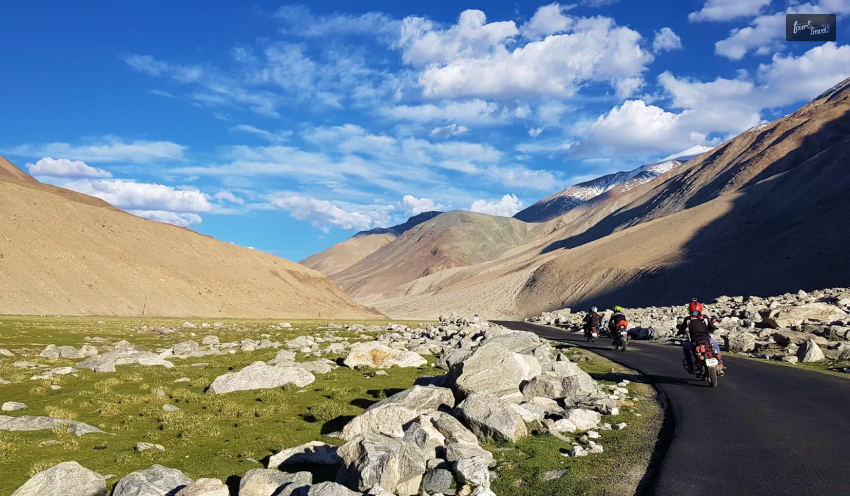
Imagine biking at Khardung La – one of the world’s highest motorable roads with a height of 18,380ft. You can plan a bike trip to this place from any city in India, or arrive at Leh, and book a bike there.
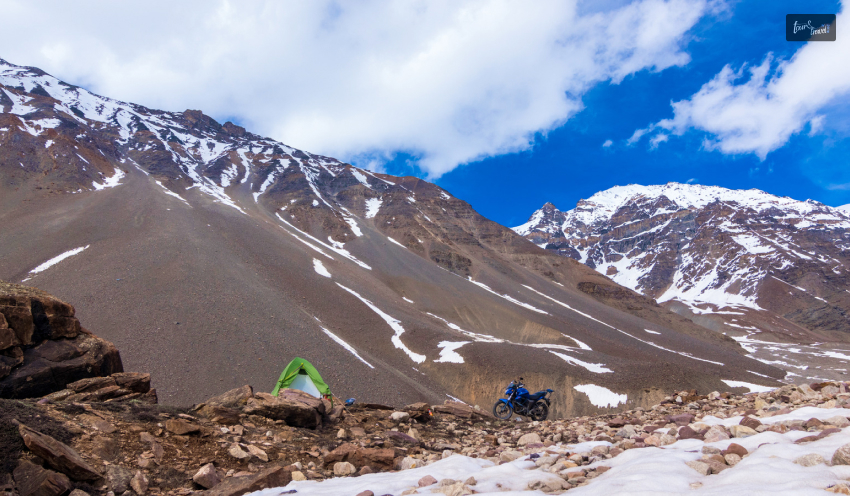
Another way of absorbing the alluring beauty of Ladakh is going camping. Some of the best camping sites are found at Pangong Tso and Tso Moriri.
Camping by the lakes, one of the best things to do in Ladakh, is the best way to explore the surrounding landscapes and carry home some great memories.
4. Go Trekking
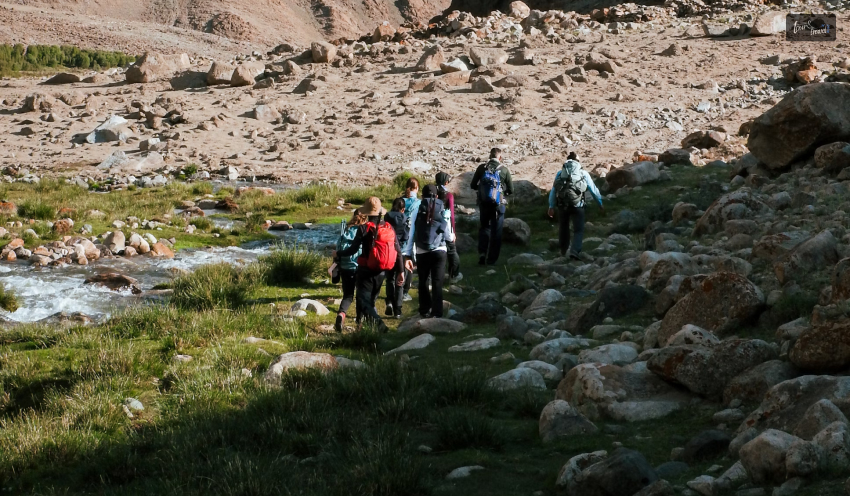
One of the best manners of exploring the scenic landscapes of Ladakh is trekking. Be it the winter season or the summer season, trekking provides you with an outstanding experience.
Some of the most popular trekking routes here are Chadar, Stok Kangri, Tso Moriri, and Markha Valley.
5. Go river rafting!
Struggling against the forceful rapids always gives you that ultimate adrenaline rush. No wonder then that river rafting is a favorite amongst tourists to Ladakh.
Nothing is more adventurous than fighting your way against the freezing waters of the Zanskar River. Along the way, you are treated to the magnificent sights of hilltop monasteries, hillside villages and glimpses of the unique wildlife.
6. Take the Ride-on Double Bactrian camel!
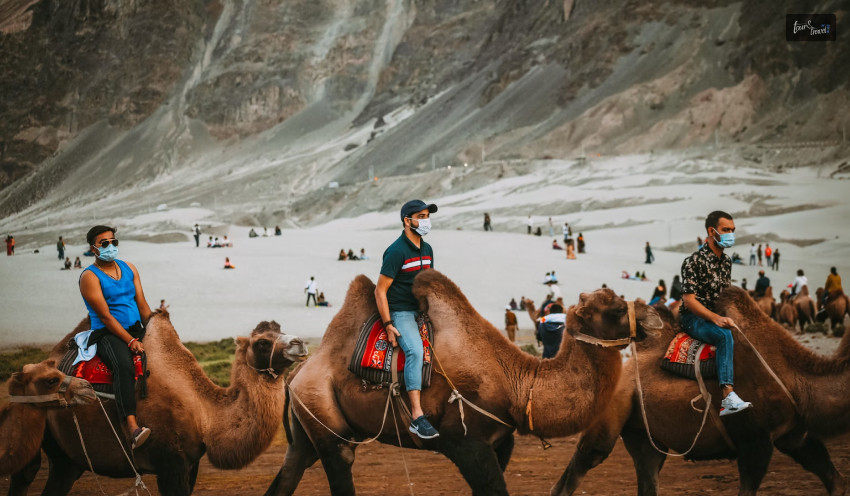
The thrill of taking a ride on a double-humped Bactrian camel is simply indescribable. The place to do this would be the Nubra Valley, located at 12,000ft above sea level.
This wonderful wobbly ride takes you through the various landscapes of the region. This is the ride of a lifetime, making it one of the most amazing things to do in Ladakh!
7. Look, a snow leopard!
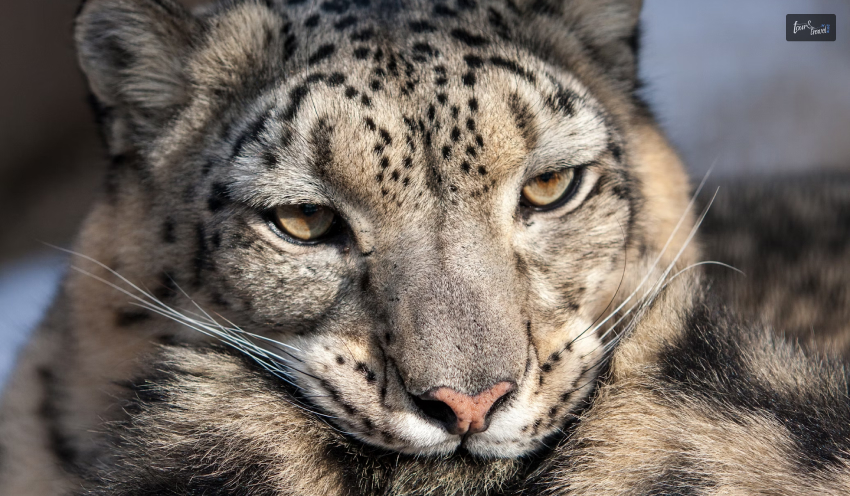
Spotting a snow leopard is a real privilege. Further, these magnificent beasts, sporting white fur, camouflage themselves with the environs as they patiently wait for their prey.
One of the best places to view these lovely creatures is the Hemis National Park. This park is home to more than 200 snow leopards and is best visited during winter.
8. Explore Buddhist Monasteries!
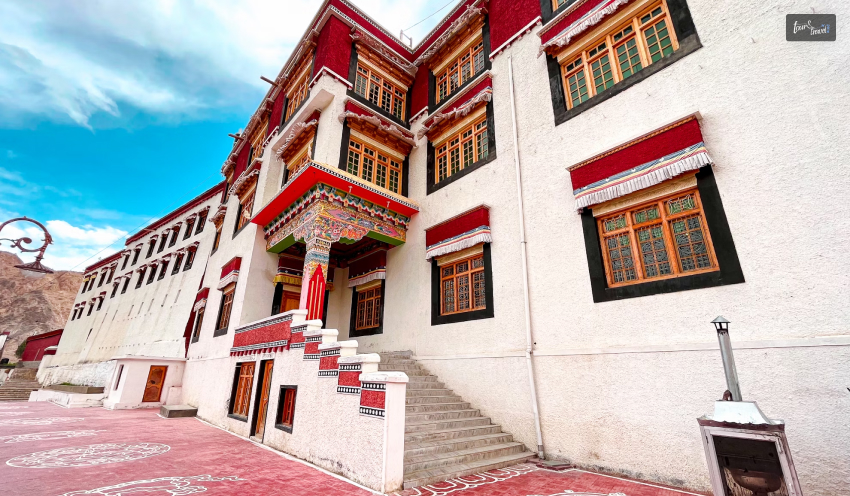
The various monasteries in Ladakh are some of the most ancient ones in the world. As such, they are a repertoire of knowledge and wisdom. One of the oldest monasteries in Ladakh is the Spituk Monastery.
It also enjoys a fabulous location and offers panoramic views of the surroundings. Another monastery worth checking out is Hemis Monastery. Besides being the biggest in all of Ladakh, it also hosts the famous Hemis Festival in June every year.
9. The Royal side of Ladakh!
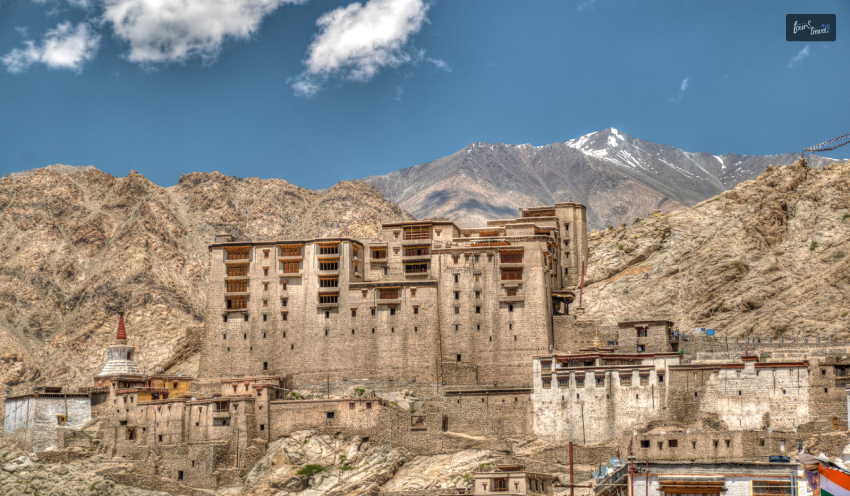
The magnificent Leh Palace lies in a dilapidated state in this day and age. However, its grandeur is still reflected in its wood and stone ruins. It is often visited by history and architecture enthusiasts.
Built by King Namgyal in the 17th century, this building is nine stories high. One can get panoramic views of the Zanskar and Stok Kangri ranges that traverse the Indus Valley.
10. Opt for a homestay!
A great way to get acquainted with the culture of Ladakh is by opting for a homestay. Try to get in touch with a local family.
The warm-hearted people will host you with great zeal and enthusiasm. Enjoy a drink of butter tea, taste some delicious momos (dumplings), and have a great time.
11. Gaze at the starlit sky!
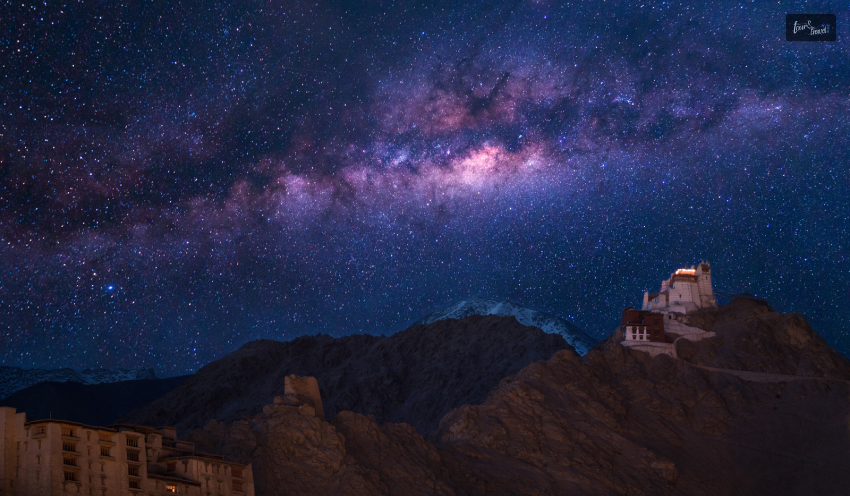
When it comes to certified stargazing in India, nothing beats Ladakh! Engaging in stargazing here transports you to the world of stars and comets.
The infinite sky, glistening with stars, casts a magical spell on the onlooker. In Ladakh, the best place to do this is the Nubra Valley.
12. The Mysterious Magnetic Hill!
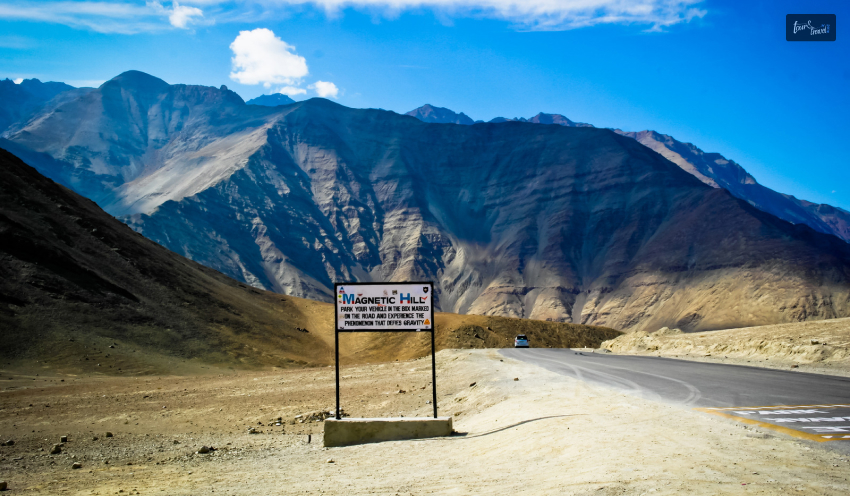
Ever heard of a car ascending without any external force being applied to it? Don’t be shocked; defying the laws of physics is a common experience here.
The Magnetic Hill, as it’s commonly referred to, pulls a car or a bike towards the peak. The reasons behind this occurrence are as yet unknown. However, it’s worth giving it a try!
13. River of opportunity!
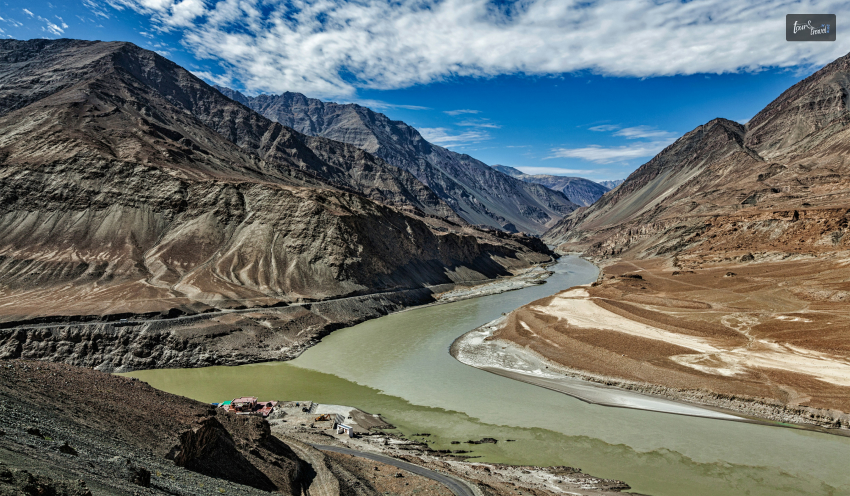
One of the top things to do in Ladakh is to watch the confluence of the Indus and Zanskar rivers. The frozen Zanskar River presents tremendous trekking opportunities during winter.
Also known as Chadar Trek, it’s a favorite among adventure seekers. The surreal beauty of the icy world enveloping you throughout the trek leaves you overwhelmed.
14. Sipping Tea at the World’s highest Cafeteria
A board stating the benefits of drinking black tea welcomes you to the Rinchen Cafeteria. Located at an altitude of 18,380ft, momos, and Maggi are also served along with tea.
This wonderful cafe has been named after Col. Rinchen for seizing Pakistan-occupied Kashmir. Once here, check out the various stories, paintings, and quotes by the Army.
15. Piping hot Maggie at High Altitude!
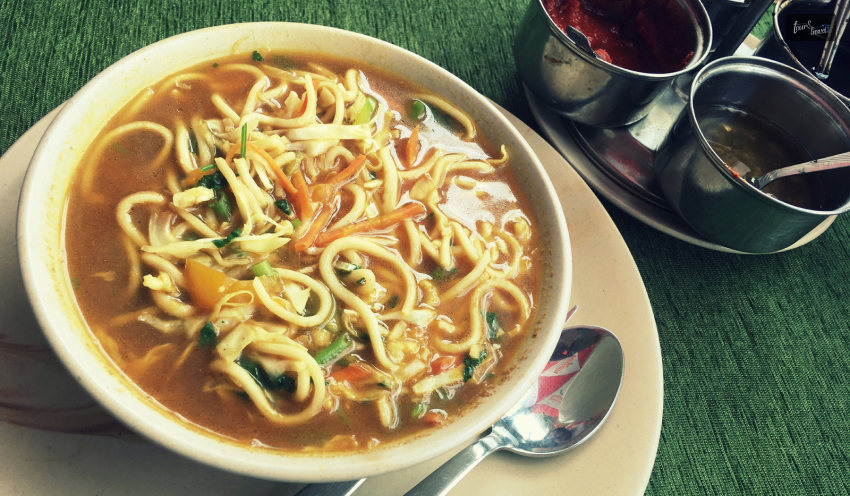
Nothing beats the taste of piping hot Maggi at high altitudes. After a tiresome journey that leaves you exhausted, this humble meal is a blessing.
One of the best places to experience this treat is Khardung La. Here, not only do you enjoy the meal, but you discover a fascinating history associated with it.
16. Participate in the Mask Festival!
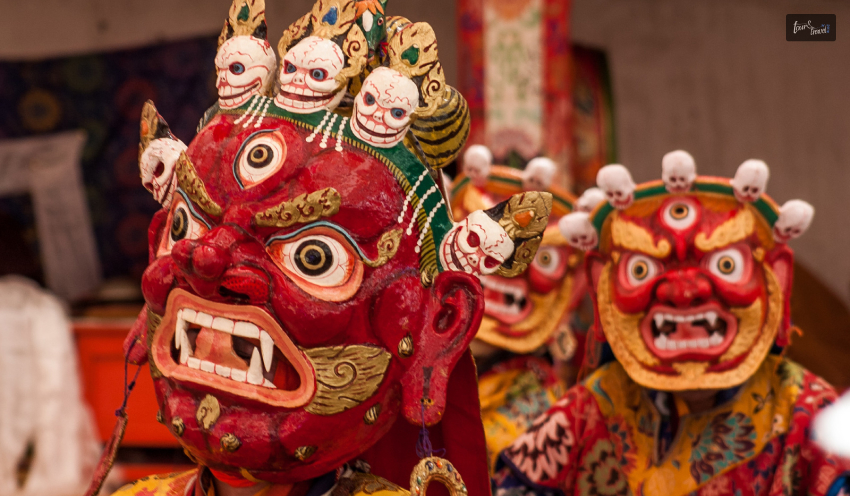
Hemis Mask Dance Festival is one of the famous festivals in Ladakh. This colorful and vibrant festival takes place every year at Hemis Gompa, the biggest monastery in Ladakh.
The main attractions are the mask parade and the “Chaam” dance. Here, the Lamas put on a spectacle with their burgundy and mustard yellow attires
17. Attend a Ladakhi Wedding!
A wedding in Ladakh is quite a solemn affair. However, the various rituals associated with it are every bit as interesting. The couple wears ceremonial dresses while the guests, seated on small tables, are served butter tea.
Traditional songs are played, and dance goes on for hours. “Chang,” the local alcohol is served, and everyone joins in the festivities.
18. Ladakh’s local delicacies!
Ladakh’s cuisine is the result of an innovative twist to Kashmiri cuisine. One of them is the delicious stew, which contains a wonderful combination of ingredients like rice, noodles, momos, Thukpa, etc.
One should also try the Yak Cheese and the Yak Cheese momos here. Of course, no meal is complete without trying the local butter tea.
19. Meditate by the famous lakes!
Lakes in Ladakh enchant visitors with their breathtaking beauty. They are known as “Tso.” Pangong Tso, which means “long and narrow lake,” is the highest saltwater lake in the world.
Tso Kar and Tso Moriri are two famous lakes. Mirpal Tso attracts travelers with its sandy bed and turquoise waters.
20. Pleasures of bird watching!
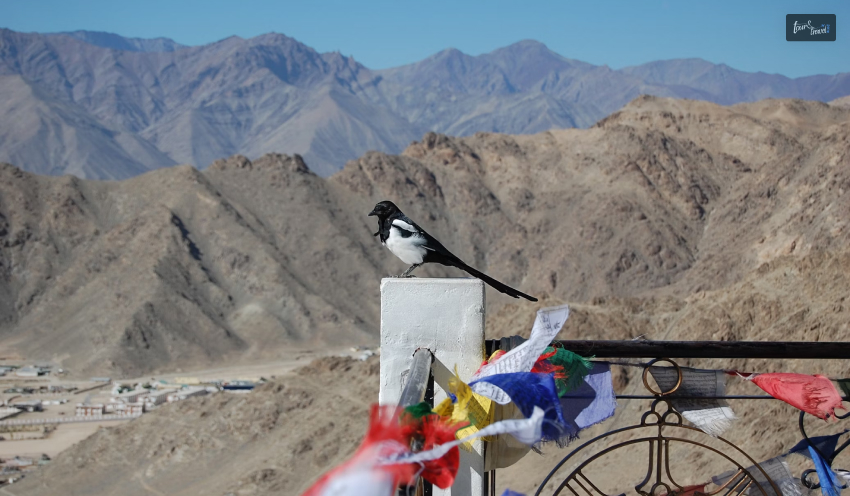
The enormous and arid landscape of Ladakh is a haven for diverse avifauna. This region has various species of birds as visitors. Further, many of them are endangered.
The amazing solitude makes bird watching in Ladakh a perfectly blissful activity. Bird watching is popular in Suru Valley, Rizong Monastery, and Nubra Valley, among others.
21. Pray Some, Spin Some!
Ladakh has several monasteries that are as charming as they are fascinating. A visit to any of them is sure to leave you with great memories.
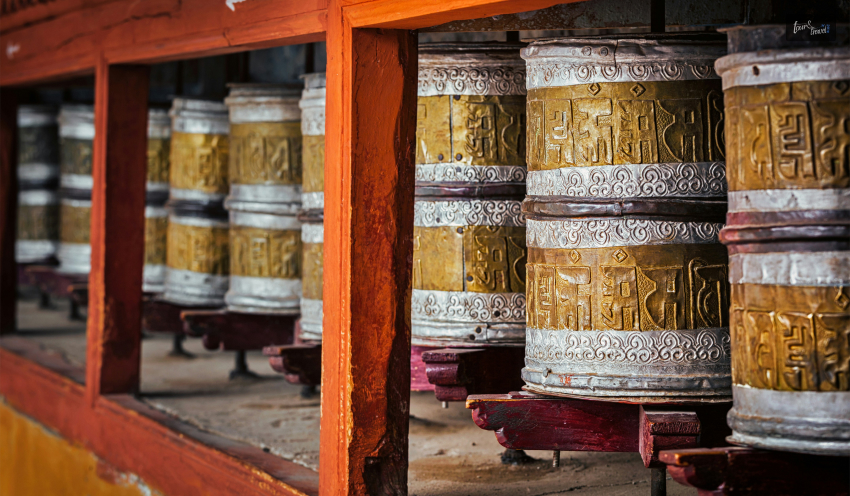
One of the prime activities to do in a monastery is to spin a prayer well. Spinning the prayer wheel, according to Buddhist traditions, ushers in good luck. So, when in Ladakh, spin that wheel!
22. Mingle with monks!
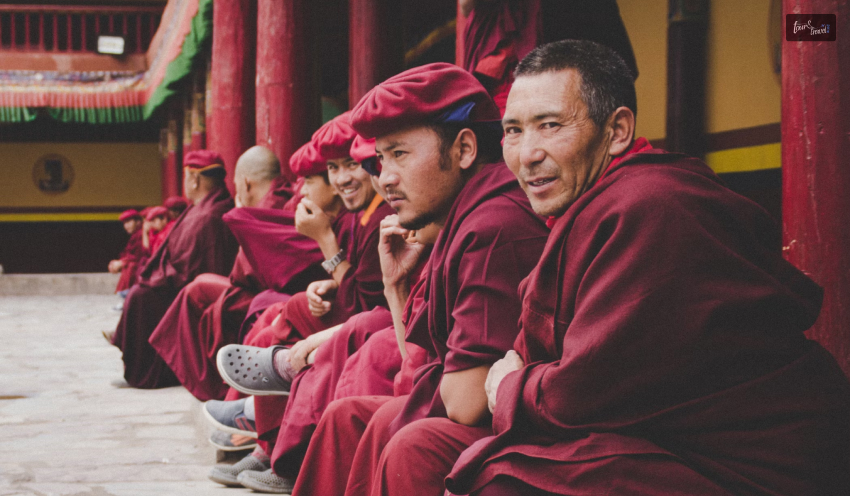
One of the great attractions of visiting the monasteries is mingling with the monks. Saffron-clad and bald, they possess a wealth of knowledge with a good dose of humor.
Request them humbly, and you may just be in for a session of fascinating tales and stories.
23. Make-a-wish stones
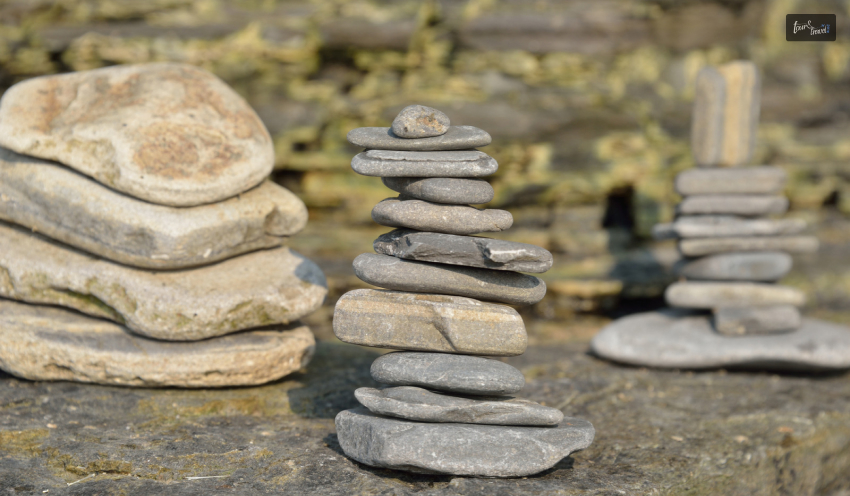
Since the beginning of history, stone stacking has been followed by making a wish. During earlier ages, they served the roles of messengers, signs, and landmarks.
The locals, however, believe that stacking stones brings good luck to travelers. Stack some stones, and make a wish! It’s time for manifestation.
24. Shop in the Local Markets to Carry Memories of the Ladakh Trip!
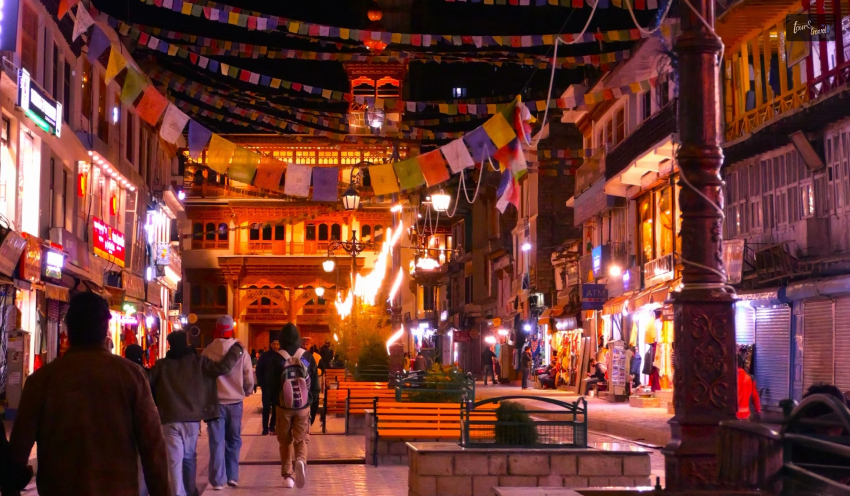
Shopping takes an exciting turn in the Ladakh markets. It’s the best place for mingling with the locals and learning various aspects of their culture.
Further, the streets have numerous stalls that display exotic items. From hand-woven rugs, wall hangings, and wicker baskets to woolen bags, one finds it all here!
25. Visit Leh City after sunset!
Sunsets in Leh City are unlike any other you may have come across. Here, the sun takes its own time to leisurely paint the sky red.
One of the best places to witness the sunset here is Shanti Stupa. Also, bring your camera along and capture some great shots. Taking some photos here is one of the most amazing things to do in Ladakh.
Exploring The First Stargazing Site For Tourists In India: Amazing Things To Do In Ladakh
Our list of top 25 things to do in Ladakh already has stargazing as an activity. However, the growing popularity of stargazing in Ladakh demands a detailed discussion about this fascinating outdoor pursuit.
All eyes were especially on the Ladakh sky as the Aurora Borealis became visible in Ladakh, thanks to the most intense solar storm in more than two decades. In May 2024, a stable red arc filled the sky in Ladakh, and the engineers at the Hanle Dark Sky Reserve confirmed the arc to be stable, consistent, and lasting for hours.
The appearance of the Aurora Borealis in Ladakh is a remarkable incident after Hanle Dark Sky Reserve was prepared as the first stargazing site in India in February 2023.
The Hanle Dark Sky Reserve is located at an elevation of 4500 meters, and it’s at Han le village, made of six hamlets.
However, along the Hanle Dark Sky Reserve, there are many other places in Ladakh for stargazing. Know them before you plan a trip to Ladakh.
Pangong Lake
Alchi
Lamayuru
Tso Moriri
Nubra Valley
For the best stargazing experience in Ladakh, you must plan a trip in the summer. The summer months from April to June offer the best sky visibility with pleasant weather conditions. Further, the full moon nights in these months dazzle the stars in the sky.
In fact, the full moon nights in summer are the best days to observe the Milky Way in the Ladakh Sky.
So, if you want to try some truly unique things to do in Ladakh, include stargazing into your itinerary.
Abdul Aziz Mondol is a professional blogger who is having a colossal interest in writing blogs and other jones of calligraphies. In terms of his professional commitments, he loves to share content related to business, finance, technology, and the gaming niche.
Everest Base Camp trek sits on the southern side of Mount Everest, the world's tallest peak at 5,364 meters.
The area is accessible to climbers and trekkers, offering beautiful Himalayan views.
However, before you begin your Everest Base Camp trek, you should enjoy and relish the places, towns, and bazaars.
They offer many holiday centers like billiards, and gambling areas to enjoy the time.
Also, don't forget the delicious food and antique pieces that can enhance your trekking experience.
Things to See While Camping At Everest Base Camp Trek
Here are a few places and things to see while camping on the Everest Base Camp trek.
Lukla
Lukla is one of the most famous destinations for travelers.
It stands at 2860 meters in northeastern Nepal. Here, you can see the beautiful sight of the Himalayas. Moreover, it is the place where you start your trekking journey.
Over the years, the town has grown into a commercial hub where tourists can find great food and shops. The city also has a small airport with a 525-meter landing strip.
Moreover, it boasts the shortest landing strip and is the airport at the highest peak in the world.
Syangboche And Everest View Hotel
Syangboche is one of the famous places to visit when you visit Everest Base Camp. Everest View Hotel is located in the Sagarmatha National Park in Nepal.
It holds a Guinness World Record as the highest-placed hotel in the world.
If you stay here, you can enjoy a 360-degree view of the snow-capped mountains from the hotel.
Peaks like Mt. Everest, Tawache, Ama Dablam, and Khumbu Himal are sights to behold.
Takashi Miyahara and Yoshinobu Kumagaya envisioned the hotel's construction. Moreover, they had to transport loads of materials to the Himalayas with the help of local Sherpas.
The task began in 1960 and began in 1971.
Tengboche
Tengboche is a town located near the Imja Khola.
It is a typical night halt after Namche. It offers breathtaking Himalayan views. Peaks here include Everest, Ama Dablam, Thamserku, Tawache, Nuptse, and Lhotse.
Tenzing Norgay was also born in Tengboche. Every October, the Tengboche Monastery holds the Mani Rimdu festival.
This Buddhist celebration includes religious gatherings, ritual singing, and dancing.
During the celebration, famous people visit, especially the Rinpoche, who blesses pilgrims and travelers.
Namche Bazaar
Namche Bazaar is one of Nepal's most vibrant places. From the town, you can see the Everest Region.
It is also a vibrant market where you can buy Tibetan antiquities, especially trekking and climbing gear.
From every point in the city, you can enjoy panoramic views of the Himalayas. Moreover, the town has preserved its historical culture and natural friendliness.
It is a trading town known for its yak cheese and butter.
You can also find pubs, motels, and hotels where travelers can relax and enjoy themselves. Thus, you can stop in the town for two days before you move on to the trek.
Lastly, you can see many Sherpa settlements like Khunde, Khumjung, and Thane when you visit the town.
Dingboche
Dingboche is another popular stop from which trekkers continue to Mount Everest Base Camp.
You can stay for two nights in the town to see the beautiful Imja River and the beautiful sights of the Himalayas. Many lodges and tents are available, offering the best accommodation for tourists.
Also, a helicopter landing pad lies on the west bank of the Imja River, especially near Moonlight Lodge.
Moreover, you can find a satellite cafe and enjoy playing billiards in one of the tallest billiards parlors.
Lastly, you can see the kilometers of Mani Walls, which is a great way to create a tourist sight.
Additionally, it comes in various sizes and is placed on top of the kilometers of walls.
Gorakshep
Gorakshep is the last stop before you begin your trek.
It is a village amidst the Sagarmatha National Park, a hub for Sherpa guides, tourism businesses, and porters. Beyond this point, there is no accommodation facility.
So, you have to stay in tents amidst the cold weather and winds of the Himalayas. You will find various guesthouses to stay in before you go for a hike.
It is the last resting point for trekkers to experience the great wilderness of the Himalayas. Thus, you can visit Gorakshep before you start your trekking to Mt. Everest.
So, spend the night in the lodging house and enjoy the great wilderness of the Himalayas.
Begin Your Trek Journey With Delightful Experiences
Everest Base Camp is where you can begin your trekking journey.
However, if you go trekking, you have to wait and see the beautiful sights of the Himalayas. The serene nature, along with the great wilderness and bazaar, is full of Tibetan culture.
Furthermore, you can gamble and play billiards in the parlor, as it is one of the best places for visitors to have fun.
You can also visit the place mentioned above, where you should bring a hard disk to capture millions of beautiful pictures.
You can also enjoy delicious Nepali and Tibetan dishes that will fill your soul. So, pack your bags and start your trekking journey right now.
Also read
Top Reasons To Do Everest Trekking – Himalaya View Treks.
Explore Human History And Wildlife With Backcountry Camping In Gates Of The Arctic National Park.
From Himalayan Peaks to Cultural Experiences: The Ultimate Guide to Everest Base Camp and Manaslu Circuit Trek.
If you have been dreaming of standing before the Great Pyramids, sailing the Nile, or exploring ancient temples, you are not alone.
Egypt continues to rank among the world’s top travel destinations.
It is a land where history, culture, and adventure come together like nowhere else.
To help you plan your perfect Egypt tour, I have compiled answers to the most common questions travelers ask before booking.
What Is the Best Tour Company For Egypt?
The best tour company for Egypt depends on the experience you are seeking.
Are you looking for luxury, cultural depth, and expert-guided itineraries?
Then, Delta Tours Egypt stands out as one of Egypt’s top-rated operators.
With over 40 years of experience in Egypt travel, Delta Tours Egypt offers fully customizable Egypt tours.
It offers Nile cruises and desert adventures to private luxury experiences with five-star accommodations and certified Egyptologists.
Which Is the Best Tour Operator for Egypt?
When choosing a tour operator, focus on expertise, licensing, and reputation.
Delta Tours Egypt is licensed by the Egyptian Ministry of Tourism.
Also, it has earned excellent reviews for professionalism and personalized service.
They offer seamless coordination, English-speaking guides, and air-conditioned transport.
Also, their curated itineraries that include must-see attractions like Luxor, Aswan, Abu Simbel, and the Grand Egyptian Museum.
What Is The Best Way To Tour Egypt?
The best way to explore Egypt is to combine land and river experiences.
Most travelers start in Cairo, visiting the Pyramids of Giza, the Sphinx, and the Grand Egyptian Museum.
Then, they fly or take a sleeper train to Luxor or Aswan for a Nile cruise.
A 4- or 5-day cruise between Luxor and Aswan allows you to visit iconic temples such as Karnak, Hatshepsut, Kom Ombo, and Philae.
What Is The Average Cost For A Trip To Egypt?
A typical 8–10 day Egypt tour ranges between $1,200 and $3,000 USD per person, depending on your travel style:
Luxury tours: From $2,500+ (5-star hotels, Nile cruise, private guide)
Mid-range tours: Around $1,500 (4-star hotels, group tours)
Budget tours: As low as $1,000 (shared tours, standard hotels)
Flights, meals, and optional activities like hot air balloon rides in Luxor or Abu Simbel excursions may add to your total cost.
What Is The Best Month To Tour Egypt?
The best months to visit Egypt are October to April.
The weather is cooler in these months, and sightseeing is comfortable.
December and January are especially ideal for Cairo, Luxor, and Aswan exploration.
During these months, you can enjoy pleasant daytime temperatures (20–28°C / 68–82°F).
Also, these months are perfect for outdoor touring and Nile cruises.
How Many Days Are Ideal For An Egypt Trip?
A 10-day Egypt itinerary allows you to experience the country’s highlights without rushing:
Days 1–3: Cairo – Pyramids, Sphinx, Grand Egyptian Museum
Days 4–7: Nile Cruise – Luxor, Edfu, Kom Ombo, Aswan
Days 8–10: Abu Simbel or Hurghada (Red Sea relaxation)
For those with limited time, even a 5–7 day Egypt tour can deliver an unforgettable experience.
What Not To Do In Egypt As A Tourist
Egypt is welcoming, but cultural respect goes a long way. Avoid the following:
Don’t ignore dress codes in mosques and rural areas. Dress modestly.
Avoid political discussions or taking photos of military sites.
Don’t drink tap water and stick to bottled water.
Avoid scams by booking with verified tour operators like Delta Tours Egypt.
Small gestures of respect ensure a smoother, more authentic Egypt experience.
What Month Is The Cheapest To Visit Egypt?
For travelers on a budget, the cheapest months to visit Egypt are May, September, and early October.
All these months are part of the “shoulder seasons.”
Hotel rates drop by 20–30%, and popular attractions are less crowded during these months.
If you can handle warmer weather, you will find unbeatable value in your Egypt tour packages during these months.
What Are The Hottest Months In Egypt?
The hottest months in Egypt are June, July, and August.
In these months, temperatures can exceed 40°C (104°F) in southern cities like Luxor and Aswan.
While still safe to visit, sightseeing is best done early morning or late afternoon.
However, beach destinations like Hurghada and Sharm El Sheikh remain comfortable thanks to Red Sea breezes.
These are perfect for travelers who enjoy sun and sea.
Which Is The Best Month To Visit Egypt?
If you want the best combination of weather, crowd levels, and pricing, November, February, and March are ideal.
These months offer mild temperatures and fewer crowds than the December peak.
You can enjoy the Grand Egyptian Museum, Pyramids, Nile Cruise, and Abu Simbel Temple at their most comfortable.
What Month Is Best To Visit The Pyramids?
The Pyramids of Giza are spectacular year-round, but for the most pleasant experience, visit between October and April.
Morning visits offer cooler temperatures and better lighting for photography.
Arrive before 9:00 AM to beat the tour buses and enjoy the Sphinx and Pyramid Plateau in peace.
How Much Money Will I Need For Two Weeks In Egypt?
For a two-week Egypt tour, budget between $2,000–$4,000 USD per traveler.
It covers accommodation, transportation, entrance fees, meals, and guided tours.
A two-week itinerary might include:
Cairo & Giza
Luxor & Aswan (Nile Cruise)
Abu Simbel
Hurghada or Sharm El Sheikh
Luxury travelers can expect to spend more, while budget adventurers can comfortably manage with $1,500–$2,000.
Is It Safe For Americans To Travel To Egypt Right Now?
Yes, Egypt is generally safe for American tourists.
The country’s main tourist areas, Cairo, Giza, Luxor, Aswan, and the Red Sea resorts, are secure and heavily monitored.
As with any international travel, it is wise to exercise standard precautions.
Stay with reputable tour companies, follow local advice, and avoid remote desert areas without a guide.
Delta Tours Egypt ensures traveler safety by coordinating with licensed guides, trusted drivers, and official tourist authorities.
Why Egypt Should Be Your Next Adventure
Egypt is not just a destination.
It is an encounter with civilization itself.
Every corner of Egypt tells a story thousands of years old.
Explore the majesty of the Grand Egyptian Museum and the timeless grandeur of the Pyramids of Giza.
Also, experience the spiritual calm of Philae Temple and the golden sands of the Valley of the Kings!
Moreover, new attractions like the Grand Egyptian Museum have opened.
In addition, with enhanced tourist infrastructure, Egypt welcomes visitors with open arms.
“Mera kaat kaleja dilli
Mera kaat kaleja dilli
Lai gayi kaat kaleja dilli
Mui dilli le gayi…”
Though the context is different, for me, this No One Killed Jessica song sums up Delhi these days.
Even if “Incredible India” calls Lodhi Garden “A green oasis in the heart of Delhi,” the official CPCB report marks the AQI at 283, or poor.
Furthermore, in a YouTube video published on the “Newslaundry” channel, the vlogger recorded an AQI between 336 and 340, meaning the air quality was very poor.
Amidst this, the good news is that the New Delhi Municipal Council (NDMC) has launched a waste management and cleanliness drive in Lodhi Garden.
This initiative will help maintain the cleanliness of the garden without impacting its ecology.
Nevertheless, the Lodhi Garden has always been a public place in Delhi, offering respite from the noise and traffic of Delhi.
Here’s to a calm day in Delhi at the Lodhi Garden and nearby Khan Market.
Lodhi Garden: Location, Entry Fee, Timing, Official WebsiteAddressMain Lodi Road, Beside India International Centre, New Delhi, Delhi – 110003Entry FeeNilPhotography Fee NilTimings6:00 AM – 7:30 PMOfficial WebsiteDELHI TOURISMPhotography AllowedYesNearest Metro StationJLN Metro Station
What Is The Lodhi Garden?
The Lodi Garden is a green escape on the Lodi Road in South Delhi.
It is between Safdarjung’s Tomb and Khan Market.
Covering an area of 90 acres, this Garden is home to many tombs from the Lodi, Sayyid, and Mughal dynasties.
However, it is more than a place where history breathes through the Indo-Islamic architecture.
With gardens, exercise machines, walking paths, and running tracks, it is a popular place for outdoor fitness activities.
Also, it is a paradise for art lovers, thanks to its stunning sculptures and art installations.
What Is The History Of The Lodhi Garden?
The history of this beautiful garden goes back to the 15th century.
It was the burial ground of the Lodhi lords.
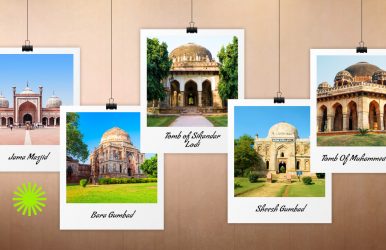
The most significant tombs here are those of Sikandar Lodhi and Mohammed Shah.
The tombs and ruins were earlier scattered around the village of Khairpur till 1931.
However, in 1936, the villagers were moved from the village, and this monument was created.
The tombs had exotic and native trees around.
Furthermore, the garden got its name from Lady Willingdon Park after the name of the British Viceroy’s wife.
It was named the Lodhi Garden in 1947 after India’s independence, in memory of the tombs present here.
However, the current form we see today is the work of American architects Joseph Allen Stein and Garrett Eckbo in 1968.
They added the rose garden, bonsai park, the lake with a fountain, and a glasshouse.
A Brief Historical Timeline Of The Lodhi Garden
1414–1451 (15th Century)• Becomes a burial site for the Sayyid Dynasty• The Tomb of Muhammad Shah was built in 1444. 1451–1517• The Lodhi Dynasty (1451–1526) used the tomb.• Included the Sheesh Gumbad and Bara Gumbad. 1517–1518• Ibrahim Lodi built the tomb of his father, Sikandar Lodi, after his death in 1517. 1936• The Khairpur Village was cleared, and a landscaped park called Lady Willingdon Park was constructed. 1947• India became independent, and Lady Willingdon Park was renamed Lodhi Garden. 1968• J.A. Stein and Garrett Eckbo enhance the Lodhi Garden as a public place with various additions. Present Day• The Archaeological Survey of India protects it for the preservation of its Sultanate-era architecture and diverse flora.
Visiting The Lodhi Garden: The Tombs And Architecture To See
Whenever I am in Delhi, I make a point to visit the Lodhi Garden.
I love the calming effect and the scent of history here.
I also take random walks in the park, and each time, the park surprises me with something new.
Even if it is nothing else, a wildflower that I have not seen before will smile at me.
Or a squirrel will greet me and then will be gone in a blink.
Also, irrespective of the direction of your entrance (East, West, North, and South), you will find ancient buildings here.
1. The Tomb of Sikandar Lodi To The North
The magnificent Tomb of Sikandar Lodi is to the north.
It is one of the oldest garden tombs of India.
Furthermore, it has an octagonal structure.
Also, despite its Indo-Islamic architecture, it has small domed pavilions or Chattris, which were a signature of Rajput architecture.
Also, the Overhanging Eaves or Chajjas and supporting brackets seen here come from the Rajput legacy.
2. The Sheesh Gumbad In The Centre
The Sheesh Gumbad stands like a witness to time amidst the greenery of the park.
It is a domed building with a cube shape.
The interior of the dome ceiling is decorated.
Furthermore, from the arched openings on the four sides of the tomb, you will get amazing views of the park.
The only problem I feel is the presence of selfie-obsessed visitors.
They somehow ruin the mood and do not understand the somberness of the place.
I even found some pre-wedding shots going on there.
Call me old-school! But these things irritate me.
3. Bada Gumbad Or Bara Gumbad To The South
Bada Gumbad has an architecture similar to the Sheesh Gumbad.
However, living up to its name, this tomb is bigger than Sheesh Gumbad.
It is also one of the oldest full-domed buildings in the country, and it serves as a beautiful entrance to the adjacent Jama Masjid.
4. The Jama Masjid Or The Friday Mosque
This mosque was built in the 15th century, and it has the typical red sandstone architecture, which was a signature of the Lodhi era.
Furthermore, here you will notice amazing geometric designs and calligraphy on the arches and columns.
5. The Tomb Of Muhammed Shah On The Southern End
The Tomb of Muhammad Shah is the oldest in the garden, and it is located on the southern end of the park.
You have to walk through a covered walkway to reach this tomb in an octagonal shape.
Along with these major tombs and architecture, the park also has many old tombs, structures, and ruins.
Furthermore, with the recent expansions, there are dedicated Yoga lawns, herb gardens, rose gardens and a glasshouse.
Moreover, there are exercise machines.
Also, the trees here are home to a handsome population of squirrels, chipmunks and various species of birds.
You will especially notice eagles spiralling over the park.
Some Practical Tips For Visiting The Lodhi Garden
The Lodhi Garden is a free public space with the richest diversity of plants, historic architecture, and ruins. So, it is a budget-friendly place to visit.
It is easily accessible by autos and metro routes.
Here is more on how to reach the park, basic amenities, and nearby attractions.
How To Reach The Lodhi Garden?
The Lodhi Garden is close to four metro stations.
Station NameMetro LineDistance Jor BaghYellow Line1.4 KmKhan MarketViolet Line1.6 KmJangpuraYellow Line4.2 KmJLN StadiumViolet Line2.6 Km
From these metro stations, you can take autos.
If you are coming from Jangpura or the JLN Stadium, you can even book an Uber to avoid negotiations with the local drivers.
How Much Time Is Required At The Lodhi Garden?
I don’t have an answer to that.
From an hour to the entire day, the time you spend here will depend on your intent of visit.
It takes around 20 minutes to complete a walk around the park.
However, if you want to appreciate the tombs and their architecture, it will take longer.
Also, the rich community of trees here always asks you to stay a little longer.
Moreover, the Lodhi Garden is a popular picnic spot.
Is There A Toilet At Lodhi Garden?
Yes, there are toilets at Lodhi Garden, and they are well-maintained.
Are Food And Drinks Available At Lodhi Garden?
There is no permanent stall of official setup for food and drinks at Lodhi Garden.
However, you will find vendors selling snacks, drinks, ice cream, and the famous chats of Delhi at the entrance.
Furthermore, inside the park, you will find many wandering vendors.
They set up their stalls on a tripod instantly and make mouthwatering chaats and snacks for you.
You can even pack your food and have it at the Lodhi Garden for a picnic vibe.
Irrespective of where you get the food from, please be careful about waste disposal.
However, if you are really hungry and want to gorge on proper Delhi food, head to the nearby Khan Market.
What Are The Places To Visit Near The Lodhi Garden?
You can combine your day in the Lodhi Garden with a visit to the Safdarjung Tomb and the Khan Market.
Also, you can explore the nearby Lodhi Art District.
1. The Safdarjung Tomb
It is the tomb of the Mughal Empire's Vazir Safdarjung, and it shows a mix of Persian and Indian styles of architecture.
It has beautiful marble and red stone architecture.
Moreover, built in 1754, it was the last monumental Mughal garden tomb in Delhi.
2. The Khan Market
You will find all the designer and branded clothes at Khan Market.
It is a high-end shopping district, and it brings you back to the present after a date with history in the Lodhi Garden.
Furthermore, it is the place to have a posh coffee date, an upscale luncheon, or an artisan cake tasting.
You must try the wood-fired pizzas at the restaurants here.
Moreover, if you really want to enjoy the evening in South Delhi, Khan Market is the place to be.
The bars and lounges here come to life after sundown.
How To Reach Khan Market?
You can walk for ten minutes from the north entrance of the Lodhi Garden, or you can take an auto from the south entrance.
Moreover, there is a metro station called Khan Market on the Violet Line.
3. The Lodhi Art District
The Lodhi Art District is a few blocks south of the Lodhi Garden.
It was the last housing estate the British had built in India.
However, today, it is a place that belongs to the Indian artists.
You will find more than 50 street artworks and murals here.
Take an auto or walk for 15 minutes to reach the Lodhi Art District from Lodhi Garden.
Where To Stay Near Lodhi Garden?
If you want a luxury experience, you can stay at The Lodhi.
Furthermore, there are many budget-friendly accommodations near Lodhi Garden.
These are Hotel O Maharaja Inn and Evergreen Delhi Bed and Breakfast.
Finding A Place To Relax In The Heart Of Delhi
Delhi, the capital of India, has endless attractions in the true sense.
From the Jantar Mantar to Humayun’s Tomb, it is a living tapestry of history and human culture.
However, whenever you feel overwhelmed by the bustling crowd and noise of Delhi, you can visit the Lodhi Garden and catch your breath.
Read Also:
Top 13+ Famous Wonders Of India That You Must Visit [Updated 2024]
Dark Tourism in India Exploring Shadows and Must-Visit Sites
Varkala Beach: Everything You Need to Know Before You Go





 Related