
Maldives’ Luminescent Secret: The Mesmerizing Sea Of Stars!

Oct 9, 2023

Last Updated on: Aug 26, 2025

Travel Guides

Have you heard about the Sea of Stars Maldives? Are you planning your honeymoon and looking for a starry night sky vibe? Please read the article to learn about the magical occurrence and its reason!

What can be better than the glowing Island in the Maldives? One of the most beautiful natural wonders, the glowy beach is perfect for visitors and tourists to create a lifetime of memories.

Maldives’ Luminescent Secret: The Mesmerizing Sea Of Stars!

Maldives' Luminescent Secret

There are reefs at the beach which show nature at its best! When the beach glows at night, it is a sight to see. It feels magical, especially because you will get privacy at the beach. In the article, I will be talking about why the Maldives Sea of Stars glows!

People have still not crowded the place, so book the tickets to Maldives if you plan to travel somewhere this year. Read the article to learn about nearby places you can visit on the glowing Island!

About Vaadhoo Island!

About Vaadhoo Island

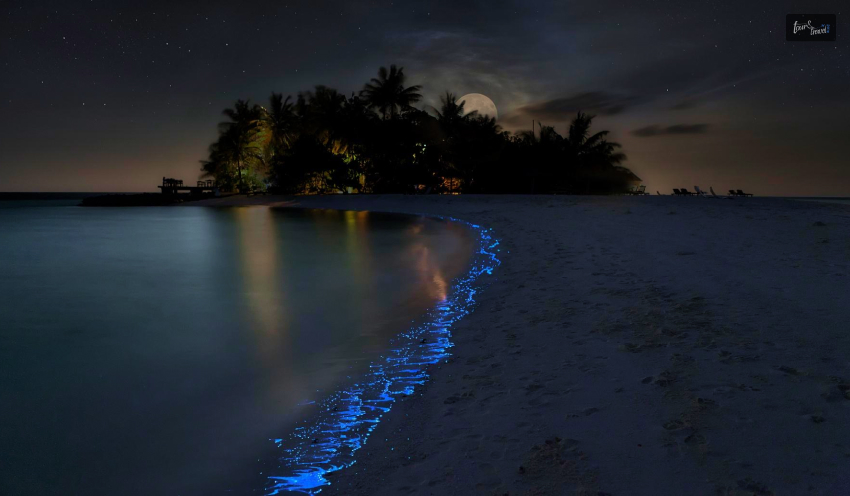
Located in Maldives, Vaadhoo Island is a part of another island of Raa Atoll. The Island is quite small, with a population of 500 people! Due to the phenomena of glowing beaches or the Sea of Stars, the Island has become quite highlighted on the global tourism map.

It was one of the best-kept secrets of the Maldives, but recently, it has become one of the most sought-after places for tourists worldwide! In 2022, the festive season of the Maldives was welcomed by plankton swarming everywhere!

The phenomenon, “Redhan lun,” is a powerful force of nature displayed across the Ocean, making the water glow! According to the ancient Maldivians, many stories and folktales respect and revere this phenomenon. The natives consider it an omen of power and majesty of the Sea.

Even though the interpretation of the dazzling display, according to the Maldivians, is not as clear, it is quite visibly magical for both the natives and the visitors. The planktons run across the northernmost to the southernmost place of the beach!

How Do You Visit The Glowing Beach?

How Do You Visit The Glowing Beach

The Sea of Stars vaadhoo Island Maldives is well connected with different parts of Maldives; hence, reaching there is no issue! Male is the capital city of Maldives, and the distance between Vaadhoo Island and Male is 8 km!

So, if you are questioning, where is the Sea of Stars located? You are booking a flight, check if it is landing at Velana International Airport, the main airport in Maldives! Vaddhoo Island is quite accessible from the airport as you can hire a speedboat, which will take approximately 15 minutes to reach!

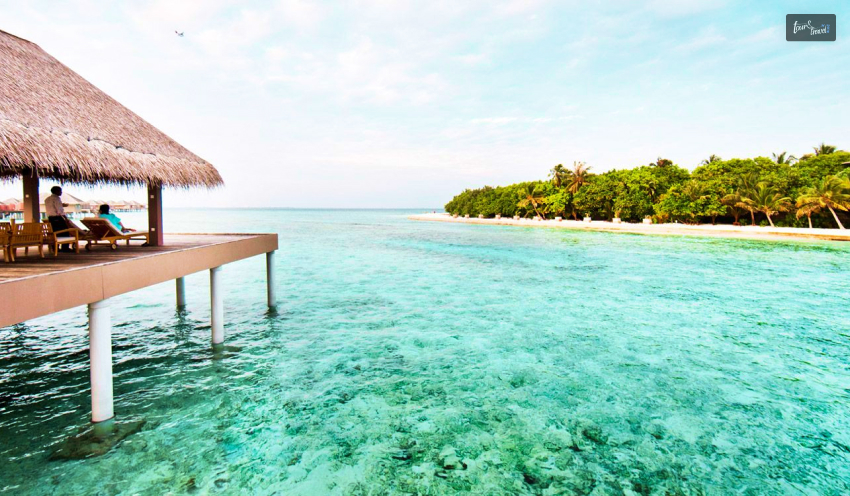
When you reach the Island, you will feel as if you have got paradise with its translucent water! The sun setting is another beautiful view you would forever like to keep as memories! It is one experience you must have on your bucket list if you are an offbeat traveler!

What Is The Secret Of The Glow?

What Is The Secret Of The Glow

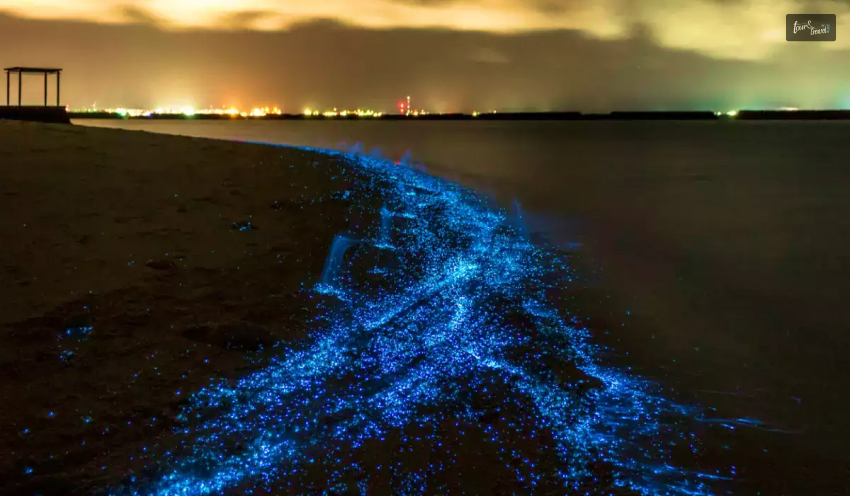
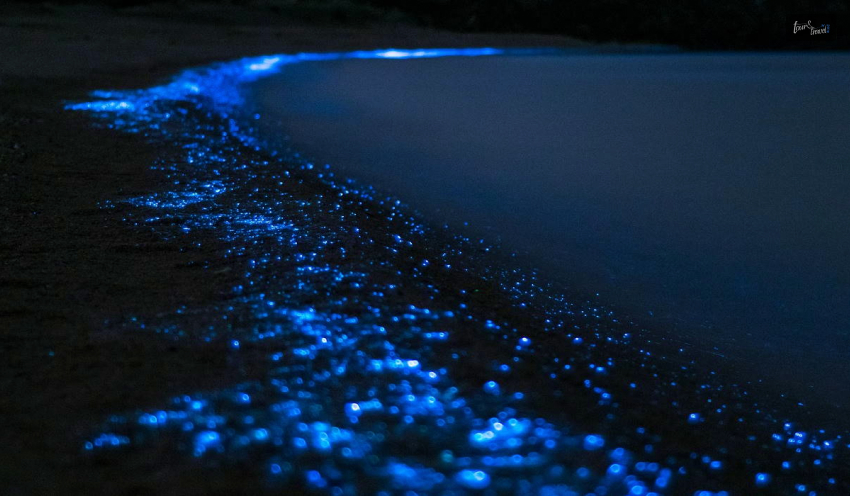
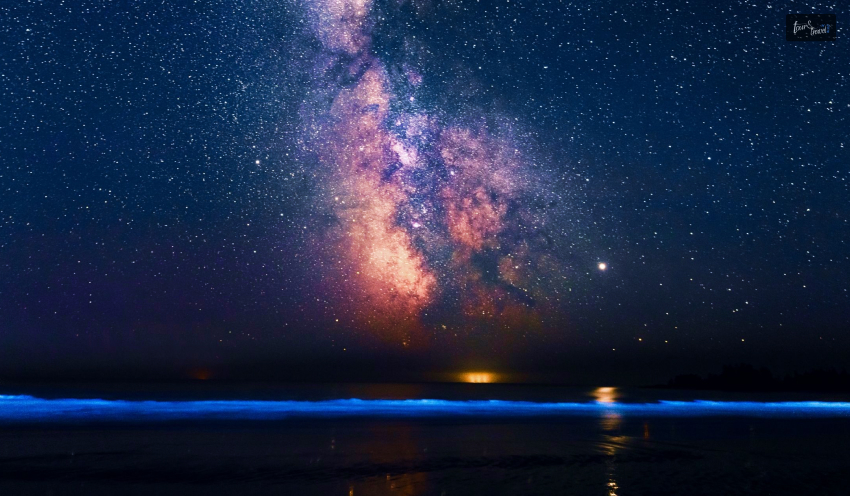
The shining beach of Vaadhoo has a microorganism called plankton or phytoplankton! These microorganisms radiate under the Sea to glow a vibrant blue light; thus, at night, their glow makes the whole beach shiny and magical!

The microorganisms are bioluminescent, and through a chemical process, they create light, making the whole Sea glowy and dreamy! These mysterious and unknown creatures create the natural phenomena of ‘Bioluminescence.’

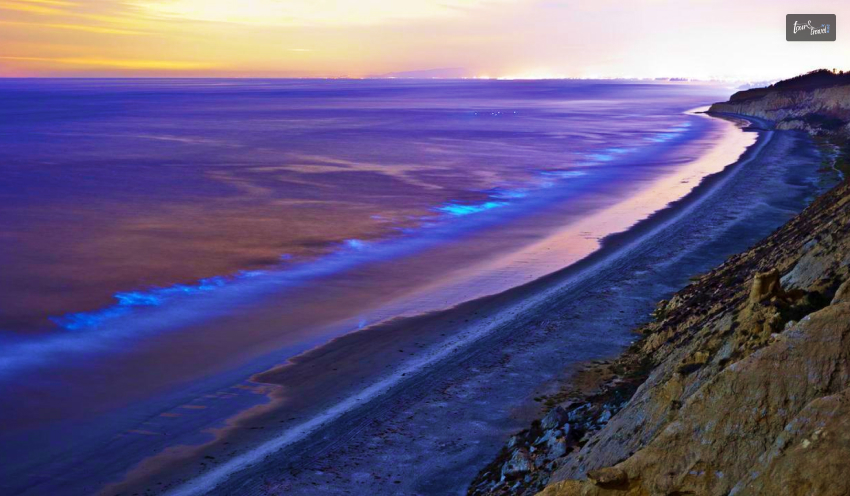
It is one visual memory you want to save for the rest of your lives! Looking at the Ocean at night, it seems like all the stars are coming down from the sky, gracing the Sea and the beach! You can easily walk across the beach or swim in the water during this time. Worth it!

You can try your luck in the Greater Male area, which is quite underrated. If you want, check out the Planktons; it is a beautiful place to visit at night!

What Is The Best Time To Visit Maldives?

What Is The Best Time To Visit Maldives

The best time to visit Vaadhoo Island is during the summer months, between May to November. We are saying this because, during this time, the bioluminescent display is at its peak!

People often think the time of the year matters when planning to visit the glowy beach! But it is the environmental conditions, along with the seasonal variations, that matter! To ensure that you check out the beautiful place, you have to calculate the optimal time to visit the beach.

The environment influences the Sea of Stars during specific months! During the summer months, the population of the phytoplankton increases and thrives. Your chances of coming across these aquatic microbes increase during this time as a magical symphony of lights is created across the shoreline.

Sea Of Stars: Instagramable Place To Visit!

Sea of Stars_ Instagramable Place To Visit

The intensity of the Sea of Stars during summer months increases as the bioluminescent dinoflagellates increase significantly. It is visual to watch at night, especially when the stars above and below create a celestial paradise for you!

Imagine you visit the Sea of Stars in Maldives with your partner hand in hand, walking down the shore, or organizing a dinner for your little sister along with your parents on her birthday on the Vaadhoo beach. It is a perfect natural setting for the best people in your life and memories of a lifetime.

Check out the instagram account @Vaadhootours, which has beautiful photos of the Sea of Stars! You can have a beautiful picture taken at the beach with stars above your head and below your feet. Rightly named the Sea of Stars, the aquatic microbes ensure their presence is felt!

Pictures taken of glowing footprints or scrawls across the glowing sand are perfect pass time for children and even adults! The Sea then washes them away later, and with morning light, the blue fluorescent light fades away.

Where To Stay When You Visit Vaadhoo Island?

Where To Stay When You Visit Vaadhoo Island

With the dark sky comes the light and the motion in the turquoise water of Maldives! The Ocean comes alive, which is otherworldly, so to check out the Sea of Stars, you need to book your accommodations close enough to experience the celestial glow of the water.

I will tell you five places to stay for your vacation at Vaadhoo Island, and enjoy the heck out of your trip!

Velassaru Maldives

Velassaru Maldives

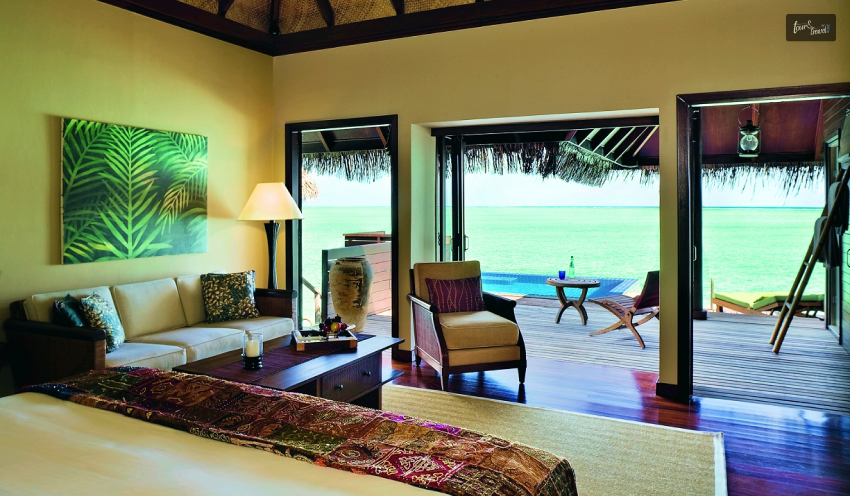
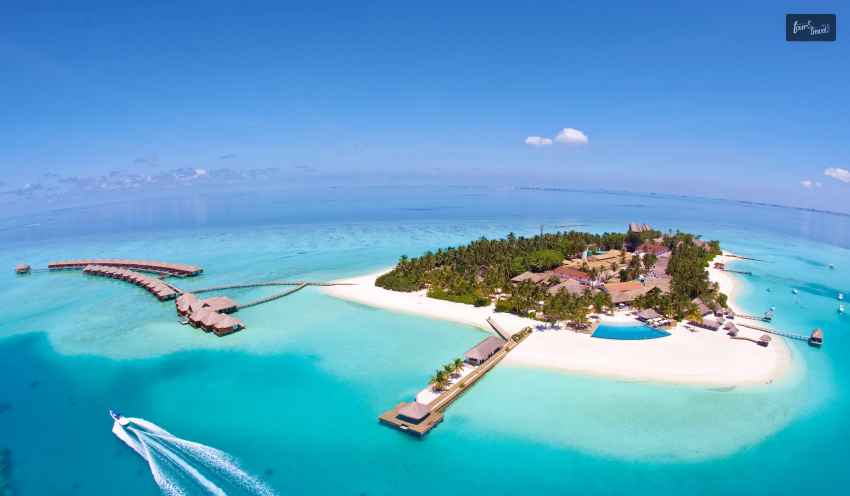
Want to experience the local culture? You have to book at the Velassaru Maldives, where luxury is at its best, along with the Gentle sand guiding you to the water’s edge. Further, the spectacular view that you will be getting of the water from the property is incomparable.

A tropical indulgence, Velassuru is the ultimate property, creating a perfect blend of nature and luxury! Services such as free internet, free breakfast, beach access, airport transportation, and canoeing make the whole deal worthwhile, with charges for rooms below $467.57!

Embudu Village

Embudu Village

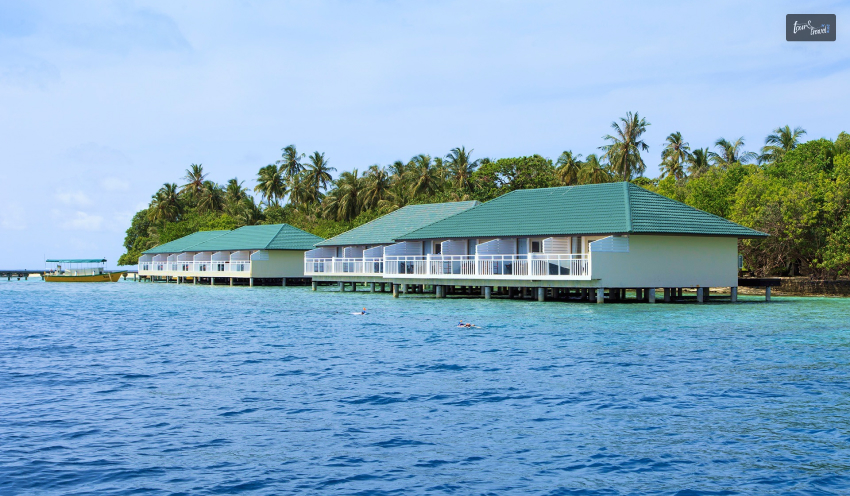
If you want something affordable, opt for Embudu Village at the South Male Atoll. The resort is situated on a private island which is 3 km long, so it is perfect for a stroll across the beach!

It is the perfect idyllic natural hideaway if you want some alone time! The lush tropical vegetation, along with white beaches, offer you the ideal backdrop for a vacation. Services available in this 122-room property are airport transportation, baggage storage, spa, canoeing, internet, beach access, and bar!

The charges of booking this property vary from $198.12 to $316.06 as it is one of the most affordable resorts available to enjoy the natural beauty of Maldives. There are rooms with private balconies on the pricier side!

Taj Exotica Resort & Spa Maldives

Taj Exotica Resort & Spa Maldives

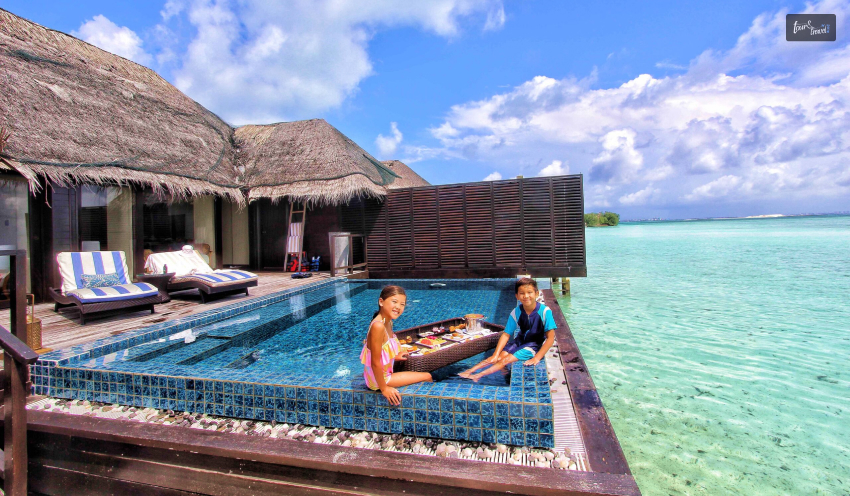
If you want to stay in one of the largest lagoons, this is it! The Taj Exotica Resort & Spa Maldives is an award-winning resort as they have created an alternative that combines nature and luxury. Water and beach villas are built amidst the largest lagoon in the Maldives!

There are a variety of water treatment rooms along with world-class holistic treatment by Jiva Grande Spa! Charges for the rooms, suites, and villas vary between $683.25 to $893.95 with free high-speed internet, pool, and gym services.

Further, you can go boating and have access to the beach and free breakfast! You can also access services such as books, music for the children, movie DVDs, and babysitting!

Baros Maldives

Baros Maldives

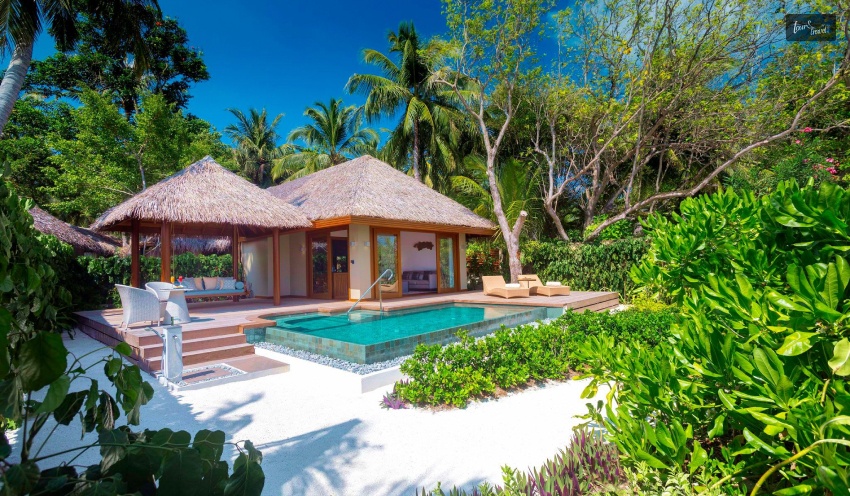
Based on 3971 reviews on Tripadvisor, Baros Maldives has been the best as they are rated 5 out of 5! With a shallow lagoon and marine life spread across the reef, this resort is located and the guests get the perfect tropical island experience.

The villas are elegant, created with sandstone and timber, peacefully nestled among exotic blooms across the beach. Per night, they charge around $791.32 for rooms as there is a variety, such as suites, non-smoking rooms, bridal suites, and ocean views.

Services include free high-speed internet, airport transportation, canoeing, a business center, free breakfast, a gym, and a pool for all guests!

Club Med Kani – Maldives

Club Med Kani - Maldives

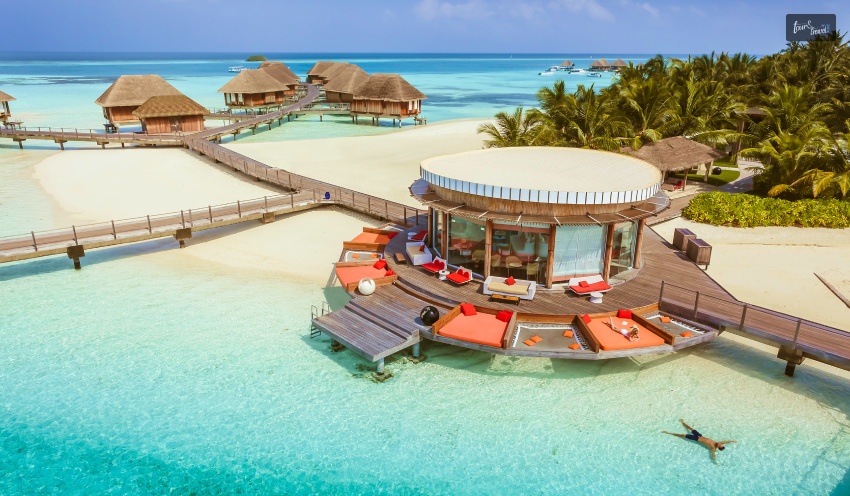
The resort is perfect for unwinding in the Maldives, within 2 km of swaying palms and powdery beach! They have all-inclusive services at the resort, so you can enjoy your stay along with experiencing some of the best underwater adventures, quite exhilarating.

Per-night charges for the hotel rooms are $1282.34! Free services provided to the guests are free internet, outdoor play equipment for kids, canoeing, free breakfast, private beach access, a pool, and a fitness center.

There are schools of tropical fish, snorkeling, and paddling across the shores that Club Med Kani Maldives Resort offers. There is a wide variety of cuisine, which will make your stay unforgettable!

What Other Places You Can Visit From Vaadhoo Island?

What Other Places You Can Visit From Vaadhoo Island

Apart from dipping your feet in the glowing Sea of Vaadhoo Island, there are other beautiful experiences that you can attain by visiting different places! On the Island, you cannot miss these natural events or experiences!

Baa Atoll Biosphere Reserve

Baa Atoll Biosphere Reserve

It is the seventh-largest coral reef, with biodiversity shooting through the roof! You will see the plankton flowing through the coral reef, which maintains the food chain in the Baa Atoll Biosphere Reserve, thus sustaining 1200 species of fish.

The total area of the coral reef is 139,700 hectares, including 75 Islands in Baa Atoll! Out of the 75, there are only 13 islands inhabited mostly by Maldivians, while there is only one Island with one tourist resort!

A variety of aquatic and marine lives. If you look in the water, you will find some endangered species, such as Napolean wrasses, green turtles, tawny nurse sharks, and hawksbill turtles. There are mangroves across all the islands!

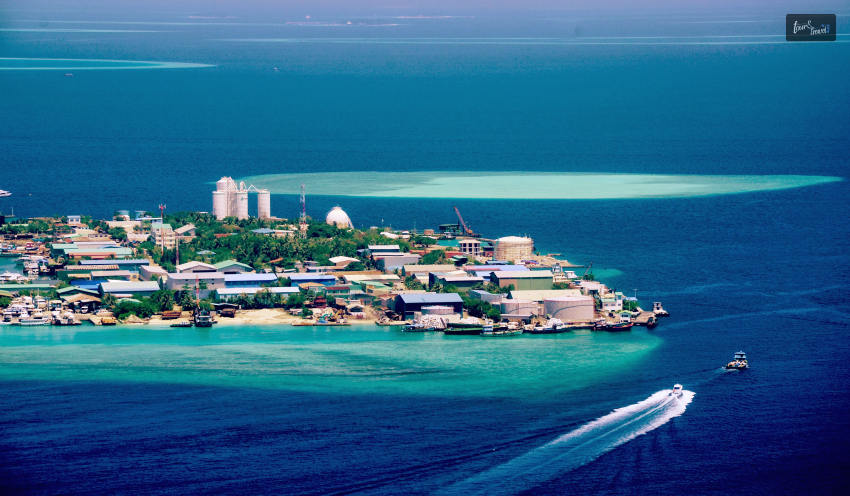
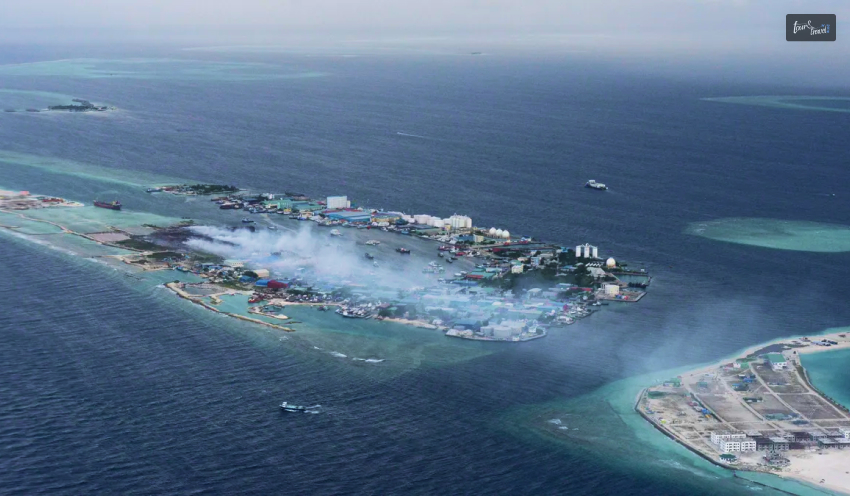
Thilafushi: The “Rubbish Island”

Thilafushi_ The _Rubbish Island

Maldives attracts 750,000 visitors annually, and this Island is paying the price of that as the rubbish produced by the tourists is all dumped, ditched, and piled like heaps of trash on the smooth white sand and tranquil blue water. The rubbing produced on a per-day basis is almost 3.5 kg!

It was initially a collection of shallow coral reefs, but in 1992, the Male government decided to dump all the garbage here; thus, it has been since called the “Rubbish Island“! The land suffered severely from the 330 tons of trash. Then, the garbage excavators, migrant workers, and refuse freighters were used to handle the Island!

Over the years, the Island has become hazardous while rubbish dumping has been stopped in 2011! It is a place you can check out if you are an environmentalist and want to make a study out of it.

Keahole Point Blowhole

Keahole Point Blowhole

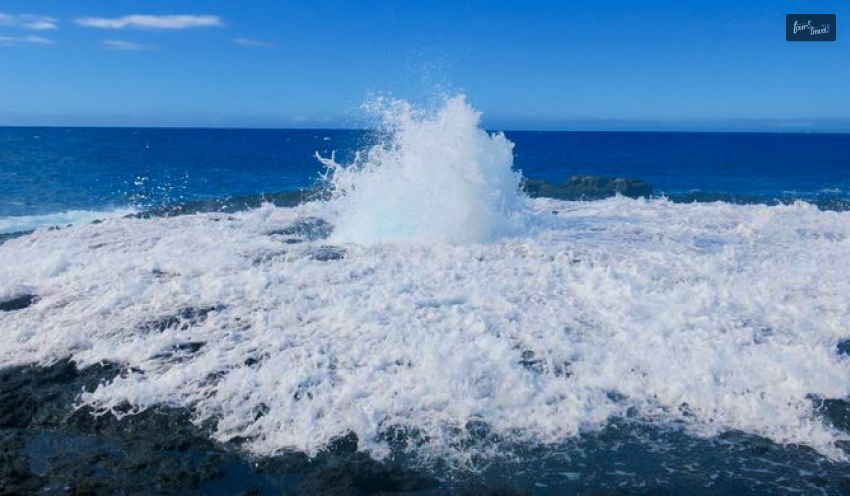
During the winter months, you can check out Keyhole Point, located in Kailua-Kona town, in the western part of the Big Island. Spectators will be fortunate to see the mammalian blowholes, especially because not all are so organically and perfectly made!

When the water rushes through the lava tube opening, which the low viscosity pahoehoe lava has created, the spouts of ocean water swell consistently, battering the rocks!

Feeling Otherworldly Yet…

Now that you know about the Sea of Stars Maldives, you must learn about some safety details! Bioluminescence is a natural phenomenon, so there is hardly any chance of getting hurt!

Yet, considering the glowy water is an attraction for people, it can be an attraction for other animals and marine life predators. It is important to understand that even if you live in a resort, you must be careful when visiting the beach!

Comment below about your plans to visit the glowing beach and why!

Read Also:

Share on Social Media

Sagnika Sinha is a content writer who is passionate about writing travel vlogs, entertainment and celebrity articles and literature-based pieces. With a 4 years experience in teaching, she loves reading books. A procrastinator by nature, she loves travelling, listening to music, planting and gardening.

Leave a Reply

Your email address will not be published. Required fields are marked *

title-img Related

READ MORE things to do in san francisco this weekend

20 Things to Do in San Francisco This Weekend!

BY  Ankita Mar 23, 2024

San Francisco is a city full of famous American landmarks, intriguing history, and delicious food. It has attractions ranging from the Ghirardelli chocolate to cioppino, various cultures, and typical California scenery. With so much to see and do in this vibrant, scenic West Coast city, even the residents could never grow bored. If you are looking for things to do in San Francisco this weekend, we have made a list of the top ones that you just can’t miss. Things To Do in San Francisco San Francisco’s famous hilly roads and cable cars have made a mark on travelers and global citizens. But there is more to this city than meets the eye. Here are the top unique things to do in san francisco this weekend. Golden Gate Bridge One of the most iconic images in the United States is the Golden Gate Bridge. Cars and pedestrians can cross the strait which is named after this 1.7-mile-long, brick-red structure, which connects San Francisco and Marin County. When visiting the city for the first time, crossing the bridge by foot or bicycle is practically required. Depending on the day of the week and the time of day you cross the bridge, there are rules governing which of the two sidewalks should be used for walking and cycling. The Presidio A great place to explore outside is The Presidio, a 1,500-acre public park that was formerly a military post. Take a hike or a bike ride on the 24 miles of trails and stop at one of the lookout points for a breathtaking view of the Golden Gate Bridge. San Francisco is surrounded by breathtaking scenery, making it one of the greatest spots to get away from the hustle and take a peaceful moment. Presidio Tunnel Tops Above a six-lane highway lies green space provided by the Presidio Tunnel Tops. The 14 acres of parklands, which opened in 2022, offer some of the best views of the Golden Gate Bridge and connect the main post of the former military base to the waterfront at Crissy Field.   You can even reserve a picnic table with the best view for a truly memorable experience. In addition, there are lots of chances for leisure and education, like the weekend campfire talks given by rangers from the National Park Service. Institute for Contemporary Art San Francisco Yes, this vibrantly creative city has a lot of places to view art, but the Institute for Contemporary Art San Francisco is unique: It is non-profit, does not collect, and is "dedicated to experimenting." It's the opposite of pretentiousness in the arts. There is free admission, so you won't have to pay to view any of the pieces, which include photography, textile art, video, and mixed media. JFK Promenade JFK Drive in Golden Gate Park was only car-free on weekends prior to 2022. Then, voters in San Francisco decided to permanently restrict traffic on the road to pedestrians. It is now free of traffic, so you can ride your bike, walk, skate, or travel along it however you please. Along the route, there will be art installations, lounging chairs, and public pianos. Read More: Is San Francisco Safe? THIS Is What You Should Know! Cable Car Ride San Francisco is a city known for its hills. Using public transportation to get around might be advantageous unless you're looking to get a serious leg workout. Since its inception in 1873, the city's renowned cable car system has been a popular tourist destination. The cable cars are still a great way to get around and a must-try Instagram-worthy experience. Tickets cost $8 for a one-way ride and can be bought at kiosks located throughout the city. Ferry to the Alcatraz While going to jail might not seem like a very vacation-like activity, Alcatraz isn't your typical jail. Some of the most infamous criminals in the country were housed at the long-closed penitentiary. It was situated on the island bearing the same name in the middle of San Francisco Bay. Some of them attempted to swim across the dangerous waters to escape. The prison is so well-known that it has appeared in motion pictures, including "The Rock" and "Bird Man of Alcatraz." To discover more about the intriguing history of the prison, anyone can take the ferry to the island. Moreover, it is now a part of the Golden Gate National Recreation Area. So you can take a guided tour of the prison. North America’s Oldest Chinatown The Dragon Gate at Grant Avenue and Bush Street marks the entrance to San Francisco's Chinatown, which is the oldest in North America. The neighborhood, which covers thirty square blocks, is a miniature, thriving city unto itself. Visit the stores, indulge in delicious dim sum or authentic congee, enjoy boba, or pick up a fortune cookie flavored with green tea from the Golden Gate Fortune Cookie Factory. Lovers’ Lane Enjoy a peaceful stroll along Lovers' Lane, the Presidio's oldest footpath, for a treat outside. When on vacation in San Francisco, the roughly half-mile trail is the ideal location. Stroll hand in hand with your significant other or find a moment of solitude amidst the trees. The trail is rated easy to moderate and has pavement. The walk takes about half an hour. Palace of Fine Arts Architect Bernard Maybeck created the Neoclassical Palace of Fine Arts for the 1915 Panama-Pacific International Exhibition. He imagined it to be a Roman ruin that would be demolished once the fair was over. Rather, a committed group of locals preserved the cherished building, which by the late 1950s had truly become a ruin. It was more permanently rebuilt in the ensuing ten years and is still a breathtaking landmark. Situated in a park at the edge of the Presidio, the free attraction boasts a stunning 162-foot-tall open-air rotunda. It overlooks a serene lagoon and is flanked by two Corinthian colonnades. It's a fantastic location for your next Instagram photoshoot, meeting spot, or stroll. Oracle Park Cheering on the Giants at Oracle Park is a sign of support for the San Francisco natives. While baseball enthusiasts will want to sit in the 100s near the field, this waterfront stadium's upper deck offers breathtaking views of the bay. This is seriously one of those times when it pays off to sit in the nosebleeds. Just remember to pack a glove and be prepared to catch a home run or foul ball if necessary. Alamo Square Park One of the most photographed locations in San Francisco is Alamo Square Park, primarily because it provides the ideal angle for photographing the pastel-colored Painted Ladies. They are also known as the Victorian-style homes made famous by the television series Full House. However, it also provides an amazing 360-degree view of the city. Bring a blanket and a snack so you can enjoy people-watching for as long as you want. TreasureFest Although there is some excellent vintage shopping in San Francisco, Treasure Fest may be the best place to locate a few unusual pieces. The outdoor market, formerly called Treasure Island Flea, features apparel, antiques, handcrafted goods, and more. In addition, there are lots of food trucks available to feed the famished masses. This flea is open only a few weekends a year; check the website for schedules and locations. Bay Cruise Take a bay cruise to experience the city from a different angle. This will let you get up close to some of the attractions, such as Alcatraz Island and the Golden Gate Bridge. While out on the water, keep a watch out for seals and other marine life. You can reserve a thrilling 90-minute inflatable raft excursion with Bay Voyager or an hour-long tour with Blue and Gold Fleet. There are numerous options for boat tours. Exploratorium A "public learning laboratory" and museum, The Exploratorium lets anyone become a crazy scientist. With the resources at their disposal, visitors can unleash their creativity. They become active explorers, creating anything they can dream up. It's no surprise that kids love this place, but Thursday nights are adult-only at the museum, so you can go without kids. If not, visit at any time to engage with the exhibits and listen to regular speakers. SFMOMA Art It would be an understatement to say that the San Francisco Museum of Modern Art is enormous. Moreover, the museum is over 45,000 square feet, spread across seven gallery floors. It is crammed full of contemporary artwork, pictures, sculptures, and much more. You could certainly explore SFMOMA and take in everything it has to offer for a full day, if not longer. Snack at the Ferry Building Searching for a delicious treat? Visit the historic Ferry Building, a marketplace with a variety of locally sourced treats. They offer sweet treats from the Donut Farm and foamy beers from Fort Point Beer Co.  Tuesdays, Thursdays, and Saturdays are market days when local purveyors come in to sell their products directly from the farms (or straight from the studio). If you're lucky, you might even visit on one of these days. San Francisco Botanical Garden The most amazing flora in the city can be found at the 55-acre San Francisco Botanical Garden. Strolling through the various gardens will make you feel as though you're in the Andes one minute and the Mediterranean the next. If you're visiting during the blooming season, make sure to stop by and take a whiff of the magnolia collection. This location is especially well-known for the flowers from December through March. Tiki Drink in the Tonga Room There are plenty of great restaurants and bars in the city that will gladly bring you a drink. However, only a few are perhaps as famous as the Tonga Room. Travelers have always loved the Fairmont San Francisco's tiki-style bar. This is despite its oddball setting in the Bay Area. Transport yourself to the tropics with a fruity cocktail as well as some bite-sized treats inspired by islands. Outdoor Music Festival Those who attend festivals frequently are probably familiar with Outside Lands, which is one of the world's highest-grossing music festivals. Every August, Golden Gate Park hosts a three-day festival. It draws hundreds of thousands of attendees and dozens of top-notch bands. The Hardly Strictly Bluegrass Festival, which ends the season with lovely folk music, and the Stern Grove Festival, which offers free outdoor concerts all summer long, are less well-known but still worthwhile visits. Walt Disney Family Museum Any Disney enthusiast visiting San Francisco should not miss the Walt Disney Family Museum. The museum provides plenty of insider knowledge along with interactive exhibits that highlight the personal side of the man behind the brand. Original storyboards, vintage movie posters, Disney memorabilia, and some of Walt Walton's personal belongings are among the items on exhibit. You will undoubtedly come away inspired. It will make you want to watch your beloved animated classic again. Lombard Street The location that most embodies the distinctively hilly and winding terrain of San Francisco is Lombard Street. It is also referred to as the "crookedest street in the world." It zigzags through eight steep turns on the hill between Hyde and Leavenworth Streets. Although you can walk the street and see the houses along the way if you're prone to motion sickness, it's a fun little stretch for a leisurely drive. Davies Symphony Hall A performance at the Civic Center neighborhood's Davies Symphony Hall is a visual as well as auditory feast. Attend a traditional concert or the San Francisco Symphony's special screenings. Here, a big-screen blockbuster film is shown with a live soundtrack provided by the orchestra. Visit the symphony's website to view the schedule.   The Weed Dispensary Are you eager to experience something that is distinctly San Francisco? Visit one of the many dispensaries in the city. Despite your stance against marijuana use, it can still be interesting to observe this booming industry up close. Since the state legalized cannabis for adult use in 2016, the practice has developed into a full-service way of life. Consider it like visiting a winery. To get assistance, simply ask a helpful "budtender." Use Weedmaps to locate a place. Ghirardelli Square You probably have a sweet tooth if the name Ghirardelli Square sounds familiar to you. The renowned chocolate company of the same name once called the entertainment and retail complex between Fort Mason and Fisherman's Wharf home. Ghirardelli relocated its headquarters to the neighboring city of San Leandro in 1966. However, the Chocolate Experience, which includes a sundae station and a pick-and-mix bar, faithfully honors the site's past. Visit its nearby eateries as well as bars for a larger bite or stop in for a taste. Mission Murals Take a self-guided tour of the Mission Murals to see some amazing street art for nothing. Even though there are over a thousand murals lining the streets, the best way to see them is to stroll down Caledonia, Clarion, Balmy, and Horace Alleys. Alternatively, you can just explore the neighborhood and pick your own favorite mural. Palace Hotel Do you wish you were a little more regal? For afternoon tea, proceed to the Palace Hotel. The hotel's Garden Court dining room hosts a traditional ceremony every Saturday. There, stands of traditional English bites, such as finger sandwiches and scones, adorn the tables and provide a perfect pick-me-up for both locals and hungry tourists. Wrapping Up So, this was a list of enjoyable things to do in San Francisco over the weekend. We could probably make this guide ten times longer with all the things we could do in SF for weekend adventures. The options are as varied as the city itself. However, it is best to take things a little at a time. We hope this guide will help you choose a few things to do during your next trip to San Francisco. For every weekend visitor, the City by the Bay guarantees an amazing experience, ranging from culinary delights and historical excursions to outdoor adventures and cultural explorations. If you have thoughts to share or questions to ask, please leave a comment below. We would love to hear from you! Read Also: Art, Architecture, And Azaleas: 24 Things To Do In Savannah The Best Things To Do In Moab Utah For Outdoor Enthusiasts From Festivals To Spas: The Top Things To Do In Park City Utah

READ MORE Raja Ampat marine life guide

Raja Ampat Marine Life Guide: What Marine Species To See In Raja Ampat, Indonesia?  

BY  Sibashree Dec 29, 2025

Have you ever been to a place where the clarity of the water feels like liquid air? Yes, you have heard it right. I am talking about the waters of Raja Ampat in Indonesia. Also, the dense coral reefs here look like a kaleidoscope in motion.   Its strategic location in the Coral Triangle in West Papua has also blessed it with a diverse marine life. Did you know that Raja Ampat has “75% of the known coral species” and more than 1,320 species of reef fish (Source: UNESCO)?   No wonder it is called the Amazon of the Seas. Also, with UNESCO designating it as a Biosphere Reserve on 27th September, 2025, it is now one of the just two places on the earth to have the distinction of being a UNESCO Global Geopark and Biosphere Reserve at the same time.   So, consisting of four islands (Raja Ampat means Four Islands), Waigeo, Salawati, Batanta, and Misool, Raja Ampat is like the biological "bullseye” as the most diverse marine habitat on the planet.   Hi, in this Raja Ampat marine life guide, I will be talking about what marine species to see in Raja Ampat Indonesia.   Also, if you want to make the most of the underwater wonderland of Raja Ampat, check out our Raja Ampat diving trips.   With an unbelievable marine life and rock formations that go back to 400 million years, Raja Ampat is the “living laboratory” of marine conservation according to UNESCO.   So, when the water here has more than a thousand species to spot, let’s find out the Big 5 of the water here. These creatures are unique, and they are majestic. They also represent the mystery of water.   1. Manta Rays (Oceanic Manta And Reef Manta)  Raja Ampat is one of the rarest places in the world to have oceanic and reef Manta Rays. You can even spot them at the same time at the same cleaning station.   Oceanic Manta Vs Reef Manta   Reef Mantas, with even a massive 5-meter wingspan, are smaller than the Ocean Mantas. The wingspan of the Ocean Mantas is close to 7 meters.   Furthermore, Reef Mantas stay in large, social groups, while the Oceanic Mantas are pelagic wanderers.   Also, Oceanic Mantas feature a “T” shape on their shoulders. On the other hand, you can identify Reef Mantas from the “Y” or “V” shapes on their back.  What Are The Best Sites For Spotting Manta Rays In Raja Ampat?  Manta Sandy in the Dampier Strait and Magic Mountain in Misool are the best places for spotting Manta Rays.  In the Dampier Strait is a quintessential cleaning station for Reef Mantas. The site is shallow, and you will find the Reef Mantas moving over the "bommes" with cleaner wrasse doing their work.  Furthermore, Magic Mountain is the place where you will find both species. So, it looks like a Manta Ballet against the backdrop of the dark blue water. 2. Walking Shark Raja Ampat (Epaulette Shark) And Where To Find Them The Walking Shark, or the Epaulette Shark, is the mascot of Raja Ampat. These are called walking sharks because they can use their pectoral and pelvic fins like legs. So, they do not swim and “walk” across the sea floor.  These are nocturnal hunters, strictly. If you are going night snorkeling at Sawinggrai or Arborek, you will spot them walking past your mask. It’s a surreal experience, I must say! 3. Wobbegong Sharks The Wobbegong Sharks usually rest on the seabed. They also remain tucked under a coral ledge.  Wobbegong Shark Sightings: Spotting The Masters Of Camouflage  These sharks are also known as “Carpet Sharks.” They have mottled and ornate patterns. So, they can disguise themselves well. You will also spot a beard of fleshy tassels around their mouths.  You will often mistake these predators for a piece of weed-covered reef. Sardine Reef in the Dampier Strait and various areas around Misool to find the Wobbegong Sharks.  4. Pygmy Seahorses Pygmy Seahorses in Raja Ampat come in various species, such as Bargibant’s, Denise’s, and Pontoh.  Bargibant’s is the most popular, and they have pinkish nodules, which match the color of their host coral. Bargibant also hides in the Gorgonian fans. They never leave their specific host fan, spending their entire lives blending into its polyps. Denise’s pygmies are slender, and the whitish Pontoh pygmies are found on hydroids and algae.  Pygmy Seahorse Habitats In Raja Ampat  You will love exploring the top Raja Ampat dive sites in search of the Pygmy Seahorses. Dampier Strait, especially sites such as Cape Kri, Blue Magic, and Misool, are the best sites to spot these adorable marine creatures.  5. Cetaceans (Whales And Dolphins) The archipelago has deep-water trenches and powerful currents. So, the water is an important highway for marine animals.  Spotting The Whales And Dolphins The Dampier Strait is a primary migration corridor. So, you will frequently spot Spinner and Bottlenose Dolphins near your diveaboards in Raja Ampat.  Furthermore, you will find Pilot Whales, Sperm Whales, or Orcas in the deep channels between the islands.  Rare & Macro Critters: A Photographer’s Dream Raja Ampat coral diversity and the macro critters make it a favorite of photographers. You will come across diverse, bizarre animals in the reef.  1. Nudibranchs And Flatworms: The Living Jewels Underwater Nudibranchs or sea slugs are vibrant, and they shine like jewels in the deep blue water of Raja Ampat, thanks to their neon shades.  You will find various species of nudibranchs and flatworms in the waters of Raja Ampat. Chromodoris is the most common species, and they look unreal. They feel like they're straight from the pages of sci-fi movies.  You will find them in Misool areas such as Nudi Rock and Lalosi in the Dampier Strait.  2. Blue Ringed Octopus And Cuttlefish The tiny and lethal marine wonders, blue-ringed octopuses, come with a brown body. They pulse with glowing blue rings when they feel threatened.  Another marine wonder is the Broadclub Cuttlefish. They use their skin as a television screen. So, you will notice changing colors and patterns in seconds.  Misool, Dampier Strait, and water near Mioskon Island are the best places to find these macro marine creatures.  3. Wonderpus And Mimic Octopus  You will find Mimic Octopus mainly in sandy areas. As the name suggests, they can impersonate other sea animals such as lionfish and sea snakes.  Wonderplus has long and slender arms. Also, Wonderplus has intricate white patterns on its rusty brown body.  Spot these stunning marine animals in the water of Misool, Waigeo, and Batanta.  Marine Life By Habitat: Where To Look The best diving and snorkeling site for you in Raja Ampat will depend on the marine experience/animals you want to encounter.  So, you have to understand the habitat.  1. The Blue Water Mangroves The Blue Water Mangroves are in the Passage or near Gam Island. These are not usual muddy mangroves.  The water here is crystal clear, and it functions as a juvenile fish nursery where you can see soft corals growing on tree roots. It is a rare phenomenon.  2. The Seamouts Magic Mountain or Sardine Reef are the seamouts, and they are the main action spots because of their position in the path of strong currents.  The strong current here attracts many pelagic species. So, you will find "walls" of Bigeye Trevally, schools of Grey Reef Sharks, and thousands of Barracuda.  3. The Muck  Muck diving is a technical term, and it means exploring the sandy bottoms of the water. It is wrong to consider this place as empty, as you will find the rarest critters, such as Bobtail Squid, Seahorses, and Frogfish, here.  These critters usually remain hidden in plain sight.  Raja Ampat Marine Life Calendar Do you have some must-see species in mind when exploring the Raja Ampat marine life? You have to know the ideal season for spotting them, as the marine life of Raja Ampat changes with each season. MonthWater ConditionsManta SightingsHighlightsOctober - NovemberCalm seasModerateWhale shark season (Cendrawasih)December - FebruaryPeak calmVery HighPeak Manta season; large schoolsMarch - MayGlassy waterModerateGreat for Cetaceans (Whales/Dolphins)June - SeptemberWindy/ChoppyLowBest for Macro and Nudibranchs Snorkeling Vs. Diving In Raja Ampat: What Can You See? The reefs of Raja Ampat are healthy, and the water is crystal clear. So, even if you are not a professional diver, you can see most of the marine life in the top 5-10 meters of water. In other words, the marine life of Raja Ampat is equally accessible to a snorkeler and a diver.  Still, here is a quick breakdown of the experience you can expect during snorkeling and diving.  1. What You Can See In Snorkeling See blacktip reef shark pups, green turtles, and massive giant clams, just a few meters from the beach. Furthermore, you will spot Manta Rays at Manta Sandy from the surface.  Other icons to spot for snorkelers are the Wobbegong Shark and the endemic Papuan Walking Shark under the jetties or in the shallow reef flats.  The Blue Water Mangroves are the ideal spots for snorkeling if you are looking for unique habitats. Here, you will find vibrant corals growing on mangrove roots.  However, if you are looking for an aquarium effect, you have to snorkel near village jetties such as Arborek or Sauwandarek. These jetties function as artificial reefs. So, you have to just look down from the pier to find massive schools of batfish, fusiliers, and giant clams. 2. What You Can See During Diving  Pygmy Seahorses or Wobbegong Sharks typically hide at depths of 15–30 meters. So, divers can easily access them, and a snorkeler may not find them easily.  While snorkelers see the "greatest hits," divers get access to the sheer scale and the "hidden" details of the Coral Triangle. Also, as a diver, you can sit at the corner of a reef, such as Cape Kri, with strong currents, to find the Grey Reef Sharks, Giant Trevally, and Barracuda hunting in the deep blue. Furthermore, sites such as Friwen Wall or Melissa’s Garden offer dramatic drop-offs where you can see the transition from sun-drenched hard corals to deep-water Gorgonian sea fans. Moreover, divers can enjoy the underwater mystery at night to the fullest. Spot panish Dancers, Eels, and Crustaceans that hide in the deep crevices of the reef.  "The Nocturnal Shift": Why Night Diving Is Mandatory After sundown, the waters of Raja Ampat transform into a completely different landscape. The reef looks surreal.  Night is the only time to spot the Walking Sharks hunting.  Furthermore, once the Sun sets, marble shrimps, slipper lobsters, and sponge crabs come out from the cracks in the coral. So, it is like a crustacean explosion.  Want to see the bioluminescence? Just turn your dive light off and wave your hands. You will find the bioluminescent plankton sparkling in the water.  Quick Comparison: Snorkeling Vs. Diving FeatureSnorkelingScuba DivingEffortLow Effort: Jump in from the beach or boat.High Effort: Gear setup and boat transit.VisibilityBest in the top 5m (sunlight).Great at all depths (up to 30m+).Best ForCoral gardens, Turtles, and reef sharks.Pygmy seahorses, Drift dives, Walls.Main AdvantageUnlimited time; "unplugged" feel.Observing behavior; seeing tiny life.ConstraintLimited by surface weather/choppiness.Limited by "no-decompression" time. Conservation And Responsible Interaction A collective conservation effort between the visitors and local communities helps to maintain the fragile beauty of Raja Ampat.  The Raja Ampat Marine Park Entry Tag (PIN): All visitors must pay an entry fee. This "PIN" supports the patrol boats that prevent illegal fishing and funds community health and education programs. Rules for Manta interaction: To keep the Mantas coming back, there are strict rules. No touching, no chasing, and no flash photography at cleaning stations. Always stay lower than the Mantas and give them plenty of space to fly. Lens Guide For Photographers: Capturing The Marine Life Of Raja Ampat  Raja Ampat is a real test for photographers as the marine life is happening and unpredictable.  If you want to capture the Mantas, schools of fish, and the stunning reefs, you can use the Wide Angle (10mm - 24mm).  On the other hand, if you want to shoot the Pygmy seahorses, shrimps, and Nudibranchs, you must use the 60mm/100mm macro lenses.  Raja Ampat Marine Life Guide: Expert Tips Check the Current: The "split current" at Cape Kri brings the most action. You have to dive with the current.  Look for Gorgonians: Stop swimming and stare at a Gorgonian fan to find the pygmy seahorses. The bumps, looking out of place, indicate their presence.  Don't Ignore the Jetty: The pillars under Arborek Jetty are world-class. They are covered in soft corals and schools of Batfish. Night Snorkeling is Safe: Don't be afraid! Shallow night snorkeling or night diving is the best way to see the Walking Shark. Manta Hygiene: At cleaning stations (like Manta Sandy), stay low and don't exhale bubbles directly under a Manta; it can startle them. Mangrove Magic: Visit the "Blue Water Mangroves" near Gam. The water is crystal clear, showing soft coral growing on tree roots. Reef Hook Etiquette: Only hook onto dead rock. Never hook onto live coral or sponges. The "60-Minute" Rule: Keep your camera battery 100% charged, as many sites are shallow and dives can last over an hour.  Watch the Triggerfish: Titan Triggerfish are aggressive when nesting. If they raise their dorsal fin, you must swim away horizontally. Listen Underwater: In the Dampier Strait, you can often hear the clicks of dolphins before you see them. Listen To The Authority Voices: A Raja Ampat Marine Life Guide  Want to know what the authorities are saying about the Raja Ampat Marine Life? I have curated their take on the Raja Ampat waters and marine life from their various interviews and insights.  1. Mark Erdmann, The VP Of Marine Asia-Pacific, Conservation International Overtourism remains a concern for the conservation of the Raja Ampat marine life. In a Raja Ampat Research & Conservation Centre Report, Mark Erdmann mentioned, “If there is nothing else done to further control and limit the growth of tourism in Raja Ampat, there is no doubt that within five years we are going to see major problems in places like the Dampier Strait, where it is already reaching the carrying capacity.” He also said,  “Misool represents one of the most pristine reef systems left on earth — one of only a handful of places in the universe where biodiversity is improving rather than declining.” 2. Sylvia Earle (Oceanographer & Explorer) She has designated the Coral Triangle (specifically the Birds Head Seascape) as a "Hope Spot," calling it one of the most important places for marine biodiversity on Earth. Dr. Sylvia Earle designated the Misool Marine Reserve in South Raja Ampat as a “Mission Blue Hope Spot” in 2017.  Max Ammer (Pioneer Of Diving In Raja Ampat) Max Ammer has veen always vocal about the resilience of Raja Ampat’s reefs against coral bleaching. That is why it is stronger than the Great Barrier Reef.  Raja Ampat Shows How Vibrant And Resilient The Ocean Can Be  You can be a first-time snorkeler or a seasoned diver. You will feel a rare and strong connection to the marine world in Raja Ampat. The “Amazon of the Seas” continues to thrive, and with the conservation guidelines and respect intact, it balances the presence of macro and micro marine life.  Plan at least a diving expedition for 7 days, especially in the Dampier Strait region in central Raja Ampat, to meet the Big Five and more. Raja Ampat Marine Life Guide: Frequently Asked Questions (FAQs) Here are the frequently asked questions and answers about the Raja Ampat marine life guide. 1. What Is The Most Famous Marine Animal In Raja Ampat? The Raja Ampat Walking Shark, the Carpet Sharks, Pygmy Seahorses, and Manta Rays are some of the most famous and big marine animals in Raja Ampat.However, the colorful corals and endless schools of fish here, along with the macro critters, create an unforgettable marine experience. Raja Ampat became a Shark Sanctuary in 2013. So, you will see different species of sharks here, including: • Wobbegong (Carpet) Sharks• Whale Sharks:• Blacktip & Whitetip Reef Sharks:• Walking Sharks• Grey Reef SharksAlso, barring some minor threats from the Wobbegong sharks (because of their hiding nature), no major threat is observed or reported from the sharks in Raja Ampat.  2. Are There Sharks In Raja Ampat? Are They Dangerous? December to March is the best time to see Manta Rays in Raja Ampat. The plankton blooms are highest in these months, and you will find Manta Rays following each other, creating a train. The northwest monsoon winds create deep-water upwellings, leading to the higher visibility of Manta Rays.  3. Can I See Marine Life If I Only Snorkel? Yes, you can see marine life in Raja Ampat if you snorkel in areas such as Blue Water Mangroves, Friwen Wall, and Arborek Jetty. Within 5 to 10 meters of water, you will find marine life such as Giant Clams, Sea Turtles, Manta Rays, and diverse schools of fish. 4. Is Raja Ampat Safe For Beginner Divers? Yes, Raja Ampat has sites such as Arborek or Sawardarek, which are ideal for beginners. Also, many dives are simple drift dives where the current carries you once you jump into the water. However, you must not overlook the down-welling nature, strength, and unpredictability of the Raja Ampat waters. So, you will need expert guides. 5. What Are Walking Sharks? The Epaulette Sharks or Walking Sharks are harmless carpet snacks. Their movement looks like a walk thanks to their pectoral and pelvic fins, like legs. These endemic species are spotted best at night when they are out hunting.  6. Do I Need A Wetsuit For Raja Ampat? Wearing a wetsuit is not mandatory if you are a snorkeler in Raja Ampat. However, you can wear a 1mm to 2mm thick wetsuit to float effortlessly and provide sun protection. If you are a scuba diver, you will need a 3mm wetsuit even when swimming in the Raja Ampat waters, with an average temperature of 28 to 30 degrees Celsius. The wetsuit ensures that your body remains warm in the water. Also, it protects your body from tiny stinging planktons and hydroids. 7. Are There Whales In Raja Ampat? Yes, there are various species of whales in Raja Ampat. You can spot varieties such as Bryde’s Whales, Pilot Whales, Sperm Whales, Omura’s Whales, and Killer Whales. The Dampier Strait and the Sagawin Strait, to the south of Batanta Island, are the best places to spot these whales. 8. What Is The Visibility Like In Raja Ampat Water? The average visibility in the water of Raja Ampat is around 15 to 25 meters. However, the visibility of the water depends on multiple factors, such as the presence of plankton and nutrients, and the season. In the peak or dry season, between October and April, the visibility is around 15 to 30 meters. On the other hand, in the windy season, from June to September, the visibility is around 10 to 20 meters.  9. Are There Saltwater Crocodiles In Raja Ampat? Yes, there are saltwater crocodiles in Raja Ampat. However, the sightings are rare, and you will find them in areas such as Blue Water Mangroves, The Passage, and remote islands such as Batanta.   

READ MORE Korean Currency Rate And Money

All You Need To Know About Korean Currency Rate And Money

BY  Abdul Aziz May 19, 2023

For avid travelers and investors, the Korean currency rate can be a fascinating topic of discussion. Understanding the fluctuations of the won against other currencies can give insights into its economy. Likewise, it could say much about Korea's political developments and investors' sentiment in the market. This article will explore everything about the Korean currency rate. As such, we will cover the basic conversion rates to the impact of major events on the Korean economy. History Of Korean Currency South Korean currency has rich historical data that dates back to the early dynasties of Korea. It all started with the use of cowry shells and pearls as currency. As time passed, metal coins and paper money became popular. The Japanese occupation of Korea introduced the Japanese yen as the official currency. Yet, in 1945, the Korean won was introduced and became the official currency. Interestingly, the won was initially divided into 100 jeon, but the jeon was eliminated in 1960. The won has undergone many transformations to ensure price stability and economic growth. In modern times, the South Korean won is the official currency used in South Korea. Today, the value of the South Korean won fluctuates with the global exchange rates. It’s one of the world’s top 20 currencies by value. Current South Korean Won Exchange Rate Knowing the latest exchange rate for the Korean won can be helpful in budgeting and forecasting your finances. As of January 2023, the exchange rate for Korean won is fluctuating depending on the global market and demand. Below are some of the latest conversion rates: 1 US dollar = 1,315.29 Korean won (USD to KRW) 1 Australian dollar = 893.35 Korean won (AUD to KRW) 1 Chinese yuan = 192.07 Korean won (CNY to KRW) 1 Japanese yen = 9.90 Korean won (JPY to KRW) However, exchange rates may vary depending on banks' locations and policies. Check exchange rates online through various currency converter websites to ease the currency conversion. Alternatively, download an exchange rate or currency calculator app. With these tools, you can convert your dollars to South Korean won (USD - KRW) or any other currency at the current rate. Banknotes And Coins Banknotes and coins in South Korea are not only used for daily transactions. Yet, they also hold significant cultural value. As such, these banknotes come in different denominations and colors. For instance, the 1,000-won note features a Confucian scholar. Then, the 10,000 won note features Admiral Yi Sun-sin, known for his naval victories against Japan. Meanwhile, the 50,000 won note features Shin Saimdang, a prominent female artist. Besides that, she was the mother of the famous Korean painter Yi I. These banknotes represent important historical figures and showcase various artistic designs. Similarly, Korean coins are equally fascinating, with 10, 50, 100, and 500 won denominations. Each coin features a different symbol that holds cultural significance. The 500-won coin features the portrait of King Sejong, who invented the Korean alphabet. Meanwhile, the 100-won coin features the image of a crane, symbolizing longevity and good fortune in Korean culture. When visiting South Korea, carry some local currency as most stores prefer cash transactions. Foreign exchange markets are available in major cities, but it is crucial to know exchange fees as they vary. Overall, banknotes and coins in South Korea hold monetary value and capture the country's cultural heritage. Visit the Bank of Korea to learn more about their banknotes and coins. Money-Handling And Etiquette As with any country, knowing the cultural norms when handling money in South Korea is good. As such, for Koreans, money is not just a means but a representation of energy. Below are some key points to note: Cleanliness is crucial. Many Koreans believe money represents energy and keep their bills and coins as clean as possible. Hence, you will rarely see crumpled or dirty bills in circulation. Besides that, many Koreans carry cash and coins in wallets and change purses. For them, it is not just a convenient way to have cash but a way to keep it clean and maintain the money's energy. Respectful giving and receiving. When giving or receiving money, using both hands for respect is customary. This act is particularly true when exchanging money with older people or of a higher status than you. No throwing or placing on the floor. Throwing money or putting it on the floor is considered disrespectful. If you drop a coin or bill, pick it up immediately. Likewise, people usually place money on a designated tray or hand it directly to the receiver. Cash vs. Card. Credit cards are widely accepted in Korea. Yet, having some Korean won for small transactions or in areas that only accept cash is always good. Keep this Korean currency rate information. Doing so will allow you to navigate financial transactions in South Korea with ease and respect for the country's cultural norms. Read Also: Traveling To Korea? Here’s Your Must-Try Korean Food 7 Reasons Why Phuket, Thailand Attracts Travelers Worldwide Top Hotels With Jacuzzi In Room In Las Vegas – Travel Guide