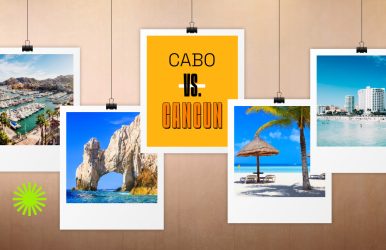
Cabo Vs Cancun: Which One Is Better For The Ultimate Mexican Getaway?
BY
Sibashree
May 14, 2025
The Baja California Sur region of Mexico is gaining massive foreign investments. Los Cabos is the most prominent name in this development, fetching a foreign investment of $783.3 million from January to September 2024.
No wonder this dramatic region in Mexico, welcoming 3 million visitors annually and recording a 16% growth in tourism, is setting the benchmark for cities and municipalities that want to thrive on luxury tourism.
In the Quintana Roo state, Cancun, a Mayan refuge, is another popular destination in Mexico, attracting millions of visitors every year. The total number of air passenger movements in Cancun from January to April 2025 was 10,759,514.
Despite a 5% year-on-year deficit compared to 2024, Cancun, famous for its whale shark tours, remains a major contributor to Mexico's $16.25 billion tourism industry. Cancun also has some of the best amusement parks in Mexico.
So, it seems Cancun and Cabo are favorites when it comes to planning a Mexican getaway. However, which one is better for a vacation?
We will find the answer in this Cabo vs Cancun comparison.
Cabo Vs Cancun: Know The Basics
Cabo is located in Western Mexico. Further, Cabo San Lucas is located at the tip of Mexico’s Baja California peninsula.
San Jose del Cabo International Airport is the main airport in Cabo. The city experiences a tropical desert climate with a maximum annual rainfall of 10 inches.
On the other hand, Cancun is on the eastern coast of Mexico. It has a tropical climate and receives around 52 inches of rainfall annually.
Cabo Vs Cancun: Getting There
The Los Cabos International Airport (SJD) serves Cabo, and it is a 40-minute drive from Cabo San Lucas.
It is also just 15 minutes away from San José del Cabo.
On the other hand, the Cancun International Airport (CUN) serves the Cancun area. It is the second-busiest airport in Mexico.
The distance between Downtown Cancun and the Cancun International Airport is just 25 minutes.
While both airports pull heavy direct traffic from the US, Cancun is a winner in terms of the raw flight volume and price.
It has more budget carriers and shorter flight times from East Coast hubs like Miami, New York, and Charlotte.
Cabo pulls stronger direct service from West Coast cities like Los Angeles, San Francisco, and Dallas, though fares tend to run higher given the longer overwater routes.
If you're island-hopping between the two, direct flights connect CUN and SJD in under five hours, with one-way fares starting around $50–$90 depending on season.
Best Time To Visit: Cabo Vs Cancun
Timing your trip, especially when you are traveling to a different country, is more important than picking a destination.
So, here is a side-by-side comparison of Cabo vs Cancun by season.
Cabo
The dry season in Cabo runs from November through May. It gets around 340–350 days of sunshine yearly and almost no rain.
Furthermore, if you are interested in whale watching in Cabo, December to April will be the ideal season.
Again, water temperatures are the warmest from September to October, shooting up to 31°C.
April is the month with the coolest water temperature.
Cancun
Cancun has the Hurricane season from June to November.
Furthermore, it is the peak rainfall season for the region, hitting an annual average of 52 inches.
Also, the driest, most crowded months in Cancun are December through April.
Moreover, the whale shark window in Cancun is just the opposite of Cabo, running from June to October.
What Is Cabo Famous For? Why Does Everyone Go To Cabo?
Los Cabos is a crown jewel in Mexico’s Baja California Peninsula. Just below the Tropic of Cancer, Los Cabos has 340-350 days of sunshine yearly.
Further, its luxury resorts, stunning beaches, and the most happening nightlife, with places such as El Squid Roe and Cabo Wabo Cantina, make Cabo famous.
Los Cabos is also easily accessible, especially through direct flights from major U.S. cities such as Dallas, San Francisco, and Los Angeles. Additionally, US Dollars are easily accepted here.
Moreover, Los Cabos is the second home to Hollywood biggies such as Cindy Crawford, George Clooney, Nick Jonas, and Jennifer Aniston. The Kardashians and Will Smith also frequently visit Cabo.
In addition, Cabo is the best place for spotting humpback whales from December to April.
What Is Cancun Famous For?
With its name originating from the Mayan language, Cancun, or the “Nest of Serpents,” is an unmatched location for anyone interested in the Mayan culture.
It is no wonder that Chichen Itza is the top attraction in Cancun. Located in the Yucatán, it is also a UNESCO World Heritage Site.
Further, Cancun has the Great Maya Barrier Reef, the second-largest in the world. So, it is a paradise for the scuba divers who want a slice of marine life.
Again, Isla Mujeres is an idyllic island in Cancun for snorkeling, swimming, and spotting whale sharks.
Moreover, the Ecological Reserve is the biggest natural ecosystem in Mexico. Also, the Riviera Maya has some of the largest underwater cave systems in the world. Those are:
Ox Bel Ha: 146.7 Kilometers
Nohock Na Choch: 61 Kilometers
Dos Ojos: 57.7 Kilometers
Overall, the diverse tourism attractions in Cancun have made the Cancun International Airport the second busiest in the country.
Cabo Vs Cancun Safety: Which One Is Safer?
Winner: Cabo 🏆
Like the question of “Is Monterrey Mexico Safe?”, traveler safety in Cancun and Cabo remains a concern.
Cancun Traveler Safety
The U.S. Government has issued a travel advisory for Cancun in 2025. Quintana Roo, the state where Cancun is located, has a Level 2 caution for tourists.
With robbery being the most frequent crime in Cancun, reaching a whopping 25% of the total crimes in 2024, Cancun has also been struggling with issues such as street scams and violent crimes.
However, increased police presence, surveillance systems, coordination with the hotels, and public awareness campaigns have been the measures to keep the crime rates in this region in check.
Cabo Traveler Safety
Is Cabo San Lucas safe? What about the crime scenarios in other parts of Los Cabos? Let’s find out the data.
Cabo is safer than Cancun, with a USA Travel Advisory of “Exercise Increased Caution” in the Baja California Sur area. This caution is similar to that of many European destinations.
However, the murder of a law enforcement officer on 22nd April and the burning of three buses on 24th April, 2025, have created some unrest in the area.
Still, Los Cabos has a lower crime rate than many other areas of Mexico, such as Acapulco and Tijuana.
In addition, there are dedicated tourist police in areas such as Medano Beach and the Marina District.
Moreover, the types of crime here include petty scams and theft. Violent crimes against tourists are rare here.
Cabo Vs Cancun Beaches: Which One Is Better As A Tropical Getaway?
Winner: It’s a Tie 🤝
It’s hard to pick a favorite among the beautiful beaches in Cabo and Cancun. Cabo in the Pacific Ocean and Cancun in the Caribbean Sea have very different waters and beaches.
Beaches In Cabo
The beaches in Cabo exude the quintessential charm of the Pacific Ocean coast. Further, Cabo sees the Pacific Ocean meeting the Sea of Cortez.
The most beautiful beaches for swimming in Cabo are:
Medano Beach and Lover's Beach, along the Sea of Cortez
Cabo Pulmo Marine Park
Playa Acapulquito and Chileno Beach in the Tourist Corridor
The waters here are electric blue, and the coastline is dotted with cacti. Furthermore, from January to April, Cabo is the best place to spot whales and go deepwater fishing.
In addition, you can do scuba diving in Cabo Pulmo, a nearby national marine park. Here, you can meet eels, big-eyed jacks, sea turtles, porkfish, snappers, etc.
Beaches In Cancun
Beaches in Cancun show the charm of the Caribbean Sea. Playa Delfines, Playa Langosta, and Playa Tortugas are the most popular among them.
Playa Delfines is a known destination for Jet skiing or parasailing. Also, you can do scuba diving, fishing, and kayaking.
Moreover, you can spot whales if you visit Cancun from June to October.
Cabo Vs Cancun For Partying: Which One Is More Fun?
Winner: Cancun🏆
Cancun is the Spring Break destination in the world. You can dance it out at Mandala Nightclub and enjoy the best cocktails at the JW Lobby Bar.
Los Cabos also has a vibrant nightlife. However, the vibe here is much laid-back. El Squid Roe and Cabo Wabo Cantina are some of the best places to experience the party scene and nightlife of Los Cabos.
Cabo Vs Cancun For Families: Know The Top Attractions
Winner: Cabo 🏆
Cancun's natural and cultural attractions are more varied and vivid than those in Los Cabos. However, Los Cabos is a more family-friendly destination because most activities and attractions here are beach-centric, accommodating people of all ages.
Also, the luxury hotels and accommodations in Los Cabos offer a “Next-Level Experience” to visitors.
Moreover, Los Cabos is safer than Cancun in terms of crime rate.
Top Attractions in Los CabosTop Attractions in CancunFamily-Friendly Things to Do in Los CabosFamily-Friendly Things to Do in Cancun‣ Medano Beach‣ Santa Maria Beach‣ Playa el Chileno‣ Lovers Beach‣ Cerritos Beach‣ El Arco‣ Cabo Pulmo National Park‣ Sierra de la Laguna‣ Todos Santos‣ San José del Cabo‣ Chichén Itzá - UNESCO World Heritage Site‣ Isla Mujeres‣ Selvatica Eco Park‣ Mayan Museum of Cancun‣ Zona Arqueologica El Rey‣ Playa Tortugas‣ Xcaret Park‣ Ventura Park‣ Swimming and building sand castles at Medano Beach.‣ Boat tours to visit the Arch of Cabo San Lucas. ‣ Snorkeling in Cabo Pulmo‣ Horseback riding in Baja Outback‣ Whale watching and dolphin encounters.‣ Ferry ride to Isla Mujeres‣ ATV tours and zipline in Selvatica‣ Swimming in Playa Tortugas‣ Visiting Chichen Itza
Cabo Vs Cancun For Couples: What Are The Best Things To Do?
Winner: It’s a Tie 🤝
If you are traveling as a couple, your favorite destination between Cancun and Los Cabos will depend on your preference.
For example, Cancun is more energetic, while Los Cabos has a laid-back vibe. Cancun further stands out thanks to its Mayan connection.
Also, Cancun has more swimmable beaches than Los Cabos.
The beaches in Los Cabos offer more adventurous experiences to couples. You can swim, surf, dive, and snorkel there. On the other hand, despite having scuba diving facilities, the beaches in Cancun are more resort-centric.
Again, the nightlife in Cancun is more vibrant in Cancun, whereas Los Cabos is a better choice for a gastronomic delight.
4. Cabo Vs Cancun For Solo Travelers
Winner: Cancun 🏆
The hotel zone of Cancun is most suitable for solo travelers. It is so because Cancun is walkable and easy to navigate without a car.
Also, Cabo has many hostels and mid-range hotels.
Again, the nightlife scene of Cancun is ideal for socializing and meeting other travelers. You can even easily book day trips to Isla Mujeres or Chichén Itzá through group tours.
On the other hand, Cabo is more spread out, and many of the top experiences, such as deep-sea fishing, fine dining, and fishing ae built around groups and couples.
So, the cost of traveling per person will be higher for solo travelers.
That said, Cabo's tourist police presence and lower violent crime rate make it a reassuring solo pick for travelers prioritizing safety over the social scene.
Cabo Vs Cancun Food Scene: Local Flavors And Delicacies
Winner: Cabo 🏆
Los Cabos promises a diverse food experience. You can have the best tacos at a beachside shack and indulge in the best haute dining.
You must also try the best handmade tortillas and wines from the North Baja wineries.
Nevertheless, if you want a gourmet experience, visit Cocina de Autor (a Michelin Star restaurant), CarbónCabron, and Lumbre.
Again, San José del Cabo is the best place in Mexico to celebrate the country's “Farm-to-Table” tradition.
Food in Cancun, however, is an ode to the Mayan culture. You will fall in love with the fish cooked in banana leaves and slow-cooked pork here.
Kiosk Verde (a Michelin-mentioned restaurant), El Pocito, and Rosa Negra are some of the most famous eating places in Cancun.
Cabo Vs Cancun: Cost Comparison
Winner: Cancun 🏆
Cancun is a more budget-friendly destination than Cabo.
It is a more affordable location due to its high flight volume, wider mix of budget and luxury resorts, and lower average nightly rates, making it easier to stretch a vacation budget.
Also, Cancun has many all-inclusive resorts. Thus, budgeting for accommodation, food, and drinks is easier in Cancun.
Cabo, by contrast, leans upscale.
Higher import costs make the essentials more expensive here, and the real estate is pricier.
Moreover, the concentration of luxury resorts and Michelin-recognized restaurants pushes average trip costs up
Even flights tend to run higher, given fewer budget-carrier routes from the East Coast.
That said, Cabo is not uber expensive.
You can find mid-range hotels and beachside taco shacks alongside the five-star resorts.
It simply skews luxury at the top end more than Cancun does.
What Is Better Cancun Or Cabo? And The Winner Is…
Let’s explore a different side before declaring the winner of this Cabo vs Cancun comparison.
Mexico, these days, earns a lot of foreign investment in tourism. Cancun and Los Cabos are not exceptions in this.
Los Cabos, especially, is located in the Baja California Sur, which is the top destination for attracting foreign investments.
However, foreign investments and the developments here are now harming the local habitat and ecosystem.
The breach of environmental regulations and intrusion into the traditional way of living in these places are posing challenges to local heritage and conservation efforts.
ParameterLos CabosCancunSafetyWinnerRunner-UpBeachesWinnerWinnerAs a Family DestinationWinnerRunner-UpNightlifeRunner-UpWinnerAs a Couple DestinationWinnerWinnerSolo DestinationRunner-UpWinnerFoodWinnerRunner-UpCostRunner-UpWinnerOverall Winner Score55
So, the winner depends on the budget of your trip and the kind of experience you want.
Is Cabo Or Cancun Water Warmer?
The water in Cancun is warmer than in Cabo because of their geographical locations. Cancun is located in the Caribbean Sea, while Cabo is nestled in the Pacific Ocean.
However, the maximum water temperature in Cabo reaches 31 degrees Celsius, which is higher than the maximum water temperature in Cancun, 30.5 degrees Celsius.
January is the coldest month in Cancun, and August is the warmest. In Cabo, April is the coldest month in terms of water temperature, and the water temperature reaches its maximum in September.
Here is a detailed month-wise comparison of Cabo vs Cancun water temperature based on the National Oceanic and Atmospheric Administration (NOAA) data.
MonthMaximum Water Temperature in Cabo (°C)Maximum Water Temperature in Cancun (°C)Minimum Water Temperature in Cabo (°C)Minimum Water Temperature in Cancun (°C)January24.726.520.224February22.726.420.324.1March22.626.420.224.2April23.427.119.625.8May25.628.321.426.4June26.12920.127.5July28.829.822.727.1August30.230.526.728.1September3130.127.928.1October30.729.827.226.7November29.12824.525.8December26.426.821.825.1
Is Cabo A Luxury Destination?
Yes, Cabo is a luxury destination. It has Michelin Key hotels, such as:
Chileno Bay Resort & Residences, Auberge Resorts Collection (2 Keys)
Esperanza, Auberge Resorts Collection (2 Keys)
Montage Los Cabos (2 Keys)
Waldorf Astoria Los Cabos Pedregal (2 Keys)
Nobu Hotel Los Cabos (1 Key)
The Cape, a Thompson Hotel (1 Key)
These names, featured in the Michelin Guide announcement made on 12th September 2024, continue to provide visitors with their “next-level” of service. Cabo is also home to Cocina de Autor, a Michelin Star restaurant in the Grand Velas Hotel.
However, Cabo's “luxury” quotient is not just limited to Michelin-Key hotels and Michelin-Star restaurant experiences.
From ATVing to snorkeling, scuba diving, whale-watching, and horseback riding, Cabo's outdoor and wellness activities are endless.
Further, the beaches and the beautiful coastlines along the Pacific Ocean and the Sea of Cortez make Cabo one of the most picturesque locations in Mexico, with a laid-back vibe.
In addition, the desert landscape, hot springs, and waterfalls make Cabo vivid and unique.
Why Is It So Expensive To Go To Cabo?
Los Cabos, one of the safest areas in Mexico, is expensive because of the luxury experience, geographical location, and the growing popularity among tourists.
Further, international flights to Cabo are expensive, and there are high immigration and customs charges. However, these are not the only reasons Cabo is an expensive travel destination.
The rise in the number of visitors to Cabo has led to rapid development in the area, which is great. However, it has also made doing business or living here more expensive.
On the other hand, the decreasing national unemployment rate in Mexico1, high inflation, “doubling of wages since 2018) and shortage of laborers have made things worse for the tourism and hospitality businesses in the region.
In other words, businesses also have to maintain their financial health, and operational costs will increase due to increased labor costs and higher dependency on imports for various goods.
So, these facilities, such as accommodations and restaurants, charge travelers more money.
Nevertheless, with Cabo being an expensive location, businesses face challenges in offering customer satisfaction or a value-for-money experience. Starbucks has been one of the most prominent names to flag this issue.
Having said that, strategic investment in the use of technology in these facilities and a lesser dependency on human labor can keep the cost of living or traveling to tourism within limits.
Cancun Vs Cabo Frequently Asked Questions (FAQs)
Here are frequently asked questions and answers related to the Cancun vs Cabo comparison.
Why Is Cabo Mexico So Popular? Cabo, connected to various US cities through the Los Cabos Airport, is a popular tourist attraction due to its diverse attractions. It has calm and beautiful beaches like Medano, and in the winter, it offers whale-watching activities and adventures such as scuba diving, snorkeling, and big-game fishing.In fact, Cabo San Lucas in the Los Cabos region, known as the “Marlin Capital of the World,” is experiencing significant growth in its sports-fishing industry. Moreover, the desert mountains and unique geological formations such as El Arco add drama to the local landscape. Additionally, you can enjoy luxurious dining and resort experiences here. Want to explore the surroundings? Cabo and its surrounding areas are well accessible by car. Why Can't We Swim In Cabo? Cabo has many swimming-friendly beaches, such as Medano Beach and Lover's Beach, along the Sea of Cortez, Cabo Pulmo Marine Park, and Playa Acapulquito and Chileno Beach in the Tourist Corridor. Having said that, many beaches in Cabo, especially along the Pacific Ocean, are unsuitable for swimming. Playa Solmar, Divorce Beach, and Pedregal are beaches where you cannot swim. Strong currents, waves, and rip tides make these beaches unsafe for swimming. Also, the steep drop-offs on many beaches make it difficult to gauge the depth of the water. What Money Is Used In Cabo? The Mexican Peso, the country's currency, is used in Cabo. Cabo also accepts US dollars. Many ATMs dispense US dollars, or resorts convert US dollars to Pesos. However, be careful about the current exchange rate. As of today, 1 USD = 19.44 Mexican Pesos. Also, many local merchants offer you less than the exchange rate while buying goods from them. So, it is best to pay with Mexican Pesos.








 Related