You may find me rude, but I have to say that most guides on Raja Ampat budget diving are vague.
First, they scare the divers with a false notion that diving in the “Last Paradise” needs at least $5000.
This is a myth bubble, which needs to be burst.
A budget diver can complete their expedition for around $2000 to $2500.
The budget includes diving, meals, and the tariff for basic cabins.
Even mid-range liveaboards are available between $ 3,500 and $ 4,000.
Furthermore, there is a lot of “reading between the lines” regarding the all-inclusive packages and the ones with “Terms and Conditions.”
So, being naive (don’t make a fool of yourself and let others make you pay more) here means blowing your budget even before you have done the expedition.
In this Raja Ampat budget diving guide, I will give you honest budget breakdowns and discuss the factors that impact the budget.
For example, transfers are expensive. However, if you take a shared boat or use the public ferry to Waisai, you can cut around 50% of your transport cost.
Are you planning a diving trip to Raja Ampat for the first time?
Homestays Vs. Dive Resorts: How To Dive Raja Ampat On A Budget?
Want the truth? You don’t need to stay in a $300 per night resort when you are diving in Raja Ampat.
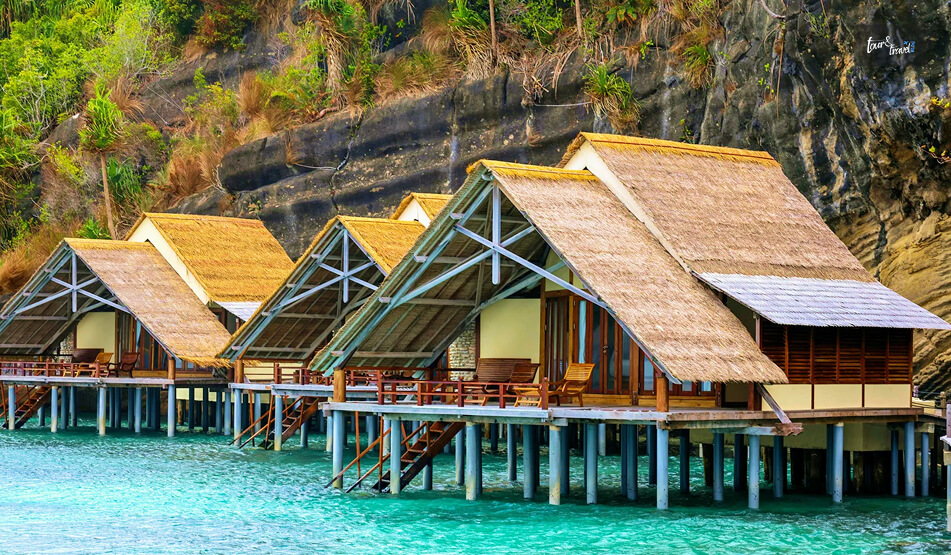
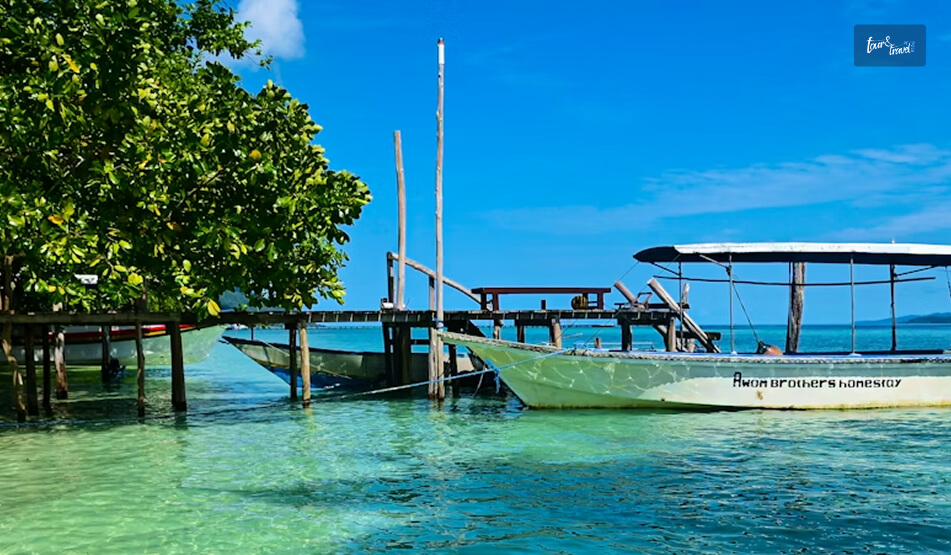
You can still have the best diving experience by staying at a $35/night local homestay and diving with a local PADI shop.
This “Homestay Dive Model” really works for smart divers and backpackers.
And you must know that this daily tariff includes three meals.
However, remember that when you book a resort, the airport transfer will be way smoother.
Most of the time, a resort boat will pick you up.
If you are planning to spend your days in a homestay, you will have to stand in a queue to get a public ferry ticket to reach the homestay from the airport.
Nevertheless, the hassle is completely worth it, as you will be spending a quarter of the amount a luxury resort will charge you.
Also, by staying in the homestays, you can support the growth of the local Papuan communities.
“Homestay businesses empower communities to take charge of their future, and the jobs created strengthen village economies.” – Stay Raja Ampat.
1. Understanding The Homestay System In Raja Ampat
“Stay Raja Ampat” is the go-to platform if you want to stay in a traditional Raja Ampat accommodation and take part in snorkeling and diving.
You can even indulge in wildlife spotting or just relax.
Arborek, Friwen, Gam, Kri, Waigeo, and Mansuar are some of the islands that host traditional Raja Ampat homestays.
You can follow the Stay Raja Ampat Facebook page to find homestays.
2. Understand The Fuel Surcharge Reality And Choose A Location That Needs Little Traveling
Fuel surcharge is a real concern for budget divers in Raja Ampat.
If you are staying away from the diving site, you will need to pay an extra $20-50.
So, it is smart to choose an accommodation near the diving site.
For example, if you want to dive in Cape Kri, choose a homestay on Kri Island.
3. Budget Homestays With Dive Shops
Some of the best homestays with dive shops are:
The Arborek Dive Homestay
Lagoon Homestay in Rufas
Pam (Fam) Islands
Dayan Dive Homestay Raja Ampat at Batanta
Pulau Dayan.
However, you cannot be complacent with your gear rental math.
Based on the type of gear you are taking on rent, the cost will be around $5 to $30.
The Liveaboards: The Most Accessible And Value-For-Money Accommodation For Divers In Raja Ampat
I have mentioned earlier that liveaboards in Raja Ampat are suitable for all types of divers.
Here, I will give you the cost breakdown of budget, mid-range, and luxury liveaboards.
If you want to know more about staying on liveaboards in Raja Ampat, you can read our Raja Ampat liveaboard tips.
1. Budget Liveaboards
If you are not too much into comfort, the budget liveaboards are ideal for you.
You will get a basic cabin, guided dives, and meals.
Additionally, you may have to share a bathroom, and you need to pay extra charges for nitrox.
2. Mid-Range Liveaboards
Mid-range liveaboards will cost you around $4500 per trip.
The dining facility here is better than the budget liveaboards.
Also, the dive decks are larger, and they have en-suite cabins.
So, the overall experience is comfortable but with a lesser pinch on your pocket than expected.
3. Luxury Liveaboards
If you are staying in luxury liveaboards, you will get spacious cabins, which you don’t need when you are traveling solo.
Anyway, luxury or the lack of it is the choice of the traveler.
Some liveaboard facilities can even offer you a spa facility, photography lessons, and personalized diving guides.
The average cost of these liveaboards is $5500-7500 per trip.
Cost Breakdown: The Unavoidable Expenses For A Diver In Raja Ampat
Irrespective of your choice to stay in a luxury resort, homestay, or liveaboard, you will have to make these expenses.
These expenses are related to diving, entry to marine parks, speedboat transfers, etc.
1. Marine Park Fee
Nine marine protection areas protect Raja Ampat.
Local villages and communities preserve these protected areas in collaboration with the conservation authorities.
So, you need to pay conservation permits when you enter these areas.
The amount you pay is spent on the following reasons.
Marine Patrol
Reef Protection
Community Development
The Permit Entry Raja Ampat, or PIN, is the main permit among these.
This is like a regional entry ticket that supports the community programs and the marine ecosystem.
2. Raja Ampat PIN Free
According to the last update in 2025, the PIN fee for international visitors is IDR 1,000,000, which is around USD 60.
Indonesian citizens, on the other hand, need to pay IDR 500,000 or USD 31 for the same.
There is no PIN charge for children below 12 years.
3. Diving & Travel Insurance
When you are diving deep and covering multiple dives in a day, there can be an emergency.
You may need urgent medical treatment or evacuation.
A diving insurance policy will help in such scenarios.
You can look for liveaboard companies that already include free or paid insurance in their charges.
4. Nitrox Charges
Nitrox is important, and the luxury liveaboards already offer nitrox for free.
However, if you are staying in a mid-range or budget liveaboard, you may need to pay around $15-25 for nitrox.
5. Gear Rentals
You need to pay extra charges to the liveaboard operator if you need to rent diving gear.
Based on the gear you are renting, the cost will be around $5 to 30.
Many divers, that’s why choose to carry their own gear.
However, that can be a concern for anyone traveling by flight.
Noone wants to pay the baggage charges.
Raja Ampat Budget Diving: Should I Rent Or Bring My Gear?
It is always better to carry light and essential gear for hygiene and to avoid extra expenses.
Furthermore, you can ensure a comfortable fit if you are carrying your own mask, snorkel, and fins.
Among the large gear, the wetsuit is something that you must carry.
It is better to carry the Buoyancy Control Device (BCD).
In fact, many diving centers offer you discounts if you carry your BCD and regulator.
Moreover, for visibility and safety, you must carry a Surface Marker Buoy (SMB), dive lights, and dive computers.
6. Crew Tips And Gratuities
Crew members work hard to make each trip a success.
So, tipping is not mandatory, but it is a way to show gratitude to them.
The Crew tips are usually 10% of the total trip price.
The tip you pay is equally distributed among the crew members.
7. Flights And Transfers
You need to take a domestic flight from Jakarta or Bali to reach Sorong.
The ticket charge is around $150 to $200.
The return ticket fare is even higher, around $270 to $400.
From the Sorong public port, Pelabuhan Rakyat, you need to take a public ferry (Bahari Express) to Waisai.
Waisai is the capital of Waigeo Island.
The ferries depart twice a day, at 9 AM and 2 PM.
The journey time is around 2 hours.
Moreover, the ticket price is IDR 250,000 for an air-conditioned VIP ticket, and it is IDR 125000 for the economy class.
Moreover, if you are boarding a private charter boat from Sorong to Raja Ampat, the ticket price will be around INR 350000.
What Are The Expert Tips On Raja Ampat Budget Diving?
Cash or card? What’s more convenient in Raja Ampat?
How should I remain connected throughout my Raja Ampat tours?
Find answers to all these queries and more in this Expert Tips section.
1. Ride The Bahari Express
Never take a speedboat from Sorong to Waisai.
The ticket for the air-conditioned section of these public ferries is even around 50% less than the speedboat ones.
Furthermore, it is faster and safer.
2. Stay On Kri Island
If you want to avoid the transport surcharge, you must stay on Kri Island.
Rental gear can cost around $5 to $30, and renting the gear is not the most hygienic solution.
So, you must bring your own mask and computer.
Moreover, many local shops offer a 10-15% discount if you have a full set of gear (BCD/Reg).
So, check airline baggage fees to see if the math works.
4. Sundays Are “No Dive” Days
Most local homestays and religious communities do not operate on Sundays.
So, you can consider Sundays as your “Surface Interval” and use them for birdwatching or cultural exploration.
5. Try Local Food
Try fresh seafood, rice, and tropical fruits in Raja Ampat.
Stick to Nasi Goreng (Fried Rice) or Pisang Goreng (Fried Bananas).
Moreover, meals are included in the homestay prices, and the homestays serve local food.
6. Buy The PIN At The Harbor
Buy the Marine Park PIN (Entry Fee) directly at the Waisai ferry port.
It will ensure that the money actually goes to conservation.
7. Negotiate “Walk-In” Dives
Are you traveling in the off-peak or low season from May to September?
Arrive and discuss a dive package in person.
Trust me!
Also, it works better than negotiations over email.
8. BYO Alcohol
Raja Ampat is a Muslim-Majority country, and alcohol is scarce and expensive here.
A bottle of beer here can cost around $5 to $8.
So, you must finish your duty-free alcohol shopping in Jakarta or Sorong before boarding the ferry.
9. Save On SIM Cards
You can avoid the hassle and cost of expensive international roaming by buying a Telkomsel SIM card at Sorong Airport.
Also, it is the only service provider to offer a reliable signal in the Raja Ampat islands.
Moreover, the charge is $10 for 15 GB of data.
10. Take Advantage Of Shared Boats When Traveling Solo
You can join Facebook groups such as Raja Ampat Independent Travelers to make your travel costs even less.
Check the group 2 weeks before your trip to find people interested in splitting the $100+ boat transfers from Waisai to their island.
11. The Cash Vs. Card Warning
Budget homestays in Raja Ampat will only accept cash.
You can use a budget calculator and know exactly how much IDR you will need.
You can withdraw the amount at Sorong before leaving for Raja Ampat.
Raja Ampat Budget Diving: Frequently Asked Questions (FAQs)
Here are the frequently asked questions and answers about Raja Ampat budget diving.
1. Is Shore Diving Possible In Raja Ampat?
Yes, shore diving is possible in Raja Ampat.
If you are a beginner and want to explore the shallow waters (around 5 meters), shore diving is ideal for you.
Cape Kri and Arborek Jetty in the Dampier Strait and Waigeo in the north are the best locations for shore diving in Raja Ampat.
2. Is Shore Diving Free In Raja Ampat?
No, shore diving is not free in Raja Ampat.
You will need to pay the boat fees and permits.
You will also need to pay to rent the gear.
However, if there is a snorkeling spot just off your homestay, you can do a free expedition without boat charges.
3. How Much Does A Budget Trip To Raja Ampat Cost?
A budget trip to Raja Ampat, focused on diving and snorkeling, will cost around $3000.
This cost includes accommodation charges, mandatory park entry fees, transportation charges, and gear rental fees.
4. Is It Cheaper To Do A Liveaboard Or Stay On Land?
If you are a serious diver, staying in a liveaboard is a more reasonable option for you.
You will get a budget liveaboard for around $2000 for a week.
Here, you don’t need to pay extra for transport, and meals are included in the package.
Moreover, being a home on the move, a liveaboard is time-efficient.
5. Can I Dive Without A Guard To Save Money?
Yes, if you are a certified diver, you can dive without a local guide to save money.
However, a local guide will help you with local knowledge.
They will help with information about entry and exit points, intensity of the current, and potential hazards such as coral and marine life.
Furthermore, if you are diving deep, there are always risks of equipment failure or sudden changes in weather.
Emergency response is crucial in these scenarios, and you will need a local guide.
6. Do Homestays Accept Credit Cards?
No, most homestays in Raja Ampat do not accept credit cards.
You will have to pay in local currency, Indonesian Rupiah.
There are no ATMs in Raja Ampat.
The last ATM you will get is at Sorong.
7. How Much Is A Single Dive In Raja Ampat?
A single dive in Raja Ampat will cost around $30 to $60.
The expense will depend on the diving location and the gear you will be renting.
Furthermore, the liveaboard you will be staying in, the cost of transportation, and the diving group size will determine the cost of a single dive in Raja Ampat.
8. Do I Need To Tip In Raja Ampat?
There is no mandatory rule for tipping in Raja Ampat.
However, there is a popular custom for paying tips to the crew members.
The tipping percentage is usually 10% of the total trip cost.
9. What Is The Cheapest Month To Fly To Sorong?
January, February, and October are the cheapest months to fly to Sorong.
These are like transitional months, with the beginning or toward the end of the peak season.
Sibashree is a travel, culture, and leisure writer who has been writing since the age of 12 and professionally since 2014. With more than a decade of travel writing experience and journeys across India and several parts of the world, she brings a deeply personal and thoughtful perspective to her work. A student of English Literature and Mass Communication, Sibashree has always viewed travel as more than movement — for her, it has been a way of understanding people, cultures, and herself. Her passion for spiritual exploration has also led her to many unusual and meaningful destinations over the years. Outside of writing, Sibashree enjoys watching European cinema, reading about global politics, and reflecting on the stories hidden within everyday places.
Great food!
Water Adventure!
Village Life!
Beaches and Salt Water!
You will get all these and more at Amed Bali.
The best thing about Amed is that it truly is a hidden gem, and the distance from the airports has saved it from overtourism.
It can be an ideal destination for slow tourism in Bali with authentic Balinese charm and a laid-back vibe of a fisherman’s village.
Moreover, a popular free diving and scuba diving hub, Amed, Bali, has reef sharks.
You can especially spot these creatures near the reefs of Bunutan and Jemeluk. However, here, sharks are not as frequent as in Nusa Penida.
Hi, in this Tour and Travel Blog, I will discuss the following areas about Amed, Bali.
Where Is Amed Bali?
Amed is located in the Karangasem Regency on the northeastern coast of Bali.
It consists of seven villages, which have unique geological features with black sand beaches.
The sand here is black in color as it gets mixed with volcanic ash.
Amed is blessed with the view of Mount Agung, and it offers a unique cultural experience with a traditional way of living practiced by the local fishermen.
Overall, Amed stands out as a quaint and more laid-back destination in comparison to many other bustling areas of Bali.
How To Get To Amed Bali?
You can reach Amed by bike from Ubud or Canggu.
From Ubud, it is a 2.5-hour drive to Amed. From Canggu, the journey will take 3 hours.
However, the drive from Padang Bai is the shortest. It takes only 1 hour and 30 minutes by bike.
The drive along the coastline and through the rice fields is an experience in itself.
Furthermore, you will meet many volcanoes and mountains on the way.
Moreover, if you are not comfortable with bike rides, you can use the Gojek app and book a cab to Amed, Bali.
Buses are also available from other cities in Bali to Amed.
What To Do In Amed Bali?
The best things to do in Amed, Bali depend on the kind of traveler you are.
Are you a sunset person? Or are you more into scuba diving and aquatic activities? Amed has got you covered.
1. Watching Sunrise At Lahangan Sweet
What a beginning to the day! Even if you are not an early riser, you will enjoy the sunrise views at Lahangan Sweet.
The Sun rising over Mount Agung is one of the most surreal scenes you will see in your life.
2. Snorkeling And Diving
View this post on Instagram A post shared by Irene Carrete ☀️ (@irwne)
Crystal-clear and calm water, along with the most beautiful reefs, make Amed the ideal spot for snorkeling and diving.
You can rent the scuba diving gear here for as little as $2.50.
3. A Boat Tour
You can hire a boat here to go to another place for snorkeling.
You can also take the boat and start a journey at Sunrise as a companion of the fishermen here.
Do fishing and enjoy the most unique perspective of Amed from the water.
4. Relaxing On The Beach
The beaches in Amed are less crowded when compared to Seminyak, Canggu, and other beach towns and villages of Bali.
So, you can just explore the traditional warungs here and have the best traditional Balinese food and drink.
5. Visiting The Tirta Gangga Water Palace
At a distance of around 30 minutes from Amed, Tirta Gangga Water Palace is a beautiful architectural site, and walking through its garden maze is a delightful experience.
The name of the palace shows the deep connection of Balinese culture with Hinduism, as Ganga, or the River Ganges, is the holiest river in Hinduism.
Furthermore, the water here is full of fish.
You can feed them and have some rejuvenation sessions with them.
The entry ticket to the palace is 50K IDR. You can also buy food for the fish here. Carry cash when visiting this beautiful palace.
6. Watch Sunset
Amed can give any other destination in the world a run for beautiful sunset views.
Jemeluk Bay and Sunset Point Amed are the best places to see sunsets in Amed, Bali.
Blue Earth Village and Joli Best View Cafe are some other notable places to enjoy the magic of sunset to the fullest.
Where To Stay In Amed Bali?
You can stay near Jemeluk Bay or Lipah Beach, as these two are the best snorkeling destinations in Amed, Bali.
Here, you will find homestays such as Warung Ombak homestay, which will offer you accommodation at around $28-30 per night.
What To Eat In Amed Bali?
View this post on Instagram A post shared by @sarahs_pl4te
Amed is a small town. So, the best way to try the delicacies here is by exploring the local shops.
However, you donot have to limit your food choices to Balinese food items only.
For example, if you are from the USA or Mexico, you can try tortillas at La Cocina Mexicana.
Similarly, if you want to gorge on fresh fish, you need to visit Warung Asri.
It serves the best Gado Gado in Bali, and it offers an amazing view as it is located on the water.
Amed also has some humble yet brilliant coffee shops. So, you now know where all of Amed hangs out!
Is Amed Bali Worth Visiting?
Yes, Amed Bali is worth visiting, with a wonderful fusion of underwater reefs, bright rays of the Sun, and beautiful beaches.
The beaches here exude a laid-back vibe, while the villages here harbor the most unique community cultures.
So, when you come back from Amed, your heart will be full and your mind full of wonder and awe.
Amed Bali: Frequently Asked Questions (FAQs)
Here are some frequently asked questions and answers about Amed Bali.
How Many Days Do You Need In Amed Bali? You can explore Amed Bali in 2-3 days. However, if you want a more immersive experience with activities such as snorkeling and a cultural encounter, you will need 4-7 days to visit Amed, Bali. Is Amed Bali Expensive? No, Amed is not expensive. It offers a taste of quiet luxury on a budget. A meal for two at a restaurant here will cost you only $30. The overall tour package will cost you something between $200 and $250. What To Wear In Amed Bali? Loose-fitting cotton and linen clothes are ideal for visiting Amed, Bali. However, if you are in your beachwear, you will need a sarong to cover your legs, and beachwear is not acceptable in the temples and rural areas. What Is The Best Time To Visit Amed Bali? April to October is the best time to visit Amed, Bali, due to mild weather conditions and moderate temperatures. Furthermore, sunny days and low rainfall make these months ideal for outdoor activities such as snorkeling and diving.
Read Also:
Bali Beyond The Beaches: Exploring The Hidden Gems Of The Island
Planning a Vacation to Bali? Read This Blog!
Bali vs Thailand: Which Place is Better?
Suzanne, a corporate professional and my colleague, all of 26, was back from what she called a “Trip to Paradise.” I knew that she was not exaggerating, as Raja Ampat is indeed called “The Last Paradise.” It also has the nickname, “The Amazon of the Seas.”
What else would you call a place that has close to 75% of the total coral and fish found in the world? Also, this massive archipelago, with a network of nine protected areas, has diving sites, which are around 100s of miles apart from each other.
The nine protected areas here are:
Dampier Strait MPA
Misool Islands MPA
Fam Islands MPA
West Waigeo MPA
Asia & Ayau Islands MPA
Mayalibit Bay MPA
Batanta Marine Park
Kofiau & Boo Islands MPA
Raja Ampat Islands and Surrounding Seas National MPA
Also, the main diving zones in Raja Ampat are Dampier Strait in the central region, Misool in the south, and the sites in the north. The diving resorts are mainly in and around the Dampier Strait, and Misool has one, the Misool Resort.
However, staying at a diving resort will never help create a diving route or itinerary between the northern and southern diving sites. That means, if you are staying in the central region near the Dampier Strait, you cannot practically travel to Misool in the south.
So, choosing a Raja Ampat liveaboard is not a luxury. It is a necessity to explore the full spectrum of diving fun Raja Ampat has to offer. And this guide will cut through the noise of booking aggregators and give you the practical Raja Ampat liveaboard tips you need to choose the right boat, the right season, and the right cabin.
Why You Must Choose The Liveaboards To See The “Real” Raja Ampat?
As I was saying, when you stay in a land-based diving resort in the central region and near the Dampier Strait, you can visit the iconic sites such as Cape Kri, but your access remains limited to a small radius.
However, with a liveaboard as your accommodation, you will get a moving diving platform, taking you to all corners of Raja Ampat.
1. Access To Misool
Misool, or the southern region of Raja Ampat, is home to the most beautiful soft corals in the world. Also, the Magic Mountain in Misool is the main Manta Ray site in Raja Ampat.
If you want to keep your activities limited to Misool, you can choose Misool Eco Resort as your accommodation. However, a liveaboard is a more feasible option here, and it will give you better mobility.
2. Access To Wayag
If you want to see the most dramatic limestone formations in Raja Ampat, you will have to dive at Wayag and other sites in the north.
Now, the northern diving sites of Raja Ampat are strictly liveaboard territories.
Furthermore, with a liveaboard as your accommodation, you can complete at least 3 to 4 dives in a day. For example, have your breakfast early in the morning, wait for 2 to 3 hours, and go for a dive.
Then, have your lunch, wait for two hours, and go for the afternoon dive. You can even go for a night dive.
What Are The Best Liveaboard Diving Trips In Raja Ampat? Choosing The Route And Three Main Itineraries
As a diver, I often get confused about the route. Will I go north? Will I go south? Or, should I go for a combined route with the north, central, and south routes?
Now, the best choice for the route of your diving trips in Raja Ampat will depend on the season and the kind of open ocean experience you are looking for.
1. The Best Of Everything: North And South Combined
Duration: 10 – 12 Nights
If you are a devoted and advanced diver who wants to tick off all the diving experiences, you must choose a combination of the north and south diving routes. This route comprises:
The Mantas of Misool
The Currents of Dampier
And The Lagoons of Wayag
However, if you are planning such an itinerary, you must be prepared to travel for and spend many nights in the open ocean. Moving between regions will not be an easy task.
2. The North & Central Route (Wayag & Dampier)
Duration: 7 – 9 Nights
The central route is accessible throughout the year. However, October to May is the ideal season if you want to combine the north and central routes. In the north, you can go for a combined Wayag lagoon hike and a pelagic-heavy diving below.
As you dive deeper, expect drift dives at The Passage. Furthermore, Blue Magic is the site where you will experience high current.
Also, the Dampier Strait is the hub of diving in Raja Ampat and Indonesia. However, if you want to avoid the crowd, Wayag will be your go-to destination. The water here is the most cinematic, with the sunlight changing the color of the water throughout the day.
3. The South Route (Misool)
Duration: 7-9 Nights
Protected by the Misool Islands MPA, Misool remains the “Photographer’s Route.” You will find large sea fans, huge schools of fish, and orange soft corals here.
However, Misool is only accessible during the dry season, and despite the presence of the Misool Eco Resort, liveaboards are the main accommodation here.
Misool is also an NTZ or No-Take Zone. As a result, it has helped in the revitalization of coral health and fish biomass.
Boo Windows and Magic Mountain are some of the iconic diving sites in Misool. Also, the Jellyfish Lake is a unique, secluded lagoon here. You can swim with non-stinging jellyfish here.
Choose Your Favorite Diving Route In Raja Ampat: A Quick Decision Matrix
Still confused about the best diving route to choose? Have a quick look at this decision matrix.
FeatureNorth (Wayag/Kawe)Central (Dampier)South (Misool)Primary Attraction• Topography• Lagoons• Pelagics• Fish Biomass• Currents• Soft and Colorful Corals • MantasTopside Scenery10/10 (Iconic Views)8/10 (Jungle Islands)9/10 (Karst Peaks)Water TemperatureWarm (28-30°C)Warm (28-30°C)Warm (28-30°C)Best ForAdventure & ViewsAdrenaline & Fish ActionPhotography & Color
Raja Ampat Liveaboard Tips: A Quick 5-Day Itinerary (Central And North Zones)
If you don’t have the time or budget to do a best-of-everything tour, you can choose a quick 5-Day central and north tour with the central and north zones in focus.
DaysLocation/RouteFocusDiving PlanKey Notes and Pro TipsDay 1Arrival in Sorong (SOQ)Logistics & RecoveryN/A• Arrival in Sorong via Jakarta (CGK) or Makassar (UPG).• Transfer to Swiss-Belhotel Sorong or A Similar Accommodation.• Assemble dive gear, test strobes, charge batteries.Day 2Sorong to Central Raja Ampat (Dampier Strait)Orientation and Easy Diving Two Dives and Optional Night Dive • Harbor Transfer in the Morning.• Board the Liveaboard and Get Done with Cabin Assignment and Safety Briefing.• Light Lunch Onboard.• Check Dives on Gentle Slopes and Bommies.• Conditions: Mild Current, Warm Water (28–29°C). • Night Dive on a Sheltered Reef or Jetty.Day 3Dampier StraitHigh-energy Fish & Currents. 3-4 Dives• Cape Kri (World-Record Fish Biomass)• Sardine Reef (Snapper & Barracuda Tornadoes)• Blue Magic (Manta Rays, Strong Current)• Optional Night Dive• Skills Required:Negative Entries and Reef Hook Proficiency.Day 4Dampier Strait to Kawe (North)Transition North and Scenery3 Dives• The Passage (Mangroves & Surreal Lighting).• Citrus Ridge (Soft Corals & Macro)• Afternoon Dive en Route North. • Evening Scenic Sail toward Kawe with Jungle Islands and Limestone Cliffs at Sunset. • Short, Comfortable Crossing.Day 5North Raja Ampat (Kawe & Wayag) to SorongIconic Raja Ampat Finale2 Dives• Black Rock (Sharks, Jacks, Heavy current).• Eagle Rock (Fish Explosions). • Optional Short Wayag Lagoon Viewpoint Visit if Weather Permits• Afternoon Return to Sorong. • No Same-Day International Flights.• Overnight stay recommended.
If You Are Going From The Central Zone To The South: A Reality Check
Remember that a journey from the diving sites in the central zone to the south is going to be logistically challenging. Exploring the south route itself takes around 7-9 days.
You have to cross the Seram Sea if you are traveling from the dive sites in the central zone to the south. I have not come across any guide that talks about this challenge.
Here, crossing the open sea is a 10-12-hour journey. You have to make a journey overnight.
October to March is the best time for diving in the central and south zones of Raja Ampat. However, there can be sudden storms or strong winds causing occasional disturbance in your diving sessions or during transitions.
Also, consider that there will be a 10-12-hour journey in the Open Sea. So, there can be sea sickness. So, you must start taking the medication before the captain announces the crossing. You don’t need to wait until you feel nauseous.
Budget Vs. Luxury Raja Ampat Liveaboard Tips: What Do You Actually Get?
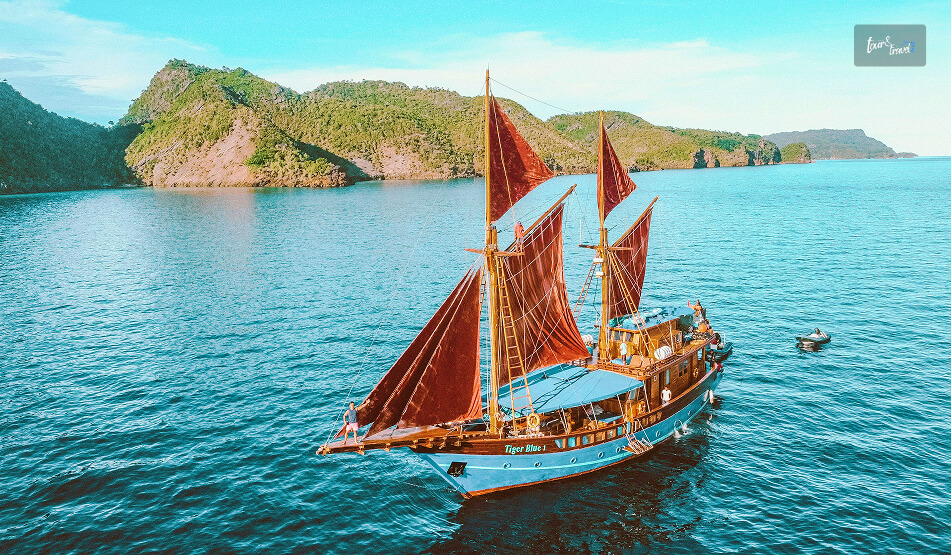
Liveaboards in Raja Ampat can be converted from traditional boats. These can also function as 5-star hotels. A student or a young professional, traveling solo, will, of course, opt for the budget-friendly converted boats.
On the other hand, the luxury liveaboards offer free satellite internet connection and free Nitrox. Here are the things you need to know about these liveaboards.
1. Budget Phinisis ($250 - $350/Night)
These are traditional Indonesian wooden schooners. You will get bunk beds in small cabins, and sometimes the bathroom facility will be shared. Also, you will get tasty but simple local food such as Nasi Goreng and fish.
However, these boats might have the dive deck at the front of the boat. Moreover, there is no dedicated camera room in these boats.
2. Mid-Range ($350 - $550/Night)
Boats such as The Mermaid or Black Manta fall into the mid-range liveaboard categories. Along with the amenities offered by the traditional and budget-friendly boats, these boats also have the following.
Nitrox Availability
En-suite Bathrooms with Hot Water
Western and Indonesian Buffet
3. Luxury Yachts ($600+/Night)
These luxury yachts have big master suites with ocean views. It also has jacuzzis on deck, massage therapists, and a 1:1 or 2:1 diver-to-guide ratio. Furthermore, it often includes free Nitrox and satellite internet.
However, you must remember that the engine room is almost always at the back of these luxury boats. To avoid this “Engine Room Trap,” you must choose a forward cabin and enjoy a quiet sleep.
You must avoid the lower decks and rear cabins. Otherwise, you will hear the noise of the engine, and you may even feel uncomfortable with the smell of the exhaust fumes.
Our Top 3 Liveaboards In Raja Ampat By Budget
Have a look at the table below to know about our pick of the top 3 liveaboards by budget.
Budget LevelBoat RecommendationWhy We Love It Budget FriendlyRaja Ampat Aggressor• Reputable Standard• Great Safety Record• Special RunsMid-Range ValueThe Mermaid II• Steel Hull, More Stable than Wood• Huge Dive Deck• Great FoodLuxuryDamai I or II• Choose Your Dive ItineraryHuge Cabins
Essential Practical Tips For Liveaboard Life
Managing the currents of the Indonesian water, the use of Nitrox, and camera table etiquette are the things you need to keep in mind for the ultimate liveaboard trips in Raja Ampat.
1. Manage The "Indonesian Throughflow" (Currents)
The current in the Raja Ampat waters is what brings the schools of fish. However, because of the current, diving in the water of Raja Ampat is a challenge.
Furthermore, in sites such as Blue Magic, you cannot float on the surface, adjusting your mask. You must roll back and descend immediately to grab the reef before the current sweeps you away.
In addition, you must have a reef hook when you are diving in the waters of Raja Ampat. You hook the reef hook into a dead rock and then float in the Raja Ampat water.
2. Nitrox: Luxury Or Necessity?
Don’t listen to anyone who says that Nitrox is a luxury. If you are attempting 3-4 dives for around 7-10 days, you will need nitrox, for sure.
Most diving spots in Raja Ampat have square profiles, meaning you have to remain deep in the water for a long time. So, you have to manage the nitrogen loading to reduce fatigue.
Unless you have boarded a luxury liveaboard, you may have to pay $150-$200 extra (per trip) to the boat for nitrox. So, consider this expense in your budget.
3. Camera Table Etiquette
Raja Ampat is the international hub for serious and professional photographers. The rigs and accessories they use are sometimes more expensive than cars.
So, you cannot keep anything wet on the photography table as it will have dry towels, o-rings, and expensive electronics.
The Logistics: Arrival, Departure, And Hidden Costs
Have a look at the table below to understand the “flight,” “airport chaos,” and more.
Arriving in Sorong (SOQ)• Sorong is the Gateway City. • It is a gritty industrial port.• It is not a tourist destination.Flights• Most flights arrive via Jakarta (CGK) or Makassar (UPG).The "Buffer Day" Rule• Domestic flights in Indonesia are notoriously delayed. • Do not fly in on the morning of your boat's departure. • Arrive one day early and stay at a hotel.Airport Chaos• You will have to say a lot of “No, thank you" and be firm to avoid the porters at the airport. • They will aggressively grab your bag.
The Hidden Costs: Raja Ampat Liveaboard Tips
When you are comparing the prices of Raja Ampat liveaboards, you have to consider the hidden costs. Otherwise, your budgeting will be in a soup.
Hidden CostsExpenses Marine Park & Harbor FeesAround $200 - $250 USD Per PersonYou will have to pay the amount in cash or by credit card on the boat. Fuel SurchargeThe Rise in fuel costs has led to a $150 - $200 USD surcharge.Crew TipsThis is the divers' salary. The standard is 10-15% of the charter price, paid in cash at the end of the trip.
That’s it! Get ready with your gear and budget your trip right, and enjoy an unforgettable diveaboard experience in Raja Ampat, Indonesia.
Raja Ampat Liveaboard Tips: Frequently Asked Questions (FAQs)
Here are the frequently asked questions and answers about the Raja Ampat liveaboard tips.
1. What Is The Best House Reef In Raja Ampat? Find a rich house reef at the front of the Raja Ampat Biodiversity Eco Resorts. This site is accessible by boats only, and based on the current, you will get to see the tip of the reef between two and five meters. Along with reef sharks, you will also find moray eels and turtles. Also, you can snorkel at this site at night to spot the walking shark or the Raja Ampat epaulette shark. 2. How Many Days Are Enough In Raja Ampat? You need at least 8-12 days for a trip to Raja Ampat. However, if you want, you can also do a quick 5-6-day diving expedition in the northern or central sections. Still, if you want to explore the entire south or a combination of the Dampier Strait diving and diving in the north zone (Wayag/Kawe), you will need at least 10 days. However, if you want to dive at the best sites of Raja Ampat, you will need more than 15 days. 3. Is Raja Ampat Okay For Beginner Divers? Yes, Raja Ampat has many diving sites for beginners and intermediate-level divers. The central Damier Strait region, especially, offers excellent visibility, but with a low current. Furthermore, the water here has many shallow reefs. So, you don’t need to get deep into the water.Also, at facilities such as At Raja Ampat Biodiversity Resort, beginners can get personalized training. Thus, you will feel confident and safe in the water, even if you are a beginner.
Read Also:
Is Amed Bali Worth Visiting? (Location, How To Reach, Things To Do, Nightlife, And More)
Is Munduk Bali Worth Visiting? (Direction, Things To Do, Unique Attractions, And More)
Bali vs Thailand: Which Place is Better?
The tourism scene of Nusa Penida, Bali, right now looks like a Bollywood potboiler. There is action, there is drama, and some special entries that will blow you away.
On one hand, there has been an ongoing construction work of a glass elevator at the Kelingking Beach of Nusa Penida. The beach is famous for its T. rex cliff. However, the trek to the beach involves steep ascending and descending, making the process physically demanding.
The glass elevator will, no doubt, resolve the problem. Still, the local people here are worried that the elevator will ruin nature, promote unnecessary commercialization of the beach, ruin the charm of the Kelingking Beach, and cause disastrous impacts in the long run. Furthermore, with rapid tourism development in Nusa Penida, the century-old practices of seaweed cultivation by women of Nusa Penida are impacted.
The women cultivators are now working with tourism operators and coral conservation groups to minimize the impact on their livelihood and, at large, on the ecosystem of Nusa Penida.
With these major environmental concerns, Nusa Penida continues to surprise us with incidents like the rare sighting of a great white shark at Pura Ped, a dive site on the northern shore of Nusa Penida.
Swedish divemaster Fabian Clinton recorded the incident in March 2025, and Sarah Taylor, a dive master of the same group, said,
‘The whole encounter was just amazing, unbelievable. There are no other words to describe it!
‘Seeing something in the blue, a shadow that none of us knew what it was (we thought it was a whale shark!) but when we did realise, we very quickly skipped back – what a great dive, a once-in-a-lifetime experience!”
Do you also want to experience the wonders of a Nusa Penida tour? Let’s plan a beautiful trip to this beautiful island in Bali, Indonesia.
Where Is Nusa Penida Island? (With A Brief Idea About Its Geography And Landscape)
Nusa Penida is a beautiful island in the Bali Province of Indonesia. It has an area of 200 km². Also, it became a part of a 20,057-hectare protected maritime zone in 2010 along with Nusa Lembongan and Nusa Ceningan. Furthermore, Nusa Penida is the largest among the Nusa Islands.
Nusa Penida is home to 576 species of reef fish.
It has 296 species of coral.
However, this data is like the tip of the iceberg to understand the biodiversity of the region. So, it is a favorite hub of diving enthusiasts, professional scuba divers and snorkelers.
The popular scuba diving points in Nusa Penida are:
Manta Point
Toyapakeh
Crystal Bay
Blue Corner
Gamat Bay
PED (Ped Village)
Manta Bay
The best thing about Nusa Penida is that it continues to maintain its pristine charm, despite the construction of the glass elevator and other commercialization efforts to support tourism.
So, even today, you can explore much of its biodiversity, including the 150-meter-high cliff on the Western Coast running into the sea.
On the other hand, the North Coast of Nusa Penida looks amazing with the views of Agung volcano, and it is also the epicenter of seaweed cultivation in Nusa Penida.
And of course, Nusa Penida has beautiful beaches such as Gamat Bay, Crystal Bay, Kelingking Beach, and Atuh & Diamond Beach.
How To Get To Nusa Penida?
Nusa Penida is well-connected to various ports in Bali. You can especially take a boat ride from Padang Bai and Sanur.
Here are more details about how to reach Nusa Penida from Bali and India.
How To Get To Nusa Penida From Bali?
You have to take a boat or ferry ride to Nusa Penida from Bali. The popular ports from where you will gets boats to Nusa Penida are:
Names of Bali BeachesHow Long Is The Boat Ride From Nusa Penida To Bali?Sanur Beach40 MinutesPadang Bai30-60 MinutesKusamba20 MinutesSerangan45-60 Minutes
The ferries running from different ports in Bali to Nusa Penida are equipped with life-saving jackets and other safety equipment. So, it does not matter whether you are traveling solo or in a group.
What Is The Cost Of Traveling To Nusa Penida From Bali?
The cost of traveling to Nusa Penida from a Balinese Port depends on the port you are traveling from.
For example, if you are traveling from Sanur, the fare will be roughly IDR 130000. On the other hand, from Kusamba, it will be between IDR 10000 and 150000.
Having said that, there are platforms like 12go, which offer a decent discount on the trip rides.
How Do I Go To Nusa Penida From India?
If you traveling to Nusa Penida from India, you will have to fly to the Ngurah Rai International Airport (Denpasar) in Bali. The airport is located at a distance of 50 km from Nusa Penida.
Also, as discussed, you can take a ferry from any of the above-discussed ports in Bali to Nusa Penida.
Why Is Nusa Penida Famous?
There are N number of reasons for Nusa Penida being a crown jewel in the tourism landscape of Bali. With its pristine beauty and a diversity of marine life, it is a part of a maritime protected area.
Furthermore, it is an island where the sea and cliffs meet, creating a perfect juxtaposition. However, talking about its landscape, it is probably now most in focus due to the T. rex viewpoint on the Kelingking beach.
In addition, Nusa Panida has the Bali Starling Sanctuary, which is home to the Bali starlings, which were once endangered.
However, Nusa Panida is not just about diverse landscapes, a rich marine life and underwater activities. It is also respected for its spiritual and cultural importance.
Here, I will mostly focus on these two aspects of the spiritual and cultural significance of Nusa Penida. I will talk about the natural wonders and things to do here in different sections.
Nusa Penida: A Spiritual Hub In Bali
View this post on Instagram A post shared by BALI LIVIN' (@balilivin)
Nusa Penida has many temples, which are significant for the Hindu communities living here. Furthermore, these temples have unique rituals.
Goa Giri Putri is one of the most important temples here. The temple is located inside a cave, and you have to enter through a narrow space here.
The most interesting thing here is going through the dozen stations for purification. The entire process can take up to 2.5 hours.
The Ped Temple is another important temple, and there are stories about the spirit of a demon being captive here.
However, the spiritual air of Nusa Penida is not just limited to the temples. You will also notice many spiritual festivals and events in several intimate settings in Nusa Penida.
Galungan and Kuningan are the two most important Hindu festivals here, celebrating the triumph of good over evil.
Also, Nusa Penida is a prominent place where animism, a belief that the spirit resides in all objects of nature, is a part of Nusa Penida’s spiritual habits.
Nusa Penida: A Cultural Hub
Nusa Penida is a cultural hub, and it is home to the Jangkang warrior dance and many other dance forms seen in various religious festivals.
Furthermore, Nusa Penida thrives on a strong community spirit.
Also, the women of Nusa Penida have been cultivating seaweeds here for hundreds of years. However, seaweed production has been a major concern in the last 10 years or so due to a change in the weather conditions and a sudden tourism boom.
Nyoman Mitri, a part of a community of seaweed-producing women in Nusa Penida, has said to Mongabay,
“It never used to be like this. It’s only been the last 10 years or so that rain has begun to seriously damage the seaweed.”
What Are The Places To Visit In Nusa Penida?
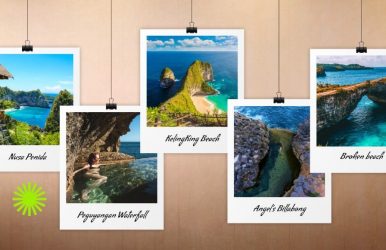
From the Teletubbies Hill and T.Rex cliff to the beautiful beaches! Nusa Penida offers more diversity than any other part of Bali.
Here are the most important landmarks of Nusa Penida.
Places to Visit In Nusa PenidaWhy Are These Places Special?KelingKing Beach• The T. rex cliff is a limestone cliff resembling a T. rex.Angel’s Billabong and Broken Beach• Adjacent to each other, these two places offer the most powerful coastal views. Diamond Beach• Turquoise Waters• Dramatic Sand Cliffs• Treehouse and Staircase ViewpointsAtuh Beach• A Relaxing Beach• Sunbeds are Available for RentPeguyangan Waterfall or Guyangan Waterfall• Hiking through a zigzag staircase, sticking to the cliffside• Dramatic ocean viewsTeletubbies Hill• Perfect for unwinding• Great Sunset views
What Are The Things To Do In Nusa Penida?
Hiking, scuba diving, temple visits, swimming, diving, and whatnot! However, it is the beaches of Nusa Penida that allow you to have the maximum outdoor fun.
Here, I will briefly talk about the scuba diving points in Nusa Penida and why you will love them.
Scuba Diving Points In Nusa PenidaThings to DoManta Point• Spot Manta Rays• SnorkelCrystal Bay• Spot Sunfish and Mola MolaToyapakeh• Vibrant Coral Gardens• A Diverse Marine LifeBlue Corner• Strong Currents• Ideal for Professional DiversGamat Bay• Ideal for Exploring the Rocky Seabed and Macro Photography• Spotting Rich Marine LifePED (Ped Village)• Swimming through Underwater Caves• Intimate and Quiet Diving Experience
Is It Worth Going To Nusa Penida?
Yes, Nusa Penida is definitely a place worth visiting. Assessing its importance as a tourism hub, the Indonesian Government has started many initiatives here for sustainable development.
Furthermore, Nusa Penida has been identified as the National Tourism Strategic Area (Kawasan Strategis Pariwisata Nasional or KSPN). So, it continues to open new avenues of revenue and funding in Nusa Penida.
Moreover, Nusa Penida, with its pristine nature and a rich spiritual heritage, is trying to capitalize on the growing demand for eco-luxury among new-age travelers.
Nusa Penida Island is undoubtedly a dream destination for travelers. Its pristine beauty and abundant marine life complement each other, and its unique landscapes and rich cultural heritage will leave you captivated.
If you want to treasure this beautiful experience forever, you might as well customize an exclusive travel pin. Simply order online and receive your personalized pin in no time. Custom lapel pins can be engraved with the majestic silhouette of a Tyrannosaurus Rex cliff, or infused with vibrant marine life, embellished with the mystical symbols of a temple.
Every time you look at these pins, your wondrous journey to Nusa Penida Island will be vividly remembered, becoming a cherished memory forever.
Nusa Penida Island: Frequently Asked Questions (FAQs)
Here are some frequently asked questions and answers about Nusa Penida Island.
Is Nusa Penida A Part Of Bali? Yes, Nusa Penida is a part of the Province of Bali. It is a part of the Klungkung Regency of the Bali Province in Indonesia. 2. How Much Time Is Enough For Nusa Penida? You at least need 2 days and three nights to explore Nusa Penida. However, to explore the hidden gems, you have to spend at least 7 days in Nusa Penida. 3. Can You Swim In Nusa Penida? Yes, you can swim in certain areas of Nusa Penida. Manta Bay, Crystal Bay, Angel's Billabong, and Toyapakeh Wall are safe for swimming. However, be aware of strong currents and always check local weather conditions. 4. How Much Time Is It From Ubud To Nusa Penida? Traveling from Ubud to Nusa Penida involves traveling to any of the Ports by road and then a ferry ride to Nusa Penida. For example, a journey from Ubud to Sanur will take 1 hour and 35 minutes by road and then a 40-minute ferry ride. 5. Is Nusa Penida Safe To Stay And Travel? Yes, Nusa Penida is safe to travel to. However, rugged and unpaved pathways and sudden changes in weather conditions, especially from November to March, remain major risk factors here. Moreover, many of Nusa Penida's beaches and natural pools, such as Angel's Billabong, are not suitable for swimming due to strong currents and rocky terrain. Always follow safety guidelines and avoid swimming in dangerous areas. 6. Where To Stay In Nusa Penida? The Northwest Coast, with areas such as Sampalan, Ped, and Toyapakeh, is the best place to stay in Nusa Penida. The Crystal Bay Area and the Eastern Coast, with places such as Atuh Beach and Batununggul, are the best places to stay for tourists and local residents. Moreover, the Eastern Coast area has the most luxurious Nusa Penida hotels.
Read Also:
Bali vs Thailand: Which Place is Better?
These Exotic Places To Travel Are Unusual: Explore The Must-Visits Around The World
3 Reasons Why Thailand Is The Ultimate Wellness Destination





 Related