










The honeymoon is the first vacation you two are going on as a couple. So it will always hold a special place in your memories. Lone time with your partner and a lot of romance will surely spice things up and strengthen the bond between the two.
You can, however, make it even more special and a truly memorable affair with a smart honeymoon travel guide. Whether you have decided to take charge of bookings and sightseeing or are looking for Kerala honeymoon packages, here are a few tips to consider in your plan to have the perfect honeymoon.
“That honeymoon phase is so much fun in real life when you meet and discover somebody new and fall in love and chase them. The pursuit. And that climactic final moment of ultimate togetherness.”
Honeymoon Travel Guide: 15+ Things You Must Not Miss
Honeymooners! Check out the things to do on the most romantic trips from our honeymoon travel guide.
1. Do Activities Together:
The trend of doing something different with your partner is really popular. It takes place more among couples who book Andaman, Goa, and Kerala honeymoon tours.
Adventure activities top the list of things to do on your honeymoon. You can do skydiving, paragliding, and scuba diving with your partner, and we are certain that memories will be cherished forever.
2. Dance the Night Away:
Dancing with your partner can be the most romantic thing to do on the honeymoon. It brings hearts closer, and you will love spending intimate and quality time with each other. In for some Bridgerton moments?
Check out the most happening clubs in your honeymoon destination. Spare some time to spend with your partner on the dance floors.
3. Plan in Advance:
Do you have a thorough idea of the honeymoon destination, places to visit, things to do, and how to spend each day?
It is one of the things to make your vacation more fun and relaxing. It saves a lot of time to book or plan something while you are at the destination.
You can get help from Kerala honeymoon packages to learn more about the destination. Make sure that you leave some downtime during the honeymoon.
4. Plan a Surprise:
It is true that a honeymoon is one of the rare times in life when you will be really free to spend all the time with your partner. Use this opportunity to follow this honeymoon travel guide to be extra romantic. You can book a table for a romantic candlelight dinner with your partner.
You can also get chocolates or flowers delivered to your partner in the hotel room. Just look for a unique or new thing that will add life to your honeymoon. It can be more interesting if you understand what interests your partner the most and stick to his or her desires.
5. Choose a Bed and Breakfast
This tip is for those planning a honeymoon on their own. Instead of staying in a traditional hotel, book a bed and breakfast. You will feel more pampered as these places are small and intimate.
The host will take care of even the minutest need and make the two of you feel more special.
6. Plan Some Treats at the Airport
You could be flying economy, but you can pre-book an airport lounge that will allow you to escape the crowded terminal.
It can help you to get free snacks and drinks, comfy armchairs, and newspapers. The choice you make depends on the airline that you are flying.
7. Check In Early
You need to avoid a last-minute rush by leaving plenty of time to check in. Gone are the days when you would find airlines upgrading honeymooners. You may find yourself sitting in a different location with your spouse because of delays in booking your flight.
Therefore, do your due diligence because little can be done late, even if you are a honeymooner. You can check for the latest shopping and dining opportunities once you are done checking in.
8. Prepare a Honeymoon List
Study for the best ideas on the available wedding gift lists. Instead of getting crockery and cutlery, you can request your guests to treat you to romantic add-ons and help you pay for your honeymoon.
Therefore, you can request your friends and relatives to contribute toward your honeymoon package. There are several places that can help you to learn more about wedding gift ideas.
9. Upgrade Your Transfers
Upgrading your transfers will be my honeymoon travel guide for you. Instead of getting a regular minibus or taxi from the airport to the hotel, you can either upgrade to a speedboat or limousine. I have also seen some people book a helicopter transfer.
It is a fast and efficient way to move to your preferred honeymoon location. The cost will vary depending on the service provider that you choose and the distance.
10. Book a Special Room
Most hotels have various categories of rooms. For instance, you may upgrade to a suite if you want rooms that are worth and truly special for your honeymoon.
You can use people who have been to these destinations previously to give you some of the best ideas for special rooms. You will need a place that will give you an uninterrupted experience.
11. Do Not Stay in One Place
When you have a two-centered honeymoon, you will get the best from the destination. You will also have so many memories to carry home. You can try a beach-plus safari combination or island hopping.
It is good to see the various sides of your honeymoon destination. Most experiences are two worlds apart, even if they are just a few minutes’ drive away. You can also get married on one Island and spend your honeymoon on another.
12. Get the Right Combination
If you are going for a two-center honeymoon, make sure you know the best way to combine it. It is a mistake to book a relaxation or adventure combo but leave out the relaxation slice until the end.
It’s advisable to start by organizing for a relaxation time to help you combat the post-wedding exhaustion.
It is a magical thing to head off for a safari. However, we don’t recommend newlyweds expose themselves to frighteningly early starts and alarm calls. You can do some tropical beach to get alerts and charge for the days that you will be in the bush.
13. Inform the Hotel
If the staff at the hotel are aware that you are on honeymoon, they may request that you be upgraded to a better room. Most five-star hotels will put chocolates, a bottle of champagne, and flowers in the room upon your arrival.
You may also get some extras like the complimentary private candlelit dinner as long as you make them aware.
Even the low-grade hotels try to add some extra touch, especially if you have some imagination or care. Ask them what they can do as you plan your booking and gauge their reaction.
14. No Need to Over-do it
You may find yourself planning so much for a trip that happens once in a lifetime. Make sure you take your time while planning for your honeymoon. Most honeymooners find themselves moving so fast because they want to get the best from their destination.
Remember, the buildup of your wedding will make you exhausted. You will also experience jet lags, and hence, you need to leave some time for leisure. You need to take time to soak up all that took place in the past few weeks or months and recover fully.
15. Book for a First-Night Restaurant
If you are on a first night away, book a romantic dinner table together. It may sound simple, but it is an essential element for the perfect honeymoon.
In most hotels, people book these services in advance. Therefore, it is good to go for early reservations so as to prepare your table in advance.
16. Book a Spa Treatment for Couples
Even if you are not a fanatic of spas, it is good to venture into the hotel spa if there is one. These spas have come on bounds and leaps over the past few years. It is an indulging journey where you can begin with the side-by-side treatment before going for a pedal-strewn bath for the two of you.
Some of the hotels offer private suites for couples to help them enjoy champagne. These suites also give couples enough space and time to relax around treatments. Do some research, and you will find something that will meet your needs with a high level of precision.
Summing up our honeymoon travel guide, I must say that you should look for a tour operator who can plan a customized vacation for you. This way, you will be saved from the hassle of arranging everything independently and can focus more on wedding planning.
Honeymoon Travel Guide | Best Places To Visit With Your Spouse (Instagram Favorites)
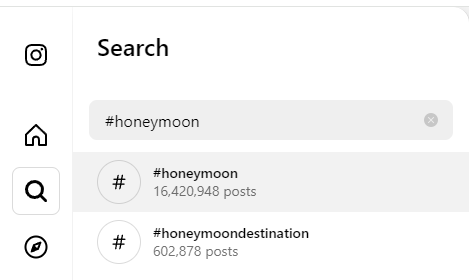
With millions (billions?) of Instagram hashtags of “Honeymoon,” the social media platform shapes the romantic interludes of Gen Z and Millennial couples. Let’s be honest! Many of our Honeymoon bucket lists are inspired by what we see on Instagram.
As I pen down this article, I see that there are exactly 16,420,948 hashtags for “Honeymoon” on Instagram. Further, #honeymoondestination is a distance second with a count of 602878 posts.
Here, I have curated the coolest destinations for you (in random orders).
1. #Bali
Instagram Posts: 73855347
Bali, Indonesia, is the biggest draw for honeymooners around the world. The sunset view at Seminyak is ethereal, and soaking in the red light here is the best thing you can do to ignite passion.
Further, Pura Lempuyang and the Hanging Gardens of Ubud are some other gorgeous destinations in Bali. Take selfies or snaps of the most scenic landscape to have the best captures for your socials.
2. #Maldives
Instagram Posts:11714083
Visiting the Maldives for a honeymoon is a dream-come-true moment true for many young couples. The pristine beaches and beautiful lagoons here set the perfect backdrop for romance.
Further, you cannot miss the sunset views for the most romantic experience.
3. #Thailand
Instagram Posts: 80490105
Thailand offers the most eclectic experience based on the number of days you spend here and the kind of experience you want. The Phi Phi Islands are the biggest attractions for honeymooners and couples.
However, for couples who enjoy a whiff of history, the ancient ruins and royal places are the bigger draws.
4. #Santorini
Instagram Posts: 8226044
Who does not want to visit Santorini in the Aegean Sea? This volcanic Greek Island and its white houses with blue roofs are sensations of all social media platforms.
The sunrise and sunset views at Santorini are amazing, and every house on the island is painted in the warmest shade of red.
5. #Mexico
Instagram Posts:103924218
Mexico is a wonderful fusion of the old and new worlds. It has ancient places like Chichen Itza from the Mayan Civilization and a more playful experience at the white sandy beaches.
Abdul Aziz Mondol is a professional blogger who is having a colossal interest in writing blogs and other jones of calligraphies. In terms of his professional commitments, he loves to share content related to business, finance, technology, and the gaming niche.
Travel is not a thing to be taken lightly. The ability to explore the world is well and truly a privilege, born of new travel capabilities and ever-more global communities. Travel is a gift – but choosing where to travel can feel like something of a course. Say you’re looking for somewhere utterly beautiful to visit; where should you go?
Any list of this nature is unavoidably subjective; beautiful places are often bucket-list places, fanned out across a wide-open world and which appeal to very specific sensibilities. Someone who sees the delicate nature of life through the coral reefs of Sharm El-Sheikh might not find that same sublimity in the harsh expanse of the Grand Canyon.
As such, this list doesn’t seek to define or even rank ‘beauty’ from destination to destination. Rather, it’s designed to be a crib sheet – a handy guide by which to inform your own decision-making, should you be planning the trip of a lifetime. And these are just a handful of suggestions, too!
The Azores, Portugal
The Azores are Portuguese territory, but a far cry from the Iberian Peninsula. These nine volcanic islands are way out in the mid-Atlantic Ocean, boasting some of the most incredible island landscapes of the entire world. Secluded bays, beautiful villages, unspoiled sands and so much more await the intrepid traveler.
A private jet rental can bring you to the quiet runways of Ponta Delgada in consummate luxury – from where you can enjoy the unusually lush green landscape that surrounds you. The Lago das Sete Cidades, a crater lake of indescribable magnificence, is a short hop away and unlike anything you have ever seen before.
Arashiyama Bamboo Grove – Kyoto, Japan
On practically the opposite side of the globe, Japan plays host to an incredible array of stunning views and sublime locales. It is especially hard to choose between them, particularly when so much of Japan’s landscape is forever immortalized in art and pop culture. One stand-out bucket-list location is an unassuming one in comparison, but no less popular for its size.
The Arashiyama Bamboo Grove, nestled in the suburban northwest of Kyoto, is a stunning forest of pure green bamboo. Paths run through the trees, allowing you to soak in this utterly unique forest experience – with an outside chance of meeting a few monkeys in the process.
Reynisfjara, Iceland
I challenge you to find any destination in Iceland that is not an emotionally moving location or landscape. Reynisfjara stands apart from the jagged volcanism of the inland, though, being a black sand beach that is every bit as mesmerizing in person as it is in the pictures. Iceland is worth a tour of its own, but Reynisfjara should be high on your list of places to visit.
Banff National Park, Canada
While globe-hopping can help with getting up close to the best sights on the planet, there are those that are little more than a stone’s throw away. A brief stint north of the border could take you to Banff National Park in Canada, where you can explore the Rockies like nowhere else: above and below. This mountainous terrain hides incredible views, stunning glacier lakes, and a network of caves and basins that defy your eyes.
Read Also:
How To Plan A Best One-Day Trip To Atlanta With Family?
What Is Most Likely To Cause Someone To Fall Overboard?
Top 10 Scenic Snowflake Cities In The U.S. To Travel To This Winter
Are you planning to go on a long road trip? Then, you might want to start by checking the vehicle you are planning to travel in.
Having the right vehicle can travel long distances and can make your road journey so much easier.
Before you start your road trip, you must first check if your vehicle is in best of condition.
You must check that your tyres have adequate pressure. At the same time, you must look for the point to check the essential components of your vehicle. This can help you manage the long, tiresome road journey with ease. This prevents your car from breaking down and causing delays in your journey.
You also lose money when your car breaks down mid-way on your road trip due to repairs.
Simple car checks with a microfibre towel and other cleaning supplies can make a world of difference.
When you have taken adequate preparation and care for your vehicle before your long road trip, you ensure safety.
You want to reach your destination on time and safely, especially if you are travelling with your loved ones.
his article provides the key inspections to perform on your vehicle before any long-distance trip.
These key inspections during car checks before a long journey include examining fluid levels and assessing tyre condition. The inspections also include tread depth, and conducting general maintenance checks for a smooth road trip experience.
Inspect and Maintain Fluids
Here is how you inspect and maintain fluid changes before embarking on your long journey. These car checks before a long journey ensure you have a worry-free road trip.
Check Engine Oil Level and Quality
You can start by checking your engine oil level and quality before embarking on your long journey.
Try to locate the dipstick and remove it while the engine is cool. Then, wipe the dipstick with a rag or cloth before reinserting it. After a minute, again, pull out the dipstick to check the oil level.
Your dipstick should have an oil level between the minimum and maximum marks for a quality ride. If the oil level is below the minimum, then you will need to top up the recommended oil type.
You will need to follow the vehicle's manual to top up with the recommended oil type and quantity.
Also, inspect the oil's color and consistency of your car and look for golden to light brown color.
These colors indicate your oil is fresh. As your engine oil gets older, it gets darker, signifying degraded oil quality that needs changing.
Consider an oil change service to ensure your engine lubrication and performance is smooth during your trip.
Check Coolant/Radiator Fluid Level and Condition
One key car check before a long journey is to check the level and condition of the cooler and radiator fluid.
The trip may be quite long, and you will have to spend maximum time in your vehicle. In that case, you must ensure the coolant and radiators are working properly. See that they are in perfect condition.
Your coolant or antifreeze are the essential components in your car that control the temperature of your engine.
It helps your car function properly during freezing temperatures. You can check your coolant when your car engine is cool. Just check the fluid level against the minimum and maximum markings, similar to an engine oil check.
You can top up with a premixed coolant solution if you are traveling to a colder region. Just follow the manufacturer's recommended coolant type and mixture ratio.
Also, inspect the coolant's colour and clarity to ensure your coolant is fresh. Colours bright or light green, while being discoloured, rusty, or opaque, indicate degraded coolant.
So, you will need to consider a coolant flush service to replace the old fluid. This ensures efficient heat transfer during your journey.
Check Brake Fluid Level and Condition
Among essential car checks before a long journey, maintaining the proper brake fluid level in your car is crucial.
The proper conditions of the brake fluid levels ensure optimum performance of your brakes, which is essential in long journeys.
Furthermore, you can check your vehicle's fluid levels to ensure the right condition. You could do this by locating the brake fluid reservoir. You can find this reservoir through the "BRAKE" symbol atop it. Then, you must look for the colour and clarity of the brake fluid.
Do you think your car's brake fluid level is between the minimum and maximum markings? It is an indicator that your brake fluid is in proper condition.
You need to change the fluids of your brake and change them if they have turned dark in color.
Darker and opaque brake fluid indicates that the fluid is no longer in the best of conditions. It can hamper brake function.
So replace degraded brake fluid with fresh brake fluid specific to your vehicle's needs. This ensures smooth brake function when you are on long road trips.
Check the Power Steering Fluid Level and Condition
The next car check before a long journey is checking the power steering fluid and its condition. This ensures that the power steering is in top condition and that any mishaps can be avoided while making the right turn and parking the vehicle.
Also, take a close look at the condition of the car's steering. It is marked with a steering wheel symbol.
Now, look at the fluid levels. It should be between the minimum and maximum markings.
It's the right time to examine the colour of the fluid in the steering wheel. It helps you understand whether the steering wheel is in good condition.
If the fluid's color is reddish or pinkish, it means the steering fluid is in good condition and suitable for longer distances. On the other hand, dark or opaque colour indicates contaminated fluids. It's time to change the fluids.
You can also opt for a professional power fluid flush service to replace the old fluids and upgrade the functionality of the steering.
Check Transmission Fluid Level and Condition
You must check the transmission fluid level to see if your vehicle has automatic transmissions.
At the same time, you must go through the vehicle's manual and then take the right reference from the vehicle's manual. This specific procedure of checking the transmission fluid level is effective.
However, you generally need to keep your car engine running and the transmission in a particular gear. Then, you need to check the fluid level and condition of the transmission.
Once you have identified the dipstick, look at the level of fluid between the minimum and maximum markings.
At the same time, take a look at the colour and clarity. The colour of the transmission fluid, in optimum condition, should appear reddish or pinkish.
On the other hand, dark fluid colours may point fingers at the degradation or contamination.
If the fluid appears compromised, then you have to consider the decision to transmit fluid flush service to change the fluid immediately.
Remember, the smooth gear shifting during your trip determines the safety and ease of the driver on longer routes.
Top Up or Flush Fluids as Needed
After inspecting all the critical fluid levels and conditions, top up any low fluids with the recommended types and quantities. Follow the specifications in your vehicle's owner's manual.
If you see that the fluids' colours are contaminated, it's an indicator of replacement. Hence, consider using a flush service to replace the old fluid to get the best performance.
Please remember that considering the health and condition of the fluids in the vehicle ensures the most optimal vehicle performance.
At the same time, it is an indicator of the safety and longevity of your vehicle, especially during long journeys.
By addressing issues related to fluids in your vehicle you can reduce the risk of component failures or breakdowns. In addition, it can help you enjoy a smooth and reliable driving experience.
Check and Replace Tires
Consider the points related to tyre conditions, as they are the most important component related to your vehicle's mobility.
Inspect Tire Tread Depth and Condition
Ensuring adequate tyre tread depth is the key to maintaining proper traction and safety on the road. It is helpful mainly on long routes.
The minimum depth, which is a must for all cars in Europe in general and the UK in particular, is 1.6mm across three-quarters of the tyre.
However, experts advise that tyres must be replaced when the tread depth reaches around 3mm.
Conduct the 20p Test: First, insert a 20p coin into the main tread grooves of your tires. Can see the outer border of the coin? it indicates that the time to replace the tyre is approaching. Or you can say it has already reached the legal minimum tread depth.
Secondly, check for Indicators of Tread Wear. Many tires have indicators of tread wear, such as raised bars or groove markings. However, the right approach signifies that the tire has reached the legal tread depth, and now it's time to replace it.
Thirdly, use a Tread Depth Gauge: Invest in a tread depth gauge. It is a specialized tool that measures the depth of individual tread grooves with the utmost accuracy. These gauges provide the most precise readings. Mover, they helps understand the right time for the tyre to be replaced.
In addition to tread depth, check your tyre properly for any signs of damage, like bulges, cuts, or uneven wear patterns.
These issues can compromise the integrity of the tires and increase the risk of blowouts or other issues during your journey.
Check Tire Air Pressure
Properly inflated fuels enhance efficiency. Moreover, it enhances handling, stability, and, finally, overall safety.
You must make an effort to check tire pressure on a regular basis. It is a must, especially when you are embarking on a long journey.
Tire Pressure Check Steps1. First, go through the manual of the vehicle's owner or the sticker on the driver's door jamb. There, you will find the right recommendation on tyre pressure.2. Now, ake use of a tyre pressure gauge of the highest quality. It helps to measure the pressure of the tyre when they are cold (after at least 3-4 hours of non-driving).3. Press the gauge firmly by removing the valve stem caps from the valve stem. It can help you to obtain the most accurate reading.4. Adjust the pressure of the tyre, either by inflating it with an air compressor or deflating it with a metal pin on the valve stem.5. After you have made the required adjustments with air pressure, recheck the tire pressure to ensure it's within the recommended range.6. Finally, don't forget to have a look and then adjust the tyre's pressure as well.
Please keep in mind that maintaining the tire pressure is one of the steps to enhance safety.
Besides, it also contributes to better fuel efficiency and then extends the lifespan of your tyres.
Rotate Tires if Due
Tire rotation is one key maintenance practice that helps achieve even wear across all four tires.
Tires wear differently depending on their positions. The front tires wear faster because they have to ensure the effect of the additional steering and braking forces.
By rotating the tires at the recommended intervals (typically every 5,000 to 8,000 miles or as specified in your vehicle's owner's manual), you can distribute the tire wear more evenly.
Ultimately, this helps attain the extended overall life of your tires and maintain optimal handling and stability.
Replace Tires if Needed
If your tires are excessively worn or have reached the legal minimum tread depth, it is a clear indication of replacement. This is a must before you start your long journey. Driving with bald or severely worn tires is detrimental and life-threatening. But also, if you are caught on the highways, it will result in hefty fines and potential license penalties.
When replacing the old ones, you must consider investing in high-quality, reputable brands that offer superior performance and longer life.
Additionally, you can replace all four tires one at a time, which ensures persistent handling and traction.
With these guidelines, you can regularly inspect and maintain your tires, ensuring a safe and enjoyable journey. Also you can easily bring down the risk of breakdowns or accidents caused by tire-related issues.
Perform General Maintenance Checks
Here are some important points that you need to consider when we discuss the general maintenance checks. Let's review them all here.
Check Brake Pads and Replace if Needed
Take a thorough look at your vehicle's brakes, which are in the best of condition. It is one of the key points attached to a safe and secure journey.
So you must take a look at the brake pads and replace them, if necessary when you start a new journey. Here's what you need to do:
Park your car on a level surface and engage the parking brake.
Also, look at the brake pads through the wheel. You must be able to see them pressing against the brake disc.
Thoroughly check the thickness of the material that makes the brake pad. Most manufacturers recommend replacing the brake pads when the friction material is reduced to approximately 3mm or less.
Look for any signs of uneven wear and examine the brake pads' cracks closely.
It's better to get new brake pads if they appear to be excessively worn out or damaged.
Additionally, be attentive to any warning signs that may indicate worn brake pads, such as:
A high-pitched screeching or grinding noise when applying the brakes could indicate that the brake pad wear indicator is making contact with the brake disc.
Increased brake pedal travel or a "spongy" feeling when pressing the brake pedal which could signify that the brake pads need replacement.
However, you may notice any of these warning signs or if the brake pad material is worn down to the recommended replacement level. Hence, it it's crucial to have the brake pads replaced before embarking on your long journey.
Inspect and Replace Air Filters (Engine and Cabin)
Clean air filters are essential for optimal engine performance and cabin air quality. Before your trip, inspect and replace both the engine air filter and the cabin air filter if necessary.
Engine Air Filter:
Locate the engine air filter housing, typically a rectangular box near the engine compartment.
Open the housing and remove the air filter.
Hold the filter up to a light source and check for excessive dirt or clogging.
If the filter appears excessively dirty or clogged, replace it with a new one.
Cabin Air Filter:
Consult your owner's manual to locate the cabin air filter, which is usually behind the glove compartment or under the dashboard.
Remove the old cabin air filter and inspect it for dirt, debris, or discolouration.
If the cabin air filter appears dirty or clogged, replace it with a new one.
Replacing both the engine and cabin air filters can improve fuel efficiency, engine performance, and cabin air quality. Alongside, it also ensures a more comfortable and enjoyable journey.
Check Lights (Headlights, Taillights, Turn Signals)
One of the most essential components that determines your vehicle's safety is the lights.
They are the ones who are responsible for providing peace of mind and the most comfortable journeys. So, before your trip, perform a thorough check of all exterior lights, including:
Headlights:
First, turn the vehicle light on. Then, take a walk around the vehicle. This technique ensures that the lights are working properly.
Check for cracks in the lights. Also, look for moisture buildup or discoloration of the headlight lenses.
Taillights:
If you have a friend or an acquaintance, you could ask them to stand behind the vehicle. However, at this point, you could activate the brake pedal to check the lights' functioning properly.
Also, check the reverse lights by engaging the reverse gear.
Turn Signals:
On the turn signals first. Then, take a walk around the vehicle. See if the front and rear turn signal lights are working properly.
Is your vehicle's lights blinking rapidly? The bulbs might have burnt out.
Other Lights:
Have you thoroughly checked the license plate lights, side marker lights, and other exterior lights of your car?
Replace the malfunctioning or burnt-out bulbs promptly. It ensures optimal visibility and ultimate compliance with legal requirements.
Inspect Belts, Hoses and Replace if Needed
Belts and hoses in your vehicle ensure the proper functioning of the cooling system and vehicle's engine.
Hence, these components must be included in the inspection list. You must not compromise on safety and replace them if necessary.
Belts:
Pinpoint the serpentine belt(s) in your engine compartment.
Look for a potential cracking, fraying, or excessive wearing of your belt.
Apply moderate pressure to see the tension of the belt. Do it with your finger. The belt should deflect only a little, not much.
Belts with wear and tear and improper tension must be replaced.
Hoses:
Inspect all coolant hoses, including the radiator hose, heater hoses, and any other visible hoses in the engine compartment.
Look for signs of leakage, cracks, bulges, or any deterioration.
Gently squeeze the hoses. It will enable you to check for any, internal degradation. Soft or spongy areas indicate the problem.
Replace the worn-out hoses immediately.
Replacing the hoses and worn belts can stop costly repairs and sudden breakdowns during your journey. Ultimately, you can enjoy a reliable driving experience.
Conclusion
You have to check the vehicle from every aspect, especially the once-involved long journey. This can be helpful in making an enjoyable trip. Check your vehicle brakes, tires, and lights.
Also, give a look at the maintenance fluids and the critical components that determine the safety of the vehicle.
If you are looking to make the long trip a memorable event, then you have to invest your time. Take a microscopic look at the aspects of the vehicle's conditions given above.
The steps on the entire preparation on thorough checking of the vehicle can be tedious as it is time-consuming. But at the cost of it, you can ensure your vehicle is in the best of conditions before you embark on a long journey.
With these guidelines and looking at the potential issues in advance, you can enjoy a trip free from worry. This is because you know that your vehicle is ready to tackle the miles ahead with confidence and reliability.
Additional Reading:
Car Collisions And Traveling Safely: A Guide
Road Trip USA: Adventures Across The States
Smart Travel Solutions: Surprising Car Accessories To Enhance Your Journey
Shipping goods to Hawaii is a rather complicated process that requires understanding state and federal regulations. This article covers all bases on container shipping to Hawaii-whether from the shipping basics to regulations to factors affecting cost.
Understanding the Basics of Container Shipping to Hawaii
Container shipping to Hawaii of goods from the beginning to the end involves sea transportation in large shipping containers. As an island chain, Hawaii is more dependent on sea freight transport than most U.S. states, as shipping lines regularly run between the mainland and Hawaii.
Goods are usually loaded into a container at the port of origin, transported across the Pacific Ocean, and unloaded at a port in Hawaii.
To ensure your shipment is properly handled, it is important to understand the preparation and what to expect from the shipping situation.
There are regulations to be observed beyond selecting a shipping provider; should any of these regulations not be followed, your shipment might encounter delays and penalties.
Laws Affecting Shipping Containers, Permits, and Building Code Requirements in Hawaii
Shipping containers in Hawaii give rise to a different set of zoning laws, permits, or building code requirements, which can be very limited if one is interested in retrofitting or dairy goods in containers on the islands.
Good knowledge of these laws is essential because they are meant to maintain the state's safety, aesthetics, and environmental balance.
Zoning Laws
The zoning law in Hawaii would regulate the areas for placement of containers in residential, commercial, or industrial properties. Some places restrict the use of shipping containers for storage or habitation.
Local zoning ordinances differ from one county to another, and thus, it is very important for you to check on what sites have requirements for where you intend to ship or store your containers. Violating zoning law could cause you to be fined or have your containers removed.
Permits
In many instances, shipping containers need to be permitted before use on private property, specifically for commercial or construction purposes, as we have maintained.
For example, a building permit will almost certainly be necessary if containers are to be used for storage or adapted for habitation.
It is best to establish that your shipping containers require permits for usage and to be prepared to submit plans for approval with the local authority.
Building Code Requirements
Hawaii’s building codes are in place to ensure safety and guarantee that structures conform to specified environmental standards.
Shipping containers turned into living quarters and/or workplaces must abide by these codes.
Areas covered include structural integrity, ventilation, electrical wiring, plumbing, and insulation. Fines or dismantlement may come consequently if building code laws are violated.
State and Federal Regulations
Besides local regulations regarding container shipping to Hawaii, state and federal regulations govern the smooth coordination of shipping containers. They include:
USDA and APHIS Regulations
The U.S. Department of Agriculture and Animal and Plant Health Inspection Service enforces standards for preventing the introduction of invasive species. Upon entering any container in Hawaii, inspection for pests and dirt will be mandatory.
Customs and Border Protection (CBP)
The Customs and Border Protection (CBP) will be able to inspect containers to ascertain whether they fit the federal import requirements.
Goods into Hawaii from any foreign country must comply with U.S. Customs. Ignoring these regulations can lead to serious legal consequences and shipment rejections.
Environmental Considerations
Hawaii is home to some of the most delicate ecosystems. Because of environmental protection laws, certain items may be prohibited from shipping here.
Tips for Compliance with Hawaii's Regulations
Additional value is given to these tips to put the shippers at ease while bypassing costly delays and fines:
Contact the Local Authorities
Interrogating the local authorities regarding arrival or intended container placement in Hawaii is also wise; it could be the county building department or the zoning office that can assist with the permits and inspections needed and requirements for shipping container use.
Prepare your Documentation
Good documentation will rule the waves. Your bill of lading, inspection records, shipping receipts, and permits should be assembled before the shipment so that no unexpected delays or issues arise on arrival.
Work with Licensed Contractors
Work with licensed contractors knowledgeable of Hawaii's building codes if you intend to convert a container into a structure, such as a house or office, to help ensure that your project follows the law and has all relevant documentation.
Factors Determining Cost of Shipping
Several factors determine the cost of shipping containers to Hawaii. An understanding of these factors would ensure proper budgeting on your part.
Origin of Shipment
The origin location of your container shipment may influence pricing. Moving cargo from the mainland United States is less expensive than moving cargo from foreign countries; this is due to distance, as well as customs necessities.
Moving/ Shipping Services Taken
The services you select, including door-to-door delivery or terminal-to-terminal shipping, will also affect the price. If you need additional services such as unpacking or installation, be ready to pay more.
Accessibility of Sites
Shipping costs may increase if your destination is in a more remote area in Hawaii or parts of the state with limited port access due to transport challenges.
Containers may need to be moved off the freight ship onto smaller vessels or trucks for delivery to the destination.
Weight of Shipment
A heavier shipment means it will be more expensive to ship. So, watch out for the weight of your container and try to minimize it by packing wisely.
Shipping Item Types
Some items may require special handling and/or permits, such as hazmat shipping and heavy-moving machinery, which costs extra. Always check restricted categories for your items.
Things You Cannot Ship in Your Container to Hawaii
Hawaii has very strict prohibitions under their regulations on certain things for environmental, health, and safety reasons. Some of the things you cannot ship:
Soils and plants: They are very strict about any invasive species; therefore, soil, plants, and plant products are strictly restricted.
Pests and insects: All the containers must be inspected for pests, and any of those that have carried insects or any other harmful organism will be refused entry.
Fresh Produce: Some fresh fruits and vegetables can also be banned because pests are introduced.
Animals and animal products: Certain animals or animal products can be very strict when imported into Hawaii.
Final Thoughts
Shipping to Hawaii involves a thorough understanding of local and federal regulations. You can smooth your shipment and any associated projects by following all zoning laws, obtaining relevant permits, and adhering to building codes.
Always seek local authorities’ assistance, prepare required documentation, and work with licensed professionals as necessary.
Remember, shipment origin, weight, and type of service will cause your costs to fluctuate, so it is wise to plan. Knowing what you can and cannot ship will help you avoid unnecessary hold-ups so your container shipment to Hawaii can go as planned.
READ MORE:
7 Benefits Of Staying At A Beach Hotel
The Stairway To Heaven Hawaii: Hiking Adventure’s Hidden Gem
Nurturing Young Explorers: The Benefits Of Beach Camps In Nurturing Curiosity And Resilience