Latest
Jetavanaramaya: Standing Before The Tallest Brick Stupa In Anuradhapura
BY Sibashree Sep 18, 2026
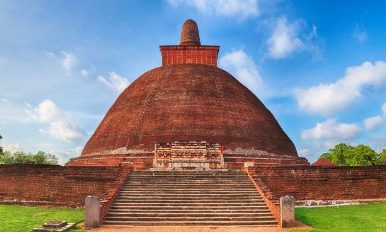
Jetavanaramaya is in the Sacred City of Anuradhapura, one of Sri Lanka's UNESCO World Heritage Sites. It is easily the most physically overwhelming structure I have seen anywhere on the island. Can you believe that this stupa was built using 93.3 million baked mud bricks in 301 CE? Even today, though the stupa is around half the height of the original stupa, it still impresses, with a towering height of 71 meters. Furthermore, archaeologists think that a three-foot brick wall could be constructed between London and Edinburgh or New York City and Pittsburgh with these mud bricks. However, Jetavanaramaya is not just about the imposing height. It has a rich history and spiritual significance. Also, recent news has put it back in the global spotlight. I will discuss all these aspects in this article, along with everything you need to plan the trip yourself. Jetavanaramaya At A Glance Detail Information Location Jetavana Monastery, Sacred City of Anuradhapura, North Central Province, Sri Lanka Built by King Mahasena (r. 273–301 CE) started the construction It was completed by his son, Sirimeghavanna/ Maghavanna I Original height Approximately 122 metres It is the tallest brick structure ever built. Current height Approximately 71 metres, after 12th-century restoration under King Parakramabahu I Bricks used An estimated 93.3 million baked bricks Global ranking (at completion) Third-largest man-made structure on Earth, after the two Great Pyramids of Giza Base area Roughly 233,000 m² Relic enshrined Believed to be a fragment of a sash or belt worn by the Buddha. UNESCO status Part of the Sacred City of Anuradhapura, inscribed as a World Heritage Site in 1982 Nearest town Anuradhapura city centre, about 4–5 km away A Recent Spotlight: Jetavanaramaya's 2026 Global Moment Jetavanaramaya does not need an introduction due to its architectural magnanimity or significance in Buddhism. However, it has become a talking point once again with CNN Travel publishing a detailed feature recently. In the February 2026 post, CNN Travel has described it as “massive megastructure built for eternity.” Also, the same post places it alongside the Great Pyramids in terms of ancient engineering ambition. The piece, reported from Anuradhapura itself, spent time with Godamune Pannaseeha, a senior archaeology officer who has spent years studying the site. Also, it framed the stupa within the living pilgrimage culture that still surrounds it. As I have seen it, there were pilgrims in white, monks chanting at dawn, rituals that have continued largely uninterrupted for more than 2,000 years. The coverage was picked up widely across the US and international outlets in the weeks that followed. Moreover, Sri Lankan media noted it as a rare moment of global attention for a site that, despite its scale, remains far less visited than Sigiriya Rock Fortress or the Temple of the Tooth. If you are planning a Cultural Triangle trip in 2026, this is genuinely a good year to see it before the crowds catch up to the coverage. The History Behind The Tallest Brick Stupa In The World Jetavanaramaya is a physical record of a religious dispute. Understanding why it exists makes the visit land differently, even if we forget about the height or scale for a while. King Mahasena And The Sect Rivalry That Built It King Mahasena began construction of this stupa between 273 and 301 CE. It was during a period of real tension between two Buddhist sects, the Mahavihara and the more liberal Abhayagiri fraternity. Mahasena was a patron of the Abhayagiri fraternity. The stupa became the centrepiece of the Jetavana Vihara, a monastic complex built for the breakaway Sagalika sect. It was designed, according to archaeologists, to accommodate more than 3,000 monks. Every structure in the complex was oriented toward the stupa. It was a daily, physical reminder of where devotion was meant to point. The Relic Enshrined Inside Jetavanaramaya is a solid stupa, not a hollow one. So, you cannot go inside. What's believed to be enshrined at its core is a fragment of a sash or belt worn by the Buddha. Thus, it is a cenotaph of deep religious significance rather than a burial monument in the ordinary sense. Some accounts also connect the site to the cremation of Mahinda Thera, the monk credited with bringing Buddhism to Sri Lanka. This version about the stupa comes from the excavated ash and charcoal layers found nearby. Restoration Through The Centuries Like most of Anuradhapura, Jetavanaramaya fell into decline after the capital shifted away from the city. It was buried gradually by jungle growth and centuries of neglect. King Parakramabahu I restored it in the 12th century, bringing it to roughly its current height. Large-scale conservation further resumed in the 20th century, and it remains an active restoration site today. Even in its diminished state, it is still the largest man-made brick structure by volume. What It Is Really Like To Stand Before Jetavanaramaya Honestly, photos do not give a fair idea about the scale of the stupa. Standing at its base, this is what I actually felt. The Scale You Don't Expect A height of 71 metres and made of 93 million bricks! Reading about these numbers is different from actually walking the perimeter. Each side of the base runs close to 576 feet, and the entrance staircases alone are around 28 feet wide. It was a long walk circling the structure once. However, the brick structure was more fascinating, with a distinct texture and color. Furthermore, the uneven weathering of this deep terracotta structure is an art time has created. No photograph truly captures that. Golden Hour And The Rituals Around It Afternoon is the best time to visit the stupa. The heat is less, and the stupa looks warmer with a red-orange hue thanks to the light. Also, this is the time when pilgrims in large numbers circumambulate the stupa clockwise. They walk barefoot with flowers or lit oil lamps in their hands, and suddenly you see evening has set in. Exploring The Jetavana Monastery Complex The stupa is the epicenter of the monastery complex. However, if you want to know more about the history and soak in the spiritual ambiance, explore the other structures mindfully. The Jetavanaramaya Museum This on-site museum is small, but it displays artefacts recovered during excavation. I saw beads, coins, ivory carvings, pottery, and inscribed stone fragments, along with information panels on the sect rivalry that produced the stupa. It takes around 30 minutes to explore the museum. However, it is a useful stop, considering the information it provides. Nearby Ruins Worth Your Time There are remains of monastic buildings, ponds and boundary walls around the stupa. The refectory ruins and stone urinals with their surprisingly intricate carved drainage systems especially demand a mention. These structures hint at an organised monastic life. Entrance Fees And Tickets Jetavanaramaya is covered by the single Anuradhapura Sacred City round ticket. So, you do not need to buy a separate ticket for it. Visitor category Approximate price (2026) Notes Foreign adult (non-SAARC) US$25–30 Covers: Jetavanaramaya Ruwanwelisaya Abhayagiri Thuparamaya, and other sacred-city sites SAARC nationals US$12–15 Passport required at the counter Children (6–12) Around half the adult rate Under 6 generally free Local (Sri Lankan) visitors Free ID required and a small fee applies only for the site museums Combined Cultural Triangle ticket US$50–60 Covers: Anuradhapura Polonnaruwa Sigiriya Dambulla Royal Cave Temple Note that the Sacred City round ticket does not include Isurumuniya, Sri Maha Bodhi, or Mihintale. So, you will need smaller entry tickets. You can buy tickets at the main office near the Archaeological Museum, or pre-book online to skip the queue. Opening Hours And Best Time To Visit Jetavanaramaya The archaeological sites are generally open daily from around 7:00 AM to 6:00 PM. Avoid the midday window (roughly 12:00–3:00 PM), when the heat over the open brick platform gets genuinely uncomfortable. Early morning and the last two hours before closing are both good choices. The latter also lines up with the evening rituals. Moreover, December to March is the most pleasant season weather-wise, with lower humidity and less rain. Getting There Anuradhapura is roughly 200 km north of Colombo. The journey takes around 4.5 hours by car. Also, it is about 65 km from Dambulla. Moreover, in a Cultural Triangle itinerary, it pairs naturally with Sigiriya, Dambulla, and Mihintale. Again, since the Sacred City is vast, you can rent a bicycle for the day to move around. The bicycle rental costs around LKR 1500 for a day. Furthermore, you can hire tuk-tuks and cars with a driver-guide. A Suggested Half-Day Itinerary For Jetavanaramaya Time Stop What to expect 7:00 AM Sri Maha Bodhi Dawn pilgrimage atmosphere at the sacred fig tree. 8:00 AM Ruwanwelisaya The gleaming white stupa and its elephant wall. 9:15 AM Jetavanaramaya Spend at least an hour, and more with the museum. 10:45 AM Jetavanaramaya Museum Excavated artefacts and site context. 11:30 AM Abhayagiri Dagoba The third great stupa, with a quieter, more forested setting. 1:00 PM Lunch in Anuradhapura town Break before the afternoon heat. Tips From My Visit To Jetavanaramaya A local guide (arranged through your hotel or the ticket office) adds real value here. You cannot know much of the sect rivalry from the on-site signage. You can take photos here. However, avoid posing with your back to the stupa or in disrespectful positions. This is an active religious site for Buddhist pilgrims. Beyond Jetavanaramaya: Continuing Your Anuradhapura Journey Jetavanaramaya fits easily into an Anuradhapura itinerary, including Ruwanwelisaya and Mihintale. This cluster is the best way to get a full picture of the ancient capital. Furthermore, you can continue south from here to other major Buddhist sites such as Mulkirigala and Kataragama. Why Jetavanaramaya Still Matters The significance of Jetavanaramaya is specific. It is proof of Sri Lankan excellence in craftsmanship in the fourth century. Even then, they could organize labor and materials and execute an ambition on a scale that rivalled any civilization of that era. So, around 1700 years later, when you stand at the base of the stupa, it is like time travel.