







 Related
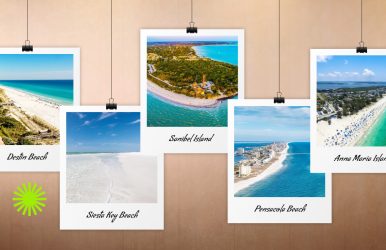
What Are The Best Beaches In Florida Gulf Coast? Know The Top Names For Every Type Of Traveler
BY Sibashree May 20, 2026
I have seen the wavy Atlantic side, and now the Florida Gulf Coast stands on the opposite pole of the spectrum. The turquoise water here is so calm and shallow that you will feel the comfort and familiarity of swimming in a large swimming pool. Furthermore, the water here is crystal clear, and the beaches have soft while sand. Also, the sunset views from the beaches are amazing. So, the best beaches in Florida Gulf Coast are ideal for every type of traveler, from families to nature lovers and couples. Moreover, the activities here are versatile. You can attend the lively beach pier festivals and explore the hidden gems, perfect for world-class shell collecting. Also, the emerald-green waters here are ideal for deep-sea fishing. You can even play with wild dolphins near the shore and gorge on fresh seafood very close to the sand. If nothing else, you can even relax on the quartz sand that never gets hot enough to burn your feet. So, you have to just find out the perfect slice of paradise you are looking for. What Are The Best Beaches In Florida Gulf Coast? A Quick Summary Best Beaches in Florida Gulf Coast Why So Famous?Clearwater BeachSugar-White SandExcellent Family Resorts Lively Night-Pier Festivals Siesta Key Beach99% Pure Quartz SandThe Stays Cool Even In The Hot Sun Naples BeachFrequent Dolphin SightingsHigh-End DiningHistoric Pier ViewsOverall, a Luxury Atmosphere Sanibel IslandWorld-Class Shelling DestinationPristine NatureQuet, Laid-Back VibeDestin BeachDazzling Emerald Green WaterWorld’s Luckiest Fishing VillageAnna Maria IslandA Hidden GemStrict Building LimitsPreserving Old-Florida CharmUncrowded Stores Pensacola BeachStriking Eco TrailsBudget-Friendly LodgingProtected Gulf Islands National Seashore A Detailed Discussion On The Best Beaches In Florida Gulf Coast Having shared the list of the best beaches in Florida Gulf Coast, I now want to delve deeper. So, here is more about why you will love the best beaches in the Florida Gulf Coast. 1. Clearwater Beach With its vibrant atmosphere and wide shorelines, Clearwater Beach has been one of the top beaches in America, fetching ranks among the top beaches in America. Furthermore, it is the ideal destination if you want a fusion of city amenities and beach relaxation. Moreover, it has the famous Pier 60, which makes the nightlife in Clearwater Beach the most happening. • Best Activities In Clearwater Beach Parasailing, jet-skiing, taking pirate-themed boat cruises, and watching the nightly sunset celebrations at the pier are the best things to do in Clearwater Beach. • Clearwater Beach Nearby Attractions You can visit the Clearwater Marine Aquarium, Caladesi Island State Park, and Captain Bligh's Landing Mini Golf near Clearwater Beach. • What Is The Best Time To Visit Clearwater Beach? March to May is the ideal time to visit Clearwater Beach. The weather remains warm in these months. However, the summer is not intense yet, and there is still time for the humidity to shoot up and storms to arrive suddenly in the afternoon. • Who Is Clearwater Beach Best For? Clearwater Beach is the best for families with children, young couples, and solo travelers who enjoy a bustling resort-town atmosphere. • Parking Info Parking at Clearwater Beach can be challenging. However, you can use the public parking garages on Coronado Drive or catch the Clearwater Ferry to skip traffic. I opted for the latter. • Water Clarity The water here is very clear, calm, and shallow. Furthermore, the brilliant light blue hue makes it perfect for wading. • Restaurants Nearby The restaurants near Clearwater Beach are Frenchy’s Rockaway Grill (famous for grouper sandwiches), Palm Pavilion Beachside Grill, and Ocean Hai. 2. Siesta Key Beach Siesta Key Beach near Sarasota has earned a global reputation thanks to its distinct sand composition. With 99% pure quartz, the sand looks like powdered sugar, and it does not get hot even when the Sun is scorching. Furthermore, it has a massive playground, professional tennis courts, a large concession pavilion, and highly active lifeguards, creating a highly active and safe environment for families. In addition, the wide-open western view of the beach offers flawless sunsets. This stunning sunset view here is often celebrated with the local Sunday night Siesta Key Drum Circle. Popular Activities The Siesta Key Beach is popular for a host of water sports, including kayaking, stand-up paddleboarding, and snorkeling near the Point of Rocks area. 3. Naples Beach High-end sophistication meets natural coastal beauty in Naples Beach. It promises a quiet, refined, and more luxurious vacation experience. Luxury Atmosphere Backed by million-dollar mansions, manicured parks, high-end boutiques, and upscale golf resorts, Naples Beach offers the most luxurious experience. Naples Pier The historic pier of Naples Beach extends into the Gulf. Thus, it is an ideal spot for walking, fishing, and viewing the coast. Romantic Travel Angle You can choose Naples Beach for a romantic date as it is the place where couples can enjoy sunset strolls, fine oceanfront dining, and book luxury spa treatments. Dolphin Spotting Naples Beach is ideal for dolphin spotting, as you can find dolphins frequently swimming close to the shorelines. You can easily find them from the beach or the pier. 4. Sanibel Island Sanibel Island is an eco-focused paradise. It stretches from east to west instead of north to south. Due to this unique geography, the island acts as a natural banana-shaped scoop for treasures from the Gulf. • Shell Collection Sanibel Island is known as the "Shelling Capital of the World.” Here, people practice the Sanibel Stoop to gather rare shells. • Nature Lovers The island has no traffic lights or high-rise buildings. Thus, it enjoys a raw and authentic coastal environment. Furthermore, the lack of light pollution makes it ideal for stargazing. • Wildlife Refuges Over half of Sanibel Island is protected. The J.N. "Ding" Darling National Wildlife Refuge especially demands special attention. It is home to manatees and roseate spoonbills. • Quiet Beaches Sanibel Island has quiet beaches that offer complete solitude. For example, Bowman's Beach offers absolute solitude. Fortunately, many beaches on the island are not commercialized, and there will be no music and crowds. 5. Destin Beach Destin Beach is in the Florida Panhandle. It showcases a dramatic landscape shift, and the amazing color of the water here creates the magic of the Caribbean. Emerald Green Water Destin Beach has a combination of pure Appalachian quartz sand and shallow water. Furthermore, the water here looks bright emerald in color. Fishing Opportunities Destin Beach is home to the largest charter fishing fleet in the state. Furthemore, it offers world-class deep-sea fishing excursions. Adventure Activities Snorkeling at the Destin Jetties, renting pontoon boats, and exploring the famous, lively Crab Island sandbar are the best adventure activities here. 6. Anna Maria Island You will go on a trip back in time in Anna Maria. You will not find fast food chains or tall condo buildings here, thanks to the strict local laws. Thus, the island remains peaceful. Also, thanks to the lack of a crowd, the island enjoys a slow pace of life, and the beaches here are devoid of massive tourist crowds. Furthermore, I loved getting around Anna Maria Island on bicycles, and you can even take a free island trolley to move around. Also, you will find locally owned boutiques and donut shops on Pine Avenue. Moreover, you can read a book under an umbrella, walk along peaceful shores, and escape modern city noise. 7. Pensacola Beach Pensacola Beach is on Santa Rosa Island. It stands out with a fusion of a rich military history and the pristine appeal of the national park coastlines. Moreover, Pensacola Beach is one of the most budget-friendly beaches on the Florida Gulf Coast. You will find affordable beachfront hotels, condo rentals, and dining options compared to those in Southwest Florida. Furthemore, the Pensacola Beach Boardwalk, the historic Fort Pickens, and regular spectacular airshows by the Blue Angels are the prime family attractions. In addition, it is bordered by miles of protected, footprint-free sand dunes within the Gulf Islands National Seashore, which offer the most amazing Gulf views. What Are The Best Florida Gulf Coast Beaches For Families? Are you traveling with your family, especially with your children? Then, you have to choose beaches that have calm waves, convenient amenities, and offer maximum safety. In this context, Clearwater Beach can be an excellent choice as it has central lifeguards, shallow drop-offs, and endless beachfront playgrounds. On the other hand, Siesta Key Beach, with its quartz sand, ensures that children can roam around the sands comfortably and without the fear of burning their feet. This beach also has excellent picnic areas. Moreover, if you are looking for a budget-friendly option, Pensacola Beach is an amazing choice. What Are The Quietest Beaches On The Florida Gulf Coast? If you want to escape the crowds, blaring music, and jet-ski traffic, Sanibel Island is the best place to visit. Here, nature takes center stage. Secondly, Anna Maria Island is a popular choice, and it offers miles of residential, tranquil shoreline. You will not find high-rise commercial resorts. Moreover, if you want to find a true hidden gem, you can visit Pass-a-Grille Beach at the southern tip of St. Pete Beach, which offers a historic, sleepy beach-town atmosphere. What Are The Best Florida Gulf Coast Beaches For Couples? If you are planning a romantic getaway with upscale experiences, Naples Beach will be the best place to visit. I loved the sunset at Naples Beach, and it has historic piers. Furthermore, you have to take a few steps from the water to find a world-class fine dining facility. Another romantic beach destination for couples is Captiva Island. It is just north of Sanibel. This island has a secluded vibe, and you will find many sunset cruises and romantic rental cottages. In addition, Longboat Key near Sarasota comes with quiet, private, and beachfront resorts. These resorts are ideal for couples who want seamless relaxation. What Is The Prettiest Beach On The Florida Gulf Coast? Siesta Key Beach is widely considered the prettiest due to its dazzling white sand made of pure quartz. striking contrast between the powder-white shoreline and the calm, light-blue Gulf water creates a breathtaking, picture-perfect tropical landscape. Which Gulf Coast Beach Has The Clearest Water? Destin Beach and the Emerald Coast region feature the clearest water. The lack of river runoff combined with a unique offshore current keeps the water brilliantly transparent, reflecting a gorgeous, Caribbean-like emerald-green hue. Are Florida Gulf Coast Beaches Better Than Atlantic Coast Beaches? Yes, for travelers prioritizing relaxation, the Florida Gulf Coast beaches are the better choice. The Gulf Coast offers significantly calmer water, softer sand, warmer sea temperatures, and stunning nightly sunsets. The Atlantic Coast is better suited for surfing, big waves, and sunrises. What Is The Best Time To Visit Florida Gulf Coast Beaches? Here is a season-wise breakdown of the best time to visit Florida Gulf Coast beaches. The Best Time To Visit Florida Gulf Coast Beaches Florida Gulf Beaches Conditions Spring (March to May) The Best Time to VisitWarm TemperaturePleasant WeatherMinimal RainSummer (June to August)Very Hot and HumidDaily Afternoon ThunderstormsHigher Crowds of Families Due to Summer BreaksAutumn (September–November)Warm WeatherLower Hotel Rates Daily Weather Can Change Winter (December–February)Mild and Dry WeatherChilly Weather, Not Suitable for SwimmingPerfect for Snowbirds, Sightseeing, and Shelling Hurricane Season Tips The Hurricane Season in Florida starts from 1st June and continues till 30th November. Furthermore, the hurricane activity takes place in August and September. So, if you are planning a visit during these months, you must check regular updates from the National Hurricane Center. Budget Advice You must travel to Florida Beaches in late April, May, or October to find the best balance of lower accommodation rates and great beach weather. What Are The Things To Do On Florida Gulf Coast Beaches? Dolphin Cruises: Book a catamaran tour to watch wild bottlenose dolphins jump through boat wakes. Snorkeling: Explore sunken ruins, artificial reefs, and look for sea turtles near rocky points. Paddleboarding: Rent a board to glide over the calm, glassy morning waters of the Gulf. Sunset Watching: Gather on the sand facing west to witness vibrant orange, pink, and purple horizons. Shell Collecting: Walk the tide lines at sunrise to find sand dollars, olives, and conch shells. Fishing: Drop a line off a historic wooden pier or hire a deep-sea charter boat. Getting To The Florida Gulf Coast: Best Airports To Fly Into Picking the right airport can save hours of driving once you land, since the Gulf Coast stretches across several hundred miles of Florida's western edge. Tampa International Airport Tampa International Airport is the most convenient hub for the northern Gulf beaches. It sits roughly 25 to 30 minutes from Clearwater Beach and about an hour from Siesta Key and Anna Maria Island, making it the best choice if your trip centers on the Tampa Bay area or Sarasota. Southwest Florida International Airport Southwest Florida International Airport in Fort Myers is the better option for Sanibel Island and Naples Beach, putting you within 30 to 45 minutes of both, compared to the two-plus hours it would take from Tampa. Northwest Florida Beaches International Airport And Destin-Fort Walton Beach Airport For Destin Beach and the Emerald Coast, Northwest Florida Beaches International Airport near Panama City and Destin-Fort Walton Beach Airport both sit within a 30-minute drive of the beach. They are far more convenient than routing through Pensacola or Tallahassee. Pensacola International Airport Pensacola International Airport is naturally the closest option for Pensacola Beach and the Gulf Islands National Seashore, generally under 20 minutes from the sand. If your itinerary spans multiple beach towns, flying into Tampa and driving south along US-41 or I-75 lets you string together Clearwater, Siesta Key, and Sanibel Island in one loop without backtracking. Renting a car is close to essential for this kind of multi-beach trip, since public transit along the Gulf Coast is limited outside the trolley systems that operate within individual beach towns. Fares into Tampa and Fort Myers tend to be the most competitive of the group, since both airports carry heavier low-cost-carrier traffic. Destin and Pensacola routes are comparatively thinner and can carry a premium, particularly during the June-to-August peak season. Booking flights three to four months out, and mid-week if your schedule allows it, generally produces the better fares across all four airports. Travel Tips For Visiting Best Florida Gulf Coast Beaches Parking is a genuine problem for visiting most Florida Gulf Coast beaches. So, you want to find a decent parking spot, and you can reach the beaches before 9 AM on the weekend. You can even use local beach trolleys to avoid full lots. Moreover, you have to be careful about the beach regulations. Using glass bottles, drinking alcohol, and using open fires are prohibited on most Gulf beaches. Also, not every beach in the Florida Gulf Coast is pet-friendly. Especially public beaches, such as Siesta Key, have strict guidelines regarding the prohibition of pets. So, if you want to enjoy a beach holiday with your pet, choose places such as Fort De Soto Dog Beach, Davis Islands Dog Beach, Brohard Paw Park & Beach, and Bonita Beach Dog Park. Read Also: The Ultimate Jaffna Beach Guide: What Are The Best Beaches Near Jaffna, Sri Lanka? Which Is The Best Tropical Beach In The World? Top 10 Best Tropical Beaches Top 10 Naples Italy Beaches You Can’t Miss!