





Best Time To Visit Andaman – Andaman Guide Of 2023

Nov 17, 2022

Last Updated on: Jun 30, 2026

Travel Blog

Weather Conditions in AndamanAPRIL – JUNEJULY – SEPTEMBEROCTOBER – MARCH
Temperature24°c – 37°c 22°c – 35°c20°c – 30°c
SeasonSummerMonsoonWinter

2022 is almost ready to bid us adieu. A new year is less than two months away, and there’s no reason why you shouldn’t start planning your trips for 2023.

And the first place to check out in the new year (if you trust us even a teeny tiny bit) is Andaman – because the best time to visit Andaman is approaching, and you must not miss out on this golden opportunity!

Today, we will only talk about visiting this island state in the Indian Ocean. Keep reading to find out all that you need to know about traveling to Andaman!

Journey Across The Indian Ocean: Best Time To Visit Andaman!

Thanks to warm temperatures and little rain, the best time to visit Andaman is anytime between October and May.

Although the picturesque archipelago undergoes moderate weather throughout the whole year, it is best that you plan a trip during these months for a memorable experience.

At the same time, you must remember that there are so many other people thinking along the same lines.

As a result, it is safe to say that this time of the year also happens to be the busiest time for the island state. But whenever you decide to visit this sunny island, it’s best to avoid the same during Monsoon.

The high tides, incessant rains, and strong wind all add up to create an environment that can hinder your touring experience – so why take the risk?

Yes, the islands are perfect for water sports, beach excursions, and plenty of sightseeing due to their warm weather, more or less throughout the year.

But naturally, there are advantages and disadvantages of visiting the islands in different seasons.

So without wasting any time, let’s check out a comprehensive guide for traveling to Andamans at different seasons – scroll down to find out all that you need to know!

Exploring Andamans In Winter (October – March):

To be honest, Andaman does not really experience a proper winter season.

If you have ever traveled to Bengaluru or Vishakhapatnam, then you will be able to understand the climate type prevalent on these islands.

The mildly humid, pleasant weather is ideal for tourists to relax – the turquoise water of the vast ocean reflects shades of blue, contrasted by the white sands, and the blue sky only makes these islands worth a visit during this season.

The winter season makes the destination a picturesque location perfect for couples on honeymoon, families, and other elderly people.

The best part? Neither the location is sultry nor is it sweaty – so you can just grab some cocktails and unwind inside the shacks against an aesthetic backdrop.

Exploring Andamans In Summer (April – June):

While seeking the best time to visit Andaman and Nicobar islands, you can always consider Summer for planning a trip to these beautiful groups of islands.

Let us tell you why! With absolutely no rainfall, the weather is ideal for sightseeing, water sports, or just relaxing by the beach.

The season usually begins in January and goes on till the end of April.

Since this is the time for a summer vacation in the academic sector, the season collides heavily with a busy tourist season comprising mostly families with children.

Moreover, you can also try out all the different watersports during this time. 

In this context, let’s check out a few details related to visiting Andamans in Summer.

Temperature And Weather:

During Summer, the Andaman Islands experience an average temperature that ranges between 25 degrees to 32 degrees.

With a mean relative humidity of about 80%, Summer is perhaps the most popular time to travel to these beautiful islands and cross off a few travel goals from that bucket list of yours. 

Moreover, during this season, the weather is quite calm. You can even try out different watersports such as

  • parasailing,
  • jet skiing,
  • snorkeling, and
  • scuba diving. 

Why Should You Visit Andamans During Summer?

Stop googling ‘Andaman Nicobar best time to visit’ and instead keep reading to find out why Summer is one of the best reasons to visit this group of islands.

Summer in Andaman is all about the warm ambiance, the glowing environment, and the vibrant crowd. If you love beaches, then you will get to witness the pristine destination, and that too in all its summer glory.

Who hasn’t seen those aesthetic pictures of Andaman in magazines, social media platforms, and even blogs?

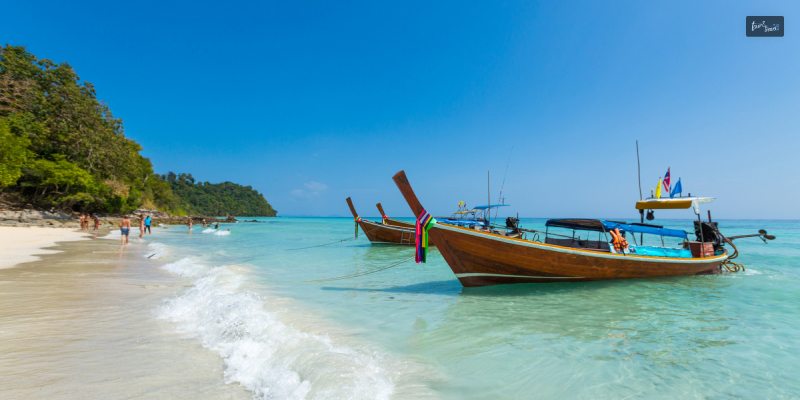
We are talking about those photographs with the boats anchored on the sandy shores with beautiful turquoise waters in the backdrop.

It’s the idea of travel photos with a few hammocks tied to several coconut trees, all standing tall, facing the limitless ocean.

Summer is also about festivities, and Andaman surely rises to the occasion. If you do end up finding Summer as the best time to visit Andaman, then don’t miss out on festivals like

  • The Island Tourism festival (a 14-day festival celebrating the traditions and cultures of the region),
  • The SubashMela (an event for celebrating Subash Chandra Bose’s birthday), and
  • The Block Mela (an event for celebrating the diverse cultures, and local lifestyles).

Things To Remember Before Visiting Andaman In Summer:

Since the weather in Andaman during Summer is calm, you do not need to let that paranoia worry you.

Simply pack everything you will need and lose yourself in this beautiful paradise – this is, after all, the best time to visit Andaman!

Here’s what you need to keep in mind!

  • Since you will be traveling to tropical climates, you will dehydrate fast. As a result, it is best that you carry plenty of adequate water and stay hydrated.
  • Don’t forget to carry your deodorants, hats, sunglasses, and sunscreens as protection against the hot Sun.
  • Also, make sure you are traveling light with beach clothes and some flip-flops.

Exploring Andamans In Monsoon (July – September):

As we mentioned early on, Monsoon is definitely not the best time to visit Andaman, as compared to the other two seasons.

In case you had no idea, the islands receive rain not once but twice from monsoon – once from the Southwest Monsoon and the other time from Northeast Monsoon.

You don’t need to type ‘Andaman and Nicobar islands best time to visit’ on Google to find out that monsoon is not your ideal weather for traveling to Andamans. But in case you hate crowds and don’t mind some rain, and a little adventure, then we don’t see any reason why you can visit these islands during monsoon.

So let’s check out all the details you need for planning a trip to Andaman during Monsoon.

Temperature And Weather:

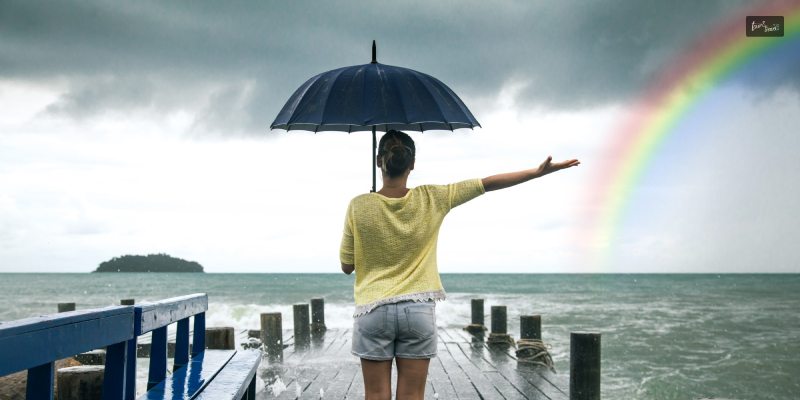
Monsoon in Andaman is characterized by incessant rains and high tidal waves. In fact, the temperatures easily range between 22 degrees Celsius to 30 degrees Celsius, making this an ideal season for both hot chocolate and different citrus-based beverages.

Moreover, Andaman is relatively dull during Monsoon. Thanks to all the rough rainfall and tropical storms that last for nearly 180 days yearly, the islands experience a reduction in tourist influx. People are seeking unique experiences and planning to let loose from their mundane routines.

You will actually find a lot of time for self-exploration and rejuvenation – if you are trying to find some solitude on your trips, then you should visit Andaman during Monsoon.

Why Should You Visit Andamans During Monsoon?

You should totally visit the Andaman Islands during monsoon for some much-needed solitude, bliss, and silence.

It doesn’t matter whether you want to go solo or with your friends, the ambiance during this season will help you self-explore and introspect without unnecessary interruptions – this is the ideal time to get lost right in the middle of nothing!

Things To Remember Before Visiting Andaman In Monsoon:

Since monsoon is not the best time to visit Andaman for a majority of tourists, it is highly unlikely that water sports are available during this season.

Moreover, the large waves and unpredictable winds further make watersports unsafe. In fact, the season makes the islands pretty isolated from tourists, so much so that hotels give away rooms at huge discount prices.

But keep in mind that all ferry operations might get disrupted frequently due to the rough waves – however, the beauty of spending a monsoon in Andaman during this time is forever memorable.

It’s not risky to travel to Andaman during this time of the year, but if you have this perfect touristy vacation in mind, then you might just be disappointed.

Here’s what you must keep in mind!

  • Don’t forget to carry your umbrellas, power banks, torch lights, munchies, mosquito repellants, raincoats, and windcheaters.
  • If the rain stops you from stepping out for food, you can always count on your munchies.
  • Make sure you are not carrying any expensive gadgets and cameras during this time.

Frequently Asked Questions (FAQs):

Check out the most frequently asked questions about finding the best time to visit Andaman.

1. Which Month Is Best For The Andaman Trip?

The best time to visit the Andaman Islands is anytime from October to May. This is because the weather during this time is pleasant and ideal for water sports, sightseeing, and even beach excursions. Similarly, monsoons are not usually recommended for traveling to these islands due to unpredictable rains, storms, and waves.

2. What Is The Famous Food Of Andaman?

The basic diet of people residing in Andaman comprises coconuts, spices, rice, and plenty of seafood. Moreover, since Andaman is made up of islands, the destination happens to be a seafood paradise – from lobsters and fresh prawns to crabs, there’s so much to try out here. Don’t miss out on Red Snapper, an all-time favorite.

3. What Type Of Clothes To Wear In Andaman?

Ans: You can carry the following clothing essentials on your trip to Andamans,
Sunglasses, 
Hats, 
Cotton clothing,
Bathing suits,
Comfortable Shoes,
Smart Casuals,
Sleeping Attires, and
Poncho/Raincoat.

In Search Of The Deep Blue: Andaman Calling!

So you know the best time to visit Andaman – you no longer need to type search for ‘Andaman best time to visit’ or related material! Then what are you waiting for? Pack your bags today, and start on your trip soon – after all, the islands are so beautiful there’s no way not to add this destination to your bucket list.

In the meantime, don’t forget to share your thoughts and moments from your Andaman trip if you have already visited these islands in the comments below.

You may also like:

Share on Social Media

Sibashree is a travel, culture, and leisure writer who has been writing since the age of 12 and professionally since 2014. With more than a decade of travel writing experience and journeys across India and several parts of the world, she brings a deeply personal and thoughtful perspective to her work. A student of English Literature and Mass Communication, Sibashree has always viewed travel as more than movement — for her, it has been a way of understanding people, cultures, and herself. Her passion for spiritual exploration has also led her to many unusual and meaningful destinations over the years. Outside of writing, Sibashree enjoys watching European cinema, reading about global politics, and reflecting on the stories hidden within everyday places.

Leave a Reply

Your email address will not be published. Required fields are marked *

title-img Related

READ MORE La Maddalena, Italy

The Most Distinctive Landscapes In The La Maddalena Archipelago — And How To Experience Them Properly

BY  Sibashree May 18, 2026

Some places in the Mediterranean win you over at first glance. Others get more interesting the longer you look. The La Maddalena Archipelago belongs to the second group. Its beauty is obvious: clear water, pale sand, rugged coastline, and the kind of light that makes the sea look unreal. But what makes La Maddalena stand out is something more specific.  Here, granite, wind, shallow seabeds, and protected coastlines come together to create landscapes that are never merely beautiful. They are precise, dramatic, surprising, and deeply shaped by the way you approach them. That distinction matters. It is easy to reduce the archipelago to the usual formula: white beaches and turquoise water. But La Maddalena, Italy, is far more varied than that. Its most memorable places are not interchangeable.  Some are defined by rock and relief. Others by light, water depth, and shifting color. Others still by exposure, silence, or the feeling of being far from shore. To understand what makes La Maddalena special, you have to look beyond the postcard image and notice how each island creates its own visual experience. What Makes A Landscape Unique In La Maddalena, Italy  For me, La Maddalena, Italy, brings something new every time. Some people say the landscape changing color is the best part. But I like how the sea blends with the land here.   The smooth granite cliffs and naturally made famous sculptures on the granite also attract me. Then there are the hidden coves. Meanwhile, the shallow sea changes its color three times a day.  As it touches the beach, it appears transparent, with a greenish tint at first. After that, the water is pale blue and finally turquoise. On top of that, the flutter of sea breeze will always calm your soul.  Some people say the long, monotonous sea coasts bore them. But I don’t relate to them. I bet they don’t have the perspective to enjoy the sea. I believe the archipelago is not only a beach site. It has traces of age-old geology. It captures the sun and moon differently.  Most importantly, their unique physical forms shape their appeal. Some of them change their shades with changes in light. Others feel remote even within one of Sardinia’s best-known coastal areas. Have you seen all of them? Caprera’s Granite Landscapes Caprera is where the archipelago shows its harder, more rugged side. Some Mediterranean islands feel soft and inviting. Caprera does not. Its identity is built first around rock, then around the sea. The coastline feels carved rather than arranged, with granite formations giving the landscape weight and direction before the water even comes into view. That makes Caprera an ideal place to begin. It shows that La Maddalena, Italy is not only about bright bays and transparent water. It is also about structure. Cala Coticcio is famous for the glare in its shallow water. The luminous water at night attracts many tourists. At the same time, the surroundings also leave a spell on you!  The bay is held inside a rocky frame, almost as if it has been cut into the island. The result is not generic prettiness, but contrast: rough stone against brilliant water, solid granite against an unexpectedly delicate inlet. Caprera also introduces an important difference between the archipelago’s landscapes. Some places reveal themselves immediately. Others feel earned.  Here, arrival is part of the experience. The coast does not simply present itself. It builds tension through dense Mediterranean scrub, pale rock, and sudden flashes of blue. That is why Caprera is one of the clearest examples of a La Maddalena landscape shaped as much by geology as by the sea. Budelli And The Shifting Colors Of The Sea People judge Budelli by the single postcard image they see. But it doesn’t really tell you much about the place. I feel what makes the place unique is Spiaggia Rosa. It is a popular destination. But if you ask me, people really don’t explore the scenic beauty here. Honestly, what triggers me is the landscape's fragility.  The pink shade of Spiaggia also seems magical. But do you know why it looks like that? The color actually comes from the minor organisms and the fragile, broken shells that lie there.  So you don’t really visit Budelli to chill out. Or have a fun swimming session. On the other hand, this is a destination that makes you pause to enjoy nature.  Around Budelli, the shallow waters and the wider Porto Madonna area create a constantly shifting field of color. Light, depth, and movement do most of the work.  This is where the archipelago's visual intelligence becomes especially clear. The scene is not powerful because it is massive or monumental. It is powerful because it changes. The sea reflects, absorbs, brightens, and darkens. Budelli becomes less like a postcard and more like a lesson in how color can define an entire landscape. Spargi’s Wild, Wind-Shaped Character If Budelli feels fragile, Spargi is something else entirely. It doesn’t try to be subtle. The island feels more open, a bit harsher in places. The coastline is broken up. To clarify, there are big granite shapes, gaps between rocks, and sudden coves that don’t really ease into each other. There’s nothing smooth or organized about it. Cala Corsara shows that pretty clearly. It’s not just “beautiful” in the usual sense. It looks worked over. For example, the rock feels it has been pushed and worn down over time.  Moreover, you can see these odd shapes, small pockets of water caught between heavier stones, and uneven edges. It feels like pressure has been part of the process here. Compared to Budelli, it’s less delicate. There’s less layering, too. But that’s what makes it extravagant. Spargi feels more direct. It doesn’t hide what it is. At the same time, it’s not untouched. In peak season, there are people everywhere. Boats, noise, and movement are very common. But even then, it doesn’t fully soften. The landscape holds its original self. It doesn’t look postcard-pretty. You might have partied on the best cruises from Miami. It’s time for a visual treat that will heal your soul, too!  And that’s probably why I love going there. It keeps a bit of that rough edge, even when everything around it tries to smooth it out. Santa Maria’s Hidden Coves And Sculpted Coastline Santa Maria offers a quieter counterpoint to the islands that come before it. Where Spargi is abrupt, and Caprera feels built from mass, Santa Maria is more open, horizontal, and subtle. It is not dramatic in the obvious sense. Its strength lies in a softer, more understated kind of distinction. The island’s lower profile matters. Because Santa Maria is relatively flat, the landscape opens outward instead of rising around you.  That changes the rhythm of the place. The coastline feels wider, the sea more continuous, and the transitions between sand, shallow water, and open sea more gradual. Cala Santa Maria captures this character well: fine sand, transparent water, and a feeling of calm that comes not from emptiness, but from clarity and space. One of the most interesting features is Passo degli Asinelli, the shallow sandy passage nearby. It is the kind of place where geography becomes image.  Santa Maria does not rely on a single dramatic viewpoint. Its identity comes from the relationships between islands, channels, beaches, and soft marine contours. It may be less theatrical than some of the archipelago’s more famous stops, but that is exactly why it belongs in the conversation. Why The Archipelago Is Best Understood From The Sea At some point, the central point becomes clear: many of the distinctive landscapes of La Maddalena, Italy, cannot be fully understood from land. They depend on perspective. Again, it’s your perspective that tells you what to gape upon and what to ignore. To clarify, the abstract shape of a cove can amaze you. For me, honestly, I find nothing more amazing than the gradient of a seabed. With that, I love watching how the shallow water changes tones as the landscape changes.  Some people tell me the way the islands are spaced is surprising. To sum up, none of these are unique details. But the landscape that forms with these elements is really amazing! How Do I Prefer Exploring?  For me, everything is about perspectives. As I said before. As a result, boat rides in La Maddalena are not just a practical way for me to get around. So go out and enjoy the best cruises for families.  In addition, they offer the viewpoint from which the archipelago finally makes sense as a whole. Budelli is the clearest example. Simply put, one of its most important landscapes is meant to be admired rather than entered. So if you want to plan a weekend trip to a nearby national or state park, think twice. Plan bigger!  But the same idea applies across the archipelago. From the water: Santa Maria’s openness becomes clearer Spargi’s broken coastline looks more expressive Caprera’s granite structure becomes easier to read. For travelers who want that perspective in a simple, well-organized way, Giteinbarca.it/en offers boat rides in La Maddalena, Italy. Book the ride to experience the connected landscape rather than a series of separate stops.  Ready To Make The Most Of Your Vacations?  How you travel and what you see vary from one person to another. Do you prefer calling the shots? Explore independently and choose what you want to see.  However, planned trips help you see the best of any destination. To clarify, if you want to enjoy the landscape at its most scenic, you need to follow a routine. A carefully routed trip helps to see each island differently, for its nature, flora, and fauna.  On your La Maddalena tour, the plan would be critical. Here you won’t just jump into a carousel of amazing landscapes. It’s your planning nd perspective that will shape your La Maddalena, Italy trip.  If you ask me, I won’t suggest you simply cover all beaches, one after another. Instead, my suggestion would be to take some time off and cherish the transition of the landscape from one beach. Whichever you like. It’s your call!  The best part is that the different landscapes would look like parts of the same puzzle. You just need to have the eyes for it. To sum up, that’s what makes the La Maddalena archipelago beautiful! 

READ MORE delta connection dl3543 emergency landing

Delta Connection DL3543 Emergency Landing: What Is It? When Did It Happen? 

BY  Sibashree Feb 20, 2026

Delta Connection DL3543 emergency landing happened on 7th July, 2025. A pressurization-related issue happened, and the flight returned to Minneapolis immediately after takeoff.  It was a safe landing as the crew took all the necessary precautions. Furthermore, there were no reports of injuries.  However, when the news of the Delta Connection DL3543 emergency landing surfaced, people were worried. It is obvious because any emergency landing or any technical fault in the air is unsettling.  In this context, we want an honest explanation and a realistic understanding of how aviation safety works. It is especially important for us, who are always on the move and have to take short and long flights.  Hi, in today’s blog, I will talk about the Delta Connection DL3543 emergency landing incident and explain what happened and why the crew had to make an emergency landing decision.  Moreover, I will have a thoughtful and clear discussion about what this emergency landing meant for passengers.  What Happened With The Delta Connection Flight DL3543? An in-flight emergency was declared on Delta Connection flight DL3543 on 7th July 2025, a little after takeoff.  So, it had to return to Minneapolis–St. Paul International Airport (MSP). The flight was flying to Chicago from Minneapolis. However, it returned immediately so that the aircraft could be inspected properly on the ground.  Fortunately, the passengers had a safe and usual disembarkation thanks to the planned, controlled, and precautionary landing. Moreover, there was never a loss of control.  Why Was The Delta Connection DL3543 Emergency Landing Declared?  As I have mentioned, pressurization-related issues were the reasons behind the landing of the DL3543 aircraft.  When a plane goes up, the aircraft's pressurization systems maintain or control the air pressure in the cabin.  Furthermore, there is a sensor to read the air pressure. When the sensor reads the air pressure outside the desired limits, it is a serious technical concern.  The plane can still fly smoothly under this condition. However, the pilot has to take immediate action based on the reading.  In other words, the pilot does not take unnecessary risks by flying the plane in this situation. Moreover, when the crew declares an emergency, it helps them to take the following safety measures.  Emergency Landing for Safe Disembarkation and Inspecting the Aircraft Emergency Handling from Air Traffic Control Having the Emergency Services as a Standby.  However, when pressurization-related issues occur and lead to an emergency landing, there is no need to panic.  An emergency landing is a part of the discipline and training of the aircraft crews.  What Does An Emergency Landing Mean?  An emergency landing is not as dramatic as we see in movies and series. An emergency landing in commercial aviation may indicate a lot of things. Those are: A Medical Issue Happening with a Passenger Any “Cabin System Alert” A Warning about Technical Faults that Need Inspection And, A Sensor Reading Outside the Limits.  In most cases, emergency landings happen as precautionary measures. In such situations, the aircraft is in full control.  However, the pilot and the crew members want to eliminate the uncertainty and get back to the ground as soon as possible as a safety measure.  This same process or discipline is followed for the landing of DL3543. Why Did The DL3543 Plane Return To Minneapolis?  Returning to the Minneapolis Airport was the most efficient and safest choice after some pressurization-related issues happened.  Also, when the plane returned, the Minneapolis Airport offered the following assistance. Readiness for Emergency Response Immediate Help from the Maintenance Teams Quick Passenger Assistance and Prompt Rebooking Familiar and Safe Runways with Adequate Ground Operations  The pilot and crew could avoid the complexity and risks related to the pressurization issues thanks to the emergency return and landing. Who Operated The Delta Connection DL3543? Endeavor Air operated the Delta Connection DL3543 flight. It is a subsidiary of Delta Air Lines.  As a regional subsidiary, it follows the same safety oversight, federal regulations, and training standards as Delta Airlines.  So, there is no deviation in the standards for passenger safety.  What Did The Passengers Experience On Board?  The passengers experienced calm and clear communication from the pilot and the crew. So, though a little panic was obvious, the situation was under control.  Furthermore, they had a shorter flight and a shorter descent than expected. Moreover, there was a brief waiting period before the inspection began.  All the actions were aligned with standard protocols, and they were well-rehearsed. What Happened After DL3543 Made A Safe Emergency Return?  When Delta Connection DL3543 made a safe and emergency return, it was no longer in service, and an immediate inspection took place.  Then, the maintenance teams checked the problematic system.  In such cases, the aircraft can only return to service if the maintenance teams issue clearance. It was the same with DL3543.  So, the passengers got the rebooking for the previous flight. Also, they got this priority service without additional charges, according to the policies of the airlines.  Overall, when an aircraft makes an emergency landing, aircraft safety and passenger care get the most importance.  Why Should The Incident Of Delta Connection DL3543 Emergency Landing Reassure Air Travelers?  You must not take the case of DL3543 Emergency Landing as a failure. It shows how the aviation industry is sincere about its safety culture.  Once the crew noticed a potential issue, they practiced precaution, clearly communicated the issue to the passengers, and planned an emergency landing.  This proactive measure ensured the safe disembarkation of the passengers.  Moreover, the proactive measures of the crew members show why commercial aviation is one of the best and safest modes of transport in the world. Delta Connection DL3543 Emergency Landing: Establishing The Practice Of Caution Over Convenience  Delta Connection DL3543 emergency landing is all about being confident about the safety measures of commercial aviation and getting rid of fear.  It also shows why prevention is always a smarter choice than reaction.  Furthermore, pilots have the training to land an aircraft as fast as possible, the moment they find anything wrong. It is a no-question-asked practice.  Moreover, this is the mindset that saves many passengers every day without making headlines.  Delta Connection DL3543 Emergency Landing: Frequently Asked Questions (FAQs) Here are the frequently asked questions and answers about the DL3543 emergency landing.  1. Was The DL3543 Emergency Landing Hazardous?  No, the DL3543 emergency landing was not hazardous. It had a safe landing thanks to the proactive measures taken by the pilot and crew members for an emergency landing. Also, all the passengers disembarked safely and got a rebooking of the next flight at the Minneapolis Airport.  2. Is Delta Connection Not As Safe As The Mainline Delta Flights?  No, Delta Connection is as safe as the Mainline Delta flights. As a subsidiary, Delta Connection follows the same aviation policies and safety guidelines. You can take the case of the DL3543 emergency landing as an example. No chance was taken to ensure a smooth emergency landing and safe disembarkation of passengers. 3. Does A Pressurization Issue Make The Plane Unsafe? No, a pressurization issue does not make the plane unsafe. Some alerts are related to the sensor, and they are minor issues. However, as part of the safety practice, a pilot usually plans an emergency landing to ensure the safety of the aircraft and the passengers. 4. Why Were Emergency Vehicles Present After The DL3543 Emergency Landing? The DL3543 aircraft had an emergency landing, and in such cases, emergency vehicles are automatically present for easy access. So, the presence of the emergency vehicles was part of the precautionary measures and standard practices. 5. Is A Detailed Public Report Issued On Emergency Landings?  There is no mandatory rule to issue a public report on an emergency landing. If the issue is severe and people are harmed, the airlines, of course, will issue a public report. However, in cases such as the DL3543 Emergency Landing, a public report on findings may not be released.  Read Also: Discount Codes Ttweakflight: How Can You Save A Few Dollars On Your Upcoming Air Trip? Do You Qualify For Cancelled Flight Compensation On Connecting Flights? 15 Airport Hacks Every Traveller Should Know Before Their Next Flight

READ MORE Cabo beaches

Cabo Beaches: A Practical Guide To The Coastlines Of Los Cabos

BY  Sibashree Dec 16, 2025

Located at the southern tip of the Baja California Peninsula of Mexico is the famous region of “Los Cabos.”   This is recognized by the diverse coastline that separates the Pacific Ocean from the Sea of Cortez because of the two different towns that exist there: Cabo San Lucas and San José del Cabo that are joined by a corridor with many beaches and bays.  The Cabo beaches have water characteristics, accessibility, and activities that differ from one another.   There are those with calm water suitable for swimming, while others have strong currents ideal for walking, taking photos, or surfing. This is important for travelers visiting the area and have plans for activities at the beaches of Los Cabos. Geography Of Cabo Beaches The coast of Los Cabos is influenced by two bodies of water:  Pacific Ocean (West-Facing beaches)  Generally rougher water, bigger waves, and rip currents.  Sea of Cortez (east-facing beaches)  "More tranquil conditions, clearer water, and improved protection in bays."  This is why swimming and snorkeling are recommended to be undertaken in particular spots.  Beach Safety And Water Conditions Not all beaches in Cabo offer safe swimming. There are strong undertows and steep drops in many areas, most notably on the Pacific side.  Beach Flag System The majority of the popular beaches have a flag system that indicates the conditions of the water:  Green flag – Calm conditions  Yellow flag – Moderate currents, caution advised  Red flag – Hazardous conditions; do not swim  Black flag – Beach closed  Visitors should make sure to check flags and signs before entering the water.  Beaches In Cabo San Lucas The different beaches of Cabo San Lucas. 1. Medano Beach Medano Beach can be found in the nearby marina area of Cabo San Lucas and represents one of the more developed spots along the coastline.  The beach has relatively calm waters, unlike other Pacific-side beaches, and is thus often employed for swimming and aquatic sports. There are eating establishments and hotels along this coastline.  2. Lover’s Beach (Playa del Amor) Because it can only be reached by water, the Lover’s Beach is located close to the iconic rock formations at the famous “Land’s End.”  One side of the beach is calm since it meets the Sea of Cortez, while the other lies adjacent to “Divorce Beach,” which meets the Pacific Ocean and has dramatic waves.  3. Divorce Beach (Playa del Divorcio) This is a beach that is parallel to Lover’s Beach on the Pacific side. The waves are not ideal for swimming, and there are rip currents.  Beaches In San José del Cabo The different beaches of San Jose del Cabo. 1. Palmilla Beach Palmilla Beach is famous for its protected bay and quiet waters. It is among the beaches that have relatively stable swimming conditions, depending on the weather and the tide.  2. Costa Azul Beach Costa Azul has a number of breaks and is famous mainly for surfing. It has varying water conditions, making it not very suitable for swimming.  3. Hotel Zone Beaches In the hotel zone at San José del Cabo are long stretches of sandy beaches. While these are attractive, there are areas that have high currents and are not recommended for the inexperienced visitor. Swimmable Beaches In Los Cabos Swimming in Cabo should be restricted to beaches recognized for their calm conditions. These beaches are:  Chileno Beach  Santa Maria Beach  Palmilla Beach  Medano Beach (conditions vary)  Even in such places, circumstances change on a daily basis due to tides, wind, and seasonal changes in weather.  Snorkeling And Marine Life There are a few bays on the Sea of Cortez that offer snorkeling opportunities due to their protected location and clearer water.  Common Snorkeling Areas Chileno Bay – Gradual entry, reef visible  Santa Maria Bay - Horseshoe-shaped bay, calmer waters  The kinds of marine life that might be found there include tropical fish, rays, and others that migrate during certain seasons. The best time for snorkeling is usually early in the morning  Surfing Beaches Surfing in Cabo takes place mostly along open beaches, mainly around the area of San José del Cabo. Known Surf Areas Zippers  Acapulquito  Costa Azul  Surf conditions are dominated by swell directions, varying according to season, and larger swells usually occur from late summer to winter. Beaches For Walking And Scenic Viewing The Mexico’s beaches are more suitable for walking, photographing, and enjoying the sunset.  Pacific facing beaches around Cabo San Lucas  Playa Las Viudas  East Cape remote beaches  Usually, these regions experience intense wave action and shoreline formations. . Family Considerations Families staying in Cabo and wanting to visit beaches should consider  A calm water environment  Easy access  Availability of restrooms  Lifeguards on duty when available  Chileno, Santa Maria, and Palmilla are some varieties commonly used for these purposes. It is advisable that the conditions be checked, however.  Seasonal Considerations Winter (Dec–Feb): Cooler water, Whale migration offshore  Spring (Mar-May): Weather is stable; water conditions  Summer (Jun-Sep): Stable weather, moderate water conditions  Fall (October-November): Transitional weather, fewer crowds  Ocean conditions can change rapidly, no matter what season it is.  Public Access And Beach Use In Mexican law, every beach is public property even if it’s in front of a resort chain’s property. The access points to the beach might be an exposed pathway to the shore, but once you reach the shore, this is public property.  Amenities vary widely  Restrooms and parking are available at certain beach destinations  There are others which are undeveloped  The enforcement and laws concerning alcohol consumption and distribution might differ from one municipality to another.   Planning A Beach Visit In Cabo When visiting beaches in Cabo, it is advisable to.  Check water conditions every day  Safety signs that are posted  Don’t forget the sunscreen and water  Do not swim at unattended Pacific beaches  Compliance with local regulations and natural environments  Many wellness retreat villas in Cabo region are carefully placed in or just off the more quiet areas of the coastline.   Being in the beach environment affects the rhythm of life in the wellness retreats, ranging from the morning walks in the quiet bays to the practices conducted in the outdoors that make use of the beach breezes.   The beach environment is often simply incorporated as a passive element of the wellness activities that provide seclusion or insulate the participants from the busy beach environment. To Sum Up! The beaches in Cabo have various conditions that result from the influence of geography and development.  Knowledge on the suitability of various beaches for swimming, snorkeling, surfing, or sightseeing goes a long way in ensuring that one takes advantage of the experience while staying in Cabo. All one needs is the correct information.