





Using Google Flights To Find Cheap Flights In 2023? All That You Need To Know!

Apr 18, 2023

Last Updated on: Apr 23, 2026

Travel Blog

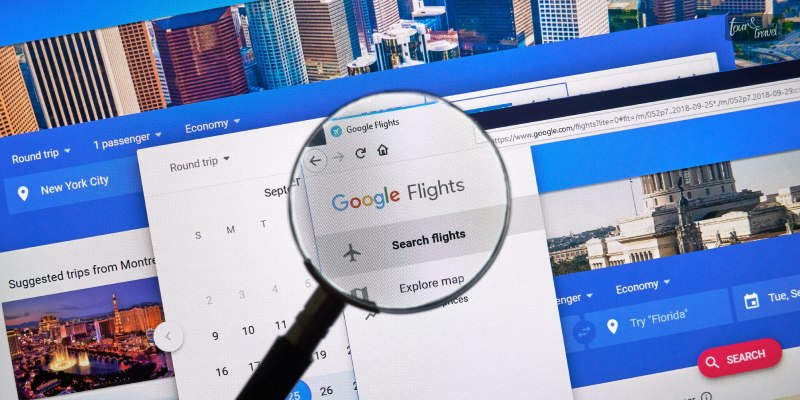
While there are multiple search engines for finding cheap flights – maybe you use a tool like Hopper or Skyscanner or depend on a travel agency online such as Expedia or Priceline. But there’s one option that’s always better than the rest – yep, we are talking about Google Flights.

Yep, that’s right!

Google is undoubtedly the best search engine in the world today – and it doesn’t fail to impress when it comes to finding cheap flights. It’s a crazy tool – and it comes with multiple features that will help you find the best prices. And not just that – thanks to its Price Guarantee feature, if the flight fares drop after the booking has already been made, you might get a refund.

It also comes with a variety of filters that can be used for finding the best flights that you want in reality. And at the same time, avoid the flights you don’t want to check out. Additionally, you can definitely use this tool for searching different carriers and directly booking any airline as compared to other third-party websites.

Today, we are here to help you find out how to use Google Flights – the tips and tricks you need to find the best deals online.

But First, What Are Google Flights?

Why will you waste time looking up ‘flights Google’ on Google when you can directly book flights on Google Flights itself? So, what are Google Flights?

Google Flights can be defined as a type of metasearch engine that uses a global distribution system for tapping into the different flight inventories offered by all airlines in the entire world. You cannot define the same as an online travel agency or OTA like Orbitz or Priceline.

How Do Google Flights Work?

Before you book yourself a GG flight, let’s find out how this is work. This is basically a type of metasearch engine that uses different itineraries, seating orders, and flight schedules to display multiple flight prices on hundreds of tickets, inclusive of taxes. The metasearch engine uses different information on extra fees for avoiding baggage fees as well as basic economy.

Once you determine the flight you need, you can directly book with your preferred airline or any travel agency online. Google Fights is basically a search, too, like Google itself – technically, you are not really booking flights via Google.

Top Tips For Using Google Flights:

Are you already busy typing ‘Google flights San Diego’ or some other location? Then stop! Because we have six top tips that will help you to use this – stay tuned to find out more!

1. Filter For Stops To Get The Flights You Want:

Flying non-stop is an ideal situation. Google Flights, in fact, make it pretty easy to look for nonstop flights – there’s a filter dedicated to finding the best nonstop flights. At the same time, it is crucial to remember that one-stop flights can help you save on costs, especially if you are flying internationally.

2. Search For The Airlines You Want:

Are you a diehard United fan? Or do you prefer flying on Delta? Google Flights can help you narrow down search results to certain airlines.

3. Search Multiple Cities To Find Better Deals:

Google’s ability to search multiple destination cities and departure points is completely unparalleled. It is pretty useful when you are seeking international flights, and you are confused about whether you should fly straight to Venice or first stop at Rome.

Other Things That You Can Do:

Apart from the tips we have mentioned in detail above, scroll down and find out what else you can do while using this.

  1. Using Google Flights to explore,
  2. Using Price Alerts, and
  3. Watch your carbon footprint.

What Is The Best Way To Book Cheapest Flights On Google Flights?

During the holiday season, it is quite important to have the bookings of the flight at a lower rate so that you don’t spend all your money. It is also important to consider that there are certain tools that are appropriate in overall using the application!

Insights On The Cheapest Time!

While following Google Flights, you get to evaluate an average on the same route of travel! When booking flights, it is also important to learn about the lower prices on a regular basis so that you can select the specific days when the fares are at their lowest.

The upgraded insights are being launched by Google Flights as they use reliable trend data based on the chosen destination and dates. Further, you can also curate your itinerary by following the insights.

Price Tracking!

If you turn on the price tracking, it will help you evaluate the lower fares of the flights along with the overall significance of the price drops. You will learn about the evaluation of the prices along with the way flexibility becomes an important part of this process.

For example, if you have to attend an event after 6 months, it will help you a lot if you deal with the bookings by putting specific dates and tracking the prices. This will lead to you understanding the way the feature will help you to have a cheaper booking price.

Price Guarantee!

When you search for flights on Google Flights, you will find some colorful price guarantee badges. This is to ensure that the flights that are with that tag show prices that will not go lower. Hence, you can finalize on the booking of the flights. 

With this tag, you can also monitor the prices of flights before takeoff! It will help in managing the differences on Google Pay. It is a pilot program hence, not available with all departing flights.

Exploring Google Flights: Pros And Cons!

Before you get all excited and Google flights to Las Vegas, it’s only practical to find out the pros and cons of this metasearch engine. Scroll down and find out the pros and cons of booking flights with the help of Google Flights.

Pros Of Google Flights:

Just for the simple reason that this is not really an OTA, it is anyway better than almost all other tools. So before you can look up ‘Google flights Las Vegas,’ let’s check out the top advantages of using this search engine.

  1. You can pretty much always directly book with any airline of your choice. You might come across multiple options for booking with different other sites, but at the same time, cutting out in-between costs while booking flights is more crucial than ever. Dealing with any airline agent is always better than dealing with bad customer support from some small online travel agency.
  1. Google Flights will enable you to look for multiple airports simultaneously, thereby helping you to find the cheapest airport to fly to or depart from, for that matter. And isn’t that the key to saving money on flights, especially when you are flying internationally?
  1. None of the search engines will do a better job when it comes to showing months’ worth of flights, especially when you are trying to land the cheapest airline deals. You will even get notified if shifting your travel dates by a day or two can save reduce your expenditure.

Cons Of Google Flights:

Having noted down all the pros of using this, you might already be typing ‘google flights Seattle’ or some other location, but wait! this is not entirely perfect. It is close to perfect, but there are certain drawbacks. These drawbacks are as follows,

  1. Since Google Flights depend mostly on featuring airfare from the different airlines directly, you can, at times, come across cheaper fares via OTAs that end up cutting deals with various carriers for listing highly discounted flights.
  1. Google is almost always updating the inventory of different available flights. Occasionally, we might stumble upon certain issues that arise from outdated pricing. This means you might come across a price that you like, only to click and find out that the price has gone up.
  1. While a majority of flights are available through Google Flights, only a handful don’t really list their fares or on other search engines, for that matter.

And It’s A Wrap!

Google Flights is one of the coolest apps that we can use if we have regular flight business! The tools available help in utilizing resources along with making it easier for us to spend the right amount of money!

And that’s a wrap on the Google Flights. What are your thoughts booking Google Flights? And while sharing your thoughts, don’t forget to share your experiences associated to Google Flights in the comments below.

Share on Social Media

Barsha Bhattacharya builds stories for a living and seeks mountains for everything else. An English major and remote content strategist, she travels every month, structuring her life around movement rather than routine. Her journeys are rooted in mountaineering and rock climbing, with a deep preference for tents over hotels and cold mornings over comfort. Barsha believes the mountains demand clarity, patience, and presence - the same qualities that shape her work. For her, travel is not an escape but immersion: long routes, rough terrain, and nights under open skies where the line between work and wilderness disappears.

Leave a Reply

Your email address will not be published. Required fields are marked *

title-img Related

READ MORE London Music Trip Travel Guide

The London Music Lover’s Travel Itinerary: Venues, Vinyl & Vibes

BY  Sibashree Aug 18, 2025

For those who travel by sound as much as sight. London doesn’t just host music, it holds it. It moves through the brickwork, hums beneath your morning coffee, and shows up when you least expect it.  If you're flying in with rhythm on your mind, don't waste time chasing tourist noise. Here’s a curated London music trip travel guide for music lovers who want to feel the city, not just see it. Your Ultimate London Music Trip Travel Guide: Follow This Itinerary You came for music in London, and if you did it right, you didn’t just watch it—you walked through it.  In London, every borough speaks its own tempo. The key is listening closely, not just for the big nights, but for the quiet tracks in between. Nevertheless, here is a standard London music trip travel guide for four days.  Day 1: Arrival & Warm-Up Walks Start with the echoes. Land, check in, and resist the urge to overschedule. Instead, walk. London’s music history isn’t just locked up in venues—it’s in the corners of Soho, the secondhand shops of Camden, and the quiet plaques on buildings that once held chaos and brilliance. Head to Denmark Street, once known as Tin Pan Alley. You don’t need a guitar to appreciate it—just time and a bit of reverence. Nearby, walk past the former Astoria (now long gone, but not forgotten), then duck into Sounds of the Universe in Soho. The vinyl is deep-cut, globally sourced, and fiercely curated. Grab a late bite nearby and keep it lowkey. You’re just getting started. Day 2: Vinyl Crates & Iconic Stages Go digging, then go big. Start the day in Notting Hill with a stop at Honest Jon’s Records. It’s been around since the '70s and the staff have that rare, quiet encyclopedic knowledge that reminds you music people don’t need to shout. Flip through dub, jazz, garage, and everything in between. Then cross town and hit Rough Trade East in Brick Lane. Even if you're not buying, the energy is unmistakable. There’s usually a live session or interview playing somewhere in the background. You feel part of something—even as an observer. As the evening rolls in, book a Cirque Le Soir table before you head to The O2 Arena. Yes, The O2 is huge. But some nights deserve scale. Whether it’s a legacy tour or a one-night-only show from an artist on the brink, this is where spectacle meets sound.  The acoustics are sharp, the production is heavy, and if you’re lucky, you’ll leave changed. Now, why the table? After a concert, artists love to celebrate. And where do they go? The table will make sure you have access. Day 3: The Cultural Cut Where sound meets soul. Dedicate the day to Southbank. Start with the Southbank Centre. Between Royal Festival Hall, Queen Elizabeth Hall, and the Purcell Room, you’ll catch everything from full-scale orchestras to left-field jazz sets to spoken word that leaves the room quiet in the best way. The best part? The space itself. Brutalist buildings softened by river light, steps where kids blast drill next to older couples sipping rosé, and that unspoken code that says, we all came for something real. After, stop into BFI Southbank or one of the nearby cafés. There’s a quiet, creative current in this stretch of the city. Lean into it. Day 4: A Goodbye With Texture Leave on the right note. Spend your final morning in Camden. Walk along the canal. Listen for the street musicians who don’t just perform—they pour. Visit the Jazz Café if it lines up, or just stop by outside and take in the marquee. A lot of names you know started here when no one else did. Before heading to the airport, swing by Flashback Records or Sister Ray. One last flip through the bins. One last moment to chase something unexpected. That’s what music travel is really about—not the big plans, but the small finds that find you. Day 5: Visit The Victoria & Albert Museum The Victoria & Albert Museum is the place where history meets music. The rarest and exclusive musical collections are often on display at the museum.  Here, you will find the works of Freddie Mercury, David Bowie, and many other musical geniuses representing genres such as opera, rock n roll, and others.  Also, the museum stands out with its unique collection of musical instruments. In fact, the collection of musical instruments here is the biggest in the world.  Day 6: Visit Abbey Road Are you a Beatles fan? You surely know what to visit in London. Abbey Road Crossing is the place where the Beatles' album was shot.  Furthermore, the crossing is close to Abbey Road Studios, where the Beatles recorded many of their iconic songs. The studio is still active as a recording facility, and you can also reserve a guided tour of the studio to learn about the history of music in London.  Day 7: Pay A Visit To The 100 Club The 100 Club in London was known as the Feldman Jazz Club from 1942 to 1964. In 1964, the club was renamed “The 100 Club” and since then, it has been a popular venue for live music shows and events.  Furthermore, throughout decades of its operation, The 100 Club has been hosting iconic performances such as Sex Pistols, BB King, Muddy Waters, Eddie Grant, and the list goes on! Moreover, located at 100 Oxford Street, 100 Club London is the oldest individual setup in the world.  Day 8: Watch A Performance At Royal Albert Hall Our London music trip travel guide will be incomplete without attending a live performance at the Royal Albert Hall.  Located at the northern edge of South Kensington, the Royal Albert Hall can accommodate 5272 visitors.  Queen Victoria opened the hall in 1871, and since then, it has been graced by all the prominent musicians and artists from around the world.  Furthermore, the hall has a distinct Italian architecture, and the first British Marathon was run at the Royal Albert Hall in 1909. 

READ MORE mountains of kenya

The Major Mountains Of Kenya: Location, Altitude, & Why You Should Visit Them! 

BY  Sibashree Aug 11, 2023

Want to learn more about the mountains of Kenya? A geographically and topographically diverse country, the Republic of Kenya has beautiful mountains that are more than just a geographical feature! Please read this article to learn about the features of the mountains, their cultural significance, as well as their beauty. There are almost 3888 mountains, out of which 3856 are named mountains. Mount Kenya is the highest peak of all these mountains, with an elevation of 5199 meters. It is one of the second-highest mountains in Africa and is considered a UNESCO World Heritage Site. Kenya is located in the eastern part of Africa, more towards the southern horn of Africa, with diverse geographical features ranging from towering alpine peaks to mangrove swamps. The mountains' beauty adds to the country's natural features, making it a perfect place to visit! Explore The Beauty Of The Mountains Of Kenya! As a country with a topographical contrast, Kenya is located in the eastern section of Africa. The equator crosses the country across Nanyuki, Maseno, and Timboroa. These features highlight Kenya as a stunning destination that many wish to visit! Being a topographically diverse country where the forests offer diverse wildlife, it is perfect to visit if you love taking safaris. There are also coasts and grasslands, making the location more diverse. The nation is also highly agricultural, with diverse produce, including vegetables, fruits, and animals, even though the location is remote and can be difficult for regular travel. An African safari holiday is a dream for every hodophile, and Kenya offers the perfect backdrop. With spectacular wildlife, astounding landscapes, and a melting pot of culture, Kenya ranks at the top of the travel list of everyone! Moreover, the beautiful mountains play an important role in making Kenya a fascinating place! The country borders nations such as South Sudan, Ethiopia, Tanzania, Uganda, and Somalia. So want to know more about the up-warped giants of the earth? Read along! 1. What Makes Kenya’s Mountains Unique In Africa?  Kenya’s mountains are unique due to:  Equatorial location with alpine conditions  Rare plant species  Combination of glaciers and savannah landscapes  Strong cultural significance  Few places in the world offer such dramatic ecological contrasts.  2. Are Kenya’s Mountains Culturally Significant?  Absolutely. Many Kenyan communities consider mountains sacred:  Mount Kenya is sacred to the Kikuyu people, who believe it is the dwelling place of their god, Ngai.  Mountains often feature in local folklore, rituals, and traditions  This cultural importance adds depth beyond their physical beauty. Highest Mountains Of Kenya The total area of Kenya is 586,000 square kilometers, with high-rising regions such as high plateaus, mountains, arid deserts, and low-lying coastal areas, including islands and coral reefs. 7 freshwater and salt lakes are creating the Great Rift Valley cutting the country in half! Kenya has two of the tallest mountains on the continent. There are several other mountains, most inactive or extinct volcanoes. The landscape is diversified, yet the mountains are as beautiful as ever! Read more on some of the noteworthy mountains in Kenya. Mount Kenya The highest mountain in Kenya is Mount Kenya, located in the center of Kenya, approximately 100 miles northeast of the Capital, Nairobi. The mountain has several summits. Nelion, Lenana, and Batian are some. Bastian is the highest, with 17,058 feet, indicating the mountain's peak. The mountain formed about 3.5 million years ago. A well-known tourist destination, the Mount Kenya National Park surrounds Mount Kenya at the base. You can see elephants, buffalo, as well as colobus monkeys in the park. You can trek the mountain's peak of Lenana Summit as it is feasible without any mountaineering expertise. The rock kente is only available on Mount Kenya as well as the Antarctic, situated at the South Pole. The Spiritual Connection Of Mount Kenya Riuki is found on Mount Kenya, which in a spiritual context is considered the symbolization of the throne of God. Riuki is regarded as the pathfinder by the Gikuyu medicine men. They also believe it therapeutic as they put pebbles at risk as seers. The history of Mount Kenya is interconnected with the Egyptians, Jews, and Ethiopians. Mount Kenya is called Ta-Neteru by the Egyptians, which means the abode of the gods. The God Hapi or lotus, the gods of the Nile Floods, lived on the mountain. The farming communities that settled in Egypt in 7000 BC before the inundation of the Nile corresponded with "Isis," the heliacal rising of the star. It was after the water from the Nile flooding receded, leading to rich dark silt across the Central African countries and highlands. The land is called "Kemet," which is fertile land ready for planting. They consider the lands around Mount Kenya as one of the fertile lands. It also believed that the goddess Isis hid her son, her husband Horus, to raise him from the dead. They say the mountain has medical properties, and the locals consider it amazing. They pray to the mountains for protection and safety. Communities such as Maasai and Samburu are semi-nomadic people who use the northland of the mountain as a paying ground. Mount Elgon The second tallest peak in Kenya is Mount Elgon, located on the country's western side, closer to the Kenya-Uganda border. The mountain has distinguishing characteristics, such as having one of the largest volcanic craters. The top of the mountain is a flat-topped plateau made of basalt. The total height of the mountain is 13,852 feet, with lava tube tunnels across the mountain. Elephants and buffaloes often visit the lava tube tunnels. A national park surrounding Mount Elgon also has rhinos, eagles, leopards, and duikers. Mount Longonot Mount Longonot is an inactive volcano that last erupted in the 1860s but is not completely extinct. The height of the mountain is 9108 feet, and the mountain's slopes are filled with ridges. Mount Longonot is a mountain in Kenya. A park nearby has plenty of wildlife, such as zebras and giraffes. The mountain is situated approximately 60 kilometers northwest of Nairobi. Travelers can visit the park by car, and the base of Mount Longonot has a lot of forest, even around the top crater. Compared to many stony mountains, this one is thickly wooded across the slopes and the summits. Satima Mount Satima is also "Ol Donyo Satima," which roughly translates to "Mountain of the bull calf." It is one of the Kenya mountains! It is the highest mountain across the Aberdare range, with a height of 13,127 feet, and is located on the northern side of the mountain range. The mountain has tussock grass and rocks in some areas and rainforests. There are bamboo forests and Moorland across a section of the mountain. The mountain has a collection of 150 species of plants, such as Podo and Cedar. The mountain is part of the water catchment area for both the Sasumua and Ndakaini dams. The two dams for Nairobi City are the primary source of water. Kinangop Kinangop is a dormant volcano in the Great Rift Valley and the west of the Kinangop Plateau. It is also situated in the Aberdares, with extensive bamboo forests across the mountain in the lower portion. The height of the mountain is 12815 feet. Moreover, the higher sections of the mountain are covered with tussock grass. The top of the mountain is rocky with open moorlands. The top of the mountain is quite chilly and turns freezing at night. Ngiro Mount Ngiro is located in the northern region of Kenya, with a height of 9344 feet. The mountain is part of the Great Rift Valley to the west overlooking the Suguta Valley. The upper slopes have forests, while the mountains is popular for cultivating bees. The mountain falls under the territory of the Samburu people, while the Lmasula phratry performs bee cultivation. The clan claims exclusive rights to the water and the land. Several other mountains and hills are situated in the nation, creating an exciting place for vacationing. If you are a hiking person, Kenya is the perfect place to visit as there are several advantages. There are enough mountains in Kenya for you to go hiking, as well as trails. It is a perfect spot to share holidays as well as weekends with your hiking partners. Some of the tallest mountains are situated in East Kenya. Kulal The mountain Kulal is identified as a biosphere reserve with lava fields, and the origin of the mountain is a volcano. The moisture in the biosphere leads to rain as well as mist, providing hydrological services to the people in northern Kenya. The mountain is located in the middle of East Africa, with steep slopes while deep canyons go across the mountain. It is also one of the driest places in Africa. There are forests across the mountain, a habitat for black rhinoceroses and elephants. Marsabit Mount Marsabit is surrounded by Mt. Marsabit National Park and Reserve, with a height of 1703 meters above sea level. The mountain has many craters, while the hills around it highlight the mountain. Across the mountain are many low-lying arid plains with elliptical shapes 70 km long on the northeast-southwest as well as 45 km wide on the northeast-southwest. The mountain comprises weathered lava flow. Mogila Mogila is one of the mountains of Kenya with a height of 1698 meters. A local relief of 300 meters, steep slopes, and a small summit area characterize the mountain. Moreover, it is located in the Turkana, creating the Great Dividing Range. Namanga Hills The mountain is in the southern part of Kenya. It is located on the borders of Tanzania, with the highest point being 2548 meters. The Great Rift Valley has four peaks: Suswa, Paka, Namarunu, and Menengai. The hills have a collection of hyenas, zebras, ostriches, as well as Antelopes. Cultural Relations Of The Mountains Of Kenya According to the Kikuyu tribe, they say the local Kikuyu god, N'gai resides at the summit of Mount Kenya. Mount Kenya is one such place that the local cultures worship. They consider these mountains the home of spirits as well as gods. Mount Kenya is a spiritual mountain, as the local communities think of it as the residence of God. Ethiopians also consider it the home of God and revered in its presence. The belief gains further confirmation because of the snow at the top of the mountain. The mountain is very close to the equator. Hence, it is quite surprising that there is snowfall at the top. There are thick forests around the mountain, and initially, the military dug the woods to flush the Maumau freedom fighters. According to the traditional version of Mount Kenya in Kikuyu, a star fell on the ground with a bang and formed the mountain. The mountain has volcanic ashes and oozing magma which forms the Kenyte. Mount Longonot has its Masai name, "Oloonong'ot," meaning "mountain with many spurs." The mountains are important as well as are traditional sites for worship by the local populations. Some vow in the mountain's name, while some send prayers based on cultural traditions. Both visitors and the natives join in collaborative activities such as mountain climbing and hiking. What Are The Major Mountains In Kenya?  Kenya is home to several notable mountains, the most famous being Mount Kenya, Mount Elgon, and the Aberdare Range. Among these, Mount Kenya is the highest and most iconic mountain in the country.   Other important highland areas include the Mau Escarpment, Cherangani Hills, and Ngong Hills, which contribute significantly to Kenya’s geography, climate, and biodiversity.  What Is Mount Kenya And Why Is It Famous?  Mount Kenya is the highest mountain in Kenya and the second-highest peak in Africa, standing at approximately 5,199 meters (17,057 feet) above sea level.   It is famous for its dramatic peaks, permanent glaciers (though shrinking), alpine vegetation zones, and spiritual significance to local communities.  Mount Kenya is also a UNESCO World Heritage Site, recognized for its unique ecosystems, scenic beauty, and ecological importance.  Are Kenya’s Mountains Safe For Tourists?  Yes, Kenya’s mountain regions are generally safe for tourists, especially within national parks and guided groups. Safety improves with:  Proper planning  Licensed guides  Weather awareness  Altitude acclimatization  Like all outdoor adventures, caution and preparation are key.  What Are The Main Peaks Of Mount Kenya?  Mount Kenya has three primary peaks:  Batian (5,199 m) – The highest and technically most challenging peak  Nelion (5,188 m) – Slightly lower, also requiring technical climbing skills  Point Lenana (4,985 m) – The most accessible peak, popular with trekkers  Point Lenana is often climbed by hikers without technical mountaineering experience, making it the most visited summit.  What Is The Aberdare Range?  The Aberdare Range is a mountain range located in central Kenya, north of Nairobi. Unlike Mount Kenya and Mount Elgon, it is not volcanic but consists of folded mountains.  The Aberdares are known for:  Dense forests  Moorlands  Waterfalls  Wildlife, including elephants and leopards  The range forms part of the Aberdare National Park, a key conservation area. Are The Mountains Of Kenya A Cult? The high places in Kenya, especially mountains with snow caps, high mountain ranges, and island mountains, are cults. There are psychological roots of the communities who believe that mountains act as a heavenly ladder. Besides the spiritual connection for the community, mountains are also helpful natural elements for humans as they bring rain, while they also have volcanoes. Volcanoes have a fiery side to them, representing the element of earth. According to the myths based on the world's origin, mountains are the first natural element from ancient water. The indigenous people believe mountains are a great phenomenon of the earth, symbolizing cosmic connection. The local communities consider the mountains as shrines or altars for the Gods and worship them. For example, people in Africa often blame an earth deity when there is an earthquake. They also consider snakes to be culprits, a belief that their cult teaches in the cultural practices of Africa. FAQs   Here are some frequently asked questions and answers about the mountains of Kenya.  1. Is Mount Kenya A Volcano?  Yes, Mount Kenya is an extinct stratovolcano. It was formed millions of years ago through volcanic activity.  Over time, erosion removed much of the volcanic cone, leaving behind the rugged peaks seen today. Although extinct, the mountain still plays a critical role in water catchment and climate regulation in the region.  2. Are The Mountains Of Kenya Suitable For Hiking And Trekking?  Yes, Kenya’s mountains offer excellent opportunities for hiking, trekking, and mountaineering, catering to various skill levels: • Beginner to intermediate hikers: Point Lenana (Mount Kenya), Aberdare trails • Experienced climbers: Batian and Nelion peaks • Leisure trekkers: Mount Elgon’s gentle slopes Guides are recommended, especially for high-altitude or protected areas.  3. What Is The Best Time To Visit The Mountains Of Kenya?  The best time to visit Kenya’s mountains is during the dry seasons: • January to March • July to October These months offer clearer skies, better trail conditions, and safer climbing environments. The rainy seasons (April–June and November) can make trails slippery and challenging. 4. What Types Of Vegetation Are Found On Kenya’s Mountains?  Kenya’s mountains feature distinct vegetation zones based on altitude: • Lower slopes: Forests and farmland • Mid-altitude: Bamboo forests and montane forests • Higher zones: Moorlands, giant lobelias, and senecios • Upper alpine zone: Sparse vegetation, rock, and ice This vertical diversity makes Kenya’s mountains biologically rich. 5. Are Kenya’s Mountains Important For Wildlife?  Yes, the mountains of Kenya are vital wildlife habitats. Species commonly found include: • Elephants and buffaloes (lower slopes) • Leopards and hyenas • Rare bird species • Endemic plants and insects Protected areas like Mount Kenya National Park and Aberdare National Park help conserve this biodiversity.  6. How Difficult Is It To Climb Mount Kenya?  Climbing Mount Kenya varies in difficulty depending on the peak: • Point Lenana: Moderate difficulty; suitable for fit hikers • Batian and Nelion: Technical climbs requiring mountaineering skills, ropes, and guides Acclimatization is essential due to altitude. 7. Do I Need A Guide To Climb Kenya’s Mountains?  While not always legally required, hiring a licensed local guide is strongly recommended. Guides provide: • Navigation assistance • Safety support • Local knowledge • Emergency preparedness For technical climbs, guides are essential. 8. Can Beginners Hike In The Mountains Of Kenya?  Yes. Many routes are suitable for beginners, particularly: • Lower Mount Kenya trails • Aberdare forest hikes • Mount Elgon trekking paths Basic fitness and preparation are usually sufficient.  Conclusion Did you notice something unique about the mountains of Kenya? Most of these mountains have physical features giving an Alpine appearance. There are many ridges across the mountains, giving it a ragged nature. So now you know about the beauty of the mountains, especially when it comes to the cultural aspect of it. People worshiping mountains is one tradition that integrates respect and protection of the natural elements. People from different cultures in Kenya believe in spirituality and offer prayers to the mountains. Let us know in the comments below if you see any culture where people worship mountains too!

READ MORE Stree-free holiday travel

Ultimate Guide to Stress-Free Holiday Travel

BY  Sibashree Mar 22, 2025

The holiday season is around the corner, and we’re already planning holidays. If you are heading to your family, going on a holiday, or elsewhere, pre-booking will help you make the journey easier and more enjoyable.  This is the full guide on assisting you with holiday travel, including expert tips and practical advice for preparing for holidays easily.  1. Prepare in Advance for an Easy Journey  The sooner you book, the more likely you will get what you want. When traveling, it is best to go during holidays and reserve rooms and seats in advance.  Don’t leave it late; arrange transportation and accommodation ahead of time. Put together tickets, accommodation, and transport on a list.  Be sure to look at the weather forecast in your destination to be able to pack suitably. You do not want to be caught in a snowstorm or heatwave with the wrong equipment!  2. Intelligent Holiday Travel Budgeting  Holiday travel costs can easily exceed budget, especially during peak holiday seasons. Setting a realistic budget when making holiday plans will prevent overspending.  Budget your expenses under allocations to pay for your airfare, accommodations, travel, restaurants, tour fare, and shopping.  Utilize discounts online, compare prices, and hostels, Airbnb, or travel off-season. No need; forward reservation can also assist. It’s also smart to have some ready money for emergencies such as tips or impulsive shopping.  3. Pack Smart and Light  Intelligent packing will save the day and avoid inconvenience. Pack only the necessities and try to keep it light.  Use multi-functional clothing that you can interchange to reduce the amount of clothing to carry.  Don’t spare any space in your luggage to purchase souvenirs or new clothes during travel. Don’t exceed your baggage allowance limits so that you can have additional charges to pay at the airport.  If your journey is short, a carry-on flight would do. A physician’s kit containing medicine, a first aid kit, and photocopies of the documents that will be needed should be kept handy in case of an accident.  4. Travel with Pets  If a pet is being taken along on a holiday vacation, find out if your hotel is pet-friendly and look up the travel rules in advance.  Some airlines and other carriers also require health certificates for pets, so have your vet issue one.  Be prepared by bringing along the basics, such as pet food, water, a leash, toys, and medication if prescribed.  When traveling, consider your pets' safety and comfort as well. Plan in advance for pet care requirements.  5. Insure Yourself with Travel Insurance  Unexpected events like flight delays, lost luggage, or illness can spoil your tour and leave you stranded. Travel insurance helps by giving you confidence through reimbursement of unexpected costs.  Depending on your holiday, you can decide to buy an upgraded policy that includes trip cancellation, illness, or even flight delay. Make sure to read the cover details before buying so that it will be worth it.  6. Create a Flexible Schedule  Planning never hurts, but flexibility is the key to enhancing your holiday experience. See where you are required to go, check their opening time, and write down their holiday hours.  Adopt a flexible approach in the event your arrangements are foiled or in case you wish to insert unplanned encounters on your path.  The holiday season means large numbers of people, and flexibility will avoid getting agitated if matters fail as expected.  7. Travel Checklist  Ensure you have all the documents and essentials with you before you go out to your destination. A list of essentials is as follows:  • Genuine travel documents (passport, visas, etc.)  • Cash and debit/credit cards (both are recommended)  • Travel insurance information  • Medication prescribed and first aid kits  • Phone chargers for electronic devices and adapters  • Rain or weather-specific footwear and clothing  • Toilet and personal items  8. Protect Your Belongings  It’s always exciting to travel to a new place, but protecting your belongings is equally important.  Stealing and pickpocketing can occur anywhere, particularly in crowded places such as airports or sightseeing sites.  Store your valuables in a money pouch or safe belt, and don’t carry all your money or cards at the same time.  It is also wise to have photocopies or digital copies of important documents (such as your passport, travel insurance, and emergency contacts) just in case they are stolen or lost.  9. Be Frugal with Your Holiday Money  Over-spending on your holiday can cause anxiety once the holiday season is over.  To prevent this, keep track of your spending once in a while on holiday. Have a budget for everyday activities and meals and prioritize substances over goods when spending.  If you tend to mindless shopping, place restrictions before eating out or shopping beforehand. The most memorable aspects of your vacation are likely the experiences, not the trinkets!   10. Foreign Currency Exchange & Financial Planning  If you are traveling abroad, it’s convenient to get used to the foreign currency and exchange rate.  Don’t exchange a large amount of money at the airport, where they offer less favorable exchange rates. Rather, use local ATMs and withdraw your money when you arrive.  It is also advisable to notify your bank of your travel so you won’t have any issues transacting on foreign grounds. Finally, for added convenience, bring a credit card with no foreign transaction fee.   11. Stay Connected for Safety & Convenience  You will require a functional phone or device to communicate with others and utilize in emergencies on the road.  If you are traveling abroad, buy an international SIM card or international data plan so that you can call.  Also, let a trustworthy friend or relative know your travel plans so that they can trace you. This is an extra precaution and convenient in the event that you need help on the road.  Final Words!  Vacation travel, if well planned, can be smooth sailing and hassle-free. Whether you are a frugal traveler, security-aware adventurer, culture-aware traveler, or packing expert and one.  Like any of them, the following is the best advice for hassle-free and successful travel.  Considering all this, you should remember that quality planning will ensure that you’re carefree during travel. Safe and happy holidays!