Spotting the burrows of the black petrels at Glenfern Sanctuary and the hillside was like magic! The burrows had eggs in a cream shade with tan freckles. They almost looked like the eggs of a hen, though slightly larger.
Also, some chicks were chirping their hearts out inside the burrows. They looked like those squishy dog toys. Now, spotting birds is one of the most fulfilling activities when you are camping on Great Barrier Island, New Zealand.
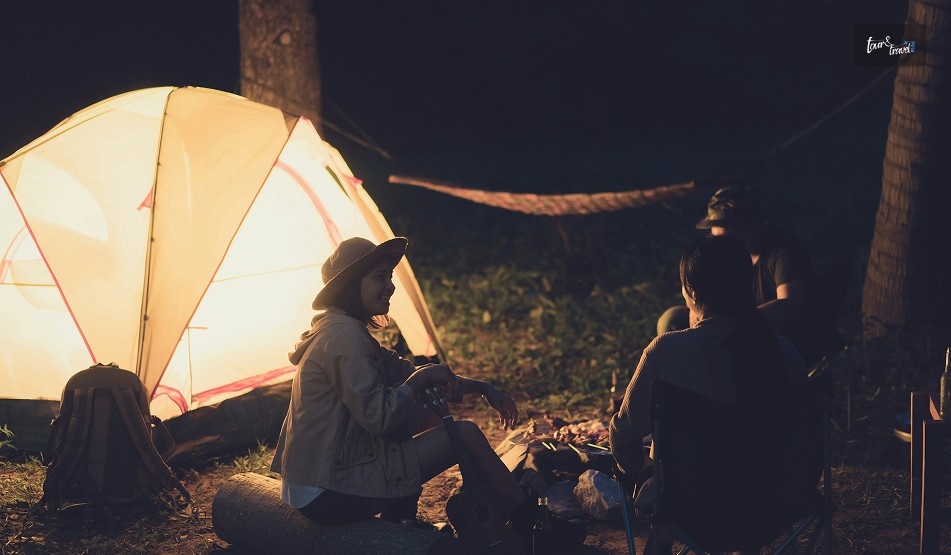
Furthermore, if days were about hiking and spotting the birds, the nights were about indulging in the surreal beauty of the celestial bodies at this designated Dark Sky Sanctuary.
Moreover, camping in Great Barrier Island is a true off-grid and remote experience.
No Streetlight!
No Public Rubbish Bins!
And, No Powered Camping Sites!
It’s just you, the camping tent, and the rugged beauty of New Zealand’s Hauraki Gulf.
Hi, in today’s blog, I will talk about the Great Barrier Island camping tips. Here, you will learn about the must-book DOC sites, the non-negotiable biosecurity rules, and everything else you need to plan your adventure.
Camping In Aotea, Great Barrier Island: Setting The Right Mindset For Biosecurity And Sustainability
Aotea isn’t a place that just hands you its beauty. It’s a place that makes you earn it. It’s a true adventure that rewards you for being self-sufficient.
It’s the thrill of waking up to the raucous call of a Kākā parrot, not an alarm clock. It’s the magic of watching the Milky Way rise over the dunes at Medlands Beach, and the peace of having a rugged, white-sand cove all to yourself.
Also, it is one of the rare islands that serve as sanctuaries, and with 60% of its area protected by the Department of Conservation, Great Barrier Island demands the utmost care for biosecurity and the adoption of sustainable practices.
So, before you want to explore the best camping spots on Great Barrier Island New Zealand, you have to build your mindset.
This is your invitation to join a small community of travellers who value wild, authentic, and responsible adventure.
1. Offering The True Off-Grid Experience
The campsites of the Great Barrier Island are exactly what the island is. They are not powered, and they have basic amenities. Furthermore, open fire is not allowed in these campsites.
So, you will have to bring fuel-powered or gas cookers. Furthemore, the Department of Conservation camping sites have only a specific number of tents. So, you need to make the booking well in advance. Contact the Department of Conservation (DoC) at 0800 275 362.
2. The Golden Rule: “Pack In, Pack Out”
Zero waste and recycling are important for the sustainability and environmentally friendly practices of the Great Barrier Island. However, the island does not have public rubbish bins.
So, whatever you carry to the island, you will have to take it back. You must use the official Orange Council bags with stickers for trash disposal.
3. Biosecurity Is Most Important
Protecting the Kauri trees from the infamous “Kauri Dieback disease” and the island’s endemic animals requires a high level of biosecurity.
So, when you leave for the Great Barrier Island from Auckland, you will have to check for ants and rats. Also, when you leave Great Barrier Island, check the tents and packs for skinks.
In addition, the Phytophthora Agathidicida attack on the kauri trees has been a serious concern. Stopping the soil movement is crucial to stopping the attack of this dieback disease. Soil movement can happen through pigs, footwear, and vehicles.
Therefore, the Department of Conservation (DoC) cleaning stations play an important role in cleaning and removing soil from your gear and footwear before entering a kauri forest on Great Barrier Island, New Zealand.
If you are camping in any of the DoC sites, you have to make the booking online well in advance. Private camping sites can be booked directly.
Here is the step-by-step guide for booking a DoC Campsite on the Great Barrier Island.
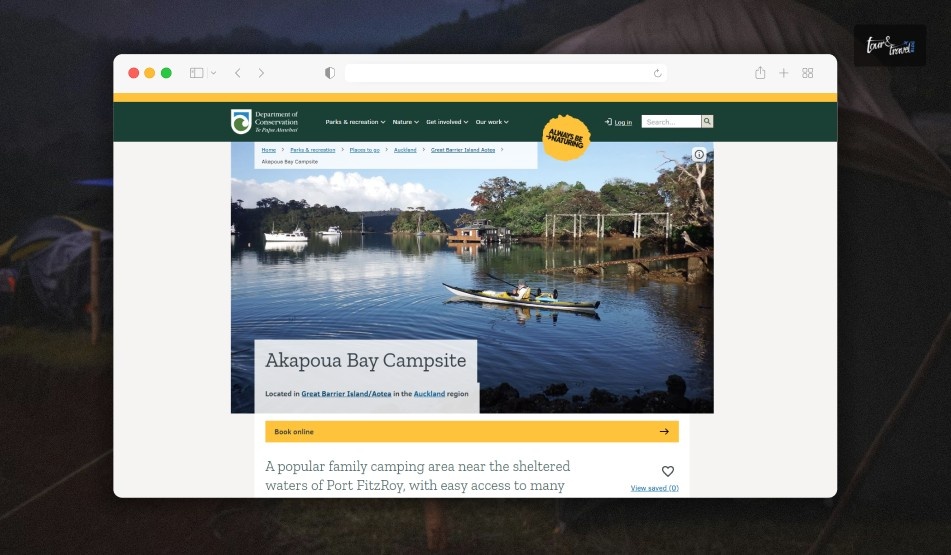
First, visit the Department of Conservation site for the particular campsite. For example, let’s talk about the Akapoua Bay Campsite.
On the dedicated Akapoua Bay Campsite page, you will get to know about the campsite and the fees.
The fees for the Akapoua Bay Campsite are $18 per night for adults, $9 per night for children ages 5 to 17, and $0 per night for infants ages 0 to 4.
In addition, you can book a campsite pass from the Department of Conservation of New Zealand. It will give you access to all the bookable and non-bookable campsites in the country.
If you need any assistance in booking the campsite pass, you can avail of that at a service tax of $10. For adults, the camping pass will cost $295.00 (365 nights), and for children between 5 and 17 years, the pass will cost $147.50.
Moreover, for children below 5 years, the camping pass is free.
If you need any assistance regarding the booking of the 1-year campsite pass or a pass for any specific site, you can contact Whakatū/Nelson Visitor Centre at +64 3 546 9339 or email them at nelsonvc@doc.govt.nz.
The Kauaeranga Visitor Centre (+64 7 867 9080/kauaerangavc@doc.govt.nz) also offers the same assistance.
What Are The Best Camping Spots On Great Barrier Island New Zealand?
Digital detox has been a trending thing these days, and if you want to truly experience that and shut all the noise in your head, the camping spots on the Great Barrier Island will be the best for you.
Further, the real magic of camping on Aotea starts after sunset. You haven’t lived until you’ve watched the Milky Way rise over your tent from the dunes at Medlands.
However, along with the Medlands Beach, there are 5 other DoC campsites in the Great Barrier Island, New Zealand. Here are the details.
1. Akapoua Bay Campsite
The sheltered waters of Port FitzRoy have a beautiful camping ground, which is like a gateway to the many walking tracks of the Great Barrier Island, New Zealand.
From waking up with a 60-second dash of a cold shower to exploring the paths graced by the pohutukawa trees, the Akapoua Bay Campsite will offer you a peaceful and off-the-grid experience.
The maximum number of campers on this site can be 75. Moreover, the camp is hosted from Christmas to the end of January.
2. Harataonga Campsite
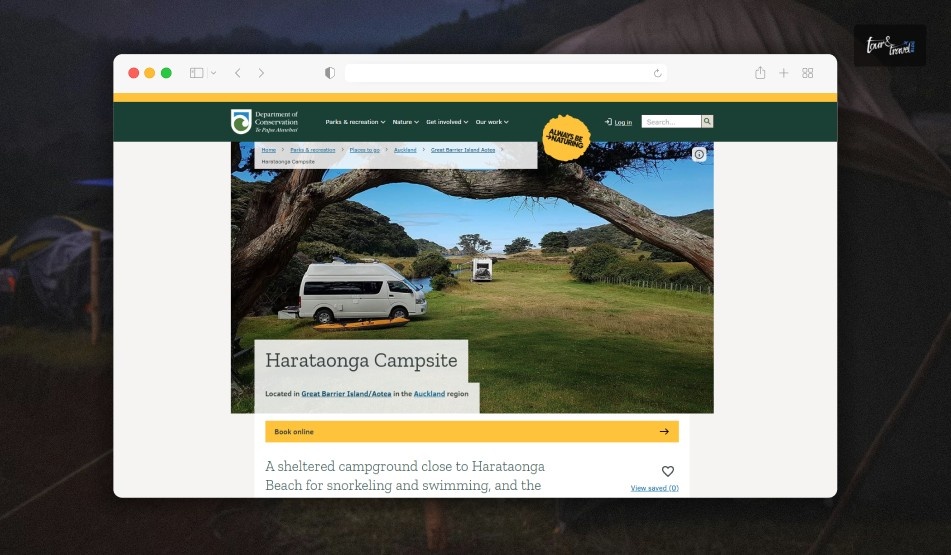
This campground is very close to Harataonga Beach. So, it is an ideal camping site for swimmers and snorkeling enthusiasts.
It can accommodate 120 campers, and this campsite is surrounded by bush and farmland. and camping takes place between Christmas and mid-February. Harataonga is for the romantic escape.
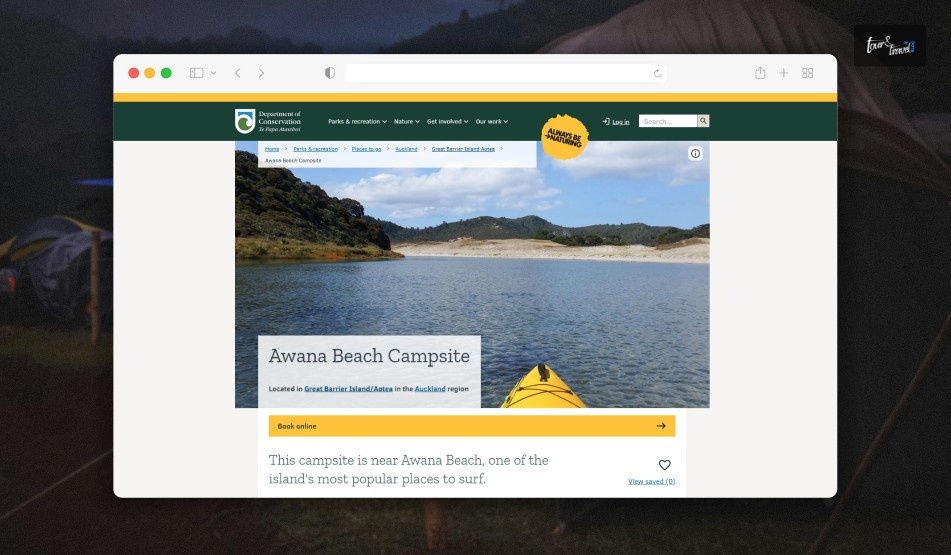
3. Awana Beach Campsite
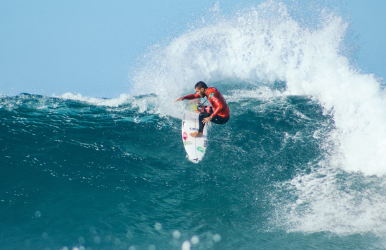
The Awana Beach Campsite is a surfer’s dream. It has beautiful dunes and farmlands around. It can accommodate 120 campers, and the campground remains open from Christmas to the end of January.
The only problem with this camping site is mosquitoes. So, you have to carry mosquito repellents.
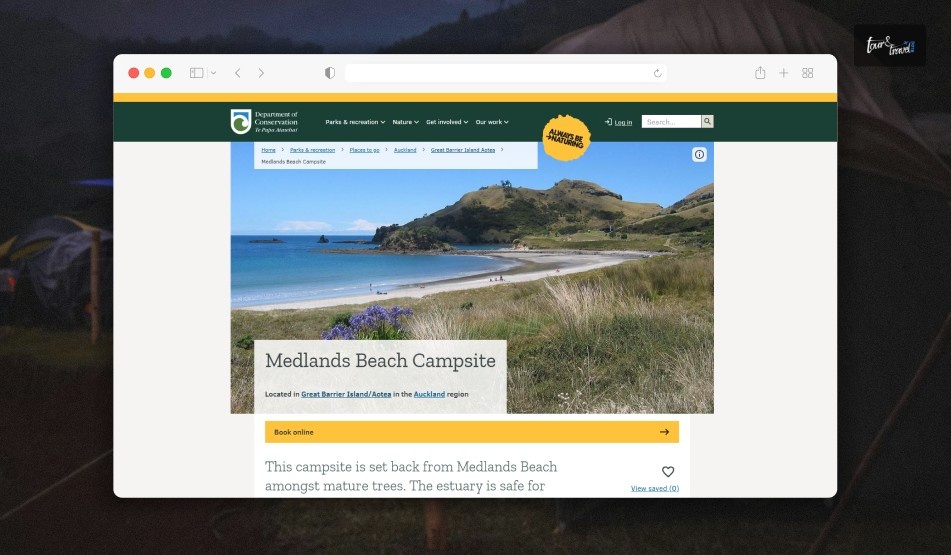
4. Medlands Beach Campsite
The sound of the waves at Medlands. This is the music you will listen to when you go to sleep or wake up at the Medlands Beach Campsite.
Medlands is like an all-rounder. It is ideal for families and surfers alike. The campsite remains open from Christmas to mid-February, and it can accommodate 120 campers.
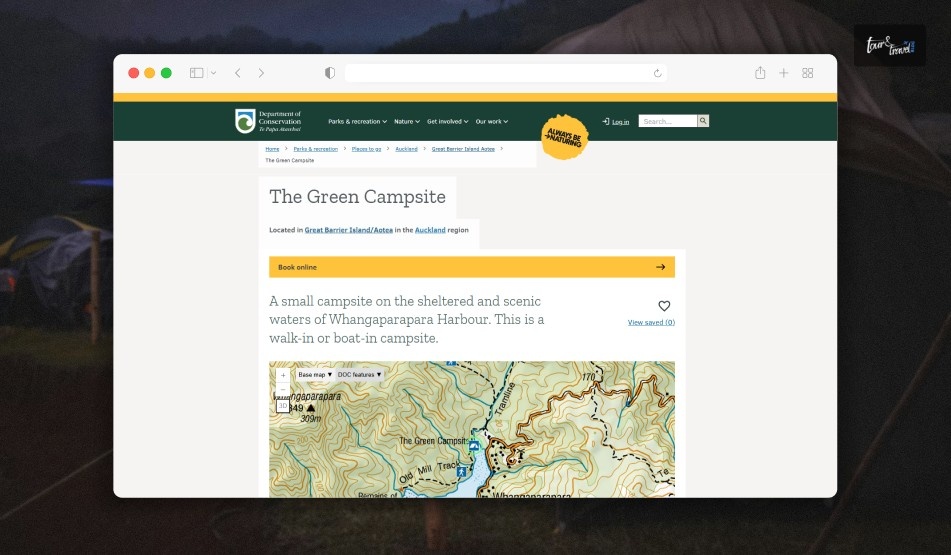
5. The Green Campsite
You can boat in or walk in the Green Campsite, which remains open from 1st December to the end of February. With a capacity of accommodating only 30 campers, this campsite has a rich history associated with whaling, kauri logging, and timber milling.
The waters of the Whangaparapara Harbour make it an idyllic retreat, and it is also the base of the Aotea Track.
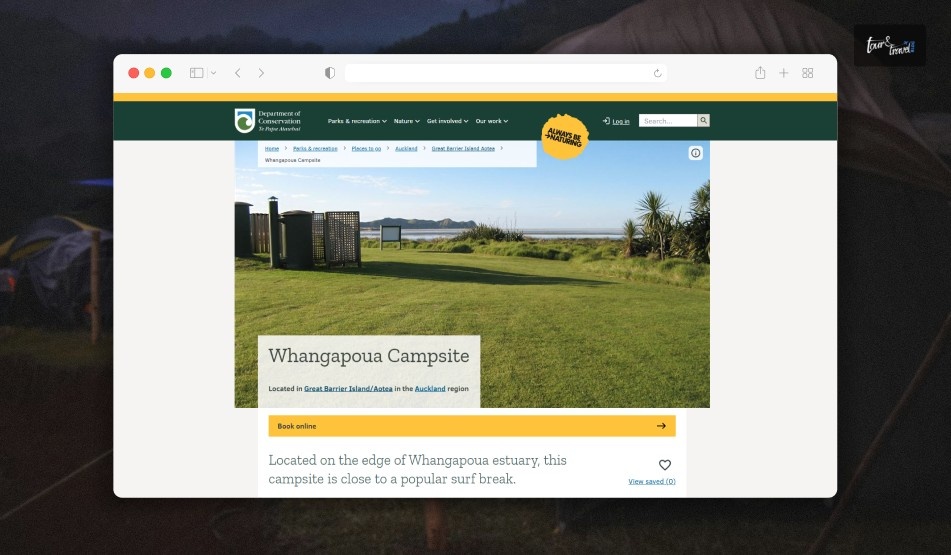
6. Whangapoua Campsite
The Whangapoua Campsite is a surfer’s paradise, and it is located on the edge of the Whangapoua estuary. It is also a favorite camping site for fishing.
With an accommodation capacity of 150 people, this campsite remains open from Christmas to the end of February. However, the biggest highlight of this camping site is the views of Rakitu Island and Mount Hirakimata.
A Comparison Summary Table Of The DoC Camping Sites On The Great Barrier Island, New Zealand
DoC Campsite
Access
Landscape
Facilities
Activities
Dog Access
Fees
Akapoua Bay Campsite
Campervan, Car and Caravan
Coastal
Boat Launching, Cooking Shelter, Cold Shower, Non-Flush Toilets for Men and Women
Boating, Fishing, Walking, and Tramping
No
Adults: $18 per night, Children of 5-17 years, $9 per night, and Children below 5 years: free
Harataonga Beach
Campervan, Car and Caravan
Coastal
Cooking Shelter, Cold Shower, Non-Flush Toilets for Men and Women
Swimming, Snorkeling, Fishing
No
Adults: $18 per night, Children of 5-17 years, $9 per night, and Children below 5 years: free
Awana Beach Campsite
Campervan, Car and Caravan
Coastal
Cooking Shelter, Cold Shower, Non-Flush Toilets for Men and Women
Kayaking and Canoeing
No
Adults: $18 per night, Children of 5-17 years, $9 per night, and Children below 5 years: free
Medlands Beach Campsite
Campervan, Car and Caravan
Coastal
Boat Launching, Cooking Shelter, Cold Shower, Non-Flush Toilets for Men and Women
Fishing, Surfing, Swimming
No
Adults: $18 per night, Children of 5-17 years, $9 per night, and Children below 5 years: free
The Green Campsite
Boat, Foot
Coastal
Cooking Shelter, Non-Flush Toilets for Men and Women
Hiking, Boating
No
Adults: $18 per night, Children of 5-17 years, $9 per night, and Children below 5 years: free
Whangapoua campsite
Campervan, Car and Caravan
Coastal
Cooking Shelter, Cold Shower, Non-Flush Toilets for Men and Women
Fishing, Surfing
No
Adults: $18 per night, Children of 5-17 years, $9 per night, and Children below 5 years: free
Insider Tips For Camping At DoC Campsites On The Great Barrier Island
If you are camping in a caravan or campervan, remember that the gravel roads leading to the camping sites, especially the Harataonga Campsite, are steep and winding. Also, the sites are off-the-grid.
Furthermore, the campervans are not usually allowed on the beaches.
The Best Private & Unique Camping Options On The Great Barrier Island
The Great Barrier Island Campground, spanning over an area of 12 square acres, is an ideal camping ground for access to different beach activities.
The camping site is located at a distance of just 200 meters from the beach. The camping fee at the Great Barrier Island Campground is $10 per person per night. You can contact them at 021 298 8905 for booking.
2. Mickeys Place
The O’Shea Family farm in Awana houses the Mickey’s Place camping ground. It is a family-friendly camping site with the following facilities.
A Communal Cooking Area
Flush Toilets
Showers
Patrick, Sean, and Mickey are the hosts of this campsite, and you can contact them at 09 4290 140.
3. Stray Possum
Stary Possum in Tryphena is an ideal camping site for backpackers. If you are camping here, you will have access to the kitchen, toilets, and showers of the adjacent Stray Possum Lodge.
This camping site has 14 tents, and you can call 09 4290 109 for booking details.
21 Essential Great Barrier Island Camping Tips
I promised you tips, and here they are. Do not go to Great Barrier Island without reading this checklist.
• Packing And Food
1. Bringing a Gas Cooker
Open fires are banned in the Camping sites of the Great Barrier Island. So, you will have to bring a gas burner for preparing your food.
2. Packing Your Food
Groceries are not available everywhere, and they are even very expensive. So, it is better to collect and pack the groceries you will need before leaving Auckland.
3. Bringing a Good Chilly Bin
You will need this insulated chest for storing warm and cold food items.
4. Bringing a Red-Light Torch
The island is a Dark Sky Sanctuary. A red torch lets you stargaze without ruining your night vision.
5. Bringing Cash
EFTPOS (debit) is unreliable, and many camping sites only accept cash.
6. Packing Warm Clothes
The weather can suddenly become cold, even on summer days. So, you will have to pack layered clothes.
7. Carrying Mosquito and Insect Repellent
Sandflies and mosquitoes are notorious on Great Barrier Island. So, you will have to carry an insect repellent.
• On-Site & Facilities
8. Cold Showers
Most shower stations on the Great Barrier Island are cold water shower stations. This is great as the dash of cold water in the morning, literally works as the eye opener.
9. Long-Drop Toilets
The long-drop toilets are basic and waterless. Using these pit toilets can be challenging for some campers.
10. Drinking Water
The tap water available at these sites is not ideal for drinking unless it is purified or boiled.
11. Pet-Friendly
The DoC camping grounds are not accessible to dogs. This is crucial for the protection of wildlife, the safety of the pets, and soil movement, causing the resurrection of pets and parasites affecting the local flora and fauna.
12. Booking
The slots for camping sites such as Medlands, Akapoua get sold more than 6 months in advance for the Christmas and New Year periods. So, it is indeed a year-long planning.
13. Alcohol Rules
The consumption of alcohol can be banned in various camping sites, especially during the peak seasons. So, check with the camping site authority.
• Transport & Logistics
14. Having a Vehicle
Having a vehicle is a must for moving around the rugged and large Great Barrier Island. You cannot walk between the sites.
15. Renting a 4WD (or 4WD-Capable)
The roads to various campsites are challenging. The road to Harataonga, especially, is very difficult. So, you will have to rent a 4WD-capable vehicle.
16. The Motorhome/Campervan Reality
The gravel roads are narrow, steep, and winding, and if you are planning to camp in a large RV, you will definitely struggle.
17. The Dump Station Nightmare
There is only one dump station in Claris, and it is only for black water or toilet waste. You will have to carry your grey water or sink with you.
18. Freedom Camping
Freedom camping on the Great Barrier Island, New Zealand, is a fascinating idea. However, the reality is quite different. It is heavily restricted, and sticking to the DoC sites is the best option.
• Safety & Etiquette
19. Using a Paper Map
Mobile network and GPS will not function in various parts of the Great Barrier Island. So, you will have to carry a paper map.
20. Tell Someone Your Plans
If you are hiking on the Great Barrier Island, you have to keep someone informed. The wilderness and remote locations of the hiking trails can throw many challenges, despite having an easy to moderately difficult level.
21. Being a Good Neighbour
You must respect the quiet, off-grid, and nature-first vibe of the Great Barrier Island. So, you have to keep the noise level down.
How To Reach The Aotea Great Barrier Island With Your Camping Gear?
For campers, especially the ones with campervans, traveling by the ferry from SeaLink is the best option. It is the only mode of transportation in which passengers and cars are both transported.
It is a 4.5-hour picturesque journey from Auckland.
Your Great Barrier Island Camping Adventure Is Calling
Camping on the Great Barrier Island, New Zealand, is the right mix of adventure, soaking in nature, and cherishing the off-the-grid living of the island. However, it’s not going to be easy with the amenities at the campsites being basic, and even the gravel roads posing challenges for the big RVs and campervans.
Also, you will have to take care of biosecurity and all the sustainability guidelines to ensure that the island, a sanctuary of wildlife, does not get impacted negatively. Conservation as a pristine sanctuary is the reason why camping in the Great Barrier Island allowed us to see a billion more stars and birds than I have ever seen in my life.
Sibashree is a travel, culture, and leisure writer who has been writing since the age of 12 and professionally since 2014. With more than a decade of travel writing experience and journeys across India and several parts of the world, she brings a deeply personal and thoughtful perspective to her work. A student of English Literature and Mass Communication, Sibashree has always viewed travel as more than movement — for her, it has been a way of understanding people, cultures, and herself. Her passion for spiritual exploration has also led her to many unusual and meaningful destinations over the years. Outside of writing, Sibashree enjoys watching European cinema, reading about global politics, and reflecting on the stories hidden within everyday places.
Whether you’re from the West or someone in South Asia, you’ll always think of Nepal when the word ‘trekking heaven’ comes to mind.
Nepal is the home to the best trekking destinations in the entire world. It has beautiful trekking routes winding around the sides of mountains and beautiful hills and plateaus. But what are some of the best Trekking Destinations in Nepal?
Thorugh this blog entry, we’re going to explore the five most iconic destinations in Nepal for every trekking enthusiasts to enjoy.
Yes, we are talking about the classical adventure like Everest Base Camp Trek, Annapurna Circuit Trek to less travelers routes like Langtang Valley Trek and Manaslu Circuit Trek. So, if you want an adventurous trekk, read on.
5 Trekking Destinations in Nepal You Must Try
Travel enthusiasts who enjoy trekking, have Nepal in their bucket list for ultimate trekking experience. Nepal is rich with beautiful places you can go to.
It has towering peaks, tall mountains, and most importantly, the Mount Everest. If you’re looking for some high altitude challenge for trekking experience, Nepal has wonders awaiting your trekking boots.
Everest Base Camp Trek
Trek Duration: 12 to 14 days
Difficulty Level: Moderate to Challenging
Best Time: Spring (March to May) and Autumn (September to November)
Let’s talk about a dream trekking destinations in Nepal every trekking enthusiast would love to take at some point. Everest Base Camp Trek — legendary trekking trail in the eastern Himalayas gives you an adventurous tour through the heart of the Khumbu region with mesmerizing views of Mount Everest (8,848m/ 29,029ft) and different other peaks.
This thrilling journey begins from Lukla (2,800m/ 9,186ft) and take the travellers across the beautiful Sherpa villages, high suspension bridges, glaciers and high-altitude landscapes.
On your journey, you’ll admire the highlights you find on the way and find yourself standing at the foothills of the tallest peak (snow-clad) in the world. Yes, we are talking about the one and only Mount Everest. Remember 1953, when Tenzing Norgay Sherpa and Sir Edmund Hillary conquered Everest? You’ll tread just in their footsteps.
Annapurna Circuit Trek
Trek Duration: 10 to 14 days
Difficulty Level: Moderate
Best Time: Spring (March to May) and Autumn (September to November)
Done with the Everest Base Camp Trek? Then, here’s another Himalayan delight in the form of a trekking adventure. Annapurna Circuit Trek – the one trekking experience that’s here to take you through the most scenic experiences in the world.
This trek takes you around the Mount Annapurna (8,091m/ 26,545ft) and you get to visit throug the lush green forests, deep gorges, and high altitude arid landscape, beautiful settlements of Gurung, Magar, Thakali, Tamang, and Manangi groups.
This trek usually starts after you take adrive to Ngadi, and slowly ascend through the Marsyangdhi Valley. This is where you get to see a drastic change in the landscape. In Himalayas, you see linear paths. But, this one is a loop giving you a varied trekking experience in the entire country.
Langtang Valley Trek
Trek Duration: 7 to 10 days
Difficulty Level: Relatively Easy to Moderate
Maximum Elevation: Tsergo Ri (4,985m/ 16,354ft)
Best Time: Spring (March to May) and Autumn (September to November)
Go for Lnagtang Valley Trek if what you want is a less crowded trekking experience compared to the Himalay. It’s nestled in the Langtan National Park, and this trek offers great view of the Langtang Lirung, Ganesh Himal, Naya Kangri, Dorje Lakpa and other surrounding peaks.
If you are starting from Kathmandu, this trek starts shortly after a few hours of drive from the capital of Nepal. It’s unlike the major trekking routes like Annapurna Circuit Trek and Everest Base Camp Treks. Those treks require a long journey before you can start off with your journey. Yes, it’s a shorter trek. But the experience you gather with this one is beyond what anyone can imagine.
You’ll start the trek from Syabrubesi (2,380m/ 7,808ft), and you will travel across alpine meadows, beautiful valleys, adn ancient monasteries, and yak pasture peaking at Kyanjin Gompa.
Manaslu Circuit Trek
Trek Duration: 8 to 12 days
Difficulty Level: Moderate Level
Best Time: Spring (March to May) and Autumn (September to November)
If you want to check out an offbeat or less commercialized trek, then Manaslu Circuit Trek is the best option to start with. At the same time, most travelers prefer popular names like the Annapurna Circuit Trek or the Langtang Valley Trek. However, this one takes you on a thrilling adventure around the west-central part of the country.
As a traveller you’ll enjoy the opportunity to admire and experience the raw beuty and culture of the Himalayas. It offers a perfect blend of thrill and solitude with a strong cultural experience. However, if you are interested in the raw and authentic trek, this experience is relatively untouched part of the Himalayas in an excellent choice.
Ghorepani Poon Hill Trek
Trek Duration: 5 to 7 days
Difficulty Level: Relatively Easy
Best Time: Spring (March to May) and Autumn (September to November)
When you want a short and beautiful journey in the Annapurna Region in Nepal, try going on a trek to Ghorepani Poon Hill Trek. This is a trek good for travelers of all ages. Whether you want to experience the fresh mountain air or get a panoramic view of the mountainscape, this is a good destination to aim for if you’re going to Nepal.
On the other hand, if you take any of the other trekking locations we have added examples to, you’ll notice that most of them require extensive physical effort. Most of those aren’t short and brief travel experiences. But if you’re up for a simple and easier trekking option, try visiting the Ghorepani Poon Hill Trek to experience the breathtaking view of the landscape.
Conclusion
Whether you want a more raw experience of the Himalayas or want to enjoy a group trekking experience, select from the five names we have mentioned in this article. From the trek of the Himalayan camp to Annapurna Circuit and Manaslu Circuit Trek, there are plenty of options you can try and travel to your heart’s content.
Let us know which one of the trekking routes you have gone through or are planning to visit in your next visit to Nepal. Happy trekking!
YOU MAY ALSO LIKE:
Is San Juan Safe for Solo Women Travelers?
View of the Mountains and Green Fields During the Kerry Way
Visit Joshua Tree National Park To Hike And Explore The Best Trails
Thanksgiving road trips with kids are perfect for families to hit the road and create lasting memories together. Road trips with kids are both fun and challenging,
Moreover, they require some planning to ensure a smooth journey.
From engaging activities to keep them entertained to snacks that will keep the peace, a little preparation goes a long way.
However, in this post, we'll share essential tips to help make your Thanksgiving road trip enjoyable and safe for the whole family. So buckle up and prepare for an adventure filled with laughter and gratitude!
What Is Thanksgiving Day?
This section is mainly for the ones who do not have much of an idea about the occasion.
Thanksgiving Day is the annual day celebrated in the United States Of America. Alsom it is a harvest celebration.
The Thanksgiving parade day is November celebration. Families and friends share the traditional meal and express gratitude for all the good things in life. Yes, many consider it as a service to others in this community.
However, the celebration takes place on the fourth Thursday in November. Macy's employees started this event on November 27th to promote the holiday sales. From Macy's Christmas Parade, the name was changed in 1927.
Thanksgiving Road Trips With Kids: Follow The Tips For A Safe Journey
We have arrived at the main section of our article, where we shower tips and precautionary measures for safe Thanksgiving road trips with kids.
Planning Your Route And Stops
A well-planned route with regular stops is crucial for a smooth road trip with kids. Map out rest areas, parks, and scenic spots where your family can stretch and take a break.
In addition, ensure these stops are child-friendly and have facilities like playgrounds or picnic areas.
If you're traveling with very young children, consider rest stops that offer amenities for changing diapers or nursing. Remember to bring carriers for babies to make short walks and sightseeing stops easier. Hence, pre-planning these details will help prevent restlessness and keep everyone in good spirits.
Packing Essentials For Kids
When packing for a road trip with kids, focus on essentials to keep them comfortable and entertained. Bring a mix of clothing suitable for different weather conditions and activities.
In addition, pack plenty of snacks and drinks to avoid frequent stops. Include travel-friendly toys, books, and electronics with headphones to keep them engaged.
Don't forget comfort items like blankets and pillows to make the car ride more pleasant.
However, using Method travel luggage for each family member can help organize everything efficiently, making it easy to find what you need quickly. A well-packed car ensures a smoother journey for everyone.
Car Safety Tips For Traveling With Children
Ensure that you install the car and booster seats properly for your child's age, weight, and height. Double-check that seat belts are securely fastened.
Also, while embarking on the Thanksgiving road trips with kids, keep the car's back seat free of loose items that could become projectiles during sudden stops.
Install sunshades on windows to protect your children from direct sunlight. Always keep a first-aid kit, emergency contacts, and essential medications easily accessible.
Also, plan for regular breaks to prevent children from becoming too restless, and make sure your vehicle is in good working order before hitting the road.
Entertainment Ideas To Keep Kids Engaged
Create a travel activity kit for each child with coloring books, crayons, puzzles, and small toys. Audiobooks and music playlists can be lifesavers for longer stretches. Interactive games like "I Spy," travel bingo, or trivia quizzes can engage the whole family.
Allow children to take turns choosing a podcast or song to keep them interested. For older kids, portable gaming devices or tablets with pre-downloaded educational apps can be beneficial. Rotate activities to maintain their interest and keep the journey exciting.
Managing Meals And Snacks On The Road
Keeping kids well-fed on a road trip is essential to a happy and peaceful journey. Opt for healthy, non-messy snacks like fruit slices, cheese sticks, and granola bars.
Also, insulated bags should be used to keep perishable items fresh. If possible, plan for meals at child-friendly restaurants with play areas to allow kids to stretch and burn off energy.
Additionally, consider packing a small cooler with sandwiches and drinks to avoid unhealthy fast food options.
Having a designated snack bag within easy reach will help minimize disruptions and keep hunger at bay.
Dealing With Emergencies And Unexpected Situations
Unexpected situations can arise, so it's important that you become prepared well in advance. Keep a fully stocked emergency kit in your vehicle, including a flashlight, batteries, and basic tools.
Ensure your phone is charged and you have a portable charger handy. Familiarize yourself with roadside assistance options and have their contact information easily accessible.
In addition, teach your kids basic safety procedures, like staying close to the car if you must pull over. Carry extra blankets, water, and non-perishable snacks in case of delays in the Thanksgiving road trips with kids.
If you prepare yourself well in advance, it will make a significant difference in handling emergencies smoothly.
Creating A Positive Travel Atmosphere
Foster a positive atmosphere by maintaining a cheerful attitude and setting realistic expectations for the trip.
Also, encourage kids to share what they're looking forward to and listen to their concerns. Create a collaborative playlist with everyone's favorite songs to boost morale. Acknowledge and praise good behavior, and stay patient during challenging moments.
Use positive reinforcement to encourage cooperation and kindness among siblings. Incorporate regular family discussions and storytelling to keep everyone connected and engaged.
Arrival And Settling In
After a long journey, it's important to help kids adjust to their new environment quickly. Start by unpacking essential items like comfort toys, blankets, and any necessary toiletries.
Familiarize your children with their new surroundings by giving them a quick tour. Establish a routine similar to home to provide a sense of stability in these Thanksgiving road trips with kids.
Allow some time for outdoor play or a short walk to burn off any excess energy from the trip. Engage in calming activities like reading a book together to help them unwind and feel settled.
Road trips with kids during Thanksgiving day truly become a rewarding experience, creating cherished family memories that will last a lifetime.
With careful planning and a positive mindset in these Thanksgiving road trips with kids
you can navigate the challenges and make the journey enjoyable for everyone.
Flexibility is key; sometimes, plans must adjust to accommodate unexpected needs or detours. Embrace these moments as part of the adventure and focus on the quality time spent together. Safe travels, and Happy Thanksgiving!
Also read
Top 10 Most Popular Paraguay Food That You Must Try.
Top 13 Famous Wonders Of India That You Must Visit! [Updated 2024]
Top Tips For Motorbike Rental In Phuket – A Guide To Exploring The Island On Two Wheels.
In my Luang Prabang travel guide, I last wrote about my travel experience and shared a 5-day itinerary. However, I wanted to go more in-depth about the cultural exploration of the Laotian gem and a UNESCO World Heritage Site.
Also, Luang Prabang, with its commitment toward sustainable tourism, has emerged as a leader of responsible tourism in Southeast Asia. Furthermore, the recent win of the “Green Destinations Silver Certification” has confirmed how Luang Prabang is dedicated to cultural conventions.
In fact, Luang Prabang has achieved a harmony between cultural heritage and nature. The mountains, rivers, and temples reflect a lifestyle that is deeply connected to the environment. Thus, Luang Prabang shows how traditional practices and values can thrive alongside modern sustainability practices.
Hi, in this Luang Prabang itinerary planner blog, I will talk about how you can explore the cultural gems of Luang Prabang in three to seven days.
Why Visit Luang Prabang?
As I was saying, the Green Destinations organization, accredited by the Global Sustainable Tourism Council, has awarded Luang Prabang with the Green Destinations Silver certification for 2025–2027.
The certification conferred at the Sustainable Destinations Forum 2025 in Dubai on 28-29 October now inspires this UNESCO World Heritage Site to aim for a gold certification in 2026.
So, learning how this city in Laos is evolving the sustainable tourism landscape can be a reason to visit it these days.
Furthermore, its location between the Nam Khan and Mekong Rivers and the presence of Mount Phousi make Luang Prabang a natural treasure trove. Kuang Si Falls is another major natural attraction here.
Historically, it is significant as the capital of the ancient Laotian Kingdom. Also, due to the 19th-20th century colonial influence, the city shows a wonderful fusion of the traditional Lao urban architecture and English colonial architecture.
Moreover, the city’s well-preserved temples, monasteries, and colonial villas make it a living museum of Southeast Asian heritage.
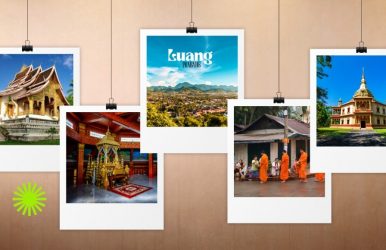
In addition, Luang Prabang has beautiful temples such as Wat Xieng Thong, and its Night Market is a vibrant hub for local crafts, textiles, and street food.
What Is The Best Time To Visit Luang Prabang?
The best time to visit Luang Prabang depends on the experience you want. For example, if you want to enjoy clear weather conditions and your time outdoors, you can plan a visit between November and February.
April and May are the hottest months in Luang Prabang, with the highest temperature hitting around 35 degrees Celsius. January is the coolest month, with an average temperature of 14-28 degrees Celsius.
However, attending the local festivals is a major part of a holistic cultural exploration. So, if you want to attend any specific celebration, you can check the table below.
Festivals in Luang Prabang Timing Boun Pi Mai Lao, or the Lao New Year Mid-April Boun Suang Huea, or the Boat Racing Festival September Boun Lai Heua Fai, or the Festival of Lights October That Luang Festival at the That Luang Stupa November Haw Khao Padap Din, A Festival Honoring Ancestors September
How To Reach Luang Prabang?
I reached Luang Prabang by flying to Luang Prabang International Airport (LPQ) via Bangkok. However, there are also boat, train, and bus options.
Mode Of Transportation DetailsBy Flight• Airport: Luang Prabang International Airport (LPQ)• Airport Connected to: Bangkok, Hanoi, Chiang Mai, and Vientiane• Laos Offers Visa on Arrival Facilities for Many Countries.Slow Boat from Thailand • This 2-Day Journey from Huay Xai via Pakbeng along the Mekong River is beautiful.• It is Ideal for Photographers and Slow Travelers.Train • You Can Travel to Luang Prabang via the China-Laos Railway.• This Railway Connects Luang Prabang with Vientiane and Boten.• This Route is Scenic, Fast, and Affordable.Buses • Travel in a Long Distance Bus to Luang Prabang from Vientiane, Vang Vieng, and Other Lao Cities. • For More Comfort, Choose Overnight VIP Buses.
Where To Stay In Luang Prabang?
I stayed in a hostel, which cost me around $20 per night. However, you will also find mid-range and luxury hotels, as well as eco-lodges suitable for families.
1. Budget Hostels In Luang Prabang
Name Amenities Location Mad Monkey Hostel • Clean • Centrally Located Luang Prabang, LaosY Not Laos Hostel • Ideal for Solo Travelers and Digital Nomads Laos, Luang Prabang, Phusi RD, Aphay village, Luang prabang, Laos
2. Mid-Range Accommodation In Luang Prabang
Name Amenities Location Villa Chitdara • Stands Out with Its Colonial Charm Near the Local Market Ban Vat Nong, Khounsua Road, Luang Prabang 06000, LaosMy Dream Boutique Resort • Lush Gardens• Riverside Views Ban Meung Nga Village Meung Nga Street, Luang Prabang 06000, Laos
3. Luxury Accommodation
Name Amenities Location Satri House • A Former Royal Residence Turned Into A Boutique HotelLuang Prabang, LaosAvani+ Luang Prabang • It Offers Modern Luxury with A Colonial Touch Setthathirath Road, Hua Xieng Village, Luang Prabang 06000, Laos
4. Family-Friendly & Eco-Lodges
Name Amenities Location Zen Namkhan Resort • Eco Conscious• River Views• Family Bungalows CP 082, Ban Xieng Lom 06000, LaosThe Namkhan Ecolodge • Nature Activities• Farm-to-Table Dining Luang Prabang 06000, Laos
A 3-Day Luang Prabang Itinerary
Here is a brief 3-day itinerary for a trip to Luang Prabang.
Days ActivityDay 1 • Visiting Wat Xieng Thong, Wat Mai, and the Royal Palace Museum in the Morning• Strolling through Old Town and Having the Best Coffee at Saffron Café• Sunset Trek to Mount Phousi• Exploring the Night Market for Street Food and Collecting Souvenirs Day 2 • Visiting Kuang Si Falls (30 km away) in the Morning.• Swimming in Turquoise Pools and Visiting the Bear Rescue Center in Late Morning.• Stopping by the Kuang Si Butterfly Park and Having a Picnic Lunch in the Afternoon. • Back to the Town and Having a Lao Massage.Day 3 • Attending a Lao Cooking Class at Tamarind or Bamboo Tree in the Morning.• Taking a Boat Trip to Pak Ou Caves, Filled with Thousands of Buddha Statues.• A Sunset Cruise on the Mekong River with Local Drinks and Snacks.
A 4-Day Luang Prabang Itinerary
If you are in Luang Prabang for another day, you can plan a day trip to Nong Khiaw. It is a 3-hour drive from Luang Prabang.
It has beautiful limestone cliffs and caves, and it is ideal for kayaking.
A 7-Day Luang Prabang Itinerary
With the activities for your first four days sorted, you can now try the following activities/attractions for the last 3 days.
Days Activities Day 5 • Learning Traditional Rice Farming Techniques and Plowing with Water Buffaloes in the Morning.• Cooking Sticky Rice in the Afternoon.Day 6 • Visiting Tad Sae Waterfalls & Ziplining in the Morning.• A Trip to the MandaLao Elephant Conservation in the Afternoon.Day 7 • A Visit to Wat Pa Phon Phao and A Meditation Retreat.• Spending the Night at the Khmu Village.
A Family-Friendly Itinerary For Luang Prabang
Here is a 5-day family-friendly travel itinerary for Luang Prabang. I have kept the itinerary relaxed to suit multi-generational travel. Furthermore, even if the itinerary keeps you busy, don’t forget to bring drawing books and journals for your children.
Days Activities Day 1 • Arrive and Check in to Your Hotel• Visit the Royal Palace Museum and Take a Walk Along the Old Town• Climb Mount Phousi• Dinner at a Riverside Restaurant Day 2 • Attending the Alms Giving Ceremony or Tak Bat. • Breakfast at a Local Cafe. • Visiting the Elephant Conservation Center• Return to Luang Prabang• Dinner at a Restaurant With a View of the Nam Khan River Day 3 • Attending a Family-Friendly Cooking Class with Children, Helping with the Preparations. • Attending Dyeing and Weaving Workshops at Ock Pop Tok Living Crafts Centre.• Dinner at Utopia Café.Day 4 • A Visit to Kuang Si Waterfall.• Exploring the Butterfly Park.• A Visit to the Free the Bears Rescue Center.• Shopping at the Night Market Day 5 • Visiting the UXO Visitor Center to Learn About Laos’s History and Demining Efforts (Especially Suitable for Children)• Souvenir Shopping• Off to the Airport
What Are The Best Cultural Experiences In Luang Prabang?
The recent That Chomsi Stupa ceremony at Luang Prabang from 5th to 6th October 2025 has once again highlighted the strong cultural tourism aspect of the city. Built during the reign of King Anourouth in 1804, this stupa blends history with spirituality.
Today, it also demonstrates the sincerity of Luang Prabang and Taos in preserving heritage. Moreover, the Chomsi Stupa ceremony emerges as an important landmark here to attract travelers who seek authentic experiences, want to understand community development, and the essence of Buddhism.
So, visiting this Stupa is a unique cultural experience in Luang Prabang. Another important aspect is the Alms-Giving Ceremony, where monks are offered fresh food for their worldly sustenance.
In addition, for holistic wellbeing and energy alignment, you can try a traditional Lao Massage. Also, visit the Ock Pop Tok Living Crafts Centre or attend traditional bamboo weaving and rice farming workshops to understand the livelihood and the true essence of Luang Prabang.
What Are The Hidden Gems In Luang Prabang?
Wat Pa Phon Phao temple on a hill southwest of Luang Prabang is a hidden gem in Luang Prabang. It is one of the central places for Vipassana meditation.
The single pagoda has an octagonal structure. It has a peaceful ambiance, and it is an ideal place for introspection.
Local Cafes And Art Galleries In Luang Prabang
Don’t miss a visit to these places if you want to sink into the community vibe and have an excellent cultural understanding.
1. Saffron Coffee
View this post on Instagram A post shared by Saffron Coffee (@saffroncoffee)
Saffron Coffee is one of the best cafes in Luang Prabang, and it is a great contributor to sustainable tourism. It sources the coffee beans ethically from local farmers. The coffee here is grown organically.
Furthermore, Saffron Coffee is known for its profit-for-purpose policy. It reinvests its profit to benefit the individual farming family.
2. L’Etranger Books & Tea
View this post on Instagram A post shared by 노바투어(NOVA TOUR Co.,Ltd) (@novatour_official)
What should I say? L’Etranger Books & Tea is a cafe, a bookstore, and a community center to read and exchange books. Furthermore, the attic room of L’Etranger Books & Tea hosts a film screening at 7 PM every evening.
It was the city's first licensed bookshop.
3. Project Space Gallery
Located at Pha Tad Ke Botanical Garden, Project Space Gallery is a non-profit multifunction space. It hosts contemporary art exhibitions and events.
Culinary Tourism In Luang Prabang: A Food And Drink Guide
View this post on Instagram A post shared by Mike Prince (@mikeprince85)
Some must-try dishes in Luang Prabang are Khao Soi or Northern Lao noodle soup with tomato and pork, minced meat salad with herbs and lime, or Laap and Or Lam, or a spicy soup with buffalo meat and eggplant.
Furthermore, grilled meats, coconut pancakes, mango sticky rice, and fruit shakes are popular street foods, and you can cherish them at the Night Market.
Manda de Laos, Dyen Sabai, and Tamarind are some renowned restaurants in Luang Prabang.
Budget For A Luang Prabang Trip
Here is a daily cost estimate for a solo trip to Luang Prabang.
Budget Type Daily Cost (USD) Inclusions Budget \$25–\$40 • Hostel • Street Food • Tuk-tuks Mid-Range \$50–\$100 • Boutique • Hotel Restaurants • Tours Luxury \$150+ • 4–5 Star Hotels • Private Guides • Fine Dining
Travel Tips For A Luang Prabang Trip
Luang Prabang is safe to travel to. However, you can face connectivity issues. So, you must collect Unitel and Lao Telecom SIMs at the airport. Also, drink bottled water and use mosquito repellent.
Moreover, you must adhere to the sustainability norms and follow local customs for a seamless experience.
Luang Prabang Itinerary Planner: Frequently Asked Questions (FAQs)
Here are the frequently asked questions and answers about the Luang Prabang Itinerary Planner.
1. How Long Should You Stay In Luang Prabang? Three to five days are enough for a cultural exploration in Luang Prabang. However, if you want a deeper cultural experience with nearby day trips and attending cooking, farming, or weaving workshops, plan a vacation of 7 days. 2. Is Mount Phousi Worth It? Yes, Mount Phousi is a wonderful destination for a sunrise or sunset hike. Once you reach the top, you will enjoy wonderful views of the city and the surrounding hills. Moreover, the Wat Chom Si Stupa is located at the top of Mount Phousi. It is an important spiritual, historical, and cultural landmark of Luang Prabang. 3. Is Luang Prabang Better Than Vientiane? Vientiane is the current capital of Laos, and Luang Prabang was the ancient capital of Laos. Today, Vientiane is a more popular destination thanks to better national and international connectivity. However, if you ask me, Vientiane lacks the cultural vibrancy and scenic beauty of Luang Prabang.





 Related