I visited Luang Prabang in 2022, and the capital of the ancient Laotian kingdom was slowly recovering from the rampage of COVID-19. The misty mornings were special, with hundreds of monks walking through the narrow streets with their alms bowls.
People gather and offer fruits and rice to the monks. The monks silently accept the offerings, then quietly return to the temples.
Even today, with skyrocketing tourism numbers, Luang Prabang remains one of the most unspoiled places on earth. Buddhism and a strong belief in the power of nature have helped the city to maintain its authentic charm.
Also, the 32 Buddhist temples present in Luang Prabang today are a telltale of the history, myths, and spiritual beliefs associated with the city’s origin. In this Luang Prabang temple guide, I will talk about the top Buddhist temples to visit in Luang Prabang Laos.
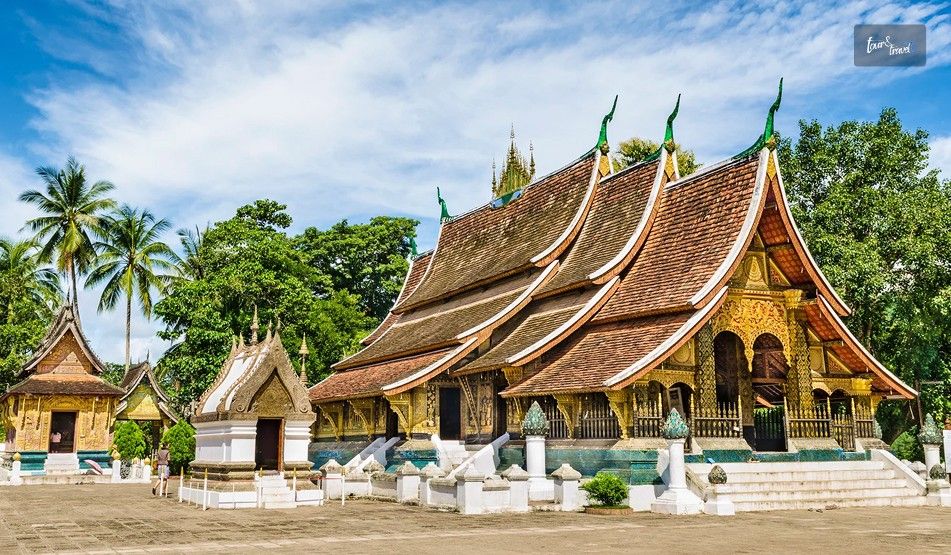
Of course, the Golden City Temple or Wat Xieng Thong is the most famous among them. It was built in 1560.
What Are The Top Buddhist Temples To Visit In Luang Prabang Laos?
As the mornings in Luang Prabang are special with the quietude and humility of the alms giving ceremony, the evenings are magical with the evening chants of the monks in the temples.
The sound of the chants echoes through the valley with the Mekong River passing by dreamily and the outlines of the mountains fading into the darkness.
I used to get lost in my thoughts that these temples were the sites of the coronation of many Laotian kings. Also, despite their intricate designs, they look like an extension of the ethereal natural landscape here.
Nevertheless, these are the top Buddhist temples to visit in Luang Prabang, Laos.
1. Wat Xieng Thong
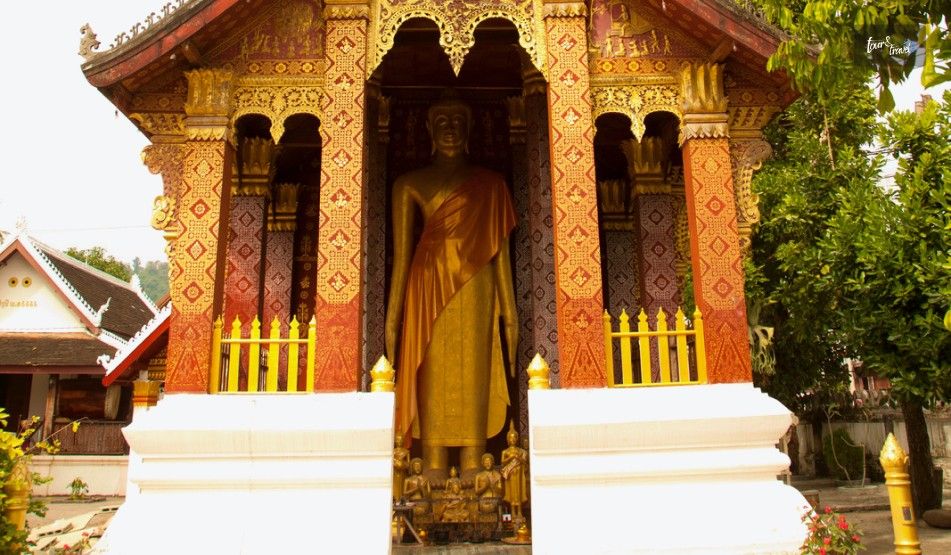
Also known as the “Monastery of the Golden City,” Wat Xieng Thong evokes awe. Built in 1560, it is home to the famous reclining Buddha Sanctuary or the Red Chapel.
It also stands out with its architectural excellence, including the multi-tiered roofline and beautiful mosaic work.
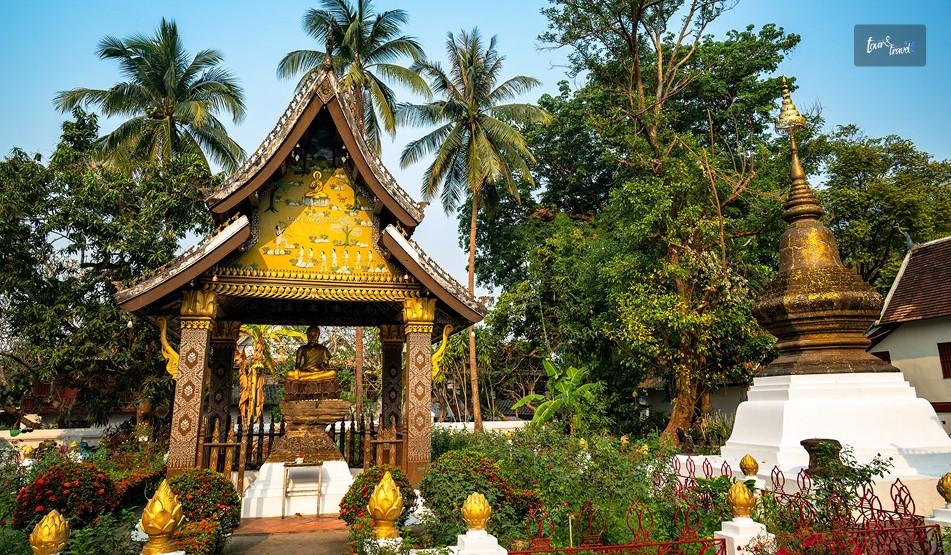
Wat Aham is also known as the Monastery of the Open Hearted. It is located next to Wat Visoun.
Wat Aham is famous for its two ancient banyan trees on its grounds. Locals believe that these trees are home to the guardian spirits of the city.
5. Wat That Luang
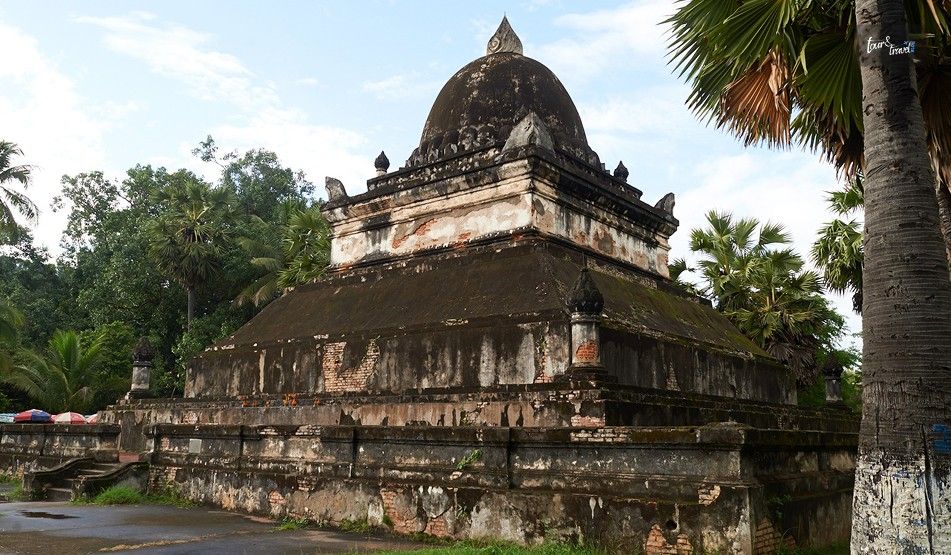
Locals call Wat That Luang the Monastery of the Royal Stupa. The ashes of King Sisavang Vong, who died in 1959, are present in the golden stupa in the temple grounds. Even before that, it was used to cremate many members of the royal family.
6. Wat Chom Si
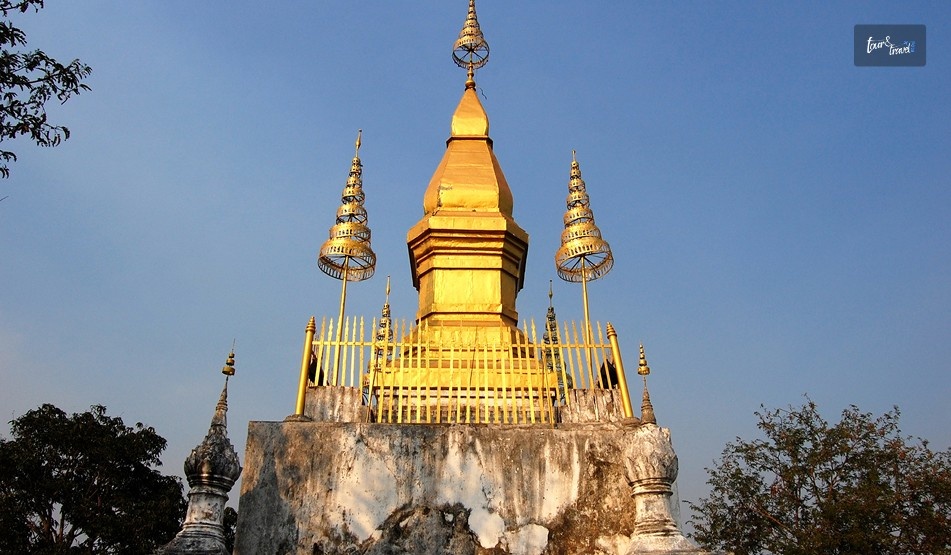
Located on the top of Mount Phousi, Wat Chom Si was the best temple I visited in Luang Prabang. The spiritual energy there was so high.
I don’t know whether it’s the joy of reaching the temple after a trek or the magical views of the Mekong River from the top! Everything looks and feels so magical here!
7. Wat Sop Sickharam
The structure of the Wat Sop Sickharam temple, what we see today, is the renovated form of the 19th century. However, the origin of the temple goes back to the 16th century.
Its architecture is a wonderful fusion of the French Colonial Style and traditional Lao architecture.
8. Wat Pa Phai
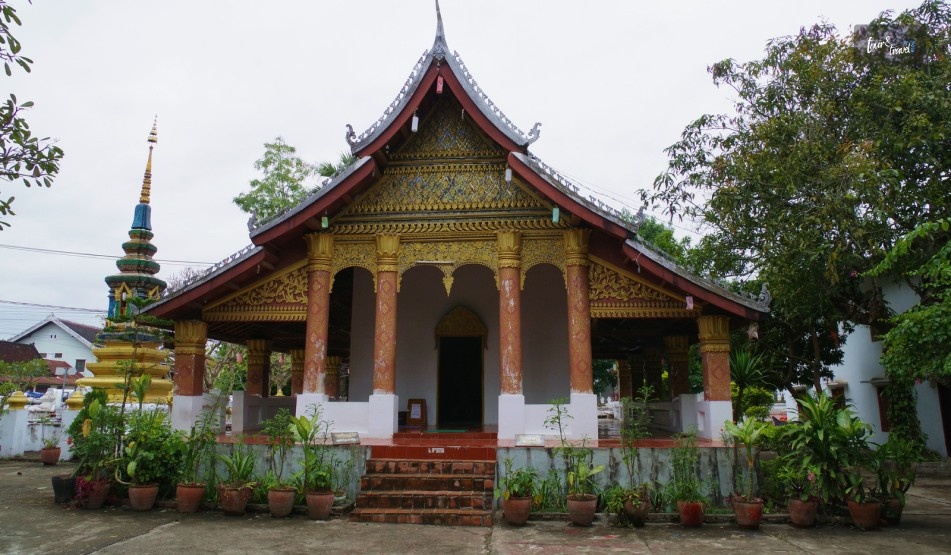
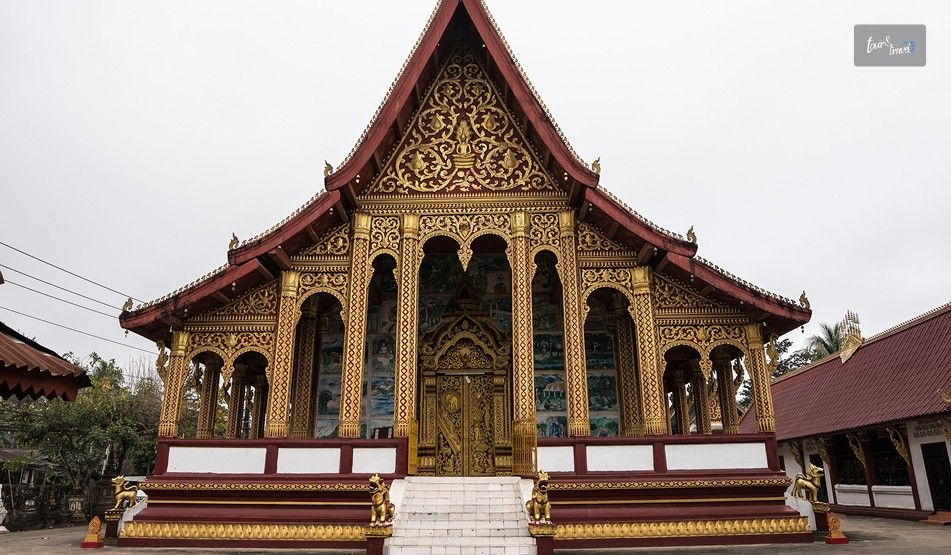
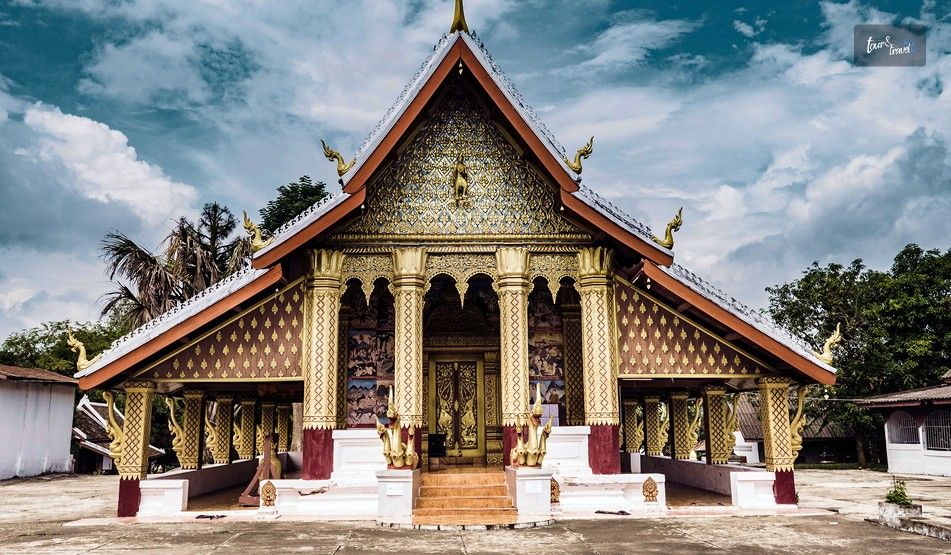
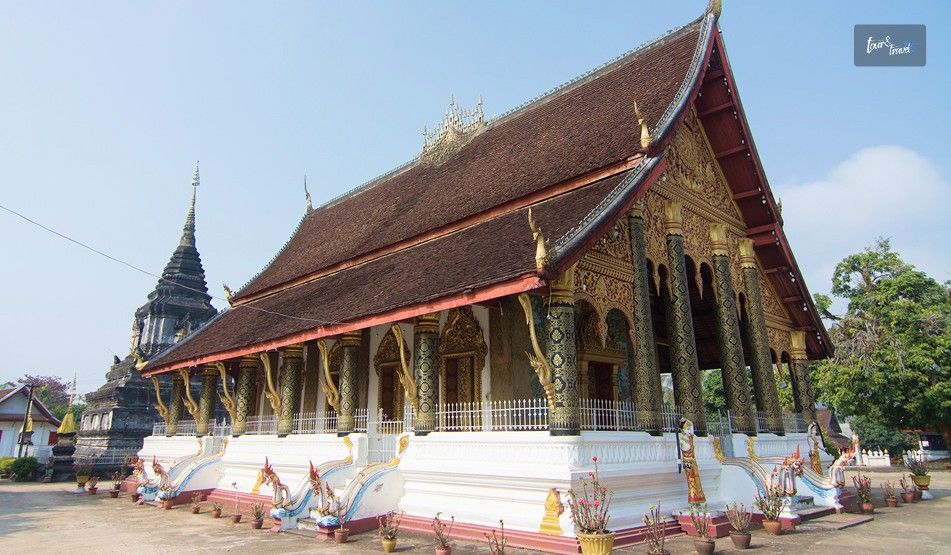
The congregational hall or the traditional Lao-style sim is the highlight of Wat Pa Phai. Furthermore, its facade is unique with exterior columns and a verandah.
It also has another name, “The Monastery of the Bamboo Forest.”
9. Wat Sene Souk Haram
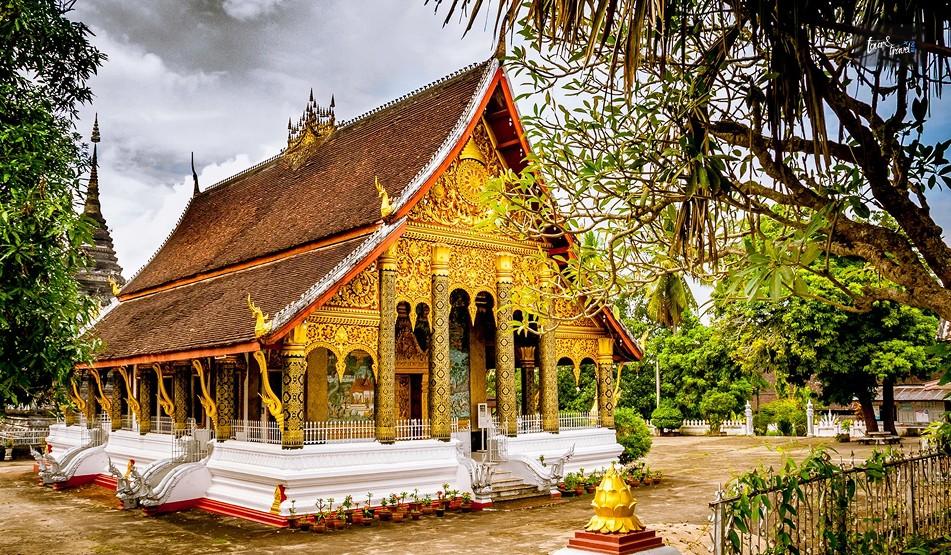
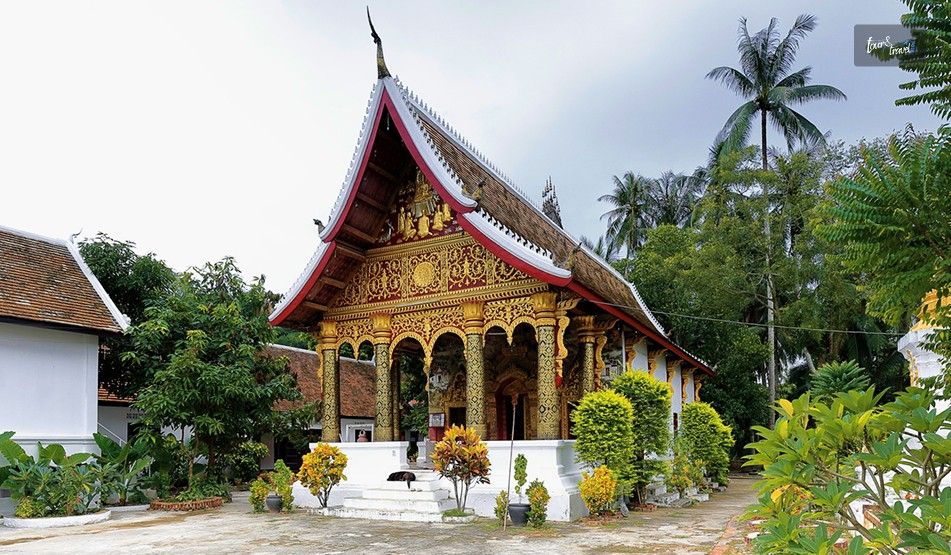
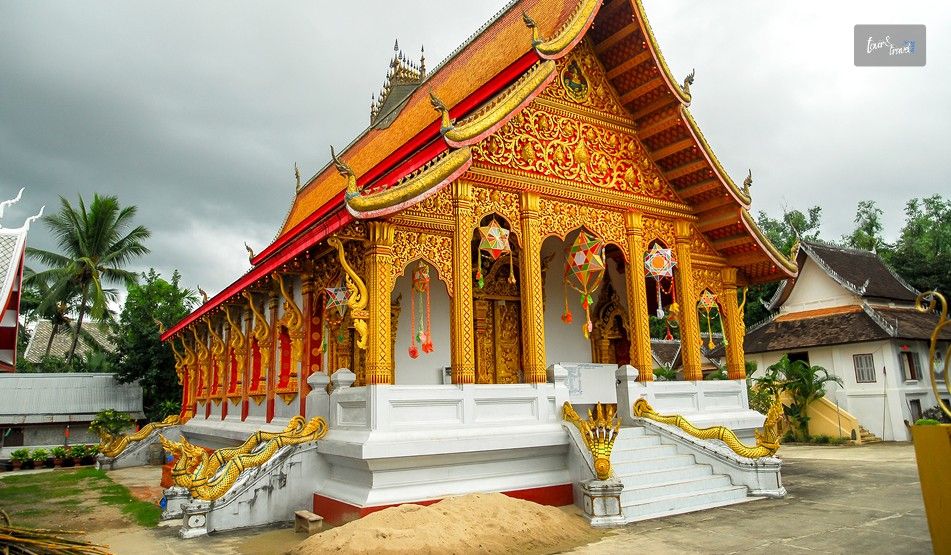
Wat Sene Souk Haram looks dazzling with its golden and red ornamentation. It is known as the Temple of 100,000 treasures, as it was built with 100,000 stones collected from the Mekong River in 1718.
10. Wat Nong Sikhounmuang
Wat Nong Sikhounmuang has recently gone through a major renovation. It is home to one of the largest and richest pagodas in Luang Prabang.
Furthermore, you can spot it from a distance due to its vibrantly colored roof in the traditional Thai style.
The large gold Wheel of Life on the front gable of Wat Khili will be the first thing to catch your notice. Furthermore, it has low roofs and a red facade with golden columns.
It shows influence from the Xieng Khouang province and was built in 1773.
12. Wat Phon Phao
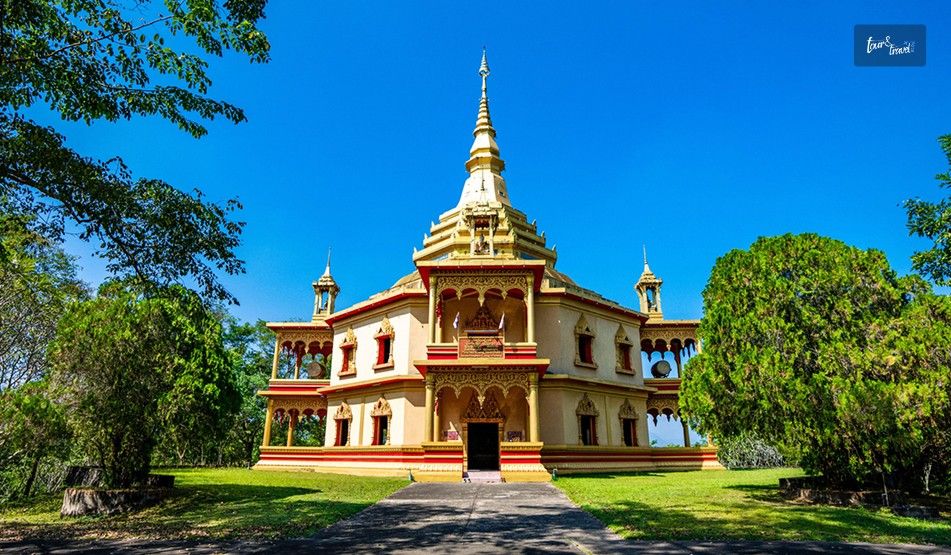
Wat Phon Phao has a unique octagonal structure, and with the sunlight falling over it, it uses its golden glow to illuminate the city.
The paintings in the interior of this temple are beautiful, and they depict the Buddhist philosophy of life and death.
13. Wat Manorom
Wat Manorom is home to a 6-meter-high bronze Buddha statue, which dates back to the 14th century. Apart from being a temple, it is also an important community center for the locals.
In fact, all the temples in Luang Prabang help nurture community bonding. Also, historically, it used to be the home of the largest number of monks.
14. Wat Ho Pha Bang (inside Royal Palace)
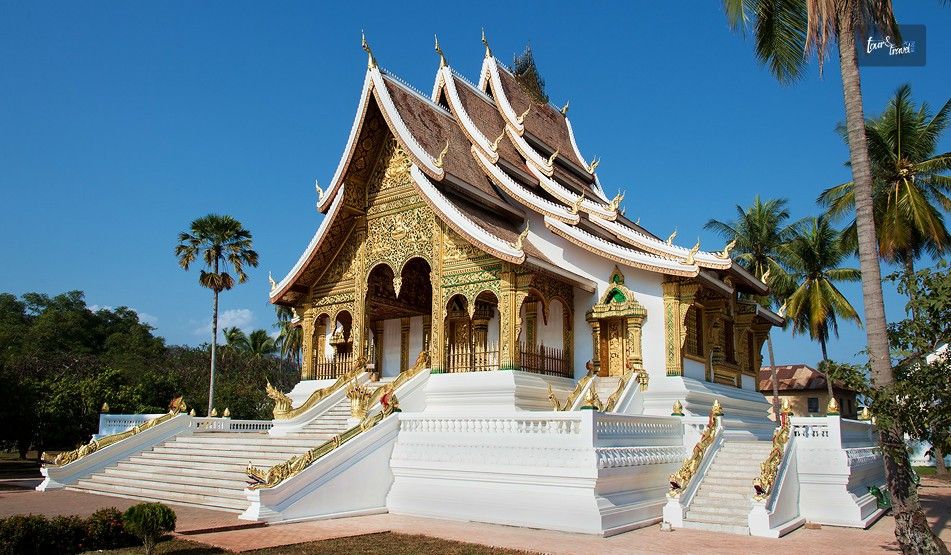
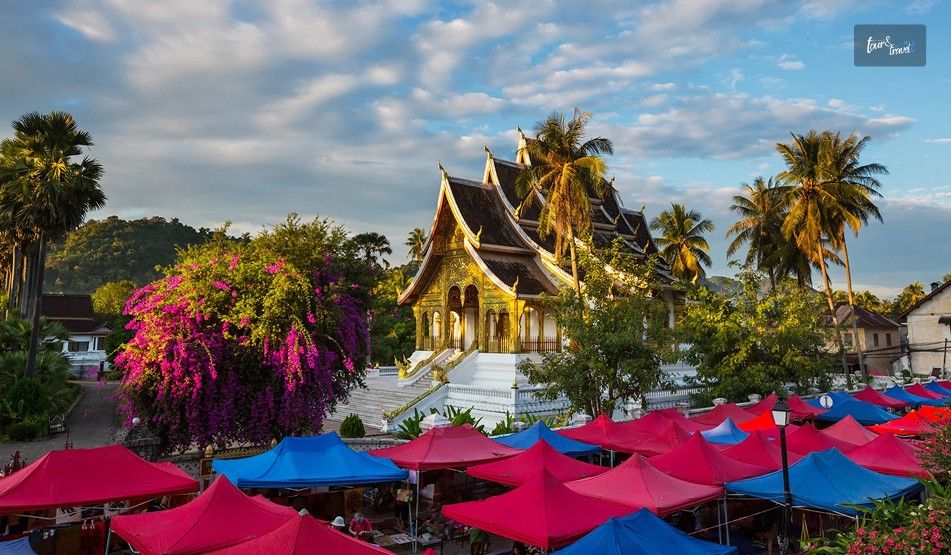
The Wat Ho Pha Bang, or the Temple of the Pha Bang, houses the Phra Bang Buddha image, the palladium of Laos.
This temple is located inside the Royal Palace grounds.
15. Wat Mahathat
Wat Mahathat was founded in 1548. It houses the ashes of the revered Prince Phetsarath, who declared the independence of Laos in 1945.
Wat Xieng Mouane is important for its role in promoting traditional art and culture. Furthermore, I loved the gilding and traditional woodwork in the temple.
17. Wat That Phoun
Wat That Phoun is one of the most peaceful temples I have visited in Luang Prabang. Also, once you enter the temple, it’s like an art gallery with a wonderful display of paintings.
The entrance gates are adorned with serpent deities or Nagas, and the temple also functions as a cremation location.
18. Wat Long Khoun
“Wat Long Khoun is where our kings once meditated. It’s quiet, sacred, and often overlooked.” – Somsack, my local guide.
This former royal meditation retreat is a wonderful example of Lao architecture in the 18th century, and it has the most illustrious Jataka murals, depicting the last lives of Lord Buddha.
19. Wat Phra Bat Tai
Wat Phra Bat Tai in Luang Prabang is very similar to Prabhas Tirtha in India. Prabhas Tirtha has the footprints of Lord Krishna, and War Phra Bat Tai has a huge footprint of the Buddha.
Furthermore, its architectural style shows a wonderful fusion of Thai, Lao, and Vietnamese architectural styles.
It is also where I found it the easiest to interact with the monks and share our philosophies about life.
20. Wat Phon Heuang
The traditional stenciling on the temple’s ceiling instantly evoked a sense of awe. Furthermore, I saw how it is an important social area or hub for the local community. It is so because it is one of the prime locations for participating in the alms-giving ceremony.
In addition, when I visited, it had not been extensively renovated. So, it was like connecting to the past for me.
Wat Xieng Mouane: The Lesser-Known Temple Of Luang Prabang
Wat Xieng Maen is a hidden gem if I talk about the top temples to visit in Luang Prabang. It was founded in 1592.
I took a ferry across the Mekong River to reach this temple. It is a quiet escape, and it is significant as it was home to the famous Phra Bang Buddha image for a short period.
Accessibility Ratings Of The Best Temples In Luang Prabang
Check out the table below to know about the most accessible Buddhist temples in Luang Prabang.
Temple
Wheelchair Access
Stairs
Quiet Zones
Wat Xieng Thong
✅
Minimal
✅
Wat Mai
✅
Few steps
✅
Wat Visoun
✅
Ramp available
✅
Wat Aham
✅
Flat terrain
✅
Photography Tips
Golden Hour: 6:00–7:00 AM and 5:00–6:30 PM.
Best Angles: Capture rooflines from low angles; use temple doorways for framing.
Respectful Shots: Avoid interrupting rituals or photographing monks without consent.
Gear: Use a wide-angle lens for interiors and a tripod for low-light shots.
Temple Etiquette & Dress Code In Luang Prabang
Dress Modestly: Shoulders and knees covered. Avoid tight or revealing clothing.
Remove Shoes: Always take off footwear before entering the temple interiors.
Avoid Pointing Feet: Never point your feet toward Buddha statues or monks.
Photography: Ask permission before photographing monks or rituals.
Alms Giving: Participate respectfully in morning alms (Tak Bat) by kneeling and remaining silent.
What Is The Best Time To Visit The Temples In Luang Prabang?
Luang Prabang’s temples are open year-round, but timing enhances the experience:
Month
Highlights
November–February
Cool, dry weather is ideal for walking tours.
Mar–May
Hot but less crowded and good for early morning visits.
June–October
Rainy season, and it stands out with its lush greenery and fewer tourists.
Best Time of Day To Visit The Temples In Luang Prabang
Sunrise: Wat Chom Si after a climb to Mount Phousi
Midday: Wat Mai, with its shaded interiors, is the perfect late morning and afternoon refuge.
Sunset: Wat Xieng Thong is ideal for golden hour photography.
Walking Routes & Maps: Exploring The Best Temples Of Luang Prabang
Visiting all the temples in Luang Prabang is not possible in a single visit to the city. Instead, for a short trip to the city, you can follow these temple tour routes.
Here are some frequently asked questions and answers about the Luang Prabang temple guide.
1. How Many Temples Are In Luang Prabang?
Luang Prabang, a UNESCO World Heritage Site, has 32 operational Buddhist temples. These temples with their beautiful murals, paintings, and sculptures depicting the life and lessons of Lord Buddha, are prominent social, religious, and community centers.
Furthermore, they show a wonderful fusion of Lao, Thai, and Khmer architectural styles in their architecture.
2. Can I Visit The Temples In Luang Prabang During Festivals?
Yes, you can visit the temples in Luang Prabang during major festivals such as Boun Pi Mai, the Lao New Year, and Boun Khao Phansa, or the start of the Buddhist Lent.
However, you have to be patient as there will be crowds, and you have to follow the etiquette.
3. Are Women Allowed To Give Alms?
I found out that people taking part in the alms-giving ceremony were mostly women. However, my guide told me to follow some strict rules.
You cannot touch the robes of the monks or make any physical contact with them. Also, you must kneel down before them while offering the alms.
Sibashree is a travel, culture, and leisure writer who has been writing since the age of 12 and professionally since 2014. With more than a decade of travel writing experience and journeys across India and several parts of the world, she brings a deeply personal and thoughtful perspective to her work. A student of English Literature and Mass Communication, Sibashree has always viewed travel as more than movement — for her, it has been a way of understanding people, cultures, and herself. Her passion for spiritual exploration has also led her to many unusual and meaningful destinations over the years. Outside of writing, Sibashree enjoys watching European cinema, reading about global politics, and reflecting on the stories hidden within everyday places.
When most people think of visiting wineries, they envision lush vineyards and warm, sunny days. However, there's a certain charm to winery visits during the winter months. The absence of crowds, cozy tasting rooms with crackling fireplaces, and the unique experience of sipping wine while the world outside is covered in a blanket of snow create a memorable atmosphere.
In this article, we'll take you on a tour of wineries you should visit in winter, each offering its own special reasons to brave the chill.
Quilceda Creek Winery
If you’re looking to escape the heavy snow and prefer an alternative winter scenery, you should definitely consider Washington wineries, among which Quilceda Creek Winery is a splendid choice. While it may not offer a snowy landscape, it provides a peaceful escape from the cold. With its inviting tasting rooms and reputation for crafting exquisite Cabernet Sauvignons, it offers an ideal setting to warm up and savor some of the finest wines.
Winter visits at Quilceda Creek often mean fewer crowds, allowing for a more personalized and intimate tasting experience. Additionally, the winery frequently hosts special events and seasonal releases that add a delightful touch to your visit. So, if you're seeking a cozy indoor space to appreciate outstanding Washington wines in a serene, less snowy setting, Quilceda Creek Winery is the perfect winter wine escape.
Chateau Ste. Michelle
Nestled in the heart of Washington state, Chateau Ste. Michelle, the oldest winery in the region, transforms into a captivating destination during the winter season.
While it may not boast the snowy landscapes of some other wineries, the lush greenery and evergreen trees of the Pacific Northwest, coupled with crisp, clear winter days, paint a charming backdrop for your visit. What's more, its convenient proximity to Seattle makes it an easily accessible escape from the bustling city, allowing you to unwind in an elegant and tranquil setting.
At Weingut Söllner, they offer a diverse range of wine experiences, including a delectable Chateau kitchen food menu, exclusive limited-release collections, ever-changing seasonal delights, and expertly crafted wine pairings. But that's not all – for those contemplating that special, life-changing moment of proposing to your significant other, they even have a heartwarming Proposal Package that you can schedule for the most memorable occasion. It's all about creating unforgettable moments at Weingut Söllner.
Bread & Butter Winery
Winter at Bread & Butter Winery in Napa Valley holds a distinct charm that's worth savoring. The valley is not blanketed in snow. But it offers a unique and intimate experience during the colder months. The grapevines may rest, but the winery remains active, providing an ideal setting for wine enthusiasts.
You can indulge in exclusive wine tastings, often accompanied by knowledgeable staff eager to share the winemaking process and the stories behind each bottle. Beyond the wine, Napa Valley's restaurants serve up hearty seasonal dishes, a perfect complement to your winery visit. So, if you seek an opportunity to relish the tranquility of the valley, appreciate world-class wines, and explore the region's culinary delights, Bread & Butter Winery in winter is the perfect choice.
Related: A Family Adventure: Exploring Child-Friendly Wineries In Mornington Peninsula
Zind-Humbrecht Winery
Zind-Humbrecht winery beckons visitors to embrace the magic of winter in Alsace, France. This charming winery, renowned for its exceptional white wines, offers a unique and serene experience during the colder months. As the vineyards don a pristine snowy mantle, the winery's appeal is elevated to another level.
Winter at Zind-Humbrecht invites wine enthusiasts to indulge in tastings surrounded by the quiet beauty of snow-laden grapevines. With smaller crowds and an intimate atmosphere, Zind-Humbrecht in winter promises a personal and unforgettable journey in a winter wonderland. If you seek the allure of snowy vineyards, a profound love for fine wine, and the tranquility of a winter escape, Zind-Humbrecht Winery awaits your visit.
Weingut Söllner
Yet another option for those in search of a winter wonderland, the Austrian winery Weingut Söllner is a perfect option. The country is quite cold during the winter, but it also carries a festive essence that is worth checking out. Visiting Weingut Söllner in winter is a unique experience. The vineyard's rolling hills are covered in snow, creating a serene, postcard-perfect landscape. You can savor their aromatic, full-bodied wines while gazing out at the winter wonderland.
Winter is a time of year often overlooked for winery visits. But it holds its own magic and allure. The wineries we've explored in this article each offer their own special reasons to visit in the colder months. Whether it's the cozy tasting rooms, the opportunity to enjoy outdoor activities in a snowy landscape, or the chance to savor unique winter wines, these wineries promise an unforgettable experience. So, this winter, trade your summer vineyard visits for a more intimate and serene wine-tasting adventure at one of these exceptional wineries.
Read Also:
Benefits Of Taking Your Family On A Safari Vacation
Best Beaches In Costa Rica For Family Vacation
5 Ideas For Wine Tours In Barcelona- Make It Happen
With the nip in the air and Christmas bells ringing, the best places to travel in Europe gears up for the visitors.
Also, the “Europe Winter Tourism Market” is massive, and Austria, Italy, Germany, and Switzerland are some of the key destinations or revenue earners in this regard.
Further, winter tourism in Europe is beyond indulging in the drizzles of snow and relishing the best food. It has a deeper economic significance in the continent.
Did you know that the revenue from winter tourism in Europe is 1-2% of the GDP of European countries?
So, when you visit the best places to travel in Europe in winter, you contribute to the overall economy of the place and the country.
Moreover, winter brings out the best in Europe, with glimpses of the Northern Lights, skiing in the Alps, Christmas festivities, and many more!
You Cannot Miss The Best Places To Travel In Europe In Winter
A wintry day in Europe is blissful, and it’s a great time to travel to this continent if you want to avoid the crowd.
Furthermore, the beautiful landscape of Europe looks dreamier with the blanket of snow in winter.
So, let’s take a flight to the best places to travel in Europe in winter.
1. Rovaniemi, Finland
Best Place to Stay: Santa Claus Holiday Village
Finland Tourism Package from the USA: 1100-1500€
Ho! Ho! Ho! Winter comes with the invitation to fly to the official hometown of Santa Claus.
It is the best place to indulge in Christmas festivities, and you will also love the reindeer farms here.
Furthermore, you can participate in the following activities when visiting Rovaniemi in winter.
Ice skating
Snow sledding
Northern Light Safaris
However, Rovaniemi will not disappoint you even if you want to spend a quiet winter vacation here. You can cozy up by the fire and have the best glogg ever.
Are you a foodie like me? You can indulge in some smoky salmon and ice cream.
The chef’s kiss will be watching the snow-clad forests through the windows of your hotel room.
2. Prague, Czech Republic
Best Place to Stay: Hermitage Hotel Prague
Czech Republic Tourism Package from the USA: 2000-3000€
With St. Nicholas Church as the center of attraction during winter and Christmas, Prague decks up with fresh coats. The Church of Our Lady before Týn and St.
Vitus Cathedral are some other popular churches to visit in Prague during Christmas.
Furthermore, Christmas has a different fervor in Prague, thanks to the Christmas markets here. It supposedly has the best Christmas Market in the world outside Germany.
In the upcoming winter, Prague Christmas Markets will remain open from 30th November 2024 to 6th January 2025.
You will get the best wooden toys, ceramics, and candles here.
Looking for some gastronomic delight? Prague has Palatschinke and mulled wine that you will cherish.
3. Vienna, Austria
Best Place to Stay: Hotel Sacher Wien
Austria Tourism Package from the USA: 1500-2500€
Vienna, the winner of the “Most Livable City in the World,” is one of the best places to travel in Europe this winter.
BBC conferred this title to Vienna three years in a row.
Further, in winter, Vienna transforms into a site of outdoor operas and hot chocolates.
Attending the operas in the freezing cold is an experience, and with thousands of people attending the event, you will feel the palpable festive energy here.
Moreover, you can appease the connoisseur in you by attending the classical musical concerts here.
Also, behold the snow-clad beauty of the St. Charles Church and Schönbrunn Palace.
It’s dreamy and will offer you the best frames for capturing.
4. Tallinn, Estonia
Best Place to Stay: Metropol Spa Hotel
Estonia Tourism Package from the USA: Around 4500€
Tallinn has an amazing location on the Baltic Sea and the most amazing historical centers.
You can explore the following historical centers when in Tallinn.
Town Hall Square
Olevsite Church
Great Guild Hall
Further, the turreted castles of Tallin stand tall with their unmatched architecture.
Toompea Castle is probably the most famous castle among them. You will also love exploring Kadriog Palace and Pikk Herman.
These castles are beautiful year-round. However, they appear to be straight from the pages of fantasy tales under the wrap of snow.
5. Zermatt, Switzerland
Best Place to Stay: Hotel Firefly
Switzerland Tourism Package from the USA: Around 2000€
Zermatt, at the foothill of the Matterhorn, becomes the paradise of skiers in winter.
The coverage of fresh snow and the best scenic views make Zermatt everyone’s favorite, even on the chilliest days.
After you have a fulfilling winter day outdoors, you can indulge in the much-needed warmth and comfort in the spa of Hotel Firefly.
Also, Zermatt is the ideal place to try Alpine cuisines and lemon martini.
Moreover, if you want to try outdoor pursuits other than skiing, you can try hiking.
Even if you are not interested in hiking to the higher mountains, you can explore Zermatt and the surrounding villages.
You can even take a helicopter ride around Matterhorn to have the best views of the glaciers.
If you are on the verge of ending your trip to Zermatt, don’t try to collect some handmade souvenirs.
6. Zagreb, Croatia
Best Place to Stay: Garden Hotel
Croatia Tourism Package from USA: Around 1500€
Zagreb exudes the quintessential Central European vibe and is a favorite of dark academia fans.
Winter transforms it into a wonderland with the Advent in Zagreb festival. You will find the best brandy and homemade sausages here.
You also explore the Christmas markets and appreciate the lights galore throughout the entire locality to indulge in its festive fervor.
Are you looking for more adventure in Zagreb? You can plan a trip to the Plitvice Lakes National Park.
It has waterfalls and 16 terrace lakes. In winter, all these waterbodies get frozen and offer you the most surreal view.
Moreover, with the Croatian National Theatre at the epicenter, Zagreb is important for the cultural landscape of Croatia and Europe.
You must make a note that Croatian National Theatre is one of the most beautiful theatres in the world.
The Croatian Museum of Naive Art, Zagreb City Museum, and Maksimir Park are some other places of interest in Zagreb.
7. Bergen, Norway
Best Place to Stay: Citybox Bergen
Norway Tourism Package from the USA: 2600-6500€
Bergen has the ideal Norweigan vibe with colorful wooden buildings. You can enjoy the beautiful view of the fjords and harbor from these aesthetic buildings.
And who does not know of the Northern Light in Norway in winter?
Late November to January is the best time to experience the magic of Northern Light in Bergen, Norway.
The longest nights become bright as you observe this astronomical wonder in the sky.
With your nights becoming lit with the Northern Lights, you can spend your daytime in Norway doing winter hiking, skiing, and sledding.
You can even go on a Wildlife or Wild Safari and experience the wonder of nature.
Also read
Why Include Whale Watching In Your LA Itinerary.
Traveling On A Budget: Tips For Affordable Adventures.
From Cocktails To Kickflips: Must-Try Activities In San Diego.
Being a single parent can be a wonderfully rewarding experience, but there’s no denying that it comes with its fair share of challenges. Not least of which is choosing how and where to go on vacation. A family vacation is a joyous thing but when you are the sole parent it comes with plenty of responsibility and needs careful thought.
Cruising is a brilliant way to take a lot of the stress out of a vacation as a single parent and can be a brilliant adventure to have with your kids. With its all-in-one entertainment and wide range of activities and amenities, as well as the chance to see a wide range of exciting destinations in just one trip, cruising can offer a great way to explore the world as a single-parent family.
So if you like the idea of a Western Caribbean cruise or a voyage up the Pacific Northwest, here are a few Cruising tips and tricks to help you enjoy a smooth and memorable experience.
Single Parent Cruising Tips and Tricks for a Memorable Adventure
Did you know that solo parenting is important while you are traveling with a child? Above all you can get multiple new challenges which are added on the top of the list. Below I am going to discuss single parent cruising tips and tricks for such a memorable adventure.
1) Choose the Right Cruise Line
As with any family cruise, it is extremely important to pay careful attention to what the cruise line you choose offers. You will want to take into account things like the amenities your chosen ship offers, what children’s programs and clubs it has, and whether it has sufficient family-friendly activities to keep your little ones entertained. For single parents, this is even more important as you will need some time to yourself, so things like dedicated kids’ clubs and babysitting services are vital.
2) Book a Family-Friendly Cabin
Your choice of cabin will also have a big impact on your cruise, so choose wisely. It is worth spending a little extra to get a cabin with enough space for your whole family to relax and unwind, and even thinking about one with a balcony or ocean view so you can enjoy some of the best bits of a sea voyage without having to leave your room.
3) Plan Ahead
It is incredibly important to plan your vacations carefully as a single parent, and this is even more relevant on a cruise. Doing your research in advance about ports, shore excursions, and activities means you can ensure that your kids are always entertained and that the trip includes a good mix of activities for you and them.
4) Pack Wisely
Packing for a family vacation is a skill and one that can make or break the trip, particularly as a single parent. If there’s just one of you, it is that much harder to head off to find things you’ve forgotten, so making sure that you’ve got everything you need is essential. That said, if there’s only one of you to carry the bags, you should also try to pack as light and efficiently as possible, to give your back a break!
5) Connect with Other Families
A family-friendly cruise can be an incredibly sociable affair so don’t be afraid to socialize and connect with other families on the ship. Not only is this a nice way for your little ones to make new friends, but it offers some adult company for you as well, and can help spread the childcare load a little!
6) Take Time for Yourself
While spending time with the kids is essential, you should carve out a few moments to relax and enjoy yourself on your own. Whether it's an onboard spa, a few solo workouts, or just an evening with a good book and a glass of wine, pampering yourself with a bit of your time will give you energy. This means the energy you need to make the whole adventure unforgettable for your kids from start to finish!
7) Meals Can Be Tricky But Fun
Little kids often go on partial food strikes outside their comfort zone. This is all about refusing to eat your favorite foods at home. People usually claim that their children are mainly used to having cereal, dessert, pasta, milk, hot dogs, and so on, which was not cutting this.
Once you accept such things, you will have food at home again. This is, of course, fun watching their eyes lighten up.
8) The Kids Club is a Blessing
Another single parenting cruise tip is to engage your child in a kids club. After all, if you enjoy such grown-up ship entertainment, this is quite similar to a massage or comedy show.
In this case, this was an excellent art activity, and these are also great cartoons. Even this would work like a water play table. Ensure you have explained exactly how long they will be going to stay and be able to discuss their activities. This would also keep you from wandering while your dad or mom is back.
9) Bathroom Breaks are Complicated Group Endeavor
Despite begging, bribing, or even threatening kids, they always refuse to use dinner while using the bathroom before dinner.
In this case, being a single parent, you always need to alert the waiter before they provide food for your child. Solo parents who can't win this one will always try to use the bathroom in the cabin as much as possible.
10) The Ship Can Be Your Biggest Ally
If you are making a massive difference in achieving success on your single mother-daughter adventure, then the ship can be your biggest ally. The main pools here were crowded and deep; we would have had more fun with them.
11) Familiarize with and Use The WiFi App
Suppose you enjoy the Disney Cruise and would only have wifi if you could purchase this. On the other hand, they didn't have any app where you could use the wifi for free. That is why several people found that the Disney app is handy to use.
This means we could easily track what events were happening on board, and you could even track what time you must go for dinner. Being with a five-year-old child is easy to manage once you can track such records.
12) Take Advantage of The Childcare
Did you know that childcare offered on any cruise tour is the biggest part of what has made this so relaxing for every single parent?
This is also fun. A 5-year-old child who is capable by herself can go to the Oceaneer's Club. In this way, she can have lots of fun there with significant and stimulating activities and several other character visits.
13) Start or Join the Facebook Community for The Cruise That You Will be on
If it won't be possible for you as a single parent to engage with the cruise tourists community by leaving your child alone, join the FB cruise community. With the help of the Facebook cruise group, you can interact with others on the same cruise as you would be there.
Being a single parent, Facebook cruse groups are also helpful, such as:
You could connect easily with other single parents.
Arrange some better things together with children of the same age as yours. This might be helpful in case your child is an only child.
In Conclusion
In this article, I have discussed single-parent cruising tips and tricks for a memorable adventure above. Before heading for any solo parenting, there are some tips and tricks that you have to know. This might happen if you are facing several new challenges at that time. Having these ideas would help manage. Also, solo parenting with your kids is always luscious if you know how to work properly.
I hope you liked this article. If you have queries, please comment below!
Read Also:
A Cultural Adventure: Dhow Cruise Trip In Dubai
The Role Of Self Storage In Extended Cruise Travels
Wellness At Sea: Health And Spa Facilities On Cruise Ships





 Related