


Big Bend National Park Wildlife: The Hot Desert Park

Sep 30, 2024

Last Updated on: Nov 24, 2025

Travel Blog

When we hear the term “desert,” we usually imagine a place with sparse traces of life. However, Big Bend National Park is an exception, creating a home for elk, black bears, squirrels, rattlesnakes, and woodpeckers. 

Big Bend National Park also has oases created by single strands of cottonwood trees. Further, ephemeral springs, rocky canyons, highland shrubs, junipers, and grasses have contributed to the biodiversity of the park.

So, did you see something moving in the bush? Let’s find out what it can be!

A Vivid Wildlife Thrives At Big Bend National Park 

Vivid Wildlife Thrives At Big Bend National Park 

Along with a never-ending variety of mammals and reptiles, the Big Bend National Park has the most butterflies, birds, scorpions, ants, and bats

Also, various species of animals here play an important role in the ecosystem of the park. Further, a rich and sustainable food chain here keeps the diversity intact. 

Mammals At Big Bend National Park

Mammals At Big Bend National Park

Home to 75 species of mammals, Big Bend National Park shows an extraordinary variety of mammals you can see. Further, it is hard to believe how the tiniest Western pipistrelle bat and the largest black bear can coexist in a space. 

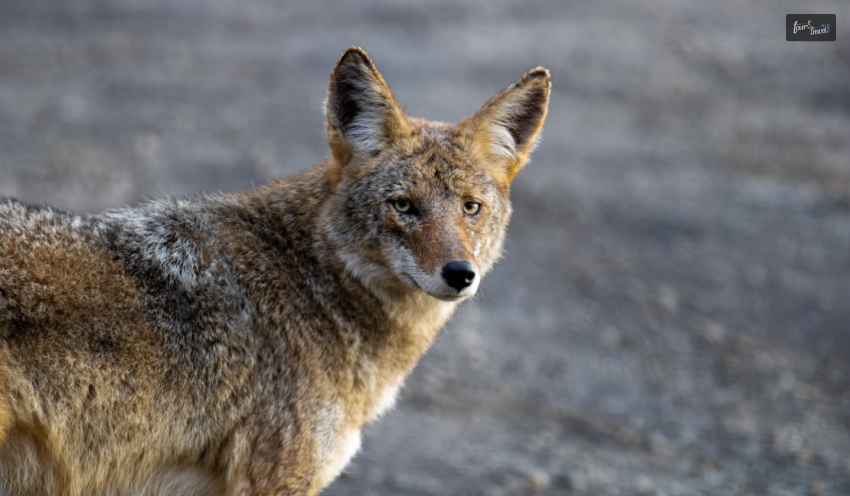
Nevertheless, along with bobcats, black bears, and javelinas, you will also get to see mountain lions, coyotes, gray foxes, bighorn sheep, aoudad, nutria, and elk.

Further, among the petite ones, the most common species here are lagomorphs, badgers, squirrels, and ringtails.

Birds At Big Bend National Park

If you are a birder and want to make the most of your bird-watching experience here, you must be at the right spot at the right time. So, the table below shows the bird-watching locations in the park and which bird species you will encounter there.


Rio Grande Village Nature Trail
Green KingfisherNorthern cardinalGreen heronGolden-fronted WoodpeckerCommon black hawk
Chisos MountainsBlack-crested titmouseMexican JayNorthern flickerAcorn woodpecker
Cottonwood CampgroundVermillion flycatcherGreat-horned owlBlack vultureLadder-backed Woodpecker
Dugout WellsSummer TanagerAsh-throated flycatcherWhite-winged doveInca doveGreat roadrunner
Sam Nail RanchScaled quailPainted buntingPyrrhuloxiaYellow-breasted chatGreen-tailed towhee
Blue CreekBlack-throated sparrowLucifer hummingbirdMourning doveBlue grosbeakCactus wren

Also, spring is the best time to visit Big Bend National Park if you want to encounter the most colorful birds. Further, in this season, some of the rarest migratory birds flock to this desert park.

So, late February to May is the best time for bird watching in Big Bend National Park. 

Amphibians At Big Bend National Park

Amphibians At Big Bend National Park

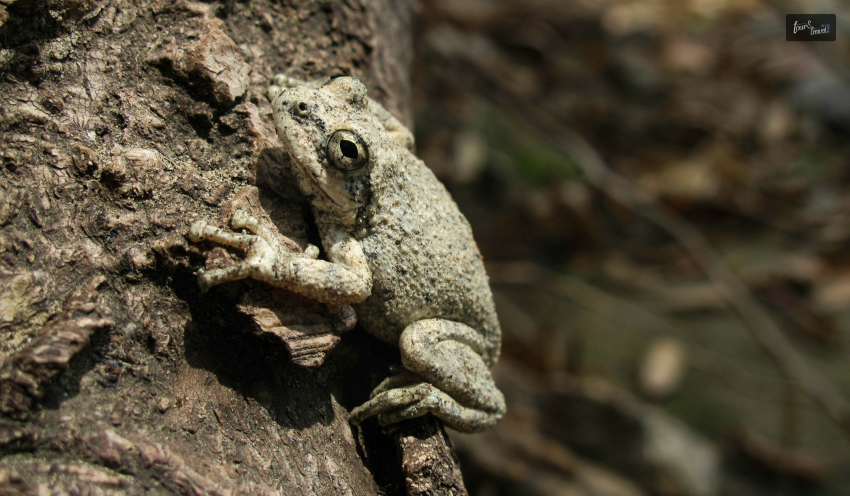
You will find a wide variety of amphibians along the Rio Grande floodplain and in many other parts of the park. However, the amphibians here mostly are different species of toads and frogs. 

So, here is a list of toads and frogs in this national park.

  • Great Plains narrow-mouthed toad
  • Couch’s spadefoot toad
  • Red-spotted toad
  • Green toad
  • Spotted chirping frog
  • Rio Grande leopard frog
  • Canyon treefrog
  • Texas toad

These toads are frogs found near the lakes and springs in the park. Moreover, if you are camping in the park or exploring the backcountry camping at Big Bend in summer, you will hear these amphibians’s loudest cries at night. 

Reptiles At Big Bend National Park

The Chihuahuan Greater Earless Lizard in Big Bend National Park is one of the most colorful reptiles you will come across. Further, the males display a riot of colors, with a touch of orange, green, yellow, and brown all over their bodies. 

However, this desert park harbors many other species of lizards and snakes. Check out the table below to learn about these species. 

Lizards in Big Bend National ParkTexas Horned LizardRound-tailed Horned LizardEastern Collared LizardGreat Plains SkinkShort-lined SkinkGreen AnoleSouthwestern Fence LizardCrevice Spiny Lizard
Snakes in Big Bend National ParkTrans-Pecos CopperheadWestern CoachwhipWestern Diamondback RattlesnakeMojave RattlesnakeBlack-tailed RattlesnakeMottled Rock RattlesnakeBaird’s Rat SnakeTrans-Pecos Rat SnakeRegal Ring-necked SnakeSonoran Gopher Snake, etc. 
Turtles in Big Bend National ParkYellow mud turtleBig bend sliderDesert box turtleTexas spiny softshell

The warm climate and extreme heat in the summer season have made Big Bend National Park ideal for the habitation and breeding of various reptiles. 

Fish At Big Bend National Park

Fish At Big Bend National Park

Finding schools of fish in a desert park like the Big Bend National Park is a little astonishing. However, the park is blessed with the Rio Grande and its tributaries. So, you can see fish in the Terlingua creeks and Tornillo. 

Unfortunately, nine species of fish in the park are now extinct. Still, it has varieties, such as Big Bend Gambusia, catfish, largemouth bass, longnose dace, bluegill, green sunfish, and blue tilapia. 

Do you know that the last American Eel was taken from Rio Grande in 1954? Further, Big Bend Gambusia is an endangered species, and it is now only found in a protected pond close to the Rio Grande Village. 

Also, the invasive species of blue tilapia has now become a pest. So, many organizations are now against the further spread of this species. 

Insects At Big Bend National Park 

Insects At Big Bend National Park 

The two-tailed swallowtail caterpillar is the most adorable insect in the Big Bend National Park. Other insects found in the national park are black beetles, whirligig beetles, and yucca moths. 

Yucca moths play a crucial role in the ecology of the Big Bend National Park. It is responsible for pollinating the creamy-white yucca flowers that bloom at night. 

Further, in the Chisos Mountains, you will find beebrush plants where bumblebees, honey bees, and other species of bees roam around. Moreover, in the summer, you will find ladybugs on the peaks. 

Other insects found at Big Bend National Park are:

  • Tarantula hawks
  • Millipedes (mostly seen after a rainfall)
  • Diplopoda or two-footed insects

Diplopoda is very vital for nutrient recycling in the Big Bend National Park. It creates burrows in the ground of around 1 or 1 and a half feet. Further, they feed on plant remains to return essential nutrients to nature. 

A varied geology, including a river corridor, mountains, acres of Chihuahuan desert, and oases, has made Big Bend National Park rich in wildlife. This desert park has around 75 species of mammals and 450 species of birds. It is also home to more than 50 species of reptiles and many amphibians

So, for a wildlife lover, this desert park in Texas is a sheer delight!

Also Read

Share on Social Media

Sibashree is a travel, culture, and leisure writer who has been writing since the age of 12 and professionally since 2014. With more than a decade of travel writing experience and journeys across India and several parts of the world, she brings a deeply personal and thoughtful perspective to her work. A student of English Literature and Mass Communication, Sibashree has always viewed travel as more than movement — for her, it has been a way of understanding people, cultures, and herself. Her passion for spiritual exploration has also led her to many unusual and meaningful destinations over the years. Outside of writing, Sibashree enjoys watching European cinema, reading about global politics, and reflecting on the stories hidden within everyday places.

Leave a Reply

Your email address will not be published. Required fields are marked *

title-img Related

READ MORE London Music Trip Travel Guide

The London Music Lover’s Travel Itinerary: Venues, Vinyl & Vibes

BY  Sibashree Aug 18, 2025

For those who travel by sound as much as sight. London doesn’t just host music, it holds it. It moves through the brickwork, hums beneath your morning coffee, and shows up when you least expect it.  If you're flying in with rhythm on your mind, don't waste time chasing tourist noise. Here’s a curated London music trip travel guide for music lovers who want to feel the city, not just see it. Your Ultimate London Music Trip Travel Guide: Follow This Itinerary You came for music in London, and if you did it right, you didn’t just watch it—you walked through it.  In London, every borough speaks its own tempo. The key is listening closely, not just for the big nights, but for the quiet tracks in between. Nevertheless, here is a standard London music trip travel guide for four days.  Day 1: Arrival & Warm-Up Walks Start with the echoes. Land, check in, and resist the urge to overschedule. Instead, walk. London’s music history isn’t just locked up in venues—it’s in the corners of Soho, the secondhand shops of Camden, and the quiet plaques on buildings that once held chaos and brilliance. Head to Denmark Street, once known as Tin Pan Alley. You don’t need a guitar to appreciate it—just time and a bit of reverence. Nearby, walk past the former Astoria (now long gone, but not forgotten), then duck into Sounds of the Universe in Soho. The vinyl is deep-cut, globally sourced, and fiercely curated. Grab a late bite nearby and keep it lowkey. You’re just getting started. Day 2: Vinyl Crates & Iconic Stages Go digging, then go big. Start the day in Notting Hill with a stop at Honest Jon’s Records. It’s been around since the '70s and the staff have that rare, quiet encyclopedic knowledge that reminds you music people don’t need to shout. Flip through dub, jazz, garage, and everything in between. Then cross town and hit Rough Trade East in Brick Lane. Even if you're not buying, the energy is unmistakable. There’s usually a live session or interview playing somewhere in the background. You feel part of something—even as an observer. As the evening rolls in, book a Cirque Le Soir table before you head to The O2 Arena. Yes, The O2 is huge. But some nights deserve scale. Whether it’s a legacy tour or a one-night-only show from an artist on the brink, this is where spectacle meets sound.  The acoustics are sharp, the production is heavy, and if you’re lucky, you’ll leave changed. Now, why the table? After a concert, artists love to celebrate. And where do they go? The table will make sure you have access. Day 3: The Cultural Cut Where sound meets soul. Dedicate the day to Southbank. Start with the Southbank Centre. Between Royal Festival Hall, Queen Elizabeth Hall, and the Purcell Room, you’ll catch everything from full-scale orchestras to left-field jazz sets to spoken word that leaves the room quiet in the best way. The best part? The space itself. Brutalist buildings softened by river light, steps where kids blast drill next to older couples sipping rosé, and that unspoken code that says, we all came for something real. After, stop into BFI Southbank or one of the nearby cafés. There’s a quiet, creative current in this stretch of the city. Lean into it. Day 4: A Goodbye With Texture Leave on the right note. Spend your final morning in Camden. Walk along the canal. Listen for the street musicians who don’t just perform—they pour. Visit the Jazz Café if it lines up, or just stop by outside and take in the marquee. A lot of names you know started here when no one else did. Before heading to the airport, swing by Flashback Records or Sister Ray. One last flip through the bins. One last moment to chase something unexpected. That’s what music travel is really about—not the big plans, but the small finds that find you. Day 5: Visit The Victoria & Albert Museum The Victoria & Albert Museum is the place where history meets music. The rarest and exclusive musical collections are often on display at the museum.  Here, you will find the works of Freddie Mercury, David Bowie, and many other musical geniuses representing genres such as opera, rock n roll, and others.  Also, the museum stands out with its unique collection of musical instruments. In fact, the collection of musical instruments here is the biggest in the world.  Day 6: Visit Abbey Road Are you a Beatles fan? You surely know what to visit in London. Abbey Road Crossing is the place where the Beatles' album was shot.  Furthermore, the crossing is close to Abbey Road Studios, where the Beatles recorded many of their iconic songs. The studio is still active as a recording facility, and you can also reserve a guided tour of the studio to learn about the history of music in London.  Day 7: Pay A Visit To The 100 Club The 100 Club in London was known as the Feldman Jazz Club from 1942 to 1964. In 1964, the club was renamed “The 100 Club” and since then, it has been a popular venue for live music shows and events.  Furthermore, throughout decades of its operation, The 100 Club has been hosting iconic performances such as Sex Pistols, BB King, Muddy Waters, Eddie Grant, and the list goes on! Moreover, located at 100 Oxford Street, 100 Club London is the oldest individual setup in the world.  Day 8: Watch A Performance At Royal Albert Hall Our London music trip travel guide will be incomplete without attending a live performance at the Royal Albert Hall.  Located at the northern edge of South Kensington, the Royal Albert Hall can accommodate 5272 visitors.  Queen Victoria opened the hall in 1871, and since then, it has been graced by all the prominent musicians and artists from around the world.  Furthermore, the hall has a distinct Italian architecture, and the first British Marathon was run at the Royal Albert Hall in 1909. 

READ MORE Travel

5 Reasons To Travel When You Retire

BY  Ankita Jan 9, 2024

In the mosaic of life, retirement marks a significant transition. While some fully embrace leisure and relaxation, others opt for a more dynamic approach—partial retirement. This innovative concept allows individuals to savor retirement benefits while engaging in meaningful activities, including travel. You can find out if partial retirement might be right for you at https://boomerbenefits.com/could-partial-retirement-be-right-for-you/. As you embark on this new chapter of life, whether fully or partially retired-here are five compelling reasons to make travel an integral part of your journey after employment. One of the most profound aspects of travel is its opportunity for cultural enrichment and continuous learning. As you step out of your comfort zone and explore diverse destinations, you encounter new traditions, cuisines, and perspectives. The world becomes your classroom, offering lessons beyond a book's pages. Whether visiting ancient historical sites, immersing yourself in local customs, or trying a dish you've never heard of, every journey becomes a lesson in cultural understanding. Travel during partial retirement allows you to fill your days with experiences that broaden your horizons and contribute to your personal growth. Strengthening Social Connections Retirement often comes with the promise of more leisure time, and what better way to spend it than by cultivating and strengthening social connections? Traveling in your retirement years provides ample opportunities to share experiences with family and friends. Whether a reunion with old friends or a multigenerational trip with family, these shared adventures create lasting memories and deepen your bonds. Additionally, travel introduces the chance to meet new people, fostering social connections with like-minded individuals who share your passion for exploration. Shared experiences and shared stories become the threads weaving the tapestry of your social connections during your partial retirement. Health and Well-being Travel is not just a feast for the soul; it can also positively impact your physical health and overall well-being. Engaging in new activities, exploring different landscapes, and staying active during travels contribute to a healthier lifestyle. Whether hiking through scenic trails, strolling along picturesque beaches, or participating in local activities, travel provides opportunities for exercise that feel like adventures rather than routines. The mental stimulation derived from navigating new environments and embracing novel experiences can also contribute to cognitive well-being. By incorporating travel into your partial retirement, you are nurturing your wanderlust and your body and mind. Rediscovering Passion and Hobbies Retirement is the ideal time to rediscover and indulge in your passions and hobbies. Whether you love art, history, nature, or adventure, there's a destination waiting to reignite your interests. From exploring art galleries in Paris to hiking the trails of Machu Picchu, travel offers many opportunities to immerse yourself in activities that bring you joy. Partial retirement allows you the flexibility to design your itinerary around your interests, ensuring that each trip becomes a personalized adventure tailored to your passions. The world becomes a canvas on which you can paint the vibrant strokes of your hobbies, rekindling the flames of enthusiasm that may have flickered in the busyness of work life. Creating Lasting Memories The essence of travel lies in the memories it creates—moments that linger long after the journey concludes. During your partial retirement, you have the luxury of time to savor and appreciate these moments. From the awe-inspiring beauty of natural wonders to the laughter shared with loved ones in a bustling market, every experience becomes a treasure. Traveling in your retirement years allows you to build a collection of memories that serve as a testament to a life well-lived. These memories enrich your personal narrative and become a source of inspiration for the generations that follow, creating a legacy woven with the threads of your adventures. Read Also: A Backpacker’s Guide: Must-Have Camping Essentials Secrets Of Forest Camping: Tips For An Unforgettable Getaway Sorting Out Christmas Vacation: 11 Best Places To Visit On Christmas This Year!

READ MORE montana national parks

Top 12 Montana National Parks You Must Visit In 2024!

BY  Ankita Jun 6, 2023

Are you thinking about visiting Montana National Parks but are not really sure about which ones should you visit while you are there? Well, there is no need for you to worry. I have you covered! There are a number of national parks that are located in the United States. Whether you want to check out the national parks in Wyoming or Zion, the list is endless. But if you want to try out a new place, Montana might just be the right one for you! In this article, I will be focusing extensively on the best national parks in Montana that you must visit when you are in the states. So, if that is something that you want to know, keep reading the article till the end… Best Montana National Parks That You Must Visit! The fourth-largest state in the US, Montana, lies in the northwest of the country on the border with Canada. It is pretty sparsely populated. It boasts delightfully diverse landscapes. The west is very mountainous. While the east’s endless plains and prairies are only occasionally punctuated by breathtaking badlands and bluffs. Hidden away among its wild and remote realms are incredible wildlife species. There are moose, grizzly bears, and mountain lions all inhabiting its numerous national parks and state parks. Are you planning to travel to the States and Montana, to be specific? You need to check out this list of the best Montana National Parks that you need to visit in 2023: 1. Bighorn Canyon National Recreation Area Bighorn Canyon National Recreation Area sprawls over a vast zone and straddles both Montana and Wyoming. It is home to stunning scenery and landscapes. The area is made up of two delightfully distinct districts. It is a treat to explore, with a wealth of recreational activities to try out. The main feature of the park is the breathtaking Bighorn Canyon. It towers over the large lake and roaring river of the same name. Its craggy cliffs form a formidable backdrop to the tranquil waters below, which offer fantastic fishing, kayaking, and boating. Hiking and camping are very popular. However, the area also has a range of archaeological and cultural treasures to check out. As well as being home to historic ranches, a third of its area is located on the Crow Indian Reservation. Part of the park is a range for wild horses. Visitors can learn all about its history, geology, and nature at one of the site’s two centers. 2. Big Hole National Battlefield The Big Hole National Battlefield is the location of the battle that took place on August 9th and 10th during Nez Perce Flight of 1877. By early August, over 800 nimí·pu· (Nez Perce) and over 2,000 horses were passing peacefully through the Bitterroot Valley after crossing Lolo Pass into Montana. Their leaders believed the military would not pursue them even though many had premonitions warning otherwise. When the nimí·pu· arrived at ?ıckumcılé.lıkpe (known today as Big Hole National Battlefield) on August 7th, they did not know the military was close behind them. On the morning of August 9, 1877, U.S. troops surprised the sleeping nimí·pu· with a dawn attack on the encampment. And that is where and when everything happened that made this area a national historic place. The park's visitor center offers museum exhibits, a film, and a book sales area. The award-winning film Weet'uciklitukt: There's No Turning Back, Battle at Big Hole provides an introduction to the Nez Perce Flight of 1877 and the battle that took place at this site. The film is shown throughout the day and is close-captioned. Audio and braille guides are available upon request. Big Hole National Battlefield is one of the 38 sites that make up the Nez Perce National Historical Park. Together they tell the story of the nimí·pu· (Nez Perce). These sites are spread over much of the traditional homeland of the nimí·pu· in present-day Idaho, Montana, Oregon, and Washington. Staff are located here at the Big Hole National Battlefield, as well as at the visitor center in Spalding, ID, and at the Bear Paw Battlefield. To visit all of the park sites could take a substantial amount of time and cover many hundreds of miles. 3. Glacier National Park Home to stunning scenery, landscapes, and nature, the gorgeous Glacier National Park can be found in the northwest of Montana on the border with Canada. Founded in 1910, it protects a vast swathe of unspoiled wilderness and fully deserves its nickname, the ‘Crown of the Continent’. Very mountainous, it is home to two rugged ranges, with vast valleys and rocky ravines left behind by the gigantic glaciers after which the park is named. Dotted about these damaged yet delightful landscapes are over 130 twinkling turquoise lakes, with gorgeous waterfalls and sparkling streams found here and there. As over half of the park is coated in verdant forests, it is a great place to go wildlife watching with moose, mountain goats and grizzly bears inhabiting its isolated areas. With scenic trails weaving their way amidst the towering trees and mountains and cozy campsites to stay at, Glacier National Park really is one of the most awe-inspiring places to visit in the whole of the States. 4. Fort Union Trading Post National Historic Site Next on the list of the best Montana National Parks is Fort Union Trading Post National Historic Site. Between 1828 and 1867, Fort Union was the most important fur trade post on the Upper Missouri River. Here, the Assiniboine and six other Northern Plains Tribes exchanged buffalo robes and smaller furs for goods from around the world, including cloth, guns, blankets, and beads. A bastion of peaceful coexistence, the post annually traded over 25,000 buffalo robes and $100,000 in merchandise. Fort Union Trading Post National Historic Site and its visitor center in the Bourgeois House are open daily throughout the year except for Thanksgiving, Christmas, and New Years Days. The Trade House, including the trade room and the clerk's office, is open seasonally. There are a number of things that you can do here. One of them is visiting the Fort Union’s Trade House, which was one of the most important buildings at Fort Union. It was in the Reception Room where Tribal leaders met with the American Fur Company Traders to discuss the terms of the trade and also where stories were told, and small feasts were held. Apart from that, you can also plan a great trip with your kids as they can become a Jr. Ranger and Jr. Trader at this historic National Park. 5. Grant-Kohrs Ranch National Historic Site Located almost equidistant between Missoula and Bozeman is the Grant-Kohrs Ranch National Historic Site, which commemorates the cattle industry and cowboy culture of the American West. Lying on the banks of the charming Cottonwood Creek, this colossal living history ranch now offers a fascinating look into the frontier cattle era that shaped the nation. Founded in 1862 by the Canadian fur trader Johnny Grant, the ranch was later bought as well as expanded by the successful cattle baron Conrad Kohrs. At its zenith, over 50,000 head of cattle roamed about his ranch, which sprawled as far as the eye could see. Nowadays, visitors can tour around its historic buildings and see the ranch in operation. Blacksmiths as well as cowboys use techniques that would have been used in the 19th century. 6. Little Bighorn Battlefield National Monument Lying about an hour’s drive to the east of Billings, this moving national monument and memorial commemorates the famous Battle of Little Bighorn. It was here on June 25 and 26, 1876, that General Custer made his ‘last stand’ and lost his life alongside many of his cavalry at the hands of the local Native Americans. At the sprawling battle site, visitors can learn all about the epic encounter that came to symbolize the clash of cultures. The Native Americans fought to protect their nomadic way of life and stop themselves from being forced onto reservations. It was a short but momentary victory for the Native Americans against the ever-expanding advances of the US Army. Through interesting and informative tours, you’ll learn all about the battle as well as its aftermath. Moreover, you will also learn about the legendary Lakota leaders Crazy Horse and Sitting Bull as well. In addition, you can visit the numerous markers and memorials scattered about what is now part of the Crow Indian Reservation. 7. Lewis & Clark National Historic Trail Also considered to be one of the best national parks in Oregon, the Lewis and Clark National Historic Trail winds nearly 4,900 miles through the homelands of more than 60 Tribal nations. It follows the historic outbound and inbound routes of the Lewis and Clark Expedition of 1803-1806 from Pittsburgh, Pennsylvania to the Pacific Ocean. Follow the trail to find the people, places, and stories that make up the complex legacy of the expedition. Boasting lots of large limestone caverns and stunning stalactites as well as stalagmites, Lewis & Clark Caverns State Park makes for a spectacular sight. Located just under an hour’s drive to the northwest of Bozeman, it is one of the most popular parks to visit in the state. First documented by the Lewis and Clark Expedition, after which it is named, the caves cover a substantial underground area. It has illuminating tours that take you around its most fascinating features. Lit up by flickering candles and fairy lights, its subterranean sculptures and formations are a treat to explore. Above ground is equally delightful. The state park’s lovely woods and shimmering streams lend themselves perfectly to hiking. It also offers mountain biking, and camping, with fishing and canoeing also on offer. 8. Ice Age Floods National Geologic Trail Glacial Lake Missoula, a 3,000 square-mile body of water encircling Missoula, Montana, was a result of an ice dam in northern Idaho. It happened at the conclusion of the last Ice Age, between 18,000 and 15,000 years ago. Floodwater came out when the dam burst, traveling across Washington, Oregon, and the Columbia River before reaching the Pacific Ocean. The Ice Age Floods affected the people and terrain of the Pacific Northwest, profoundly. The majority of geologists thought that glaciers and streams slowly eroded rock formations to create Washington's Channelled Scabland. Geologist J Harlen Bretz postulated that cataclysmic floods were responsible for the formation of the Channelled Scabland after finding geologic data that contradicted this theory. Bretz's theory was initially mocked, but it was later proven correct thanks to new technology like satellite photography. By the 1970s, everyone agreed that the Ice Age Floods were to blame for the ravaged terrain of the northwest United States. Today, the terrain is littered with remnants of these Ice Age Floods. It includes massive basalt coulees, dry falls, and big boulders. They have traveled hundreds of miles, high water lines, as well as tremendous current ripples. The Ice Age Floods National Geologic Trail includes spectacular examples of cataclysmic flood geology, breathtaking landscapes, and locations for scientific study. 9. Lone Pine State Park Lying just to the southwest of Kalispell is the lovely Lone Pine State Park. It looms over the city and Flathead Valley. As it is home to wonderful nature and scenic trails, it is very popular with locals and tourists. It also has plenty of recreational activities on offer. Founded in 1941, the park boasts delightful landscapes, with flower-filled meadows and lush forests coating its hilly confines. Reaching 1,110 meters in height, there are more than ten kilometers of trails to explore. It also has fabulous vistas visible from its upper reaches. Besides hiking, mountain biking, and horseback riding along its peaceful paths, visitors can go wildlife watching and birdwatching. In addition, there is an archery range and volleyball court to try out. Cross-country skiing and snowshoeing are on offer in the winter months. 10. Bannack State Park Once a thriving mining town, Bannack became a ghost town as the seams of glittering gold ran out, and so did the prospectors moved on. Set in a scenic yet remote spot in the southwest of the state, the eerie yet enticing ghost town is now under protection as part of a state park. Nestled away among Montana’s majestic mountains are more than 50 decaying buildings for visitors to explore, with log cabins lying alongside a school, hotel, and Methodist church. Although they have long been abandoned to the elements, most of them are in remarkably good condition. As such, it makes for an unsettling experience wandering around the empty streets. One of the best times to visit is in July, during the ‘Bannack Days.’ Re-enactors transform the town into what it would have been like during the gold rush. The rest of the year, visitors can take tours of Bannack or rent bikes and set off hiking from the nearby campsite. Read More: Top 8 List Of National Parks In North Carolina 11. Giant Springs State Park Giant Springs State Park lies just to the northeast of Great Falls on the banks of the Missouri River. It has sparkling springs all around, from which it derives its name. It is a top-rated place with many recreational activities on offer. That is mostly due to its proximity to the city and its peaceful and picturesque nature. Blackfeet Nation has used Giant Springs for centuries. Moreover, it is one of the largest freshwater springs in the States. First described by the Lewis and Clark Expedition in 1805, its waters originate in the Little Belt Mountains. It took around 3,000 years to travel the 100 kilometers underground to surface again at the springs. Besides visiting the springs, visitors can wander around the park’s gorgeous green spaces. They explore the scenic shoreline of the river. As well as its picnic areas and playgrounds, it also offers some great fishing, boating, and birdwatching. 12. Yellowstone National Park Last but definitely not least, we have another immensely famous option. It is a very popular and widely visited Yellowstone National Park. Most of Yellowstone lies within the wilds of Wyoming. Some picturesque parts of the popular park sprawl over into Idaho and Montana. An absolutely incredible place, it is awash with astounding natural sights. There are mighty mountain towers above sweeping valleys, verdant forests, and roaring rivers. The oldest national park in the world came to be in 1872, delighting and dazzling countless generations ever since. Its diverse and dramatic scenery is spectacular. However, it is most known for its more than 10,000 geysers as well as hot springs. There are also thermal features dotting its craggy confines. Of these, one of the most popular is the Grand Prismatic Spring due to its kaleidoscopic colors. Old Faithful never fails to amaze with the staggering size and scale of its spurting spring. Moreover, you cannot miss out on Yellowstone National Park. It has lots of wildlife residing within its remote realms and exquisite hiking, camping, and boating on offer. Wrapping It Up! In case you were searching for the best as well as must-visit Montana national parks, I hope that this article has been of help to you. If there are any other queries related to the same, feel free to let me know. All that you need to do is scroll down till you reach the bottom of the page. Then leave your queries and suggestions in the box below. Read Also: A Guide To National Parks In Wisconsin A Complete Guide For National Parks In Illinois Best National Parks In Missouri That You Must Know