Explore In Style: A Guide To Travel-Friendly Fashion

Nov 30, 2023

Last Updated on: Feb 20, 2024

Adventure

Embarking on a journey calls for a wardrobe that’s as functional as it is fashionable. Selecting the right travel attire is a blend of art and strategy. It focuses on pieces that offer comfort during transit and style upon arrival. This guide will navigate you through the essentials of crafting a travel-friendly wardrobe. It will ensure you’re prepared for any destination without compromising your style. Get ready to explore in style with fashion choices that are as adaptable and adventurous as your travel plans.

The Essentials Of Travel Wardrobe

Creating a travel-friendly wardrobe begins with understanding the essentials – key pieces that offer maximum versatility and comfort on the go. These staples include lightweight, breathable tops that can be layered or worn alone. There are also comfortable yet stylish bottoms like stretchy jeans or wide-leg trousers and a versatile jacket suitable for various climates.

Additionally, neutral colors and simple patterns are your allies, allowing for easy mixing and matching. The essence of travel fashion lies in selecting items that not only save space in your luggage but also keep you prepared and confident. It should cover long flights to spontaneous city explorations.

Coord Sets For Women – Effortless Matching

Coord sets for women have revolutionized travel fashion with their effortless style and matching convenience. These sets, comprising coordinated tops and bottoms, eliminate the hassle of outfit planning, making them ideal for on-the-go dressing. Whether it’s a breezy linen set for beachside holidays or a chic, tailored ensemble for urban adventures, coord sets offer a polished look with minimal effort.

Their versatility extends beyond aesthetics, as pieces can be mixed and matched with other wardrobe staples, providing numerous outfit options. This effortless matching solution not only simplifies packing but also ensures you stay stylish with ease while exploring new destinations.

Layering For Changing Climates

Mastering the art of layering is essential for adapting to changing climates while traveling. It’s about creating a flexible outfit that you can modify throughout the day to suit varying temperatures. Start with a lightweight base layer, like a breathable cotton tee or tank, and add a long-sleeve shirt or blouse for added warmth.

Incorporate a versatile sweater or cardigan that you can remove easily as and when you need. Top off with a weather-appropriate outer layer, such as a waterproof jacket or a cozy coat. By layering smartly, you ensure comfort and style, no matter where your travels take you or how the weather shifts.

Multi-Purpose Clothing

Multi-purpose clothing is a game-changer in travel fashion, offering style and functionality without overpacking. Convertible dresses that you can wear in multiple ways or pants that zip off into shorts are versatile. They are ideal for travelers looking to maximize their wardrobe options with minimal items.

Look for garments that can transition from day to night or casual to formal with just a few tweaks. This approach not only lightens your luggage but also gives you the flexibility to adapt to different activities and settings. It ensures you’re always appropriately and stylishly dressed on your journeys.

Travel Outfits For Ladies – Comfort Meets Style

Regarding Travel Outfits for Ladies, striking the perfect balance between comfort as well as style is key. Opt for ensembles that offer ease of movement and can withstand hours of transit yet are chic enough to step out into a new city. Elastic waistbands, wrinkle-resistant fabrics, and layers are your best friends.

A stylish maxi dress paired with a denim jacket or a comfortable jumpsuit accessorized with a scarf can make for ideal travel outfits. These choices ensure you look pulled together and feel relaxed, whether you’re navigating airport terminals or exploring urban landscapes.

Choosing The Right Footwear

Selecting the right footwear is crucial in travel fashion, as it needs to be practical for long walks and versatile enough for different occasions. Aim for shoes that provide comfort and support, like birkenstock sandals or cushioned sneakers , without sacrificing style. A pair of chic flats or loafers can also be a great choice, easily transitioning from daytime exploration to an evening out.

Ideally, footwear should be lightweight and easy to pack, and if possible, water-resistant. Remember, the best travel shoes are those that you can wear all day without discomfort yet still complement your outfits perfectly.

Accessorizing On The Go

Accessorizing on the go is an art that enhances your travel outfits without overburdening your luggage. Opt for versatile pieces like a statement scarf that can double as a wrap on cooler evenings or a chic hat to protect you from the sun while adding style. Jewelry should be minimal yet impactful. A pair of hoop earrings or a sleek watch can elevate any look. Also, consider a crossbody bag for hands-free convenience while exploring.

These thoughtful additions shouldn’t just complement your outfits; they should also offer functional benefits, making them practical choices for your travel adventures.

Practical Fabrics For Travel

Choosing practical fabrics is pivotal for travel-friendly fashion. Look for materials that are lightweight, easy to pack, and resist wrinkles, like nylon, polyester, or blends with spandex. Breathability is also key, especially for destinations with warmer climates; fabrics like cotton and linen are ideal for their airiness.

Durability is another factor – opt for fabrics that can endure multiple wears and are easy to clean, as this reduces the need for frequent laundry. Quick-drying fabrics are a bonus for those impromptu washes. These fabric choices not only ease the hassle of travel wardrobe maintenance but also ensure comfort and style throughout your journey.

Packing Smart For Your Trip

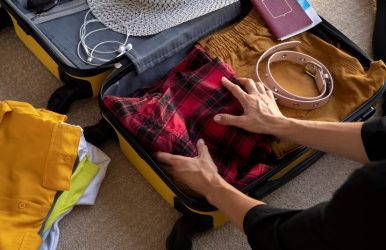
Packing smart is essential to ensure you have everything you need without overloading your suitcase. Begin by planning outfits for each day of your trip, considering activities and the weather. Roll clothes instead of folding to save space and reduce wrinkles. Utilize packing cubes to organize outfits and compress items.

Remember to pack a versatile piece that can be worn in multiple ways, and always include a layer for unexpected temperature changes. Prioritize items that can be mixed and matched, creating different looks with a few key pieces. This efficient approach to packing keeps your travel wardrobe compact yet complete.

Conclusion

In crafting your travel wardrobe, the goal is to merge practicality with style, ensuring every item has a purpose and a flair. With the right mix of versatile pieces, comfortable fabrics, and smart packing strategies, you can navigate any trip with confidence as well as ease. Remember, traveling in style doesn’t mean sacrificing comfort or overpacking; it’s about making thoughtful choices that let you explore freely while looking and feeling your best.

Read Also:

Share on Social Media

Ankita Tripathy loves to write about food and the Hallyu Wave in particular. During her free time, she enjoys looking at the sky or reading books while sipping a cup of hot coffee. Her favourite niches are food, music, lifestyle, travel, and Korean Pop music and drama.

Leave a Reply

Your email address will not be published. Required fields are marked *

title-img Related

READ MORE Best Time to Go Trekking in Nepal

Best Time to Go Trekking in Nepal

BY  Sibashree Mar 21, 2025

If you wish to come here, book slots for any time between Autumn and Spring. The season lasts from September to November and from March to May. That’s the Best Time to Go Trekking in Nepal.  If you're here, only for the climate and the peaks, come anytime. Barring the rains. Otherwise, Nepal always offers mild temperatures, good food, and cozy retreats along with marvelous nature.  The Himalayas  Nepal is the doorway to the Himalayas for you. What’s best- Nepal suffers the least of abrupt snowfalls and rains. So, you can surely enjoy a delectable trekking experience here. The clear skies and soothing weather will assist you.  Ideals Times for Trekking in Nepal (Autumn and Spring)  Do you know which is the Best Time to Go Trekking in Nepal? The autumn and spring for sure. What else? Autumn (September to November)  This post-monsoon season is considered the best trekking period in Nepal. This season rewards you with stable weather that is perfect for trekking. In addition, the skies are clear, offering great views of the snowy peaks. The autumn air is fresh and cool. The post monsoon landscapes in this season are lush green which is phenomenal to trek. There are no dusk cloaks. So, the visibility would never be an issue. You will also get a magnified view of the ranges that stand tall before your eyes. Meanwhile, an exceptional view of the unfrozen alpine lakes waits for you in Nepal.  In essence, you can book the popular Gokyo Lake Trek. The trek is best during the autumn. At this time of the year, you get the best view of the clean and vibrant Gokyo Lakes. Likewise, you can also opt for the Annapurna Circuit Trek, this month.  Choose this trek if you want to see the virgin beauty of the Gangapurna lake here. At the same time, try completing the Tilicho Lake Trek at a go! The Ranges in Sight  Other than lakes, the mountain peaks are there to amaze you. If you’ve selected the Langtang Trek, you can enjoy the retreat of the popular Kyanjin Ri. Then, there is the glamorous Langtang Lirung and other peaks in front of you. Trot some kilometers from there and you can see Naya Kanga. That and many other amazing ranges can be accessed from this vantage point.  Other Peaks  Simultaneously you can enjoy breathtaking views of the Gurja, Tukuche, and most importantly the Annapurna in Nepal. When you climb the Poon Hill, you can see all these peaks and much more at a stretch.  But, here’s the catch. To view these beauties, you have to go to the Annapurna Base Camp Trek. With all these, the exceptional Kala Patthar and Mt. Everest are also visible during the trek.  If you wish to see these peaks and treat yourself, come during the autumn. At other times, the weather is overcast. Or snows impair your visibility.  During treks, you may be caught between high winds or heavy rainfall too. So, it is better to avoid the random seasons. For an uninterrupted journey, choose the two seasons I spoke of.  Spring (March to May) During Spring, you can witness Nepal 2.0. Surely, this is another best Time to Go Trekking in Nepal. Most importantly, the weather is fine and the temperature is moderate. Moreover, clear skies will welcome you. Therefore, you can witness warm and often breezy mountain views.  Trekkers say that it is an ideal climate to trek the Base Camp. or you may also go for the Manaslu Circuit Trek.  Additional treats  If you are trekking during Spring, these are some of the pleasurables you will come across. Don’t miss the rhododendrons. The rest of the flora is also surreal. No wonder, more than 50% of the trekkers choose springtime treks in Nepal. But you can come here and amaze yourself with something else.  The daylight lasts till 8 p.m. during Springs. So you can trek for a long. Or view the serenity of the trekking paths for a long time.  But the peaky areas may be still frozen. So, you can’t miss your woolen and trekking jumpers when you visit Nepal during spring. But with time, the temperatures gradually rise. During later May, you may witness rain showers too. So, don’t miss out on rain gears, if you are planning to stretch your stay.  Reservation The Spring is one of the most popular travel seasons in Nepal. So, you must book your slots in advance. You may book teahouses while trekking. But you need to make booking if you need to get hold of the popular ones along the track.  The Annapurna base camp trek has a lot of them along the way. And almost all of them accept advance online booking. You may also book your teahouse from Kathmandu city offices.  Trekking in Off-Seasons  Off-season treks may be your thing if you want to see another side of Nepal. How’s the weather and what are the challenges of coming here during these months?  Winter Season (December to February) Winter trekking is serene but it is also challenging. During this season, the trails of high-altitude areas are covered with a thick layer of snow. In addition, the temperature drops significantly during this time.  Therefore, trekking can be challenging for those who are not accustomed to the cold weather in the mountains. While moderate-altitude treks can be completed smoothly, high-altitude treks requireproper planning, support from expert guides, and thoughtful packing. It is essential to check the weather regularly before heading out for the treks during the winter months. The high altitude passes likeLarkya La of Manaslu Circuit and Thorong La of Annapurna Circuit Trek can be impassable or difficult to navigate. The heavy snowfall poses all the challenges.  In addition, the accommodation may not be available at the higher zones as locals shift to lower elevations because of the bitter cold. Thus, it is essential to inquire about the availability of accommodation before making plans for high-altitude treks. Even though there are significant challenges, the winter landscapes are ethereal. You can witness the beauty of winter wonderland and feel the serenity of nature as there are fewer people on the trails. In addition, the adventurers who are experienced can be thrilled to traverse the snowy winter paths. The views of peaks covered with dense snow in this season are majestic. As higher altitudes are bitterly cold, it is essential to pack down jackets, sweaters, gloves, socks, warm caps, sleeping bags, and layers of insulated clothing. If you are well prepared and navigate with caution, then you will have a wonderful time trekking in Nepal this season. Monsoon/ Summer Season (June to August) In theMonsoon/ Summer season, the trekking regions in Nepal receive heavy rainfall. The trails of the different trekking trails are slippery and muddy, making navigating challenging. In addition, at the forest areas of the trekking sites, leeches may be found which makes the journey unpleasant.  The weather is unpredictable during monsoon/ summer months, with frequent rain showers, which may obstruct visibility and make traversing difficult. In addition, the trails can be blocked, because of landslides interrupting the trek.  However, monsoon trekking also presents some unique rewards. The views of misty mountains and ethereal cloud formations are fascinating. The landscape gets nourished by rainfall turning it into a green paradise.  Even the trails of popular treks are serene as fewer trekkers embark on this time. So, it can be a good choice for those who are seeking a tranquil journey in the Himalayas.   There are indeed some good sides to trekking in this season. However, it is important to consider the challenges. You need to be well prepared for the trek and check the weather forecast. Being flexible and cautious helps you ensure a smooth journey during this time. The Final Call The climatic conditions influence the overall trekking experience. When you know the best Time to Go Trekking in Nepal,  you can complete the trek with maximumsafety and comfort. In addition, the primary goal of most trekkers is to witness exceptional mountain scenery and connect with nature.  The best times to visit Nepal are autumn and spring. The other seasons offer some challenges for tourists. But these two seasons come with decent weather, moderate clime, and visible trekking trails. So, go on and enjoy your trekking experience. 
READ MORE how is it possible for ski jumpers to stay in the air so long and how do they train for that

How Is It Possible For Ski Jumpers To Stay In The Air Long And How To They Train For That?

BY  Sibashree May 18, 2026

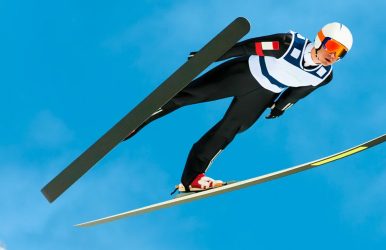
Suppose we jump high in the air. We can stay in the air for around half a second. Michael Jordan could even stay off the ground for only one second.  Now, at many events at the Winter Olympics, we see athletes showing strength and athleticism in the air.  However, ski jumping beats them all in terms of jumping high in the air and staying afloat for so long.  Here, you need to understand the physics of sports, and for many of us, the ski jump is a mesmerizing event in the Winter Games, showcasing sports physics in action.  The athlete who travels the farthest and shows the best style while flying and landing becomes the winner of the event.  Ski jumpers can fight gravity, and they can turn their bodies and skis into a wing to stay in the air for 5 to 7 seconds.  Within that span, they can travel almost the length of a football field while staying in the air.  But how is it possible for ski jumpers to stay in the air so long and how do they train for that?  Let’s delve into the details.  How To Fly?  The answer to how is it possible for ski jumpers to stay in the air so long and how do they train for that lies in three important concepts of sports physics.  These are drag, lift, and gravity.  Gravity is the power that pulls any object in flight down. Gravity is a force that works on everybody, and ski jumpers cannot avoid it.  However, ski jumpers, as they move, interact with the air. Now, this interaction further produces lift.  Lift refers to an upward force projected by the air for an upward movement of an object.  In this scenario, if the force of gravity and the force to lift balance each other, an object can fly or glide.  However, producing lift is only possible when the object is moving. Moving objects collide with air particles and push them aside.  Pushing air downward creates an equal, upward reaction known as lift. Here it follows Newton’s third law, “For every action, there is an equal and opposite reaction.” You can increase lift by boosting your speed, expanding your surface area, or optimizing your angle of attack (the object's tilt against the airflow).  If this angle is too flat, you generate no lift; if it is too steep, the object stalls.              The Car Window Example  If the concept feels complicated, you can experience the same by just sticking your hand out of a moving car window.  If you keep your hand perfectly flat, it will yield no movement.  However, if you tilt your palm slightly upward, it will force the incoming wind downward, and thus your hand will be pushed up immediately.  It is a clear example of lift.  The same particle collisions that generate lift also create drag. Drag is a resistive force that slows objects down.  As an object loses speed, its lift drops, cutting the flight short. Because of this, ski jumpers use highly precise body positions to maximize their lift while minimizing speed-killing drag. A Brief History Of The V-Style  The history of ski jumping goes back to the 1800s. Norwegian skiers first started competing for distance on snowy slopes. However, for most of the sport's history, jumpers kept their skis pressed tightly together, parallel to each other, all the way through the flight. The 1980s brought a major change to these practices.  A Swedish jumper named Jan Boklöv began spreading his skis apart mid-air, forming the V-shape you now see in every competition. He drew criticism from experts and judges who considered it a “bad style” because it looked unconventional.  However, Boklöv's V-style increased his jump distances by as much as 10%, simply by giving his body and skis more surface area to catch the air. Then, ignoring the style was impossible.  Within a few years, every serious competitor had switched to the V-style, and judges stopped penalizing it. Even today, it remains a standard technique, and it is the same aerodynamic principle that more surface area means more lift. How To Fly On Skis?  We need to observe the skiers to understand how is it possible for ski jumpers to stay in the air so long and how do they train for that. You will see a skier starting on a high slope, and then they move downhill. They generate speed by skiing in this way.  They also reduce drag by squatting and steer very carefully to minimize the friction between the ramp and skis.  So, when they reach the end, the speed will be close to 60 miles or 96 kms per hour.  Once airborne, ski jumpers use aerodynamics to fight gravity and extend their flight.  While they cannot generate enough lift to stay in the air indefinitely, maximizing this upward force slows their descent and carries them further down the hill. To achieve the longest flight possible, athletes lean forward until their bodies and skis are nearly parallel to the snow.  By spreading their skis into a V-shape just outside their body's silhouette, they gain two major aerodynamic advantages. The spread position creates a larger surface area to catch the wind and generate lift. So they get an expanded surface area.  They also get an optimal angle of attack. The forward tilt places them at the perfect angle relative to the airflow to maximize upward pressure. As the jumper glides forward, drag continuously pushes back against them, draining their forward momentum.  Because lift relies entirely on speed, this deceleration causes the upward force to fade away. As drag robs the athlete of their speed, gravity takes complete control, pulling them faster and faster toward the landing zone. The Takeoff: The Hardest Half-Second Out of everything a ski jumper does, takeoff is the most difficult skill to master. It happens in under half a second.  Furthermore, when the jumper reaches the end of the ramp, known as the "table," they must explosively extend their legs and spring forward and slightly upward. They will do it all while still moving at nearly 60 miles per hour. However, if they jump too early, they will lose speed and distance. Once again, jumping too late can cause losing control of their body position in the air, which can be dangerous. In addition, the takeoff also sets the jumper's angle of attack for the entire flight.  Because there's no way to make major corrections once airborne, a fraction-of-a-second error in the takeoff can throw off the aerodynamic position for the whole jump.  This is why ski jumpers spend years drilling this single movement until it becomes automatic. How Ski Jumpers Actually Train? Physics explains the reason why ski jumpers fly so far. However, the training behind it is equally crucial.  Training AreaWhat It InvolvesWhy It MattersStrength and Explosive PowerSquats, box jumps, and plyometric drillsBuilds the fast-twitch power needed for the powerful, split-second leg extension at takeoffSummer Training on Artificial TracksYear-round practice on in-run tracks covered with porcelain or plastic bristles instead of snowLet athletes drill their approach, takeoff, and body position even outside the winter monthsWind Tunnel SessionsFine-tuning arm position, back angle, and ski spread with coachesFlight position is highly sensitive to drag and lift, so small posture adjustments can shave off dragVideo and Biomechanical AnalysisFrame-by-frame review of the in-run, takeoff, flight, and landing from multiple camera anglesHelps compare an athlete's actual form against ideal aerodynamic positionsMental PreparationVisualization techniques and gradual exposure, starting on smaller hills and building up to normal and large hillsBuilds the psychological conditioning needed to launch off a mountainside ramp at speed How Do Judges Score A Jump? The judges will not just assess the ski jump based on the distance covered. So, the question of who becomes the winner depends on the distance and the style.  Scoring ComponentHow It WorksPurposeDistance Points- Measured against the K-point (a reference point on the hill). - Landing exactly on it earns a fixed score, with points added or subtracted for every meter beyond or short of it.Rewards how far the athlete actually travelsStyle PointsFive judges score the flight and landing, including body position in the air and control of the landing in the "telemark" position (one foot in front of the other, knees bent). Each judge scores up to 20 points; the highest and lowest scores are dropped, and the middle three are added to the distance score.Rewards technique and control, not just distance.Gate and Wind CompensationOfficials apply point adjustments in real time based on wind conditions, since headwinds increase lift and tailwinds reduce it.Prevents a gust of wind from unfairly helping or hurting a competitor's final score. Normal Hill Vs. Large Hill Vs. Ski Flying Not all ski jumps are the same size, and the hill itself determines how far a "long" jump actually is. Hill TypeK-Point (Target Landing Distance)NotesNormal HillUp to 109 metersSmaller competition hillLarge Hill110–184 metersUsed for most Olympic ski jumping eventsSki Flying Hill185 meters or moreIt is a separate discipline where athletes can stay airborne longer, sometimes covering well over 200 meters. The larger the hill, the faster the in-run speed and the longer the flight. That is why ski flying produces the most extreme examples of the physics described earlier: maximum lift, sustained over the longest possible time. Record-Breaking Flights The current men's ski flying world record stands at 254.5 meters. Domen Prevc completed it in Planica, Slovenia, on 30 March 2025. (Source: Guinness World Records).  Among women’s ski flying, Nika Prevc holds the record. She completed the jump of 236 meters in Vikersund, Norway, on 14 March 2025. These extreme distances are a direct demonstration of the lift-versus-drag balance. The longer an athlete can hold an efficient aerodynamic position without losing speed to drag, the farther gravity has to work to finally pull them down. How Is It Possible For Ski Jumpers To Stay In The Air Long? The Rules Follow The Physics So, you can see there is pure physics at play behind how is it possible for ski jumpers to stay in the air so long and how do they train for that.  However, the body of an athlete, equipment choices, and the wind can impact the quality of the jump in many ways.  Also, there are a lot of rules and regulations to keep a ski jump fair.  You will see many officials changing the starting and ending points up and down the slope during the events.  This adjustment happens to ensure a safe landing, depending on the speed of the wind.  When the headwinds are faster, there will be more lifts and longer jumps. As a result, an athlete can go past the scure zone for landing.  Moreover, the regulations of a ski jump will also depend on the height and weight of a skier.  Usually, skis have to be “145% of the skier's height.” Also, if the skier has a body mass index of less than 21, they will get shorter skis.  Again, long skis are not the best in every case. When the ski is heavy, you will need more lift to fly and stay in the air.  Also, you have to wear a tight-fitting suit. You cannot wear anything that will need additional lift.  So, when you see a skiing event, think of how the skiers have also mastered the concept of physics. Why Is Ski Jumping Riskier Than It Looks? Ski jumping looks graceful. However, we cannot undermine how physically demanding and risky the sport is.  Athletes fly through the air at highway speeds with only their skis and body position keeping them stable.  A poor landing, a sudden gust of crosswind, or a small error in the takeoff can cause a loss of balance that's difficult to correct mid-flight.  This is part of why regulations are so strict that the rules on suit tightness, ski length relative to height and BMI, and the ability of officials to adjust the start gate are all safety measures as much as they are fairness measures. Wind is the biggest variable officials can't fully control. Which is why competitions are sometimes paused or delayed when crosswinds pick up, and why the point-compensation system exists to account for conditions that shift mid-competition. How Is It Possible For Ski Jumpers To Stay In The Air Long? Some Quick Questions And Answers 1. Why Do Ski Jumpers Spread Their Skis Into A V-Shape? It increases their surface area and creates a better angle of attack, both of which generate more lift and let them fly farther. 2. How Fast Do Ski Jumpers Go Before Takeoff? Around 60 miles per hour (96 km/h) by the time they reach the end of the ramp. 3. How Long Do Ski Jumpers Actually Stay In The Air?  Roughly 5 to 7 seconds in standard competition, and even longer during ski flying events on the largest hills. 4. Is Ski Jumping Scored Only On Distance?  No. Final scores combine distance points with style points awarded by judges for body position and landing control. 5. What Is The Difference Between Ski Jumping And Ski Flying?  Ski flying happens on larger hills built for greater distances, allowing longer flights and higher speeds than standard normal or large hill ski jumping. Read Also: Car Travel On PaxTravelTweaks: How Does It Help In Smartly Planning Budget-Friendly Road Trips? IWantThatFlight Offering Cheap Flights: The Best Hack For Traveling On A Budget

READ MORE Packing Essentials For Your Next Adventure

On The Go: Packing Essentials For Your Next Adventure

BY  Ankita Nov 21, 2023

For those who love venturing off the beaten path to experience the wonders that Mother Nature has to offer, your success and your safety in enjoying your next adventure will depend on the essentials you pack to carry with you. While enjoying the wind and sun or exploring a new destination can be exciting, gratifying, and even relaxing, these emotions can quickly turn into worry, fear, and exhaustion if you’re unprepared. Selecting what is essential to your well-being on the move can be challenging, whether planning a six-month, six-day, or six-hour adventure, mainly if you have limited packing space. Planning is the key to your success. Phone  It’s impossible nowadays to even think of going somewhere without your smartphone. You don’t want to leave home without yours. Consider including a universal travel adapter depending on your destination and acquiring a local SIM card to remain connected in the event of an emergency or if you want to enjoy a bit of entertainment while on the go. Portable Charger While a charger and power bank may be among your best options if you’ll be off the grid for a while, carrying an extra battery is one of the top tips to follow when adventuring. A spare battery can be beneficial, especially for your phone as well as a camera or laptop, if you bring these along. Lots of things can go wrong, and the unexpected is always to be expected. You may become lost, need help, contact your family, or request medical assistance, and your phone may be your only lifeline to civilization. Pack that extra battery. Maps If you travel to a remote location, a phone or the internet may not be viable tools. Include physical maps, a GPS device, or even a basic compass among your adventure essentials to keep you on track. Water And Snacks Snacks like nuts and seeds, granola bars, or chocolate, along with a variety of pop tart flavors, can help maintain energy levels, and hydration is essential to general health and well-being. Reusable water bottles or boxed water aid in preventing dehydration and protect the environment as well. If you are refilling your water bottle, include water disinfection tablets. Carry extra snacks if you are embarking on an active trip. First Aid Kit Traveling can be an exhilarating experience, but especially when selecting a natural destination, bumps, bruises, bites, and scrapes are to be expected. A fall, unwelcome insect, thorny vegetation, or an upset stomach can leave you miserable and, in some cases, susceptible to infection. A compact first aid kit with band-aids, gauze, tape, antiseptic cream or wipes, painkillers, antihistamine pills, eyewash, ibuprofen, a small pair of scissors, tweezers, hand sanitizer, and even some electrolyte tablets needs to be among your travel gear. Consider packing some bug spray, moisturizer, and sunscreen if the climate warrants them, and don’t forget prescription medicines and a copy of prescriptions, just in case. A pair of protective sunglasses and a hat will complete your protective gear. Eco-Friendly Essentials If traveling off the beaten path, consider bringing reusable items such as cutlery sets, plates, containers, and a reusable shopping bag. A portable knife or pocket multi-tool is an excellent item to carry. If you’re traveling by plane, place it in checked luggage. Use solid hygiene products like soap or shampoo that require less space in your backpack or suitcase and are environment-friendly. Don’t forget a towel, toothbrush, toothpaste, nail clippers, and glasses if you wear them. A small sewing kit with needles may prove handy, too. Toilet Paper Roll A toilet paper roll may not seem obvious, but depending on where you are headed, you’ll be happy you thought to bring a roll along. Some cultures will not use toilet paper; wilderness destinations can be challenging when nature calls. Add in some tissues and wet wipes if you don’t have a place to wash up. Flashlight/Torch A flashlight is an essential tool to always have on hand. You don’t want to wander about in the darkness in a location you are unfamiliar with, especially should you lose track of time or your way. Flashlight torches and headlamps will reduce the risk of getting lost as well as bodily harm because you’ll be able to see where you are heading. Bring along an extra set of batteries and a lighter or matches, just in case. Comfortable Shoes And Clothing If you plan on walking a lot or hiking, comfortable footwear can make or break your overall experience. Plan for local weather conditions as well. You may be better prepared with waterproof shoes or boots. Don’t forget the proper type of socks, especially in colder climates. Choose the correct type of clothing, such as swimwear, goggles, and flip-flops for a warm beach destination, breathable fabrics for the tropics,  or heavier clothing for winter climates. Waterproof instruments may be called for if you’re visiting rainy locations. You may want an extra blanket or two as well. Portable Shelter If the wilderness is your final destination, portable emergency shelters are suitable to carry along. Reflective thermal shelters can be packed or attached to your backpack. Don’t Forget Your Documents! Regardless of where you are headed, you’ll need your documents. Necessary papers might include a driver’s license, vehicle registration, proof of insurance, passport, and perhaps a visa. Carry photocopies of these documents in a separate location in the event of loss or theft. Prepare a mix of credit cards and local currency, as not all places may accept your plastic, and use a money belt or anti-theft bag if possible. Final Considerations Finally, bring a lock to keep your things safe during hostel visits or overnight train trips. If you use a backpack, have a rain cover so your items don’t become drenched in a downpour. Include a whistle among your packed essentials. You never know when you may need to call for help or fend off a critter! Read Also: A First-Hand Experience Of Taking A Red Eye Flight! The Ultimate Guide To Finding Cheap Flights To Chicago Using Google Flights Momondo Flights: Should You Try This Platform For Booking Flights In 2023?